A Gathering of Shadows (Shades of Magic, #2) by V.E. Schwab

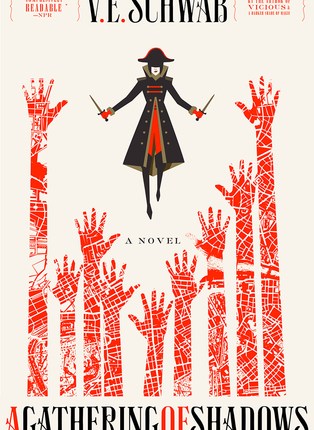
A Gathering of Shadows (Shades of Magic, #2) by V.E. Schwab

The characters from A Darker Shade of Magic are back and up to their usual tricks. Rhy worries about Kell, Kell worries about Rhy and Lila, Lila worries about where she’s going to get her next knife. We also get to meet someone new, a dashing privateer named Alucard Emery.

Walking away had been easy. Not looking back was harder. pg 30, ebook.

Photo by Pixabay on Pexels.com

The second entry in the series is usually when you get to know the characters better. What are their motivations, loves, hates? We get a bit of that in A Gathering of Shadows but, mainly, the author uses this book to introduce what has become the young adult trope of “dangerous contest” to get the characters together. Think Hunger Games or Maze Runner or the Tri-Wizard Cup but without as much excitement.

Kell is suffering after what he went through in the first book. “Once he would have hesitated — once he had hesitated — but not this time. With a flick of his hand, metal spikes slid from the sheath at his wrist and into his palm. They rose into the air and shot forward, burying themselves in the specter’s throat, his heart, his head. But there were still more shadows. Always more.” pg 43, ebook.

Rhy is suffering too: “Who drinks this?” Kell coughed. “People who want to get drunk,” said Rhy, taking a long, pained sip.” pg 58, ebook.

Photo by Rachel Claire on Pexels.com

The pace of the story is quite slow. What goes on in Red London isn’t nearly as interesting as what goes on in other places (no spoilers). But there were so few chapters about the other Londons.

“Saints,” cursed Rhy, “do all the Londons get this cold?” “As cold,” said Kell as he followed the prince away from the bright beating heart of the city, and down a series of narrower roads. “And colder still.”

I am still enthralled with the idea of different worlds and only a few characters having the ability to walk between those worlds. I like how magic functions here. I like how Schwab gives everybody a back story. But, as in the first book, I feel like I’m probably not the target audience for this tale.

Photo by Lisa Fotios on Pexels.com

That’s not going to keep me from reading the last one though. 🙂 Recommended for young adults who adore fantasy reads.

Here’s my review of the first book: A Darker Shade of Magic by V.E. Schwab

Thanks for reading!

Hanging the Sheriff: A Biography of Henry Plummer by R.E. Mather, F.E. Boswell

Hanging the Sheriff: A Biography of Henry Plummer by R.E. Mather, F.E. Boswell

Hanging the Sheriff takes another look at the life of Henry Plummer. Conventional history labels Plummer as the leader of a notorious outlaw gang in the territory that would eventually become Montana. This book suggests that Plummer’s life story was written by the vigilantes who killed him and they had every reason to make him seem worse than perhaps he actually was.

It was kind of funny — the authors assumed everyone reading their book would know exactly who Plummer was. I had no clue: The image of Plummer as the one man responsible for all crime committed in the mining districts east of the Rockies is so firmly ingrained it is nearly impossible for even the most impartial of readers to drop old suspicions and view him with an open mind.” pg 7

Photo by Suliman Sallehi on Pexels.com

Like I said, blank slate here. And the story they revealed was fascinating.

Plummer was born in Maine and migrated West not just for the Gold Rush but also because of his lung disease. He was a successful business owner and prospector. He was a notorious gunslinger, able to fire five bullets in three seconds. He got in trouble with the law, but was elected marshall and sheriff in two different towns. He killed at least half a dozen people.

“Plummer jumped up. ‘I’m tired of this,’ he said, drawing his pistol and firing at the ceiling. A second shot struck Cleveland, who fell to his knees, pleading, ‘You won’t shoot me when I’m down?’ ‘No,’ Plummer said, ‘Get up.’ pg 25

In his defense, the American frontier was wild and untamed with very few courts or lawmen. Everyone had to police themselves: “As Granville Stuart explained, ‘There was no safety for life or property only as far as each individual could, with his trusty rifle, protect his own.'” pg 26

Photo by Alex Andrews on Pexels.com

I would have enjoyed this book more if it had been arranged in a linear fashion (it wasn’t) and if they had included some of the other viewpoints about Plummer. They go on and on about Plummer’s bad reputation but give little explanation, for those who haven’t heard of it, exactly what that reputation was.

“She said that she loved Mr. Plummer,” Thompson wrote, “that she knew that he loved her, that she had the upmost faith in him, that the terrible stories of him were told by men not worthy of belief; that she could never be happy unless she married him.” pg 41 What stories!

This book made me wonder about all of the “history” of the Wild West. Who were the heroes and who were the villains? Things weren’t black and white… and, as the authors pointed out, history was written by the men who survived. Was that the truth of what really happened? I guess we’ll never know.

Thanks for reading!

Here’s the History Guy episode I wrote about Henry Plummer:

Proven Guilty (The Dresden Files, #8) by Jim Butcher

Proven Guilty (The Dresden Files, #8) by Jim Butcher

The wizard Harry Dresden continues to anger the White Council, the Red Court of Vampires, the winter court of the Fey and pretty much everyone else in the universe. He and Bob have a new (dangerous) project in his work space. He’s worried about his half-brother, Thomas, who has been acting kind of weird and may or may not be feeding off of people again. He and Murphy are starting to talk about their interesting relationship and there’s a fallen angel in the concrete of his house. Could things get much worse?

Yeah, it could. When Michael’s daughter begins to have problems, Harry has to deal with those too.

Photo by Vijay Sadasivuni on Pexels.com

First, he has to witness an execution of an evil magic user by the council. It makes him sick to his stomach because the boy was never trained and didn’t know that what he was doing was wrong. It reminds Harry of his own questionable past and how close he came to the same fate.

“But it doesn’t change the fact that we’ve just murdered a boy who probably never knew enough to understand what was happening to him.” pg 15

The White Council is so stretched by the war with the vampires, they’ve giving less time to social niceties than perhaps they able to in the past. They’ve also been able to train fewer wizards. And there’s a new threat running around Chicago that Harry has been tasked to discover.

“As the senior Warden in the region, it falls to you to investigate and find those responsible. In my opinion, it is vital that you do so immediately. To my knowledge, no one else is aware of the situation.” pg 29

Photo by Bob Ward on Pexels.com

I really enjoyed this entry in the series until the end of the story arc with Michael’s daughter. That part felt off to me and crossed a line that I didn’t know I had for these books.

In my mind, The Dresden Files are sort of the “junk food” of my to-be-read pile. The hero of the stories is not perfect and admittedly so. He’s kind of a dog when it comes to women and relationships. He tries to make the right decisions but it sometimes back fires in his face. But I usually agree with what he tries to do and understand his motivations behind it.

But the way that he treats Michael’s daughter… I didn’t agree with that. There’s a kind way to go about things and a cruel way, and I felt like he unnecessarily chose the cruel way. It’s not what I look for in my “junk food” reads. Plus, the whole scene gave me the creeps and made me feel like I didn’t know the character after all.

Photo by Sanaan Mazhar on Pexels.com

And perhaps that was the point. Sometimes Harry does the wrong thing. Sometimes he thinks the wrong thing. But at the end of the day, in this book at least, he didn’t make a different type of unforgivable mistake.

That being said, if he lived in my world, I wouldn’t let him be around my kid, end of story. And if this book hadn’t included the icky part with Michael’s daughter, it would have been a five-star read for me.

Here are more reviews I’ve written for this series:

Storm Front (The Dresden Files, #1) by Jim Butcher

Fool Moon (The Dresden Files #2) by Jim Butcher

Grave Peril (The Dresden Files, #3) by Jim Butcher

Summer Knight (The Dresden Files #4) by Jim Butcher

Death Masks (The Dresden Files, #5) by Jim Butcher

Blood Rites (The Dresden Files, #6) by Jim Butcher

Dead Beat (The Dresden Files #7) by Jim Butcher

And thanks for reading!

Animosity: Evolution, Vol. 1: Lex Animata by Marguerite Bennett

Animosity: Evolution, Vol. 1: Lex Animata by Marguerite Bennett

Animosity: Evolution imagines a world in which animals have become sentient and all of the chaos that followed. It’s a fascinating science fiction graphic novel in which leaders among the animals have to come to grips with an additional multi-billion mouths to feed, homes to find, and society to organize.

Compounding the complexity, the animals are now just like people with individual personalities. Some are brave, others corrupt, others run vice dens with black market milk or other forbidden specialties. There’s problems with population control and predators continue to desire prey.

Photo by YURI MANEI on Pexels.com

A laconic wolf named Wintermute is leading the charge for the former city of San Francisco. None of the decisions she is required to make on a daily basis are simple and she’s almost universally hated, except by a few who know her well.

Meanwhile, out in the ocean, the dolphins have organized into their own blood-thirsty society. Beyond the city limits on the land, there are animals (and people) who don’t want to join a new world order in San Francisco.

I really enjoyed Animosity: Volume 1. It is a multi-layered story in a world that has a lot of potential. The characters, both animal and human, are fascinating. The relationships that they are attempting to develop are brand new and without precedent. There’s shifting power structures and social services have been completely up-ended.

Photo by Daniel Torobekov on Pexels.com

I wonder what’s going to happen next…

Many thanks to one of my local public librarians for the excellent recommendation. You rock, Ryan.

Thanks for reading!

A Darker Shade of Magic by V.E. Schwab

A Darker Shade of Magic by V.E. Schwab

A Darker Shade of Magic is a young adult fantasy novel about a rare-type of powerful magician who can travel between worlds and who also has a penchant for smuggling items between these worlds. It also concerns a young woman from our world who may or may not have a secret relating to magic, who wants to be a pirate and find a life of adventure, far from the dreary and almost magic-free realm of the real world. Their worlds collide when Kell, the magician, secrets a particularly dangerous item from one of the worlds to another.

“So when Kell passed through the palace wall and into the anteroom, he took a moment to steady himself — it took its toll, moving between worlds— and then shrugged out of his red, high-collared coat and turned it inside out from right to left so that it became a simple black jacket.” pg 1

Photo by Elti Meshau on Pexels.com

I forgot to mention, he also sports a fabulous jacket with multiple “sides” and pockets, the extent of which he hasn’t even been able to discover. Wish I had one.

The worlds Kell moves between are different in almost every way, except there is a city called London in each of them.

“And so Kell — inspired by the lost city known to all as Black London — had given each remaining capital a color. Grey for the magic-less city. Red, for the healthy empire. White, for the starving world.” pg 15

Magic is something that can be dangerous in this universe, not just pretty sparkles. Because one of the worlds succumbed to magic and it ate their souls, the doors between the worlds have been severed. Only Kell, and magicians like him, can travel from place to place.

But the thing about magic,” added Kell, “is that it preys on the strong-minded and the weak-willed, and one of the worlds couldn’t stop itself. The people fed on the magic and the magic fed on them until it ate their bodies and their minds and then their souls.” “Black London,” whispered the Prince Regent. pg 23

Photo by Kit Zasloveskiy on Pexels.com

It’s actually a fascinating premise for a series. My quibble with this book, which I sometimes have with young adult fare, is that the characters never really came alive for me. They felt like a series of cliches.

“And Lila left feeling empty, hungry, and hollow in a new and terrifying way. Or maybe it was the same kind of hunger she’d always felt, and now the missing thing had a name: magic. She wasn’t sure.” pg 160

But even so, I think I’m going to pick up the next book to see how things go for them. Recommended for young adults. Other readers (ahem, older) may, like me, be left wanting more substance.

Thanks for reading!

Scandals of Classic Hollywood by Anne Helen Petersen

Scandals of Classic Hollywood by Anne Helen Petersen

Full title: Scandals of Classic Hollywood: Sex, Deviance, and Drama from the Golden Age of American Cinema

Scandals of Classic Hollywood is about movie star scandals, obviously, but also shows the development of Hollywood and how public and private forces place tremendous pressure on the stars of film. I think it’s extraordinary than anyone in the business can be normal at all considering what they go through.

The scandals discussed in this book are more than just smut. They’re history lessons…” introduction

Photo by Edgar Colomba on Pexels.com

The most fascinating piece of this book is the role of fixers and reputation creators. It makes you wonder what’s real and what’s simply fairy tale in celebrity magazines now. In what other profession do we act like we know a person simply because they were doing their job?

“During this period, stars weren’t born; they were made. Scouts would bring in ‘raw’ star material, culled from the vaudeville circuit, the theater, or the soda fountain counter. The potential star would be given a name, a sanitized (and sometimes dramatized) backstory, a makeover, and a contract.” introduction

The other side of Hollywood that this book gives you an inside look at is the creation of film ratings and the history of censorship.

“To save their monopolies, then, they had to figure out a way to appease the calls for censorship, but to do so without actually appointing a government censor. Thus the studios came together and created an organization — the Motion Picture Producers and Distributors of America — and elected to censor themselves.” pgs 22-23

Photo by Pietro Jeng on Pexels.com

Each chapter focused on a different person or couple and it seemed like most of the chapters ended in tragedy. Judy Garland, Lombard and Gable, and Fatty Arbuckle are a few who come to mind, but there are a dozen others.

“Whenever a Hollywood star dies young, it’s a tragedy. Whenever a Hollywood star dies young while serving her country, leaving behind her much-beloved husband, with whom she had been very publicly and blissfully happy, the tragedy amplifies into something else entirely.” pg 132

Before TMZ, fans got their gossip through magazines or newspaper columnists, perhaps not with the immediacy that exists now, but there was still tremendous pressure to behave or appear to behave a certain way. The pressure totally messed up some stars.

Like Judy Garland: “Today she remains one of Hollywood’s most enduring stars and the most compelling reminder of what our affection for the idols on the screen, and the machinery that feeds it, does to both body and mind. Her life suggested hope and despair in equal measures, begging you to love her and damning you for doing so.” pg 178

Photo by Matt Hardy on Pexels.com

I also loved learning about the eccentricities and bizarre behaviors a few of the stars were known to display. I mean, I always knew Marlon Brando was kind of weird, but this book took it to a whole new level for me…

“He loved to play congas and marimbas, and specialized in playing the recorder with his nose; he owned a pet raccoon; and he was known to make an entire meal out of peanut butter. (When asked why he didn’t fall for Desire costar Jessica Tandy, his answer: ‘She doesn’t like peanut butter.’)” pg 223

Recommended for fans of classic film or those who want to learn more about Hollywood and its stars. Scandals of Classic Hollywood entertains while it educates.

Thanks for reading!

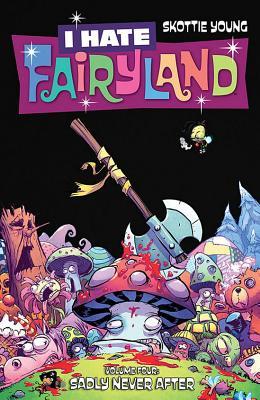
I Hate Fairyland, Vol. 4: Sadly Never After by Skottie Young

I Hate Fairyland, Vol. 4: Sadly Never After by Skottie Young

Sometime in July, when I wasn’t paying attention, Skottie Young announced this installment of the I Hate Fairyland series would be the final one. Imagine my surprise when I got to the last page of what was obviously the end of one of my favorite comic series. It was bittersweet.

Young brings the series to a close with Gertie trying one more time to get home. The last book ended on a cliffhanger with a surprise twist. He addresses that directly in the first pages of this installment.

“Yeah, that’s why I’m completely unimpressed. Feels like a cheap stunt to end a story with a ‘clever’ cliffhanger, if you ask me.”

Photo by Egor Kamelev on Pexels.com

Characters from the previous books all make an appearance, plus a few new ones. All-in-all, I enjoyed it.

The genius of this series is the idea that fairyland is one, built for children, and two, should have an expiration date. Gertrude, a foul-mouthed homicidal maniac in the form of a perpetually small child, is what would happen if someone was forced to endure endless disappointments in a futile effort to go home again. And was given a pointy-edged sword with little to no consequences for her actions.

All quests have ends though they may not be in the form the person going on the quest expected. I was pleased to see that Young didn’t drag out this series beyond its own expiration date. Because he could have. Honestly, the beautiful world he created could have gone on and on if he had chosen (or had the time) to do so. But he embraced one of the lessons in the story and ended it in a timely and, I felt, dignified manner.

Photo by PhotoMIX Company on Pexels.com

Recommended for adults who are looking for a different coming-of-age story in graphic novel format. Not appropriate for the younger set.

Here is my review for a previous entry in the series:

I Hate Fairyland, Vol. 3: Good Girl (I Hate Fairyland #3) by Skottie Young

Thanks for reading!

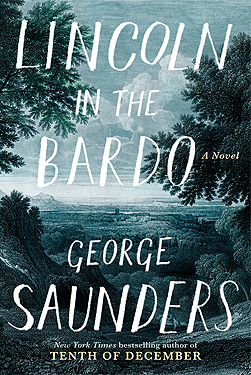
Lincoln in the Bardo by George Saunders

Lincoln in the Bardo by George Saunders

Lincoln in the Bardo may be the strangest book I’ve ever read. It intersperses non-fiction excerpts from historical documents and memoirs and mixes it with fictional quotations to form the narrative. At first, I thought, “I don’t like this at all.” But strangely, it grew on me and I ended up reading the whole book in one sitting.

And I couldn’t stop thinking about what the book was saying.

In the fictional portion, Willie Lincoln, the young son of President Abraham Lincoln, dies and ends up in a world between this one and the next. And in this realm, other tortured souls are spending eternity tied to their hang-ups or traumas from their previous lives. A few of the more normal of this crowd wants to help Willie move on before something bad happens to him.

Photo by Pixabay on Pexels.com

“Imagine our surprise, then, when, passing by an hour or so later, we found the lad still on the roof, looking expectantly about, as if waiting for a carriage to arrive and whisk him away.” pg 48, ebook.

The non-fiction part is about Abraham Lincoln’s struggle to mourn his son while conducting the Civil War. It contains criticisms of Lincoln from his contemporaries that I have never read prior to this book, which is shocking to me, living in “The Land of Lincoln” state and all that. You’d think with all of the books that have been written about Lincoln that I would have at least been exposed to it. So, that part was fascinating too.

But back to the fictional part… Lincoln in the Bardo is an examination of love and mortality. Everyone dies. Yet we live and love like we will live forever. What do we take with us beyond death? What awaits? A hell of our own creation or an eternal heaven?

Photo by Mike on Pexels.com

I can see why some readers can’t stand this book. As I said, it is strange and can be, at times, vulgar and shocking. But at the same time, it is so unique and thought provoking. I can see why it was awarded The 2017 Man Booker Prize and why its rating on Goodreads is barely above three stars.

Only recommended for readers who enjoy weird books with completely novel narrative methods.

I’ll be thinking about this one for a long time. Thanks for reading!

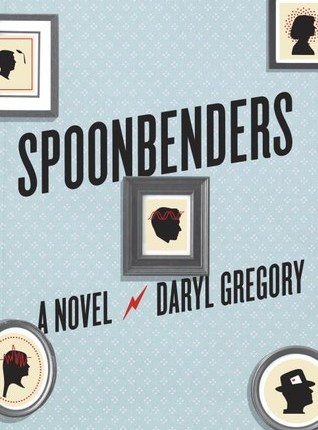
Spoonbenders by Daryl Gregory

Spoonbenders by Daryl Gregory

A con-man and a highly talented psychic fall in love and have children with extraordinary talents. But this doesn’t automatically give them an extraordinary life. They struggle to hold down jobs and support each other, while mourning the loss of one of their members and a career in showmanship.

One night, years before this story takes place, the Telemachus family was on a late night show, introducing themselves to the world. But a skeptic proved a portion of their act to be fake and the family’s bookings all fell through. One of the members of the family, Frankie, blames the skeptic for the mediocre life they are living now… and worse.

Photo by Cleyton Ewerton on Pexels.com

“Archibald was a necessary evil,” Grandpa Teddy said. “He was the voice of the skeptic. If your mother had shown him up, the audience would have loved us for it. We could have gone to the stratosphere with that act.” “He was evil,” Frankie said. … “He killed Grandma Mo…” pg 19, ebook.

Though the head of the family, Grandpa Teddy, doesn’t have any legitimate powers to speak of (except a talent for manipulating cards), his children have a veritable cornucopia of abilities. Frankie can move metal objects with his mind, when he’s not under stress. Irene can tell if someone is telling her a lie. And the youngest, Buddy, can see the future so clearly that he calls his perceptions “memories”.

And their children have different powers too.

“That they were psychic was another Telemachus Family Fact, in the same category as being half Greek and half Irish, Cubs fans and White Sox haters, and Catholic.” pg 27, ebook.

Photo by Mikhail Nilov on Pexels.com

The strength of this story is in the characters themselves. You really enjoy learning who these people are and seeing how they prevent themselves from being great. It’s also just a fun story about a large, semi-dysfunctional family. As someone from a large family myself, I felt right at home in this world (minus the extraordinary powers and most of the dysfunction).

One of my favorite characters, though he was a bit of a rogue, was Grandpa Teddy. He’s trying to keep his herd-of-cats family all pointed in the same direction while not having the advantage of extraordinary abilities beyond his own quick mind.

“The problem with getting old was that each day had to compete with the thousands of others gone by. How wonderful would a day have to be to win such a beauty contest? To even make it into the finals?” pg 196

I also liked Irene, the daughter who could tell if you were lying to her. I never considered how much the small untruths we tell each other grease the wheels of relationships and civil discourse.

Photo by Magda Ehlers on Pexels.com

This might be a good pick for a book club read. There are plenty of issues to discuss and powerful moments to dissect.

I may have enjoyed this book more if it had been primarily about the family’s abilities rather than real life drama. But I’m into superhero stories and epic fantasy. For readers who like to think about the impossible but not read a story where that sort of thing is the norm, this book may fit the bill.

Thanks for reading!