The Lost Prosperity Secrets of Napoleon Hill by Napoleon Hill

The Lost Prosperity Secrets of Napoleon Hill by Napoleon Hill

The Lost Prosperity Secrets of Napoleon Hill examines some of Hill’s lesser known newspaper essays. He writes about his life and the workings of the “unseen hand” of the universe within it. He dissects how a series of failures ultimately caused him to succeed.

And he writes about his studies of some of the most successful people of his time, what they have in common and what you can do to become one of them.

Photo by The Lazy Artist Gallery on Pexels.com

Some of these essays share powerful advice for inner transformation.

I particularly enjoyed Hill’s detailed description of the ’round table method’ that he used to change his personality. I think it is a fascinating mental exercise that can be customized for anyone.

But, at other points in this audiobook, his essays felt a bit heavy-handed in his declarations of his faith and belief in an organizing intelligence. But Hill’s faith seems to have been partially what he credited for his mammoth success… though not at first.

He freely admits that, early on in his career, he was obsessed with the accumulation of money to the cost of all else. It wasn’t until later on, that he realized money was nice, but there are other important goals that should be considered in one’s professional life. He talks about the golden rule and morality.

Photo by Karolina Grabowska on Pexels.com

And Hill talks about how you should treat someone who treats you poorly. He wasn’t alone in some of his most spectacular failures, but the people who used those low moments to get ahead in business did not do well afterwards. Again, Hill credited a higher power for that balance. Some would call it karma, but he did not.

If you liked Think and Grow Rich, you will probably enjoy this audio program.

Thanks for reading!

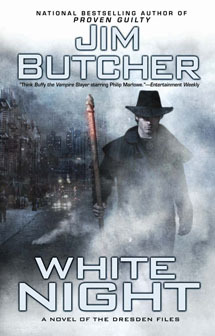
White Night (The Dresden Files, #9) by Jim Butcher

White Night (The Dresden Files, #9) by Jim Butcher

Someone is killing people in Chicago and leaving clues that only a person with magical ability, like a wizard named Harry Dresden, could see. Why would they do that?

Meanwhile, most everything else in Harry’s life is going spectacularly wrong. He has an unruly apprentice who had an unfortunate brush with dark magic awhile back. The White Council is still at war with the Red Vampire Court which was Harry’s fault to begin with, but we don’t need to go into all that.

Photo by cottonbro on Pexels.com

He’s still got a fallen angel’s shadow in his head, trying to convince him to wield a coin that will give Harry unimaginable power but also consume his soul. Thomas, the vampire, has been acting really weird and he’s probably eating people again which, vampires do, but it’s kind of a problem because Harry is supposed to be protecting people.

And now this, a serial killer. Perfect.

The Dresden Files, as a series, is really starting to come together. I like how Jim Butcher starts to layer the books on top of each other, each plot line leading to more complications and depth.

Normally, Wardens existed to police wizards, to make sure that they didn’t use their power against the rest of humanity in violation of the Laws of Magic. Things weren’t normal.” pg 59, ebook.

Photo by Brayden Law on Pexels.com

Harry has to juggle the politics between the wizards, the vampires, humanity, the faeries… and also keep his sanity when someone from his past shows up and he has to rehash some old wounds.

Real fright isn’t like the movies. Real fear is an ugly, quiet, relentless thing. It’s a kind of pain, and I hated seeing it…” pg 129, ebook

And we can’t forget Bob the Skull, one of my favorite characters. He seems to always get a few good lines in, no matter how busy the plot is.

“What’s up, boss?” “Evil’s afoot.” “Well, sure,” Bob said, “because it refuses to learn the metric system. Otherwise it’d be up to a meter by now.” pg 154, ebook.

Photo by Pixabay on Pexels.com

Though I had some difficulties with the way Harry behaved in the latter part of the last book, I feel like he’s more of the flawed character I’ve come to know in this entry. Yes, he still makes mistakes sometimes and can be an idiot, but it makes more sense. There are circumstances beyond his control that are acting on his mind in ways he may not be aware of yet. But he’s learning about that, and his friends won’t let him get too out of hand.

Or, at least, they’ll all go down together… probably spectacularly and in flames. Highly recommended for urban fantasy readers.

Here are more reviews I’ve written for this series:

Storm Front (The Dresden Files, #1) by Jim Butcher

Fool Moon (The Dresden Files #2) by Jim Butcher

Grave Peril (The Dresden Files, #3) by Jim Butcher

Summer Knight (The Dresden Files #4) by Jim Butcher

Death Masks (The Dresden Files, #5) by Jim Butcher

Blood Rites (The Dresden Files, #6) by Jim Butcher

Dead Beat (The Dresden Files #7) by Jim Butcher

Proven Guilty (The Dresden Files, #8) by Jim Butcher

And thanks for reading!

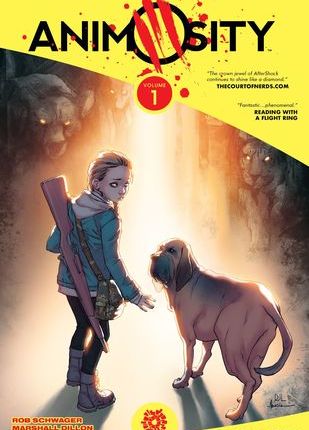
Animosity, Vol. 1: The Wake by Marguerite Bennett

Animosity, Vol. 1: The Wake by Marguerite Bennett

One day, animals obtained self awareness and the ability to speak. The world will never be the same.

They started thinking. They started talking. They started taking revenge.

There’s something profoundly disturbing when reading about animals embodying the worst of the human emotions. They’re angry, afraid, vengeful. Part of what draws humanity to the animals is that they’re not like that. They live in the moment. They operate from instinct. And the love they give is uncomplicated… the hate too.

Photo by Dominika Roseclay on Pexels.com

In Animosity, this paradigm is flipped on its head. Now animals can plan. They’re organized. They can make assumptions and mistakes.

When the animals changed, some pressing issues arose beyond the obvious problem of everybody hurting each other in the first panic and fear-filled moments following the change. How will the world feed itself? How will reproduction be controlled? Humanity had trouble providing for all even when not dealing with the quintillions of other lives on the planet.

And the love one dog has for his human can perhaps have some darkness in it that she doesn’t expect. There’s still loyalty. He’ll fight to protect her. But there’s some question to how much he’ll protect the rest of her family…

Photo by 42 North on Pexels.com

Animosity is a surprisingly deep graphic novel that makes the reader question the role of animals in our lives and how the world could be a very different place if everyone, literally all life, acted like humanity. And how that might be an awful development.

Here’s my review of another book that is set in the dystopian world of AnimosityAnimosity: Evolution, Vol. 1: Lex Animata by Marguerite Bennett

And thanks for reading!

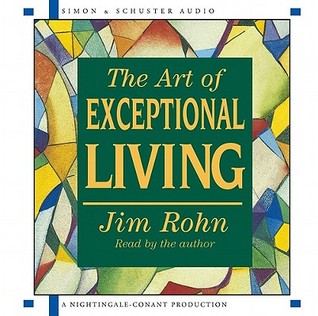
The Art of Exceptional Living by Jim Rohn

The Art of Exceptional Living by Jim Rohn

Nearly every house valued over $200,000 has a library in it. Now why do you think that is?

Jim Rohn, motivational speaker and business genius, was a kinder, gentler Tony Robbins. Originally from Iowa, he uses common sense and a storytelling style in an effort to encourage listeners to improve their lives. This audiobook presentation is a mix of live presentations and studio-recorded bits. Personally, I think he was better in front of a live audience, but there was plenty to take away from in both sections.

Photo by Ihsan Aditya on Pexels.com

Here’s some of what he shares in this audiobook:

Read, learn, journal. Write down what works and what doesn’t. Write down your goals and then take a minute to look at the passing days, weeks and months and see what you’ve accomplished.

Eat healthy and take that walk around the block. If you don’t, you may seriously regret it, maybe not today or tomorrow but in the years to come, you’ll wish you took a minute to invest in yourself.

Work hard at your job and you’ll make a living. Work hard on yourself and you’ll make a fortune!

Photo by Taryn Elliott on Pexels.com

Rohn insists that anyone can be exceptional. He says success in business (and life) comes from small positive steps taken consistently over time. That type of approach really works for most any goal or dream you may have.

Read contracts all the way through, every time. It seems like a simple thing, but it can take you down some dark roads if you don’t read the fine print. He learned that the hard way.

Don’t stop reading and be a lifetime learner. Stay curious. Stay involved.

And take pictures. Part of your legacy to the next generation can be the pictures and documentation you’ve made of your life.

Photo by Kaique Rocha on Pexels.com

I can’t tell you how many times I’ve listened to this audiobook. It’s one of my go-to programs when life has me down. Jim Rohn believed you can accomplish anything that you set your mind to do. He makes listeners believe that too. Highly recommended for anyone who wants to learn “the art of exceptional living.”

Thanks for reading!

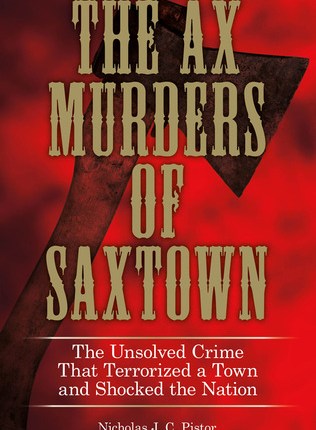
The Ax Murders of Saxtown by Nicholas Pistor

The Ax Murders of Saxtown by Nicholas Pistor

Full title: The Ax Murders of Saxtown: The Unsolved Crime That Terrorized a Town and Shocked the Nation

Imagine you’re a farmer in 1874. You live out in the middle of nowhere. There are no cars, electric lights… each night brings a blanket of silence to the world. Then, one fateful night, there’s a knock on the door. You answer it… and it’s an axe-swinging maniac!

Photo by Pixabay on Pexels.com

Sound like a cheesy horror film? For one farming family in Southern Illinois, that nightmarish scenario actually happened. A family of five, including two children, one a baby in her mother’s arms, were slaughtered in their home. It was called the most shocking crime since the murder of Abraham Lincoln and garnered national attention.

Nicholas Pistor examines original sources to share the story of the ax murders of Saxtown.

The grounds of the Stelzriede farm glowed with the orange light of oil lamps and handheld torches. A few hours had passed since the Stelzriede bodies had been discovered. The tough Saxtown farmers arrived one by one, and then in groups. … Many showed up on the property with their families. They were too afraid to leave them home alone. pg 44, ebook.

I would have been the same way. There had been extensive rains around the time of the murders and the roads in and out of town were nearly impassable. The residents of Saxtown believed the killer could still be among them. Eek.

Saxtown was a farming community where people primarily spoke German. Everybody knew everybody else and their business. The closest city, sheriff and bank were located in Belleville, almost nine miles north of Saxtown. At the time, they believed the motive for the killings was money. The Stelzriedes were known to loan out cash and it was thought that they kept a stash in their home.

Photo by Pixabay on Pexels.com

They also left a fairly large inheritance behind.

Pistor goes into how authorities conducted investigations during the late 1800’s. It made me wonder that they ever managed to solve anything. There were no forensics or sophisticated evidence gathering protocols.

Public awareness was important in solving crimes. An eyewitness could crack the case open before it began. Detective work relied heavily on what other people saw, a distinct challenge in the remote and lonely woods of Saxtown, where farms were spaced by miles and miles. pg 44, ebook

The saddest part of this non-fiction tale is, in my mind, how terribly this crime affected Saxtown. For decades, residents accused each other of the murders. There were lawsuits and whispers of restless ghosts on the Stelzriede property…

Photo by Skitterphoto on Pexels.com

If you’re looking for a true crime read, this is an interesting pick, plus you get to learn about a few other shocking crimes that took place in Southern Illinois and history.

And if someone knocks on my door tonight, I don’t think I’m going to answer it.

Thanks for reading!

Here’s an episode I wrote for The History Guy about the murders:

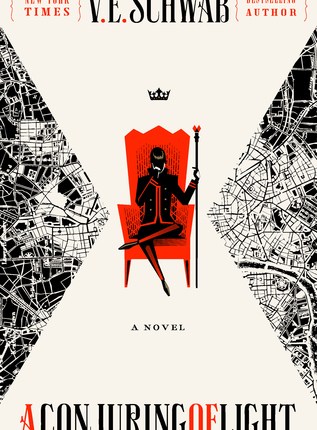
A Conjuring of Light (Shades of Magic #3) by V.E. Schwab

A Conjuring of Light (Shades of Magic #3) by V.E. Schwab

V.E. Schwab concludes her multi-world, dimension-traveling fantasy trilogy in A Conjuring of Light. And you know what, I liked it the best of the three.

He’d stood, half dead, before the onyx throne, and spoken to the king carved in stone, and traded freedom for a chance to save his London, to see it bloom again.” pg 10, ebook.

Photo by Mike on Pexels.com

I thought this plot flowed more smoothly, without the detours to introduce readers to new characters. We understood the magic, the dangers, the relationships between everyone. This was Schwab’s chance to just write a good story. I feel that she succeeded.

“Lila thought it would be easy or, at least, simple. Something you either survived, or did not. She was wrong.” pg 9, ebook.

He may not be everybody’s choice, but Holland was my favorite character in these books. Talk about born under an unlucky star… his world is dying, most of his life he spends under the compulsion of the Danes, and yet, he hasn’t been driven completely insane by the unfairness of all of it. And, unlike some characters I can mention (cough, Lila), he doesn’t kill without a reason.

I could not believe how many times Lila murdered people. And she was supposed to be one of the “good” characters. More like a loose canon. I never liked her much. Consider this Lila soliloquy:

“Because the shadows can’t touch me, and the fallen won’t. Because I’m good with magic, and better with a blade, and I’ve got more power in my blood than you’ve got in this whole damned palace. Because I’ve no qualms about killing, and on top of it all, I’ve got a knack for keeping your sons — both of them — alive.” pg 175

Photo by Engin Akyurt on Pexels.com

“No qualms about killing” isn’t a positive attribute in my book.

Kell still comes off as a bit one dimensional because of his god-like magical powers. But his motivations made more sense to me in this book than in previous ones.

“The flame hovered in the air between Kell’s hands, brilliant and white. He made it look so easy, and Rhy felt a flash of anger toward his brother, hot as a spark — but just as brief. It wasn’t Kell’s fault Rhy couldn’t do magic.” pg 21, ebook.

Rhy, on the other hand, makes a few decisions I couldn’t wrap my head around. I suppose you could put it down to rampaging emotions, but, in a crisis, he rarely seems to choose the right path.

Photo by u4e00 u5f90 on Pexels.com

Everything in Kell tightened at that. “I was out there trying to protect your people.” “And for every one you shielded, a dozen more were taken by the dark.” pg 82

Recommended for young adults. You may be able to read this book and understand it without slogging through the other two, but I think you’ll get more enjoyment out of it by taking the entire journey with the characters.

Here are my reviews of the other books in the series:

A Darker Shade of Magic by V.E. Schwab

A Gathering of Shadows (Shades of Magic, #2) by V.E. Schwab

And thanks for reading!

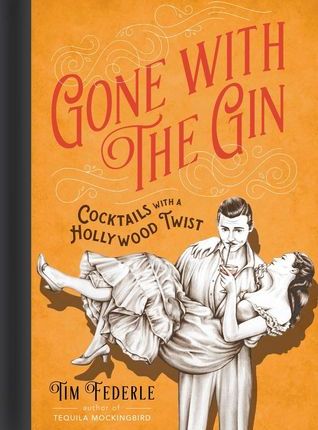
Gone with the Gin: Cocktails with a Hollywood Twist by Tim Federle

Gone with the Gin: Cocktails with a Hollywood Twist by Tim Federle

“Gone with the Gin” is an effervescent drink guide that pairs cleverly named potables with classic films. It’s a winner!

Last year (or was it the year before), I named Tequila Mockingbird: Cocktails with a Literary Twist, also by Tim Federle, as one of my favorite reads in my annual book review. It’s similar to Gone with the Gin, except that Tequila Mockingbird uses classic literary works instead of film.

Federle has a way with puns and summarizing complex plots in three sentences or less without devolving into the unbearably cheesy. My favorites from Gone with the Gininclude the “Ben-Hurricane” and “The Empire likes Jack”.

Photo by Anthony Shkraba on Pexels.com

And, like Tequila Mockingbird, I think I’m going to have to purchase a copy of this book to keep at the house. Like the majority of my reading material, I borrowed it from the library. But it’s going to be a sad day when I have to give it back…

Lest you think that Federle is a one-note author, please take a moment to consider another of his books: Life Is Like a Musical: How to Live, Love, and Lead Like a Star. It gives some hard-won lessons from Federle’s days dancing and singing his way across the stage. I enjoyed it too.

I think it’s fair to say that I highly recommend most anything Federle has written, so far. Keep ’em coming, Tim!

And thanks for reading!

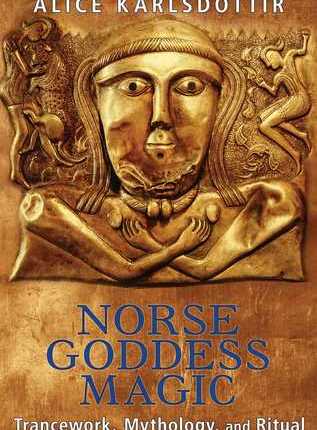
Norse Goddess Magic: Trancework, Mythology, and Ritual by Alice Karlsdóttir

Norse Goddess Magic: Trancework, Mythology, and Ritual by Alice Karlsdóttir

This is a new age, non-fiction book about trance work, which can loosely be described as deep meditation. I practice a type of meditation called “pathwalking” which is basically just another word for the same kind of practice. This book is about someone who focuses on the Norse religion exclusively.

I read Norse Goddess Magic not for the details about the Norse pantheon (which admittedly I know very little about, so it was very interesting and educational) but mainly for the author’s experience in trance work. To my disappointment, she spends pages and pages explaining what going into trance is, how she does it, and then only a few paragraphs in each chapter detailing an actual trance.

Photo by Lucian Potlog on Pexels.com

I wanted the book to be mainly trance work. That is what made it unique and original- her personal sojourns into “another world” and what she brought back. The rehashing of all of the old mythologies were, as I said, interesting, but if I wanted to read them, I could have picked up any book about Norse mythology.

I also felt like Alice spent a lot of time explaining why trance work is a valid method of information gathering and defending her opinion on why she believes that. I agreed with her completely so I just read through the pages thinking- preaching to choir, get to the trances! So, that was a frustration.

A part of the book that I disagreed with was Alice’s assertion that it is “difficult” to go into trance. In my experience, if you believe something is difficult to do be that hypnosis, meditation, whatever- you’re putting stumbling blocks on your path that don’t need to be there. Going into trance is as simple as watching your breath flow in and out. If you breathe, you can go into trance. I felt like she did a disservice to beginners with that particular teaching.

Photo by Daisa TJ on Pexels.com

I felt like Alice’s trances were so closely focused on one goddess or aspect of the goddess, that she didn’t really get all that she could out of her trance work or interactions in the other worlds. She read all of this information to prime her subconscious mind and then… it felt like not much happened.

To be fair, she did see the person she was looking for, describe their physical characteristics, express the emotion that they evoked in her, and then, maybe, have a brief interlude with them. In my personal trance work, there’s more interaction in the world itself but that could be the difference of our focus.

Alice said from the start that she wanted to know more about these different goddesses and form a working relationship with them whereas I’m just curious to see what’s out there. I’ve run into Roman gods and goddesses, Native American figures, Tibetian locations, some Egyptian and Hindu gods… but again, I’m not focused on one or another of the world religions. With an open mind, it’s incredible the types of things that you see.

Photo by carol wd on Pexels.com

So, I don’t believe in priming your mind with symbols before you do your work. Pick where you’re going or who you want to see, and just go. Personally, I use the symbols on the Tree of Life or tarot cards. Believe that you can do it. Figure out what works for you. And do it.

Then write it down so that I can read it. 🙂 Because I will.

Thanks for reading!

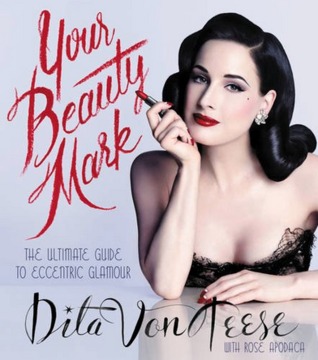
Your Beauty Mark: The Ultimate Guide to Eccentric Glamour by Dita Von Teese

Your Beauty Mark: The Ultimate Guide to Eccentric Glamour by Dita Von Teese

In life, there are fundamental skills a gal must master: Walk in heels. Poach an egg. Pen a thank you note. And, most absolutely, without a doubt, create a cat eye. pg 172

Your Beauty Mark by Dita Von Teese is the most inclusive guide to beauty I’ve ever had the chance to peruse. From make-up to perfume to grooming, she leaves no stone unturned in her quest for glamour.

Photo by Saeeed Karimi on Pexels.com

And she’s not afraid to share some secrets. If you read this book, you’ll have the rare privilege of viewing Ms. Von Teese sans her glamour. (Well, and clothes, as she includes some burlesque photos.) She tells about one Halloween when she dressed up as “the girl next door” and no one recognized her because her appearance has literally become her identity.

She also has separate entries by many of her cutting-edge fashion and beauty friends, sharing their lives, struggles and unique brands of beauty. In a world that sometimes tries to push everyone into cookie cutter molds of both appearance and behavior, it is a breath of fresh air. The history of beauty is sprinkled throughout and we learn about the origins of lipstick, heels and more.

Photo by Godisable Jacob on Pexels.com

This was a book I had to enjoy slowly, otherwise it had moments where I felt overwhelmed by the level of dedication Ms. Von Teese brings to her art, which is, beauty. She eats a certain way, walks a certain way, arranges her hair just so…

I enjoy dressing up, occasionally, as much as the next person, but I don’t think I’ll ever give up the level of comfort I’ve come to enjoy in my footwear. Or dedicate as much time to adorning my body as Ms. Von Teese does. But that being said, it’s fun to dream.

Everyone, male and female, will probably find something to enjoy in this book. They say beauty is in the eye of the beholder and Ms. Von Teese makes herself so easy to love.

Thanks for reading!