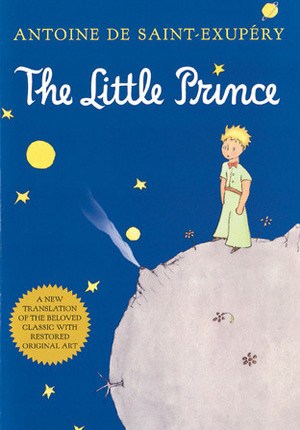
The Little Prince by Antoine de Saint-Exupéry

The Little Prince by Antoine de Saint-Exupéry

Similar to The AlchemistThe Little Prince is a metaphorical tale that people seem to love or not.

“In the face of an overpowering mystery, you don’t dare disobey. Absurd as it seemed, a thousand miles from all inhabited regions and in danger of death, I took a scrap of paper and a pen out of my pocket.” pg 4

Photo by Alex Andrews on Pexels.com

A pilot crashes in the desert and discovers a child wandering around who claims to be from another planet. His planet is so small that the prince can see multiple sunsets by simply moving his chair. And there’s a rose with four thorns that the prince loves. But he left this planet because of a disagreement with the rose. After a series of adventures where he meets dysfunctional adults on other planets, sees that his rose isn’t the only rose in the universe and learns about love from a fox, the prince decides he wants to go back home.

How he’s going to do that is not really clear.

So that’s the literal story.

The allegorical part has to do with how differently children perceive life than adults, what love is or means and how growing up, change or death affects love… among other things.

Here is my secret. It’s quite simple: One sees clearly only with the heart. Anything essential is invisible to the eyes.” pg 63
Photo by Jovana Nesic on Pexels.com

I felt like there were layers to this story that I haven’t grasped yet. I suppose this could also be about a man contemplating his inner child. Then again, I suppose this story could be about a lot of things.

This was the first time I’ve ever read it and, to my amusement, when I checked it out from the library, my 12-year-old said she has already read it. I asked her what she thought of it and she just shrugged her shoulders. I liked it more than a simple shoulder shrug, but, in conclusion, I think there was stuff I was missing.

This book has been adapted for the screen a couple times. One of the latest was in 2015.

Thanks for reading!

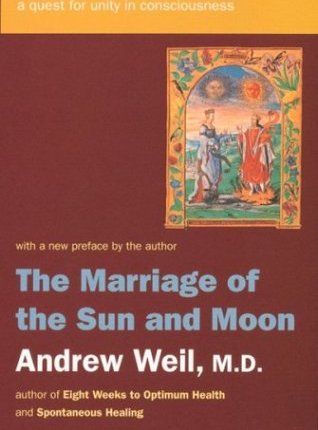
The Marriage of the Sun and Moon: A Quest for Unity in Consciousness by Andrew Weil

The Marriage of the Sun and Moon: A Quest for Unity in Consciousness by Andrew Weil

Andrew Weil travels around the world taking conscious-altering drugs or participating in mind-altering experiences (like a solar eclipse) to see what happens.

And to think, I assumed this book would be about meditation. 🙂

I recently read Weil’s Breathing: The Master Key to Self Healing and I really liked the way he presented Eastern teachings and techniques for a Western audience. I also like his mind-set, that practical knowledge is better than mere theory.

“I must emphasize at the outset my prejudice that the experience of an altered state of consciousness is intrinsically more valuable than any amount of theorizing about it, unless the theory helps individuals to make more and better use of the states available to them.” pg 241

Andrew Weil
Photo by Pixabay on Pexels.com

Similar to Tim Ferriss (the self help/improvement guru who brought us such works as The 4-Hour Body: An Uncommon Guide to Rapid Fat-Loss, Incredible Sex, and Becoming Superhuman), Weil is focused on collecting actual experiences and he uses his own body and mind as a test subject.

This book is a collection of newsletters that Weil wrote for the Institute of Current World Affairs. They offered him a fellowship after the publication of his book The Natural Mind: A Revolutionary Approach to the Drug Problem, to further test his theories about consciousness in the real world. I think his results are fascinating.

All of the chapters converge toward the idea of unifying consciousness. pg 5

Photo by Jonas Ferlin on Pexels.com

The dual consciousness Weil is talking about is the active mind, represented in ancient alchemy by the sun, and the subconscious mind, represented by the moon. Within each of us, both minds operate more or less in balance. Though many of his studies involve the conscious use of drugs to achieve that balance, Weil promotes natural methods above all else. He believes that though drugs may be used ritualistically and responsibly, that any state they reveal was already a latent potential in the mind.

Basically, you can get there without the drug.

The highs of altered states of consciousness such as those of trance and meditation are similarly related to the focusing of awareness. When we learn to bring about this kind of concentration at will, we can be independent of external triggers for highs, whether drugs, sex or mangoes. pg 26

Yes, according to Weil, mangoes, the fruit, have been used by mystics for millennia to unify the conscious and subconscious minds through a type of ecstasy of the mouth. Who knew?

Weil exposes himself some far out stuff. He has three different chapters about his experiences with mushrooms.

“In other words, there is no line between poisonous and psychedelic mushrooms. Mushrooms are a pharmacological continuum, from the white cultivated variety that has no action as a drug to species like the Death Cup that can easily kill. If one likes to get high by eating mushrooms, he can choose species over a wide range of toxicity.” pg 47

Photo by Pixabay on Pexels.com

In addition to all kinds of drugs, there’s consciousness altering through purposeful vomiting in Mexico, chili eating, personally observing Uri Geller doing his metal-bending thing and more.

This book is perfect for readers who are interested in varying states of consciousness but, for whatever reason, aren’t able to make the trips or take the risks themselves. And there are risks because not everything that Weil tries is safe. At one point, he’s riding waves of nausea in the rain in the middle of the jungle while his friend vomits again and again an arm’s length away and there’s nothing he can do about it. Certainly doesn’t sound like something I’d want to attempt.

Though these newsletters were written in the ’70s and this book was published in 1980, I feel that it still has applicable uses for today. Just look at all of the states that are legalizing marijuana (and our Canadian friends!). Questions about altered states of consciousness and addiction are going to crop up that society, after decades of avoidance, is going to have to answer.

“Sooner or later we will learn that plants with effects on the body and mind, such as marijuana, are what we make of them. Used intelligently and carefully they can help us. Used irresponsibly they can harm us.” pg 98

Good thing we have trailblazers like Weil showing us a middle way.

Thanks for reading!

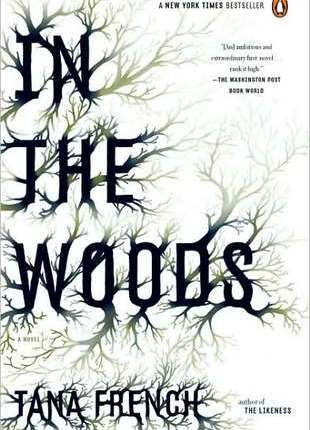
In the Woods (Dublin Murder Squad, #1) by Tana French

In the Woods (Dublin Murder Squad, #1) by Tana French

“They are running into legend, into sleepover stories and nightmares parents never hear. Down the faint lost paths you would never find alone, skidding round the tumbled stone walls, they stream calls and shoelaces behind them like comet-trails.” pg 14, ebook.

Rob Ryan is a detective in the Dublin Murder Squad. He has a curious past, being the only survivor of a strange afternoon in the woods. Rob and two of his friends went into the woods, but only he emerged. His memories of that time are a blank. It may be that his subconscious prefers it that way.

“Obviously, I have always wished I could remember what happened in that wood. The very few people who know about the whole Knocknaree thing invariably suggest, sooner or later, that I should try hypnotic regression… I worry that I might come out of hypnosis with that sugar-high glaze of self-satisfied enlightenment, like a seventeen-year-old who’s just discovered Kerouac, and start proselytizing strangers in pubs.” pg 35, ebook

Photo by Darius Krause on Pexels.com

Fast forward twenty years, a child’s body is found in the same town, Knocknaree, where Rob lived when he was a child. Could the two cases be related?

“This is what I read in the file, the day after I made detective. I will come back to this story again and again, in any number of different ways. A poor thing, possibly, but mine own: this is the only story in the world that nobody but me will ever be able to tell.” pg 15, ebook

I loved the unfolding of both of these stories. Tana French was able to build tension through the slow reveal and she kept me guessing. Rob was the quintessential unreliable narrator and likable (for the most part). He made some bone-headed decisions that I didn’t agree with, but the reader always knew why he was making them.

Rob’s partner, Cassie, was my favorite character in the story. She’s the only woman on the Dublin Murder Squad and loyal to a fault. Cassie also has some dark secrets in her past. She and Rob complement each other perfectly.

Photo by eberhard grossgasteiger on Pexels.com

“When we went into work the next morning we were friends. It really as simple as that: we planted seeds without thinking, and woke up to our own private beanstalk.” pg 30, ebook

I also loved the layers of this story. There’s the relationship between Cassie and Rob, their relationship to the rest of the squad, Rob’s memories, Cassie’s backstory, the two cases, and the reactions of everyone around them.

“Now death is un-cool, old-fashioned. To my mind the defining characteristic of our era is spin, everything tailored to vanishing point by market research, brands and bands manufactured to precise specifications; we are so used to things transmuting into whatever we would like them to be that it comes as a profound outrage to encounter death, stubbornly unspinnable, only and immutably itself.” pg 57, ebook

Photo by Stephan Mu00fcller on Pexels.com

Recommended for readers who enjoy mysteries and not-so-scary thrillers. I’m definitely picking up the next book in this series.

For any readers who enjoy page to screen viewing, the show adaptation of this book and its sequel called “Dublin Murders” was pretty well done.

Thanks for reading!

Three Years with Quantrell: A True Story Told By His Scout by John McCorkle, O. S. Barton

Three Years with Quantrell: A True Story Told By His Scout by John McCorkle, O. S. Barton

In Three Years of Quantrell, John McCorkle recounts riding as an irregular with William Quantrell and how they fought against the Federals in Missouri and Kansas during the American Civil War.

It is a sobering look at how war is hell. McCorkle never knew who he could trust and who he couldn’t. During the infamous raid at Lawrence, Kansas, McCorkle says that some good men may have died in the raid, “but that wasn’t our intent.”

Photo by Rodolfo Quiru00f3s on Pexels.com

It’s hard to imagine what a country at odds with itself must have been like. People would take advantage of each other, steal property, and even the lives of their neighbors.

My one quibble with this memoir is it contains a lot of travel. It feels like McCorkle said we went here, then here, then here… as he goes through his memories of the war. There’s plenty of “hours of boredom punctuated by moments of terror.”

Recommended for history readers who want an original source for research about the American Civil War.

Thanks for reading!

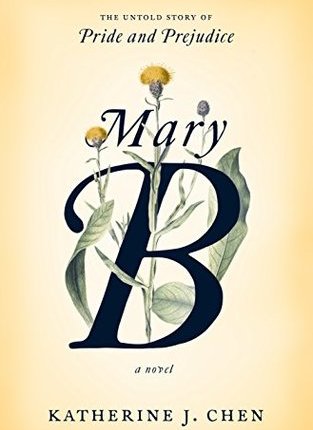
Mary B: An Untold Story of Pride and Prejudice by Katherine J. Chen

Mary B: An Untold Story of Pride and Prejudice by Katherine J. Chen

Mary B is a retelling of Pride and Prejudice (before and after the original story) from Mary Bennet’s point of view. It is well written and unique… and probably will be hated by any serious “Austenites”.

Katherine Chen takes major characters and adds to their stories in ways that were difficult to swallow. In that way, it reminded me of Longbourn. And I’m not even what you would call an Austenite.

“It was therefore acknowledged, long before my younger sisters and I had any say in the matter, that beauty, goodness, and intelligence had disproportionately concentrated themselves in the two eldest and gone woefully amiss the three following; namely, that I had been touched with a plainness in appearance unrivaled throughout the whole country…” pgs 3-4

Photo by Anete Lusina on Pexels.com

Mary Bennet is the forgotten middle child of the Bennet family. Her two older sisters, Jane and Elizabeth, are the main focus of Pride and Prejudice and her younger two sisters, Kitty and Lydia, create scandal and mayhem almost wherever they go.

Mary just wants to play piano and relax quietly with her own thoughts. She doesn’t get to do that often between her sisters and her ever-worrying mother.

“I wonder sometimes that Mary is so plain and what, in consequence, will become of her!” pg 12

Readers can empathize with her love of books and writing. But Mary has also weaponized these things, using them to keep the world that has rejected her at arm’s length, so that it cannot hurt her even more. Or so she thinks.

… the act of reading is a silent rebellion. To read in the presence of company is a most convenient excuse for not partaking in conversation. The book is a better tool than the piano in this regard. pg 21

Photo by Daria Shevtsova on Pexels.com

In addition to an excuse not to mingle, Mary uses reading to escape her carefully restricted world and its expectations of beauty, wit and submissiveness.

“But there is pleasure, is there not, Mr. Collins, unrivaled by any other feeling in the world, to reach the last page of a book and know that you have lived in it, that you have stood witness to the performance of momentous deeds at the hands of extraordinary personalities?” pg 33

Most of Mary B is actually rather sad. Because of her looks and circumstances, Mary has very little say in what happens to her or what goes on around her. In small ways, she pushes back. This book has made me appreciate, as a modern woman, how much gender equality has advanced.

Not that everything is perfect. But at least I can own property now, hold a job and make decisions that affect my own life.

“So you see, dear cousin, the lesson to be learned from this is that one should never settle in life for what others may think is best and right for you. There is always the larger and more delicious fruit hanging from a higher branch, just out of your grasp, and which might easily be yours, if someone would only lend you the ladder to reach it.” pgs 66-67

Photo by Khimish Sharma on Pexels.com

Surprisingly, I found myself feeling some pity for the generally despised Mr. Collins. But the way Chen alters the fate of Mr. Darcy was not my favorite change. The ending of this book, in fact, was what lessened my enjoyment of it.

Prior to the ending, I was thinking highly of the book. It finally gives Mary Bennet a story and a moment in the limelight. I think she deserves that considering the way she was treated, or almost completely ignored, in the other story.

“The fewer Mary Bennets there are in the world, the better. They add no beauty to their surroundings and will all grow up to be ugly old maids, living on the charity of their families.” pg 71

Recommended for readers who like books that are written in the style of Jane Austen and who can also bear new major story arcs to beloved characters. They may not be so beloved after this book.

Thanks for reading!

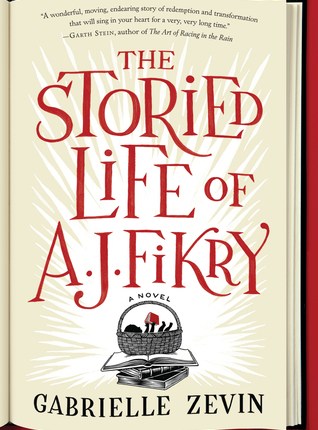
The Storied Life of A.J. Fikry by Gabrielle Zevin

The Storied Life of A.J. Fikry by Gabrielle Zevin

“The Storied Life of A.J. Fikry” is a contemporary fictional story about a book shop owner and how he handles the unexpected twists and turns that life has in store for him. If you are a reader who enjoys mulling over and applying what you read to your real life, you may really like this book. The main characters are all about that — learning lessons from books.

“Her mother likes to say that novels have ruined Amelia for real men. This observation insults Amelia because it implies that she only reads books with classically romantic heroes. She does not mind the occasional novel with a romantic hero but her reading tastes are far more varied than that.” pg 12, ebook.

Photo by cottonbro on Pexels.com

There’s some romance, some mystery, some heart break in this tale. There’s also fantastic book analysis of classic works written by the character A.J. Fikry that add dimension to the story as it unfolds. It is through these mini book reviews (and his actions) that the reader gets to know A.J., who is otherwise a rather introverted and sometimes curmudgeonly character.

“Despite the fact that he loves books and owns a bookstore, A.J. does not particularly care for writers. He finds them to be unkempt, narcissistic, silly and generally unpleasant people. He tries to avoid meeting the ones who’ve written books he loves for fear that they will ruin their books for him.” pg 39, ebook.

But he’s not unpleasant to the extent that I didn’t like him. In fact, A.J. was my favorite character. I felt like he lashed out at people or kept them at a distance because he was hurting. I think at one point or another in our lives, we’ve all been there.

“So it’s basically like a book party.” “Yeah, sure.” Lambiase has never been to a book party. “I hate book parties,” A.J. says. “But you run the bookstore,” Lambiase says. “It’s a problem,” A.J. admits. pgs 74-75, ebook

Photo by Nubia Navarro (nubikini) on Pexels.com

There’s plenty of relate-able moments in The Storied Life of A.J. Fikry. The characters feel real with all of their imperfections and dreams.

The thing is, though, sometimes people tell you you’re on one kind of trip, but it turns out to be another kind of trip, you know what I mean? I just want to know what kind of trip I’m on. Are we going to see topiaries, or are we going to see something else? Maybe that lady friend of yours, say? pg 118, ebook.

The trip this story takes you on is unexpected, very much like life. Who know where we’re all headed and what we’re going to do along the way. But, at the very least, I hope we all get to read as much enjoyable fiction as we want to before the trip ends.

Recommended for readers who enjoy contemporary fiction and book clubs.

Have you heard they’re making this into a film?

Thanks for reading!

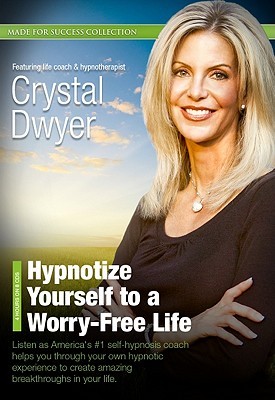
Hypnotize Yourself to a Worry-Free Life by Crystal Dwyer

Hypnotize Yourself to a Worry-Free Life by Crystal Dwyer

Crystal Dwyer, a new age instructor, has developed a set of guided meditations to enable listeners to improve their lives in a variety of ways. These tracks address issues from insomnia to anxiety. She has a pleasant voice and the meditations are enjoyable.

If you’re not into new age themes, you may want to try another hypnosis program. At the beginning of the audiobook, Dwyer is straight forward with her beliefs about God being within each of us and our individual power as creators. I could see that being problematic with those who don’t connect with those teachings.

Photo by Pavel Danilyuk on Pexels.com

I feel that the title of this work is a bit misleading. There are going to be ups and downs in any life. To suggest that you can eliminate anything seems suspect and sort of pie-in-the-sky. It reminds me of books that tout “read this and lose ten pounds in three weeks” and things of that nature. These meditations are valuable enough without the publisher (or author) making promises that perhaps they can’t keep.

That being said, I don’t think many people know what hypnosis is. In my experience, hypnosis, similar to a trance-state, just feels like deep relaxation. Everyone is different, but when I’m under, my body feels heavy but light, which seems impossible. My limbs sort of disappear and I feel as if I’m floating.

Once I’m there, in that relaxed state, then I let the meditation I’m listening to just wash over me. It feels really good actually. Generally, at the end, the hypnotist will say something like, “You’re coming back and you’ll feel entirely refreshed.” And, wouldn’t you know it, I do.

I think popular culture hasn’t done hypnosis any favors with people’s expectations about how it works. (The film “Office Space” comes to mind.) You don’t turn into some suggest-able zombie person when you’re under. Like most things, hypnosis and relaxation are a choice. Worry is a choice. It’s all about controlling that inner narrative and changing your inner thought processes to ones that are pleasing to you.

Photo by Maria Orlova on Pexels.com

A child once asked me to teach her about hypnosis so she could “control her brother”, which cracked me up. But then I explained to her that hypnosis isn’t a tool for controlling other people. The name of the game is improving and controlling yourself.

It’s like Marcus Aurelius said: “You have power over your mind – not outside events. Realize this, and you will find strength.”

Recommended for seekers looking for another tool to help them on their path to self knowledge.

Thanks for reading!

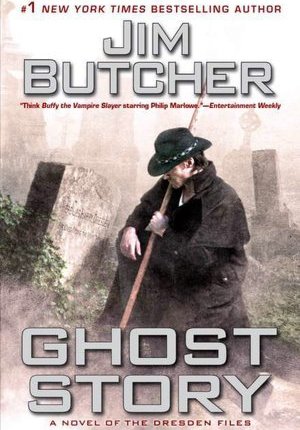
Ghost Story (The Dresden Files, #13) by Jim Butcher

Ghost Story (The Dresden Files, #13) by Jim Butcher

Harry Dresden, wizard for hire, is dead. And he still has to save the world by discovering his killer. How is that fair?

Maybe I was dead, but I was sure as hell not ready to go. I had to make sure the people who’d helped me take on the Red King were taken care of. pgs 32-33

Photo by Chris J Mitchell on Pexels.com

He quickly discovers that magic and dead people don’t mix. Now, instead of taking on god-like enemies with the backing of the Winter Queen, he can’t even pass through thresholds without permission.

It’s frustrating for both Harry and the reader. I didn’t realize how much I enjoyed reading about Harry blowing stuff up until he couldn’t do it anymore.

One of the things a lot of people don’t understand about magic is that the rules of how it works aren’t hard-and-fast; they’re fluid, changing with time, with the seasons, with location, and with the intent of a practitioner. pg 179. And if you’re alive or dead.

We spend a lot of time in Harry’s mind and memory in Ghost Story and less time in action. Frankly, it’s not as much fun as the other books in the series.

“You have entered a new world. Your old life is no more. You cannot be a part of it any longer. The wide universe stretches before you.” pg 185

Photo by Maria Orlova on Pexels.com

I also didn’t realize how much I enjoyed the give-and-take of the characters in this series until the main character couldn’t interact with most of them anymore.

Ghosts who weren’t supermighty manifested all the time. It wasn’t a question of raw power, and it never had been — it was a matter of desire. You just had to be crazy enough to make it happen.” pg 550

That being said, the ending of this book was strangely satisfying. And I cried at the part with Mouse. Overall, I’m glad I read it, but I’m not of the opinion that it was the best in the series.

Photo by Pedro Figueras on Pexels.com

I would have already started on the next book but there’s a wait list for the digital copy. Library user problems, sigh.

Thanks for reading!

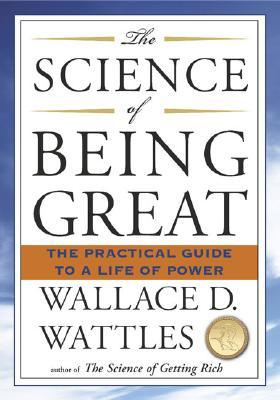
The Science of Being Great: The Practical Guide to a Life of Power by Wallace D. Wattles

The Science of Being Great: The Practical Guide to a Life of Power by Wallace D. Wattles

In the latest installment of “Heidi re-listens to all the old audiobooks on her hard drive”, I gave The Science of Being Great another chance to share its wisdom with me.

Couched in religious language, Wallace Wattles shares his new age viewpoint long before modern audiences became enamored of it with the mammoth success of The Secret. In fact, that’s how the publisher marketed this older manuscript, as source material for The Secret.

Photo by Maria Orlova on Pexels.com

I suppose it could be considered “source material” in that Wattles teaches enlightenment is to be found within. But he has very little in it about the guiding power of emotions, which was a cornerstone of The Secret. Wattles book is more along the lines of: You are a god walking among gods and should act accordingly. And don’t stick your nose into other people’s business.

Some of his advice is more tricky, such as: see the world in a perfect state of becoming. Nothing has gone wrong or could go wrong. Everyone and everything is perfect for where they are and everything has the chance to get better.

That’s hard stuff to swallow if you take a second to think about it. “The world is in a perfect state of becoming.” Maybe I’ve become too accustomed to looking for problems rather than relying on faith that everything is working out how its supposed to.

Photo by Pixabay on Pexels.com

Other parts of this book sounded similar to more modern new age authors with these ideas: Books and people will be drawn to you when you need them. Go where your inner feelings tell you to go. As you think, so you will become. Thoughts are things, etc.

By comparing and contrasting this book with other authors, I’m not intending to denigrate those teachings. I wouldn’t want to dismiss the power of the mind and emotions. Using just those things, people can certainly change their lives.

It’s just that the way they are packaged in The Science of Being Great may make it difficult for some readers to absorb it. Take the word “God” for example or “the Father”. Wattles throws those two around in every other sentence or so. That could be problematic for people who have struggled with religion or have involving it. Or those who don’t believe religion and science can mix.

Photo by Flickr on Pexels.com

And the whole book takes itself so seriously. Even the title “The Science of Being Great”, reminds me of an encyclopedia entry or something. I’ve had the most success in my own personal life when I’ve lightened up and stopped making such a big deal out of things.

In conclusion, is there helpful information in this book? Yes. Would I recommend taking the time to go through it to find those gems? It depends on how you learn best, I guess. Personally, I’d recommend Esther Hicks if you want the same sort of new age teachings with less religious trappings and a bigger dose of fun.

Thanks for reading!