The Midnight Assassin: Panic, Scandal, and the Hunt for America’s First Serial Killer by Skip Hollandsworth

The Midnight Assassin: Panic, Scandal, and the Hunt for America’s First Serial Killer by Skip Hollandsworth

A fascinating, non-fiction examination of what may have been the first serial killer in the United States. “The Midnight Assassin” or “Servant Girl Annihilator” terrorized Austin, Texas, for about a year before disappearing. Then, when Jack the Ripper began running around London, some in Texas theorized that their killer had crossed the ocean.

The scariest part, like Jack the Ripper, is that this person was never caught or identified.

“Several journalists proclaimed in their articles that the murders were nothing less than an Edgar Allan Poe tale of terror come to life. One reporter nicknamed the killer “the Midnight Assassin… who strides at will over Austin’s sacred soil.” pg 4

Photo by Yigithan Bal on Pexels.com

Skip Hollandsworth uses newspaper articles and period pictures to make these historical events come to life. It is a story that you almost can’t believe. You can feel the citizen’s terror as the murders increase and no one is found.

“A woman has been chopped to pieces!” Wilkie yelled. “It’s Mrs. Hancock! On Water Street!” pg 139

This was before investigations were conducting using forensic evidence or even finger prints. It is interesting to see how authorities looked for the killer.

“… the idea that Jack the Ripper was a Texan made for sensational copy, and soon the newspapers in England were in on the frenzy. “A Texas Parallel!” cried the Woodford Times of Essex. “The monster has quitted Texas and come to London!” trumpeted the London Daily News…” pg 234

It is also a glimpse into the shadowy part of the human soul.

“I do not believe any man figures into the world’s history with such a terrible and horrifying distinction from the rest of humanity,” the reporter declared. “He may well give to history a new story of crime — the first instance of a man who killed in order to gratify his passion.” pg 173

Photo by Matthew T Rader on Pexels.com

The Midnight Assassin is a story of forgotten history that most of the world no longer remembers. The murderer’s name has now become a fairy tale to scare children…

“But people in Austin hadn’t forgotten about him — not completely. Children had devised their own nickname for the Midnight Assassin: they called him the “Axe Man.” They raced for their homes as the sun was setting, shouting to one another that the Axe Man was hiding in the shadows just beyond the light of the moonlight towers, waiting for them to come close so he could grab them.” pg 255

Recommended for readers of true crime and thrilling history.

Thanks for reading!

Here’s The History Guy episode I wrote about the ‘Midnight Assassin’ also known as ‘The Servant Girl Annihilator’:

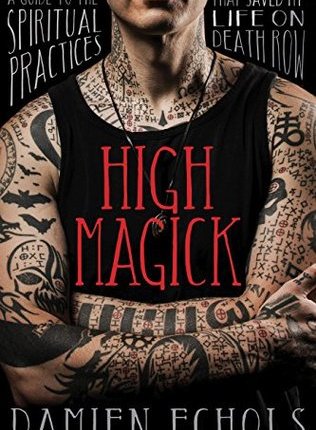
High Magick: A Guide to the Spiritual Practices That Saved My Life on Death Row by Damien Echols

High Magick: A Guide to the Spiritual Practices That Saved My Life on Death Row by Damien Echols

“Magick was out there in the world, and I could learn and practice it! That realization was like a bomb going off inside me. From that moment on, I pursued magick as if my life depended on it (and, in fact, later it did).” pg 11, ebook.

Damien Echols has penned a part-memoir/part-magic primer and, I believe, established himself as a new major voice in the Western Golden Dawn tradition. Many are familiar with Echols’ life. He was sentenced to die for a crime he didn’t commit. In High Magick, Echols shares the meditations and practices he used to keep his sanity and advance his spiritual development while behind bars.

Photo by RODNAE Productions on Pexels.com

It is a powerful book, not just because it is written in simple language and easy to understand, but because Echols is living proof that these techniques worked for him.

“Magick was the only thing in prison that gave my life purpose and kept me sane. Magick was the only thing I had to protect myself with. And that’s what this book is about — the practices that kept me alive for nearly two decades on death row.” pg 12

He shares some of the most basic practices like the Middle Pillar and Lesser Banishing Ritual of the Pentagram and, beyond the simple instructions of it, he gives the theory behind them. That’s helpful. Most of these kinds of books I’ve read don’t bother to go into the why’s. They’re too obsessed with the “how”.

“Every person on this earth is born with an entire universe of potential in them. Most people never cultivate the seeds of that potential, so the seeds go to waste and the people go through life wondering what went wrong, or blaming the world for everything that did go wrong. Magick waters those seeds to make that potential stir, grow, and flower.” pg 16, ebook.

Photo by Any Lane on Pexels.com

Echols avoids most “loaded” terms with an eye on appealing to every manner of reader. For example, he uses the term “energy” to describe the force behind the rituals he’s describing. I’ve heard it called many things and that particular word is a good one, I think.

He makes no unfounded promises. He simply offers a way to experience something that worked for him.

“Magick is both an art and a science. Some techniques are known for providing specific effects, but results vary, as they say.” pg 21, ebook.

An interesting side story: One of the librarians at my local library said “these types of books” (spiritual, nature-based, or “magic”) have been in high demand lately. She said there’s something of a renaissance going on in those who come to the library. They’re looking for something. It’s unique to each person, but she said libraries are purchasing more and more of this type of book in an effort to fill that need.

Photo by Matheus Bertelli on Pexels.com

“My grandfather used to say, “There’s more than one way to skin a cat.” I think most of you are familiar with the phrase, or at least an axiom with a similar message. It’s a curious way to remind ourselves that there’s more than one path to a particular destination…” pg 112, ebook

If you’re a reader looking for “this type of book”, I hope you find the right fit for you. Echols’ book should appeal to those looking for an introduction to the western occult tradition or simply the curious.

Thanks for reading!

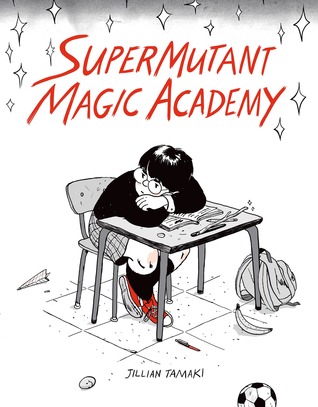
SuperMutant Magic Academy by Jillian Tamaki

SuperMutant Magic Academy by Jillian Tamaki

At the SuperMutant Magic Academy, strange things happen and everyone looks different, but teenage angst and questions about reality remain the same. There is unrequited love, hormones run amok and popularity problems. There is a young man who can’t seem to die, no matter how he tries to end his life. There’s an artist who puts herself into shocking situations to underline the pointlessness of reality.

There’s a young woman with the head of a lizard who just wants to find a boyfriend and a beautiful girl with ears like a fox who occasionally has to change into a fox and hunt prey. There’s drugs and alcohol and a host of other issues, while the poor teachers are simply trying to educate the group.

Photo by fauxels on Pexels.com

I didn’t connect well with this graphic novel and question its appropriateness for the younger end of the young adult scale. Older or more mature teens should be ok. There’s moments that make light of self harm without, what I think, is the appropriate context. There’s some sexual content that may be incredibly confusing and inappropriate for 11 and 12 year olds.

When I borrowed this from the library, I was under the impression that I could share this book with my child. After reading it, I realized I was wrong. That may have affected my opinions of SuperMutant Magic Academy. If I had just read it for enjoyment’s sake, maybe I would have thought more of its content.

Or maybe not. Jillian Tamaki gives herself, usually, just six panels to create a narrative and it isn’t enough. The jarring moments of reality left me with more questions than answers. I wanted more of a story and never really got that.

Photo by Thiago Matos on Pexels.com

It made me think maybe I was missing out on something. If this is based off of a web comic, maybe I would have enjoyed it more if I had read it in its original medium.

Thanks for reading!

Barracoon: The Story of the Last “Black Cargo” by Zora Neale Hurston

Barracoon: The Story of the Last “Black Cargo” by Zora Neale Hurston

Zora Neale Hurston interviewed Oluale Kossola before he died in the 1930’s to create this first-person narrative by one of the last people to be transported to the United States through the middle passage. It is interesting in that, among the existing records of that period in time, it is written from the perspective of someone who lived slavery rather than perpetuated it. It wasn’t written with an agenda. It is a record of a history.

It is a story of a culture and a life lived far from home and family because of human greed.

“I hailed him by his African name as I walked up the steps to his porch, and he looked up into my face as I stood in the door in surprise.” pg 17

Photo by Johannes Plenio on Pexels.com

Hurston records Kossola’s responses to her questions phonetically, which makes you feel like you’re sitting there with her, listening to the remembrances of Kossola as he says them.

In the introduction by Deborah G. Plant, she captures this feeling: “The narrative space she creates for Kossula’s unburdening is sacred. Rather than insert herself into the narrative as the learned and probing cultural anthropologist, the investigating ethnographer, or the authorial writer, Zora Neale Hurston, in her still listening, assumes the office of a priest.” pg xxv

I think, as someone looking back, it’s important to understand the transportation of slaves into the U.S. was made illegal in 1808, fifty years before Kossula was taken from his home. It’s a piece of American history that has been almost entirely forgotten.

“Of the thousands of Africans smuggled into American after 1808, only one man was held accountable and hanged, and even he died proclaiming his innocence.” pg 132

Photo by GEORGE DESIPRIS on Pexels.com

In Barracoon, not only are we given the story of Kossula’s transportation in life in the U.S., but also, he shares fascinating details of his life in Africa. There’s information about the justice system, social structure, rites of initiation and more.

In addition to his life story, Kossula shares fables he created to share his feeling of loss about his family as he outlived all of his children and wife. I enjoyed this folk lore part of the book the most.

There’s some controversy surrounding this book. Apparently, Hurston published a magazine article about Kossula early in the last century and was accused by later scholars of plagiarism.

“Of the sixty-seven paragraphs in Hurston’s essay,” Hemenway relates, “only eighteen are exclusively her own prose.” pg 120

Photo by Pixabay on Pexels.com

The text in question is Emma Langdon Roche’s Historic Sketches of the South, that was published in 1917. The full text is available from the U.S. Library of Congress and can be accessed online. That’s how I read it and was able to see some of the similarities in the writing.

However, the interview portions of this book, written in Kossola’s distinctive style of speaking, are entirely unique. As the editor of this book points out, Hurston was never accused of plagiarism in her works after writing about Kossola and it was very early in her career. We all make mistakes.

Recommended for any readers interested in history. Barracoon is a treasure.

Thanks for reading!

Here’s the History Guy episode I wrote about Oluale Kossola:

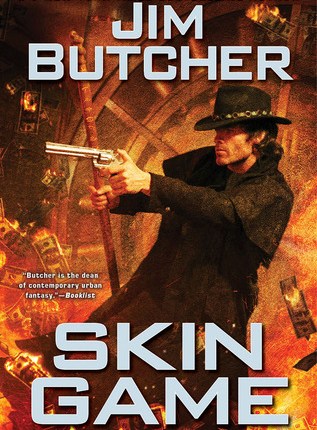
Skin Game (The Dresden Files, #15) by Jim Butcher

Skin Game (The Dresden Files, #15) by Jim Butcher

Harry Dresden, wizard-for-hire and Winter Knight, joins a group of unsavory characters to pay off a debt owed by Mab and to steal something incredibly valuable from a god. And he thought he had bad days before this. At least he still has a way with words.

“… Nicodemus is a murderous murdering murderer,” I said. “And if he’s picking a crew, they’re going to be just as bad.” pg 26, ebook

Photo by Aidan Roof on Pexels.com

Is there anyone he can trust? Can he even trust himself with the strange “parasite”-thing growing in his head?

“Sometimes when you find yourself alone, for whatever reason, you review every little thing you know about someone, searching your memory for small, subtle things that you may have missed about them.”pg 10, ebook.

Any guesses on what they’re going to be stealing?

“My sources say he’s the collector of the supernatural world. He’s famous for it. Art, treasure, gems, jewels, antiques, you name.” pg 37, ebook.

Photo by Suzy Hazelwood on Pexels.com

Skin Game is a clever mix of heist and The Dresden Files. I thoroughly enjoyed it. And now my heart is broken because the next book isn’t written yet.

We were finally getting somewhere with Harry’s relationships with his friends and a certain someone in particular. (No spoilers!) Harry was learning how to juggle his “mantle of power”. Molly was coming into her own unique situation.

We’ve learned about angels, demons, fairies, pixies, gods and more in this series. I’ve really come to enjoy the world and the strange things that happen in it. I love the shifting balance of power and how when Harry’s up, he’s really up. And when he’s down… well…

“And since when had I become the guy that things happened to ten years ago?” pg 49, ebook.

Photo by Maria Orlova on Pexels.com

I think all of the readers are wondering that too. Not that we’re complaining because this series seems to have such staying power. I really wish it would keep going for awhile longer, just spit-balling here, how about another 15 books? 🙂 Or, at least, perhaps we could tie up the loose ends.

“I know that things happen to people,” he said. “And maybe you’ve got excellent and real reasons for doing what you’ve done. But… at the end of the day, there’s just no replacement for being here.” pg 84, ebook.

I like being in this world and I think plenty of other readers do too. Jim Butcher, give the people what they want. Write, please. Write now!

Thanks for reading.

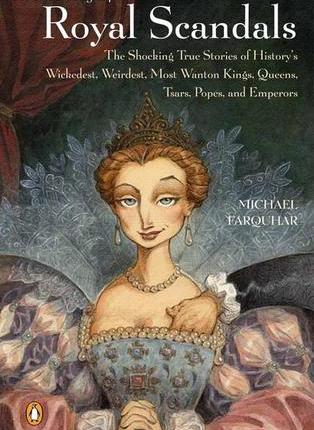
A Treasury of Royal Scandals: The Shocking True Stories of History’s Wickedest, Weirdest, Most Wanton Kings, Queens, Tsars, Popes, and Emperors by Michael Farquhar

A Treasury of Royal Scandals: The Shocking True Stories of History’s Wickedest, Weirdest, Most Wanton Kings, Queens, Tsars, Popes, and Emperors by Michael Farquhar

Michael Farquhar takes readers through different time periods and countries to remember some of the most scandalous royal persons who have ever lived.

All of the stories showcase the rich assortment of scandals that once flourished across Europe. And, thanks to the generations of royals who unwittingly created them, they remain immensely entertaining. pg 11, ebook.

Photo by Romu00e9o on Pexels.com

There is a rich assortment indeed. Almost any kind of depravity can be found in these pages. But the most shocking of the lot, in my mind, were the Roman emperors or the medieval Popes.

I guess those stuck with me the most because the emperors were stunning in how far they would go into their own personal madness, whatever that happened to be. And the Popes because, frankly, you’d think they’d know better.

For example, Tiberius, a Roman emperor, when he wasn’t raping young people on the island where he built a castle expressly for that purpose, he was torturing and killing anybody he felt like.

To Tiberius, death was a relatively light punishment. What he really enjoyed was the slow process of getting there. pg 184 Yikes.

Photo by Pixabay on Pexels.com

As for the Popes, in a cast of colorful characters, the one I remember the most was Benedict Gaetani or Pope Boniface VIII. Not necessarily because of how awful he was, but because how he was so determined to be Pope. Gaetani thought he should hold the office even when someone else was elected. He came up with a creative scheme to get that Pope to resign.

By some accounts, Gaetani installed a hidden tube in Celestine’s room. During the night as the pope slept, he would whisper into it, “Celestine, Celestine, lay down your office. It is too much for you.” Only too glad to oblige what he believed was the voice of God, Celestine V dutifully resigned and Benedict Gaetani was immediately elected Pope Boniface VIII. pg 217, ebook.

As interesting as this book was, I enjoyed Farquhar’s Bad Days in History: A Gleefully Grim Chronicle of Misfortune, Mayhem, and Misery for Every Day of the Year more because I knew fewer of the stories in that book. In fact, some of what he wrote in this book was printed nearly verbatim in the other. (Not that there’s anything against that, it is his own writing after all.) But if you only have time to read one non-fiction book full of historical trivia, I’d recommended Bad Days in History.

However, if you’re specifically interested in the misbehavior of royal people throughout history, this is the book for you.

Thanks for reading!

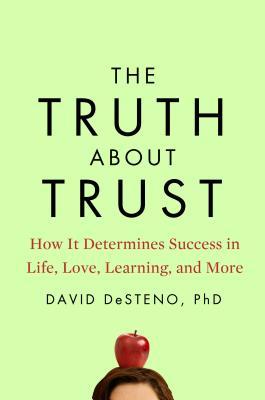
The Truth About Trust: How It Determines Success in Life, Love, Learning, and More by David DeSteno

The Truth About Trust: How It Determines Success in Life, Love, Learning, and More by David DeSteno

“Deciding to trust someone, more than almost any other decision we make, holds the keys to how resilient we, both as individuals and as a society, will be.” pg 241

Trust is one of the things that makes society work. We trust that our taxes will go towards making our society better. We trust we will be paid for the jobs we perform. We trust in contracts, news agencies and family members. Sometimes it seems this trust is misplaced. David DeSteno examines trust, what is it and how or why you decide to give someone all your trust or not.

Photo by Karolina Grabowska on Pexels.com

I held as true many of the fallacies that DeSteno deconstructs in The Truth About Trust. That was disturbing, in a way, but I also enjoyed it because I learned new ways to approach trust issues and even to define what trust is. Although it may seem like a simple concept, I realized that I didn’t know the basic definition of trust. I knew what it felt like, but not the mechanics behind it.

Tell me: what do you think trust is?

“There are two facets to trust: integrity and competence. Some of the best partners or teachers you may ever have had may not be the warmest people in the world, but they knew their stuff.” pg 33

DeSteno reminds readers that beyond examining a new business or potential romantic partner to determine their trustworthiness, you need to remember your own perceptions color your reality.

If you want to be able to trust as you should, take a moment before negotiating with someone new to allow any feelings from a previous event to dissipate. pg 60

Photo by fauxels on Pexels.com

I liked that DeSteno waded into the potentially thorny world of cyberspace and who or what to give your trust to in the technological age. It seems that is going to be the future — programs, applications and machines.

…the basic issue of whether to trust technology has in fact been around for thousands of years. What makes it feel new now, however, is that technology is beginning to encroach on what had until recently been a solely human domain — sociality. pg 183

DeSteno gave me plenty to think about including why I sometimes place great trust where it has not necessarily been earned. Recommended for readers who want to ask themselves the same types of questions.

If you enjoyed The Truth About Trust, I’d suggest also picking up Terms of Service: Social Media and the Price of Constant Connection (DeSteno deals with trust in cyberspace and the two books complement each other nicely) or The Happiness Advantage: The Seven Principles of Positive Psychology That Fuel Success and Performance at Work (which discusses the issue of trusting yourself to do the things that will benefit you most in the future and why we don’t always do those things).

Thanks for reading!

Titanic Thompson: The Man Who Bet on Everything by Kevin Cook

Titanic Thompson: The Man Who Bet on Everything by Kevin Cook

“Are you a gambling man?” he’d ask. “Because I am.” Prologue.

A non-fiction biography that reads like fiction, this is the life story of Titanic Thompson. According to author Kevin Cook, Titanic’s life was the model for the gambler Sky Masterson in the musical “Guys and Dolls.” This poker and golf-playing phenomenon bet and propositioned his way across the country. In addition to all of the fun anecdotes about bets he made, Titanic was a star witness in the trial for the murder of the man accused of “fixing” the World Series.

Seriously folks, history doesn’t get much more interesting than this.

As Alvin collected his winnings, someone asked Snow Clark the stranger’s name. “I don’t rightly know but it ought to be ‘Titanic,'” Clark said. “He sinks everybody.” pg 3

Photo by Pixabay on Pexels.com

Alvin Clarence Thomas was born in 1893 in rural Missouri near the small town of Monett. The last name, Thompson, that he would adopt for most of his adult life, came from a later newspaper misprint that he embraced as his own.

Later in life, Thompson said he couldn’t read, but numbers and odds always made sense to him. He spent hours sitting alone in his room, teaching himself to adeptly shuffle cards, practicing dealing from the bottom of the deck more quickly than the eye could follow. Thompson developed a method of marking cards that some still use today, like putting dots on the back or notching the edges to be able to tell a face cards from the lower ones.

He was quite popular with the ladies and married 5 times to women significantly younger than him. Scandalous!

Photo by Irina Iriser on Pexels.com

“He was fun,” said a woman who knew him. “He took his hat off when he spoke to you. Alvin was slim like a willow, and he didn’t walk, he sauntered.” pg 21

When he was drafted into the army, he was made a sergeant and taught the men under him how to gamble.

“Sergeant Thomas spent hours dealing demonstration stud hands, providing a running commentary on each hand, training his men to calculate the odds of an opponent’s having an ace or king or deuce in the hole, telling them when to bet harder and when to fold their tents, so they could beat all the poor dumb soldiers who trusted to luck.” pg 53

Photo by Anna Shvets on Pexels.com

There are so many interesting stories in this book. My favorite was when he swindled Al Capone. Yes, THE Al Capone.

Highly recommended for fans of history or historical fiction. As I said, this guy’s life reads like a story.

Thanks for reading!

Here’s the History Guy episode I wrote about Titanic Thompson:

inGenius: A Crash Course on Creativity by Tina Seelig

inGenius: A Crash Course on Creativity by Tina Seelig

As my mentor pointed out to me a couple years ago, creativity is one of the most important skills to master and develop throughout your career. No matter what you’re doing, in your professional or personal life, creativity provides the answers and greases your wheels to whatever goal you desire.

inGenius is Tina Seelig’s offering to those interested in learning about creativity. She is a professor at Stanford University and these chapters are like talking points from her class.

Photo by Tima Miroshnichenko on Pexels.com

Granted, some of these tips seem like common sense. But if that’s the case, then why aren’t we all creative geniuses who have solved all of our problems? In my mind, there’s plenty still to be learned from the topic or, if you’ve already heard it, reiterating the important points.

What is that saying… your thoughts become actions, become habits, become your life? Or some such. Well, it’s true.

“With enhanced creativity, instead of problems you see potential, instead of obstacles you see opportunities, and instead of challenges you see a chance to create breakthrough solutions.” pg 4

Photo by Allan Mas on Pexels.com

It’s more than a positive mind-set, it’s a way of viewing your reality. And, as Seelig points out in this book, your attitude at any given moment affects your creativity. You have to view any problem as solvable — you just haven’t found the solution yet.

Seelig says anyone can be creative: “There is a concrete set of methods and environmental factors that can be used to enhance your imagination, and by optimizing these variables your creativity naturally increases.” pg 9

I figure it’s a bit like exercise. Flex those creative muscles on a regular basis and they’ll get stronger.

Photo by nappy on Pexels.com

Seelig brought my attention to the fact that our environment affects our creativity. She cites studies with the way classrooms are set up and how those changed the results of experiments. I had no idea.

She also reminded me that one does not have to re-invent the wheel to be creative: “Building upon existing ideas and inventions is another way to foster innovation.” pg 41

inGenius offers readers a clear path to creativity. Recommended for anybody who wants to up their creative game.

Thanks for reading!