Sandman Slim (Sandman Slim, #1) by Richard Kadrey

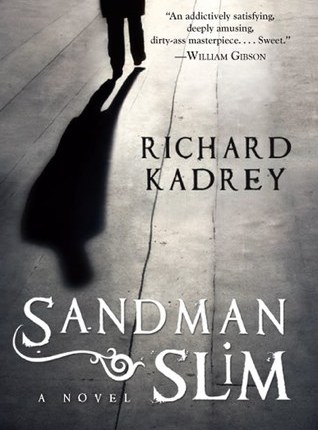
Sandman Slim (Sandman Slim, #1) by Richard Kadrey

Sandman Slim is a dark, urban fantasy read about a magician who was given to demons by people he considered his friends. Now, James Stark’s back for revenge.

Because, what does he have to lose. He’s already been to hell.

“.. I’m lucky that way. Always have been. Otherwise, I might have crawled back into this world and ended up a charcoal briquette in my first five minutes home. And wouldn’t those black-hearted bastards down under have laughed when I ended right back in Hell after slipping so sweetly out the back door? pgs 1-2

Photo by Dexter Fernandes on Pexels.com

James is not just claiming revenge for himself. While he was with the demons, someone killed the love of his life. That someone is going to have to pay.

I’ve been gone eleven years. I was nineteen when I went Downtown. I’m practically an old man now. pgs 11-12

Meanwhile on earth, someone or something has been causing more chaos and destruction than usual. Los Angeles, though never particularly a “city of angels”, seems to be something much worse now. But why should James care — he’s not going to be around long enough to figure out what’s going on anyway.

I really enjoyed Sandman Slim. James Stark is brooding, angry and you can’t help but hope for him to succeed.

Revenge is never what you think it’s going to be. There’s no pleasure or glory, and when you’re done your grief remains. pg 54

Photo by Rahul on Pexels.com

The world Richard Kadrey has created has levels and different forms of spirituality and magic. Angels, demons and monsters walk the streets, in plain view but hidden from those who don’t know what they’re looking at.

There’s an alchemist named Vidocq who accidentally made himself immortal. A mysterious doctor who helps those in the magical community but doesn’t charge for his services. And readers are also introduced to Allegra, a beautiful young woman who runs a video shop and wants to learn more about magic.

“Where was God when I was stuck in Hell?” I ask her. …. “Maybe God thought you were where you belonged. pg 228

Photo by Julia Volk on Pexels.com

Recommended for readers who don’t mind their urban fantasy reads filled with some profanity and angry heroes.

Thanks for reading!

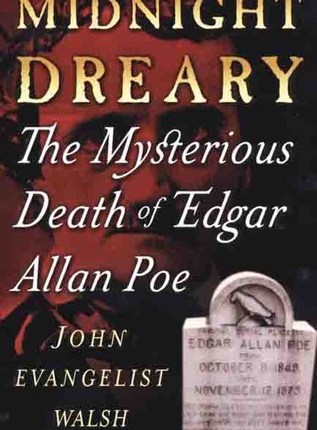
Midnight Dreary: The Mysterious Death of Edgar Allan Poe by John Evangelist Walsh

Midnight Dreary: The Mysterious Death of Edgar Allan Poe by John Evangelist Walsh

John Evangelist Walsh examines the last months of the life of Edgar Allan Poe and puts forth the hypothesis that he did not die of alcohol withdrawal, but something more sinister.

Poe, one of the most celebrated American authors, had a rough life. He was orphaned and adopted at an early age. He spent his life in poverty, scraping enough money from writing and editing jobs to keep himself fed, only to die mysteriously at age 40.

“We regret to learn that Edgar Allan Poe Esq. the distinguished American poet, scholar and critic died yesterday morning after an illness of four or five days. This announcement, coming so sudden and unexpected, will cause poignant regret among all who admire genius and have sympathy for the frailties so often attending it.”pg 34

Photo by Poppy Thomas Hill on Pexels.com

Walsh packs this book with details about Poe’s life and heartbreaks — that can be verified by historical documentation. After Poe’s untimely death, an author, perhaps more than one, who had been vilified by in Poe’s literary reviews, wrote angry and unflattering obituaries and biographies. It was an effort to black Poe’s name after his death which ultimately failed.

However, this “name blackening campaign” makes it difficult to separate fact from fiction.

Walter Colton, who was one of those who was kind to Poe after his death wrote: “I knew something of Poe. Something of the unfathomed gulfs of darkness out of which the lightning of his genius sent its scorching flashes.” pg 28

Perhaps that’s the lesson to take from Poe’s life, besides his astonishing literary achievements. Genius often seems to walk hand in hand with madness or emotional upheaval. I wonder why this is. Maybe, to touch the heights and depths required to write beautiful poetry, you have to go there? I don’t know.

“As always with this type of alcoholism, the unsettling fact was its combined certainty and unpredictability. After long periods of perfect sobriety, he seemed almost bound to fall again, and those who cared about him had to live with that relentless expectation.”introduction, pg xiv

Walsh’s hypothesis about the manner of Poe’s death was not convincing to me, but it gave me another angle to consider.

I had heard Poe may have died from “cooping” which was a practice where a man was kidnapped by a political party, kept drunk and imprisoned until election day, when he would let him free to vote as they directed. This idea holds water because he was found inebriated and ill outside a polling place and in clothing that didn’t seem to belong to him. I had also heard he was a victim of alcohol withdrawal.

Dear Sir, There is a gentleman, rather the worse for wear, at Ryan’s Fourth ward polls, who goes under the cognomen of Edgar A. Poe, and who appears in great distress, and he says he is acquainted with you, and I assure you, he is in need of immediately assistance.” pg 46

Walsh believes some relatives of one of the women Poe was involved with may have led to his untimely end.

Whatever happened, I can’t help but feel sad for the rest of us. Imagine what he could have accomplished with another 40 years on this earth.

It was many and many a year ago, 
In a kingdom by the sea, 
That a maiden there lived whom you may know 
By the name of Annabel Lee; 
And this maiden she lived with no other thought 
Than to love and be loved by me.

Recommended for fans of Edgar Allan Poe or readers who enjoy true crime.

Thanks for reading!

Here’s The History Guy episode I wrote about Edgar Allan Poe:

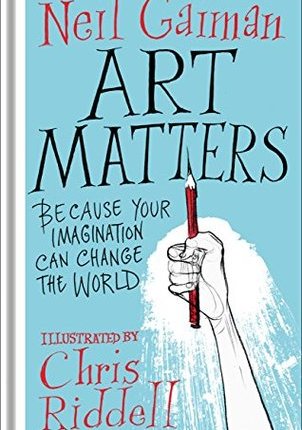
Art Matters: Because Your Imagination Can Change the World by Neil Gaiman, Illustrated by Chris Riddell

Art Matters: Because Your Imagination Can Change the World by Neil Gaiman, Illustrated by Chris Riddell

Neil Gaiman and Chris Riddell have created a manifesto for readers, librarians and content creators. This little book celebrates everything having to do with reading, freedom of information and ideas, and how to start creating the life of your dreams, even if you don’t know where to start.

It was compiled from Gaiman’s prolific back catalog of speeches, poems and various other writings about creativity.

“The world always seems brighter when you’ve just made something that wasn’t there before.”

Photo by Matt Hardy on Pexels.com

I feel like this should be required reading — especially the parts about how to respond to intellectual disagreements. I think Gaiman penned these words after the bombing at Charlie Hebdo, and they still ring true.

“I believe I have the right to think and say the wrong things. I believe your remedy for that should be to argue with me or to ignore me. And that I should have the same remedy for the wrong things that I believe you think.”

And, of course, I was partial to all of the praise directed towards librarians and libraries, having been a librarian once myself. Sometimes people ask me if I ever think libraries will be closed because “they’re just a building with books” or “they’re a waste of taxpayer money”.

This is how I wished I had replied: “Libraries are about freedom. Freedom to read, freedom of ideas, freedom of communication. They are about education, about entertainment, about making safe spaces and about access to information.” How could that ever possibly go out of style?

Photo by Zichuan Han on Pexels.com

Gaiman also gives attention to the bookworms of the world. We make it a better place through our reading and daydreaming and daydreaming about reading. Also, our epic library patronage is a good thing.

“We have an obligation to read for pleasure. If others see us reading, we show that reading is a good thing. We have an obligation to support libraries, to protest the closure of libraries. If you do not value libraries you are silencing the voices of the past and you are damaging the future.”

Gaiman shares a bit about how he became the universally beloved author he is today. Step one, you’ve just got to get started.

“If you have an idea of what you want to make, what you were put here to do, then just go and do that and that’s much harder than it sounds and, sometimes in the end, so much easier than you might imagine.”

He confesses that he lied on early resumes to get his foot in the door. But, after his later success, he went back and worked at all of the places he had claimed before. That way, he didn’t see himself as lying but as “chronologically challenged.” I loved that he took the time to make things right.

Gaiman also has some interesting views about no-start dreamers. He says the saddest thing to him are friends that say they’re too committed to follow their dreams. There’s bills to pay, mortgages and families to support and they can’t take the dive to do whatever it is they’ve always dreamed of doing.

Photo by Karolina Grabowska on Pexels.com

He said he dodged that particular roadblock by skipping a well-paying job or two early in his career, so that he didn’t get too comfortable doing something other than writing. I thought that was an interesting strategy. Creating is about having the courage to just do it, no matter what and not stopping until you’re doing it.

“Somebody on the internet thinks what you do is stupid or evil or it’s all been done before? Make good art.”

The good news is there are more platforms than ever before to get your creations in front of the people who will care about them.

“The gatekeepers are leaving their gates. You can be as creative as you need to be to get your work seen. YouTube and the web (and whatever comes after YouTube and the web) can give you more people watching than television ever did. The old rules are crumbling and nobody knows what the new rules are. So make up your own rules.”

My own life right now points to the truth of that. I left a guaranteed paycheck and employer provided health care to write for my husband’s YouTube channel. We’re not only succeeding but we’re having a lot of fun doing it.

Thank you, Gaiman and Riddell for this beautiful book. I hope it encourages creators everywhere to take the leap.

Thanks for reading!

The Astonishing Power of Emotions: Let Your Feelings be Your Guide by Esther Hicks, Jerry Hicks

The Astonishing Power of Emotions: Let Your Feelings be Your Guide by Esther Hicks, Jerry Hicks

“Beyond the five physical senses that you are actively aware of, there is another less-realized sense — the sense of emotion.” pg 20

Esther Hicks channeled this book from her “higher self,” an entity she calls Abraham. It is about how one can deliberately create their experience by being aware of their emotions. It also gives advice on how to focus on those things that make you feel good, because by doing so, Hicks believes it will “bring you into alignment” with your higher being. And, therefore, you’ll allow the goodness of creation to flow through you.

Photo by Emre Kuzu on Pexels.com

“Allowing yourself to become what life has caused you to desire is not about action. It is about the aligning of thought Energies. It is about focusing your attention in the direction of your desire rather than looking back at the current conditions that have given birth to your desire.” pg 25

My favorite part of this book was contained within the first 45 pages in which Abraham talks in a general way about emotions and their latent power. The rest of the book contained examples of how to apply this teaching to specific questions Hicks received at her various workshops.

I didn’t find the second portion as helpful because, first of all, it felt like we were focusing on current conditions. Secondly, the answer to every question was to soften the emotions by looking for things that made you feel good about in whatever subject was being discussed. Then, roll with that until the emotions shift. Honestly, it felt repetitive after the first two or three examples.

Photo by Quang Anh Ha Nguyen on Pexels.com

I suppose if one of the questions had applied directly to my life experience right now, then maybe I would have had a different view of this book. As it is, I prefer Ask and It Is Given: Learning to Manifest Your Desires to this.

Ask and It is Given deals with the topic in a more general way and I got more out of it.

I can understand the criticisms of Hicks as a life philosophy: that she teaches people to ignore their problems, to be selfish, to be utterly self absorbed. But wasn’t it a teaching of the Buddha that the first love you should attend to, before you can offer unconditional love to others, is self love. You build a base of love and everything else flows from that. I see Hick’s teachings as the same kind of thing — self love first.

I think another point to bring up before closing the discussion of this book is the idea that the Law of Attraction, so beloved of New Age teachers and authors, functions rather like gravity. You don’t have to teach someone how to utilize gravity because it just works. The Law of Attraction is the same kind of deal and isn’t that nice to know.

Photo by Mary Taylor on Pexels.com

So, no matter what you’re doing, thinking or feeling, you’re not going to float off into outer space because gravity has got both of your feet safely planted on the ground. I like to approach any teachings about the Law of Attraction the same way. I can play with ideas and techniques, but at the end of the day, it’s going to do its thing whether I’m paying attention to it or not.

Recommended for readers who like New Age materials or love the teachings of Abraham Hicks.

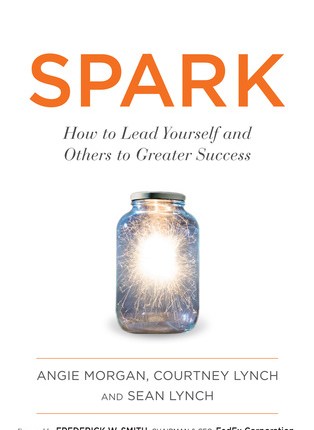
Spark: How to Lead Yourself and Others to Greater Success by Angie Morgan, Courtney Lynch, Sean Lynch

Spark: How to Lead Yourself and Others to Greater Success by Angie Morgan, Courtney Lynch, Sean Lynch

Spark is a manual to help an individual or a business develop leadership skills. The important attributes are outlined in each chapter with highlighted stories provided by the authors’ own life experiences. The salient points of the different topics are simply and clearly listed at the end of each chapter as well as further resources.

“Our society values leadership — craves it, for that matter. Yet we don’t teach it in formal education.” pg 9, ebook.

Photo by Sora Shimazaki on Pexels.com

The title itself “Spark” refers to those who know they carry the seeds of greatness within themselves and are willing to learn how to make those seeds bloom. As the authors are quick to point out, there are a lot of misconceptions about leadership.

One of them is that people are born leaders and only certain people can lead. They say, and I believe this too, that anyone can become anything they set their minds too. This book helps provide the necessary skills to make that process simpler.

“No one else can make or anoint you a leader. The only way to become a Spark is to make yourself into one.” pg 24, ebook

I thought it was an interesting that these skills are taught to our military personnel but are not stressed as much in the private sector. The main reason the authors started their leadership business was because they noticed leadership was required in business but no one was teaching it. I suppose that’s true, but I’d never considered it before because I had assumed that leaders were born that way.

“… invest the time in seeking to uncover your values, and you’ll be led to discover any misalignment between your expectations of yourself and your actions. The next step is having an honest conversation with yourself so that you not only understand where, when, and why you’ve compromised your values in the past but also recognize the changes you need to make to lead more consistently with your intentions.” pg 42, ebook

Photo by Cade Prior on Pexels.com

I think some of the suggestions in Spark might discomfort those who haven’t taken the time to look and evaluate their own character. Or accept responsibility for reoccurring issues in their experience.

“Overwhelmingly, we all seem to agree that we live in a pass-the-buck culture. Pointing to others as the reason for a problem is a typical response.” pg 69, ebook.

And, taking responsibility for a problem gives you the power to change it. Because, at the end of the day, you can’t control somebody else’s actions — despite how much we may want to.

The chapters I, personally, liked the most were about how to “build your confidence” and “demonstrate consistency”. The information in that section felt the most relatable because it deals with the humanity of leaders. We all fail sometimes or experience self doubt. What matters is how you handle that and continue onwards.

Photo by Ono Kosuki on Pexels.com

Which brings me to my last thought about this book, as I mentioned earlier, the authors insist leaders make themselves. If you want to learn these skills, you can. If you want to make change in your organization, you can. What you can’t do is force other people to become leaders if they don’t want to be.

I think the power in becoming a leader or a “spark” is the example you hold up to others who have the same aspirations. As for the rest, I suppose they can provide the background against which your brilliance shines.

Thanks for reading!

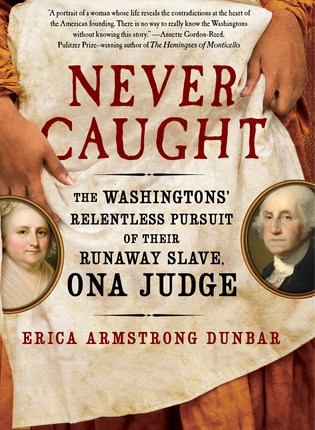
Never Caught: The Washingtons’ Relentless Pursuit of Their Runaway Slave, Ona Judge by Erica Armstrong Dunbar

Never Caught: The Washingtons’ Relentless Pursuit of Their Runaway Slave, Ona Judge by Erica Armstrong Dunbar

An interesting, non-fiction book about Ona Judge, a woman who was one of Martha Washington‘s personal slaves until she ran away. Ona remained a fugitive for the rest of her life. This book dissects early emancipation laws in the United States and Ona’s life, as well as revealing struggles in the private lives of George and Martha Washington.

Ona was born to a black slave and a white, indentured servant. Ona and her mother were abandoned by Ona’s father after only a few years.

“Ona Judge learned valuable lessons from both of her parents. From her mother she would learn the power of perseverance. From her father, Judge would learn that the decision to free oneself trumped everything, no matter who was left behind.” pg 14

Photo by Todd Trapani on Pexels.com

Author Erica Dunbar does a fairly good job bringing Ona Judge to life on the few details that were available. It must have been tricky to fill in the blanks on a life that wasn’t as well-documented as her famous, former owners.

“Those of us who research and write about early black women’s history understand how very difficult it is to find our subjects in the archives. Enslavement, racism, and sexism often discarded these women from the historical record, and as historians we are frequently left unsatisfied with scant evidence.” from the Author’s Note.

Because she gave two interviews to journalists towards the end of her life, Ona may well be one of the only female, fugitive slaves from Virginia to have a personal narrative that survived to exist in the historical record.

“The interviewer wrote, ‘When asked if she is not sorry she left Washington, as she has labored so much harder since, than before, her reply is ‘No, I am free, and I have, I trust, been made a child of God by the means.'” pg 187

Photo by Maksim Romashkin on Pexels.com

What I liked most about this book, beyond Ona’s own life story, was the way Dunbar made George and Martha Washington into people, not just icons, in my mind. They made mistakes and would act in their own best interest. It was interesting to discover that one of the founding fathers and his spouse were just as human as the next person.

But also sad in the way they held and treated “human property.” I suppose everyone is a product of his or her own time.

(Martha Washington) had no interest in releasing the slaves at Mount Vernon, who numbered in the hundreds. Instead, she would move quickly to join her husband in New York, shielding her slaves from the contagion of liberty.” pg 31

Photo by cottonbro on Pexels.com

They simply couldn’t understand why someone would want their freedom — at any cost. It seems like a no-brainer now. But, once the Washingtons discovered where Ona was hiding, they sent agents to talk to her and try to convince her to return to slavery.

“She told Whipple that under no circumstances would she return to slavery, where she could be “sold or given to any person.” She would rather die than return.” pg 144

Recommended for readers who love history, especially American history, and want to learn about another facet of the American experience.

Thanks for reading!

Here’s the History Guy script I wrote about Ona Judge:

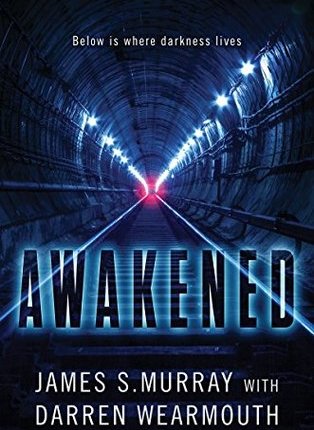
Awakened (Awakened #1) by James S. Murray, Darren Wearmouth

Awakened (Awakened #1) by James S. Murray, Darren Wearmouth

A new subway line in New York City is being unveiled with fanfare, press coverage and even a visit from the President of the United States. When something goes terribly wrong, it becomes clear that an unspeakable evil has been released from the depths.

And they all said the devil didn’t actually exist…

Photo by Anthony Macajone on Pexels.com

Plodding dialogue and clumsy character development clog what otherwise would have been an action-packed science fiction read. The set up was so classic. The line, “the dwarves delved too deep”, kept running through my head.

“The workers shouted and pointed, but the noise of splitting granite drowned out their words. The ground beneath Grady’s feet disintegrated. He lunged for the cable, clutched it in a white-knuckled grip, and dangled over the newly formed black abyss.”pgs 8-9, ebook.

And once the evil emerges, I thought everyone took far too long to figure out what the heck was going on. For goodness sake, the President was right there. I mean, maybe in the face of unexplained phenomena, response times would be slowed down. But I had a hard time believing the incompetence.

“The majority headed to the food court while shooting nervous glances toward the train. Cops, now free from the burden of chaos, helped the injured to their feet and escorted them to triage. The five dead — one from the stampede, another shredded by the cafe window, and three at the hands of the Secret Service — were placed in a line and had jackets draped over their faces.” pg 18, ebook.

Photo by Kaique Rocha on Pexels.com

On the other hand, I did enjoy some of the tense moments. I liked the way journalists were portrayed, because of course they’d be there. Unless all newspapers go under… which, let me be clear, I don’t think anybody wants. But gosh, that’d make a good horror story, wouldn’t it.

“We’re sealing the second car of the train and taking refuge inside.” “Are you mad?” the Washington Post journalist called out. “There’s not a chance in hell I’m going near that subway train.” pg 37

If you take this story for what it is, like a summer blockbuster of a book rather than a serious work of science fiction, it’s fun enough. There’s thrills, chills and moments of terror.

“He had never subscribed to conspiracy theories or the far-fetched stories about monsters, but he couldn’t deny what he just saw. It hardly seemed believable. … This wasn’t terrorism. It was pure terror.” pg 52

Photo by Lucas Pezeta on Pexels.com

Recommended for readers who are looking for a mildly entertaining book to pass the dark days of winter or the hot days of summer by a pool. This is like a “comfort food” option for horror and science fiction fans.

Thanks for reading!

The God Hunter (Field Ops #1) by Tim Lees

The God Hunter (Field Ops #1) by Tim Lees

An interesting science fiction novel about a company that captures gods and transforms their energy into a commodity.

“The official view is, all we’re dragging up are imprints. Worship at a certain site for long enough, you charge it up. The power gets compressed, like coal.” pg 11, ebook.

Photo by Adrien Olichon on Pexels.com

When something goes wrong, as one would expect it to, the results are pretty bad. Chris Copeland is called in to clean it up. But there may be no stopping what happens next…

This book was like the film Ghostbusters, except instead of containing the ghosts like in the movie, they’re transmuting them somehow. Well, and the film has ghosts instead of gods. But, you see the similarities.

It’s an interesting idea. Everyone is looking to develop new, clean and renewable energy. What if we could mine that from emotions or other planes of existence? Would such a thing be possible? And what would be the costs?

“I don’t believe in premonitions. You only see them looking back, once the mind’s had the chance to make up shapes and patterns, and give form to random data. And yet now, in retrospect, it seems those days were full of omens, all trying to tell me something, circling me like softly-whispered threats.” pg 28

Photo by Alem Su00e1nchez on Pexels.com

Chris is an interesting character. He embodies the “over-worked into absolute nonchalance” type. Chris and his coworkers are literally capturing gods and he’s like “so what?”. I imagine you could get used to anything after awhile, but his attitude was amusing to me.

Especially when you put him next to professional detectives later in the book. They have the exact same attitude except about criminals rather than spirit energy. It makes for a fascinating juxtaposition.

“It’s manna,” Martin Klein announced, matter-of-fact. “The stuff that fed the Israelites.” “Wrong desert,” I said. “You’d have to be a thousand miles east for that.” “Well.” He shrugged. “It gets around.” pg 74

Like any business that can generate enormous profits or be controlled by the government, the god-into-energy racket has attracted some unsavory and cutthroat characters. But the stakes are higher than simple wealth or power. A misstep could mean the end of the world.

Photo by Pixabay on Pexels.com

I wanted this book to be more mystical, with more conspiracies, and more romance. I enjoyed the premise and the questions the story raised about people being people, no matter their level of technology. I also liked the character of Anna Ganz, the strong female detective.

I did not like how the author Tim Lees gave us very little context. I also didn’t like how he didn’t develop the characters much beyond the main two.

Recommended for science fiction readers who like their stories thick with questions and a bit thin on the answers.

Thanks for reading!

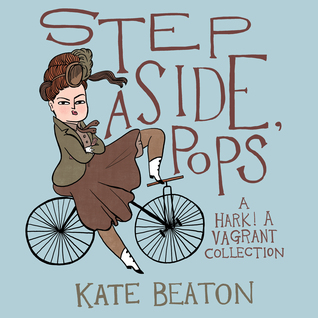
Step Aside, Pops (Hark! A Vagrant, #2) by Kate Beaton

Step Aside, Pops (Hark! A Vagrant, #2) by Kate Beaton

An incredibly clever collection of comics with topics ranging from history to literature to pop culture and everything in between.

You don’t have to know a thing about Kate Beaton’s Hark! A Vagrant to enjoy this book. (I didn’t.) And it is so much fun.

Like any great observational comedian, Kate takes idiosyncrasies or exaggerates details to create comic gold.

For instance, here’s the dialogue from a comic about the Black Prince and some of his early exploits: “How are you feeling about being a hero of the battle of Crecy?” “Bro I am stoked.” “This is quite a momentous event so far in the war…” “Those French guys were like ‘Whoaaaaaa’.” “I keep forgetting you are sixteen.” “And my army was like eat it. Ka chow!!” pg 114

Photo by Julia Volk on Pexels.com

There’s another one I liked about the Greek god Zeus going on a first date that doesn’t make much sense without the pictures so you’ll just have to check it out for yourself on page 123. Basically, it’s a play on all of the mythological stories about Zeus revealing himself to mortals as a swan, shower of gold or something else and still getting the girl. Kate has a point. I mean, how does that even work… showing up as a shower of gold. It’s ridiculous and almost begging for a comic to make fun of it. Like this one. 🙂

In addition to the observational humor, Kate takes characters from old posters, newspaper clippings or magazine photos and gives them a back story. Some of her creations are just hysterical.

Photo by brotiN biswaS on Pexels.com

The spare and pencil-drawn style strongly reminded me of Nimona, which I also enjoyed. I highly recommend this collection for readers who enjoy comics or satire.

Thanks for reading!