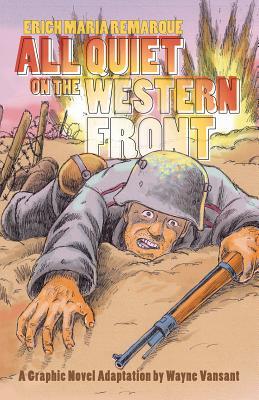
All Quiet on the Western Front by Wayne Vansant (adapter), Erich Maria Remarque

All Quiet on the Western Front  by Wayne Vansant (adapter), Erich Maria Remarque

This is a graphic novel remake of the classic All Quiet on the Western Front and it packs as much punch as the original.

Paul Bäumer and his classmates are encouraged to join the German army in WWI by an enthusiastic professor. What they find is not the heroic battlefields of the classical texts they’ve studied, but one nightmare after another.

“We plunge again into the horror, powerless, madly savage, and raging; we will kill, for they are still our mortal enemies, their rifles and bombs are aimed against us, and if we don’t destroy them they will destroy us.” pg 68

Photo by Kirsten Bu00fchne on Pexels.com

As his friends slowly die and he takes an uncomfortable leave home, Paul comes to realize that there will be no end to this war for him.

“He fell in October 1918, on a day that was so quiet and still on the whole front, that the army report confined itself to the single sentence: All quiet on the western front.” pg 170

This book is an interpretation of war that was banned and burned in Erich Maria Remarque’s home country of Germany. To go to war, it seems that the world has to sanitize it and completely demonize the other side, otherwise, we would never do it.

All Quiet on the Western Front refuses to look away from the humanity on both sides of the conflict. It is tough to read, and kicks you in the feels. But, in my mind, that’s what makes it so great.
Photo by Jan Tancar on Pexels.com

Though it is fictional, it is the story of a generation of young men who were shipped off to war and never came home again. And, if by some miracle they did, they’re forever haunted by the sound of a train car because it reminded them of the sound of falling bombs. When they picked up a book that they used to love, it didn’t ignite their souls in the same way, because they’d seen the worst that life can offer. War kills more than the ones who end up dead on the battlefield.

This graphic novel version of All Quiet on the Western Front should appeal to reluctant readers. Though it is about a very serious and triggering topic, the artwork is done tastefully. I read the original All Quiet on the Western Front as a seventh grader, age 13. I think this book would be appropriate for children of that age and up.

I received a free advance reader copy of this book from the publisher. This quotations I cited in this review may vary in the final printed version.

Thanks for reading.

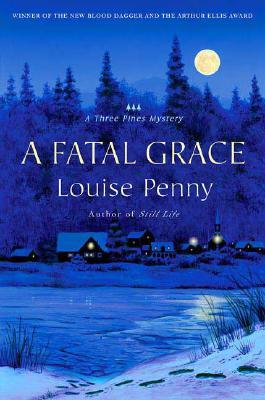
A Fatal Grace (Chief Inspector Armand Gamache, #2) by Louise Penny

A Fatal Grace (Chief Inspector Armand Gamache, #2) by Louise Penny

Chief Inspector Armand Gamache solves more murders while surrounded by the sparkling personalities that compose the small town of Three Pines in Canada. 

Nobody likes the victim of the murder, which makes the job harder for Gamache. As a reader, I was cheering for Gamache to solve the crime, but not because of the unlikeable CC de Poiters. She was as different a character from the victim of the first book, Jane, as you could possibly be.

I wonder if Louise Penny’s editors said, ‘Give us another cozy murder, but different.’ Well, she delivered.

Photo by eberhard grossgasteiger on Pexels.com

“Anything CC didn’t like didn’t exist. That included her husband and daughter. It included any unpleasantness, any criticism, any harsh words not her own, any emotions. CC lived, Saul knew, in her own world, where she was perfect, where she could hide her feelings and hide her failings. He wondered how long before that world would explode.” pg 11, ebook

Meanwhile, a storm is brewing at Gamache’s headquarters because of fall out from the mysterious Arnot case (which the reader first read about in the last book and finally gets to learn about in this one).

“Only fools underestimated (Gamache), but Brault knew the service was full of fools. Fools with power, fools with guns. The Arnot case had proved that beyond a doubt. And had almost destroyed the large, thoughtful man in front of him.” pg 57, ebook

We are also treated to more background on some of my favorite characters from the last book, Clara and Myrna, plus poetry from the irascible Ruth.

Well, all children are sad
but some get over it.
Count your blessings. Better than that,
buy a hat. Buy a coat or pet.
Take up dancing to forget.
 pg 39, ebook.

Photo by Zen Chung on Pexels.com

I like that Penny is developing these characters. They’re not just stuck in a time or place, unmoving and stiff. For example, Clara and Peter, her husband, are still fighting, but about different subjects now than from the last book. How very realistic for a married couple.

“When my death us do part
Then shall forgiven and forgiving meet again,
Or will it be, as always was, too late?”
 pg 61, ebook.

And it’s simply a treat to follow Gamache around and listen to his inner voice. He’s sensitive and kind, smart and intuitive. He also likes good food and drink. It makes him so relatable. He’s one of those characters that I’d like to meet for a drink sometime, if he were real. Or I’d want him in my book club.

“Gamache’s job was to collect the evidence, but also to collect the emotions. And the only way he knew to do that was to get the know the people. To watch and listen. To pay attention. And the best way to do that was in a deceptively casual manner in a deceptively casual setting. Like the bistro.” pg 142, ebook.

Photo by Atahan Demir on Pexels.com

The only part of this book that I found a bit off-key was a moment between Gamache and one of the town’s oldest residents, Em. They talk about moments from their past when something inexplicable caused them to behave in a certain way. That conversation comes back to haunt Gamache later in the book, and it almost has an air of magical realism to it.

There’s nothing wrong with magical realism, but I felt like Three Pines and its residents had enough every day magic without resorting to the truly far out there. I’d be curious as to what other readers thought of that moment — I won’t say any more because I don’t want to spoil it. You’ll know what I’m talking about when you get there.

Highly recommended for readers with a hankering for cozy mysteries. Thanks for reading!

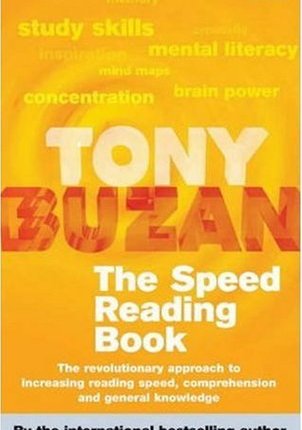
The Speed Reading Book by Tony Buzan

The Speed Reading Book by Tony Buzan

I did not speed read Tony Buzan’s The Speed Reading Book because I found it to be rather a slog. There is useful information in here about the physical capabilities of your eyes and brain, methods for training your eyes how to move, the benefits of improving your vocabulary, how to recognize patterns in the way paragraphs are structured, and the basics of logic.

However, it’s interspersed with information that I felt was better presented in Use Your Head.

“Quite apart from important improvements in the technique of learning how to read fast which are set forth in this book, what I wish to emphasize in my system is that understanding and remembering factual material is not nearly as important as knowing how to relate new material to what you already know. This is the all-important ‘integrative factor’, or if you will, learning how to learn.” pgs 12-13

Photo by fotografierende on Pexels.com

He re-hashes the proper way to make a mind-map and the importance of previewing all reading material, even mystery novels, which I felt was silly. I can’t speak for the whole world, but I read mysteries to be entertained, not create a template into which I fit important details as I go along.

“The purpose of the preview is to develop a structure into which the mind can more easily fit the smaller details of that structure. … Previewing should be applied whatever kind of material you are going to read, which it be letters, reports, novels or articles.” pg 115

Though he did backpedal on his “preview everything” stance somewhat in a chapter about reading poetry: “When reading literature and poetry, bring to bear all your knowledge and judgment, and if you feel that it is the kind of writing you wish to treasure forever, forget about speed reading through it and reserve it for those occasions when time is not so pressing.” pgs 167-168

Thank you, I will.

Photo by Mark Cruzat on Pexels.com

Perhaps part of my problem with this book is that it revealed to me just how slowly I read and assimilate non-fiction, because Buzan offers the reader information about the absolute limitlessness of human capability.

“Theoretically, the human visual system can photograph an entire page of print in one-twentieth of a second, and thus a standard length book in between six and twenty-five seconds, and the entire Encyclopaedia Britannica in less than an hour. Advanced skinning and scanning skills take you on the first step of that incredible and inevitable journey.” pg 70

Let’s say I have much room for improvement.

The book also showed its age somewhat during a chapter on the importance of organizing how you take in information from newspapers: “Newspapers are so much a part of our everyday life that we seldom stop to think that they are a very recent development.” pg 148

But are they still? I’m not so sure.

Photo by Masha Raymers on Pexels.com

The book ends on a high note and, of course, I plan to continue practicing and improving my skills: “Your continuing success in all fields of speed reading depends on your personal decision to continue the course you have begun, and on the capacity of your brain to read, assimilate, comprehend, recall, communicate and create, abilities which we know approach the infinite. Your success is therefore guaranteed.” pg 177

But if you’re only going to read one book by Tony Buzan, I recommend Use Your Head.

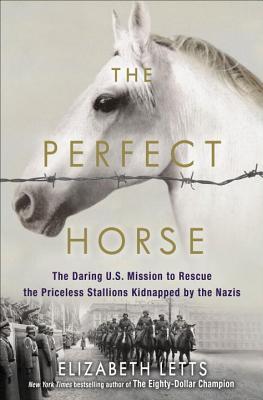
The Perfect Horse: the Daring U.S. Mission to Rescue the Priceless Stallions Kidnapped by the Nazis by Elizabeth Letts

The Perfect Horse: the Daring U.S. Mission to Rescue the Priceless Stallions Kidnapped by the Nazis by Elizabeth Letts

Author Elizabeth Letts‘ non-fiction book is about Operation Cowboy, the American protection of the Spanish Riding School and the plight of the Lipizzaner horses during World War II.

As priceless as any of the masterpieces that hung in Vienna’s museum, from their snow-white coats to their large aristocratic heads and deep brown eyes, the horses were unlike any others in the world.” prologue xvii

There was a precedent for saving irreplaceable works of art during the war, but Colonel Hank Reed‘s effort to save horses was something different. Reed, the most decorated American cavalry officer during WWII, recognized that there was something special about the horses at the Nazi stud farm at Hostau.

Photo by Helena Lopes on Pexels.com

Gustave Rau, the Nazi’s master of horse, was attempting to apply eugenics to his horse breeding program to create “the best warhorse”. He focused on gathering Lipizzaners from all over Europe.

Rau, in his next official report to Berlin, would declare, “There are no high-legged Lipizzaner, there are no flat-ribbed Lipizzaner, there are no bad-tempered Lipizzaner…” Clearly, he was impressed with what he had witnessed in Vienna. pg 87

But it wasn’t just about the breeding program, the Germans needed horses to feed the engines of war.

“The Germans were churning through horses at an astonishing rate — the army demanded six thousand fresh ones per month to replace those killed or lost to disease.” pg 37

I didn’t realize horses had such a large role in WWII. I assumed machines had taken over most of the vital functions horses used to perform like transportation and moving men into battle. I was wrong.

The Perfect Horse doesn’t cover the technical aspects of WWII or talk about the American defense of Hostau. It focuses on the horses though Letts does provide some context and information about the backgrounds of the men involved on both sides of the conflict.

Photo by Dids on Pexels.com

“Politics, prejudice, avarice, and intolerance had riven a brutal divide between the countries of these men; the grace of these horses had already started to knit them back together. The former enemies parted as friends.” pg 149

She follows the horses from their eventual relocation from the war front to the United States and what happened next.

The Perfect Horse is a difficult book to read in that it contains a lot of information and not as much “story,” but for readers interested in history, it may be a good fit.

Thanks for reading!

Here’s the History Guy episode I wrote about Operation Cowboy:

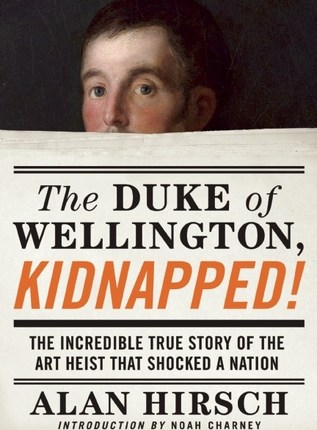
The Duke of Wellington, Kidnapped!: The Incredible True Story of the Art Heist That Shocked a Nation by Alan Hirsch

The Duke of Wellington, Kidnapped!: The Incredible True Story of the Art Heist That Shocked a Nation by Alan Hirsch

“The only successful theft from London’s National Gallery took place on August 21, 1961, when a brazen thief stole Goya’s Portrait of the Duke of Wellington.” Introduction

Alan Hirsch discusses an extraordinary art heist that took place in the 1960s, how it affected criminal law thereafter and even made an appearance in a James Bond movie. The thief sent authorities a series of ransom notes, demanding money for the return of the painting. This went on for years.

Photo by Pixabay on Pexels.com

“All the publicity led to a spike in visitors (from the usual August average of five thousand daily to more than seven thousand in the weeks following the theft), and reportedly even more people came to see the empty space where The Duke had hung than had come to see the painting itself.” pg 19

This potentially fascinating story becomes bogged down during the chapters discussing the trial and minutiae of the law. But, Hirsch is thorough, I’ll give him that.

“Where necessary, lawyers argued in the alternative: “My client did not take the painting, and if he did take it he intended to return it.”pg 125

I loved the information about the thief himself, which the world may not have seen before this book. Hirsch was given the man’s unpublished memoirs to add details to his side of the story.

“I understand you have information to give to police respecting the theft of the Goya portrait from the National Gallery in London.” “You don’t have to look any further, I am the man who took it,” the man calmly replied.” pg 107

Photo by Steve Johnson on Pexels.com

I also enjoyed the information about the ransom notes sent after the heist. That part of this book read almost like a movie. Who does that!

“In handwritten block letters, it began: “Query not that I have the Goya,” and it sought to prove the point by identifying marks and labels on the back of the canvas.” pg 52

Admittedly, I know very little about art history and had never heard of this event before reading The Duke of Wellington, Kidnapped!. But I think this would be a great read for anyone interested in history, especially art history. It may appeal even more if you’re interested in the development of criminal law in Great Britain.

Thanks for reading!

Here’s the History Guy episode I wrote about the theft of the Wellington portrait:

You’re Married to Her? by Ira Wood

You’re Married to Her? by Ira Wood

A surprising and amusing collection of essays by Ira Wood about his childhood, early relationships and, eventual marriage, to author Marge Piercy.

“Readers seeking insight into the creativity of a prolific American artist had best look at my wife’s own memoir, for these are my stories, those of the very lucky young man she chose not merely to put up with but to love, and for slim rewards except being fiercely loved in return.” pg 10, ebook.

Photo by Emma Bauso on Pexels.com

These are not tame remembrances. Wood is cheerfully self-deprecating as he relates heavy drug use, promiscuous sexual behavior, and smashing disappointments as both an author and a publisher. He remembers the cut-throat politics during his time on the board of a small New England town. He talks gardening, sex at other people’s houses, and how he ruined one of his girlfriend’s big nights out.

Each essay, as outrageous as it may be, ties itself up in a surprisingly tender conclusion. Usually.

“The motivation that would always drive me in the face of overwhelming odds, the internal fire that no amount of personal failure, or success, would put out; as powerful as the force of life itself, my father’s everlasting gift to me: the burning envy of other people’s lives.” pg 26, ebook.

I loved Wood’s humor. I loved his insights. Really, I was pleasantly surprised by this book. I found it in my library’s digital lending library and the cover drew my eye.

Photo by Rachel Claire on Pexels.com

He reads a lot like David Sedaris but with more sex. I mean, he talks about sex more than the Sedaris books that I have read so far. Small disclaimer: I haven’t read them all.

“One night I left Boston so blindly drunk that I arrived in Wellfleet with a sandwich in my lap that I had neglected to eat and could not remember buying.” pg 38

Highly recommended for readers who like humorous non-fiction and aren’t put off by some scandalous situations.

Thanks for reading!

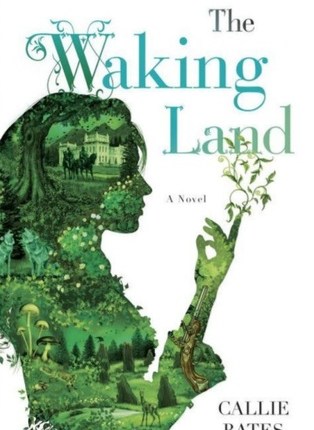
The Waking Land by Callie Bates

The Waking Land by Callie Bates

A fantasy novel about a young woman who was raised away from her home who is destined to become something greater than anyone ever imagined she could be.

There were shades of Irish mythology in this story with magic surrounding standing stones and a midnight ritual about “marrying the land”.

Overall, I just felt like I had read this book before in some form or another. It stuck to so many forms — heroine who doesn’t know her own strength, falls in love with a man who may help her or betray her, trusts everyone she shouldn’t and doesn’t trust everyone she should.

Photo by WARREN BLAKE on Pexels.com

There were so few unexpected moments. Even the big stuff is heavily foreshadowed. Take this passage:

“I can do nothing. I am a botanist, not a sorcerer. Botanists have a place in this world — a respectable place. As the emperor of Paladis likes to remind us, sorcerers are worse than nothing — their impious actions are a mockery of the gods, and their historical conviction that they could rule kingdoms presented a threat to civilization itself, a danger that had to be exterminated.” pg 22

Ok, now guess what is going to happen in this book… you’re probably right. And that blurb is from the first chapter.

I’m on to the next book… and thanks for reading!

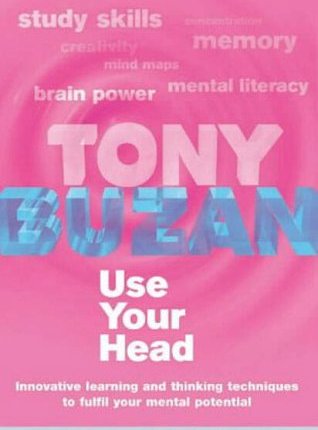
Use Your Head by Tony Buzan

Use Your Head by Tony Buzan

In “Use Your Head,” Tony Buzan teaches the reader strategies to utilize the infinite powers of your mind.

“I call it the ‘operations manual’ for your brain. It is designed to help you nurture your ‘super-biocomputer’ and unleash the natural and extraordinary range of mental skills that you possess.pg xii

Photo by Maria Orlova on Pexels.com

I’ve read a lot of non-fiction books about what the potentials of the mind and positive thinking are. This book gives more than just information about what could be, it shares tools for expanding your creative skills and organizing what goes in and comes out of our mind.

“No man yet exists or has existed who has even approached using his full brain. We accept no limitations on the power of the brain — it is limitless.” pg 24

Buzan shares the keys for maximizing your memory — imagination and association. By combining images with simple rhymes, he’s created a surprisingly easy way to remember lists and, potentially, large sections of information.

Photo by Pixabay on Pexels.com

I was intrigued by his method of organizing information and study materials with the use of “mind maps.” Basically, you start with a topic and draw branches coming out from this main theme, that relate to the information in some way. Continue to branch out, using colors and shapes to stimulate your brain while drawing conscious connections between the ideas on the paper.

It’s a fun little creative exercise, but also it helps you see associations you may not have considered before.

Personally, I do mounds of research on an almost daily basis and it helps to have a tool to organize the facts I come across. The mind map may be the most helpful tool in this book.

There’s a lot of self help advice in these pages too. It’s mainly common sense, but I found almost all of it useful as reminders of what is possible. For example, Buzan suggests considering your perspective before starting any program of study or problem solving.

Photo by Andrea Piacquadio on Pexels.com

“On average, people assume that there are theoretically infinite insoluble problems and only a relatively minor number of solutions. The fact is, every problem has a solution and there are no insoluble problems for a human brain that is properly trained, activated and aware of its creative functions.” pg 82

After a bit of research on the author, it seems Buzan is quite popular in Great Britain and has been for some time. Perhaps it’s time for the U.S. to jump on this train too.

Thanks for reading!

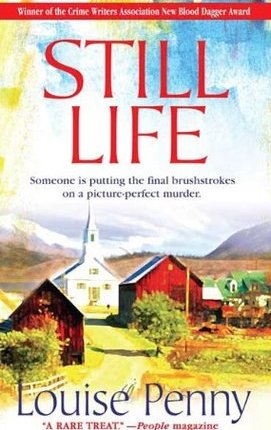
Still Life (Chief Inspector Armand Gamache, #1) by Louise Penny

Still Life (Chief Inspector Armand Gamache, #1) by Louise Penny

Still Life is a satisfying start to a cozy mystery series. It has a diverse and quirky cast of characters and it kept me guessing as to what was coming next.

“Miss Jane Neal met her maker in the early morning mist of Thanksgiving Sunday. It was pretty much a surprise all around.”pg 6, ebook

The small town of Three Pines, Canada, is the kind of place where people don’t lock their doors. Or, it used to be that way.

Now, one of their kindest citizens is dead and a killer walks among them.

Photo by Magda Ehlers on Pexels.com

“Her name’s Jane Neal. Aged seventy-six. Never been married. We got this information from Mr. Hadley who says she was the same age as his mother who died a month ago.” pg 29, ebook

Chief Inspector Armand Gamache is one of the top of his field. He knows how to listen and he’s a keen observer — of people, of scenes, of everything. He’s a dazzling main character.

“Ruth Zardo, my job is to find out who killed your friend. And I will do that. I will do it in the manner I see fit. I will not be bullied and I will not be treated with disrespect. pg 41

As for the townsfolk, you’ll enjoy meeting each and every one. We have the owners of the local restaurant and bed & breakfast, local artists, real estate sales people, a book shop owner, an award winning poet and more. The dialogue between all of them is a delight to read. You may find yourself laughing out loud… I did.

Photo by Daniel Joseph Petty on Pexels.com

Also, I’d recommend starting the last chapters of this book either during the day or early in the evening. I thought I’d just read a few pages before bed and found myself finishing the book two hours later. (And far past my bedtime.)

Highly recommended for readers who love mysteries. This is a gem.

For readers interested in page to screen adaptions, this book has been made into a film. It is also slated to become a series for Amazon.

Thanks for reading!