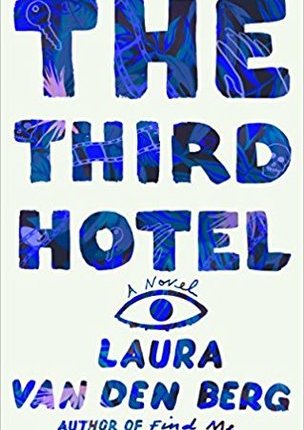
The Third Hotel by Laura van den Berg

The Third Hotel by Laura van den Berg

A strange and confusing ride through a world seen through the eyes of a grieving widow. A short time prior to attending a film festival in Cuba, Clare’s husband Richard was killed. Now, she sees him on the streets of Cuba.

“Clare had never before seen her husband operate a motorbike, but he navigated it like he had been riding one all his life, like he had been riding one in Havana all his life, like he had not been struck by a car and killed in the United States of America some five weeks ago.” pg 13

Photo by Valeriia Miller on Pexels.com

What is going on? The reader isn’t sure what’s real and what’s only in the mind of Clare. Laura van den Berg raises mammoth questions and leaves the interpretation to the reader.

My book club picked a heck of a read for March. Reactions to this book ranged from the disgusted to the mystified to the fascinated. I’d put myself somewhere in between.

I like having complex symbolism to pick apart and magical realism to consider in a story. I like having an open-ended mystery. I don’t need to have all the answers.

But I do like to have more hints at the possible interpretations than van den Berg gives us.

“She might have said, I am not who you think I am. She might have said, I am experiencing a dislocation of reality.” pg 3

Photo by cottonbro on Pexels.com

Or she might have said, I have no idea what’s going on in this story. A character in the novel itself explains this confusion (in the guise of talking about horror films), suggesting it’s purposefully created by the author, and says it is designed to create a sensation of “eels under the skin.” This book definitely had that type of impact on me.

“Besides, he added, raising a finger, the foundation of horror is a dislocation of reality, a dislocation designed to reveal the reality that has been there all along, and such dislocations happen all the time.” pg 9

As I said, it’s weird, but there’s something genius about it too. Van den Berg’s words are beautiful, but they don’t always make sense. I turned the last page and was infuriated at how confused I was.

“She wondered what the eye would see and what she would see in what the eye saw. She imagined the suspension transforming into a warm flood of inevitability as the gate swung open and she stepped into whatever new dislocation of reality lay ahead.” pg 32

Photo by Tobias Bju00f8rkli on Pexels.com

In conclusion, it’s a hard book to read, but perfect for groups who are looking to spur a literary discussion. There’s so much to unpack.

Is she in an alternate reality or having a psychotic break? Or is she just grieving the whole time? What does her life now have to do with her childhood? What is the secret Clare shares with her father? Is there hidden meaning in her trip to the southern part of the island?

That’s just what pops into my head when considering the title of this book. Recommended for readers who don’t mind being totally confused and left with eels under their skin.

Thanks for reading!

The Gospel of Loki (Loki #1) by Joanne M. Harris

The Gospel of Loki (Loki #1) by Joanne M. Harris

Joanne M. Harris treats readers to episodes from Norse mythology from Loki’s point of view.

“No doubt about it, I told myself. These bastards really don’t like me.” pg 27

Born from literal Chaos and tricked into joining Odin’s forces of Order, Loki is perpetually a child of both worlds. From his first moments out of the world of Chaos, Loki is disliked by the other gods. That leads to some initial unpleasantness and he vows, no matter how long it takes, to get his revenge.

Photo by Gioele Fazzeri on Pexels.com

“Till then, I bided my time, and smiled as sweetly as my scarred lips would allow, until the day I would take my revenge and bring the gods down, one by one.” pg 67

And it is a long game. Through schemes, tricks and straight up cons, Loki weaves disorder throughout the worlds.

There’s the memorable time he convinces Thor to dress up as a bride in order to sneak into the home of their enemies: “I’ll be your handmaid, Thor,” I said. “Don’t worry, I won’t steal your thunder. You’ll make a gorgeous bride.” Thor growled. pg 118

As he becomes famous for his trickery, it becomes more difficult for Loki to pull off his tricks. He’s pushed into marriage by Odin, but it doesn’t fit who he is. It isn’t in his nature to settle.

“I began to see that celebrity wasn’t all hot girls and free beer. It’s also the curse of expectation — and the bitterness of falling short.”pg 141

Photo by Little Visuals on Pexels.com

We all know where the story is headed, but it’s a train wreck you can’t quite look away from.

My quibbles with this book included a disjointed feel to the overall story. Loki and company run from one disaster to the next. I realize that the source material is probably the reason for this, but it just doesn’t coalesce into something more than its parts.

Odin’s gods, the gods of Order, come off as rather one note. It’s interesting how Odin was able to see potential in Loki, enough so that he calls him from Chaos to begin with, but the other immortals share none of his vision.

Other than a few notable exceptions, they never extend an olive branch or give Loki the smallest chance to prove himself. In my mind, it’s easy to see why he wants them to fall. Who wouldn’t wish that on the people who are mistreating you?

Photo by Nick Bondarev on Pexels.com

I’ve read a few of Joanne Harris’ other books, and I remember they contained delightful twists in them, so that the plot wasn’t so straight forward. She’s somehow stuck in telling conventional mythology in this book.

If only she could have used this book to tell aspects of the story we haven’t heard before, or even imagined, using the voice of one of the most interesting of the gods to do so. That would have been something I may have enjoyed even more.

Recommended for readers who adore Loki. There’s plenty of him in here, and that’s it.

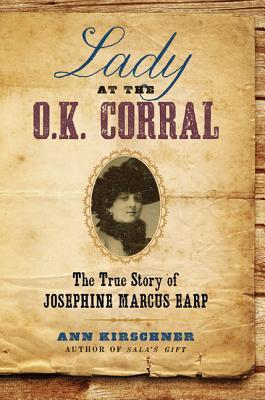
Lady at the O.K. Corral: The True Story of Josephine Marcus Earp by Ann Kirschner

Lady at the O.K. Corral: The True Story of Josephine Marcus Earp by Ann Kirschner

Josephine Marcus Earp made it difficult for biographers to accurately portray her life. Later, she would tell her history how she wished it had been or cover up the parts she didn’t want people to remember. It makes it hard for historians to paint an accurate picture of who this complicated woman actually was.

But I think Ann Kirschner, in this biography, does as good of a job as anyone could be expected to considering how convoluted the history is surrounding Josephine.

“The gunfight at the O.K. Corral was a love story, fought over Josephine Marcus, a woman of beauty and spunk barely out of her teens, escaping the restrictions of birth and seeking adventure, independence, and romance.” pg 3

Photo by Laura Stanley on Pexels.com

It’s a shame really. We know so much about Wyatt Earp and his friends. But the women around them have been almost swept into obscurity.

“A sizable group of authenticated photographs testified to Wyatt Earp’s undeniable good looks at any age, while there was not a single undisputed photograph of young Josephine, only ones in which she looked more like Sophie Tucker than Penelope Cruz.” pg 5

The fragments that are left reveal a woman who was brave and craved adventure. She seemed to have loved deeply and enjoyed gambling. Through extraordinary highs and lows, multiple states, and even the unbelievable gold rush of Nome, Alaska, Josephine lived life to the fullest.

“There was far too much excitement in the air for one to remain long a child,” Josephine recalled.” pg 22

Photo by NaMaKuKi on Pexels.com

Josephine’s Jewish family seemed rather conservative when compared to her wandering existence. She had siblings who married and raised families, like ordinary folk. One imagines that holiday gatherings were rather interesting.

“The most common occupation for a woman in Tombstone was prostitute or performer. Or both: many of the more attractive prostitutes also performed at the theaters and dance halls in town.” pg 47

The end of Josephine’s life was devastating compared to the decades of adventure that proceeded it. Penniless and perhaps suffering from dementia, one of the writers she worked with trying to create a definitive history of her life wouldn’t answer the door when she came calling. Instead, he’d record the abuse she wrote on notes that she slid under the door.

Her aggressiveness frightened him, and he began to keep track of her visits with handwritten notations on the back of calendar pages, with quotes from her: “I’ll get back at you — good and hard.” … Once she stuck her arm through the screen door to reach the doorknob.” pgs 217-218

Photo by Pixabay on Pexels.com

How could that happen? A woman who had once captivated two of the most legendary men in the West reduced to delivering threats when an acquaintance wouldn’t let her in the door. Lady at the O.K. Corral helps the reader understand some of the complicated twists and turns in the life of Josephine Marcus Earp, but I’m not sure that historians will ever be able to completely untangle the mixed-up threads of this woman’s life.

“As Wyatt’s biographer Stuart Lake put it: ‘In back of all the fighting, the killing and even Wyatt’s duty as a peace officer, the impelling force of his destiny was the nature and acquisition and association in the case of Johnny Behan’s girl. That relationship is the key to the whole yarn of Tombstone.’ pg 49

I wish there were more historical records to remember this extraordinary woman. It’s just sad.

Also, it makes me consider the type of documentation and oral record I’m leaving behind. How history will remember me? Will I be someone with a legacy to remember or just another shadow clinging to the arm of a more successful man? Stay tuned.

Thanks for reading!

Here’s the History Guy episode I wrote about Josephine Sarah Marcus Earp:

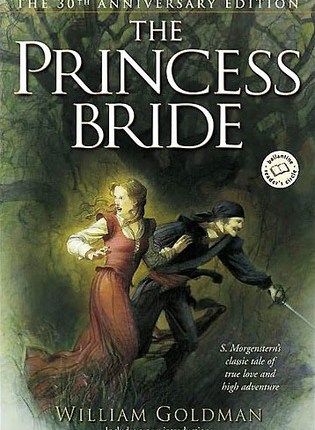
The Princess Bride by William Goldman

The Princess Bride by William Goldman

** spoiler alert ** Please be aware: major spoilers ahead if you have not read the book or watched the film. Consider yourself warned.

A new classic tale about a woman named Buttercup, the man she loves named Westley, a giant who loves to rhyme named Fezzik and Inigo, a Spanish swordsman out for revenge.

Of course, like many, I’ve seen the film The Princess Bride about a bajillion times, but I’d never read the book. It was time to rectify that error. Because the book is always better than the movie, right?

“I love you,” Buttercup said. “I know this must come as something of a surprise, since all I’ve ever done is scorn you and degrade you and taunt you, but I have loved you for several hours now, and every second, more.” pg 59, ebook.

Photo by Charles Pragnell on Pexels.com

But not this time, friends. I know, I was shocked too.

That’s not to say the book isn’t charming, because it is. There’s all of the characters you love and they deliver the classic lines from the film, plus you get the backstory and additional humorous injections from William Goldman. Goldman created a story within a story — he acts as if he’s simply editing a book by S. Morgenstern and has created an entire history around this idea.

He’s so convincing, in fact, that I immediately googled Goldman to make sure I hadn’t missed something.

My favorite part of the book was exploring Prince Humperdinck’s “Zoo of Death”, which we only get to see in passing in the movie.

“The fifth level was empty. The Prince constructed it in the hopes of someday finding something worthy, something as dangerous and fierce and powerful as he was. Unlikely. Still, he was an eternal optimist, so he kept the great cage of the fifth level always in readiness.” pg 68, ebook.

Photo by Daniel Torobekov on Pexels.com

Honestly, some of the scenes in the book go on a bit too long. The part where Westley challenges Prince Humperdinck “to the pain” instead of “to the death” comes off as creepy in the book, whereas, I felt, in the film it was kind of awesome. I’m not entirely certain what the difference is, except his speech is more to the point in the film.

“It means that I leave you to live in anguish, in humiliation, in freakish misery until you can stand it no more; so there you have it, pig, there you know, you miserable vomitous mass, and I say this now, and live or die, it’s up to you: Drop your sword!” pg 225

Those are all just quibbles compared to the ending, which was the most shocking point of all.

Ok, as we all know, in the movie, it ends with a kiss and they all live happily ever after.

In the book, not so! Here are the last lines in the “official story” not counting a few more comments by Goldman:

However, this was before Inigo’s wound reopened, and Westley relapsed again, and Fezzik took the wrong turn, and Buttercup’s horse threw a shoe. And the night behind them was filled with the crescendoing sound of pursuit… pg 228, ebook.

Photo by Min An on Pexels.com

That’s it. I nearly fell out of my chair when I read it. Here’s what our author said about it a few paragraphs later:

“I’m not trying to make this a downer, understand. I mean, I really do think that love is the best thing in the world, except for cough drops. But I also have to say, for the umpty-umpth time, that life isn’t fair. It’s just fairer than death, that’s all.”

It’s such an unsatisfying ending. I can see why they changed the film because I don’t think audiences would have stood for it, which probably says more about film-going audiences than readers, but still. Don’t readers deserve a happy ending too?

Thanks for reading!

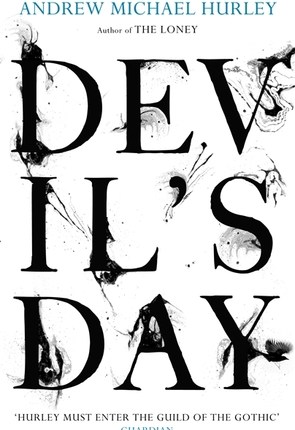
Devil’s Day by Andrew Michael Hurley

Devil’s Day by Andrew Michael Hurley

A slow-moving horror story that asks the reader to consider what may be the truth behind ancient customs and myths, and what secrets a small, isolated community may be hiding from the rest of the world.

“One late October day, just over a century ago, the farmers of the Endlands went to gather their sheep from the moors as they did every autumn. Only this year, while the shepherds were pulling a pair of wayward lambs from a peat bog, the Devil killed one of the ewes and tore off her fleece to hide himself among the flock.” pg 1

Photo by Snapwire on Pexels.com

The small gathering of farms, Underclough, is as much a character in this story as the actual characters.

“When the first buildings appeared, I could tell that Kat was disappointed. I think she’d expected to find Underclough nestled in the valley, not dark and cramped like something buried at the bottom of a bag.” pg 24

There’s a sense of inevitability about the whole thing. You’re not just born in this place. You live, work and die here, on the edge of the wilderness and the known world.

“Living on the farms was one endless round of maintenance. Nothing was ever finished. Nothing was ever settled. Nothing. Everyone here died in the midst of repairing something. Chores and damage were inherited.” pg 38

Photo by Karolina Grabowska on Pexels.com

John Pentecost knows from his childhood that there are forces in nature that cannot be explained. There are whispers in the woods and shadows beneath the trees that move with their own power. There’s a reason why the farmers have a “Devil’s Day” each year, to put the spirit to sleep while they gather their flocks in peace.

“As the Devil watched me, the same question ran through my mind as incessantly as the river. Did I like stories? Did I like stories? I answered yes.” pg 146

Andrew Michael Hurley uses the environment and setting to slowly create a feeling of dread, but then I felt like he never delivered on the story that he so painstakingly sets up. The pace is glacially slow.

Photo by Lucas Pezeta on Pexels.com

That being said, there are one or two scenes from Devil’s Day that haunted me when I read them. I just happened to be reading this the night a record-breaking windstorm blew through town. I heard eerie shrieks and groans coming from outside my windows throughout the evening.

I couldn’t help but wonder what I would say if the Devil asked me if I like stories…

Thanks for reading!

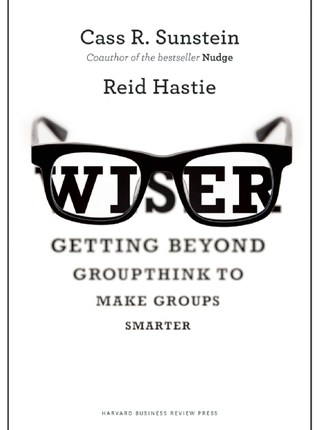
Wiser: Getting Beyond Groupthink to Make Groups Smarter by Cass R. Sunstein

Wiser: Getting Beyond Groupthink to Make Groups Smarter by Cass R. Sunstein

Authors Cass Sunstein and Reid Hastie examine many of the problems that beset groups and how to best address them for optimal group performance.

Written in a style that is more academic than approachable, Wiser uses the findings of multiple researchers to come to its conclusions. This book may be useful to managers who are desiring to set up a group at their own place of employment and want to start on the best foot.

“Do groups usually correct individual mistakes? Our simple answer is that they do not. … We also ask a second question: Can groups correct individual mistakes? Our simple answer is that they can. We aim to explain how.” pg 2

Photo by Canva Studio on Pexels.com

I picked this book up because, frankly, I wanted to know why anybody would utilize groups in a work setting. Every one that I have ever sat on has been either a disaster or inefficient. I was hoping Wiser would help me see the appeal that group-thinking seems to have for some.

And it did. But it also opened up my eyes to the myriad reasons why my experiences had been so bad. I had just assumed groups didn’t work. As it turns out, things are more complicated than that.

“The basic lesson is that people pay a lot of attention to what other group members say and do — and that they do not end up converging on the truth. In fact, they often ignore their own beliefs and say that they believe what other people believe.” pg 28

There can also be problems with authority figures in a group setting: “If the group contains one or more people who are known to be authorities or who otherwise command a lot of respect, then other group members are likely to silence themselves out of deference to the perceived or real authority.” pg 35.

I’ve seen that happen multiple times. The whole purpose of the group is thrown off. It has often frustrated me, leading me to think we may as well have saved our meeting time and had the boss issue a directive.

Photo by Andrea Piacquadio on Pexels.com

Groups also have to keep in mind the idea of “cascades” or ideas taking a hold early in the process and then taking over the rest of the group’s time: “For their part, many groups end up with a feeling of inevitability, thinking that they were bound to converge on what ultimately became their shared view. Beware of that feeling too, because it is often an illusion. The group’s conclusion might well be an accident of who spoke first…” pg 60

Groups can polarize themselves, driving their members to extremes they wouldn’t otherwise reach without members that think like them. To combat this, leaders should make sure groups are diverse.

In a perfect world, groups are equivalent to their best members, aggregate all of the information each individual brings to the table, utilizes experts properly and creates an almost mystical “synergy” where, as the authors say, “the whole is more than the sum of its parts.”

Photo by fauxels on Pexels.com

The trick is getting the group to work like that. As I said, I’ve never seen it. This book brings me hope that perhaps one day I will.

The failures of groups often have disastrous consequences — not just for group members, but for all those who are affected by those failures. The good news is that decades of empirical work, alongside recent innovations, offer a toolbox of practical safeguards, correctives, and enhancements. With a few identifiable steps, groups can get a lot wiser.” pg 214

Thanks for reading!

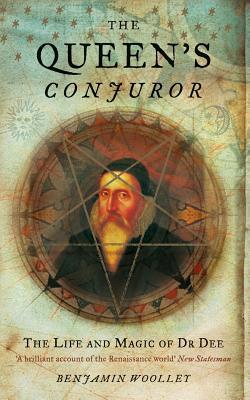
The Queen’s Conjuror: The Science and Magic of Dr. John Dee by Benjamin Woolley

The Queen’s Conjuror: The Science and Magic of Dr. John Dee by Benjamin Woolley

The Queen’s Conjuror is a biography of Dr. John Dee, a fascinating and much-maligned Renaissance man who was, among other things, Queen Elizabeth I’s personal astrologer.

“And for these and such like marvellous acts and feats, naturally, mathematically, and mechanically wrought and contrived: ought any honest student and modest Christian philosopher be counted and called a conjuror?” pg 15

He had interests in astrology, science, mathematics and the occult, which, to modern eyes, may seem strange. But Dee viewed the inner workings of nature and the universe as a type of magic and his studies of it, through the use of science, was another way that Dee worshiped God.

Photo by Tima Miroshnichenko on Pexels.com

“Queen Elizabeth, a symbol of Protestant sovereignty, told the French Ambassador Andre Hurault: ‘There is only one Jesus Christ… the rest is dispute over trifles.’ This, it seems, was Dee’s view as well.” pg 45

Part of Dee’s study of nature was an attempt to find a “universal language.” This universal language, Dee believed, was told to the Biblical Adam by God in the fabled Garden of Eden before the fall from grace. Dee hypothesized if a scientist could find this universal language, giving the secret name of beasts, plants and everything in creation, that it would unlock the secrets of the universe itself.

“In other words, Dee thought that the ‘astronomical’ symbols appeared to be the relics of a long lost universal language that transcended national and, by implication, religious barriers.” pg 75

Photo by cottonbro on Pexels.com

In addition to his legacy of mysticism and the Enochian alphabet, Dee is credited as the first man to formulate the idea of a ‘British Empire’ and he suggested that England develop its navy as a key to upholding that empire.

“The navy would become the ‘master key’ of English military strength, England would challenge the Spanish — to spectacular effect in its defeat of the Armada in 1588 — North America would be colonized, a British Empire would emerge, and the expeditions that Dee had in the last few years been helping to plan would lay its foundations.” pg 123

Another reason I admire Dee — he amassed one of the largest libraries in Europe. Unfortunately, his home was looted during a long sojourn on the Continent.

Photo by Ekrulila on Pexels.com

“In short, Dee’s house had been ransacked not by an ignorant peasant mob, but by pupils and associates. Their motives remain unclear. They may have seized the books to settle outstanding debts, or to discover the secrets they contained, or to hide them from others.” pg 278

Although he died in poverty and obscurity, he affected society then and today, and represented an era where science, religion, and mysticism were intimately entwined.

Highly recommended for readers who enjoy history, mysticism, and a curious combination of the two.

Here’s the History Guy episode I wrote about Dr. John Dee:

The History Guy remembers Dr. John Dee

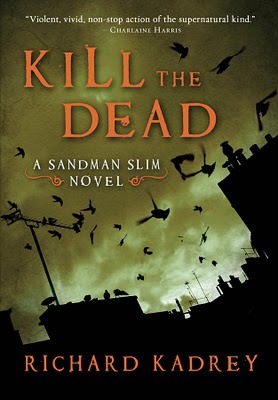
Kill the Dead (Sandman Slim, #2) by Richard Kadrey

Kill the Dead (Sandman Slim, #2) by Richard Kadrey

“Subtle hunting, acting like a grownup, I really miss Hell sometimes.” pg 4

First of all, don’t read the Goodreads description of Kill the Dead before you read it. It gives far too much away!

Here’s a Heidi-no-spoilers blurb that should serve you just as well: James Stark, the half-angel, half-human and one hundred percent pissed off anti-hero is back. Keeping an apartment in Los Angeles doesn’t pay for itself, so Stark is on the hook for contract work for a variety of agencies including Vigil (a super secret department of Homeland Security) and Lucifer, yes that Lucifer.

Photo by ROBERTO ZUNIGA on Pexels.com

Because of a small saving-the-world situation in the last book, Stark has become an underground local celebrity, which has its ups and downs. Part of the perks includes a upsurge in customers at the Bamboo House of Dolls, Stark’s favorite local dive.

“It’s good to have one thing that hasn’t changed much. We need a few anchors in our lives to keep us from floating away into the void. Like Mr. Muninn said the one time he came in. “Quid salvum est si Roma perit?” What is safe if Rome perishes?” pg 28

Trouble brews when people start to go missing in Los Angeles’ underground and some of the members of its leading magical families turn up dead. Looks like Stark is going to have to save the day again and he’s not happy about it.

“I didn’t save anyone. I just killed the bastards who needed killing. Get it? I don’t save good people. I murder bad ones.” pg 39

Photo by Julia Volk on Pexels.com

Why can’t the world just save itself? Hasn’t Stark suffered enough? But what’s a nephilim to do if not save the world while holding tightly to his fracturing sanity with both hands.

“You came back to get the people who hurt you and Alice and you did it. Great. Now you need to find the next thing to do with your life.” “Like learn the flute or maybe save the whales?” pg 57

Suffice to say, Stark finds a few new motivational factors in this book and we are treated to some fairly serious zombie action.

I enjoyed the second entry in the Sandman Slim series, but less than the first book. To start, I felt it was less focused. There’s a heck of a lot going on in Stark’s life and he doesn’t stop to ponder things. He’s always on the go. It makes for a book that you can’t put down, because if you do, you’ll forget who is doing what.

We see less of some of my favorite side characters, which was another bummer. Stark is so intense. He needs more comic relief than just his literal talking head roomie who is perpetually drunk and watching garbage on his computer.

Photo by Photography Maghradze PH on Pexels.com

“I know whose side I’m on. Mine.” pg 236

And there’s the darkness factor. Again, this is urban fantasy with a heavy dose of pessimism. No one is coming to save our intrepid hero. There may be angels in heaven but they couldn’t care less about what goes down on earth. At least Lucifer can be bothered to visit and throw some cash around to his favorites. How depressing is that.

That being said, of course I’m going to pick up the next volume. This is a revenge story primarily, but it is also a love story. I feel like, somewhere in the cosmos, Stark is going to find his Alice and they’re going to get the time together that he was denied. Won’t he be pleasantly surprised…

Thanks for reading!

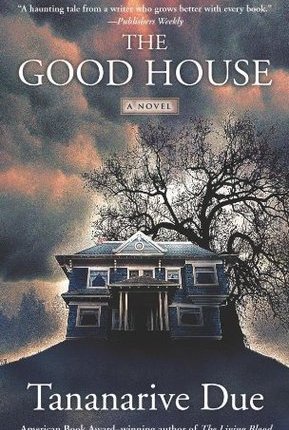
The Good House by Tananarive Due

The Good House by Tananarive Due

The Good House is a horror story spanning generations of the Toussaint family and their home. The family has a history of healing and mysterious vodun practices, or maybe they’re just extremely lucky. Take, for example, a mud slide that destroyed every home in their part of town, except theirs.

“The mud’s recent wrath had left their two-story house untouched, but sprays of buckshot fired at the house during cowardly moments, usually at night, had pocked and splintered the old door. The mere sight of the damaged door had always made her angry, and Marie Toussaint no longer trusted herself when she was angry.” pg 10, ebook.

Photo by Maria Orlova on Pexels.com

Sacajawea, the town where the Toussaints live, is small. Everyone knows each other and have long memories.

“Aside from the handful of vacationers who frequented the town’s two popular B&Bs, most people in Sacajawea had lived here for generations, earning hourly wages in the mills in Longview or taking down trees in the woods. And even if Sacajawea had been a more sometimey place, the rules would have been different for Angela, or anyone else who was kin to Marie Toussaint.” pgs 25-26, ebook.

Why is the Toussaint home called “the Good House”?

“…this house was built in 1907 by the town pharmacist, Elijah Goode. He chose this place because he said the land felt ‘blessed beyond all description,’ or in any case that’s what he wrote to his brother in Boston.” pg 30

After a tragic Fourth of July party, Angela Toussaint, the granddaughter of Marie Toussaint, thinks her family home may be mislabeled.

Photo by Tamas Marton on Pexels.com

What I enjoyed most about The Good House is the author Tananarive Due wrote an epic horror story around a family with characters I cared about. This wasn’t just a thrill-a-minute short story. Getting to know the residents of Sacajawea and the Toussaint family was a treat. Then, when things started to get scary, I was completely hooked.

This is a horror story for readers who enjoy a slow reveal and an extremely satisfying conclusion. Highly recommended.

Thanks for reading!