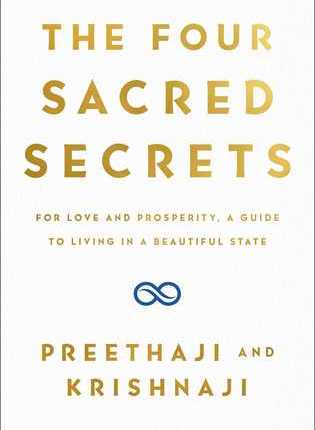
The Four Sacred Secrets: For Love and Prosperity, A Guide to Living in a Beautiful State by Krishnaji, Preethaji

The Four Sacred Secrets: For Love and Prosperity, A Guide to Living in a Beautiful State by Krishnaji, Preethaji

In The Four Sacred Secrets, Krishanaji and Preethaji, a husband and wife team, help readers understand four principles for spiritual living. Each section of the book is divided into an explanation of the principle or secret and then details corresponding transformational journeys the readers can undertake to help them internalize and live each one.

“Our goal is to help you awaken to a power that is much greater than any technique you can master — a power that is available to each and every one of us. We need only unlock it. It is the power of a transformed consciousness.” pg 2

Photo by Karan Shah on Pexels.com

The secrets aren’t really “secret” in that they’ve been discussed in spiritual texts throughout human history. But each speaks to how someone’s consciousness can move away from one’s primal state of beauty. The authors believe there are two states in life — this beautiful state of oneness or not being in this state.

The simplicity of this method of teaching is that it is easy to tell if you are in a beautiful state or not. You can feel it. You simply know. It is the state that children walk in. They are themselves, unconditioned by worldly expectations or concerns. It is a state that points to oneness with life itself.

“I want us to be free from the idea that we are separate from one another. Free from the war we feel within ourselves and the world around us. Free from the suffering that makes our lives feel small and meaningless. I knew a beautiful life lived in a beautiful state of being was everyone’s destiny.” pg 12

Photo by Jonathan Petersson on Pexels.com

The secrets include living your spiritual vision, discovering your inner truth, awakening universal intelligence and practicing right action. The journeys to these secrets are all different, but I think a similar thread runs throughout — observation of current conditions without judgment. If you can figure out where you are and then you can see clearly what’s holding you back.

“Our society places a premium on doing, with very little care to our inner state of being. Few of us truly make creating a beautiful inner experience a priority in our lives, choosing instead to live as though our career, performance, appearance, status, or financial security is all that matters.” pg 23

This book contains all of the tools one would need to completely transform their inner world, including meditation instructions and mythological allegories.

The authors also share the real-life stories of many of their students, some of whom didn’t even realize they were in a state of suffering until they stopped a minute and observed themselves. The type of freedom from suffering that seems to follow these students’ transformations is astonishing. If only we could all feel that way, what a different world this would be.

Photo by Alex Green on Pexels.com

“So many of us have been taught that we must solve our problems if we want to be free of suffering. But the truth is the inverse: If you want to become free of your problems, start by allowing your suffering to dissolve.” pg 62

Recommended for spiritual seekers who aren’t sure where to start. The Four Sacred Secrets is a good place to start looking.

Thank you to the publisher for a free advance reader’s copy of this book. The brief quotations I cited may change in the final version of the book. Expected publication date is August 2019.

Thanks for reading!

The 7½ Deaths of Evelyn Hardcastle by Stuart Turton

The 7½ Deaths of Evelyn Hardcastle by Stuart Turton

A science fiction twist on the mystery genre — each morning a man, who can’t even remember his own name, wakes up in a different body at a party in the country. Each night, the daughter of the hosts dies. It is his job to solve the mystery to break the cycle. But where to begin?

“My dear man, what on earth happened to you?” he asks, concern crumpling his brow. “Last I saw —” … “We must fetch the police,” I said, clutching his forearm. pg 7

Photo by Skylar Kang on Pexels.com

As the man lives the same day again and again, he discovers that he is not the only one trying to solve this mystery. And none of the people in the house are who they appear to be.

“A party?” she says, shaking her head. “Oh, my dear man, you really have no idea what’s happening here, do you?” pg 48

Any readers out there watch the television show, Quantum Leap, in the 80’s and 90’s? (It may be on Netflix now too, I don’t know.) I devoured that show every time it was on.

The television show is about a doctor named Sam Beckett who enters a time travel/quantum physics experiment and it goes terribly wrong. He finds himself stuck in the body of other people throughout history. He has to solve a mystery or right a wrong in each life and then he “leaps” into somebody else.

From the introduction to Quantum Leap“And so Dr. Beckett finds himself leaping from life to life, striving to put right what once went wrong and hoping each time that his next leap will be the leap home.”

This story is quite similar to a mystery version of that show.

“Somebody’s going to be murdered at the ball tonight. It won’t appear to be a murder, and so the murderer won’t be caught. Rectify that injustice and I’ll show you the way out.” pg 68

Photo by Pixabay on Pexels.com

I enjoyed it immensely. My only complaint is that the introduction is completely baffling until the author begins to drop clues about what’s going on. Other than that, prepare yourself for a twisting, complex ride through the same day, over and over again.

“Somebody wants me dead.” It feels strange to say it out loud, as though I’m calling fate down upon myself, but if I’m to survive until this evening, I’ll need to face down this fear.” pg 34

It doesn’t sound like very much fun, but similar to the film Groundhog Day, the reader soon discovers that much more goes on in one day than can be entirely lived through one viewpoint or life.

This book helped me ponder how complex life actually is. Imagine everything you’re missing by living each day in just one body.

Photo by Josh Sorenson on Pexels.com

Highly recommended for science fiction and mystery fans.

Thanks for reading!

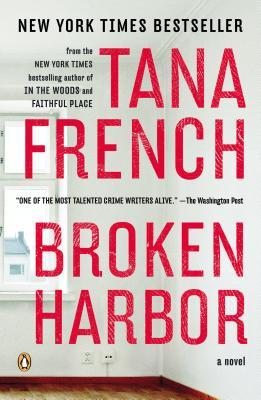
Broken Harbor (Dublin Murder Squad, #4) by Tana French

Broken Harbor (Dublin Murder Squad, #4) by Tana French

When a family is attacked and three of its members die, the Dublin Murder Squad activates Detective Michael “Scorcher” Kennedy to solve the case.

“Here’s what I’m trying to tell you: this case should have gone like clockwork. It should have ended up in the textbooks as a shining example of how to get everything right.” pg 13, ebook

Photo by Rachel Claire on Pexels.com

But things are never that simple in Tana French’s thrilling, mystery series.

I said, “This is a bad one.” O’Kelly laid one heavy palm on the call sheet, like he was holding it down. He said, “Husband, wife and two kids, stabbed in their own home. The wife’s headed for the hospital; it’s touch and go. The rest are dead.” pg 15, ebook.

Readers were introduced to Scorcher in the last book, as the tight-laced and slightly inept officer assigned to investigate the cold case that took place in Faithful Place. I didn’t like him much in that book and this one didn’t change my opinion.

“Probably he was thinking what a boring bollix I was. … Only teenagers think boring is bad. Adults, grown men and women who’ve been around the block a few times, know that boring is a gift straight from God.” pg 22, ebook.

Photo by Dimitry Anikin on Pexels.com

I thought he was kind of boring too.

Unlike the last books which mainly dealt with psychological tension caused by fear, Broken Harbor delves into the murky waters of mental illness.

“I don’t know what word you want me to use, but if this fella’s mental, then nobody has to go asking for trouble. He’s bringing it with him.” pg 81, ebook.

In addition to juggling his case, Scorcher is trying to protect his sister, who is bipolar and refuses to seek help. The family hides her illness from their neighbors because of shame and something that happened in their past.

Photo by Daria Shevtsova on Pexels.com

This plot point seemed outdated to me. Culture has shifted in the past decade so that mental illness is no longer something that is swept under the rug. Maybe this is different in Ireland than the States, but I kept getting hung up on that and it spoiled my enjoyment of what would have otherwise been another thrilling story.

Recommended for readers who enjoy psychological thrillers. Be aware of potential triggers for anyone who struggles with auditory hallucinations, suicidal tendencies and mood swings.

Thanks for reading!

Powers of Two: Finding the Essence of Innovation in Creative Pairs by Joshua Wolf Shenk

Powers of Two: Finding the Essence of Innovation in Creative Pairs by Joshua Wolf Shenk

Joshua Wolf Shenk examines creatives pairs throughout history in an effort to see why and how they work, and also why they end.

“The dyad is also the most fluid and flexible of relationships. Two people can basically make their own society on the go. When even one more person is added to the mix, the situation becomes more stable, but this stability may stifle creativity, as roles and power positions harden.” Introduction, pg xxii

Photo by Gratisography on Pexels.com

Shenk believes pairs move through six stages: Meeting, confluence, dialetics, distance, the infinite game and interruption. The stages show the development of the relationship, assumption of roles and eventual fall out of creative pairings.

“This book is written in the faith, underscored by experience, that more is possible — more intimacy, more creativity, more knowledge about this primary truth: that we make our best work, and live our best lives, by charging into the vast space between ourselves and others.” Introduction, pg xxv

I picked up this book because I’m involved in a creative partnership with my spouse (The History Guy, YouTube channel) and I was curious to see how other pairings have worked in the past. It was interesting to see how similarly we function when compared to other creative partners. I mean, everyone is different, but there are patterns that can be observed if you look closely.

“The irony is that, while our eyes naturally follow the star, a pair’s center of gravity is often with the one we see less.” pg 66

Photo by Victoria Borodinova on Pexels.com

Shenk’s chapters were interesting not only in their obscure history about some of the most famous partners in history, but also their implications for people who are looking to share their creative endeavors, and lives, with others.

“High-functioning couples commonly say that one key to a good relationship is giving each other plenty of space. But a big reason there are so many dysfunctional couples, romantic and creative, is that it’s hard for a lot of us to know what that really means or what it would look like in our lives.” pg 128

What works, what doesn’t work, and why?

“Creativity has become a broad, vague term, a kind of stand-in for universal good, even a synonym for happiness (or, as innovation, for profits). But making new, beautiful, useful things is as much about discord as it is about union.” pg 21

Photo by Tim Samuel on Pexels.com

The path isn’t always smooth, but good partners shore each other up. They may be strong where the other is weak. They challenge each other to be better than they ever would have been by themselves.

“Highly creative people have high standards and distinct sensibilities; they see the world in an unusual way (or they wouldn’t be able to make something new out of the materials of that world). Their partners must be a match — and the discovery of a shared sensibility is itself often an impetus to share work.” pg 31

I learned a lot about the Beatles, scientists, dancers, artists, screen writers, authors and more in Powers of Two. This is a book about creativity, yes, but it also looks at relationships themselves. It takes apart power dynamics, personal satisfaction and creative instincts. It is more of a rumination on creative pairs than a scientific thesis.

Recommended for readers who enjoy quirky non-fiction books. You’ll probably learn something new if you pick this one up. I did.

Thanks for reading!

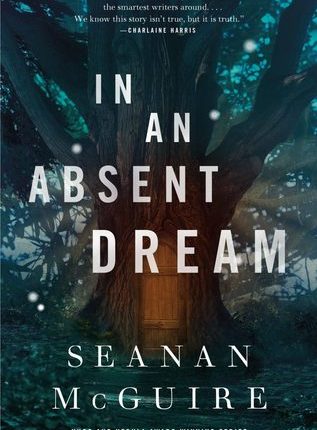
In an Absent Dream (Wayward Children, #4) by Seanan McGuire

In an Absent Dream (Wayward Children, #4) by Seanan McGuire

In this enjoyable entry in the Wayward Children series by Seanan McGuire, we learn the other-worldly wanderings of the person who calls herself Lundy and why she is the way she is.

Like the other children from this series, the world, in this case the Goblin Market, chose the child for specific reasons.

“Katherine’s remarkability took the form of a quiet self-assuredness, a conviction that as long as she followed the rules, she could find her way through any maze, pass cleanly through any storm.” pg 18

Photo by carboxaldehyde on Pexels.com

The most enjoyable aspect of this story is Lundy’s unrepentant bibliophilia. I think anyone who loves to read can empathize with much of her character.

“Mysteries in books were the best kind. The real world was absolutely full of boring mysteries, questions that never got answered and lost things that never got found. That wasn’t allowed, in books. In books, mysteries were always interesting and exciting, packed with daring and danger, and in the end, the good guys found the clues and the bad guys got their comeuppance.”pgs 27-28

But it is Lundy’s penchant for always trying to find a loophole in reality, which serves her well in reading and the Goblin Market, that eventually creates a problem.

“If she thought of this as a fairy tale that she had somehow stumbled into, she could handle it. She knew the rules of fairy tales. Most importantly of all, she knew that fairy tales ended with “happily ever after” and everything being just fine.” pg 48

Photo by Guilherme Rossi on Pexels.com

Like McGuire’s other entries in this series, nothing is simple in this tale and there are decisions far more complex than a child can easily make. That’s part of the brilliance of it. These worlds that the children stumble into are dangerous and sometimes innocent people get hurt.

“What’s the Goblin Market?” “It is a place where dreamers go when they don’t fit in with the dreams their homes think worth dreaming.” pgs 56-57

Highly recommended for readers who like their fairy tales told with just enough reality to make it feel real. The Wayward Children series is a treat.

My other reviews in the series:

Every Heart a Doorway

Down Among the Sticks and Bones

Beneath the Sugar Sky

Thanks for reading!

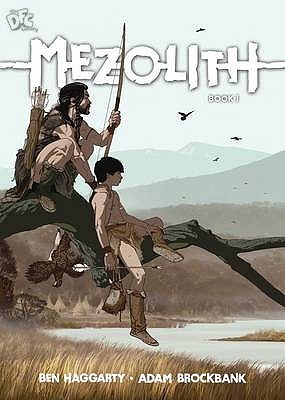
Mezolith by Ben Haggarty, Adam Brockbank

Mezolith by Ben Haggarty, Adam Brockbank

A beautifully illustrated coming-of-age tale about a boy who lives with his stone age tribe. Reality and mythology are mixed in his life to create something else, something that feels true though it couldn’t possibly be.

“Poika, at the heart of the world there is a cave and in that cave there are countless urgas, all sleeping… all dreaming… and when one dreams that a brother has been destroyed he wakes. Crawls into the world. Finds some humans and cries pitifully near them… until someone comes to care for him…”

Photo by Rozemarijn van Kampen on Pexels.com

How do you imagine that Stone Age peoples explained phenomena that scientists today have only begun to unravel? Where does love come from? What brings a fever or trouble? They explained these things by telling stories.

There’s the story of a man who fell in love with a woman who was actually a swan, so he travels to the end of the world to convince her father, the Swan King, to let her live with him.

There’s a demon who conceals itself as a baby and then in the night, if you take it into your tribe, it wakes and consumes everything in its path.

There’s a woman who should have died, but survived, and now has an uncanny relationship with crows and can see through their eyes… and more.

Photo by Pixabay on Pexels.com

It’s magical and strange, and Adam Brockbank has illustrated Ben Haggarty’s stories beautifully. It is easy to see why this was a Times pick for Best Graphic Novel.

Despite this excellence, only one library in my enormous, interconnected library system owned this book. I was surprised. It has appeal for both young adults and the young-at-heart. The violence in it isn’t overly graphic. The themes are appropriate and intriguing for reluctant readers.

If any librarians read this review, please consider buying a copy of Mezolith for your shelves. I think your patrons would enjoy it. I certainly did.

Thanks for reading!

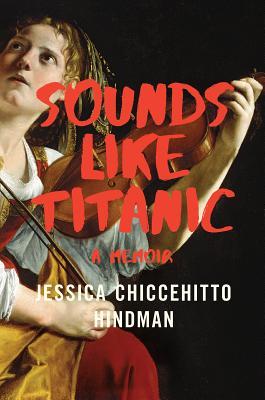
Sounds Like Titanic by Jessica Chiccehitto Hindman

Sounds Like Titanic by Jessica Chiccehitto Hindman

Jessica Chiccehitto Hindman is a violinist and Eastern Studies major who is struggling to pay her way through Columbia gets a job that seems to be more than she ever hoped for. She is going to be playing professionally for audiences across the U.S. It turns out to be fake — the music is played through speakers, never live.

“While this is a memoir about being a fake, this is not a fake memoir. This is a memoir in earnest, written by a person striving to get at the truth of things that happened in her past.” From the introduction.

Photo by Pixabay on Pexels.com

Jessica Hindman grew up in Appalachia among some of the most impoverished residents in the country. It’s interesting though, the gripping poverty seemed normal to her until she considered it later, through more mature eyes. Children are so flexible. Almost anything can be made to seem “normal”.

“And as you listen to the other kids talk about their life goals, you realize something else: You are someone whose upbringing was upper class enough to make you believe you could make music for a living, but lower class enough to provide no knowledge of how to do it.” pg 10

After some serious struggles through puberty with her body and self image, Jessica ends up following her boyfriend to Columbia University, where they almost immediately break up. But her troubles to pay the astronomical tuition bills are just beginning.

“The Composer,” the man behind the music and the tours Jessica eventually goes on, seems to know very little about music himself.

Photo by Nathan Martins on Pexels.com

“And then, The Composer asks me a question that — had it come from any other musician, let alone a Billboard-topping classical composer who has performed with the New York Philharmonic — I would have taken as a joke. … “I like this music,” he says of the opening to Beethoven’s Fifth Symphony. “What is it?” pg 20

Despite any concerns she may have, Jessica perseveres in the job anyway, because her tuition requirements leave her little choice. It nearly ruins her mind and body before she finds a way out of her predicament. Along the way, you can’t help but hope for her to succeed.

“After several more customers mention ‘Titanic,’ you begin to realize that most of The Composer’s compositions sound very ‘Titanic-esque’. And you notice that the more the songs sound like ‘Titanic,’ the more customers want to buy them.” pg 47

I enjoyed this memoir so much not just because of Jessica’s life, which is fascinating, but also because we have so many things in common. I am the same age she is, lived through the events of 9/11 in a collegiate setting (as she did), started out as a music major but changed to something else, and the similarities go on. I’ve also experienced crushing anxiety with the same physical symptoms she describes. It was eerie, really.

“A million times more than any other emotion or experience, fear has the strength and ability to mangle her into something different from what she truly is, something phony and fake and cowardly. And now, surprised and twisted and disoriented and broken as she is by fear’s sudden arrival, she realizes that she needs to fight it, fight for her life.” pg 223

Photo by Pixabay on Pexels.com

But you don’t need to be anything like Jessica to appreciate what it means to be made to feel like an impostor in your own life. To know that you can be doing better, but you’re just inching along. To dream big but live small.

Recommended for readers who enjoy memoirs about a life filled with difficulties, but also hope. If you have a background in music, you may like this book even more, but it’s not required to understand it.

Thanks for reading!

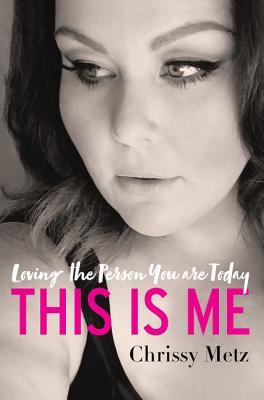
This Is Me: Loving the Person You Are Today by Chrissy Metz

This Is Me: Loving the Person You Are Today by Chrissy Metz

Chrissy Metz relates her abusive and underprivileged childhood and how hard work and perseverance made her into the inspirational figure and television superstar she is today.

“Honeybees are meaningful to me because technically they’re not supposed to be able to fly. We know they do, but in the 1930s French scientists ‘proved’ they couldn’t. Their reasoning was that it was aerodynamically impossible because honeybees’ wings are too small to support the weight of their bodies. … I get that. I’m not supposed to be able to fly either.” pg 6, ebook

Photo by Pixabay on Pexels.com

Chrissy’s parents divorced when she was young and her mother worked multiple jobs to support her children. They lived in a trailer park for a time in Florida.

“I know now that when families are in crisis, kids blame themselves, and kids also take on adult burdens. Which is why it is important that I say something else: Arredondo Farms is still there and I won’t say a single bad thing about it. People look down on people who grow up in trailer parks.” pg 25

Things became a bit easier when her mother married Chrissy’s stepfather (she calls him ‘Trigger’), but then he began systematically abusing Chrissy.

“I don’t remember why Trigger hit me the first time. I know he thought I’d had it coming for a while. I bet I was too loud putting away the dishes. Or I didn’t put his Coca-Cola in the fridge and he wanted a cold Coke. That would usually do it.” pg 28, ebook

Photo by Karolina Grabowska on Pexels.com

Somehow, she survives to not only succeed in the business of her dreams, but to thrive. It wasn’t easy. She honestly documents her struggles, both mentally and physically. She continues to have relationship troubles. But Chrissy never lets it dim her optimism that things can get better and that she can improve, no matter where she finds herself.

Throughout the memoir, she gives tips and life advice that she calls “Bee Mindful” lessons — referring back to her metaphor of how the honeybee can fly even though it seems aerodynamically impossible.

“So many people, including myself, talk at each other but don’t listen. To ourselves or to other people. Believe in actively listening to yourself. Take time to have a conversation with yourself every now and again. … So often we’re on autopilot and we slip into addictive behaviors to avoid listening to ourselves. We eat, or drink, or, yes, check our phones — anything to avoid hearing what we truly need to say.” pg 57, ebook

Photo by Ono Kosuki on Pexels.com

The astonishing part of this memoir, to me, is simply how often Chrissy is judged and found wanting because of her appearance. How long are we, as a society, going to accept the objectification of women’s bodies and believe that it’s ok? I thought we addressed that issue in the last century, but, from the way this beautiful and strong woman has been treated her entire life, it is obvious that we haven’t gotten very far.

I found Chrissy Metz to be inspiring before I read her memoir. Now, I feel like she’s a literal hero for anyone who simply wants to live life as they are and not accept anyone else’s standards for what beautiful, strong and successful is. And she manages to be kind and humble while doing it.

Highly recommended for any readers who like inspiring memoirs — this one gets all the stars.

Thanks for reading!

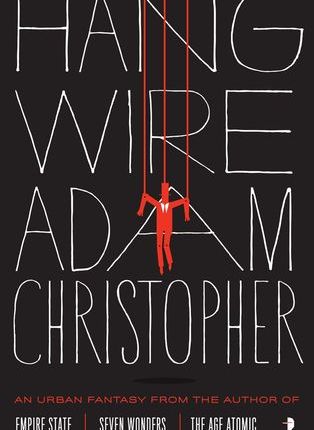
Hang Wire by Adam Christopher

Hang Wire by Adam Christopher

Hang Wire is an urban fantasy novel with a half dozen characters, some immortal, some every-day people, who come together to face a threat of a magnitude that humanity has never known.

In between flash backs to the villain setting up his ghastly scheme, readers get to follow the trail of a killer in San Francisco who garrotes his victims with thick cable and then hangs them by their necks in a grisly display. 

“When the second surge threw him up to the surface, and the third pulled him down, he knew something was wrong. When he surfaced again he could hear it, a moaning, like a deep wind howling through a canyon a million miles away.” pg 10

Photo by Alex Azabache on Pexels.com

It’s actually a rather complex plot between the flashbacks and the modern day with nearly constant back and forth skips in time, almost like waves in an ocean.

“You are the master of every situation.” pg 45

Which leads to my main complaint about this book. Similar to other urban fantasies I’ve had the privilege of reading in the past, it felt like the plot either needed to be simplified or fully fleshed out. By zipping over so much in so few pages, I felt like we only got part of the story.

“Of course it had happened before. Several times. San Francisco, like an unfortunate number of other cities across the United States, knew what it was like to have a serial killer in their midst.” pg 47

Photo by Pedro Figueras on Pexels.com

I guess the lesson I took from Hang Wire is that less is more when it comes to storytelling. And Hawaiian gods of death are incredibly cool.

Recommended for readers who don’t mind multiple flashbacks in their urban fantasy.

Thanks for reading!