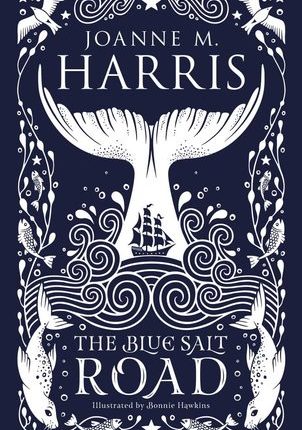
The Blue Salt Road by Joanne M. Harris

The Blue Salt Road by Joanne M. Harris

The Blue Salt Road is where the selkies dwell as kings and queens of the deep. When a young woman named Flora needs to find a husband, she despairs of choosing any of the men on the small island where she lives. They’re hardened by work on the whaling ships and unrefined.

Photo by Andre Estevez on Pexels.com

But when Flora’s grandmother teaches her a secret about mysterious beings called the selkies, she knows her search will soon be over.

“In tears he was summoned, salt as the sea,
In silver was his binding. In blood and betrayal, his calling he found.
In cedar, his salvation.”
 pg 87

Unlike other selkie stories I’ve read, like Sealskin, the person summoned from the waves is male, not female. I’m sure the fairytale has been told both ways, but it’s a nice change from other versions.

Joanne Harris writes interesting and nuanced fantasy in which she takes a look at older stories and puts her own spin on them. If you haven’t had a chance, you may want to read her duology about the Norse god, Loki. (The Gospel of Loki and The Testament of Loki)

“This is my story. The story of the land-folk and the seal-folk, and of treachery, and of the call of the ocean.” pgs 4-5

Photo by Skitterphoto on Pexels.com

There’s quite a lot to unpack in the symbols of The Blue Salt Road and the selkie myth. (Warning, spoilers ahead for those unfamiliar with the selkie myth.) In Jungian psychology and dream interpretation, water is a common symbol for the subconscious mind. What floats or comes to the surface is what you’re aware of. Swimming about in the depths of the ocean, are the feelings or situations you’re perhaps unwilling to confront.

In the sad fairytale of the selkie, the fairytale creature emerges from the ocean as a free being, but then is prevented from returning to the depths where it belongs. He or she forced to live a life on land unless she can find the magical item, her sealskin, that allows her to return to the waves.

The added twist to the tale, sometimes, is the selkie has a child that either gets abandoned when he eventually returns to his home or he takes the child with him and the land-bound parent never gets to see the child again.

Photo by Simon Clayton on Pexels.com

So, we have a fairytale examining the complex relationship between men, women, and how people handle having a child together. In addition, it looks at the loss of freedom some experience when a single person adopts a life with a family and how some people can’t deal with it.

It also speaks to the individual ways that people deal with growing up and choosing a trade or growing old and growing apart from the people and things they used to cherish.

In Joanne Harris’ version, there’s a family component with the secret passed between mothers and daughters, grandmothers and grandchildren.

“I told you that within the year I should catch myself a prince, and bear him a pretty princeling,” she said. “Now I shall be the envy of all the maids on the island, and all the young men who missed their chance will curse their evil fortune.” pg 44

Photo by Ruvim Miksanskiy on Pexels.com

These secrets that we carry are unique as well and help create cultures among family groups. Sometimes, the spouses we choose to add to the mix don’t adapt well to these cultures and eventually leave, not because there’s a loss of love, but because they are never truly accepted into the family group.

All of this is symbolic goodness is packed into a story that is appropriate for young adults to read. There is nothing overly graphic in here, just layers of complexity that a tween might not be able to grasp.

Highly recommended for young adult and adult readers of fantasy fiction and mythology.

Thanks for reading!

The Alchemist’s Kitchen: Extraordinary Potions & Curious Notions by Guy Ogilvy

The Alchemist’s Kitchen: Extraordinary Potions & Curious Notions by Guy Ogilvy

The Alchemist’s Kitchen is an examination of alchemy — what it is, what symbols it uses and includes a cookbook of various recipes to use and practice the art on your own.

For as confusing a topic as alchemy is for me, Guy Ogilvy has put together the most succinct explanation of it I have ever read. I still don’t completely get it, but for the first time I was able to follow the general idea of it from beginning to end rather becoming completely lost and giving up in the middle.

Photo by Rodolfo Clix on Pexels.com

“The story of alchemy, at least in the West, is, in a nutshell, the story of gold and our relationship with it.” pg 2

Let’s not forget spiritual gold. The search for the Philosopher’s Stone seems to entail something of both the physical and the mystical, a curious mixture of both.

Ogilvy uses each section, which consists of one page, to completely explain a concept and then, on the opposite page, provides alchemical artwork to illustrate the concept. It is clear, concise, and it makes me crazy that I still don’t get most of it.

The most fascinating part to me was the author’s description of colors, planetary correspondences, and their purposeful arrangement in famous works of art like Raphael’s “The Crucifixion”. You can see it here: 
https://www.nationalgallery.org.uk/paintings/raphael-the-mond-crucifixion

Who knew Raphael was an alchemist? I didn’t.

Photo by Steve Johnson on Pexels.com

“There is a way of manipulating matter and energy so as to create what modern science calls a force-field. This force-field acts upon the observer and puts him in a privileged position in relation to the universe. From this privileged position, he has access to realities which are normally concealed from us by time and space, matter and energy. This is what we call the Great Work.” pg 38

Some of this book sounds like nonsense. But then I wonder why so many people have been obsessed with these practices for so long if there’s nothing to them? Oh right, probably because of the creating gold from dross part of it.

Photo by NaMaKuKi on Pexels.com

I’m still not one hundred percent convinced that alchemy isn’t anything other than a misunderstood metaphor for purely spiritual practices. But I’m still willing to dream and explore and entertain the idea that the magical might be concretely possible.

Recommended for readers who are dreamers, like me.

Thanks for reading!

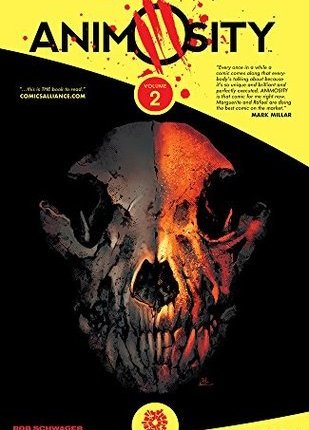
Animosity, Vol. 2: The Dragon by Marguerite Bennett

Animosity, Vol. 2: The Dragon by Marguerite Bennett

The plot thickens for Sandor, the hound dog, and his human, Jesse, as they attempt to make their way across the country to reunite Jesse with her half-brother.

“Jesse is growing up, and signs of it frighten Sandor more than they even frighten her. Sandor fears, so much, that he will be unable to protect Jesse from all pain, all terror, aware that he will not be there for her adulthood.”

Photo by cheptu00e9 cormani on Pexels.com

Now that all of the animals are sentient, the lines between human and animal, predator and prey have blurred. Certain species are starving to death. Other species are being farmed for their meat. It’s a dark story, but still fascinating in the way it flips reality on its head.

“The honeybees have retreated to some secret place, and the ants threaten blistering violence for the paw that reads the wrong mound, yet each seem unusual in their clannishness to their own kind.”

Along with their new sentience, some of the animals are considering the state of their souls… do they have one, and where do they go when they die? Others are banding together to fight against the humans or each other. And still others are protecting the only person or thing they care about, like Sandor.

My favorite part of this issue was the series recap at the end where the author, Marguerite Bennett, gives a brief glimpse into what’s going on in every state and country since the animals “woke”. Highlights include my home state of Illinois trying to figure out how to regulate the new reality (you know they would) and her description of the new Mongolia: “Little has changed.”

Photo by Julia Volk on Pexels.com

Honestly, this book is worth reading if only for that section. I can’t help but be impressed by the imagination it took to combine the cultures, unique creatures and people of each corner of the world and provide its own mini-story.

The artwork, as you can tell from the cover, is haunting in places. You see animals wielding human weapons and wearing clothing. But it’s not cute, the overall effect is very disturbing. I won’t soon forget a deer lobbing a hand grenade into a group of shadowy figures in the forest and I think that’s probably the point.

Recommended for fans of dark science fiction graphic novels. Thanks for reading!

To read more of my reviews of graphic novels, go to
https://thehelpdeskbookblog.wordpress.com/category/comic-or-graphic-novel/page/1/


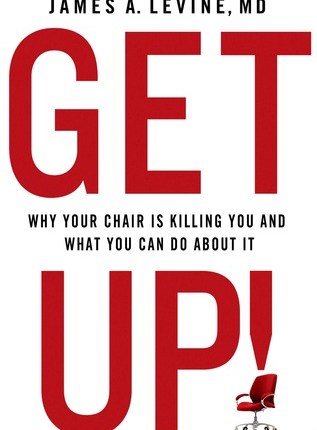
Get Up!: The Dire Health Consequences of Sitting and What We Can Do About It by James A. Levine

Get Up!: The Dire Health Consequences of Sitting and What We Can Do About It by James A. Levine

James Levine shares the disastrous consequences of a sedentary lifestyle and has created a clarion call for the modern world.

“When you first contemplate a book about the harm of sitting, you may view it as absurd. How can chairs possibly kill anyone? … However, this book summarizes 40 years of science — the work of scores of scientists and physicians from around the world. The scientific conclusion is clear: Humans are not designed to sit all day long, from a physiological, medical, creative or psychological perspective.” pg 4

Photo by Andrew Neel on Pexels.com

This book scared me. Levine provides study after study proving his hypothesis and the results are shocking.

“From birth through death there is a predictable, programmed timetable of movement. We transition from the frenetic nature of childhood, to the organized movement of adulthood, through the stillness of aging.” pg 13

But don’t worry. The body and mind are more flexible than people realize.

“Because the brain is constantly adapting, it takes about three weeks for brain change to occur. A chairaholic can become a walker in three weeks. But watch out! A walker who begins to sit can just as easily become a chairaholic.” pg 46

Photo by Daniel Reche on Pexels.com

There are concrete steps you can take to incorporate more movement into your life. The first step is to realize there’s a problem.

Next, look for ways to increase your “NEAT” energy. NEAT stands for “non exercise activity thermogenesis”. Basically, it means, make an effort to move more during your every day routine — cleaning the house, running after the kids, walking the dog, etc.

That seems to be a key for kicking the sitting problem to the curb. In Levine’s studies of urban life compared to agriculture living, that was the difference he noted between the two populations. People living the agriculture lifestyle move all the time. The urban lifestyle… not so much.

“The differences were so large that it staggered us — when you live in an urban setting, even if you are lean, you move half as much as people living in agricultural regions. The decline in calorie burn with urbanization could entirely explain the obesity epidemic worldwide.” pg 60

Photo by Maria Orlova on Pexels.com

Fear not, urban dwellers. There are solutions to upping your NEAT energy, even if you are required to be at a desk for the majority of the day. One of these, that I invested in the moment I finished reading this book, is the desk treadmill. Another option is the standing desk.

Both of these tools help you move while still getting your job done.

This book contains more helpful suggestions than simply buying new lifestyle equipment. For example, Levine also suggests a leisurely walk after every meal.

“If people sit after a meal, their blood sugar peaks like a mountain for about two hours. If, however, people take a 15-minute walk at 1 mph after a meal, the mountains become safe, gentle, rolling hills. With a 1-mph walk after a meal, blood sugar peaks are halved.” pg 68

Photo by Daria Shevtsova on Pexels.com

I think I can manage that.

The line that firmly established Levine’s hypothesis in my mind is: “If you see a saber-toothed tiger charging toward you, you don’t fire off an email, you get up and run!” pg 81

It’s that simple. Humans did not evolve to live the way that we’re living. I’m taking steps to change that now. Who’s with me?

Thanks for reading!

Healthy Sleep by Andrew Weil, Rubin R. Naiman

Healthy Sleep by Andrew Weil, Rubin R. Naiman

Doctors Andrew Weil and Rubin Naiman have created an audiobook to help cure the various troubles one may have while falling to sleep.

I liked their multimodality approach to a problem that everybody seems to have. They start with an exercise to help you figure out what type of sleep problem you may be facing. They discuss the differences between “rest” and “sleep”, which I had never considered. They also talk about how to structure your bedroom to give yourself the best opportunity for sleep.

Photo by Ketut Subiyanto on Pexels.com

Dr. Weil gives some natural suggestions for sleep like maintaining a consistent diet and exercise routine, going to sleep the same time every night, realigning your body with the natural rhythms of the outdoors, and more. He also discusses holistic remedies and the doses he recommends to his patients with potential side effects.

There are also multiple meditations to assist with relaxation and then sleep. As Dr. Naiman points out in the program, one does not truly “go to” sleep as it’s not a location or something you can “catch”. Sleep is more about stepping back and allowing your body to naturally do its thing.

The doctors also go into the importance of dreaming for the health of the psyche. If you’re not sleeping, there’s some underlying issues that your consciousness may not have time to deal with during the waking day. Managing your sleep is more than a benefit for your health, it is also vitally important for your mental health too.

Photo by Vecislavas Popa on Pexels.com

In addition to sleep for individuals, they talk about sleeping with a partner and the special challenges that can bring. I could see this being particularly helpful for sleep-challenged couples and is another aspect of the sleep environment that I hadn’t necessarily considered before.

Highly recommended for people who are looking to increase or improve the quality or quantity of their zzz’s.

Thanks for reading!

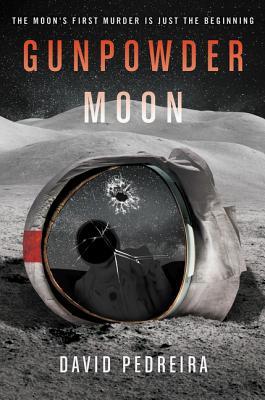
Gunpowder Moon by David Pedreira

Gunpowder Moon by David Pedreira

In a dystopian world where the once powerful countries are now scrambling for fuel, the helium3-rich fields of the moon are a godsend. But when an American miner turns up dead, it may become the new front in a war, not just for control of the Earth, but also the galaxy.

“Cold enveloped him. He opened his eyes in Moon shadow and had to blink to make sure they weren’t closed.” pg 5

Photo by Alex Andrews on Pexels.com

This is a story that could have been a thriller, but it gets bogged down in the technical aspects of life on the moon. I imagine the science is sound, but, unlike “The Martian”, I felt like it slowed the action down to a crawl rather than speeding it along.

The characters were problematic. There are half a dozen of them and I couldn’t seem to connect with any.

“Dechert wondered for the hundredth time if the people back home had any clue what it was like to live on the Moon.” pg 15

The mystery wasn’t all that mysterious and is tied up in one paragraph towards the end. I was disappointed. I like my mysteries with more twists and turns, an unexpected bump or two.

Photo by Pixabay on Pexels.com

“I’m going to catch a quick two hours,” he said. “Wake me up if something bad happens.” pg 29.

A nap was starting to sound pretty good to me too.

I read David Pedreira’s bio and it seems he’s a journalist, or was. I could tell from his writing. The sections read sort of like mini-news stories. Lede, information, kicker, repeat. Not that there’s anything wrong with that format, but I wish the story had been shaken up somewhat.

Oh well. On to the next book! Thanks for reading.

Estranged (Estranged, #1) by Ethan M. Aldridge

Estranged (Estranged, #1) by Ethan M. Aldridge

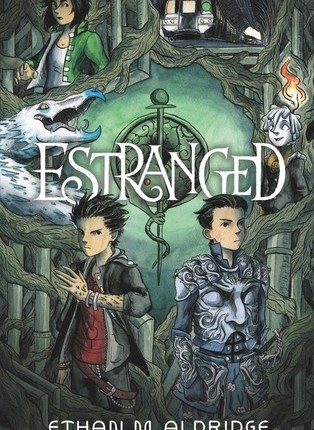
A cute graphic novel for middle graders that features a changeling, his human counterpart, their human sister and a golem made out of wax.

“There hasn’t been a human in High Court in a century. That makes you special, doesn’t it?” “Oh, they never let me forget that. It’s always ‘the human childe’.”

Photo by Danielle Reese on Pexels.com

But trouble brews when a disgruntled elf turns the king and queen of the High Court into rodents. Then, she goes after the “Childe”. In response, he seeks out his changeling twin in the world above or the real world. And that is where our adventure begins.

“The only home I’ve ever had has been taken! This was meant to be my home, my life, and it was taken before I was old enough to remember it!” “I’ve got nothing, nowhere to go! I have as much right to be here as you!”

Along the way, they have to face goblins, magic statues, a witch and a treasure-hungry dragon. The plot is a bit simplistic but it is perfect for children who like fantasy and urban fantasy.

In fact, I picked this book up at the local game shop for my daughter and she read it in one sitting, which is a miracle because she’s a reluctant reader. I’m always looking for stories or formats that appeal to someone who enjoys video games more than books.

Photo by Andrea Piacquadio on Pexels.com

She absolutely loved it and said I HAD to read it. I asked why and she said, “Because it’s just awesome.” She loved the magic and world Ethan Aldridge has created. She also loved the artwork. Her favorite character, and mine, was Whick, the brave wax golem who accompanies the Human Childe from the court below to the world above and back.

The story also touches on the sometimes difficult relationship between a brother and sister. There’s a good message about taking care of your family that I resonated with.

In conclusion, I loved that my Human Childe loved it. Highly recommended.

Thanks for reading!

The Only Harmless Great Thing by Brooke Bolander

The Only Harmless Great Thing by Brooke Bolander

Author Brooke Bolander takes two unrelated historical events and ties them together in an effort to make a statement about the inherent darkness in humanity. Historically speaking, an elephant named Topsy was actually put to death by electrocution. The radium dial painters, whom you can read about in The Radium Girls: The Dark Story of America’s Shining Women, actually existed.

In this science fiction/alternative history story, elephants are a sentient race, forced to work where the radium girls once worked. And to bear the same lethal doses of radiation. It leads to a sad conclusion.

Photo by Aenic on Pexels.com

“The ‘greater good’, as you put it, was also used to justify the use of my people in your radium factories during the war, was it not? To save costs. To save your own from poisoning.” pg 32

This new history is reflected in a future narrative that takes place between the historical portions of the story. (You’ve got three stories being told from three different narrators. I didn’t find it confusing once I figured out that the author switched stories after each break on the page. But prior to that, I was grasping at straws.)

In this new future, the government is looking for a way to warn humankind away from nuclear waste sites. They decide to ask the elephants if they can alter their DNA, to make them glow in a version of a living “keep away” sign.

And so here Kat sits, tie straightened, hair teased heaven-high, waiting to meet with an elephant representative. Explaining the cultural reasons why they want to make the elephant’s people glow in the dark is going to be an exercise in minefield ballet…” pg 12

Photo by Pixabay on Pexels.com

I felt like this book lessened each historical event rather than making them stronger by tying them together. They were both awful, yes, and sentient elephants deserve their own story. The women who suffered and died because no one shared the dangers of radiation with them, deserve their own story. Something far more than the simplistic alternative future Bolander gives them in which, yet again, elephants were about to be abused by human beings and confined to a nuclear wasteland.

“They will see how we shine, and they will know the truth.” pg 59

In some ways, it all reminded me of what was done to the Native American tribes. Which was also awful. And also deserves its own write-up.

Another quibble I had with this story, Bolander takes aim at the males of both species, painting them as both stupid and addicted to violence.

“The bull rolled one red eye to look up at her. He laughed with malice and with scorn, but most of all with madness. As is the way with bulls. … Furmother looked at him with sadness — because then as now We pitied the bulls, our Sons and Fathers and occasional Mates.” pgs 30-31

Photo by Tatiana Syrikova on Pexels.com

Can you imagine if those pronouns were reversed? “The Furmother rolled one red eye to look up at him. She laughed with malice and with scorn, but most of all with madness. As is the way with Furmothers…” I don’t believe in hurling hate or blame from either end of the spectrum. We’re all in this together.

On a more positive note, the curious collective intelligence of the elephants that the author hinted at was fascinating, as well as their different methods of communication. But this short story format doesn’t allow for an in-depth examination of this aspect of the story.

“They had blown raw red holes through the Many Mothers, hacked away their beautiful tusks, and the sky had not fallen and she had not mourned the meat. She was She — the survivor, the prisoner, the one they called Topsy — and She carried the Stories safe inside her skull, just behind her left eye, so that they lived on in some way.” pg 14

Photo by Artem Beliaikin on Pexels.com

Elephants are something special. I’m reminded of the Romans and how they loved to kill people and all manner of animals in the Coliseum, except elephants. They banned killing elephants because they couldn’t stand to look the creatures in the eye as they died. There was something too sad to be borne that was communicated in the moments before an elephant’s death, something that crossed species lines.

That’s why I wanted this story to work. And, sadly, I just didn’t connect with it.

Thank you for reading!

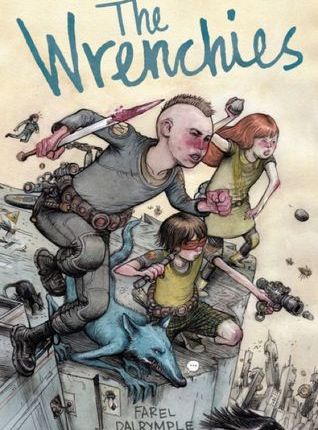
The Wrenchies by Farel Dalrymple

The Wrenchies by Farel Dalrymple

A gorgeously-drawn graphic novel that suffers from a bonkers plot and scrambled timeline.

I’ll try to give a brief summary here, but understand that this is gleaned from every part of the book — beginning, middle, end. Farel Dalrymple doesn’t present the story in a linear fashion, which is incredibly frustrating.

A boy and his brother enter a cave and are attacked by a demon-like creature called a shadowman. During the course of the attack, the demon messes with the first boy’s eyes and something radically shifts in his brain/destiny. After his brother saves him, the boy’s eyes are drawn to a medallion in the demon’s cave through which he sees/astral travels into a different dimension where he can view aspects of the future.

Photo by Francesco Ungaro on Pexels.com

This future is an apocalyptic world filled with these shadowmen and children who fight against them. All grownups in the world have become shadowmen. When a child reaches a certain age, they are “harvested” by the demons and become part of the problem. Something powerful and magical is fueling these shadowmen, but discovering and disabling that artifact is the large story arc so I won’t spoil it for you here.

Meanwhile, the boy-with-the-demon-altered-eyes is (I kid you not) kidnapped by aliens while his brother goes on to fight the shadowmen in the real world. Then there’s some character development about the children/warriors in the apocalyptic world, the involvement of a child from our time, a blind child who uses technology in a way that borders on magic, another child who actually uses magic… And, at one point, I think the author tries to add the difficulty he had writing the comic into the comic itself. 

Photo by Michael Herren on Pexels.com

I think that’s enough of a summary. Don’t you?

This isn’t a fairy tale story for teens though it seems to reach for a coming-of-age feel. The children use drugs to protect themselves from the mind-altering powers of the shadowmen and are constantly fighting bugs that pop out of the shadowmens’ heads after they kill them. It is a paranoid schizophrenic’s nightmare.

The Wrenches is violent and disturbing, rather like Peter Pan on acid with demons instead of pirates. And not in a good way.

I suppose if you just looked at the artwork and didn’t read it, you might enjoy this graphic novel. Honestly, the panels are stunning. Shame about the story tho.

Thanks for reading!