Last Ones Left Alive by Sarah Davis-Goff

Last Ones Left Alive by Sarah Davis-Goff

Last Ones Left Alive brings the zombie-genre to Ireland. Orpen, the daughter of Muireann and Maeve, spends her life training, running, and learning to throw knives. The end has come and humanity has, for the most part, been wiped out by zombie-like creatures called “skrake.”

“I’m to put away the stories about the monsters that are not real and to hear about the others. They’ve got worse as I got older; heroes are caught, turned, burned, throttled, they die of hunger and cold. Children same as me.” pg 33

Photo by tom balabaud on Pexels.com

Orpen lives a sheltered existence on an island. But she dreams of going to the mainland, once-Ireland, and finding the fabled “Phoenix City,” which she learned about through flyers rotting in abandoned buildings. Phoenix City is touted as a paradise with women warriors protecting the walls and weak from the encroaching skrake.

Orpen’s mother and Maeve have drilled rules into her head since the day she turned seven. Some of these rules are: Don’t go near tall buildings. Count your ‘Just-in-Cases’. and Beware people.

“Beware people. I can’t stay on my own, though, I can’t. If they’re men, I will run.” pg 71

Photo by Ricardo Esquivel on Pexels.com

But is life worth living without the interaction of other people? Orpen doesn’t think so. She dreams of the day she’ll leave the island… and wanders the land with the skrake.

I enjoyed Last Ones Left Alive but it felt like more of an homage to Ireland than a truly scary horror novel. Much of the gore and scares felt done as readers have been exposed to them all before in such series as The Walking Dead, Book One or Saga, Vol. 1.

The narration is related in two parallel lines with the past woven among the present by alternating chapter. It’s not my favorite way to read a story, but I can see how it could appeal to some readers.

The female characters in this broken world are unapologetically strong. Readers looking for books with self-reliant female characters may really enjoy this read. It may also be a great pick for a book club to pick apart and discuss.

Photo by Khoa Vu00f5 on Pexels.com

Personally, I wanted more details about the dangers this world had to offer rather than focusing on Orpen’s journey, which is the main part of the story. There’s something to be said for unknown horrors… true. But when you peer deeply into the darkness, there’s the feeling that it looks back into you. 

That’s what I felt was missing in this excellent debut novel by Sarah Davis-Goff. I wanted more looking into the shadows.

Thank you to the publisher for an advance reader copy of this book. The short quotations I cited in this review may vary in the final printed version, which I believe is available today (August 27, 2019).

Thanks for reading!

A Rule Against Murder (Chief Inspector Armand Gamache, #4) by Louise Penny

A Rule Against Murder (Chief Inspector Armand Gamache, #4) by Louise Penny

When a body is discovered near a retreat in the woods, Chief Inspector Armand Gamache happens to be staying at the Manoir Bellechasse, the lodge, with his lovely wife, Reine-Marie. Now, their peaceful get-away has devolved into a murder investigation. Someone at the hotel is a killer.

Can Gamache figure out who before it’s too late?

“But just as their waffles arrived they heard a faraway sound, something so unexpected it took Gamache a moment to recognize it. It was a scream.” pg 84

Photo by karthik reddy on Pexels.com

As delightful as this entry is in the Chief Inspector Armand Gamache series, I had trouble getting into the story. It has Louise Penny’s usual eccentric characters and thoughtful insights into universal emotions like love and despair.

And, as usual, I guessed completely wrong on the resolution and enjoyed the nail-biting conclusion.

“His team had a near perfect record, and they did it by sorting facts from fancy from wishful thinking. They did it by collecting clues and evidence. And emotions.” pg 95

I think what I was missing from the mystery was the setting of Three Pines itself. Honestly, it was nice to branch out a little and see many of Penny’s beloved characters in a different place, but Three Pines is so delightful that I missed it.

Photo by Sasha Prasastika on Pexels.com

To be fair, it does make a bit of a cameo with a village festival, but it wasn’t the same. The irascable poet, Ruth Zardo, is almost completely absent, except for a one-liner, and I missed her. I’m also inordinately fond of the bed and breakfast owners, Oliver and Gabri. But we didn’t see much of them because the action was taking place at a different hotel.

Here’s hoping the next book takes place back in Three Pines. I’d still recommend this one to readers who love cozy mysteries. Louise Penny has a gift for writing them.

Thanks for reading!

Joyful: The Surprising Power of Ordinary Things to Create Extraordinary Happiness by Ingrid Fetell Lee

Joyful: The Surprising Power of Ordinary Things to Create Extraordinary Happiness by Ingrid Fetell Lee

Ingrid Fetell Lee shares how to bring more joy into your life through the appreciation of ordinary things. Using tools like color selection, feng shui, gardening and room design, you can utilize your environment to foster an inner sense of joy and well being.

I think anything that increases joy and appreciation in my life is a good thing. I found it interesting almost every other book I’ve read on this subject focuses on the inner aspects of joy, the ones that won’t fade. But Lee convinced me there is something to appreciate and cultivate in the outer world as well. We may all be spiritual beings but we’re living very physical lives.

Photo by Rodrigo Feksa on Pexels.com

I knew little to nothing about interior design or some of the more troubling aspects of minimalism. But I do like to move through spaces that feel warm and lived in.

I can see the appeal of simplifying a space down to just a few items, but I wouldn’t want to stay there very long. Lee helped me understand some of my intuitive feelings about minimalism and why maximalism has the opposite effect, at least on me.

Lee also talks about the joy one can find in quirkiness versus convention. The caveat being that you have to be in a space or group of people who allow such things to exist rather than quashing them at the start. Different colors, unexpected materials, strangely-shaped furniture — if introduced to your every day environment can bring joy and a sense of relief from staid normalcy.

Photo by Pixabay on Pexels.com

This book really got me thinking about what joy I take in my surroundings and why or why not. Recommended for readers interested in interior design, gardening, or those looking for small ways in which to introduce a little more joy into their every day lives.

Thanks for reading!

Anxiety and Avoidance: A Universal Treatment for Anxiety, Panic, and Fear by Michael A. Tompkins

Anxiety and Avoidance: A Universal Treatment for Anxiety, Panic, and Fear by Michael A. Tompkins

Everyone experiences anxiety in some form or another in their lives. The trouble comes when you find yourself altering your behavior to avoid triggering yourself, painting your life into smaller and smaller boxes in order to attempt to control the anxiety.

Photo by Eternal Happiness on Pexels.com

This self help workbook hands you the keys to your anxiety response. By unlocking that, you give yourself back the freedom that you may have lost to uncontrollable anxiety.

Emotional flexibility, then, is the key to recovery from your anxiety disorder.”

Michael Tompkins uses cognitive behavioral therapy, mindfulness and acceptance therapies to tackle most major anxiety issues.

I liked his approach because mindfulness is a practice that I enjoy incorporating into my life anyway. By applying it to my anxiety responses, I learned a lot about myself in a very short period of time.

Photo by Karolina Grabowska on Pexels.com

“The purpose of both our primary and secondary anxious responses is to protect us from the threats and challenges of life. For some people, however, the natural and normal secondary anxious response creates problems. These people are stuck in their secondary anxious responses and because they’re unable to move out of it, they have an anxiety disorder.” pg 22

But no matter what coping mechanisms therapists may bring to the table, we have to be willing to put them into action. Tompkins reminds readers to be gentle with themselves and that “true motivation is an invitation, not a push.”

“True motivation is a willingness to try because you recognize and accept that it makes sense for you to change.” pg 43

Once you know your triggers and responses, Tompkins guides the reader through exposure therapy to continue releasing any further anxiety responses.

Photo by Kaboompics .com on Pexels.com

I know no method or book will be a breakthrough for everyone, but I found this particular book to be incredibly helpful and informative. I highly recommend it for anyone suffering from anxiety, panic or fear.

It could be the jump start you need to discover true healing and freedom from the fears that may be holding you back from living the life you’ve visualized for yourself.

Thanks for reading!

Agrippina: The Most Extraordinary Woman of the Roman World by Emma Southon

Agrippina: The Most Extraordinary Woman of the Roman World by Emma Southon

Emma Southon gives us a fascinating look at a complex woman whom history has perhaps treated unfairly.

She starts by giving the reader reasons why the study of historical women is so difficult.

… we have just three major literary sources that mention Agrippina with any detail, and a total of seven literary sources from the entire corpus of Latin literature that think she was interesting or significant enough to deserve a single line; one of which is a play.”

Photo by Octoptimist on Pexels.com

Like most women from history, Agrippina was mainly written about when she orbited important men. There’s also the difficulty of potential bias in the few sources we have.

“She can be seen only through the distorting lens of her relationship to other people and how well or badly she performed the ideal form of that relationship. It’s mostly badly, which is why we get to see so much of her.”

But what’s left when you take all of that into consideration is extraordinary. As the author points out, Agrippina was “the sister, niece, wife, and mother of emperors.” There are few from history who can claim the same.

Photo by Francesco Ungaro on Pexels.com

Southon uses an informal style and words like “stabby” and “murdery”. I found her delivery rather hilarious and enjoyed it. If you’re turned off by this type of writing, you may want to choose another, more serious author.

She doesn’t neglect to remind readers of the context of every bit of Agrippina’s history or point out when the record is missing or falls silent. Sometimes, the gaps in the record speak even louder than what was written.

“The next year, however, Agrippina came roaring back into historical narratives in the most confusing possible way.”

I liked how Southon took complex concepts from Roman history and gave them to the reader in digestible chunks. For example, we get a glimpse of what portions of Agrippina’s wedding ceremony may have been like:

“First, Agrippina the Younger anointed the doorway with fat and wool. Basically, she smeared some kind of animal fat onto the door frame and then strung wool between the door posts, sticking the ends to the fat. Obviously that sounds both disgusting and bizarre, which it is, but this is very symbolic and serious. Probably as these things were brought out, the party atmosphere would die down and everyone would watch reverently as this little girl covered the door in goo.”

Photo by Mathias P.R. Reding on Pexels.com

She goes on to examine the superstition of carrying the bride across the threshold of her new home which was another important part of the ceremony and nothing like the laughing, fun time it is today. It was interesting to me to juxtapose the modern viewpoint on these ancient traditions and see the glaring differences between the two.

Highly recommended for readers who like their non-fiction to sound like a conversation between friends. Southon makes the past come alive in a delightful read filled with scandals, power struggles and, of course, Rome.

Thank you to NetGalley and the publisher for an advance reader copy of this book, which is slated to go on sale tomorrow, August 6, 2019. The brief quotations I cited in this review may change or be omitted in the final copy.

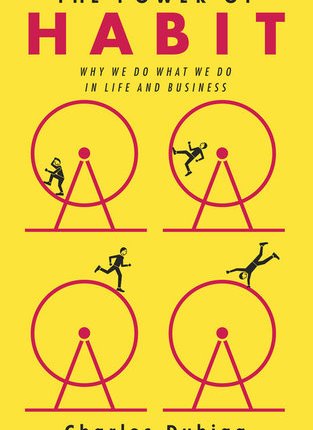
The Power of Habit: Why We Do What We Do in Life and Business by Charles Duhigg

The Power of Habit: Why We Do What We Do in Life and Business by Charles Duhigg

The Power of Habit examines behaviors you may not even know you have and hands you the tools to make lasting change at home, at work and in your community… if you want it.

“Each chapter revolves around a central argument: Habits can be changed, if we understand how they work.” prologue xvii

Photo by Sora Shimazaki on Pexels.com

First, author Charles Duhigg goes into what makes a habit at the biological level.

“Habits, scientists say, emerge because the brain is constantly looking for ways to save effort. Left to its own devices, the brain will try to make almost any routine into a habit, because habits allow our minds to ramp down more often.” pgs 17-18

Duhigg describes how the brain creates a “habit loop” through cues, routines and rewards. These three elements feed on themselves until an ingrained habit is made. And, once it is there, it takes very little to upkeep.

That’s good news and bad news, because it works the same way for healthy and unhealthy habits.

“But the reason the discovery of the habit loop is so important is that it reveals a basic truth: When a habit emerges, the brain stops fully participating in decision making.” pg 20

Photo by Anna Shvets on Pexels.com

The “golden rule” for changing a habit, Duhigg says, is to keep the same cues and rewards, but change the routine that leads to them. It sounds simple, but everyone is different with different motivations. So, it takes a bit of self awareness to discover what those unique cues and rewards are for you. But, once you know your triggers and motivations, that’s when the fun begins of crafting a new routine.

I found this book to be absolutely fascinating. It’s also making me question the habits I’ve picked up in my own life. Am I certain that they are ones I want to continue? I can think of a few that could use a bit of tweaking. And now I know how.

Photo by Petar Staru010deviu0107 on Pexels.com

“This is the real power of habit: the insight that your habits are what you choose them to be.” pg 271

Let’s cultivate the good ones then.

Thanks for reading!

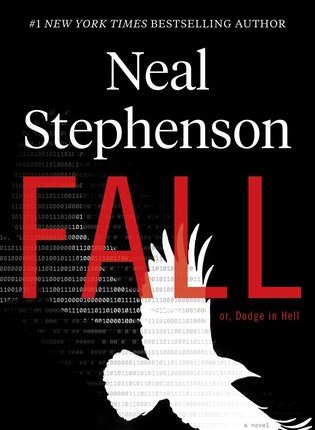
Fall, or Dodge in Hell by Neal Stephenson

Fall, or Dodge in Hell by Neal Stephenson

“Not only can we defeat entropy, but the universe, in a way, wants us to use our powers as conscious beings to make things better. And part of that is defeating death.” pg 50

I finally finished Neal Stephenson’s latest book, an opus about the nature of reality that uses mythology, archetypes and technology as the instruments of that examination. Coming in at a hefty 896 pages, it will most likely be the longest book I read this year.

“Far from being a source of frustration, this comforted him, and made him happy — perhaps even a little smug — that he lived in a universe whose complexity defied algorithmic simulation.” pg 19

Photo by Markus Spiske on Pexels.com

Richard “Dodge” Forthrast, one of the many protagonists from Reamde, suffers an unexpected injury and dies — to the horror of his loving family. Immediate complexities reveal themselves in his will, which contains very specific instructions on what is to be done with his corpse and living brain.

These instructions will lead to a technological coalition of companies and big money in an effort to create another reality for the “recently diseased”. And, what happens in that new world is beyond anyone’s (among the living) control… isn’t it?

Stephenson, as usual, has created a complex science fiction novel that not only makes you think again about where technology is headed, but also compels you to ask yourself what that exponential development means.

“It’s really only since wireless networks got fast enough to stream pictures to portable devices that everything changed,” Enoch said, “and enabled each individual person to live twenty-four/seven in their own personalized hallucination stream.” pg 236

Photo by C Technical on Pexels.com

And lest one think such changes are so far off, you only need to take a look at someone else’s Facebook newsfeed. The difference between what I see on that platform and what my husband sees is shocking. Our “own personalized hallucination stream” is already a reality.

Stephenson is at his best when he’s mixing science fiction and fantasy in Bitworld. He’s at his worst when he’s clocking the changes going on in the real world or “meatworld”, as his characters call it. One likes to think that he had reasons for including the myriad of details that he includes, but readers could also suspect that he needed a good editor.

The first portion of this book moves agonizingly slowly, which prevented it from being a five-star read for me. But that was its only downside in my view.

“So he went into the room where the disciples of Greyhame and Pestle scratched out words on paper, and told them to go through all of their documents and make him aware of any mention they might find of angels, or the One Who Comes, or Daisy, or death.”pg 482

Photo by Pixabay on Pexels.com

I can’t say I completely understand the ending of the story, but it is epic. I find myself still thinking about it and taking pieces apart in my mind. And, for me, that’s one of the hallmarks of a good read.

Recommended for science fiction readers who can tolerate a very slow build-up for a potentially puzzling end.

Thanks for reading!


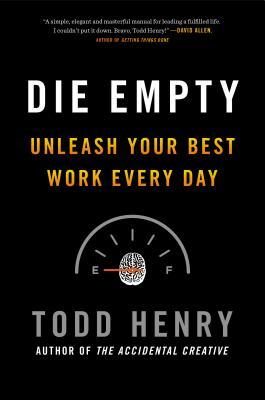
Die Empty: Unleash Your Best Work Every Day by Todd Henry

Die Empty: Unleash Your Best Work Every Day by Todd Henry

Your days are finite. One day, they will run out. As a friend of mine likes to say, “You know, the death rate is hovering right around one hundred percent.” pg 3

Todd Henry has given the world a call-to-action with Die Empty. The book is one big reminder that one day you (yes, you!) will die and he imparts some useful tools to help you discover what you’re meant to do and then to do it to the best of your ability.

Photo by Ketut Subiyanto on Pexels.com

“If there is one overriding goal of this book it is this: to bring a new found clarity and sense of urgency to how you approach your work on a daily basis, and over your lifetime.” pgs 5-6

Henry is into catchy acronyms and veers very close to empty motivational jargon. But, I feel, he pulls himself back in time.

“No one charts a course for mediocrity, yet it’s still a destination of choice. It’s chosen in small ways over time, and those tiny, seemingly inconsequential decisions accumulate until they result in a state of crisis. pg 35

I learned a great deal from his abc’s of mediocrity that include “comfort zone” as the letter C. If I am guilty of anything, it is finding my comfort zone boundaries and then staying carefully inside of them. Henry believes you do the world a disservice when you don’t push yourself. Who knows how much you can do if you don’t try?

Photo by Ketut Subiyanto on Pexels.com

“Growth is about daily, measured, and disciplined action. It’s about embracing purposeful skill development and pursuing new opportunities that stretch you a step beyond your comfort zone, even when it means venturing boldly into the unknown.” pg 89

You escape your comfort zone, Henry says, by creating goals in steps, sprints and stretches. Steps are goals that can be accomplished in one day. Sprints are completed in one or two weeks. Stretches are a big goal that takes longer than that.

Throughout much of the book, the lesson seems to be act, observe, and act again. It touches on everything from fear of failure and delusions to inflated egos and effective communication. Die Empty could be described as a one-stop-shop for almost anything that holds you back from “unleashing your best work every day”.

Photo by Prateek Katyal on Pexels.com

Henry even addresses the fact that no self help book is the complete answer for anyone. The final ingredient in any lasting change or improvement in your life is you.

You can have the map, and there can be gas in the tank, but unless you’re willing to fire up the engine and put your foot on the gas, you’ll never get anywhere. Intention and theory don’t change the world; decisive action does.” pg 201

Recommended for readers who are unwilling to settle for less than their very best work every day.

Thanks for reading!

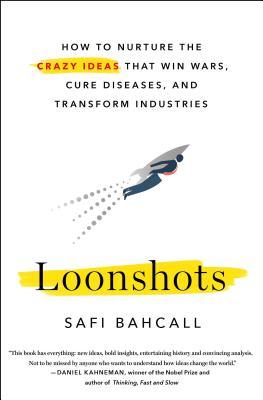
Loonshots: How to Nurture the Crazy Ideas That Win Wars, Cure Diseases, and Transform Industries by Safi Bahcall

Loonshots: How to Nurture the Crazy Ideas That Win Wars, Cure Diseases, and Transform Industries by Safi Bahcall

“New frontiers of the mind are before us, and if they are pioneered with the same vision, boldness, and drive with which we have waged this war we can create fuller and more fruitful employment and a fuller and more fruitful life.” — Franklin Delano Rooseveltpg 257

Safi Bahcall has applied a physics-based approach to understanding innovations and creativity in group settings. Through the careful study of a bunch of historical examples, he has discovered ways leaders can structure their businesses to best encourage the growth of “loonshots.”

Photo by Pixabay on Pexels.com

The author has defined a “loonshot” as “a neglected project, widely dismissed, its champion written off as unhinged.” It is through these, Bahcall believes, that world-changing ideas are produced that can be applied from arenas as diverse as business to war.

“The twisted paths leading to great discoveries are the rule rather than the exception. And so are their revisionist histories: victors don’t just write history; they rewrite history.” pg 56

He suggests these breakthroughs are generally created by large groups of people, rather than solitary geniuses. And he thinks that “applying the science of phase transitions to the behavior of teams, companies, or any group with a mission provides practical rules for nurturing loonshots faster and better.”pg 2

Photo by Andrea Piacquadio on Pexels.com

For example: By examining Theodore Vail and the way he structured AT&T’s “fundamental research” department to Vannevar Bush’s non-military leadership for the Office for Scientific Research and Development for the military, Bahcall has come to some actionable conclusions.

He believes that, in a business, you need to separate the creative-types in the innovation departments from what he called the “soldiers” or people who run the rest of the business. Both are absolutely imperative to the success of the business, but if the two are working too closely together, “loonshots” can be strangled in their infancy.

The same risk of failure is faced by leaders who try to micromanage “loonshots”. Trust your people to do what they do best, whether that’s development or running the business, so that you don’t drive a business into the ground because you’re too attached to your own pet project.

Photo by Pixabay on Pexels.com

Bahcall reminds us that structure is important but culture is as well. He makes a biological comparison to drive the point home: “Both genes and lifestyle matter. And so with teams and groups: both structure and culture matter. The aim of this book is not to replace the idea that certain patterns of behavior are helpful (celebrating victories, for example) and others are less so (screaming), but to complement it.” pg 227

I can’t say I completely understand what a “phase transition” is but Bahcall’s storytelling manner of imparting information is easy to understand. His writing is reminiscent, in some ways, of The Black Swan: The Impact of the Highly Improbable but with more emphasis on structure and culture instead of probability.

Readers who enjoyed one book, may like the other. Recommended for readers seeking more information about how to help businesses succeed, innovate and thrive.

Thanks for reading!