Promethea, Vol. 2 by Alan Moore

Promethea, Vol. 2 by Alan Moore

Promethea, Volume 2 was an incredibly disappointing follow-up to a promising comic series.

The reader continues to follow the efforts of Sophie, a student who has learned to channel the spirit of a being of enlightenment named Promethea, while battling demons and other nebulous, bad guys.

Photo by Francesco Ungaro on Pexels.com

We have yet to learn more about the villains of the story, except in brief asides, or Sophie’s allies, some sort of technological heroes.

This entry is bogged down with a lengthy metaphysical poem about the progression of tarot cards and an unexpected tantric sex primer.
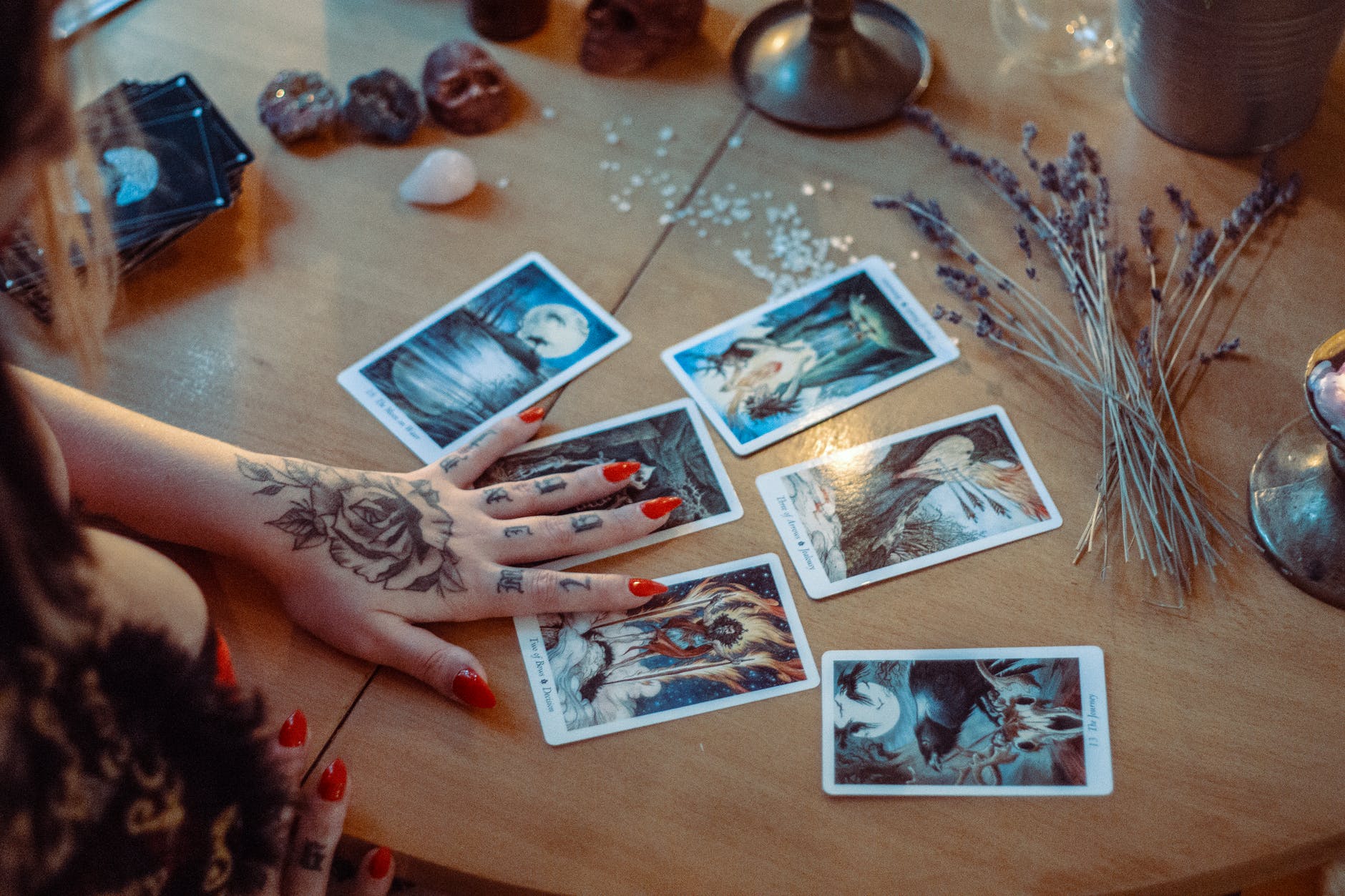
Photo by Alina Vilchenko on Pexels.com

My quibbles with the tarot card piece is it is far too simplistic but also too long. Each card can be interpreted a number of different ways, and not just applied to principles of civilization. It is also a metaphor for the soul’s journey, which Alan Moore touches on, but, I feel, never truly explains.

Also, by presenting the whole thing through rhyme, I couldn’t help but draw comparisons to Dr. Seuss. I get what Moore was going for, but it didn’t work for me.

Meanwhile, I couldn’t help but wonder if the lead character in this story was a guy if we would have been subjected to the tantric stuff at all.
Photo by Roy Reyna on Pexels.com

I believe the earthly can be spiritual and the spiritual can be earthly. I think “kundalini rising” is just the lightning flash of inspiration in reverse. But a male hero being pressured into trading his body for secret knowledge? I don’t see it happening.

I liked the first entry of Promethea. I thought it was ground-breaking in the way it depicted a strong female character on a spiritual journey.

This second book simply isn’t of the same quality. Perhaps the series will redeem itself in the next entry. One can only hope.

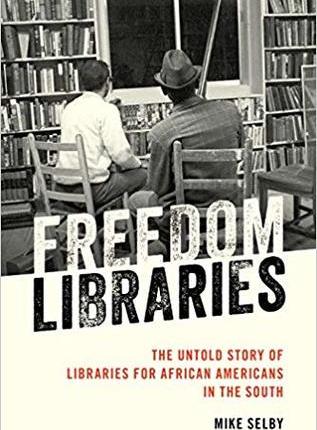
Freedom Libraries: The Untold Story of Libraries for African Americans in the South by Mike Selby

Freedom Libraries: The Untold Story of Libraries for African Americans in the South by Mike Selby

In Freedom Libraries, Mike Selby remembers and honors the volunteers and patrons of the numerous libraries set up to serve black populations mainly in the southern states during the civil rights era and later.

During that period of history, the institutionalized racism of many southern towns extended to library services. Books and learning programs were specifically curated at whites-only libraries in order to propagate the disgusting ideology of white supremacy in addition to keeping the black population illiterate and subjugated.

Photo by marco allasio on Pexels.com

“Pattie Mae McDonald operated a “Freedom Library” out of two rooms of her modest home. This was enough to earn her and her family terror and attempted murder.”

The volunteers and anyone who was brave enough to visit the freedom libraries, set up in private homes and wherever a semi-safe space could be found, were subject to shootings, harassment and arrest by local authorities, and even fire bombings. Some gave not only of their time but also their lives to keep the freedom libraries going. It is a frightening and dark moment in library history that, I feel, has been largely forgotten, until now.

“The right to vote would be everything for African Americans. The right to read would be something else entirely. Voting would make them citizens; libraries would make them free.”

Photo by Oladimeji Ajegbile on Pexels.com

In addition to remembering the bravery and sacrifice of those involved with the freedom libraries, this book illustrates some of the particular problems of librarianship that came along with the creation of the libraries.

Sadly, the American Library Association did little, if anything, to assist in the creation of freedom libraries, even though their written policies were against segregation. Very few of the volunteers who ran the organizations knew anything about cataloging and maintaining library collections. There was no money for curating books or creating community programs. Yet, somehow, the freedom libraries persevered in both expanding their collections and offering a wide variety of enriching and educational programming in the midst of life-threatening situations.

This perseverance may have had something to do with the uniquely fluid characteristics of libraries themselves.

As Selby points out, after the firebombing of the McComb Freedom House: “With the building still smoldering, the after-school youth just waited on the ground outside. The children somehow knew what many adults in the twenty first century have difficulty grasping: the fact that a library is a service, not a collection. A library exists for the librarians and patrons, not the other way around.”

Photo by Pixabay on Pexels.com

Highly recommended for readers who like to remember forgotten moments in history and for anyone who knows, or would like to learn more about, the power and life-changing reality of public libraries.

Thank you to NetGalley and the publisher for a free digital copy of this book. And thank you for reading.

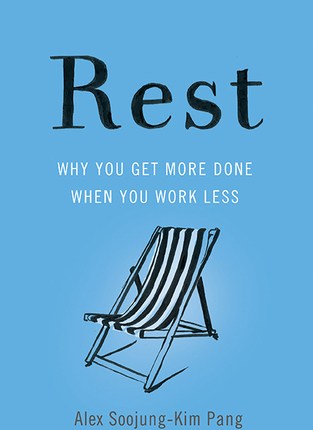
Rest: Why You Get More Done When You Work Less by Alex Soojung-Kim Pang

Rest: Why You Get More Done When You Work Less by Alex Soojung-Kim Pang

“We shouldn’t regard rest as a mere physical necessity to be satisfied grudgingly; we should see it as an opportunity. When we stop and rest properly, we’re not paying a tax on creativity. We’re investing in it.” pg 11

Photo by Tatiana Syrikova on Pexels.com

I think we’re living in a culture that generally glorifies busyness and a frantic pace of achievement. That’s not news.

Alex Soojung-Kim Pang takes a deep dive into the science of rest and shares the insight that taking breaks isn’t something we should squeeze into our schedule. Rest, he argues, is as important as the work itself.

Four of his major points are: “work and rest are partners”, “rest is active”, “rest is a skill”, and “deliberate rest stimulates and sustains creativity”.

I was particularly interested in the creativity-related point of Pang’s hypothesis.

“You need time for rest because that’s when the unconscious mind can get to work. You can’t command inspiration to appear, but you can nudge it, most notably by working steadily and regularly. The romantic image of the artist who does nothing until he’s inspired and then produces in a furious burst of work is misleading.” pg 91

Photo by Dazzle Jam on Pexels.com

Pang looked into the lives and routines of creative thinkers throughout history and came to the perhaps surprising conclusion that four concentrated hours of work per day is sufficient.

“The pattern of working four hard hours with occasional breaks isn’t just confined to scientists, writers, or other people who are already successful, well-established, and have the freedom to set their own schedules. You can also see it among students who go on to become leaders in their fields.” pg 67

The rest of the day that geniuses such as Charles Darwin or Ernest Hemingway lived were filled with activities like long walks, day dreaming, active rest, sport and other seemingly unrelated moments that fueled the subconscious mind.

“The right kinds of rest would restore their energy while allowing their muse, that mysterious part of their minds that helps drive the creative process, to keep going.”

Photo by Pixabay on Pexels.com

What these activities may be vary from person to person, but Pang’s research proves time and again that the rest portion of the day is critical.

One of my favorite parts of this book dealt with Malcolm Gladwell’s popular 10,000 hours for mastery idea that he discusses in his book, Outliers. Yes, Pang argues, 10,000 hours are necessary for exceptional performance. But we’re ignoring the rest of the equation.

“It comes after 10,000 hours of deliberate practice, 12,500 hours of deliberate rest, and 30,000 hours of sleep.” pg 74

Photo by Andrea Piacquadio on Pexels.com

From morning routines and sabbaticals to naps and carving out time for more sleep, Pang exhorts the reader to make rest a priority. It’s not lazy, it is one of the building blocks of a creative and productive life.

Sign me up. 🙂

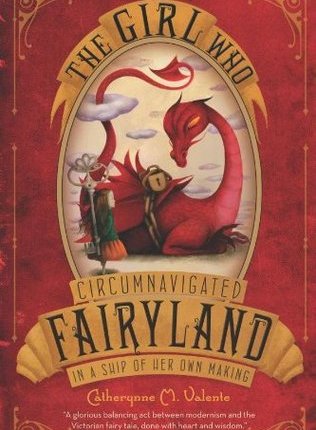
The Girl Who Circumnavigated Fairyland in a Ship of Her Own Making by Catherynne M. Valente

The Girl Who Circumnavigated Fairyland in a Ship of Her Own Making by Catherynne M. Valente

The Girl Who Circumnavigated Fairyland in a Ship of Her Own Making is a modern take on more traditional fairy tales wherein a child finds a way to another world and comes back changed.

Photo by Pixabay on Pexels.com

I first read the title of this book in Catherynne Valente‘s much more adult novel, Palimpsest. I think it was mentioned as sitting on someone’s book shelf. I remember thinking how I wish I could read that book too. Imagine my surprise to discover it was actually a book in the real world. Of course, I had to pick it up.

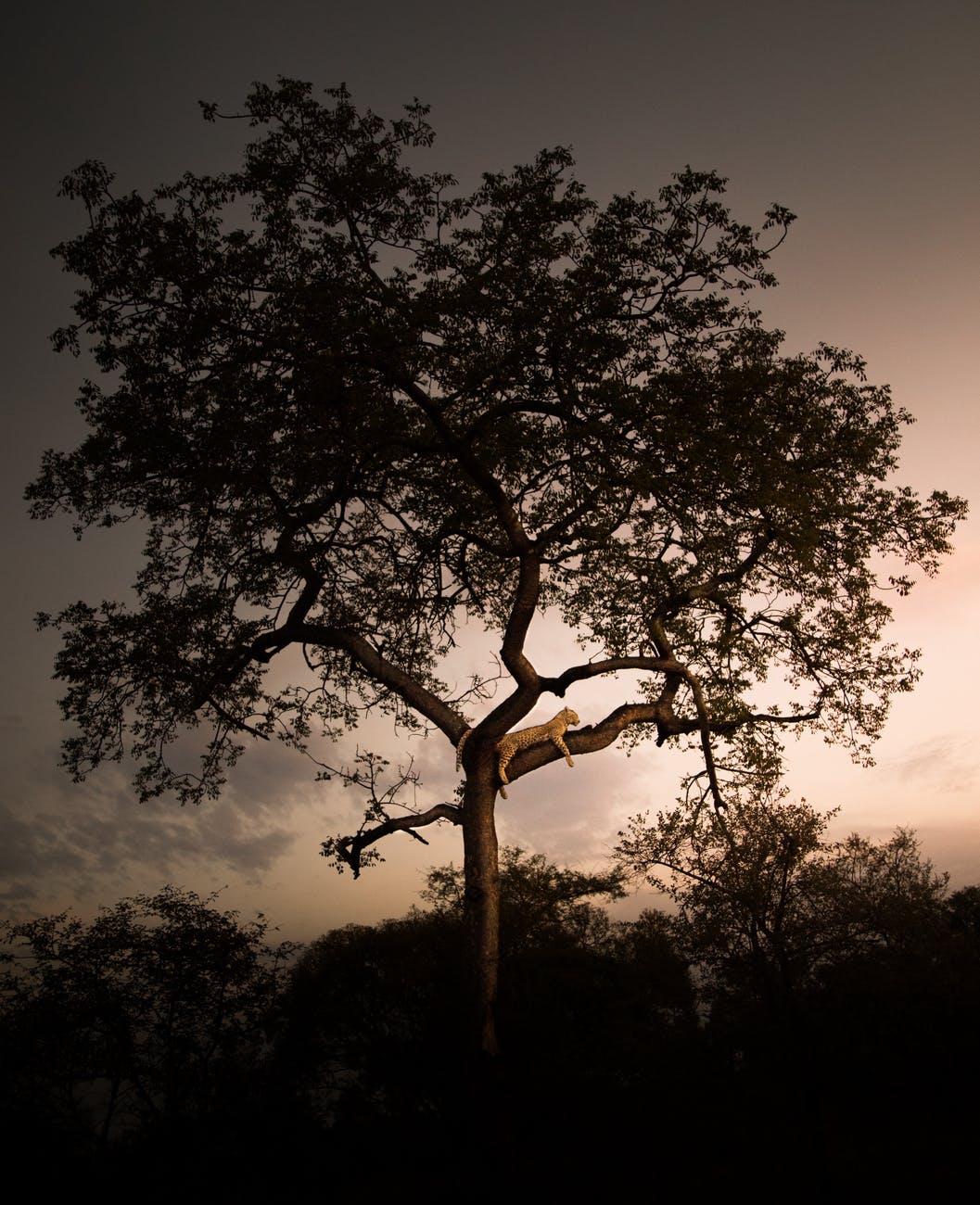
“You seem an ill-tempered and irascible enough child,” said the Green Wind. “How would you like to come away with me and ride upon the Leopard of Little Breezes and be delivered to the great sea, which borders Fairyland?” pg 2

Photo by Geran de Klerk on Pexels.com

How could any heroine refuse an invitation like that?

The main character of this tale, a girl with the curious name of September, has read enough books to know a once-in-a-lifetime chance when she sees it. Though she doubts, at first, that she is the appropriate girl for the adventure.

“In stories, when someone appears in a poof of green clouds and asks a girl to go away on an adventure, it’s because she’s special, because she’s smart and strong and can solve riddles and fight with swords and give really good speeches, and… I don’t know that I’m any of those things.” pg 14

Photo by Ksenia Chernaya on Pexels.com

Part of Valente’s fairytale, like most good fairytales, is how September realizes how special she actually is — one of the conclusions heroes tend to arrive at during their various journeys.

September’s journey is a danger-filled jaunt through a land under the thumb of a smartly-hatted villain named the Marquess. September meets curious characters along the way including a trio of witches, a wyvern who claims his father is a library, and a boy from under the ocean with dark eyes and a secret.

The story contains plenty of winks and nods to anyone who loves reading: “Stories have a way of changing faces. They are unruly things, undisciplined, given to delinquency and the throwing of erasers. This is why we must close them up into thick, solid books, so they cannot get out and cause trouble.” pg 36

Photo by Zichuan Han on Pexels.com

And: “She sounds like someone who spends a lot of time in libraries, which are the best sorts of people.” pg 55

They are the best sorts, aren’t they.

Recommended for young adults, the young-at-heart, or anyone who enjoys quirky portal fantasy reads. I thought this book was charming.

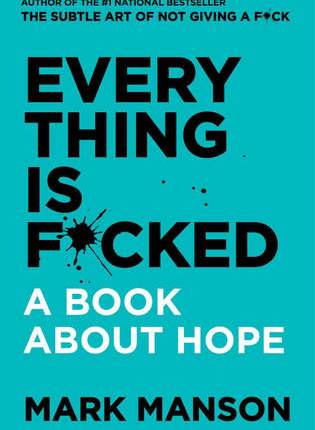
Everything is F*cked: A Book About Hope by Mark Manson

Everything is F*cked: A Book About Hope by Mark Manson

This creatively titled self-help book, Everything is F*cked, presents psychology, philosophy and the author’s view of reality.

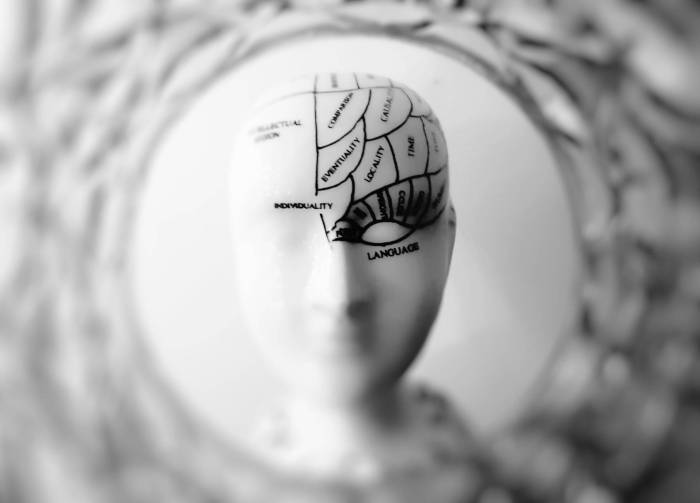
In a series of essays, Mark Manson discusses a variety of topics including the differences between the “thinking brain” and “feeling brain.” He uses Isaac Newton’s laws to create a parallel universe’s version of emotional laws and completes a fairly scathing dissection of religion.

Throughout the various topics, he circles back to the idea of hope and how it can potentially create more problems than it solves.

Photo by meo on Pexels.com

Why did Manson write a book about hope?

“This book is my little source of hope. It gives me purpose; it gives me meaning. And the narrative that I’ve constructed around hope is that I believe this book might help some people, that it might make both my life and the world a little bit better.” pg 15

I did not read Manson’s other incredibly popular title, The Subtle Art of Not Giving a F*ck: A Counterintuitive Approach to Living a Good Life, so I went into this one not knowing what to expect. I found Manson to be particularly adept at breaking down complex topics into simple, easy-to-understand analogies.

For example, here’s his take on the psychological cause of a underlying feeling of unworthiness: “This feeling of unworthiness is usually the result of some bad sh*t happening to us at some point. We suffer through some terrible stuff, and our Feeling Brain decides that we deserved those bad experiences. Therefore, it sets out, despite the Thinking Brain’s better knowledge, to repeat and re-experience that suffering.” pg 46

Photo by Pixabay on Pexels.com

And here’s the analogy he crafts around his explanation of unworthiness: “Put another way, the problem isn’t that we don’t know how not to get punched in the face. The problem is that, at some point, likely a long time ago, we got punched in the face, and instead of punching back, we decided we deserved it.” pg 46

His writing is simple and succinct, which could be incredibly useful for readers who are looking for more information about the self help topics presented. I didn’t particularly care for Manson’s overall style, but that’s a personal preference rather than a commentary on the value of what he’s discussing.

“The stories of our future define our hopes. And our ability to step into those narratives and live them, to make them reality, is what gives our lives meaning.” pg 70

Photo by Engin Akyurt on Pexels.com

I think this author may be similar to Sarah Knight and her series of self help books about The Life-Changing Magic of Not Giving a F**k. Readers either love or hate those, I fell somewhere in between.

My favorite part of this was when Manson dived into some Buddhist philosophy in the chapter, “Pain is the Universal Constant.” He discusses the teaching of suffering being similar to a person struck by arrows. The first arrow brings physical pain and the second brings the emotional pain, which can be far worse and last longer than the physical pain because of the narratives we weave around it.

Through meditation, the second arrow, emotional pain, can be diminished or perhaps eliminated.

“That while pain is inevitable, suffering is always a choice. That there is always a separation between what we experience and how we interpret that experience. That there’s always a gap between what our Feeling Brain feels and what our Thinking Brain thinks. And in that gap, you can find the power to bear anything.” pg 186

Photo by Aleksandar Pasaric on Pexels.com

Recommended for readers who aren’t offended by strong language and have the ability to hold the book they’re reading in that gap in their minds — between the thoughts and the emotions, in the space of pure being.

I’ll meet you there. 🙂

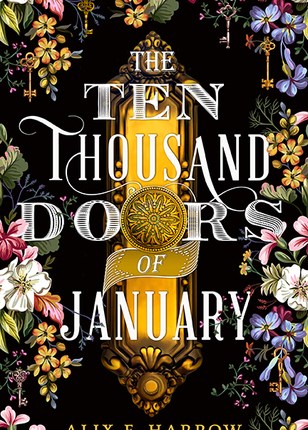
The Ten Thousand Doors of January by Alix E. Harrow

The Ten Thousand Doors of January by Alix E. Harrow

The Ten Thousand Doors of January is a beautiful portal fantasy novel wherein our heroine learns the world contains far more magic than she imagined and so does she.

Photo by Pixabay on Pexels.com

“If we address stories as archaeological sites, and dust through their layers with meticulous care, we find at some level there is always a doorway. A dividing point between here and there, us and them, mundane and magical. It is at the moments when the doors open, when things flow between the worlds, that stories happen.” pg 2

January has never quite fit into the glittering and privileged world of her fabulously wealthy guardian, Mr. Locke. She perpetually waits for her father to return from his many voyages where he’s constantly seeking lost treasures for his demanding employer.

She has very few friends, except Samuel, the local grocer’s son, and, eventually, a feisty hound named Sinbad, “Bad” to those who know him. In her enforced solitude, January has a lot of time to herself. One day, she discovers something strange in a field.

Photo by Irina Iriser on Pexels.com

“I almost didn’t notice the Door at all. All Doors are like that, half-shadowed and sideways until someone looks at them in just the right way.” pg 8

Once she has found the way to another world, January’s life is never quite the same.

I really enjoyed this debut novel by Alix Harrow. The writing is beautiful and most of the book acts as an homage to reading as an escape.

“It smelled of salt and age and adventure. It smelled like another world, and I want to return right this minute and walk those strange streets. Instead, I added articulately, “I liked it.” pg 13

Photo by Harrison Haines on Pexels.com

It also asks the reader to consider the magic of thresholds. The two-headed Roman god, Janus, from which we get the name of the month, January, had an interesting place in the pantheon. Though he didn’t necessarily have a priest dedicated to only him, Janus would be invoked at the start of each religious ceremony, no matter who the ceremony was dedicated to. It was appropriate because Janus holds the authority over beginnings and endings.

He also has a mystical association with the conscious and subconscious mind. The two faces of the god coincide to the two portions of a person’s psyche. Janus can symbolize the unification of these two minds in order to become something greater.

Photo by Octoptimist on Pexels.com

It relates to this story as January comes of age and claims her own, very unique, abilities as well as discovering her mysterious past.

It is also somewhat of a love story: “It’s a profoundly strange feeling, to stumble across someone whose desires are shaped so closely to your own, like reaching toward your reflection in a mirror and finding warm flesh under your fingertips. If you should ever be lucky enough to find that magical, fearful symmetry, I hope you’re brave enough to grab it with both hands and not let go.” pg 91

Photo by Ashley Williams on Pexels.com

Highly recommended for readers who enjoy fantasy. There’s plenty of magic and escape to enjoy in these pages.

Thanks for reading!

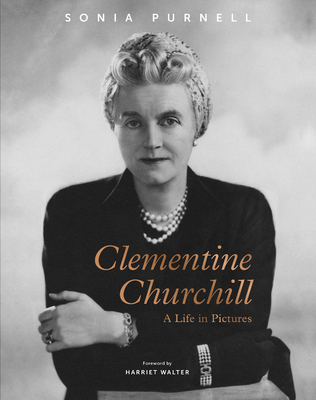
Clementine Churchill: A Life in Pictures by Sonia Purnell

Clementine Churchill: A Life in Pictures by Sonia Purnell

Clementine Churchill: A Life in Pictures is a sparkling biography about Mrs. Winston Churchill. The biographer credits Clementine with supporting and providing the confidence necessary to her famous husband so that he could live the extraordinary life of service that he did.

In the meantime, she also devoted herself to her country as well as raised a family. Her role in Churchill’s life has gone largely unnoticed, but it seems she is finally taking her place in history.

Photo by vectors icon on Pexels.com

Not only did they weather repeated public and personal humiliation together, they overcame the bitterest of personal tragedies, and survived the all but intolerable strains of being at the center of two world wars. … The question is not simply what did she do for him, but also what could he have done without her? pg 9

I knew, in a general way about Winston Churchill’s life, but this biography about Clementine fills in many of the gaps in my knowledge. And actually, it was quite interesting reading. The personal life of the Churchills was filled with a surprising amount of drama and scandal.

In addition, they worked with and knew so many powerful people from the time period. I particularly liked the chapters about Clementine’s acquaintance with Eleanor Roosevelt.

The case can be made that no other premier’s wife, in a democratic country at least, has played such a pivotal role in her husband’s government — arguably greater during the Second World War than the greatest of American First Ladies, Clementine’s direct contemporary, Eleanor Roosevelt. pg 18

Photo by Sid Ali on Pexels.com

The pictures bring this incredible woman, and the trying times she lived in, to life. Many of the photos are un-posed and Clementine is looking off camera, smiling at other people. Even in photos, one gets the sense of how much of this woman’s life was lived in the public eye.

Though her contributions were perhaps unrecognized during her lifetime, Clementine was appreciated by her husband. Take this note he wrote to her on their fortieth wedding anniversary:

“I send this token, but how little can it express my gratitude to you for making my life & any work I have done possible.”

She is certainly a woman who deserves to be remembered.

Thank you to NetGalley and the publisher for a free advance reader copy of this book. It is slated to be on sale in October 2019. Please note, the brief quotations I cited in this review may change or be omitted in the final print edition.

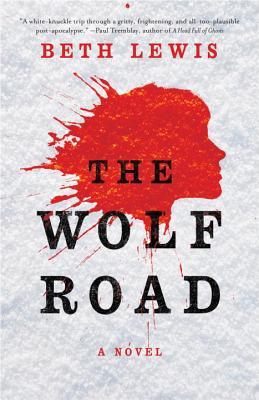
The Wolf Road by Beth Lewis

The Wolf Road by Beth Lewis

Elka grew up in a world where nuclear bombs fell from the sky and poisoned the earth, and the weather can turn deadly in a heartbeat. In this apocalyptic landscape, she found a home in the wilderness with a man she called, “Trapper,” and he was like a father to her. Turns out, there was a dark side to the person who fed and sheltered Elka. Now, Elka has to find her real parents who went north years before. And she has to hurry, because if Trapper finds her first, something terrible will happen.

“Trapper was my family even though I didn’t know a sure thing about him, but I figured quick I didn’t know much more ’bout my parents and they was kin. Trapper was the kind a’ family you choose for yourself, the kind that gets closer’n blood.” pg 21

Photo by Valiphotos on Pexels.com

The title of the book speaks to Elka’s disdain for taking the regular road through the wilderness — in her world, that’s where the predators find you. It’s also a metaphor for living the life you want to live, not the one that others expect for you.

“I don’t much like roads. Roads is some other man’s path that people follow no question. All my life I lived by rules of the forest and rules of myself. One a’ them rules is don’t go trusting another man’s path.” pg 85

Elka, instead, forges her own road through the trees and, as she goes, chooses a new family including a beautiful young woman with a background as mysterious as Elka’s own and a lone wolf who appears one day out of the blue. But she doesn’t trust her own choices because she made such a terrible one by relying on the monster she called Trapper.

Photo by Pixabay on Pexels.com

“He bolted up, stood tall and kinglike, towering above me. Felt like I’d lost a piece of me in that moment, like that wolf had stolen something and I had to stick with him always to make sure I’d get it back.” pg 73

Written in first-person narrative style, The Wolf Road is a dystopian coming-of-age story with some elements of horror and mystery. I found the opening to be a bit slow, but was swept up in the plot as the story progressed and Elka remembered certain details she had forgotten from her unique childhood.

Recommended for readers who like the thrills and chills of dystopian worlds.

Thanks for reading!

Aware: The Science and Practice of Presence by Daniel J. Siegel

Aware: The Science and Practice of Presence by Daniel J. Siegel

Daniel Siegel, MD, psychiatrist and author, shares his research into neuroscience and a meditation practice he has developed called the “Wheel of Awareness“.

“The Wheel practice is a way to open awareness and cultivate a larger, more expansive container of consciousness. People who participate in the practice seem to be strengthening their minds.” pg 9

Photo by Polina Tankilevitch on Pexels.com

The practice uses focused attention on the senses, bodily sensations, mental activities and interconnectedness, in order to encourage the mind to become more integrated. When this integration happens, the mind gives off certain brainwaves that Siegel and other researchers have measured coming from experienced meditation practitioners such as monks.

Basically, Siegel is using western science in an effort to measure and replicate meditation practices.

The science portions of Aware are not very accessible to the non-scientists readers and I could see that being off-putting. However, if you are interested in the intersection of neuroscience and meditation practice, this book could be incredibly useful to you.

“Where attention goes, neural firing flows, and neural connection grows.” pg 19

Photo by cottonbro on Pexels.com

I found the implications of Siegel’s research to be fascinating. He claims, through focused attention, one can change the neural patterns and behavior of the brain. Meditation affects biology in a physically measurable way.

There have been countless studies on the positive benefits of meditation practice, but, I think, fewer on the changes in the function and integration of the mind. The rewards of such can be profound.

“When our minds wander unintentionally, we are not present, we are not receptively aware, we are not mindful, and studies suggest, we inhibit being happy — even if we are daydreaming about exciting things. … Presence cultivates happiness.” pg 49

Besides the Wheel of Awareness portion, the part of Aware I found most helpful was a discussion about the proper cultivation of empathy, the ability to put yourself in another’s place to feel and share what they are feeling.

Photo by Anastasia Shuraeva on Pexels.com

Tania Singer, in a presentation to the Dalai Lama, had this advice: “… we need to place empathy in the larger space of altruistic love and compassion. This space will act like a buffer for empathic distress. Since altruism and compassion are positive mental states, they reinforce our courage and give us the resources to deal with the suffering of others in a constructive way.” pg 86

I liked the visual of that and think it will come in handy in the future.

Recommended for non-fiction readers interested in the science behind meditation and the development of presence. Spiritual seekers looking for different meditation methods may want to look for that in another, less technical, book.

Thanks for reading!