The Mysteries of Merlin: Ceremonial Magic for the Druid Path by John Michael Greer

The Mysteries of Merlin: Ceremonial Magic for the Druid Path by John Michael Greer

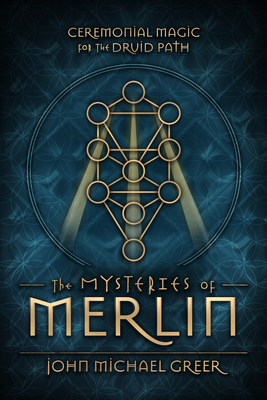
John Michael Greer, one of the most influential authors on Druidism in the modern age, takes a crack at reviving ancient traditions through ceremonies involving the mysterious figure of Merlin. As for his success at this integration, I think that’s up to individual readers to decide for themselves.

Photo by Carol Lemos on Pexels.com

I didn’t connect with the rituals myself, but the first part of this book which details the author’s research into mystery cults and mythology in general, was fascinating to me.

“… myths are things that never happened but always are. They express spiritual truths too profound to be communicated in any more direct way.” pg 12

Though this topic has been covered by a variety of different authors, perhaps most notably Joseph Campbell, Greer’s take on the subject is welcome and refreshing. His focus in this book is piecing together what the Pagan Celtic religion of Britain may have looked like through the fragmentary records and mythology that remain behind.

“Was Merlin, then, purely a god, and his appearances as a Dark Age prophet and wizard only garbled mythology? That is a surprisingly difficult question to answer.” pg 27
Photo by cottonbro on Pexels.com

Greer’s writing is accessible even for those who may not have a background of western occultism or paganism to draw upon. But, this book might be most useful for those who feel drawn to those spiritual paths because, as I mentioned before, the majority of this book is dedicated to detailing rituals that Greer has created for those traditions.

Seekers interested in the forgotten history of paganism in Europe, as I am, might be better served with another book. If I find one, I’ll let you know.

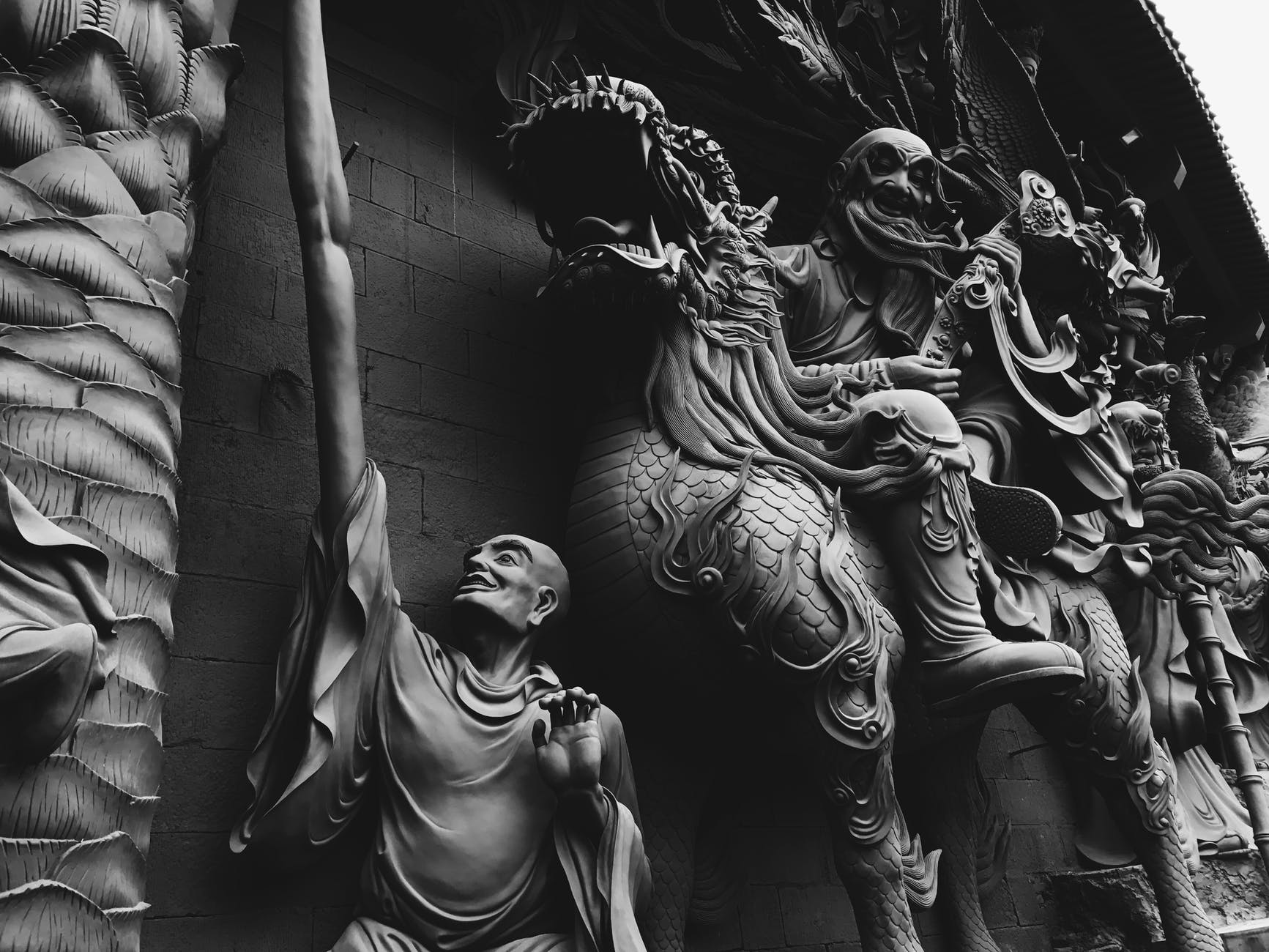
“Vortigern ordered the workmen to dig into the hill and they found the lake; once the water was drained away, the rocks appeared, and the dragons leapt out of them and began to fight each other. As they struggled, Vortigern asked Merlin what the combat meant, and the boy burst into tears and began to prophesy.” pg 22

Photo by Dimitry Anikin on Pexels.com

As for the actual historical personage of ‘Merlin,’ I think Greer’s interpretation of the sparse evidence is as good as any I’ve read which, admittedly, isn’t very much because there’s not much to go on.

And as for the retrieval of ancient traditions and mystery cults, perhaps new mythologies, like this book, need to be written. The old lineages may simply be lost forever.

Further Tales of the City (Tales of the City, #3) by Armistead Maupin

Further Tales of the City (Tales of the City, #3) by Armistead Maupin

Having read the two previous books in this series, Further Tales of the City was exactly what I’ve come to expect from Armistead Maupin. It’s a dramatic, fast-paced soap opera with unexpected twists and turns, and diverse characters whom I enjoy reading about.

In fact, my only quibble with this book is that one of my favorites, Mona, wasn’t in it. I’m hoping she makes a reappearance in the next story.

Photo by picjumbo.com on Pexels.com

Further Tales of the City is an easy escape from reality as the characters work, enjoy their leisure time, and navigate the difficult paths of relationships in the modern era. If you’re looking for a getaway from the real world, this might be a good choice for you.

If you can, do start with book one, Tales of the City. It is possible to enjoy each book as a stand alone, but Maupin weaves previous incidents from his characters lives seamlessly into the new stories. I feel like readers might miss out on the full experience if you don’t pick the tale up from the beginning.

Highly recommended.

Here are my reviews of the other two books in the series:

Tales of the City: https://thehelpdeskbookblog.wordpress.com/2020/08/04/tales-of-the-city-by-armistead-maupin/

More Tales of the City: https://thehelpdeskbookblog.wordpress.com/2020/08/17/more-tales-of-the-city-tales-of-the-city-2-by-armistead-maupin/

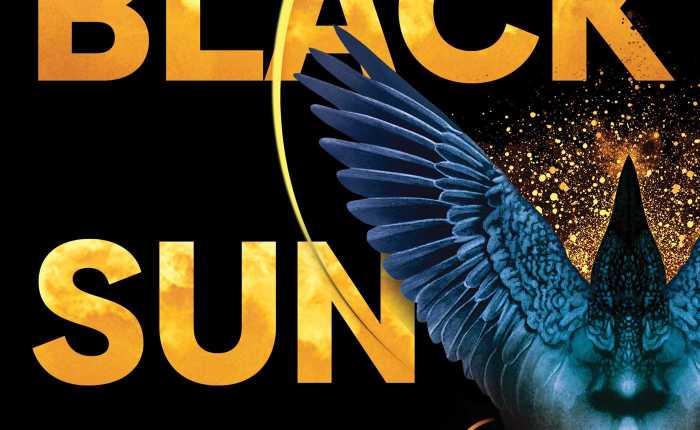
Black Sun (Between Earth and Sky, #1) by Rebecca Roanhorse

Black Sun (Between Earth and Sky, #1) by Rebecca Roanhorse

Black Sun is a fascinating fantasy novel that examines religion, ritual, prophecy, and how all of those variables affect civilization and the balance of power between groups within that civilization.

“Just like their great ancestor, I have swallowed the shadow of the sun. They call me Grandfather Crow sometimes, although I am not so old.”

Photo by Tom Swinnen on Pexels.com

Much has already been said about Rebecca Roanhorse’s characters in Black Sun, which are phenomenal, so I will only add to the discussion by saying how much I enjoyed the differences that she created between the various cultural groups of this fictional world. I also liked how she built the hierarchies within the cities, especially Tova.

“It is said that thousands of years ago our world was once populated with gods. They are our ancestors. But there was a great war, the God War, and many were killed. Those who were not killed in the war began to die anyway.”

This spring, I took a course from Oxford University about ritual and religion in prehistory and it not only changed the way I view the role of religion within the creation of civilization, it also changed my analysis of books that contain religious themes, like this one. Matters of faith and spirit aside, there are compelling reasons to believe that religion started as a method of maintaining power and control within groups in prehistory.

Photo by freestocks.org on Pexels.com

Roanhorse’s work shows these connections clearly. There’s hints of a bloody night filled with warriors who set out to exterminate a particularly warlike cult for, what they say is, the good of all the other groups. The priestly-class carefully constructs rituals and remembrances to not only mark the passing of time and powerful individuals but also to demonstrate their enduring power over the groups they claim to represent.

The mysterious figure, Serapio, is manipulated from birth to fulfill a role that no one tells him about because of a specific prophecy of the Carrion Crows. The Sun Priestess Naranpa has difficulties holding her office because of the poverty of her birth family will always make her an outsider among the more privileged classes who traditionally gave their sons and daughters to the priests.

There are more examples of power struggles throughout the story and I don’t want to ruin anyone’s enjoyment of discovering them. Those were a few that came readily to mind.

Photo by Pixabay on Pexels.com

So, in addition to being an immersive fantasy read, Black Sun is also semi-educational about the potential development of religion in prehistory.

All that being said, and as much as I loved the character and plot development, I didn’t like the ending. No spoilers here though.

Thank you to NetGalley and the publisher for a free advance reader copy of this book.

Or What You Will by Jo Walton

Or What You Will by Jo Walton

Or What You Will is a unique fantasy novel about a writer, one of her fictional characters, her real life, a final story she is writing, and her love affair with the city of Florence.

“I have been a character, and I have been a narrator, but now I don’t know what I am.” pg 8, ebook.

Photo by Tamara Velazquez on Pexels.com

Told from the point of view of a character inside another character’s mind and between flashbacks to real life and an on-going fictional story-within-the-story, Or What You Will sounds quite complex. But once I got into the flow of it, I enjoyed this quirky tale quite a lot.

“Readers remember you. So you’ll live on in the books. It’s the only form of immortality the real world has.” pg 53, ebook.

I loved learning about Sylvia (the fictional writer’s) life, loves, and writing process. Part of its charm is that this is a meta-filled book for readers who love the process of writing and the development of characters. It is also filled with surprising and entertaining tidbits of real history about Florence which appealed to the amateur historian in me.

Photo by Josh Hild on Pexels.com

There was plenty to enjoy in Or What You Will. My quibble with the book has to do with its ending.

After meticulously building an immersive world, or two, the author unceremoniously ends the story in a few paragraphs.

It was incredibly disappointing, especially when you consider the book is only 226 pages long (ebook). She had room to do more. In fact, I could have stayed in the world she created for twice as many pages.

That being said, the last few pages of the book made me cry. So, perhaps it was a satisfying ending in its way. I just wish it had been developed more fully.

Photo by Daria Shevtsova on Pexels.com

Other than the ending, this is a brilliant and totally unique story, unlike anything I’ve ever read. If you like Jo Walton’s other fantasies, you may want to give it a try.

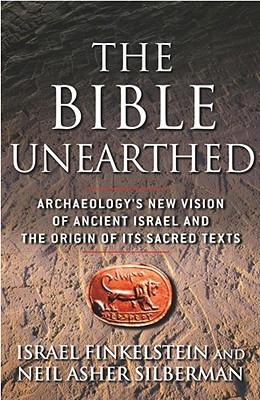
The Bible Unearthed: Archaeology’s New Vision of Ancient Israel and the Origin of Its Sacred Texts by Israel Finkelstein, Neil Asher Silberman

The Bible Unearthed: Archaeology’s New Vision of Ancient Israel and the Origin of Its Sacred Texts by Israel Finkelstein, Neil Asher Silberman

Authors Israel Finkelstein and Neil Asher Silberman examine archaeological evidence in an effort to shine further light on the writing and creation of the first five books of the old testament of the Bible or the Pentateuch.

Photo by Luis Quintero on Pexels.com

From a historical perspective, this book was fascinating to me.

“Recent developments in archaeology have finally allowed us to bridge the gap between the study of biblical texts and the archaeological finds. We can now see that the Bible is – along with distinctive pottery forms, architectural styles, and Hebrew inscriptions – a characteristic artifact that tells a great deal about the society in which it was produced. pg 22, ebook

This was the first time I had read a non-fiction book about the actual history of events and leaders from the Bible rather than a theological interpretation. This may have been one of the reasons why I enjoyed it so much, but, despite my inexperience with books on such topics, I still believe it is very well done.

Photo by Suliman Sallehi on Pexels.com

The Bible Unearthed could be a challenging read for some. For example, it doesn’t hesitate to look at potential political reasons for why the Bible was written and constructed in the manner that it was.

The authors also don’t shy away from discussing when there is a lack of historical evidence for long-held assumptions or ideas.

“As far as we can see on the basis of the archaeological surveys, Judah remained relatively empty of permanent population, quite isolated, and very marginal right up to and past the presumed time of David and Solomon, with no major urban centers and with no pronounced hierarchy of hamlets, villages, and towns.” pg 132

Photo by Mike on Pexels.com

Religion doesn’t seem to be a topic that invites inspection or examination. This book does, in my opinion, a brilliant job of looking at only the evidence.

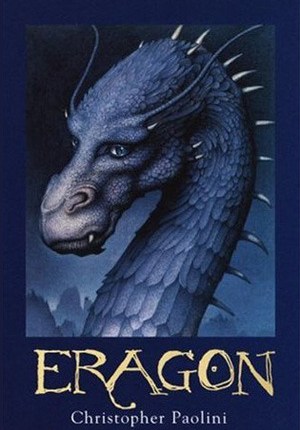
Eragon by Christopher Paolini

Eragon by Christopher Paolini

Eragon follows the exploits of a boy, a dragon, and their fight against an evil king, and his henchmen, who would plunge the world into darkness.

Prophecies of revenge, spoken in a wretched language only he knew, rolled from his tongue. He clenched his thin hands and glared at the sky. The cold stars stared back, unwinking, otherworldly watchers.” pg 14, ebook

Photo by carol wd on Pexels.com

Though it is written for children, Eragon is a charming tale that I thoroughly enjoyed as an adult reader. The pace was snappy, the characters were written quite well, and the story itself was a fun, adventure and fantasy.

“Eragon found the stone both beautiful and frightening. Where did it come from? Does it have a purpose? Then a more disturbing thought came to him: Was it sent here by accident, or am I meant to have it?” pg 16, ebook

Photo by Dids on Pexels.com

I did a little research about the author, Christopher Paolini, and was surprised to discover that this was one of the first books he published and he was in his teens when he wrote it. How impressive is that?

“Dragons will constantly amaze you. Thing… happen around them, mysterious things that are impossible anywhere else.”

There were a couple things I didn’t enjoy about Eragon, but they didn’t ruin my appreciation for the overall story. For example, I wanted Saphira the dragon to have a different personality. She has some character traits that I felt were incongruous with how an immensely powerful, magical being would act.

Photo by Andre Moura on Pexels.com

When I think carefully about it, what a silly quibble to have with a story based in fantasy. But readers will have their preferences, and I like to picture dragons as either wise and benevolent, Buddha-like beings or demonic treasure hoarders along the lines of Smaug.

Paolini’s version of them is different from both of these extremes. He makes dragons fallible, like humans. Which, at the end of the day, makes this a better story for children. A lesson like, even the most powerful among us can make mistakes or experience unpleasant emotions like jealousy, is a good lesson to learn.

“These books are my friends, my companions. They make me laugh and cry and find meaning in life.” pg 153, ebook

Photo by Pixabay on Pexels.com

Highly recommended for young adult fantasy readers or the young-at-heart.

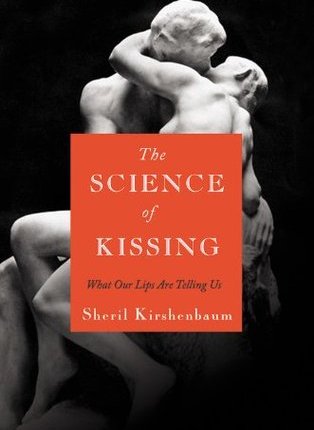
The Science of Kissing: What Our Lips Are Telling Us by Sheril Kirshenbaum

The Science of Kissing: What Our Lips Are Telling Us by Sheril Kirshenbaum

What do we know about the “science” of kissing? Researcher and author Sheril Kirshenbaum shows we know surprisingly little in The Science of Kissing.

“Kissing is a type of universal language, best interpreted by those involved in the exchange.” pg 209

Photo by Flora Westbrook on Pexels.com

To start, I didn’t know that humankind wasn’t the only species to demonstrate “kissing” behavior.

“Moose and ground squirrels brush noses. Manatees nibble at their partners. Moles rub snouts and turtles tap heads. Porcupines nuzzle noses – one of the few regions of their bodies that lack quills.” pg 29

Photo by Snapwire on Pexels.com

I also didn’t know, seems obvious in hindsight, that kissing wasn’t always a common behavior. It has spread throughout cultures and countries because of the way we’re interconnected with technology.

But that wasn’t always the case. Historians and anthropologists have recorded different attitudes towards kissing among various cultures for hundreds of years.

“… he noted that some Finnish tribes were not very interested in kissing, and observed that while the sexes would bathe together completely nude, a kiss on the lips was considered indecent.” pg 57

Kirshenbaum briefly covers a few different scientific studies into sexual behavior or kissing.

“In Alfred Kinsey’s 1948 report ‘Sexuality in the Human Male,’ for instance, kissing style was found to correlate with a person’s level of education. Seventy percent of well-educated men admitted to French kissing, while only 40 percent of those who dropped out of high school did.”

Photo by Pixabay on Pexels.com

However, I felt that the majority of this book was written anecdotally because there are so few rigorous studies that have been conducted. In fact, one of the chapters of this book consists of suggestions of studies that could be done with some of the information that Kirshenbaum compiled.

… only one in seven women answered that she would consider sex with someone she had not first kissed. Conversely, the majority of men reported that they would not be deterred.” pg 92

Despite what I perceived as a lack of hard science in here, I found the book amusing. Recommended for readers who are looking to be entertained, rather than enlightened, about kissing.

The Burning Wheel by Luke Crane

The Burning Wheel by Luke Crane

I’ve been reading the rule books of different roleplaying games this year like Nobilis and now The Burning Wheel in order to alleviate boredom and socialize with friends while playing the various games online. While doing so, I have come to appreciate the artistry and finesse that goes into creating the games.

This effort is most easily seen in the rulebooks.

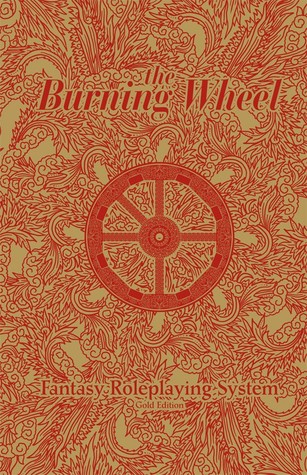
The Burning Wheel rulebook is gorgeous. The artwork and binding are lovely. This is a book that feels like it belongs in your hands when you open it.

I realize that the world is moving more digital all the time, books included, and that makes sense. It saves resources, space, and what could be more convenient than having your entire library with you when you travel?

But I think I would miss the experience of holding a physical book and the sensations that go along with that. I watched a YouTube video review of this game that suggested part of the familiarity of the feel of this book might be related to the fact that it was created in the shape and size of a family Bible.

Whatever the draw is, if you’re going to play this game, I highly recommend buying a physical copy of the book.

That being said, the game itself is incredibly complex. No matter what you want to do in Burning Wheel, it requires some sort of roll. The most annoying aspect of this complexity is in the “resource” portion of the game. I failed a roll a few weeks ago and now my financially-challenged elf bard has to find a job.

Photo by fotografierende on Pexels.com

Do I really want to play a game to roleplay something like that? I could just live life as it is right now to worry about resources.

The organization of the rulebook also leaves something to be desired. For example, bard songs and their details are located in a couple different places.

So, say you’re playing along, then you want to know what sort of dice you have to roll to sing a song to the trees. In order to find that information, you’ve got to look all over the place. It doesn’t work well at all.

Photo by Pixabay on Pexels.com

Even the character creation is an unwieldy process. It took two very experienced gamers and I, who admittedly has less experience but plenty of enthusiasm, nearly four hours to put together two characters. Four hours!

Despite its complex and difficult nature, I think experienced gamers who are willing to greatly simplify the rules might still enjoy playing this game. Newbies to RPGs may want to try something else.

The Complete Idiot’s Guide to T’ai Chi & QiGong by Bill Douglas

The Complete Idiot’s Guide to T’ai Chi & QiGong by Bill Douglas

The Complete Idiot’s Guide to T’ai Chi & QiGong is a useful reference guide that I’ve been using in conjunction with online courses to dip my toes into the practice of both.

The first part of the book is the history of the martial and meditative arts as well as best practices. The second part is the movements.

Photo by Pixabay on Pexels.com

I liked that links to demonstrative videos are sprinkled throughout the text, somewhere over a hundred of them! It really helped the materials to come alive for me.

The way the author writes might be a little far out for readers who are looking for more scientific approaches to the practices. He touches on scientific studies that demonstrate health benefits, but doesn’t go too deeply into the science behind them. Readers who are looking for something like that may want to find a different book.

Photo by Craig Adderley on Pexels.com

I’ve begun to incorporate both t’ai chi and qigong into my daily routine. It is a nice, restive break from the stressful day-to-day grind. As I move my body through the practices, my mind follows.

It is difficult to describe, but easy to experience if you attempt some of the movements yourself.

One of the most helpful online resources I discovered for qigong is “Qi Gong for Better Health and Wellness” by Lee Holden on Wondrium.

Highly recommended for readers at all levels of fitness. Namaste!