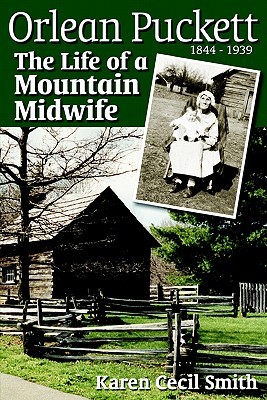
Orlean Puckett: The Life of a Mountain Midwife by Karen Cecil Smith

Orlean Puckett: The Life of a Mountain Midwife by Karen Cecil Smith
orlean-puckett

The Life of a Mountain Midwife is an interesting, but sometimes meandering, biography about a midwife named Orlean Puckett who lived and worked in rural Appalachia.

This reminded me of Laura Ingalls Wilder’s Little House on the Prairie books in that Karen Cecil Smith takes great care to detail the day-to-day chores, food, clothing, and lives of the people of Appalachian Mountains in the 1800’s to 1900’s. I loved those intimate details, many of which are completely gone from the modern lifestyle like chopping wood, lighting the stove, and cleaning laundry by hand.

Also, I am a big fan of BBC television show, Call the Midwives so the chapter detailing Puckett’s extraordinary midwifery skills was fascinating to me. Take this gem: “Aunt Orlean continued to ask, ‘Don’t you think it’s about time to feather her?’ Dr. Cundiff finally said, ‘Okay,’ at which point Aunt Orlean produced from her bag a goose feather. She stuck it into the fire and then placed the smoking feather beneath the mother’s nose. The mother started coughing and sneezing and the baby was born immediately.” pg 101 Can you believe that!

Astoundingly, Orlean Puckett delivered over 1000 babies with almost zero training and never lost a mother or child.

Photo by Pixabay on Pexels.com

Karen Cecil Smith utilizes actual interview tidbits from many of the people who knew Orlean Puckett for this book and that was also enjoyable. She maintained their improper grammar and local accent which lent real flavor to the narrative. For example, many of the children that Orlean helped deliver said that she “borned” them. Here’s a memory from a relative: “Now I was gonna stay up there one night with Granny (Orlean) and she was gonna learn me how to bake wheat bread the next mornin’ and Uncle Stewart he had to go to work and they waked me up and wanted to know if I wanted to put on bread.” pg 57

My only complaint about this book is that it wanders in places and the reader is led into extended stories about ancillary people to Orlean’s life when, this reader at least, just wanted to know more about the Orlean herself.

Photo by Lum3n on Pexels.com

If you are mainly interested in local history, this book is like a casual conversation with an elderly friend. I’d even go so far as to compare it to an unedited Story Corp interview. It can be charming but also frustrating when the story goes on and on but doesn’t seem to go anywhere.

If you enjoyed this book, I’d suggest any of the Laura Ingalls Wilder series. They have the same sort of detail oriented focus but with more of a story line.

I received a free copy of this book through Goodreads First Reads program. Thank you for reading!

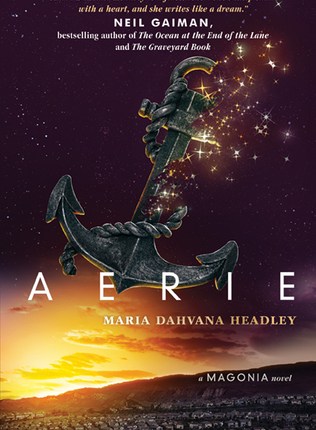
Aerie (Magonia #2) by Maria Dahvana Headley

Aerie (Magonia #2) by Maria Dahvana Headley

Warning: minor (and major if you haven’t read the first book) spoilers, proceed with caution.

Aerie is a very strange and complex, young adult fantasy. Allow me to explain.

In the first book, we met Aza, a girl who was drowning on Earth because, though she doesn’t know it, she’s actually from a kingdom in the clouds. She’s in love with Jason, a genius boy with obsessive thoughts like repeating the numbers of pi in his head over and over again.

Photo by Pixabay on Pexels.com

Many adventures happened in the first book, but essentially we learned that in Aza’s home, the Magonians use their voices in magical ways. Through changing vibrations, Magonians can make elements appear and change, control the weather and animals, manipulate the molecules of reality itself.

Like most young adult stories, Aza is special, a savior with godly abilities that she didn’t know she had until she was tested. She’s supposed to bring balance back to Magonia because Aza’s mother is crazy and wants to kill everyone on the ground- Jason included.

One of the things that happens at the end of the first book is that Aza’s mother is imprisoned. (Lots of other stuff happens too.)

This book picks up where the last one left off. Jason and Aza are deepening their relationship though Aza looks like a completely new girl because she trashed her “skin,” essentially a suit that allows her to look and breathe like a human, and had to acquire a new one.

Did I mention that Magonians have naturally blue skin with orange/red eyes and white tattoos that change depending on their emotional state? Yeah, that’s a thing.

Photo by Marcelo Dias on Pexels.com

Aza’s mother, Zal, breaks out of prison and someone has to stop her before she destroys the world. There are rumors of “The Flock,” a weapon of some sort that can stop Zal, but no one knows where or what it is.

And that, I think, is where this story really begins.

Headley’s world building is epic. Magonia itself is a treasure and the other supernatural creatures that the author introduces are tantalizing in their possibility.

However, I didn’t care much for the characterizations or the obvious plot twists.

The grand showdown itself was a huge disappointment like expecting a brightly colored balloon on your birthday only to have it pop in your hands when you receive it. Headley gathered all of these potentially awesome characters together but only the actions of three mattered.

I wanted ships firing at each other, creatures made of flame, earth, water, feathers… slamming into each other in waves, with the earth itself rising in fountains in an effort to touch the sky.

Photo by Pixabay on Pexels.com

But that didn’t happen.

Aza’s special, I get it.

Aza can sing a song that only she can sing, I get that too.

She FEELS things deeply then SINGS them deeply. Blah.

I just never connected with Aza the way Maria Headley wanted me to. Headley built a lovely world that was so much more than just three characters.

Perhaps I’m being unfair- did anyone who read this book feel differently? I would love to hear from you.

Photo by Ylanite Koppens on Pexels.com

Recommended for readers who are willing to overlook a weak story for some fantastical and wildly imaginative elements.

You don’t have to read the first book to appreciate this one, but I think you’d want to in order to absorb the outlandish world that is Magonia. Some similar reads: The Breedling and the City in the Garden, Archivist Wasp, or Under the Empyrean Sky.

Thanks for reading!

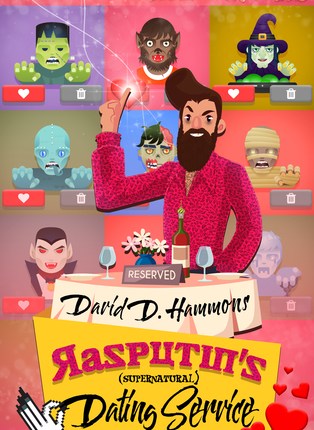
Rasputin’s Supernatural Dating Service by David D. Hammons

Rasputin’s Supernatural Dating Service  by David D. Hammons

rasputinImagine for a moment that supernatural creatures are real. All of those bloodsucking vampires, toothy werewolves, wandering sasquatch, elves, ghosts, and witches from the stories, they actually exist. Why would all of these beings have notoriously difficult relationships with humans from hauntings to kidnappings to feasts made of human flesh? Rasputin has a theory. He thinks that they’re looking for love in all the wrong places. And the answer to the world’s problems lies through the doors of Rasputin’s Supernatural Dating Service.
Rasputin is THE Rasputin, a seemingly immortal mystic from tsarist Russia who has a way with the ladies, the supernatural, and, sometimes, the men too if he’s in the right mood. This ancient horn dog steers the agency from the golden hot tub in his office and sends his agents throughout the country, certifying legitimate supernatural creatures for dating service access. Eli Kowalski, the narrator, is one of those agents. His troubles begin when a vampires gives him an ancient artifact of unimaginable power and a sinister supernatural creature begins hunting Eli in order to take this power for himself.

Is this story ridiculous? Yes, it is. Did I love it? Surprisingly, yes, I did. David Hammons reminds me of a young Christopher Moore, a silly storyteller with heart. If you can see the humor in an elderly mystic driving a phallic shaped hot rod while demanding that his dating service underlings call him “the Love Machine” then you may enjoy this story too.

Just to give you a taste, here is Eli reading the privacy policy of the Supernatural Dating Service: “Your information will not be shared with any non-Certified member, nor will your home address, dwelling, lair, ethereal plane, or other physical, metaphysical, neo-physical, and existential contact details be divulged to any group outside the RSDS and appropriate government agencies. … Your privacy is important to us, as is your ability to make sweet love to whatever creature you desire.” Lawyers required us to say most of that. Rasputin required us to say the last part.” loc 106, ebook.

Recommended for readers who enjoyed Lamb: The Gospel According to Biff, Christ’s Childhood Pal or almost anything by Tom Holt.

Thank you to NetGalley and Curiosity Quills Press for a free advance reader’s copy of this book. And thank you for reading!

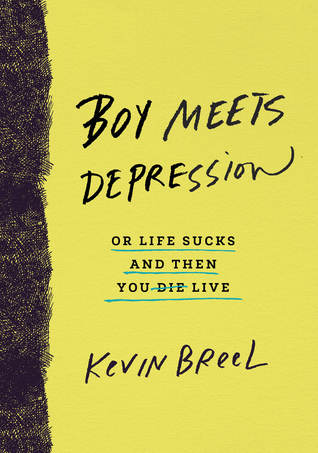
Boy Meets Depression: Or Life Sucks and Then You Live by Kevin Breel

Boy Meets Depression: Or Life Sucks and Then You Live by Kevin Breel
boymeetsdepression

Boy Meets Depression is a raw memoir written by someone who lived through the depths of mental illness but, fortunately for the world, lived to tell about it.

Between relating events from his past, the author pokes around in the dark corners of his mind and it can be difficult to read because of his brutal self consciousness. Kevin Breel’s flowing, almost stream of consciousness, writing style probably isn’t for everyone, but I generally liked it because it allowed me to literally step inside his brain while I was reading his book.

Having dealt with a bout of crippling depression when I was at the age Breel describes here, I empathized deeply but also was forced to look through the mirror of my own recollections at moments that I perhaps didn’t want to remember.

But, that was ok. Breel’s point is that these life stories and experiences do not define us, it’s what we do with our lives that does.

A few highlights for me:

“You make a better life through example, not opinion. You can’t just think things. You gotta live them out.” pg 167 He found a counselor he liked and this was in one of their conversations.

“The thing about trying to figure out who you are is that it’s big waste of time. You never end up finding yourself, only being a part of the journey which is creating you.” pg 172 A conversation with his mother in which he realizes that he can go to therapy until he croaks but that the point of life is to live it.

“I’m not much a fan of stars, but I am a fan of the idea that sometimes life has to go pitch black before you can really appreciate the light.” pg 174  In this passage, Kevin was talking about the extreme darkness in the Yukon and how it allows people to see stars in the sky that they would not normally be able to see. What a beautiful metaphor for depression and life.

“I used to think that focusing on the here and now was just a cute way of ignoring life. Now I see it’s the opposite: the here and now is life. Everything else is just self-talk.” pg 188  How extraordinary that Breel has been able to come to this conclusion so early in his life. I think that generally it takes folks longer to come to the realization that the world in your mind isn’t real, just a story.

Photo by cottonbro on Pexels.com

I wish that our society could come up with better ways to address and treat mental illness than what we have figured out so far, but with books like Boy Meets Depression and Furiously Happy by Jenny Lawson I think that we have at least found a place to start the conversation.

Personal accounts of the darkness that dwells in our minds and the slow climb back into the light of wellness serve a purpose beyond a cathartic release for the author. It lets any of the book’s readers, who may be suffering with the same issues, realize that they’re not alone and that there are ways out. These books are like flashing exit signs to people who may be lost in a frighteningly dark place and I only hope that they find their way at the right time into the hands of the ones who need them most.

I received a free advance reading copy of this book through GoodReads First Reads program. Thanks for reading.

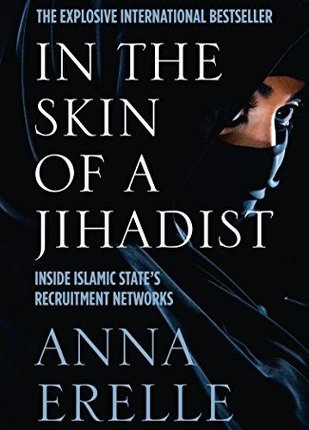
In the Skin of a Jihadist: Inside Islamic State’s Recruitment Networks by Anna Erelle

In the Skin of a Jihadist: Inside Islamic State’s Recruitment Networks by Anna Erelle
jihadist

This book was scary.

First of all, I had no idea how widespread the problem of young men and women leaving their home country to wage jihad had become. Anna Erelle was almost effortlessly sucked in to a horrific situation that has actually happened to hundreds of young people from Europe.

She demonstrates how easily a young woman, who may be lonely, marginalized, or searching for meaning, could be swept away by a religious fanatic so that she could never return home.

Once these young people hit the Syrian border, their passports are taken so that, even if they changed their minds, they couldn’t go back. And, the worst part is that it happened so quickly. The events of In the Skin of a Jihadist occur over the course of one month.

Reading this as a parent, this book was a nightmare. One minute, your child is home with you- the next they’re on a one-way flight to Turkey and they’re never coming back.

As compelling as the story was, it suffered from some small translation problems. (It was originally written in French.)

Why, for example, did Anna get into that fight at the photojournalist party? I know that she was under pressure and had had too much to drink, but, if it had been me, I wouldn’t have punched a bouncer because I was upset about how my story was going. When everything soured, I would have packed my bags and taken the first flight home.

That probably only shows how she’s a more serious journalist than I am, but still. I felt as if I was missing some details about why she was behaving how she was and how the French police used her contacts and information to prosecute terrorists.

Overall though, it was a harrowing read. I learned more about Sharia law than I had known before I read this book and also about why people would chose that type of lifestyle- it was all profoundly disturbing.

Read In the Skin of a Jihadist if you want to know more about this issue but prepare yourself for some eye-opening revelations.

If you want to learn more about this topic, I’d recommend reading The Terrorist’s Son: A Story of Choice by Zak Ebrahim or I Am Nujood, Age 10 and Divorced by Nujood Ali.

I received a free copy of this book through GoodReads First Reads program. Thanks for reading!

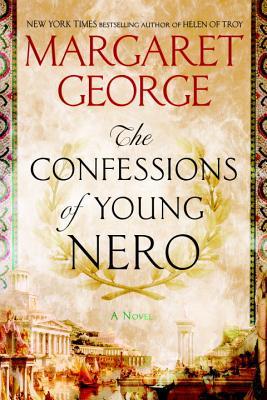
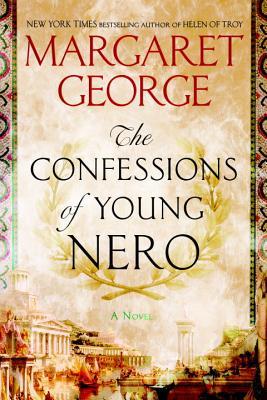
The Confessions of Young Nero (Nero #1) by Margaret George

The Confessions of Young Nero (Nero #1)  by Margaret George

margaretgeorge**Warning: minor spoilers ahead unless you’re familiar with Roman history.**

Margaret George has done it again and produced yet another triumph of historical fiction. This one follows the much maligned Nero from his humble beginnings in a lower branch of the imperial family tree to the prize itself, Roman emperor. Then, it ends on an epic cliff hanger, but I forgive her because it is so awesome. If you can’t handle that kind of wait, you may want to hold off on reading this until the next installment is out.

All I knew about Nero (before this book) was that he “fiddled while Rome burned.” George combines the research of a scientist with the storytelling ability of a master writer to bring this man’s story to life. I have to admit- I actually felt sorry for the guy. Yes, despite the orgies, outlandish expenditures, palatial living, and god-like status, poor Nero, like all of us, just wanted to be loved. At least, so says Margaret George.

“It was hard to keep the family… straight. There was so much intermarrying that everyone seemed related to everyone else.” loc 219. Like British aristocracy, the upper echelons of Roman society were actually quite small and so everyone actually knew each other very well. Their children married, they frequently divorced and remarried each other, and excuses were made for the very close marriages. Nero’s mother, for instance, marries her uncle.  Abhorrent to modern eyes, perhaps, but like royalty from many different ages, somehow the rules were bent and it was allowed.

From his very earliest days, Nero watches others scheme, poison, and claw their way towards power. It really messes him up. “It was my first, and most brutal, lesson in what lengths to which evil people will go, and for what flimsy reasons. I have never forgotten it, nor let down my guard since. Let them call me cruel. Better that than dead.” loc 544, ebook. Just to put it into perspective, Nero’s uncle, the Emperor Caligula, once declared war on the god, Poseidon, and had his soldiers run into the ocean and stab the waves with their swords- totally bonkers. George suggests throughout the story that Nero is not only trying to outshine his relatives because of natural ambition, but also because he believes there is a curse in his blood. With an extended family like that, I can see his point.

George also does a good job bringing Rome and her curious attitudes about everyone not Roman to life. Nero is fond of the Greeks- their music, poetry, and athleticism. But, to the Romans, that sort of cultural appreciation is unmanly and unnatural. I think it was just an extension of the very human attitude of “us vs them” but Romans took it very badly when Nero wanted to perform music in public (gasp), wear a tunic rather than a toga (double gasp), and race a chariot in the Coliseum (passes out on the floor). These things were not done but Nero insisted on doing them. Compared to the things that celebrities get away with today, those behavioral peculiarities seem so tame.

“I learned to live with the knowledge I had; people can get used to anything, even horror, and it begins to feel normal. And the thought that I had inherited the blood of murderers seemed less threatening than that my mother… might kill me. Thus we make peace with ourselves and our weaknesses, for there is always someone worse to focus on.” loc 1732, ebook. Poor, poor Nero. Can you imagine being afraid that you’d die at the hand of your mother? It really makes one feel like her anxieties are rather trivial. Stressed about a dirty house? Yeah, Nero’s mom might kill him today or tomorrow or the next time he’s not paying attention. Get over it!

Highly recommended for fans of historical fiction, ancient Rome, or people who want to get lost in a story. Margaret George is amazing. I own four of her books and, when this is published, I just may have to pick it up too. Coming from a (former) librarian, this is really one of the highest compliments I can give to an author. Do yourself a favor, if you like this genre and haven’t tried her yet, pick up Margaret George.

Thank you to NetGalley and Berkley Publishing for a free advance reader copy of this book.

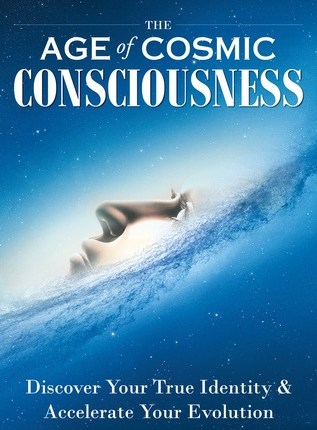
The Age of Cosmic Consciousness: Discover Your True Identity & Accelerate Your Evolution by Transform Publishing

The Age of Cosmic Consciousness: Discover Your True Identity & Accelerate Your Evolution by Transform Publishing
ageofcosmic

Time for the hippie librarian to get a little New Age-y!

The Age of Cosmic Consciousness is a bunch of different metaphysical concepts strung together sort of like Ram Dass’ Be Here Now but written on regular paper instead of- I don’t know what that stuff is- let’s say brown paper bags.

The first thing to know about this book is that it is written in a flow of consciousness style. I found it very difficult to get into, but then hypnotic once I got reading, and thus it became difficult to put dow

. I found it similar to Kelly Howell’s Secret of the Universal Mind Meditation in that one idea leads to the next idea in a very natural and linear fashion.

A lot of the concepts in here have been covered by The Secret and various other authors. There’s a good bit about the Law of Attraction, but there’s so much more than that.

What I loved about this book can be summed up in this quote: “Do not overly focus on the inaccessible gurus and unapproachable enlightened people. Recognize and accept that a higher consciousness can be attained by anyone who proactively pursues its realization.” pg 136 I truly believe that enlightenment is for everyone and possible for everyone. This book really puts that idea forward.

That being said, I don’t know that I was prepared for the “other beings of light consciousness” mentioned in this book or the section that purports to have information directly from them but not “channeled”. Or the other section about aliens tampering with human DNA in the dawn of time. My inner self doesn’t necessarily “resonate” with those ideas yet, but some readers out there may feel it and understand it.

Photo by Julia Volk on Pexels.com

In conclusion, The Age of Cosmic Consciousness is worth the read for anyone interested in improving themselves and the world through inner transformation. Remember to keep an open heart and mind because some of the ideas presented are fairly “evolved”. Some similar books are: Be Here Now and Gateway to the Heavens: How Simple Shapes Mould Reality and the Fabric of Your Being.

I received a free copy of this book through the Goodreads First Reads program. Thanks for reading!

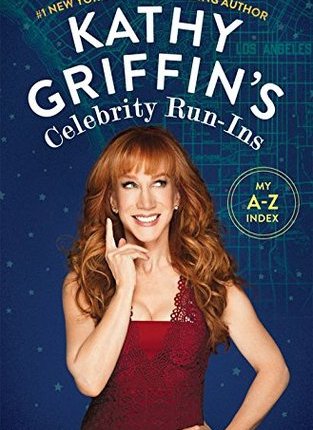
Kathy Griffin’s Celebrity Run-Ins: My A-Z Index by Kathy Griffin

Kathy Griffin’s Celebrity Run-Ins: My A-Z Index by Kathy Griffin

Here’s The Help Desk’s first ever video review!

I hope you enjoy it and here are the links to the books I mentioned at the end of the video.

The Andy Cohen Diaries

Tip It

Thanks for reading.

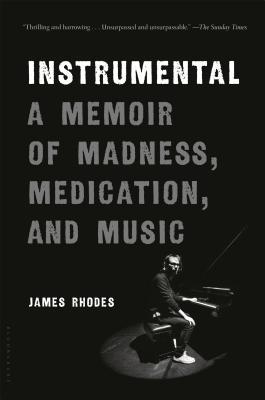
Instrumental: A Memoir of Madness, Medication, and Music by James Rhodes

Instrumental: A Memoir of Madness, Medication, and Music by James Rhodes
instrumental

This is a shocking memoir about the horrific sexual abuse that James suffered as a child and how music saved him. It is raw, ragged and real.

The author is frank about describing what happened, how his life fell apart, and how he was able to finally begin putting it back together.

Not a book for the faint of heart, Instrumental makes the reader wonder why we’re all here and what might the purpose of suffering serve in the grand scheme of things. I don’t pretend to know the answers to these questions, but James has given us a powerhouse of a book and a place to start.

I am also a classically trained pianist but you don’t have to be one to appreciate Instrumental: “… the unassailable fact is that music has, quite literally, saved my life and, I believe, the lives of countless others. It provides company when there is none, understanding where there is confusion, comfort where there is distress, and sheer, unpolluted energy where there is a hollow shell of brokenness and fatigue.” loc 51, ebook.

James gives a poignant warning to readers: “…this book is likely to trigger you hugely if you’ve experienced sexual abuse, self-harm, psychiatric institutionalisation, getting high or suicidal ideation.” loc 112. So, friends, be aware before you pick this one up.

James has a child with his first wife and he adores the boy, only asking him to do what makes him happy.

Though James thinks he’s a poor father, he’s offering the child more than some people are able to manage, even coming from a stable and emotionally healthy place: “I want him to know the secret of happiness. It is so simple that it seems to have eluded many people. The trick is to do whatever you want to do that makes you happy, as long as you’re not hurting those around you. Not to do what you think you should be doing. Nor what you think other people believe you should be doing. But simply to act in a way that brings you immense joy.” loc 986.

Photo by uncoveredlens on Pexels.com

How wise is that.

James introduces each chapter with a suggested classical music track to listen to as you read as well as some juicy tidbits about the musicians who wrote the pieces: “Beethoven… was clumsy, badly coordinated, couldn’t dance, cut himself while shaving. … Schubert, nicknamed ‘Little Mushroom’ on account of his being 5 foot nothing and violently ugly, was spectacularly unsuccessful with girls and, on one of the very rare occasions he did manage to score, he caught syphilis. … From Schumann (who died alone and miserable in a mental asylum) to Ravel (whose experiences driving trucks and ambulances in the First World War changed him forever), the great composers were basket-case geniuses…” locs 2040-2058, ebook.

He reminds us that these men we’ve set on a pedestal because of the art they produced were nothing but human with all of the failings that people have today. James makes classical music and musicians interesting to the average person. It’s a gift and one that the genre really needed to bring a new generation into the fold. This book really made me wish that I could see James Rhodes in concert. I think I would love it.

Recommended for the music enthusiast and survivors of childhood abuse, anxiety, addictions, and cutting. Some similar reads: I’m Just a Person, My Booky Wook, or Kasher in the Rye: The True Tale of a White Boy from Oakland Who Became a Drug Addict, Criminal, Mental Patient, and Then Turned 16.

Thank you to NetGalley and Bloomsbury USA for a free digital copy of this book. Thank you for reading.