The Annotated Sandman, Vol. 1 by Neil Gaiman

The Annotated Sandman, Vol. 1  by Neil Gaiman

sandmanIn Sandman, a powerful group of mortals is trying to trap Death itself. Instead, they catch another important figure, the Lord of Dream. This volume details the Lord of Dream’s struggle to reassert his power after being locked away for so many years.

He’s lost his symbols of authority, which are literally pieces of his power. So, he needs to get those back.

Also, the denizens of the realm of Dream have gone off the rails since their lord has been missing. Some of these are nightmare creatures- fatal to humankind. This isn’t going to be simple.

Sandman, Vol. 1 was very dark. Neil Gaiman is known for his dark fantasy, but there are usually moments of light. In Neverwhere or The Ocean at the End of the Lane, there is darkness, but nothing like this.

Within these pages, there’s serial killers, child abusers, psychotic mental ward escapees, kidnapping rapists- one after another in a seemingly endless parade. It’s a lot to take.

I found I wasn’t a fan of the Lord of Dream himself. His immortal nature has made him unable to understand emotions or even desire to. I suspect that subsequent volumes deal with this exact issue. But, he’s rather unlikeable in Vol. 1.

I really disliked the way he treated women- in multiple relationships. The worst being Nada. Again, I’m guessing that this is a story of redemption. But in that one moment, no spoilers but readers know what I’m talking about… his behavior was unforgivable.

Honestly, I liked Watchmen more. So far. The characters in that tale weren’t necessarily likeable either. I suppose we’ll have to see how the story develops in the next volume.

Recommended for graphic novel readers who like their stories gothic, mythical and with a sprawling storyline.

Thanks for reading!

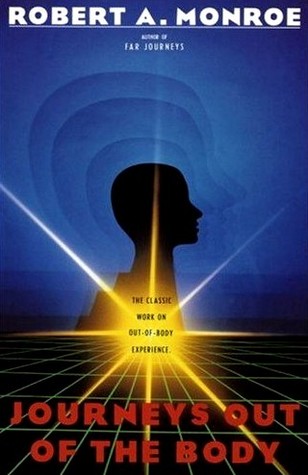
Journeys Out of the Body: The Classic Work on Out-of-Body Experience by Robert A. Monroe

Journeys Out of the Body: The Classic Work on Out-of-Body Experience by Robert A. Monroe
journeys out of the body

A ground breaking work into the mystery that is the out-of-body experience by a leading researcher in the field.

Ultimately, Journeys Out of the Body left me with more questions than answers, but, for the most part, I enjoyed the ride.

Charles Tart’s introduction is excellent: “… OOBE’s are a universal human experience, not in the sense that they happen to large numbers of people, but in that they have happened all through recorded history, and there are marked similarities in the experience among people who are otherwise extremely different in terms of cultural background. One can find reports of OOBEs by housewives in Kansas which closely resemble accounts of OOBEs from ancient Egyptian or oriental sources.” pg 8.

That statement reminded me of the near death experiences described in Wisdom of Near-Death Experiences: How Understanding NDEs Can Help Us Live More Fully by Penny Sartori. OOBEs like NDEs are a human experience rather than a cultural one.

Munroe points out a curious habit of society that I’ve noticed:“Many (in spiritual and occult circles) have deep professional jealousy for each other, and often are inclined to be suspicious of techniques and theories propounded outside their particular activity. They may even subtly deride or look with tolerant, superior amusement at results unrelated to their specialty. pg 37.

Why can’t we all just get along? I bet we’d learn more that way.

Photo by Min An on Pexels.com

Munroe’s thoughts on the “natural” home for what he calls the “second body”, astral body, or body of light: “The Second Body is basically not of this physical world. To apply it to visits to George’s house or other physical destinations is like asking a diver to swim down to the ocean bed without scuba gear or pressure suit. He can do it, but not for long, and not too many times.” pg 75-76.

That was why Munroe believes that out of body experiences are so hard to substantiate. When explorers are looking for evidence from the physical world, it isn’t the natural place for that consciousness to be.

Munroe talks about going to an alternate dimension in his explorations. He quotes a college professor about the possibility of this: “Dr. Leon M. Lederman, professor of physics at Columbia University, has stated: “Basic physics is completely consistent with the cosmological conception of a literal antiworld of stars and planets composed of atoms of antimatter, which is to say negative nuclei surrounded by positive electrons. We can now entertain the intriguing idea that these antiworlds are populated by antipeople, who antiscientists are perhaps even now excited by the discovery of matter.” pg 100

I think that would make a great science fiction novel. Has anybody written anything like that?

Photo by Yan Krukov on Pexels.com

I had imagined that learning about out of body experiences would be empowering and uplifting but parts of Munroe’s account didn’t really leave me feeling that way.

Take this journal entry in which he describes aliens and the loss of his belief system: “Then they seemed to soar up into the sky, while I called after them, pleading… By this time, it was getting light, and I sat down and cried, great deep sobs as I have never cried before, because then I knew without any qualification or future hope of change that the God of my childhood, of the churches, of religion throughout the world was not as we worshiped him to be- that for the rest of my life, I would “suffer” the loss of this illusion. Are we, then, just leftover laboratory animals? Or perhaps the experiment is still “in process.” pg 262.

Very, very bleak and, it just didn’t feel right to me. However, Munroe believes this is true and I felt very sad for him.

If you are interested in more information about OBEs, you may want to read Soul Traveler: A Guide to Out-of-Body Experiences and the Wonders Beyond by Albert Taylor or Multidimensional Man by Jurgen Ziewe.

If you want more one-on-one experiences with aliens, try The Key: A True Encounter by Whitley Shrieber.

Thanks for reading!

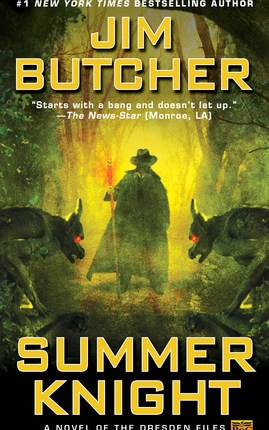
Summer Knight (The Dresden Files #4) by Jim Butcher

Summer Knight (The Dresden Files #4) by Jim Butcher

“Harry Dresden has been down and out in Chicago. He can’t pay his rent. He’s alienating his friends. He can’t even recall the last time he took a shower. The only professional wizard in the phone book has become a desperate man.”

-Goodreads

“Summer Knight” is the fourth entry in the delightful “Dresden Files.” If you’re looking for a fantasy soap opera starring a male lead and a cast of colorful, non-human characters, look no further.

Photo by RODNAE Productions on Pexels.com

Harry Dresden, a wizard-for-hire, is in the thick of it. He’s started a war between the vampires and wizards and the White Council is not happy about it. And, there’s the small matter of his former girlfriend, Susan, who’s been infected with vampire blood.

Can he save her from a terrible fate? Can he save himself?

Photo by RODNAE Productions on Pexels.com

Then, there’s Karrin Murphy, the head of the supernatural department at the Chicago PD. She’s suffering from nightmares caused by the last adventure that Harry brought to her doorstep. Will she be able to pull herself together long enough to help the wizard save the world?

Add to these troubles vengeful fairies, a handful of changelings, pizza-loving pixies, werewolves and, of all things, Dungeons and Dragons! The Summer Knight is a rollicking entry in The Dresden Files.

My one complaint: more Bob. That is all.

Photo by Ahmed Adly on Pexels.com

Recommended for urban fantasy readers, MMORPG players and people who believe or want to believe in fairies.

Thanks for reading!

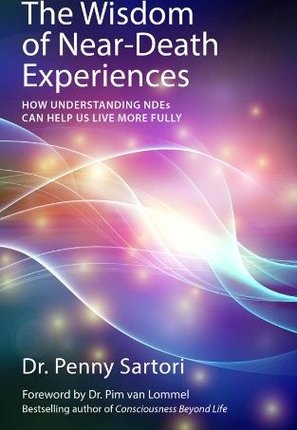
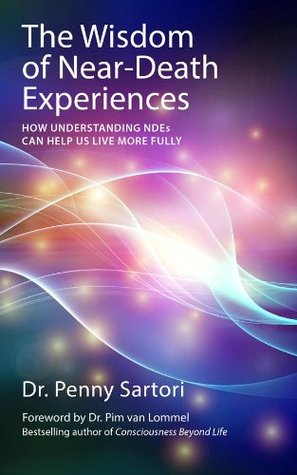
Wisdom of Near-Death Experiences: How Understanding NDEs Can Help Us Live More Fully by Penny Sartori

Wisdom of Near-Death Experiences: How Understanding NDEs Can Help Us Live More Fully by Penny Sartori
wisdomofneardeath

An extraordinary book by Penny Sartori who was a nurse, now doctor, and worked for years in the NHS.

She realized that with end life issues, there are many categories of experiences that are not discussed in medical educations but that happen often enough to be tacitly understood by practicing medical staff. Dr. Sartori compiled this book with the aim of helping other medical professionals understand near-death experiences and their potential effects on recovering patients.

Refreshingly, Dr. Sartori writes simply enough for a lay-person (like me) to completely understand the text and I found first-hand account after account fascinating, uplifting, and educational.

I’ve read about many near-death experiences and I’ve always gotten the feeling that there was something more there. As if, in reading the account, I was viewing a light behind a veil. Dr. Sartori calls this, “Ineffability.” “Ineffability: When people try to make sense of the (near-death) experience or try to verbalize it they find that words fail them. They have experienced something with which they have nothing to compare, and to try to find words to describe it is impossible.” pg 9

It’s nice to be able to put a word to that feeling.

At the end of the chapter about international near-death experiences, she has this to say: “It is evident that NDEs are worldwide phenomena and it has therefore been suggested that they are merely the effects of a dying brain. However, some cultures report components that are not present in other cultures, which would rule out materialist explanations. As some components are interpreted according to culture then it is reasonable to construe that the components may be interpreted symbolically through each individual’s cultural filter. This could suggest an underlying collective consciousness, as discussed by Carl Jung.” pg 83.

Photo by Timo A. on Pexels.com

Most of the books I’ve read on this topic have had little to say about the commonality of NDEs among the world’s population. This is a good introduction to it.

About the power of love: “Hospice and palliative-care consultant Dr. John Lerma has reported that 70 to 80 percent of his patients waited for loved ones to leave the room before dying. He also remarked that he had witnessed patients who had been certified dead return to life as the pain of their loved ones had pulled them back from a place of peace and love.” pg 103 Mind blown.

Love literally brought people back from the dead.

About the science of spirituality and how that relates to religious texts: “Texts such as the Books of the Dead have many similarities to NDEs. For many thousands of years these have been reduced to myths but now they appear to be ‘maps of the inner territories of the psyche encountered in profound non-ordinary states of consciousness’. Maybe this is what is needed to reintegrate our spiritual roots with our huge advances in technology.“pg 191 I think that this may be true too.

And finally: “One thing I’ve come to realize over the past few years is that heaven is not a location – it is a state of mind and is within us all. We just have to go within and find it.” pg 191 Absolutely, Dr. Sartori.

If you enjoyed The Wisdom of Near-Death Experiences, I would suggest reading, The Map of Heaven by Eben Alexander. You may also enjoy Journey of Souls: Case Studies of Life Between Lives by Michael Newton- a hypnotherapist explores between life/past life consciousness with his patients to heal current issues.

Also, if you want to explore the idea that heaven is inside of us, you may want to check out What if This is Heaven by Anita Moorjani.

Thanks for reading!

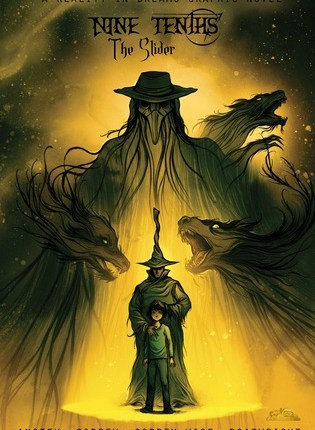
Nine Tenths: The Slider by Alex Anstey. Illustrated by Cory Godbey, Courtney Godbey Wise, Thomas Boatwright

Nine Tenths: The Slider  by Alex Anstey. Illustrated by Cory Godbey, Courtney Godbey Wise, Thomas Boatwright

nine tenthsNine Tenths: The Slider is a gorgeous graphic novel that introduces a world of archetypes and fantasy, where some of the forces that underlie nature have become unbalanced.
The panels are done primarily in greys, blues, and red. The overall effect is ethereal and dreamlike. I loved the artwork in this, especially the scenes of Lundon, the city of the dead and the gods in the introduction.

The characters are drawn beautifully as well. My favorites are the Dreads, hell hound creatures with elongated teeth, that sever the threads of life within souls. Excellent and very creepy.

Because this graphic novel is the first in a series, I felt like I didn’t get to enjoy all that much of the story before it was over. But, that’s nothing new. I seem to feel that way at the start of every series.

The world and main characters get their introductions then there isn’t time for much else. And this literally starts at the beginning of existence: “At the very beginning of time, long before there was an Earth or people to live upon it, there was only chaos… from chaos came life, and by consequence, death. Two natural forces through which all could be observed.” pgs 1-2

I’m always on the look out for age appropriate graphic novels for reluctant readers. Nine Tenths: The Slider has some violence in it so it may most appropriate for the 12-18 year old set.

The mythological setup and scope of the story are truly epic. It’s a shame that there haven’t been future entries in this series. Anyone who appreciates the intrinsic beauty of graphic novels will certainly find much to enjoy in this.

I received a free copy of this book through Goodreads First Reads.

Thanks for reading!

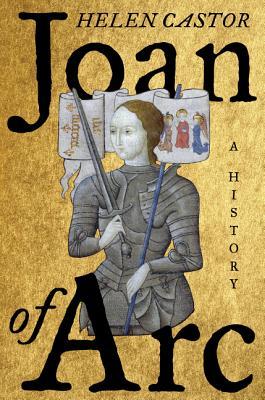
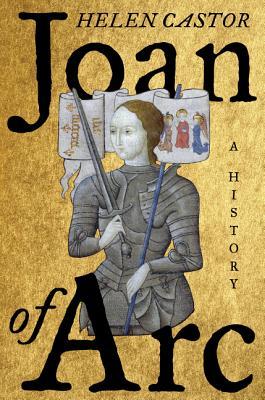
Joan of Arc: A History by Helen Castor

Joan of Arc: A History by Helen Castor
joanofarc

The review that I’m about to give Joan of Arc: A History has nothing to do with the historical accuracy of the book. On the contrary, I found this to be an extraordinarily well researched and cited biography.

Unfortunately, that mega-effort did not lend itself to a readable or enjoyable book.

The general idea behind Joan of Arc is sound. Helen Castor wanted to present Joan’s story in context with an extended history of France for years before and after her appearance on the world stage.

In that way, she thought that the legend of the woman could be separated away from the reality. The reader could appreciate the main players, the attitude towards spiritual visions, the belief of divine will in war and the monarchy, and capture the overall general flavor of the time period.

It was a good premise, but it just didn’t work. Maybe this was a doctoral thesis that Castor tweaked a bit and published? It reads like that.

Why is it that experts on topics are rarely able to translate that interest and depth of knowledge into stories that the general public would enjoy? I love medieval history, especially the backgrounds of the handful of female figures who made it into print during that period. This should have been right up my alley.

Photo by Pixabay on Pexels.com

Joan of Arc: A History read like a school textbook- the dull kind.

Actually, it reminded me of translating Livy’s History of Rome from Latin into English during college. It should have been fascinating stuff as he was writing about a particularly exciting period in Roman history when Hannibal was crossing the Alps to invade. But, sadly, Livy got caught up in listing endless details, particularly the size and shape of the elephants. Through description after description, the pace of Hannibal’s army slowed to a trickle and then it turned into a snooze-fest.

That also happened in this book.

If you enjoy scholarly research to the point that you just have to have it and nothing else will do, read this book. If you want history to come alive and punch you in the face, pick up something (anything really) by Margaret George or Bernard Cornwell.

I particularly liked The Memoirs of Cleopatra or The Autobiography of Henry VIII: With Notes by His Fool, Will Somers. George may not have the exacting research standards of this biography, but her historical fictions are informative in addition to a delight to read.

I received a free copy of this book through Goodreads First Reads. Thanks for reading!

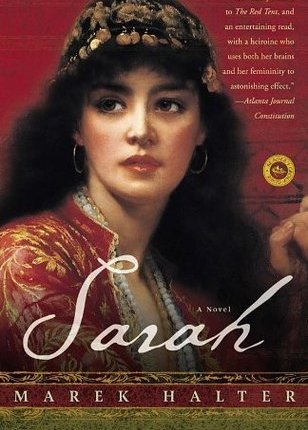
Sarah (The Canaan Trilogy #1) by Marek Halter

Sarah (The Canaan Trilogy #1) by Marek Halter
sarah

A historical fiction about the early days of Abraham from Sarah’s (Sarai’s) point-of-view.

I think that this novel wasted an opportunity for a great story. Like a majority of women in the Bible, Sarai’s life was largely untold. So, Marek Halter had a blank slate to work with.

And what he wrote for Sarai was a life of waiting. Waiting for Abram to talk to his god. Waiting for Abram to come back from war. Waiting to become pregnant. Waiting and wandering, looking for a home.

If I had written this story, Sarai would have been so busy doing something spectacular that she would have hardly even noticed Abram’s absence or presence. Maybe she invented a new form of weaving. Maybe she started her own business selling those herbed loaves that she was so proud of. Or, to introduce a fantasy twist, maybe she was secretly a vampire hunter, like Abraham Lincoln: Vampire Hunter.

My point is: for a story about a woman, it was mostly about the men in her life. Which makes it not very different than the source material. And, in my mind, a disappointment.

Thanks for reading!

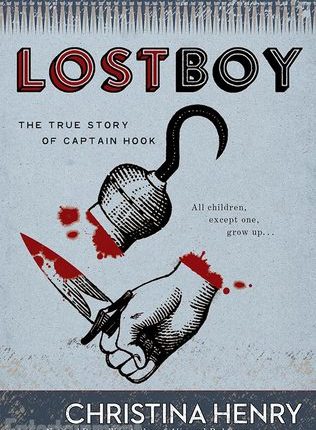
Lost Boy: The True Story of Captain Hook by Christina Henry

Lost Boy: The True Story of Captain Hook  by Christina Henry
lostboy

Christina Henry, author of the chilling Alice, which is a brilliant re-telling of Alice in Wonderland, has shifted focus to a new fairytale. In Lost Boy, readers get to experience the story of the boy-who-never-grew-up through the origin story of his arch-nemesis. And what a story it is.

“Peter will say I’m a villain, that I wronged him, that I never was his friend. But I told you already. Peter lies. This is what really happened.” loc 85, ebook. Goosebumps? Yeah.

Fans of the original tale will need to prepare themselves for having beloved characters shown in a new and sinister light. Think Longbourn, but worse, much worse. “I had been with Peter longer than I’d been in the Other Place, longer than I could count, anyway. The seasons did not pass here and the days had no meaning. I would be here forever. I would never grow up.” loc 146, ebook. The others in Peter’s group call the narrator, Jamie.

He is a fierce fighter- the best. And he protects the younger and weaker members of those lucky few that Peter brings back from the real world or in this tale, the Other Place. This protective instinct is sneered at by Peter who accuses Jamie of “babying” or “mothering” the boys. In truth, there is no worse insult in Peter’s arsenal. Grown ups either abuse you or take your stuff or both. They’re pirates.

“(Peter) had invited us there, had promised us we would be young and happy forever. So we were. Unless we got sick, or died, or were taken by the pirates.” loc 257, ebook. So, Neverland is not the paradise that it is portrayed as in the original tale. There are also monsters called Many-Eyed that eat the boys alive, if they catch them.

“Was this, I wondered, what it felt like to be a grown-up? Did you always feel the weight of things on you, your cares pressing you down like a burden you could never shake? No wonder Peter could fly. He had no worries to weight him to the earth.” loc 1971, ebook.

The stage is set. Love and hate intertwine with magic, blood and, of course, a little bit of fairy dust.

If you enjoyed this tale, you may also want to explore some other Peter Pan re-tellings like Tiger Lily by Jodi Lynn Anderson or All Darling Children by Katrina Monroe. The last, a horror-filled offering, may really appeal to those who want to delve more into the potential shadows of Neverland. There’s a price to pay for never growing up. In that tale, as in this, Peter pays it without a qualm.

Thank you to NetGalley and Berkley Publishing for a free advance reader’s copy of this book. Reminder: the short quotations I cited in this review may vary in the final published version.

Thanks for reading!

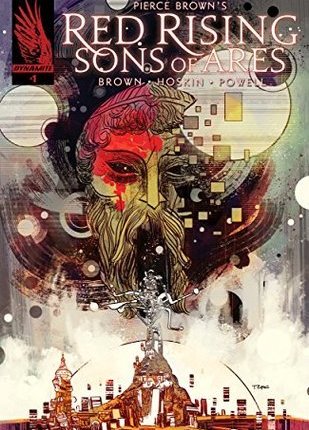
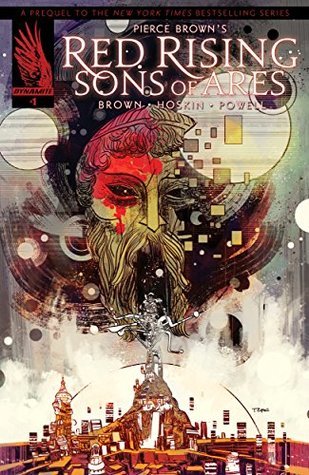
Sons of Ares (Sons of Ares, #1) by Pierce Brown

Sons of Ares (Sons of Ares, #1) by Pierce Brown
sonsofares

A comic that claims is going to give us the backstory of the Sons of Ares. But, in this entry, it just rehashes what goes on in the Gold school with an intro and conclusion teaser.

For anyone who hasn’t had the chance to read Red Rising, you’d need that backstory. For someone like me, who has, I wanted more new details. I didn’t get them.

I suspect that these comics, another coming out in June, are whetting the appetites of readers for the 2018 debut of Iron Gold. (Can’t wait, by the way.)

The art is beautiful but not breath-taking or highly stylized like Monstress, Vol. 1: Awakening.

The story takes place in a world I’ve come to love. But, it was only 32 pages and that was not enough.

On the other hand, I actually bought this comic. I wasn’t patient enough to recommend it for purchase at the library and then wait to see if they picked it up. I had to have it NOW. That says something for how much I love it. Having worked as a librarian, I take my book purchasing very seriously.

If you’re not a die-hard fan like me, you may want to wait until the libraries get their hands on it. As I said, this entry doesn’t give the reader much beyond a small window into Brown’s world. If you’re satisfied with crumbs, buy it now.

Thanks for reading!