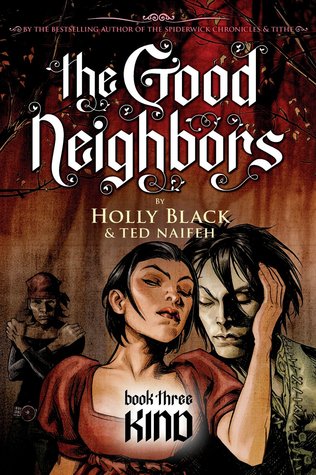
Kind (The Good Neighbors, #3) by Holly Black

Kind (The Good Neighbors, #3) by Holly Black

kindRue’s grandfather put his nefarious plan to merge the faerie world with the normal one in motion at the end of the last book. Now, everyone in Rue’s town is going bonkers. Faeries are roaming the streets, eating and manipulating humans. The more organized groups of people are fighting back. It’s a mess.

“What do you do after the end of the world?”

Meanwhile, Rue has a love triangle going. Her boyfriend Dale has taken up with some bloodthirsty bog faeries and she needs to save him. But, she can’t seem to forget Tam, a young man who has a special talent for speaking the truth and was stolen away from the real world by faeries.

What’s a girl to do?

“When people tell you to forget things, they really just mean that you should pretend to forget. No one actually forgets.” “You are as heartless as any faerie girl, Rue, yet I want you to look at me and to see me. To see me like I see you.” pg 25

And who is going to save the town?

“There is a reason why mystics are mad, Rue. We- people, humans- cannot sustain exposure to the supernatural. That’s why we’re not meant to live like this. Already, people’s minds can’t handle it.” pg 55

The artwork in this series reminded me of The Walking Deadgraphic novel franchise. Sometimes, it’s good, but then in other panels, you can’t tell one character from another.

There are some truly beautiful and grotesque faeries. I think the artist, Ted Naifeh, was at his best with the supernatural creatures.

The ending to this series was a little too predictable for my taste. But, it is good enough for what it sets out to do- entertain young adults with a slightly darker fairy tale.

Thanks for reading!

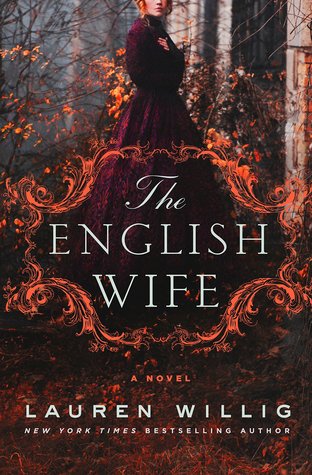
The English Wife by Lauren Willig

The English Wife by Lauren Willig
english wife

The year is 1899. The Van Duyvils are an extraordinarily wealthy and established family in New York. One night, at a holiday party, there is a murder… or is it a suicide?

The newspapers whip the public into a fury with their sensational headlines. They ask, ‘Who are the Van Duyvils and who is the new English wife?’

And there, our story begins.

Lauren Willig has created a lovely mystery/historical fiction with snappy dialogue and enough layers to keep readers guessing to the very end.

I loved Janie Van Duyvil, one of the main characters in this tale “There were times when she wished she had been born a male, that she might make her own way, that she might marry as she pleased and live as she would.” loc 45, ebook.

As she desperately tries to piece together the clues to find the murderer, Janie also comes into her own and begins to stand up to her tyrannical mother.

“It is her marriage,” Georgie pointed out drily. “Surely, she has some say.” “If you can think that, you haven’t met my mother.” loc 1179, ebook

I also enjoyed the role of the press in this story. James Burke is a reporter for ‘The News of the World.’ He wants to get the scoop on the murders. But, part of his job, is to sell papers. “The man had the gall to widen his eyes in innocence. “We prefer to call it investigative reporting, Miss Van Duyvil.” “I call it scandal-mongering, pure and simple.” loc 252, ebook.

My favorite scene is when Janie goes to ‘The News of the World’ building and readers get a glimpse into the crazy newsroom. “There was an undeniable energy to the room, the clacking typewriters, the shouting voices, that put energy into her step and color in her cheek.” What fun.

Photo by Suzy Hazelwood on Pexels.com

Willig seems to have a handle on what makes reporters tick. She even captures the gallow’s humor that they use to maintain their sanity. “Will it appear in an illustrated supplement in The World?” “Not unless there’s a body hidden there.” Mr. Bruke grimaced. “Sorry. In the newsroom, we… well, the worse it is, the more of a joke we make it. It’s a way to get through the day without being sick.” loc 2765, ebook.

Recommended for readers who want to lose themselves in a mystery with some romance along the way, The English Wife may just fit the bill.

Thank you to NetGalley and St. Martin’s Press for an advance digital copy of this book. Reminder: the brief quotations in this review may vary from the final printed form.

Thanks for reading!

Remodelista: The Organized Home by Julie Carlson

Remodelista: The Organized Home by Julie Carlson
remodelista

Remodelista is another de-cluttering book. This one encourages readers to utilize storage containers made out of natural materials, to hang items in unexpected places and to make your space functional and beautiful.

Maybe I’ve reached my limit on these types of books. For example, I loved The Life Changing Magic of Tidying Up, but that was one of the first books of this kind that I read.

I know not everyone responds well to Marie Kondo’s philosophy of considering the spirit of your stuff, but that clicked with me, for whatever reason. Must be a hippie thing.

I thought this one was a bit ridiculous. It just wouldn’t work for me in my real life with my crazy pets, busy family and serious amounts of stuff.

My main problem with this one is illustrated quite clearly on the cover. We’ve got two brooms, a towel, an umbrella, some string and a large bucket hung right over a cat drinking from a water bowl.

I can think of a hundred reasons why that wouldn’t work for me, but let’s start with three:

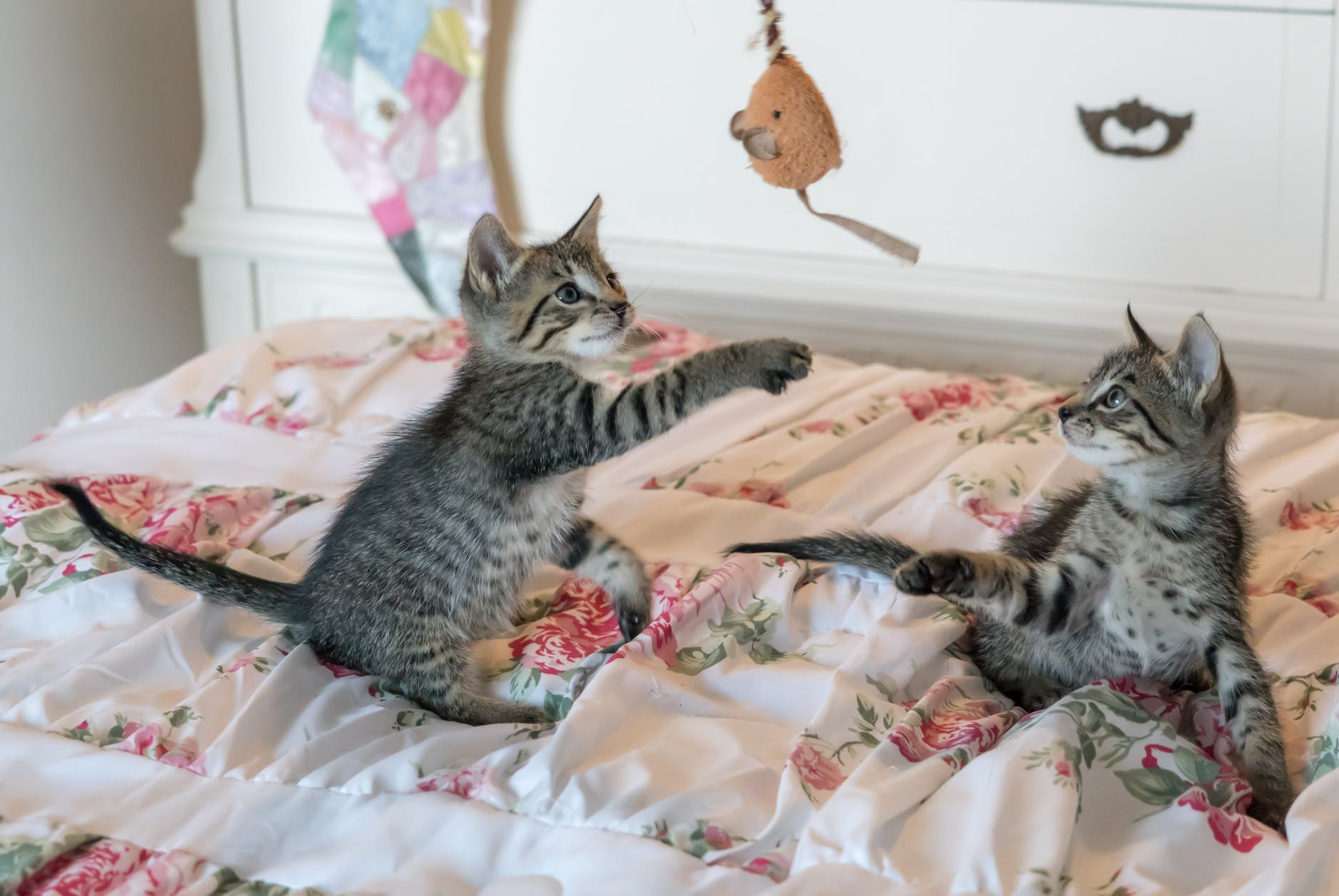
First of all, the kitties would think I was trying to kill them- hanging menacing items over the watering hole. And, let’s be honest, with my poor hanging-things-up skill, it just might.

Photo by Pixabay on Pexels.com

Second, putting string high up but visible is inviting a kitty disaster. They would hunt the heck out of that string, probably using the umbrella as a climbing wall to get to it, destroying my artfully arranged buckets and mops in the process.

Third, where would I put the rest of my family’s entryway stuff? We’ve got a lot more than that in just umbrellas, not even counting the brooms, swiffer mops, you-name-it.

The result: easy-to-maintain spaces that are both orderly and artful, personal and purposeful. Because, ultimately, the goal isn’t a flawless, impossible-to-maintain showcase. The aim is an unencumbered life in a house that makes you happy.” pg 9.

All of the rooms and cabinets in this book had like three things in them. It’s just not realistic.

Photo by Anastasia Shuraeva on Pexels.com

That being said, I did like the “Daily Rituals” on pg 18. The authors included “seven simple habits” to adopt every day to make your life easier. They include activities like making your bed and opening the mail.

I can handle that.

I also liked the ‘Herb and Spice Drawer’ suggestion on page 70. My spices are a jumble of bottles and sizes and it’s nearly impossible to find anything quickly.

Photo by monicore on Pexels.com

The authors suggest storing herbs and spices in: “Uniform glass jars- we like small paint jars from the art supply store.”Then, label the tops. It’s a simple solution but one that never occurred to me.

Only recommended for people who have calm cats and very few items. Other than the suggestions mentioned, I can’t see myself using very many of the tips from Remodelista.

Thanks for reading!

The Only Girl in the World: A Memoir by Maude Julien

The Only Girl in the World: A Memoir by Maude Julien
onlygirl

The Only Girl in the World is an extraordinary memoir about madness, control and the survival of horrific childhood abuse.

Maude Julien’s father Louis chose his future wife and mother of his child, Jeannine, when she was only six and he was 34. He became Jeannine’s guardian by promising her family that he would provide her with a quality education.

Then: “Twenty-two years after he took possession of Jeannine, Louis Didier decided the time had come for her to bring his daughter into the world… Louis Didier liquidated his assets, bought a house near Cassel, between Lille and Dunkirk, and withdrew to live there… to devote himself entirely to carrying out the project he had devised back in 1936: to make his child a superhuman being. That child was me.” loc 73, ebook.

Unfortunately, to “make his child a superhuman” involved leaving her alone in a dark, rat-infested basement, sleeping in a room without heat, eating stale bread, practicing music for 12 or more hours a day and being entirely separated from any other children her age.

That’s where Maude got the title of this memoir: The Only Girl in the World

I have not read a childhood account this disturbing since A Child Called It by Dave Pelzer.

Maude’s father was unhinged. “My father is convinced that the mind can achieve anything. Absolutely anything: it can overcome every danger and conquer every obstacle. But to do this requires long, rigorous training away from the impurities of this dirty world.” loc 247, ebook.

Photo by Marcelo Jaboo on Pexels.com

He asks Maude to do things he cannot do like perform somersaults or swim in freezing water. He shows no affection to either his child or his wife.

Louis makes the females of the house wait on him as if he is an invalid. He makes his child hold a chamber pot each morning while he empties his bladder.

He’s a controlling monster.

Louis has strange beliefs about water and soap removing the body’s immunities so he insists that Maude only bathes once a week or less. And, when she is finally given the opportunity to bathe, she must use his dirty bathwater to “take strength from him.”

Photo by Sora Shimazaki on Pexels.com

And she can’t count on protection from her mother, who was groomed by Louis to do anything he asks of her. Jeannine actually blames Maude for Louis taking them to live in the middle of nowhere. It is very sad.

Maude’s only friends are her pets, whom her father abuses as much as he hurts Maude. “Can an animal teach a person about happiness? In the depth of my despair, I am fortunate to have this incredible source of joy.” loc 685, ebook.

Even worse, Maude is abused by the few adults Louis allows in their lives. (Trigger warnings for those who were sexually or physically abused as children.)

Though incredibly disturbing, The Only Girl in the World is ultimately a story of survival against all odds. The human spirit is incredibly resilient as Maude’s tale illustrates.

Photo by Pixabay on Pexels.com

Perhaps she is more superhuman than even she realizes. Highly recommended.

Thank you to NetGalley for a free digital copy of this book.

Thank you for reading!

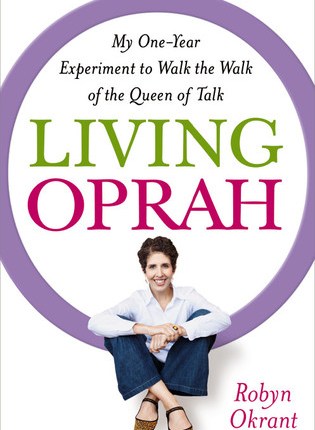
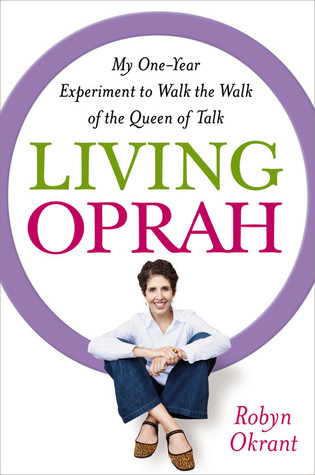
Living Oprah: My One-Year Experiment to Live as TV’s Most Influential Guru Advises by Robyn Okrant

Living Oprah: My One-Year Experiment to Live as TV’s Most Influential Guru Advises by Robyn Okrant
livingoprah

Living Oprah is Robyn Okrant’s account of how she spent one year conscientiously following the advice Oprah dishes out to millions of women across America.

If Oprah said to read a book or watch a film, Robyn did it. If she advised de-cluttering, new make-up tips or relationship work, Robyn was on-board.

For the most part, I enjoyed this quirky book, but I also found it to be slightly repetitive- similar to what Robyn found following Oprah to be after a few months.

She starts out with high hopes: “Could Oprah’s guidance truly lead a woman to her ‘best life,’ or would it fail miserable? Is it even possible to follow someone else’s advice to discover one’s authentic self?” pg 4.

We all discover the answer to be no. But, Robyn gives it a good run because: “It’s vitally important for women to question the sources of influence and persuasion in our lives. We are inundated with get rich/get thin/get married suggestions every time we turn on the TV or walk by the magazine rack. And sadly, we tend to judge ourselves against seemingly impossible standards.” pg 11.

I liked her thought process throughout the year. I also thought her reasoning for doing the experiment was excellent: “One of the reasons I was drawn to Oprah as a subject for this project was my continual search for new ways to manage my pain, keep my self-esteem from faltering, and ease the stress and fear associated with scoliosis.” pg 36. In some ways, Robyn was sort of Oprah’s target audience.

Photo by Jean van der Meulen on Pexels.com

My favorite part of this book was when Robyn was trying to follow Oprah’s advice to read Eckert Tolle’s A New Earth and live by its precepts, while still engaging in the consumerism and self improvement programs Oprah touts on her program each week.

“It’s also uncomfortable to enjoy a celebrity lovefest on Oprah after I’ve spent an hour competing my reading assignment for A New Earth. Oprah’s Book Club selection focuses on separating ourselves from our ego and learning to connect with people on an authentic level rather than a superficial one. I don’t see how a segment on the show glamorizing Mariah Carey’s lingerie closet supports the work Oprah’s asked us to do.” pg 72.

Robyn comes to the conclusion that if Oprah’s viewers followed all of Oprah’s advice, they quickly wouldn’t need her anymore to live their best lives. Part of Oprah’s draw is that she has viewers convinced there’s always something more to be improved upon, tweaked, de-cluttered or examined.

It is a never-ending process of evolution. That is why Oprah’s built her empire and also why women don’t stop watching.

And sometimes it’s the promise of ‘infotainment’ that keeps viewers coming back: “Oprah frequently reminds her guests and audience that her tell-all shows are not pulp entertainment, they are for our education. I do take her warning to heart but think that if this is something we must constantly be reminded about, maybe a different format is in order.” pg 57-58

I’ve never been a huge watcher of Oprah (or any tv for that matter), but I still enjoyed this book for it’s honest examination of hero worship, popular culture and the self improvement industry. I think Oprah viewers may enjoy this book even more.

Thanks for reading!

I Was a Child by Bruce Eric Kaplan

I Was a Child by Bruce Eric Kaplan
iwasachild

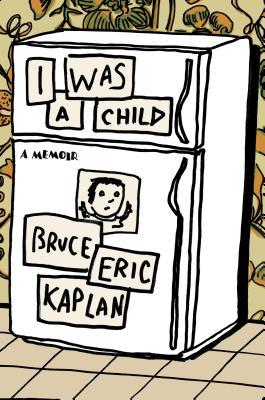
I Was a Child is Bruce Eric Kaplan’s (BEK) memoir and is written in a stream-of-consciousness style with small, hand-drawn cartoons interspersed throughout the text. Each blurb is a recollection of an event, time, television show, piece of furniture in the house, anything and everything from BEK’s childhood.

I’m not familiar with BEK’s work but his bio talks about his cartoons appearing in The New Yorker. I can see why he’s so popular.

The drawings are simple but somehow manage to convey a great depth of emotion and meaning.

They reminded me of the small drawings in Roald Dahl‘s books. I looked up the illustrator for those and Google tells me it’s Quentin Blake.

Both share a sparse, black-line look with no color to bright up the design. However, there’s something very powerful about the pictures… it’s hard to describe.

I Was A Child may be a book that one has to read to really experience what it’s all about.

I’m not as old as the author, but I connected with many of his memories because, despite what other people may tell you, we were all children once.

This memoir is quite unique but if you like it, you may want to try Today is the Last Day of the Rest of Your Life. It is more of a graphic novel than this, but it is also a memoir about growing up and change that is drawn with simplistic black and white panels.

I received a free advanced reader’s copy of this book through Goodreads First Reads. FTC guidelines: check!

Thanks for reading!

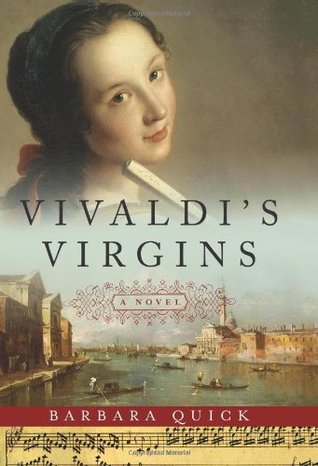
Vivaldi’s Virgins by Barbara Quick

Vivaldi’s Virgins by Barbara Quick
vivaldi

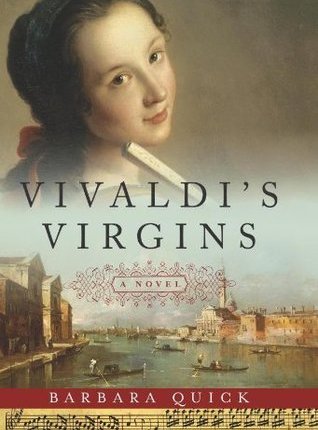
Vivaldi’s Virgins is a sparkling historical fiction about Anna Maria dal Violin, one of the orphans trained to perform music for the well-fare of the souls of Venice in the 1700’s.

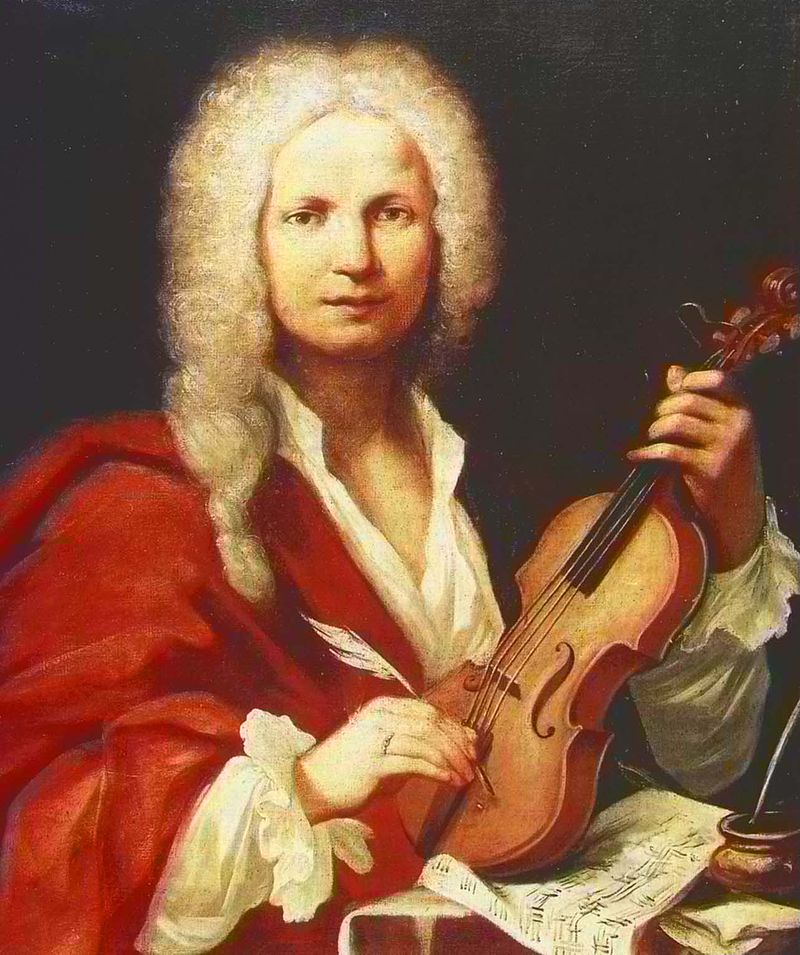
One of her instructors is Antonio Vivaldi, who is called “The Red Priest” because of his fiery hair: “I heard and then watched Maestro Vivaldi climb the stairs. He has been my teacher- and one of the very few men who has ever seen my face or spoken to me- for nearly half of my lifetime. I was only a girl of eight when, newly ordained as a priest, Antonio Vivaldi, native son of Venezia, was hired by the governors of the Pieta to be our master of the violin.” pg 2

Only girls are allowed to perform music in the Pieta. They are kept separate from the general population and all men, except for the priests who are their instructors, to maintain their purity. “Our lives are arranged so that every piece of every day and night is fit together into an intricate mosaic of music and study and prayer. But it is only a counterfeit of real life. We have no more reality in the world than the trompe l’oeil floor tiles of the church have depth or height.” pg 85

There is drama among the children through their interactions and competition with each other and some of their instructors, who are either nuns or priests. “Whoever says that girls are kind has never lived among them.” pg 13.

Anna longs to know who her family was, but that is a secret kept by the nuns who watch over the children. She spends much of her time trying to figure out how to learn more about who her family may be.

Anna also strains against the restrictions placed on her because of her gender in the 1700’s. The government only allows the female musicians from the Pieta to perform in public if they remain in the cloister. If they choose to marry, they have to sign a contract to promise not to perform or pay an exorbitant amount of money to the orphanage to pay for their childhood musical education. “It is one of the great injustices of this fair city. And it has made me dream sometimes of other cities- of London and Paris and Vienna, where, I’ve heard, female instrumentalists have actually been welcomed, from time to time, on the performance stage.” pgs 145-146.

A probable portrait of Vivaldi

During these struggles, Anna forms true friendships with other foundlings in the Pieta. “When I think of who my companions will be in Hell, I feel rather glad that I will be going there. It will be filled with those I most well and truly loved.” pg 150

I learned a lot about 18th century Venice in this book and Vivaldi. All that I knew about Vivaldi, before reading this book, was that he liked to use a bunch of stringed instruments in his compositions.

It makes so much more sense when I discovered who it was he had been composing for.

Recommended for those who enjoy historical fiction, books about composers or stories about troubled childhoods.

Thanks for reading!

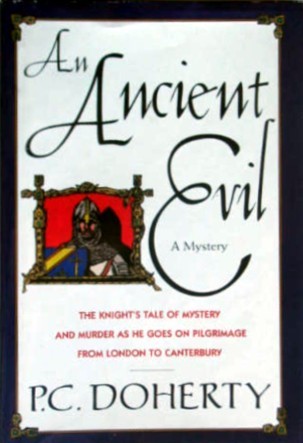
An Ancient Evil (Stories told on Pilgrimage from London to Canterbury, #1) by Paul Doherty

An Ancient Evil (Stories told on Pilgrimage from London to Canterbury, #1) by Paul Doherty
anancientmystery

An Ancient Evil is a charming historical fiction based loosely on the premise of The Canterbury Tales.

In the introduction, a knight tells a story to a group of pilgrims on their way to Canterbury. “My tale begins hundreds of years ago, just after the great Conqueror came here. So, gentles all, your attention as I describe these horrors sprung from the very pit of Hell.” pg 6.

In the story within the story, a menacing prologue introduces the reader to Sir Hugo, who buries alive the leader of a group of evil magic doers and burns the rest of his order. The evil leader who is buried alive doesn’t seem that upset about the whole thing. Which is weird.

Fast forward a couple hundred years into the future.

Sir Godfrey and a clerk, Alexander, are tasked by the king of England to discover the truth behind a series of mysterious and grisly murders in Oxford.

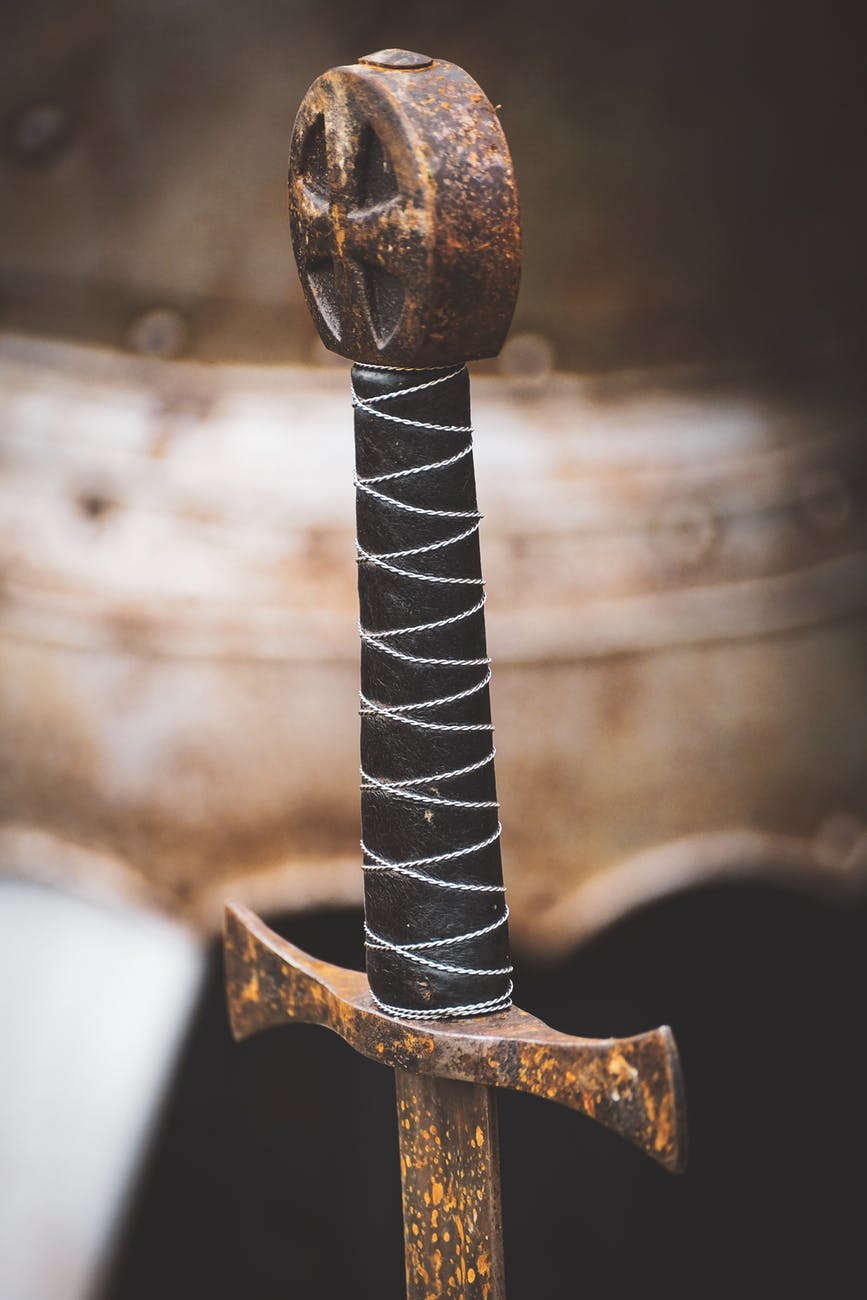
They are assisted in their task by Dame Edith, a blind anchorite who is known for her exorcism talents. ‘Sir Godfrey, whoever the killers are, we are about to enter the Valley of Death, but,’ Alexander couldn’t resist gentle banter, ‘we have your sword, my brains and the prayers of Dame Edith.’ ‘I think we might need more than that.’ pg 64.

I enjoyed this medieval, just a bit too bloody to be called “cozy”, mystery.

Photo by Susanne Jutzeler on Pexels.com

The characters are layered. The author drops enough hints to lead the reader towards the bad guy without giving the game away.

It reads a bit like a Nicholas Cage movie. We’ve got a battle between good and evil with some paranormal stuff and swords thrown in.

“Dame Edith tapped the side of her head. ‘Sir Godfrey, you are a soldier. You, of all people, should realize that a man is what he thinks he is. What causes one man to be a coward and another to be a hero? After all, they may be the same flesh and blood. They may even be brothers from the same womb. It’s what they think.” pg 170.

I also enjoyed the details about medieval life that are sprinkled throughout.

Recommended for readers who enjoyed The Thief Taker by C.S. Quinn or Mistress of the Art of Death by Ariana Franklin.

Thanks for reading!

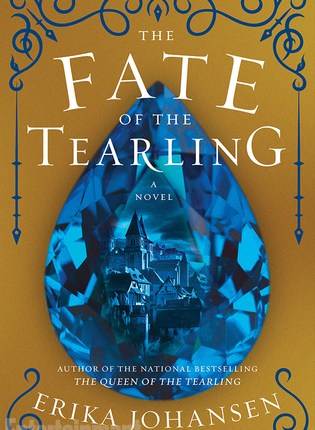
The Fate of the Tearling (The Queen of the Tearling, #3) by Erika Johansen

The Fate of the Tearling (The Queen of the Tearling, #3) by Erika Johansen

The Fate of the Tearling ties up the series nicely. All questions of the founding of Tearling, the shadow and Mort are answered.

And we also learn all of the secrets of the Fetch. Finally! “For three long centuries… William Tear’s dream sunk further and further into the mire. No one in the Tearling could even see Tear’s better world any longer, let alone muster the courage to dig for it.”pg 6, ebook.

The path isn’t easy. Kelsea questions herself every step of the way. “Maybe we aren’t capable of being satisfied, Kelsea thought, and the idea seemed to open a chasm inside her. Maybe utopia is beyond us.” pg 90, ebook.

But she is determined to see things through to the end: “We can’t simply stay here, hiding, while the kingdom burns. What sort of queen would I be?” pg 273.

Though Erika Johansen writes a thorough ending, I found myself dissatisfied with it. Read it and let me know what you think. I’m still thinking about it, even though I finished this book last week.

Photo by Pixabay on Pexels.com

From a lackluster start, I think The Queen of the Tearling series turned out to be fairly enjoyable. I would classify it as adult because of some of the themes, imagery and language.

It uses fantasy to examine the human condition, society and what happens to communes after a charismatic leader dies.

I think Kelsea is one of the strongest female characters I’ve read. Bravery-wise, she fits right in with Katniss Everdeen. She doesn’t quit and isn’t afraid to admit when she’s wrong.

Throughout the series, we see her grow from uncertain child to warrior queen. Bookish and introverted, Kelsea may appeal to those who wish they could be something more than they currently are.

Recommended for readers who are willing to invest some time in a series to enjoy it and for fans of fantasy/dystopian worlds. The Queen of the Tearling grew on me. It has heart.

Thanks for reading!

See my review of the first book here: The Queen of the Tearling (The Queen of the Tearling, #1) by Erika Johansen

Second book here: The Invasion of the Tearling (The Queen of the Tearling, #2) by Erika Johansen