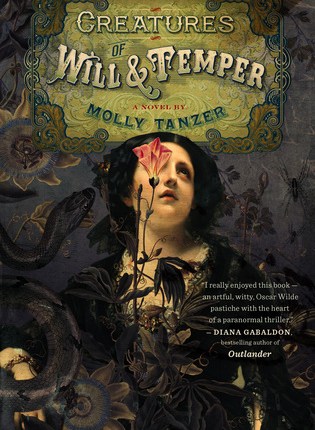
Creatures of Will and Temper by Molly Tanzer

Creatures of Will and Temper by Molly Tanzer

Creatures of Will and Temper is a historical fiction and fantasy novel that takes some of the magic contained in The Portrait of Dorian Gray and mixes it with some demons, and a pair of extraordinary sisters.

“Death is an illusion, just like anything else – like distance, for example, or time, or the separateness of one thing from another. The whole universe is only matter forming and reforming itself, endlessly, beautifully.” pg 6
Photo by Francesco Ungaro on Pexels.com

The author, Molly Tanzer, builds layered characters with distinctive personalities who are a pleasure to read about. However, she takes so long doing this, that I nearly put the book down before I hit page 200 and the main story arc took off.

“Never let anyone tell you demons are unnatural things – they are perpetual, like fragile flowers that blossom anew each year, like the majestic pine that never goes brown.” pg 53

Photo by Brett Sayles on Pexels.com

Prior to around page 200, Creatures of Will and Temper reads like a historical fiction with magical realism rather than the fantasy it actually is. The pace was incredibly slow.

But once I was over that two-thirds slump, the rest of the story (another 150 or so pages) was fantastic. I couldn’t put the book down at that point.

“We must give in to beauty, surrender ourselves to pleasure and enjoyment. We must return to hedonism, but we must also make it our own – for we are not sentimentalists, seeking to recreate an emotion time and again. It is our holy duty to create a new hedonism, a philosophy of passionate experience.” pg 170

The strength of this book is in the complex demonic world Tanzer hints at throughout. I wish she had focused on that world instead of this one! What a unique story it would have been.

As it stands, only recommended for readers who can tolerate a glacial pace on the way to a breath-taking ending.

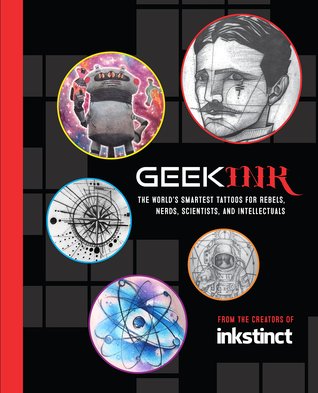
Geek Ink: The World’s Smartest Tattoos for Rebels, Nerds, Scientists, and Intellectuals by Emanuele Pagani

Geek Ink: The World’s Smartest Tattoos for Rebels, Nerds, Scientists, and Intellectuals by Emanuele Pagani

Geek Ink is a fairly representative book of “geek” culture tattoos with brief biographies of some of the tattoo artists.

I have to say though, there were far more Star Wars ideas in here than Star Trek. In that particular showdown, the Trekkies were not representing. I know there are major fans of the Star Trek franchise out there… where are you guys?! Not getting tattoos, I guess.

Photo by Jose Musa on Pexels.com

I was also disappointed in their collection of literary tattoos. Lord of the Rings, Harry Potter and The Little Prince were there, of course. There were a few science fiction themes. But nothing from other beloved classics like Where the Wild Things Are, or poetry, or various mythologies beyond a few generic-looking fairy tale castles.

Are book readers not into tattoos? This one is. 🙂 I was particularly drawn to the hyper-realistic tats of plants and animals.

Photo by cottonbro on Pexels.com

Recommended for people looking for tattoo ideas or who appreciate gorgeous body art. Despite my quibbles, this is a beautiful book created by incredibly talented artists, and which would look great on your coffee table.

Thanks for reading!

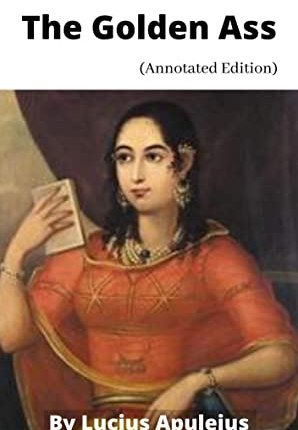
The Golden Ass by Apuleius

The Golden Ass by Apuleius

Lucian longs to experience real magic. When he discovers it, an unfortunate misstep turns him into the title character. In the shape of an ass, Lucian suffers through a series of misadventures.

Photo by Nilina on Pexels.com

I wonder when Apuleius was writing The Golden Ass, if he ever imagined this particular novel would be the only one written in Latin to have made it through his time to ours in its entirety.

Perhaps that’s an unfair question, because how could a writer imagine something like that?

But if he could have somehow foreseen it, I think that he would have written something different than this rambling, depressing, occasionally obscene adventure. Or maybe not. Maybe it summoned up his society nicely.

Photo by Mike Andrei on Pexels.com

Hypothetical ramblings aside, it didn’t make for an enjoyable reading experience.

A very large consideration for readers of The Golden Ass is the quality of the translation and how that may affect your enjoyment of the book. A friend and I read this book in tandem and this particular problem became clear quite quickly.

My edition, borrowed from the library, is a reprint of a translation by William Adlington in “Oxenford, September 1566,” and comes complete with the spelling and idiosyncrasies of his era.

“You perhappes (sic) that are of an obstinate minde (sic) and grosse (sic) eares (sic), mocke (sic) and contemme (sic) those things which are reported for truth, know you not that it is accounted untrue by the depraved opinion of men, which either is rarely seene (sic), seldome (sic) heard, or passeth the capacitie (sic) of mans reason, which if it be more narrowly scanned, you shall not onely (sic) finde (sic) it evident and plaine (sic), but also very easy to be brought to passe.” pgs 14-15, ebook

Photo by Andrea Piacquadio on Pexels.com

I found many passages “passeth the capacitie of” my reason because the nearly five hundred years between Adlington’s translation and this made so much of it nearly unintelligible.

My friend read a modern translation by Penguin Publishing and reported a more positive reading experience. If given a choice between the two, please do pick the more modern version.

“Verily shee (sic) is a Magitian (sic), which hath power to rule the heavens, to bringe (sic) downe (sic) the sky, to beare (sic) up the earth, to turne (sic) the waters into hills and the hills into running waters, to lift up the terrestrial spirits into the aire (sic), and to pull the gods out of the heavens, to extinguish the planets, and to lighten the deepe (sic) darknesse (sic) of hell.” pg 19, ebook

Translation problems aside, I found the bulk of the story to be repetitive and, on the main, depressing. Things get worse and worse for our hero.

Photo by Emmylou on Pexels.com

Yes, there is some measure of relief when we reach the end of our story and explore the mysteries of a cult whose rituals have been forgotten to history. But between the beatings and, as I mentioned, various obscene interludes, the end couldn’t come fast enough. Poor Lucian, “poore” William Adlington, and poor me!

The version I read of The Golden Ass, I recommend only for English majors, classicists or religious scholars. The appeal for modern readers just isn’t there.

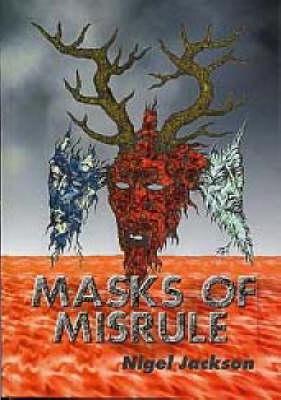
Masks of Misrule: The Horned God and His Cult in Europe by Nigel Jackson

Masks of Misrule: The Horned God and His Cult in Europe by Nigel Jackson

My mind has been going in circles as I’ve pondered, for days, how to review this book. It is a poorly organized and bewildering publication that could be tremendously important for pagans or religious scholars who are looking for information about The Horned God.

“The Knell of Inbetweenness hath been struck,
The Bell of MISRULE soundeth;
Reverberating the Thirteen Angles,
Echoing through the Nine Spheres”

Photo by Luca Paul on Pexels.com

It begins with a foreword by Michael Howard speaking of the scarcity of information about a male god within the existing neo-pagan revival movement. Then, the author, Nigel Jackson, goes into what could almost be called a tirade against established religions and the current neo-pagan movement in a chapter entitled, “In the Sign of the Horns.”

“The old time is passed away and the ‘age between the ages’ is begun: the Aionic Twilight falleth over the world and the day of the cross and the mitre is wholly done with.” pg 11

Honestly, that type of tribalism and fear-mongering is a poor look for any type of spiritual movement. Why immediately alienate readers from other spiritual paths who are coming to your materials with an open mind and a willingness to learn?

Photo by Vladyslav Dushenkovskyi on Pexels.com

Despite his initial hostility, Nigel Jackson quickly turns his attention to what he believes are different aspects of a male pagan god, throughout history, and includes various rituals to invoke this ancient being.

As I mentioned earlier, it is a bewildering hodge-podge of material with only the thinnest of connecting threads between. Newcomers to occult matters or pagan practices may lose their way within the quickly shifting time periods, places, names and associated mythologies.

However, I found information in “Chapter Three: Cycles of the Midnight Hunt” and “Chapter Seven: Wudewasa, the Knowledge of the Green Man” that was completely new to me and interesting.

“It was held that when nocturnal thunder broke over the wildwood and the forked lightning-flash clove the darkness and the night-tempest roared and tossed the boughs, that the wild host of Woodwoses came forth in primal panoply, raging through the hoary oaks and pines, their eldritch voices mingling with the storm’s tumult.” pg 107

Photo by Pixabay on Pexels.com

The printing of Masks of Misrule is a travesty for any lover of books. The font is irregular and fades, seemingly at random, within the text. The cover is ridiculous and does nothing to convey the seriousness with which the author treats his subject.

But if you set all of these concerns aside, some of the mythology contained within this book is entirely original, at least to me, and could be incredibly useful for seekers who are looking for a new movement within paganism that celebrates the male side of nature.

Thanks for reading!

Nobilis by R. Sean Borgstrom, Bruce Baugh

Nobilis by R. Sean Borgstrom, Bruce Baugh

Though not a traditional “book”, the rules and world-building instructions for the fantasy role-playing game, Nobilis, has more than 300 pages in it. And reads like a beautiful work of fiction.

“His eyes open, black as night. A star falls through them. ‘It is strange,’ he says, ‘how humans need but a taste of power to grow arrogant. You walk in a world of things greater than you can imagine, and you speak defiance.”

Nobilis by R. Sean Borgstrom, Bruce Baugh
Photo by Achraf Alan on Pexels.com

The game itself has been labeled so complex that, after reading the rules book, some gamers don’t bother to try it. Therefore, I think it’s fair to rate it on Goodreads where it can be appreciated more for its fantastic literature rather than its playability as an actual game.

“The Imperator Ananda rules Murder, the Infinite, and (some say) the Fourth Age that is to come. His glory is terrible: humans and Powers weak in spirit dare not face him, lest his countenance drive them mad with joy.”

The basic premise is there are major forces behind the every day reality that we all know. These forces are striving to either preserve the universe or end it.

Photo by Engin Akyurt on Pexels.com

They work through intermediaries and lesser servants to influence what goes on in the real world. The point of the game is to create a story with levels and nuances rather than to brute force your will into existence.

“More beautiful than the angels are the Excrucians, whose eyes show darkness full of ever-falling stars. It is said that the Creator bargained with them long ago, that he or she might capture a touch of this beauty in the world of Ygg- and then failed to carry out his or her end of the bargain. It is said that this is why the Excrucians on their pale horses seek the destruction of all that there is…”

Photo by Anastasia Zhenina on Pexels.com

The rules book describes all of these powers in extraordinary detail, or the manner for choosing a custom name and backstory of your own. There’s no limit to what you can create except your imagination.

The players embody the ruling powers and all of their minions simultaneously. So, a game scene can go from the real world, to the divine, to a place where a god resides and back again.

And you begin to see why so few people attempt this game in the first place… 🙂

“Powers bridge divine nature and human nature, the supernatural and the natural. They fight battles on all those levels, facing the challenges of gods and ordinary humans alike. They must learn to move fluidly from a world of spirits and myths to a polluted world of highways and computers, and from their Imperator’s custom reality to the broad Earth.”

Recommended for gamers who are looking for an incredibly detailed fantasy world to romp around in or readers who like open-ended works of fantasy. Beyond simple enjoyment as a game or work of literature, I could see Nobilis being a useful tool as a writing prompt for fantasy authors.

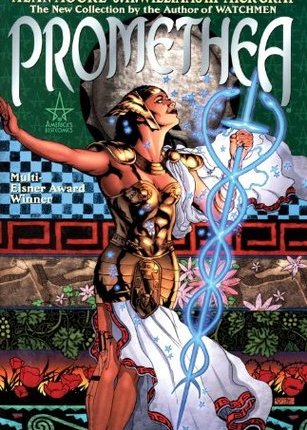
Promethea, Vol. 1 by Alan Moore

Promethea, Vol. 1 by Alan Moore

Promethea is a brilliant fantasy graphic novel by the legendary Alan Moore. It follows a woman who is researching a story for her thesis, only to discover that the story actually lives in the imagination and can explode into the real world in surprising and mystical ways.

“Tell me, child, what is your name?” “Promethea.”

Photo by Hert Niks on Pexels.com

It is a clever, gender-bent retelling of Prometheus. But, it presents the exploration and knowledge of the mystical worlds of the qabalah as Prometheus’ gift to the world, instead of the usual literal interpretation of the gift of fire to light the night.

It seems to be Promethea’s destiny to bring fire and knowledge back to the imagination of humanity in order to change the world forever for the better.

“I am Promethea, the rumored one, the mythic bough that reason strains to bend. I am that voice left, once the book is done… I am the dream that waking does not end.”

Photo by Suvan Chowdhury on Pexels.com

To free her conditioned mind from the limitations of this reality, the woman, now bearing the incarnation of Promethea, needs to learn from her previous incarnations. If she doesn’t quickly grasp the secrets of the four sacred weapons, the cup, sword, pentacle and wand, Promethea’s ancient enemies will rip her to pieces.

“Humans are amphibious, Sophie. That means they live in two worlds at once: matter and mind. Yet many people only notice the solid world they have been conditioned to think of as more real while all about them diamond glaciers creak and star-volcanoes thunder.”

This graphic novel is pretty far out there. I really liked the mythic and occult themes, and strong female characters.

Photo by Erik Mclean on Pexels.com

There’s some near nudity, but nothing too ridiculous. One of the incarnations of Promethea was brought into being by an author who used words and his imagination to shape his mistress into something more. Because of this sexual-themed awakening, she only wears a sheet, but it covers all the wobbly bits. Barely.

Highly recommended for adult readers who like fantasy graphic novels. There are few authors who write such themes better than Alan Moore.

Thanks for reading!

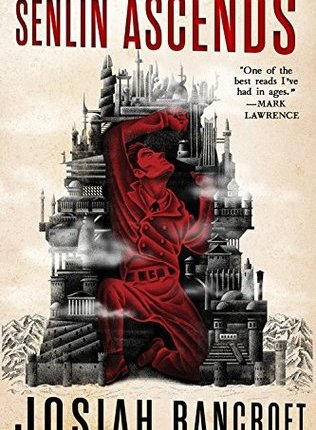
Senlin Ascends (The Books of Babel, #1) by Josiah Bancroft

Senlin Ascends (The Books of Babel, #1)  by Josiah Bancroft

Senlin Ascends is a steampunk adventure novel wherein our hero, Thomas Senlin, ventures into the mythical and massive Tower of Babel to reunite with his new wife and love of his life, Marya.

Sounds simple? It’s not.

Each ring of the tower is a different country with tyrannical and ruthless rulers who run their circle of influence with an iron fist. And as Senlin ascends, the technology becomes more and more advanced to the point where, even to an educated man like Senlin, it looks like magic.

Photo by Pixabay on Pexels.com

“There is a lot of debate over how many levels there are. Some scholars say there are fifty-two, others say as many as sixty. It’s impossible to judge from the ground.” pg 4

And their married life had started out so well…

“Their honeymoon was ruined, that much seemed certain. They would have to fabricate some fable of luxury to tell their friends, and he would, of course, make it all up to her with a quiet weekend in a pastoral cottage, but for the rest of their marriage she would remember what a terrible trial their honeymoon had been.” pg 16

Senlin is no fool in love though. He’s introverted, introspective and thoughtful. His wife, Marya, is younger and impulsive. Together, they make a great team. If only he could figure out which direction she went.

The character of Senlin is one of the delights of this fantasy novel. He’s prickly and doesn’t seem lovable right off the bat. But as you get to know him, you realize, he’s one-of-a-kind.

Photo by Enric Cruz Lu00f3pez on Pexels.com

“The subtext was obvious: Love, pure and eternal, reigned supreme. Senlin did not believe in that sort of love: sudden and selfish and insatiable. … He believed true love was more like an education: It was deep and subtle and never complete.” pg 59

Senlin is still hopeful he’ll find his wife until he discovers what the tower really is and what it does to the unknowing who venture within its walls.

“I am upset because we have pooled out human genius into the building of an elaborate Tower and have filled it up with the same tyrants that have plagued our race since we crawled from the sea. Why does our innovation never extend to our conscience?” pg 142.

Why indeed.

Photo by Navneet Shanu on Pexels.com

Highly recommended for fans of fantasy and adventure fiction. Senlin Ascends is a masterful debut novel and start of a unique series.

Thanks for reading!

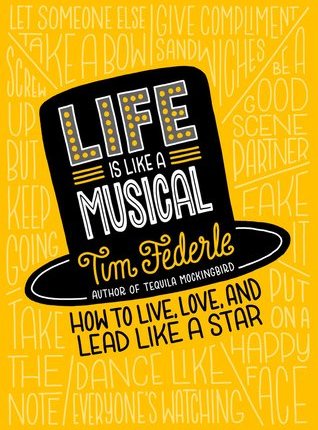
Life Is Like a Musical: How Broadway Can Help You Live Your Best Life by Tim Federle

Life Is Like a Musical: How Broadway Can Help You Live Your Best Life by Tim Federle

Life is Like a Musical is a cute, self-helpish book, full of the wisdom Tim Federle gleaned from years of experience on the stage.

“Basically, think of this book as ‘Don’t Sweat the Small Stuff’ with jazz hands.” Introduction.

Photo by Anastasiya Gepp on Pexels.com

Tim’s advice is common sense, but I appreciated it anyway. Make your weaknesses your strengths. Be nice to everybody. Pay attention. Don’t try to be a perfectionist, and so on.

He pairs these nuggets with his life stories. So, it’s part-memoir, part-self help.

“When Bob Fosse had a bald spot, he put on a stylish hat. Where’s your bald spot? Or blind spot? Or thing that you can barely accept about yourself? Go put a hat on it, and make it something wonderful.” pg 23. There’s nothing wrong with advice like that.

Photo by cottonbro on Pexels.com

First off, the key to approximately 90 percent of adulthood is appearing more interested in something than you actually are. Seriously.” pg 31.

Truth bombs, people.

Don’t give your power away. Remember who you are: “Please, never forget you’re the leading character in your own life. Read that sentence again: You aren’t the supporting cast. You’re it, baby.” pg 48.

And most importantly of all, have a sense of humor about the whole thing.

“Forgive yourself when you screw up. Develop a sense of humor that allows you to snort-giggle before anyone else can.” pg 139.

Photo by Tim Mossholder on Pexels.com

None of us are getting out of this thing called life alive. We may as well make the most of it.

I enjoyed this book. I was also a huge fan of his drink recipe book mixed with classic book titles: Tequila Mockingbird: Cocktails with a Literary Twist.

Recommended for people who are looking for a peppy voice to get them back on track and singing throughout the soundtrack of their own lives. This read will do the trick.

Thanks for reading!

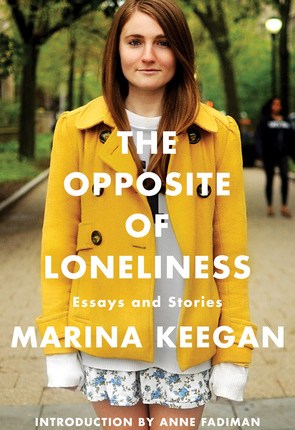
The Opposite of Loneliness: Essays and Stories by Marina Keegan

The Opposite of Loneliness: Essays and Stories by Marina Keegan

The Opposite of Loneliness is an excellent collection of fiction and non-fiction essays by Marina Keegan, a Yale student who died in a car wreck a couple days after she graduated from college.

Photo by Pixabay on Pexels.com

My favorite essay out of the bunch is “Against the Grain” pg 157 where she discusses her Celiac disease and the negative effect that that had on her mother.

She expresses frustration with how ridiculously protective her mother became when they were finally able to figure out what was wrong. She talks about being embarrassed at holidays as her mom cooked separate pies just for her or at field trips when her mother brought along special snacks.

But then, she reveals how she saw an internet article about how having Celiac disease could negatively effect the fetus when the sufferer becomes pregnant… and it’s a light bulb moment for Marina. She suddenly understands that feeling, how she would do anything to protect that other person, her baby, and suddenly her mom’s behavior doesn’t seem all that crazy after all.

Photo by Pixabay on Pexels.com

Of course, the absolutely heartbreaking moment for the reader is realizing that this particular dream will never come to fruition for Marina, but the fact that she even had that “ah-ha” moment is so powerful.

Marina’s writing highlights the sometimes indescribable feelings of daily life in such a powerful way.

For example: “My dog let out a small howl, twigs cracked in the woods, and something about the stillness or my state of mind reminded me of the world’s remarkable capacity to carry on in every place at once.”pg 34 I always had that feeling towards the end of the semester during college.

You’d work at this frantic pace, not giving a thought about your family or friends at home, then somehow in the lull between the final and actually going home, it would occur to me to wonder how my sisters had been for the last ten weeks or what my high school buddies had been up to.

I’d also forgotten that the world “carr(ies) on in every place at once.” Loved that sentiment.

Photo by Andrea Piacquadio on Pexels.com

“I worry sometimes that humans are afraid of helping humans.”pg 153 I worry about that too.

In that essay, Marina is talking about helping to save whales that were beached near her home. She talks about the time, effort, and money that is spent without consideration for the fact that only so many of the whales will actually be saved.

Then, when these whale rescuers go home, they do so without a backward glance towards the homeless on the streets, who are just as “beached” as the whales that they’ve been caring for all day.

“You feel like so many people are doing it and talking about it all the time like it’s interesting, so you start to wonder if maybe it really is.” pg 190.

Photo by Tomas Anunziata on Pexels.com

Marine was writing about how 25 percent of Yale graduates go immediately into banking or consulting positions that have absolutely nothing to do with their long term goals, but provide a quick paycheck in the short term.

Will they ever realize their dreams? If they make enough money, will they even care?

Life is about more than a paycheck. Marine Keegan knew that and her life had barely begun.

If you enjoyed The Opposite of Loneliness, I’d suggest Cool, Calm & Contentious, an excellent and serious collection of essays about life, or Zombie Spaceship Wasteland, a comedic collection of essays about life that are surprisingly insightful.

Thanks for reading!