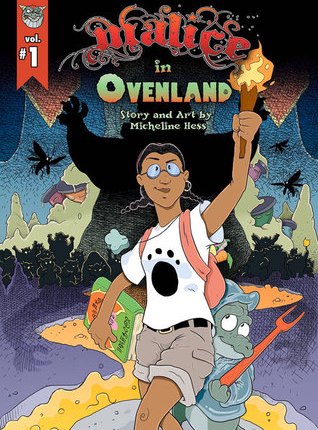
Malice in Ovenland by Micheline Hess is a graphic novel for children. Lily Brown’s mom tells her to clean the kitchen- and her adventure begins.
An excellent pick for reluctant readers, this story is a cute, gross, and, endearing romp through a fantastical world hidden behind an oven.
Lily’s heroic journey reminded me of the comic series, Princeless by Jeremy Whitley. In Princeless, the heroine tires of waiting for a prince to come save her, so, she sets about saving herself.
Lily is no wilting flower either, despite her name. 🙂
With art and a storyline appropriate for the pre-teen crowd and an empowered female protagonist, I could see this being a great addition to any juvenile’s graphic art collection.
What I enjoyed most about Malice in Ovenland were the homages to other great works of children’s literature.
The obvious one, of course, is to Alice in Wonderland but I also caught shades of the Lord of the Rings in the poem included at the end of Chapter 1.
The moment that Crumb comes to visit Lily in the dungeon reminded me of when Taran met Gurgi in the Black Cauldron.
The Queen’s advisor, named Crispodemus, reminded me of Nicodemus the rat from the classic children’s story,Mrs. Frisby and the Rats of NIMH by Robert O’Brien. (One of my all-time favorites, by the way)
And finally, The Royal Rangers reminded me of the Beagle Boys from Duck Tales– bumbling, minimally intelligent thugs, who would be harmless if they weren’t so determined to be bad.
Malice in Ovenland would be a great title for a reluctant reader or a reluctant eater. The story, in addition to the adventure, teaches kids to not be afraid to try new things- either food or life related.
It’s a message that can’t be repeated enough.
The humor is mainly gross-out or potty-related but, as a mother of a soon-to-be-10 year old, that’s exactly where her humor is at right now. It’s perfect for the audience that it is seeking.
Big thanks to NetGalley for providing me with a free digital edition of this title for review purposes and thanks for reading!
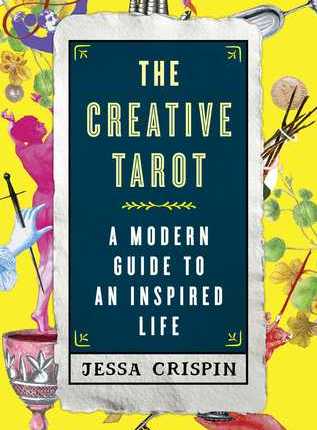
The Creative Tarot: A Modern Guide to an Inspired Life is an excellent tarot card reading manual for beginners to the more experienced card reader.
I loved that Crispin gives novel, art, and film suggestions for each card so that the reader can immerse herself in the “feel” or “mood” of them. That was a lovely touch and different from any other book on tarot cards that I’ve read.
Mainly, the books that I’ve picked up have been about tarot card theory and how the cards tie in to the Tree of Life. It’s a complex system and can only be talked about in metaphors.
Imagine my relief to read a book about just the cards themselves and not an arcane “theory of everything.”
A.E. Waite was the co-creator of the Rider-Waite Tarot. He had some interesting thoughts about the tarot card reading qabalists, many of whom wrote books like the ones I’ve mentioned above.
A.E. Waite’s beliefs, which Crispin includes in the chapter entitled, A History of the Tarot, were: “Waite believed that the magical systems (tarot) of the Golden Dawn and other systems were not about imposing your will on a situation… or about telling the future… He believed they were for elevating the soul and for bringing what is unconscious conscious.” pg 7.
I believe that too. But, if you can’t explain the system in a way that makes sense, then what’s the point of writing a beginner’s manual. There can be no “elevation of the soul” if the beginners can’t understand the first thing about reading tarot cards.
Thankfully, Crispin’s interpretations are simple and clear. This is a book that will see some use, not become another expensive paperweight.
I liked Crispin’s description of Temperance: “Temperance is an easily misunderstood card, as it has become associated mostly with abstention. Not drinking, not participating, denying yourself something. But that breaks away from the origins of the card, which traditionally portrays a hermaphrodite blending two cups of water- one hot and one cold- to create something in the middle between these two extremes.” pgs 76-77
Temperance is about finding the middle way, not skirting along the edges from one extreme to another. Kind of ruins the idea of a “temperance movement,” doesn’t it.
I also liked this blurb about the Tower: “Remember that scene in Louisa May Alcott’s Little Women, where Amy throws Jo’s stories into the fire? That’s the feeling of the Tower: the realization that all is lost, and you will have to start over from the beginning.” pg 83
Yes, I’m a bookworm. Yes, Little Women is one of my favorite books. I think Crispin nailed the card’s description with that scene.
I thought this description of The Moon was brilliant: “The Moon rules our dreams, and that’s a good way to think about this card. They don’t make sense on a logical level, but on a personal level, on an emotional level, they do. The location in a dream will shift without warning; dead people will walk beside the living; your mother will show up, say something nonsensical while wearing a jellyfish on her head, and then stab you in the heart. And you wake up and think, “Oh, of course, this is about that incident that happened when I was five.”
My dreams are just like that. In fact, I had that exact dream last night. 🙂
The tone in The Creative Tarot is very friendly and conversational, as if you asked your best friend to teach you a little bit about her favorite hobby- tarot cards. Highly recommended for artists, dreamers, and aspiring tarot card readers.
Its only weakness, in my opinion, is that I wanted more… more stories, more examples. I understand that we’re dealing with 50 plus cards and they can’t all receive extremely detailed treatment, otherwise we’d get the George R.R. Martin version of Tarot card books, but a girl can dream.
Jessa Crispin has modernized a system that seems to want to stay inaccessible to the beginner. I wish more of the books about the tarot were like this one.
Warning: this is a book you either love or hate. Consider yourself warned.
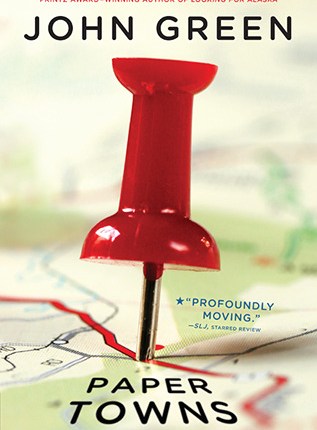
I fell more on the “hate” side of this equation but, surprisingly, enjoyed the film. This young adult, coming-of-age tale has elements of mystery to it.
Quentin has always loved Margo. One night, she wakes him up and they go on a wild tear about town, righting perceived wrongs and causing all sorts of hijinks.
Right off the bat, the reader is thrown into Margo and Quentin’s lives and we’re exposed to some of their worst traits rather than their best. Usually, people behave their best when you first get to know them and then, as they become comfortable with you, they let some of their more questionable sides out.
The whole “rolling around the neighborhood at night and causing mayhem” takes place right at the start of Paper Towns. It isn’t fun because we don’t really know these characters yet.
It’s easier to forgive adolescent hijinks when you know and love the people who are doing them, but we’ve got almost zero time to form a connection before they’re breaking laws.
I think I would have given up on Paper Towns if I hadn’t watched John Green’s TedTalks video on the topic. If you haven’t seen it yet, here it is:https://youtu.be/NgDGlcxYrhQ
Quick summary of Green’s video: The basic idea behind a paper town (a made up town on a map) was copyright protection. The coolest part is that the mapmakers took something that wasn’t real and made it real because they presented it that way for so long.
I know that John Green can write amazing, sympathetic characters. He chose not to in this book and I’ve been rolling it around my brain, wondering why.
I think that Green wrote the characters in this story like a paper town.
At first, he presents the main characters as over-the-top clichés of what teenagers could be. The reader isn’t necessarily meant to bond with them at this point, they’re not real, they’re just “people on paper.”
Then, through the second part of the book, let’s call it the “clue finding” part, Green slowly reveals more and more of the real parts of their characters just as Quentin finds more and more clues to where Margo has gone.
Through their hopes and dreams, relationships, daily struggles and hopes, they’re becoming more real.
Finally, in the last third of the book, as we join the characters on their mad rush to find Margo, they’ve become real. Real enough to have some close life-threatening moments on the road. Though they started out fake, Green built enough substance for the characters so that they have heft and dimension.
That’s my theory on why Green wrote such awful characters: he meant to. But, I still never liked any of them very much, even after they became “real.”
I liked Green’s prologue: “The way I figure it, everyone gets a miracle. Like, I will probably never be struck by lightning, or win a Nobel Prize, or become the dictator of a small nation in the Pacific Islands, or contract terminal ear cancer, or spontaneously combust. … My miracle was this: out of all the houses in all the subdivisions in all of Florida, I ended up living next door to Margo Roth Spiegelman.” pg 15 ebook.
“Margo always loved mysteries. And in everything that came afterward, I could never stop thinking that maybe she loved mysteries so much that she became one.” pg 23 (ebook)
And that was the high point in this book for me. It was all downhill afterwards.
Here’s the passage that helped develop my theory about Green writing paper characters in Paper Towns: “… she looks like Margo Roth Spiegelman, this girl I have known since I was two- this girl who was an idea that I loved. And it is only now, when she closes her notebook and places it inside a backpack next to her and then stands up and walks toward us, that I realize that the idea is not only wrong but dangerous. What a treacherous thing it is to believe that a person is more than a person.” pg 406 (ebook)
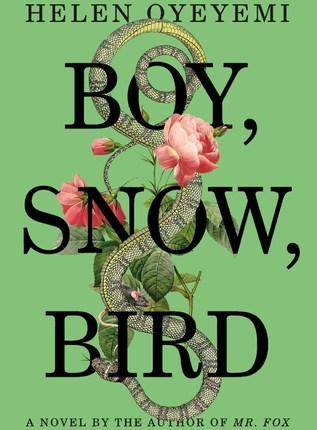
Boy, Snow, Bird is beautiful, haunting, modern and loose re-telling of the fairy tale of Snow White. The ending made me so mad that I almost chucked the e-reader across the room.
The story is about Boy Novak moving to a new place and starting her life over again. She meets a man named Arturo who has a beautiful daughter named Snow.
Their relationship changes when she gives birth to a child named Bird. The interactions between Boy, Snow and Bird are what to watch for in this well-described tale.
I loved the characters and the huge twists in this book so much. I was reminded of the major twist in The Life of Pi. Oyeyemi was able to flip the narrative over and make it something else by unveiling a rather large surprise towards the end.
Still though, that ending. I can’t make up my mind whether it was awesome or infuriating.
At any rate, this is a book that captured my attention and held it mercilessly until it was done.
Oyeyemi can write.
Check out this passage: “The town should really have been called Flax Hills, since it was huddled up between two of them, but maybe that was the locals’ way of instructing one of the hills to scram. The hills are ringed round with old, dark, thick-trunked trees. They’re so tall you feel a false stillness standing under them; when you look all the way up, you see the wind crashing through the topmost branches, but you hear all the commotion only distantly, if at all…” pg 26.
Much of this story deals with gender politics and the balance of power between the sexes. Oyeyemi drives right to the heart of the issue with her descriptions.
“I watched wealthy men and their wives and dates dancing and playing cards and making deals: I will admire you exactly as much, no more or less, as you admire me. I will love you in the strictest moderation. Some couples seemed pleased with their negotiations and others were in despair.” pg 31
I loved Oyeyemi’s descriptive writing. She makes you feel what the characters are feeling and it’s beautiful.
For example, here’s the beginning of a love story in three lines: “Because he says he can’t stand you and you act like you can’t stand him, and whenever a man and woman behave like that toward each other, it usually means something’s going on. There’s a precious metal kind of gleam about you, and the man’s a jeweler, you know. So look out.” pg 33
I really liked Oyeyemi’s character development. She writes flawed characters that readers can see themselves in. It makes for an engaging and emotional read.
In this passage, she takes a stab at describing the small things that we look for in each other: “…he knew how to lean in and light a girl’s cigarette with a look and a smile that had me stubbing my cigarette out whenever his attention was elsewhere, just so he’d light up another one for me. It could have been the way he guarded the flame with his palm, the unexpected care with which he carried it up toward your lips; who knows what makes a man’s gesture attractive?” pg 56-57
Finally, I enjoyed Oyeyemi’s interpretation of the magic that exists in every day life. Because I believe it is there, if we only knew how to look for it.
“…a whole lot of technically impossible things are always trying to happen to us, appear to us, talk to us, show us pictures, or just say hi, and you can’t pay attention to all of it, so I just pick the nearest technically impossible thing and I let it happen. Let me know how it goes if you try it.” pg 177
I’m off to try the “nearest technically impossible thing.” Thanks for reading!












 The Help Desk Book Blog