The Ballad of a Small Player: a Metaphysical Movie Review

The Ballad of a Small Player: a Metaphysical Movie Review

I recently had the opportunity to watch Colin Farrell’s latest film, The Ballad of a Small Player, and I liked it far more than any of the other reviewers that I could find online when the movie was done. I shall attempt to explain why here.

Also, fair warning, this discussion will have major spoilers for the film. Please do not proceed if you haven’t seen it yet.

Again, major spoilers ahead. Due diligence done.

First, for just a little bit of context if you haven’t seen it, the film is set in Macau, an exotic locale that I have never visited but the crowded and brightly lit casinos were quite familiar as I have been to Las Vegas. In some ways, the bright lights and lavish interiors of the rooms are beautiful and they are meant to be so in order to lure high rollers through their doors in order to take their money at the casinos.

Beauty and lavishness aside, I really don’t understand the draw of a place where day blends into night and back again while you gamble away the very thing that keeps a roof over your head and food in your mouth. But, I’m fortunate in that gambling isn’t one of my preferred vices.

We meet the protagonist of the film, Lord Doyle played by Farrell, as he’s waking up in one of these casinos. The room is a mess which suggests he’s been gambling for quite some time. It also leads the viewer to think, despite the evidence of high living, that Lord Doyle has not been successful. If he was, wouldn’t have he allowed the cleaning folks in to help him out?

The next few scenes continue this storyline with the bell boy at the front of the hotel encouraging Lord Doyle to visit another casino because they “may” be willing to extend the unfortunate gambler a line of credit which the current casino is declining to do. Lord Doyle is also given a short deadline to pay off a very major bill and threatened with legal action if he does not comply. It all adds to a growing feeling of pressure and dread which lasted throughout the film.

Thus, the stage is set for the rise and/or fall of our intrepid hero. I was completely drawn in by Lord Doyle’s desperate attempts to win money back and delay those who are looking to collect on old debts. From the cut of his brightly colored jacket to the yellow gloves on his shaking hands, Lord Doyle presented the picture of a well-to-do European on a holiday, whiling away his idle hours in luxury and excess.

The reality is actually quite different from this and the exploration of the differences of the image he’s presenting versus his reality are fascinating. I think all in existence present images of what we want the world to believe while hiding our true selves behind various masks. Why does Lord Doyle do this? Read on…

Enter Dao Ming, played by Fala Chen, a woman who offers lines of credit to struggling gamblers who don’t want the game to stop. Lord Doyle and Dao Ming have an awkward encounter where she offers him money if he pays off his bar tab, but he can’t, so the deal doesn’t go through. That’s when the film takes a major turn into another version of reality.

While walking through the streets of Macau, Lord Doyle describes himself as a “gweilo” or “ghost man” which, a little research on the internet has revealed, is a historical term used by locals to describe foreigners. The term has been called a racial slur and other times not, depending upon the context. In this film, Lord Doyle embraces the phrase and says he walks among the others of Macau like a shadow.

As soon as he said that, I realized the film wasn’t actually about gambling at all but about the deeper spiritual realities that we all exist in and move through whether we acknowledge them or not, like fish in water. Some claim that heaven or hell only enters our existence after death but I say we make our heaven and hell in the here and now. Lord Doyle lives in a hell that he created through his inability to walk away from the gambling tables and unshakeable belief that his luck is always about to change. He does indeed move through the world like a shadow, always on the move to find the money to make a new bet.

It is in this larger spiritual metaphor that The Ballad of a Small Player truly finds its footing. I could go on more about the role of Dao Ming in helping Lord Doyle rise from the depths of his created hell (or does he?) or the interesting role of Cynthia Blythe, played by Tilda Swinton, but I would prefer to stay in the realm of the metaphysical. Further discussion of the plot itself may be made at any of the other reviews floating out there in the ether.

The “naraka” or hells of the Buddhist world that get a brief mention in the film was fascinating to research. So, like Dante’s vision of hell, the narakas are layered with each successive layer being worse for the unfortunate residents of each. There are hot and cold narakas where the beings within experience various tortures based on the way they moved through life and the suffering they created through their existence. I think, with the multiple scenes of Lord Doyle being covered in sweat, that he lives in a hot naraka, suffering under the weight of his accumulated karma caused by his gambling addiction and those he harmed in his pursuit of it.

But which naraka it is is definitely up for discussion. In which realm do you think Lord Doyle finds himself? https://en.wikipedia.org/wiki/Naraka_(Buddhism)

I’m loathe to pick any of them except to say that Lord Doyle is wandering the earth as a “hungry ghost” or spirit who has an emptiness inside of him that he is always seeking to fill whether that be through winning at the gambling tables, plates of sumptuous food, dancing with the beautiful residents of the hell around him, or just existing in his own head.

It is eventually through this realization, that he has a wound that will never heal, that Lord Doyle finds his way out of the shadows of existence and back into the light of self knowledge and non-attachment.

Alive or dead, I believe all create their own reality. Lord Doyle tells himself throughout the movie that all he needs is for his luck to change and then he’ll be in control of his life again. But then, when his luck finally swings up, he finds himself feeling even more alone than he did before. In many ways, the movie suggests, he was alone the whole time.

Do the residents of hell know they are in hell? How about heaven?

Some have described the character of Lord Doyle as unrelatable or even repulsive for his repeated failures, his exposure as a fraud or for his physical body’s reactions to what is going on around him including uncontrollable sweat, endless hunger and thirst, and the never ending need to find money to gamble away. I think it is those failures that make the character absolutely relatable. Who among us has not fallen in some way throughout our lives and disappointed those around us? Who has a spirit made of stone who can take the stresses and disappointments of life without a hiccup or panic attack or sleepless night?

No one, that’s who.

And, at the end of the film, the one thing that pulls Lord Doyle out of hell is the redemptive act of returning the money he stole from Dao Ming. She gives him access to the treasure he needs to return to the gambling tables. She, it is suggested, stands behind him as a ghost and gives him the luck he needs to make those few big wins and leave the casinos behind forever. Even in hell, the film seems to say, there are those who will help you get out of your hopeless circumstances.

When he is informed that Dao Ming died days before his big win and he can therefore not return the money to her, Lord Doyle burns the money ritualistically at the temple to give her the cash back even beyond death, even though he is quite likely dead himself. Will this penitent action be enough to change his behavior for all time? The film is ambiguous about this possibility, but I’m ever hopeful for the best outcome for all. In my vision of what comes next, Lord Doyle leaves the casinos and the hell he has discovered/created, never to return because of the gift of a pathway out by another suffering member of the naraka.

I did a little research into hungry ghosts while I was gathering my thoughts about the film and stumbled onto the concept of “hell money“. The idea is that spirit money or false bills are burned to provide those in the afterlife with money to help them through whatever realm it is in which they may find themselves.

Curious custom. I wonder if the practice could possibly work the other way, with spirits burning whatever counts as cash over there for their living relatives on this side of the veil.

Hell money ruminations aside, The Ballad of a Small Player is an excellent examination of the suffering that can be created in one’s own life through attachment to material things which leads to a cycle of suffering perpetrated not only on the self but also on those around oneself. It is a finger pointing at the moon on the sad state of reality and the lost souls who inhabit it.

Highly recommended by movie-watchers who like to contemplate these types of themes. If you watch the film yourself, please do let me know your thoughts about it.

Thanks for reading. -Heidi

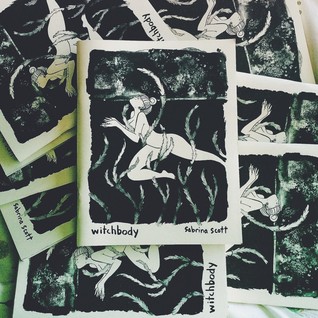
witchbody by Sabrina Scott

witchbody by Sabrina Scott

What is a “witchbody”?

Sabrina Scott defines this nebulous concept in graphic novel format.

Basically, to have a witchbody, the spiritual practitioner uses his or her senses and whole body to connect with everything in the world around her- be that a polluted parking lot or a clear mountain lake.

Scott touches on this idea that sometimes in our spiritual practices we only consider “pure” and “unpolluted” things as holy. They put forward the theory that, if we continue down this path, there may be nothing left to connect with as everything in existence mixes and mingles with everything else.

The spiritual is in the here and now, in the interaction of all things. I heartily agreed.

They wander through philosophy and other theories in the delivery of this message, which some readers may enjoy. I found myself wishing the text had a little more organization to it.

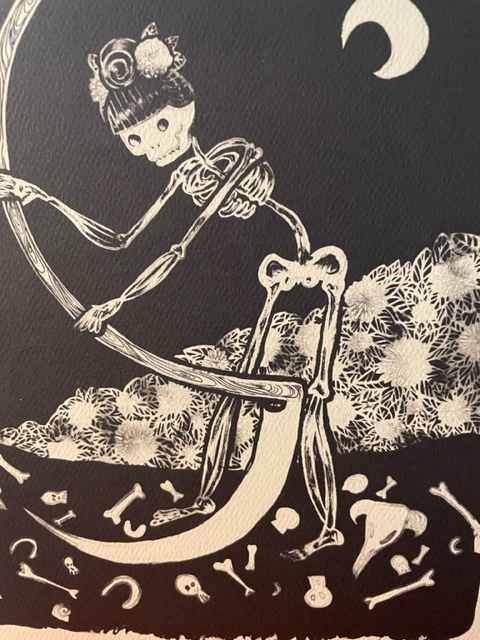
The art in this black and white graphic novel is beautiful. There is some non-graphic nudity- for librarians looking to categorize this book, I’d suggest in the adult graphic novel section.

As lovely as the art is, the lettering is close together and difficult to read in places. I think the author was going for the obviously hand drawn look, but I think they went one step too far. Otherwise, this book was enjoyable.

Highly recommended for spiritual seekers.

Eckhart Tolle’s “The Everyday and the Transcendent”: a Podcast Review

Eckhart Tolle’s “The Everyday and the Transcendent”: a Podcast Review

While I was on my daily walk, I listened to “The Everyday and the Transcendent” a podcast on Spotify in Eckhart Tolle’s “Essential Teachings” series.

Was it worth the listen? I say yes.

I enjoy learning from Eckhart occasionally but not all the time. He has a soothing voice and his stream-of-consciousness delivery style is hypnotizing.

However, after a couple hours of his teachings, they all begin to sound exactly the same. And that’s because his core message never changes- which isn’t a bad thing.

Photo by Sebastian Voortman on Pexels.com

Beware self help or spiritual gurus who hold up a carrot of further secrets. As my hairstylist said after visiting an aura cleanser for the first time, “You can overdo stuff like that.” By which she meant, pouring piles of money into someone’s hands to “fix” something you can’t even perceive.

The cool thing about Eckhart’s teachings is you can begin practicing and perceiving what he’s talking about right this second, no matter your situation or state-of-mind.

For example, in this podcast, a practical tool he offers for spiritual insight is to simply observe what he calls your “inner body”. His focus, which he says he’s used over the years to great success, is to monitor what the energy of his hands are doing.

Photo by Meryl Merlin on Pexels.com

How do you do that? Simple- feel your hands. Act like you’re going to pick up a pencil, but don’t move. There! You can feel that can’t you.

Do this multiple times a day or just once in awhile and you’ll begin taking your focus away from what Eckhart calls “thought forms” and enter the state of “the now”.

This particular podcast deals with “the everyday” which Eckhart describes as your job, your family, your home, all of the trappings of the physical life. He says most people never move beyond the everyday. We can get lost in the world around us, which he reminds us, are simply projections that we create through our perceptions.

Photo by Ricardo Esquivel on Pexels.com

He describes the everyday as a horizontal line- a visualization that I found very helpful.

When you are lost in anxiety or fear, you’re moving either forwards or backwards on this line and not staying in the present moment, which is where the second part of his visualization comes in.

Eckhart describes “the transcendent” as a vertical line that intersects the horizontal line of daily living. He says we travel upwards and downwards on this line through our thoughts as we go about our lives.

Photo by eberhard grossgasteiger on Pexels.com

The thing is: most of humanity isn’t aware that we’re doing this. We unconsciously move about our day, responding in a kneejerk way to things we perceive as “happening to” us. And, Eckhart says, they actually are “happening to” us because we aren’t aware we are doing it.

If only we could realize our own internal processes, then, he says, we would realize that nothing really “happens to” you. It is all movement along the metaphorical everyday and the transcendent lines of our lives.

Photo by Anna Roguszczak on Pexels.com

We break the power that thoughts have over us and enter into the timeless state of the Now. The holy grail, so to speak, of spiritual experiences.

Highly recommended for spiritual seekers who are looking for practical ways to practice being present. Thanks for reading!

If you’re interested in Eckhart Tolle’s further teachings, here my book review of his “Stillness Speaks”:

And you can listen to the podcast yourself here:

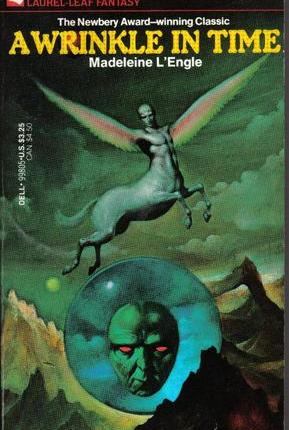
A Wrinkle in Time (Time Quintet, #1) by Madeleine L’Engle

A Wrinkle in Time (Time Quintet, #1) by Madeleine L’Engle

**Spoiler alert: for those who haven’t had the chance to read this classic tale. Please read before you enjoy this review!**

A Wrinkle in Time begins in a deceptively normal way: on a night with wind-tossed trees and a howling rain storm. From there, award-winning author Madeleine L’Engle takes readers literally to the stars and beyond in this extraordinary coming-of-age fantasy novel.

Photo by Lachlan Ross on Pexels.com

I first read about the adventures of Meg, Charles Wallace and Calvin when I was eleven or twelve years old. It was during my early bookworm phase, when I was still learning there were genres that I enjoyed more than others.

I was swept up in the adventure part of this story- facing down the shadows and ‘It’ in my subconscious mind and heart. I remember thinking the Aunt Beast portion of the story was boring and being disappointed Meg’s father was a real man with flaws rather than a superhero who could solve all of her problems.

Photo by Josh Willink on Pexels.com

Looking back on that interpretation now, I see my own burgeoning psychological development and the belief that my parents were some kind of godlike beings- something that most if not all children pass through at some point or another. When did you discover that your parents were real and fallible, just like you?

However, listening to the audiobook as a fully grown adult with a daughter of my own, I was struck by Meg’s strength and bravery. It takes a great deal of inner resolve to face down society’s expectations and the numbing experience of living soullessly every day, following someone else’s school or work schedule and agenda. (A real life version of the pulsing, all-encompassing brain of L’Engle’s fantasy world.)

Photo by SHVETS production on Pexels.com

How many days have I awoken only to race off to the hamster wheel of the work week- toiling away so the highly-paid minds of the CEOs could rest easy, knowing that the company was producing product (whatever industry that may be) and providing value for the shareholders? More than I’d care to admit, before I discovered the safe haven of the librarian’s world.

In my own effort to find my calling, I was reminded of Meg’s struggles to survive her encounter with It, not just survive but decide how her body and mind should function. In some ways, the modern work experience feels like someone else dictates how many breaths you should take per minute or what rhythm your heart should beat.

Photo by Designecologist on Pexels.com

I had the good fortune of listening to an audiobook that has L’Engle speaking a brief introduction and then an afterword read by one of L’Engle’s granddaughters.

The granddaughter (I’m embarrassed I don’t remember her name) shared the details and struggles of L’Engle’s life- including the rejection of her manuscript by numerous publishing houses and the shade some readers threw her way for their own interpretations of her story. Some claimed the book was too overly Christian while others thought it promoted witchcraft. Her granddaughter said L’Engle was baffled by the hate mail.

Photo by Abstrakt Xxcellence Studios on Pexels.com

Curious how a reader’s lens of perception shapes the experience you have with a book. As I mentioned earlier, as a child I thought this book was a grand adventure. As an adult, I see it as a metaphor for living in the modern world.

I’m keen to have my own reluctant reader try this book and share what she thinks about it.

Recommended for everyone but especially those who find themselves a beat or two out of step with the proverbial Its of the modern world. This book reminds you that you’re not alone.

I enjoyed the book more than the movie- but here’s the trailer for those who like movies more than books.

Thanks for reading!

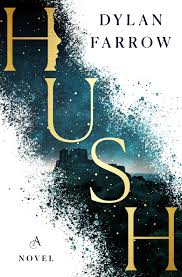
Hush (Hush, #1) by Dylan Farrow

Hush (Hush, #1) by Dylan Farrow

In the world of Hush, ink, the suspected origin of a deadly plague, has been declared the enemy of humankind and outlawed. The keepers of the law, High House and its magical soldiers called bards, roam the world, rooting out those who break the law and rewarding those who bend to their will.

“Our history shows that vigilance and caution are tantamount to survival. Burn the ink from the page. Turn away from forbidden words, toxic tales, and deadly symbols. Cleanse the country of this malignant blight. Join us.”

Photo by Dids on Pexels.com

Shae lost her brother to the mysterious plague early in her life and her family has been outcast from her small village since. When tragedy once again darkens her family’s doorstep, what will Shae do not only to seek justice for her brother but, potentially, the whole world?

The premise of Hush had some interesting ideas, but this debut, young adult novel suffers from wooden characters and predictable plot twists.

“The Bards arrive today.” The Bards. Suddenly I feel as though the house has been encased in ice. The town elders say there’s power in words- that certain phrases can change the world around you.”

Photo by Polina Zimmerman on Pexels.com

Weakness in the character development aside, Shae is a strong protagonist who struggles to create her own reality which differs quite markedly from the reality that her small town has imagined for her. Teens might connect with her more strongly than I did, which is to say, not at all.

I’m not sure what it was. Maybe I’m suffering from YA dystopian reading burnout?

Instead of appreciating Shae for her flaws which include falling in love too quickly, trusting everybody and pushing all her friends away the moment she could really use their help, I found myself annoyed with her.

“I spent countless nights lying awake, staring at the austere wooden beams of the ceiling, trying to figure out if I was mad or cursed- or both.”

Photo by Joshua on Pexels.com

Be smarter, I thought. The odds are stacked against you, and you need to pay attention, not fall for the first stranger you meet who has a dreamy pair of eyes.

But as I said, I’m definitely not the intended audience for the book.

Here’s the author, Dylan Farrow, talking about Hush:

Thank you to NetGalley and the publisher for an advance reader copy. And thank you for reading!

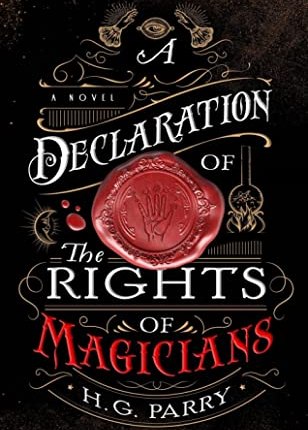
A Declaration of the Rights of Magicians by H.G. Parry

A Declaration of the Rights of Magicians by H.G. Parry

In a world where magic is real and controlled by government authorities, H.G. Parry re-imagines true historical events and people, inviting readers to add an additional layer of conspiracy to movements that changed the course of history like the French Revolution or the slave rebellion in the Caribbean.

Photo by Andreea Ch on Pexels.com

The premise didn’t work for me for a couple reasons.

I felt like this book minimized the atrocities that were committed during the era. The slave trade and the French Revolution’s cost in both human lives and suffering is immeasurable, and it felt somewhat flippant to take those events and say, “Well, magic,” as the main driving force behind the conflicts.

I felt the same could be said for the subtle twisting of the lives of historic figures.

“His quiet voice spoke of a country built on Enlightenment principles, whose people were virtuous, where magic was a free resource to be used for the betterment of all, where food was well distributed and plentiful, where courts were in the hands of the people and not the talons of the Aristocracy, where the poorest Commoner was free to vote and grow and be educated.” pg 155

Photo by Dominika Greguu0161ovu00e1 on Pexels.com

That is not to say that history or historic personages couldn’t or shouldn’t be in fantasy novels. It is a hallmark of the genre to take a reality, change the rules of that reality, and then tell the story with the new rules. Though if that was what the author was going for, perhaps she should have staged her story in another world or made the focus of the story characters she invented with the real people living their lives in the backgrounds.

Taking real events, real people and real world locations to drive the story didn’t coalesce into the fantasy novel I believe she was reaching for.

I think fantasy, alternative-historical fiction is something that can be done successfully, but I have yet to see its promise fulfilled. This may be an unpopular opinion, but I had the same issues with this story that I had with Abraham Lincoln: Vampire Hunter.

Photo by eberhard grossgasteiger on Pexels.com

Students of history may find themselves frustrated by A Declaration of the Rights of Magicians because of the way the true events are spun. I didn’t have any specialized knowledge of the era, but a friend who is somewhat of an expert told me the complexity of the time period is so dumbed down that he was distracted by it.

“It had seemed so simple after the fall of the Bastille. The National Assembly of Magicians had risen up, exactly as Robespierre had hoped. They had issued a proclamation declaring it the right of all citizens to be free to practice their own magic: a Declaration of the Rights of Magicians.” pg 179

Setting my concerns with fantasy clumsily applied to horrific real life events aside, my biggest issue with this book was the glacial pacing. Readers sit through meeting after meeting, and it’s incredibly dull. But with the time period we were in, it should have been gripping. I told myself that a big payoff for all of this story building was coming, as the book clocks in at over 500 pages, but I felt like it never materialized.

I don’t mind a long book. But please, tell the story.

Nobody Wants to Read Your Sh*t: Why That Is And What You Can Do About It by Steven Pressfield

Nobody Wants to Read Your Sh*t: Why That Is And What You Can Do About It by Steven Pressfield

Steven Pressfield shares the applicable lessons he’s learned from a lifetime of different writing jobs. The most important one is the title of this non-fiction, self help book.

Photo by Suzy Hazelwood on Pexels.com

“Sometimes young writers acquire the idea from their years in school that the world is waiting to read what they’ve written. They get this idea because their teachers had to read their essays or term papers or dissertations. In the real world, no one is waiting to read what you’ve written. pg 16, ebook

Along the way, Pressfield discovered the importance of writing for yourself rather than as a ghost writer, the necessity of structuring each piece whether it is a screen play or a novel, the enduring popularity of the hero’s journey and more.

Photo by Kun Fotografi on Pexels.com

He also addresses the inner demons that may prevent fledging writers from finishing what they begin, a topic that Pressfield also discusses at length in his other book, The War of Art: Break Through the Blocks & Win Your Inner Creative Battles

“I did not know that there existed inside my head an invisible, insidious, intractable, indefatigable force whose sole object was to keep me from doing my work, i.e., finishing the book I had been trying to write for seven years- and ultimately to destroy me, physically, psychologically, and spiritually. All I knew was that I couldn’t finish anything.” pg 49

Photo by bongkarn thanyakij on Pexels.com

I found all of his advice helpful, and the manner in which Pressfield delivers it as both approachable and entertaining.

“The writer must know what genre he is working in and the conventions of that genre, just as the bridge builder must understand the science of foundational integrity and the means of mitigating stress on strung steel.” pg 66, ebook

He closes the book with a humorous anecdote about writing for a pornographic film. Even in that tale, Pressfield managed to teach me something about story construction and storytelling. I only mention it in case any potential reader finds such things offensive. Here’s your warning.

Highly recommended for writers at any level. Pressfield knows his stuff.

Mystical Places by Sarah Baxter, Amy Grimes

Mystical Places by Sarah Baxter, Amy Grimes

Throughout history, humankind has told each other stories. Sometimes these stories center on places that become sacred through their association to the legends that are told.

Sarah Baxter highlights 25 such locations from all over the world. Each brief chapter includes a short description of the site and the stories associated with it.

Photo by diana plotkin on Pexels.com

“In these pages we meet mythical kings, sacred summits, and enchanted architecture, plus a cast of elves, giants, ghosts, golems and sea creatures without which our planet might be a more logical and well-reasoned place but also less colourful and compelling.” pg 6, ebook.

I thoroughly enjoyed armchair traveling from Africa to Canada, China to Portugal, and more. This book gave me so many ideas for places I want to see when I feel comfortable boarding a plane again.

And, in the meantime, there’s always the possibility of travel-filled day dreams.

In the chapter about Cadair Idris in Wales, Baxter writes: “It’s said that on the very crown of the peak there is a long, wide platform of stone slabs that is the Bed of Idris and that whoever sleeps on that bed will suffer one of two fates: they will wake up either as the most profound poet or completely mad.” pg 18, ebook.

Photo by Adrian Dorobantu on Pexels.com

Worth the risk, right?

I was also taken with the descriptions of the Stone Circles of Senegambia, thousands of ancient stone monuments found in Senegal and The Gambia.

“Stories passed down the generations claim that the stones were put in place by the gods at the very dawn of time. Other legends suggest they are the gravestones of an ancient race of giants or chiefs and that a curse will fall on anyone who dares disturb them…” pg 76, ebook.

I had never heard anything about these circles, despite taking a class in ritual and religion in prehistory from Oxford. I am also fairly well-read in world mythologies yet there were surprises on almost every page.

Photo by Oleg Magni on Pexels.com

Highly recommended for travelers, armchair or otherwise, who are seeking destinations of mystical significance or anyone who wants to learn about legends from around the world. The only trouble that may be encountered for the mystical tourist is the remoteness of some of the locations.

Thank you to NetGalley and the publisher for a free advance reader copy of this book. The brief quotations I cited may change or be omitted entirely from the final version, which I believe is slated to be published tomorrow.

The Loop by Jeremy Robert Johnson

The Loop by Jeremy Robert Johnson

“It was so surprisingly calm that it took a few minutes before anyone in the room even noticed the way that Chris Carmichael was twitching at his desk.”

Photo by Pixabay on Pexels.com

The first hint that something has gone wrong in Lucy Henderson’s town is a horrific event in her high school classroom. The violent-nature of the event triggers trauma from Lucy’s past, an emotional wound that goes so deeply into her psyche that she hasn’t begun to process it- let alone the damage it has left behind.

It doesn’t help that Lucy feels like an outcast and an outsider in her small hometown. Part of this is baggage from Lucy’s past, but the majority of it is the racism and tribalism she faces from the small-minded young adults in the community. They won’t let her forget she looks different from them and torment her with their racial hatred on a near-daily basis.

The only semblance of friendship in her life is with a young man who goes by the name of “Bucket,” for reasons that are explained in the story. (No spoilers.)

Photo by Anna Shvets on Pexels.com

When all hell breaks loose in town, Lucy and Bucket only have each other and a few acquaintances to help in a race to save their families. The nightmare that they had been living solely in their minds becomes all too real.

“What the hell is going on in this town? Sometimes it feels like things are f*cked up in every direction, you know?”

The character and world-building of The Loop is well done in that I connected deeply with Lucy and Bucket before the story took off.

My lack of enjoyment of the book stems from the graphic nature of the violence against people and animals, both physical and mental. There are also brief instances of sexual abuse between underage teens as well as the discussions of porn with descriptions vague enough that young adults reading this book will immediately turn to Google to answer any questions they may have. There is bullying, unaddressed by the adults in the young peoples’ lives, as well as the trauma Lucy suffered at the hands of a system that should have protected her.

Photo by cottonbro on Pexels.com

Which brings me to another discussion point, this is not a book for young adults. If it was television, it would carry a mature rating. The horror genre has a huge following and graphic violence is definitely a part of that. That being said, it is strange to me how cavalierly some treat depictions of absolutely horrific things.

I feel like society has become desensitized to violence in the media we mindlessly consume. Descriptions of fingers popping through eyeballs and knives cutting through flesh is delivered as a matter-of-course, part of what makes the story so scary.

I picked this title out of the myriad being published in the next months because it was compared to Stranger Things, a horror show, true, but one that leans on the psychological and paranormal scares far more than the physically violent ones. I watched that show with my young daughter. I would not let her read this book, at least until she’s 18.

I say that as a former librarian but also a mother.

All that being said, there are beautiful lines in the book that perfectly capture the agony of mental pain.

For example: “She imagined herself tilting her head back and opening her mouth to scream again, only this time her mouth kept opening and her jaw detached like a snake’s and she kept splitting until she was cleaved in two and all that came out of her was white flame.”

Photo by Matej on Pexels.com

But I didn’t feel that the beauty of those fleeting moments made the time I spent reading the title worth it.

Recommended only for adult horror readers who can handle the triggers of violence and everything else described above.

Thank you to NetGalley and the publisher for a free digital advance readers copy of this book. The brief quotations I cited may be changed or omitted in the final, printed version.