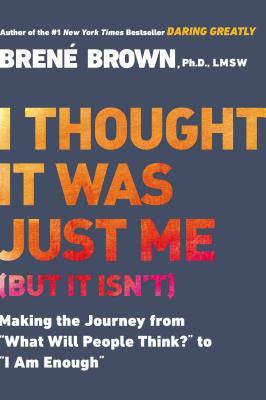
I Thought It Was Just Me (But It Isn’t): Making the Journey from “What Will People Think?” to “I Am Enough” by Brené Brown

I Thought It Was Just Me (But It Isn’t): Making the Journey from “What Will People Think?” to “I Am Enough” by Brené Brown

Researcher Brené Brown gives readers another self help title on how to handle the difficult emotion called shame.

“This book offers information, insight and specific strategies for understanding shame and building “shame resilience.” We can never become completely resistant to shame; however, we can develop the resilience we need to recognize shame, move through it constructively and grow from our experiences.” pg xiv

Photo by Kei Scampa on Pexels.com

It’s not easy to handle shame. In fact, it’s not that easy to read about it.

But Brown says the way through is sharing those uncomfortable feelings with others. One of the solutions to shame is empathy and another is self awareness.

Other attributes shared by those with high shame resilience are:

“The ability to recognize and understand their shame triggers. High levels of critical awareness about their shame web. The willingness to reach out to others. The ability to speak shame.” pg 67

Photo by Pixabay on Pexels.com

Part of her work in psychology has been to define what shame is. Brown writes everyone has different triggers based on unique childhood and adult experiences. Therefore, it is impossible to name universal shame triggers which can make it difficult to study shame.

Her studies have led her to believe the opposite of shame is self esteem, which was an interesting aspect I had never considered. Other aspects of shame include: feeling like you’re not good enough or don’t belong.

Brown has discovered another hurdle in her research- it can be difficult to speak about shame as words sometimes fail us when we experience visceral feelings.

“Sharing our shame with someone is painful, and just sitting with someone who is sharing his or her shame story with us can be equally painful.” pg 147
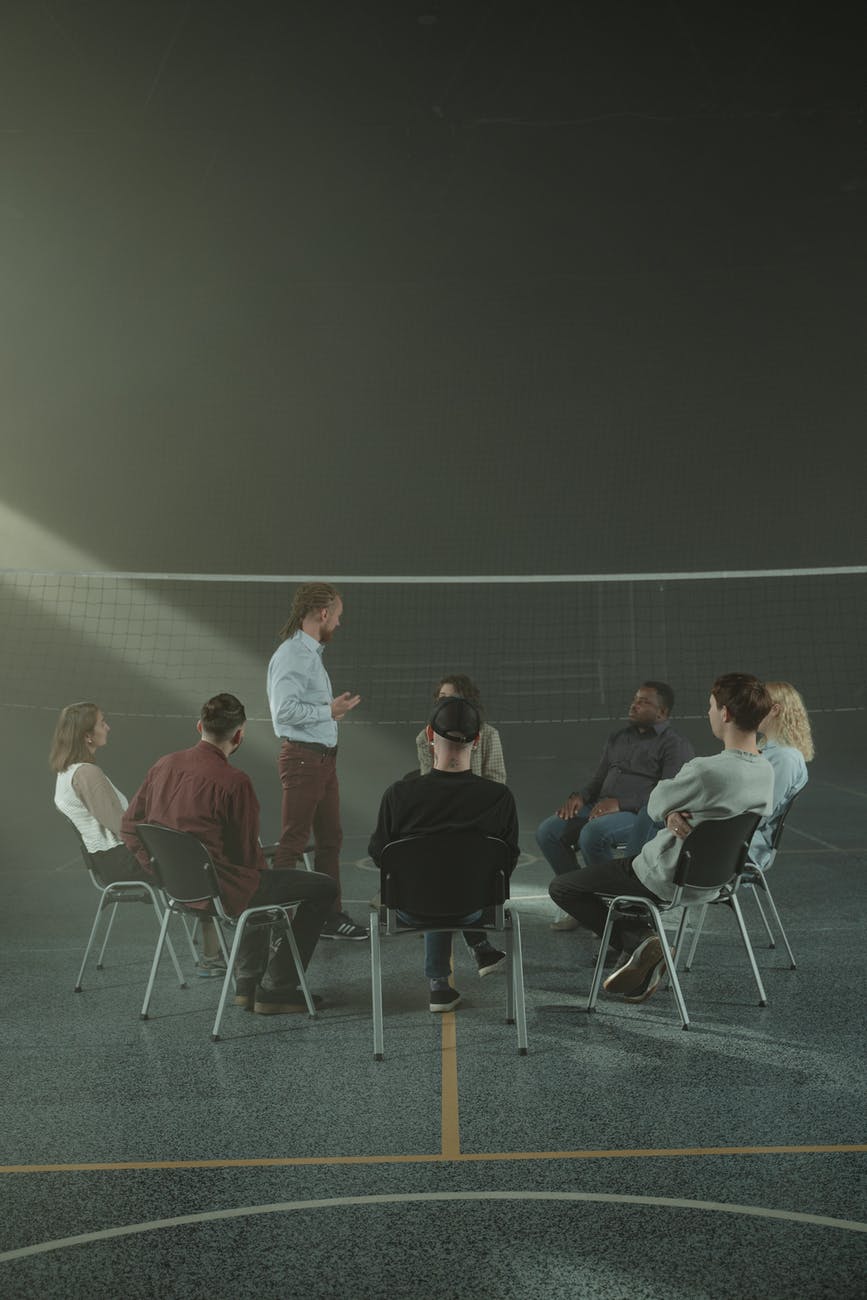
Photo by Tima Miroshnichenko on Pexels.com

On a more positive note, Brown writes everyone has experienced this at some point or another. She uses this universality of experience to issue a clarion call for change. To foster shame resilience, we should build networks of support and be kind to each other by showing our own vulnerability. We’re all in this together.

And I couldn’t agree more.

Recommended for anyone who has ever felt shame. That’s everybody.

Thanks for reading!

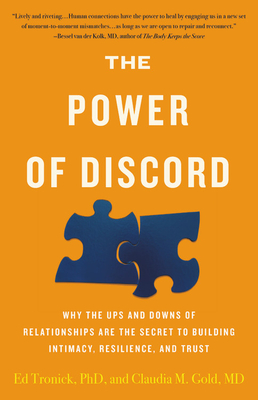
The Power of Discord: Why the Ups and Downs of Relationships Are the Secret to Building Intimacy, Resilience, and Trust by Ed Tronick, Claudia M. Gold

The Power of Discord: Why the Ups and Downs of Relationships Are the Secret to Building Intimacy, Resilience, and Trust by Ed Tronick, Claudia M. Gold

The Power of Discord is a study of human connection and disconnection. The authors, Ed Tronick and Claudia Gold, demonstrate through scientific and therapeutic studies that by working through conflict and the messiness of every day life, our relationships can be stronger than ever before.

Our earliest relationships have a profound affect on the way we interact with others as adults. It is almost scary how fast infants develop the responses that they carry with them into adulthood. In Tronick’s groundbreaking study called the “still-face” experiment, his findings helped researchers discover how infants communicate with their mothers.

Photo by Anna Shvets on Pexels.com

In the experiment, a mother and child are interacting, playing as usual. Then, the mother turns away a moment and when she turns back, her face is still and empty of emotion.

The curious thing about the infants’ reaction to their caregiver presenting them with a face devoid of emotion is that researchers could already see how the relationship between the two was developing. Infants in a healthy relationship kept trying to get a reaction out of the other person until their caregiver “went back to normal.” Infants in a “dysfunctional” relationship, or who were for whatever reason were less connected with their parent, shut down and practiced coping or self soothing mechanisms rather than trying to draw the caregiver out.

Prior to this experiment, it was assumed that infants had little to no communication ability whatsoever.

“When confronted with a stressful situation, (infants) could apply a style of interaction drawn from the everyday exchanges with their caregivers. While they did not yet have the capacity for language or conscious thought, they were able to draw on their countless moment-to-moment interactions to cope with the stress of caregivers’ unfamiliar behavior.”

Photo by Pixabay on Pexels.com

I worried, as I read the study, that the children would somehow be scarred by it. Some of the reactions the researchers described were very intense and painful for everyone involved. But the authors assured readers the level of stress in the experiment wasn’t something beyond what the children would encounter in their daily lives. Still, it seemed rather unfair to them. It wasn’t like researchers could explain what was going on.

Beyond the initial interactions that form the manner in which people craft their relationship styles, Tronick and Gold delve into further issues that may affect how you connect with others like: the pernicious effects of perfectionism and addiction to technology, feeling safe around others, taking responsibility for your connection style, and, the part I liked the most, the surprising way discord makes relationships stronger.

“… it is not simply what happened when we were young that screws us up now. Along the way to growing up and into our adult lives, we continue to create new ways of being screwed up. Only when we have accumulated a whole new set of interactions, when we work through the inevitable moments of disconnection to again find connection, will we grow and change.”

Photo by Josh Willink on Pexels.com

Though we learn how to form connections before we even have language, researchers have found that connection styles can be relearned, relationships can be repaired and are repaired, every day, little by little. In countless “mismatch and repair” moments, we teach ourselves that there is nothing broken that can’t be restored. It builds confidence in the relationship and trust in ourselves and each other – the building blocks of intimacy.

Highly recommended for readers looking to engage in some introspection about their own attachment style or for those who are curious about how relationships are formed and maintained.

Thank you to NetGalley and the publisher for a free advance reader copy of this book.

Stronger by Jeff Bauman, Bret Witter

Stronger by Jeff Bauman, Bret Witter

strongerI am not a big news watcher. I try to keep up on current events, so I knew about the bombing at the Boston Marathon, but I didn’t watch the news broadcasts as they occurred nor did I see the (now famous) picture of Jeff Bauman being wheeled away from the bomb site. So, this whole book was a revelation and learning experience for me.

In a straight forward and honest manner, Jeff describes his life, what happened to him that tragic afternoon, and then how he and his family picked up the pieces of their lives and began to move on.

He also describes what happened at the shootout between Tsarnaev and the police from the officers’ point of view (he heard multiple first hand accounts from the men who were there). He details the trauma to his body and mind- some of it is very graphic, but that’s how he experienced it.

I think this was a very intimate memoir.

In addition to sharing his inner most thoughts and emotions, he doesn’t try to make the people in his life look better than they really are. For example, the portrait he paints of his mother is very unflattering. She tends to drink to excess and then vent her emotions while under the influence.

Apparently she has behaved this way Jeff’s entire life, so he doesn’t think much of it. It’s very dysfunctional, at best, and alcoholic, at worst. But, it’s real and not something that he had to share with the world.

Jeff chose to share it.

At multiple points in the book, Jeff denies that he’s a hero, but he is. He’s demonstrated the resiliency of the human spirit and sheer determination to move on with his life by learning to walk with his new legs a mere six months after the bombing.

I sincerely hope that his life continues to move forward and that he finds more peace than is detailed in his memoir. He deserves that, at least.

I received a free copy of this book through Goodreads First Reads. Thanks for reading!