Every Heart a Doorway (Wayward Children #1) by Seanan McGuire

Every Heart a Doorway (Wayward Children #1) by Seanan McGuire

everyheartWhat if children actually fell into other worlds, like Alice in Wonderland or the Pevensies into Narnia, far more often than anyone realized? What if those worlds were superior in every way to the normal, mundane world- not in that they were in heaven, but the child felt finally at home?

And what if those worlds cast the children out, to live in the “real world” again? It might not be a pretty picture.

That is why Eleanor West started a home for children who went away, came back and didn’t belong anymore. All of those reasons, but also, because she went away once too.

“Eleanor West spent her days giving them what she had never had, and hoped that someday, it would be enough to pay her passage back to the place where she belonged.” pg 13.

I loved the basic premise of this story. All of the worlds the children went to were so different, but the fact that the worlds were “other,” tied them altogether.

“‘Real’ is a four-letter world, and I’ll thank you to use it as little as possible while you live under my roof.” pg 20

This story has the drama of a bunch of misfit children all trying to get along, but also the mystery of these other worlds. There’s also a deeper mystery that develops when one of the children seems determined to find a way home- at any cost.

“You will not all find your doors again. Some doors really do appear only once, the consequence of some strange convergence that we can’t predict or re-create. They’re drawn by need and by sympathy. Not the emotion- the resonance of one thing to another. There’s a reason you were all pulled into the worlds that suited you so well.” pg 97

I was concerned when I started this book that it would be too much like Miss Peregrine’s Home for Peculiar Children. That was a needless concern.

They are similar in that both contain orphanages for extraordinary children and fantasy has a large part in the story. But that was where I felt the similarities ended.

I also found myself wishing that Every Heart a Doorway was written for adults rather than young adults. This was a fairytale that could have used some darker twists to it.

Seanan McGuire didn’t make this story all rainbows and gumdrops, but I would have liked it to be edgier.

I loved the “longing to belong” feeling McGuire wove into the book. It seems to me to be a quintessential teenage feeling, but I suppose everyone wants to feel completely at home- whatever that might mean.

For some people, that longing is attached to a place, another person, or to the drug addict, it’s the next hit. Other people crave a moment in time, or a particular period in their life.

I would say, on second consideration, “longing to belong” is perhaps the human condition itself.

Recommended for fans of Miss Peregrine’s Home for Peculiar Children. If you’re looking for a darker, more adult fairytale, I’d recommend The Magicians by Lev Grossman.

Thanks for reading!
How to Fly a Horse: The Secret History of Creation, Invention, and Discovery by Kevin Ashton

How to Fly a Horse: The Secret History of Creation, Invention, and Discovery by Kevin Ashton

How to Fly a Horse takes many of the myths that I believed about creativity or the creative process and methodically takes them apart. Any perceived blocks are revealed for the fallacies that they are.

It is one of those great non-fiction books that educates the reader while simultaneously encouraging her to improve herself.

From the creation of a South Park episode to Coca-Cola, Kevin Ashton covers all sorts of ways the average person can, does, and should contribute to mankind through her own, innate creativity.

My biggest take-aways from this are Ashton’s descriptions and appropriateness of creativity (or lack of) within organizations. He writes about humanity’s need for the new while simultaneously pushing against it.

Here’s a quote about organizations that could be applied to any work place: “Organizations are made of rituals- millions of small, moments-long transactions between individuals within groups- and it is these rituals that determine how much an organization creates.” pg 225

Photo by Marc Mueller on Pexels.com

Be aware of these rituals and harness them to be more creative.

And, on humanity’s propensity to reject innovation, Ashton explains this is not unusual but is actually the normal response to expect when introducing new ideas into your work environment.

Don’t be discouraged; be prepared. Create anyway.

Photo by Pixabay on Pexels.com

I liked that he encouraged creation while also illuminating the many pitfalls, both internal and external, that one may encounter along the creative path.

Folks who enjoy How to Fly a Horse may also like Leonardo’s Brain: Understanding da Vinci’s Creative Genius or any of Malcolm Gladwell’s books. If you’re looking for another book about how to be more productive or creative in the workplace, I suggest Linchpin: Are You Indispensable?.

I received a free copy of this book through Goodreads First Reads. FTC guidelines: check!

Thanks for reading.

See the five most popular reviews from The Help Desk book blog

See the five most popular reviews from The Help Desk book blog

First, I’d like to thank all of the readers of my book blog. I’ve been sharing my thoughts about books since May 2016. It hardly seems like any time has passed at all.

Thank you for taking the time to read the reviews and comment. I wouldn’t be here without you.

Without further ado, here’s the top five of my most read reviews on The Help Desk book blog:

5. How The Secret Changed My Life: Real People. Real Stories. by Rhonda Byrne – How the Secret Changed My Life adds nothing new to the Secret franchise, but it’s still fun to read if you enjoy hearing success stories about people who utilized the Law of Attraction.

4. Diary of an Oxygen Thief by Anonymous – Did you like the emotionally disturbing/psychological train wreck that was Gone Girl? You may really enjoy this one.

3. It Works: The Famous Little Red Book That Makes Your Dreams Come True! by RHJ – It Works by RHJ is a short book, pamphlet really, on the Law of Attraction.

2. Thank & Grow Rich by Pam Grout – There is a disclaimer written in the description of this book on Goodreads that states that is not for everyone, but it was awesome in my opinion. I am going to admit that I am incredibly biased. I absolutely adored Pam’s other books on New Age thought and had some unbelievable experiences with them.

1. Amish Confidential by “Lebanon” Levi Stoltzfus and Ellis Henican – I wasn’t expecting much from Amish Confidential, a tell-all memoir, by Amish mafia reality television star, Lebanon Levi Stoltzfus. Despite my expectations, it was quite good.

And happy reading to all of you!

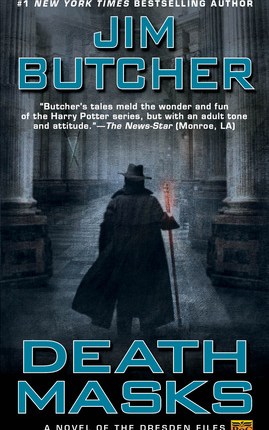
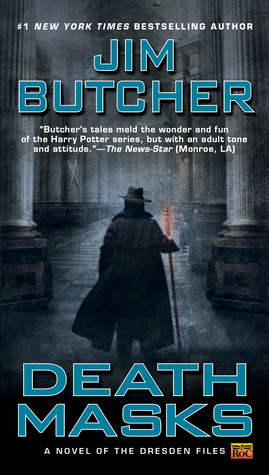
Death Masks (The Dresden Files, #5) by Jim Butcher

Death Masks (The Dresden Files, #5) by Jim Butcher

deathmasksHarry Dresden can’t catch a break… or a full night’s sleep. He’s up against the Red vampire court, he’s being attacked by supernatural creatures with powers he’s never seen before and his ex-girlfriend is back in town.

But, you can’t keep a good wizard down, right?

Even when you introduce a holy relic into the tale: “Someone stole the freaking Shroud of Turn?’ I demanded. ‘Yes.’ I settled back into the chair, looking down at the photos again. This changed things. This changed things a lot.” pg 28

In case you haven’t read the first four entries in this series: Harry Dresden is a wizard for hire. He solves supernatural crimes, he finds lost items and he never seems to make enough money to be comfortable.

“I’d learned something in several years of professional wizarding. Never walk into a fight when the bad guys are the ones who set it up. Wizards can call down lightning from the heavens, rip apart the earth beneath their enemy’s feet, blow them into a neighboring time zone with gale winds, and a million other things even less pleasant- but not if we don’t plan things out in advance.”pg 58

Some criticisms of this series are that the humor is juvenile and corny. I’ll confess: it is. But I still love it.

“I get more threats before nine a.m. than most people get all day,” I responded, and shut the door on him. Purely for effect, I locked it too. Me, petty? Surely not.” pg 110

If I was a male wizard, I think I’d be something like Harry. I’d go in with the best of intentions and end up with the most mediocre of results.

Harry stands up for the little guy and has a soft spot for the ladies. He protects children and holds the door for women.

He likes to drink, wears a leather duster and can’t seem to sleep even when he’s exhausted.

Aren’t we all, in some ways, Harry Dresden? Fighting the good fight, even though we know that death waits around the corner?

“Apocalypse, as you refer to it, isn’t an event. … Apocalypse is a frame of mine,” he said then. “A belief. A surrender to inevitability. It is despair for the future. It is the death of hope.” pg 353

Recommended for fans of urban fantasy and especially the Iron Druid Chronicles by Kevin Hearne. I am a fan of The Dresden Files despite the fact that it can seem formulaic. I think Harry Dresden is worth the read.

Thanks for reading!

Boy’s Life by Robert McCammon

Boy’s Life by Robert McCammon

Boy’s Life is about Cory Mackenson, the southern town of Zephyr and the magic of every day life.

We had a monster in the river, and a secret in the lake. We had a ghost that haunted the road behind the wheel of a black dragster with flames on the hood. We had a Gabriel and a Lucifer, and a rebel that rose from the dead. We had an alien invader, a boy with a perfect arm, and we had a dinosaur loose on Merchants Street. It was a magic place.” pg 10, ebook.

Photo by Swapnil Sharma on Pexels.com

The story begins with a death and a mystery.

“On that morning before the sun, as I sat eating my breakfast with my dad and mom in our house on Hilltop Street, the year was 1964. There were great changes in the winds of earth, things of which I was unaware.” pg 15.

After witnessing something terrible sinking into the lake, Cory sets about discovering what or who put it there.

The trauma is almost too much for Cory’s father to bear.

“Whoever did it had to be a local. Had to be. … It might be somebody who sits on our pew at church. Somebody we buy groceries or clothes from. Somebody we’ve known all our lives… or thought we knew. That scares me like I’ve never been scared before.” pg 35, ebook.

Photo by Kirill Belotserkovsky on Pexels.com

But this book is about more than just the central mystery. It is also about the community of Zephyr and the relationships between the people who live there.

There is a racial divide in the town. When the river overflows its banks, the white and black communities come together to prevent disaster.

“There is something about nature out of control that touches a primal terror. We are used to believing that we’re the masters of our domain, and that God has given us this earth to rule over. … The truth is more fearsome: we are as frail as young trees in tornadoes, and our beloved homes are one flood away from driftwood.” pg 97, ebook.

Boy’s Life also examines coming-of-age issues like bullies, over-bearing parents, and accepting the realities of old age and death.

“But I’ll tell you a secret, Cory. Want to hear it?” I nodded. “No one,” Mrs. Neville whispered, “ever grows up. … They may look grown-up but it’s a disguise. It’s just the clay of time. Men and women are still children deep in their hearts.” pg 221, ebook.

Photo by Skitterphoto on Pexels.com

I loved this book. It is a far-reaching tale made for winter nights, to be read with a hot drink in your hand and a warm blanket on your lap.

It vaguely reminded me of The Help because of its southern location, the racial issues and some of the mystery elements. But really, Boy’s Life stands on its own.

Recommended for readers who enjoy historical fiction with a touch of magic and mystery.

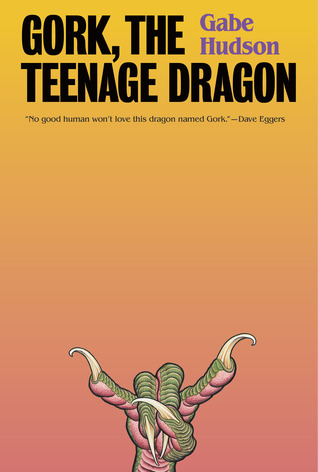
Gork, the Teenage Dragon by Gabe Hudson

Gork, the Teenage Dragon by Gabe Hudson
gork

Gork needs to crown his queen today and leave to take over a distant planet or suffer terrible consequences. He has a few major problems: he’s in love with one of the most popular females at the military academy, his heart is far too big, his horns are far too small, his class rating is too low and his grandfather, Doctor Terrible, has gone missing.

Nothing a teenage dragon can’t handle, right?

Gork, the Teenage Dragon is one of the most unique books I’ve read in a long time. It is a story about dragons, yes, but not just that. Gabe Hudson has created an entire dragon culture.

WarWings graduates continue to conquer the universe one planet at a time. We are the proud preservers of the EggHarvest tradition. Victory will always be ours! pg 30.

In some ways, WarWings reminded me of the military academy from Ender’s Game. It is dog eat dog, or dragon eat dragon.

My favorite part of the dragon culture is its use of poetry: “I don’t know why it is, but singing a poem out loud will always make you appear more repulsive and psychotic to those who you intend to enslave.” pg 56.

I also enjoyed the nudging of journalists: “The vibe in the room was definitely fiendish, and you should know that dragon journalists on Blegwethia are notoriously ruthless. Because on my home planet Blegwethia if a journalist shows up to report a story and they don’t like the situation they’re seeing, they’re not afraid to wade right in and get their claws and beak bloody. That’s dragon journalism for you.” pg 88.

If anything, Gork, the Teenage Dragon suffered from too many lovingly crafted details about dragon culture to the detriment of the story. It dragged as a result. And some of the gags didn’t quite work.

On the other hand, I was laughing out loud quite a lot at Gork’s antics: “… I study my scaly green reflection and see five nasty-looking slashes in my forehead from where that demon Torp has swiped me with his claws. ‘Not bad, Professor,’ I say, looking at the slashes. ‘This could make some nice scars.’ Now in case you don’t know, teenage dragons love scars.”

I was also not fond of the ending.

Recommended for readers with patience and the willingness to overlook some repetitious dialogue.

Gork, the Teenage Dragon won’t appeal to everyone, but I could see some die-hard dragon fans absolutely devouring this book.

Heidi’s 2017 Year-end Review

It’s the last day of 2017! As usual, this year I’ve enjoyed an eclectic mix of fiction and non-fiction.

I had a lot less time to read this year because of my full-time job, but I surprised myself with how many I was able to get through.

I’d like to take a moment to say thank you to all of my friends here on WordPress and Goodreads. Reading and reviewing wouldn’t be nearly as fun without all of you.

And without further ado, here’s my end-of-the-year book recommendations:

Total books read: 165

Overall favorite: Annihilation by Jeff VanderMeer

Non-Fiction: Inspired!: True Stories Behind Famous Art, Literature, Music, and Film by Maria Bukhonina or When Bad Things Happen to Good People by Harold S. Kushner.

Favorite Book Club Pick: Dark Matter by Blake Crouch (Good work, Kathy!)

Best Fantasy: Life After Life by Kate Atkinson (I did not like the sequel, but this book was excellent.)

Funniest Self Help: How to Be Ultra Spiritual: 12 1/2 Steps to Spiritual Superiority by J.P. Sears or How to Be Happy, Dammit: A Cynic’s Guide to Spiritual Happiness by Karen Salmansohn.

Book I Thought I Wouldn’t Like but Did: Heartless by Marissa Meyer

Book I Thought I Would Like but Didn’t: The Shadow of the Wind by Carlos Ruiz Zafón

Most Overrated: Paper Princess by Erin Watt

Most Disturbing: Gather the Daughters by Jennie Melamed (fiction) or The Only Girl in the World: A Memoir by Maude Julien (non-fiction).

Most Inspirational: The Four Agreements: A Practical Guide to Personal Freedom by Miguel Ruiz or Year of Yes: How to Dance It Out, Stand In the Sun and Be Your Own Person by Shonda Rhimes (memoir).

Most Far-Out: Surviving Death: Evidence of the Afterlife by Leslie Kean or A Field Guide to Lucid Dreaming: Mastering the Art of Oneironautics by Dylan Tuccillo.

Nerdiest Read: Level Up Your Life: How to Unlock Adventure and Happiness by Becoming the Hero of Your Own Story by Steve Kamb.

Most Depressing but Worth It: Night by Elie Wiesel (non-fiction) or Year of Wonders by Geraldine Brooks (fiction).

Book about books: Bizarre Books by Russell Ash, Brian Lake.

Classic I Should Have Read Before but Hadn’t: Animal Farm by George Orwell and Fahrenheit 451 by Ray Bradbury (read a bunch of classics this year, these were my top two).

Best Graphic Novel: Lumberjanes, Vol. 1: Beware the Kitten Holy by Noelle Stevenson (This whole series is a lot of fun.)

Strong Female Role Model: #GIRLBOSS by Sophia Amoruso (non-fiction) or Mistress of the Art of Death by Ariana Franklin (fiction).

Best Book about Music: Vivaldi’s Virgins by Barbara Quick (fiction) or Instrumental: A Memoir of Madness, Medication and Music by James Rhodes (non-fiction, very dark).

Best Book about Trivia: Fox Tossing, Octopus Wrestling and Other Forgotten Sports by Edward Brooke-Hitching.

Best Memoir: What I Talk About When I Talk About Running by Haruki Murakami.

Best Book about a Foodie: Born Round: The Secret History of a Full-time Eater by Frank Bruni

Best Historical Fiction: The Confessions of Young Nero by Margaret George or Wolf Hall by Hilary Mantel.

Best political: Gnarr: How I Became the Mayor of a Large City in Iceland and Changed the World by Jón Gnarr

Work-related: Linchpin: Are You Indispensable? by Seth Godin.

Family-related: How Not to Hate Your Husband After Kids by Jancee Dunn.

Happy New Year, my friends. And, happy reading, to all of you.

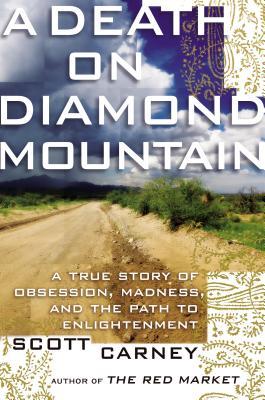
A Death on Diamond Mountain: A True Story of Obsession, Madness, and the Path to Enlightenment by Scott Carney

A Death on Diamond Mountain: A True Story of Obsession, Madness, and the Path to Enlightenment by Scott Carney
diamond mountain

In A Death on Diamond Mountain, Scott Carney has crafted an excellent examination of an untimely death, cult-like Buddhist practices, madness along the spiritual journey, and the dangers of extreme religious practices like multi-year, silent meditation retreats and fasting.

He also provides not only extensive backgrounds for all of the main actors in this tragedy, but also a dissection of the birth of Eastern philosophy in the West, including many different religions and belief systems.

This is the first non-fiction book that I’ve ever read that discusses potential negative effects of meditation.

Photo by Pixabay on Pexels.com

In this eye-opening analysis, Carney talks about potential research bias in meditation studies. He mentions researchers habitually attributing consistently positive results to meditation and reporting any negative results as pre-existing conditions in the practitioners rather than a side effect of the practice itself.

I think that this is an indication that moderation in all things, including meditation, may be the best way forward. I was unaware of the potential, catastrophic consequences of abusing traditional spiritual methods.

The sad thing is that the tragedy detailed in this book could have been prevented.

The death of Ian Thornson reads like a soap opera.

Photo by Shiva Smyth on Pexels.com

Carney has written these dysfunctional yet charismatic people with such skill that their personalities almost leap off the page.

I pitied Ian’s mother while reading about her struggles to extract her son from what she felt sure was a cult. Then, when his spiritual search eventually killed him, I can’t imagine the pain that she went through.

I’m certain that any mother would be proud for her child to exhibit the sort of spiritual drive that Ian had, however, the extremes that he took it too were obviously unhealthy. Again, it appears that moderation is the key to success.

Readers who enjoy non-fictional survival stories like Into the Wild may enjoy A Death on Diamond Mountain.

This book could also appeal to readers who enjoy learning about Buddhist philosophy or meditation methods. It is a shining example of how not to proceed on the spiritual path.

Thanks for reading! I received a free copy of this book through Goodreads First Reads.

Casino Royale (James Bond #1) by Ian Fleming

Casino Royale (James Bond #1) by Ian Fleming
casino royale

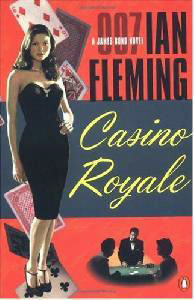
The first novel about James Bond, the 00 agent, takes place at the Casino Royale. He has to outplay a French/Russian operative to take money away from the communists.

If Bond fails in his mission by losing at the card table, then British government will be directly funding communists. No pressure.

I have a thing for Bond. Cool under pressure, fast cars, looks fabulous in a tux…

I thought I would like this a lot, but I didn’t. I don’t think the story has aged well.

The best parts of the tale took place in the casino itself, the bar or the dinner table.

“Bond had always been a gambler… above all, he like that whatever happened was always one’s own fault. There was only oneself to praise or blame. Luck was a servant, not a master. Luck had to be accepted with a shrug or to be taken advantage of up to the hilt. But it had to be understood and recognized for what it was and not be confused with faulty appreciation of the odds. For, at gambling, the deadly sin is to mistake bad play for bad luck.”

Bond certainly knows how to order a drink:“A dry martini,” he said. “One, in a deep champagne goblet… three measures of Gordon’s, one of vodka, half a measure of Kina Lillet, shake it until its ice cold and then add a large thin slice of lemon peel. Got it? … I hate small portions of anything, particularly when they taste bad. This drink is my own invention. I’m going to patent it when I can think of a good name.”

His attitudes about women were particularly depressing: “As he drove, whipping the car faster and faster through the night, with the other half of his mind, he cursed Vespa and M for having sent her on the job. This was just what he had been afraid of. These blithering women who thought they could do a man’s work. Why they hell couldn’t they stay at home and mind their pots and pans and stick to their frocks and gossip and leave men’s work to the men?”

This blithering woman is going to put down the book now and back away slowly…

Recommended for… not blithering women?

I believe I’ll stick to the films from now on.

Thanks for reading!