Earthwalks for Body and Spirit is a handbook of sorts for a shamanistic experience of nature. James Endredy, through various exercises for both the solo and group walker, crafts a system through which the reader can get in touch with nature and, he believes, heal the world through this relationship.
I’ve always enjoyed the outdoors for its healing aspect. I’m more of a sun bather than an avid walker but I think that the general principle is the same. If you’re in a funk, go outside for awhile. It clears the clouds from your mind so to speak.
Actually, this is one of the first books I’ve ever read that goes into actual shaman practices. It’s worth the read just for that, really.
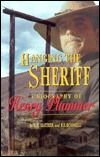
Hanging the Sheriff takes another look at the life of Henry Plummer. Conventional history labels Plummer as the leader of a notorious outlaw gang in the territory that would eventually become Montana. This book suggests that Plummer’s life story was written by the vigilantes who killed him and they had every reason to make him seem worse than perhaps he actually was.
It was kind of funny — the authors assumed everyone reading their book would know exactly who Plummer was. I had no clue: The image of Plummer as the one man responsible for all crime committed in the mining districts east of the Rockies is so firmly ingrained it is nearly impossible for even the most impartial of readers to drop old suspicions and view him with an open mind.” pg 7
Like I said, blank slate here. And the story they revealed was fascinating.
Plummer was born in Maine and migrated West not just for the Gold Rush but also because of his lung disease. He was a successful business owner and prospector. He was a notorious gunslinger, able to fire five bullets in three seconds. He got in trouble with the law, but was elected marshall and sheriff in two different towns. He killed at least half a dozen people.
“Plummer jumped up. ‘I’m tired of this,’ he said, drawing his pistol and firing at the ceiling. A second shot struck Cleveland, who fell to his knees, pleading, ‘You won’t shoot me when I’m down?’ ‘No,’ Plummer said, ‘Get up.’ pg 25
In his defense, the American frontier was wild and untamed with very few courts or lawmen. Everyone had to police themselves: “As Granville Stuart explained, ‘There was no safety for life or property only as far as each individual could, with his trusty rifle, protect his own.'” pg 26
I would have enjoyed this book more if it had been arranged in a linear fashion (it wasn’t) and if they had included some of the other viewpoints about Plummer. They go on and on about Plummer’s bad reputation but give little explanation, for those who haven’t heard of it, exactly what that reputation was.
“She said that she loved Mr. Plummer,” Thompson wrote, “that she knew that he loved her, that she had the upmost faith in him, that the terrible stories of him were told by men not worthy of belief; that she could never be happy unless she married him.” pg 41 What stories!
This book made me wonder about all of the “history” of the Wild West. Who were the heroes and who were the villains? Things weren’t black and white… and, as the authors pointed out, history was written by the men who survived. Was that the truth of what really happened? I guess we’ll never know.
Thanks for reading!
Here’s the History Guy episode I wrote about Henry Plummer:
Full title: Scandals of Classic Hollywood: Sex, Deviance, and Drama from the Golden Age of American Cinema
Scandals of Classic Hollywood is about movie star scandals, obviously, but also shows the development of Hollywood and how public and private forces place tremendous pressure on the stars of film. I think it’s extraordinary than anyone in the business can be normal at all considering what they go through.
The scandals discussed in this book are more than just smut. They’re history lessons…” introduction
The most fascinating piece of this book is the role of fixers and reputation creators. It makes you wonder what’s real and what’s simply fairy tale in celebrity magazines now. In what other profession do we act like we know a person simply because they were doing their job?
“During this period, stars weren’t born; they were made. Scouts would bring in ‘raw’ star material, culled from the vaudeville circuit, the theater, or the soda fountain counter. The potential star would be given a name, a sanitized (and sometimes dramatized) backstory, a makeover, and a contract.” introduction
The other side of Hollywood that this book gives you an inside look at is the creation of film ratings and the history of censorship.
“To save their monopolies, then, they had to figure out a way to appease the calls for censorship, but to do so without actually appointing a government censor. Thus the studios came together and created an organization — the Motion Picture Producers and Distributors of America — and elected to censor themselves.” pgs 22-23
Each chapter focused on a different person or couple and it seemed like most of the chapters ended in tragedy. Judy Garland, Lombard and Gable, and Fatty Arbuckle are a few who come to mind, but there are a dozen others.
“Whenever a Hollywood star dies young, it’s a tragedy. Whenever a Hollywood star dies young while serving her country, leaving behind her much-beloved husband, with whom she had been very publicly and blissfully happy, the tragedy amplifies into something else entirely.” pg 132
Before TMZ, fans got their gossip through magazines or newspaper columnists, perhaps not with the immediacy that exists now, but there was still tremendous pressure to behave or appear to behave a certain way. The pressure totally messed up some stars.
Like Judy Garland: “Today she remains one of Hollywood’s most enduring stars and the most compelling reminder of what our affection for the idols on the screen, and the machinery that feeds it, does to both body and mind. Her life suggested hope and despair in equal measures, begging you to love her and damning you for doing so.” pg 178
I also loved learning about the eccentricities and bizarre behaviors a few of the stars were known to display. I mean, I always knew Marlon Brando was kind of weird, but this book took it to a whole new level for me…
“He loved to play congas and marimbas, and specialized in playing the recorder with his nose; he owned a pet raccoon; and he was known to make an entire meal out of peanut butter. (When asked why he didn’t fall for Desire costar Jessica Tandy, his answer: ‘She doesn’t like peanut butter.’)” pg 223
Recommended for fans of classic film or those who want to learn more about Hollywood and its stars. Scandals of Classic Hollywood entertains while it educates.
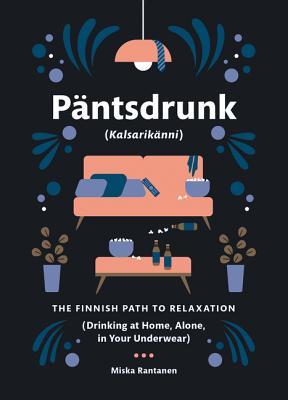
Päntsdrunk, a satirical self help read, seemed fairly straight-forward to me. To keep your cool, occasionally you should take a page out of the Finnish playbook and put on your most comfy underwear, grab your favorite alcoholic beverage and chill out. But then Miska Rantanen had to write something to fill up the rest of the pages. There was quite a lot of filler material.
Päntsdrunk doesn’t demand over-the-top arrangements. Affordability and democracy are its hallmarks. It’s quick acting and suitable for all who have reached the age of majority.” pg 16
Rantanen talks about how Finland developed this coping mechanism from a couple of different factors: freezing weather, long distances between cities and towns, and very little sunlight near the winter solstice.
“The Finnish term kalsarikanni is a simple compound word: kalsari (underwear) + kanni (state of inebriation). This pithy idiom crystallizes the essential: at its simplest, pantsdrunk means imbibing alcohol in one’s underwear at home without any intention of going out. The term’s ingenuity lies in everything it doesn’t imply.” pg 21
But pantsdrunk practitioners don’t have to stay in or solitary. You can drink as a couple, with friends, with a couple of friends. As the night wears on, you can go from pantsdrunk to plus pants at the club or bar, if the mood lends itself that way. The trick is to go with the flow of the evening and enter a state of total relaxation.
“As a philosophy, pantsdrunk is not in conflict with lagom and hygge. Au contraire. They all spring from the same Nordic origins and share the same ultimate goals: optimal peace of mind, joie de vivre, comfort, equilibrium, and recuperation as embodied in a snug coziness.” pg 22
Pantsdrunk is not about getting blasted as fast as possible. It’s a slow slide into mellow.
“At its most minimal, pantsdrunk is a device for balancing life and work. It can, however, be expanded into a lifestyle and worldview. The beauty of pantsdrunk lies in its possibilities.” pg 27
I’m not sure about some of the statistics Rantanen cites in his book, but he claims Finland is one of the stablest, safest, most educated countries in the world. And he credits the practice of pantsdrunk with part of this fantastic result.
Heidi, you may say, what could your problem be with pantsdrunk? Anyone who has dealt with an alcoholic can easily point out the potential roadblocks to happiness with this. Also, there’s addiction issues to consider. None of which can be dealt with if you’re indulging in this behavior by yourself and aren’t aware there’s a problem.
Rantanen does say that if pantsdrunk becomes a conscious choice every day to deal with stresses, that a reshuffling of your life may be in order. He also suggests counting bottles or cans to keep tabs on how much you’re consuming. Or gauging how well you’ve managed to balance drunk and relaxed by your hangover the next day.
I’m not entirely convinced this is possible. Rantanen also talks about how pantsdrunk has gotten a bad rap with some films depicting people drinking in their underwear alone as sad and pathetic rather than empowered and relaxed.
One of the most uplifting performances (of pantsdrunk) can be seen during the credits of Bridget Jones Diary (Maguire 2001), when Bridget Jones (Renee Zellweger) belts out the quintessential pajama playback solo while sloshed on red wine. pg 76.
But wasn’t that one of her lowest points?
Recommended for brave readers over 21 who mostly have their lives together, but need to allow themselves to chill out now and then.
For other satirical self-help reads, please see the following reviews:
“Are you a witch, are you a fairy, are you the wife of Michael Cleary?”
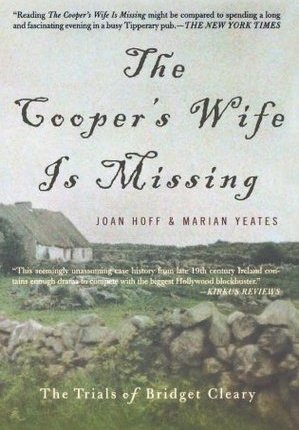
In March 1895, after walking the fabled “fairy fort” of Kylnagranagh Hill in Tipperary County Ireland, Michael Cleary’s wife, Bridget Boland Cleary, returned home ill with a fever and headache. Michael Cleary thought she was exhibiting signs of fairy abduction. And he was determined to get her back.
What happened next highlighted the clash of paganism and Catholicism, and the ushering out of old superstitions to make way for the modern era. After days of abuse, he eventually burned Bridget until she died because he believed she had been replaced by a fairy.
“… they continued to feed her herbs and to shake, slap, and swing her while she ‘screamed horrible’ and they shouted: ‘Away with you. Come back, Bridget Boland, in the name of God.'” pg 191
The Cooper’s Wife is Missing gives nearly complete context of Ireland in this era and the political and social pressures during the time period.
The crime was shocking in its brutality but also the stated motive. The press had a field day. It was 1895, the world was on the brink was technological, social and political change. And yet, they wrote, these rural Irish peasants still believed in fairies or practiced witchcraft. (Depending on which publication you chose to read.)
And it wasn’t just perpetrated by Michael Cleary. Bridget’s own family and neighbors participated in the “fairy trial” that led to her death. Nine people were found guilty at varying levels of culpability for the crime.
“As the police led him away, he shouted, ‘I am innocent.’ Cleary maintained it was not his wife he burned but a fairy.” pg 361
The Cooper’s Wife is Missing jumps back and forth, giving the reader the history of Ireland, fairy lore and what historians believe happened to Bridget Cleary. That was my only complaint with this read, some of the story repeats itself, especially during the testimony at the trials.
But, overall, highly recommended for fans of true crime and history. This book has both of those in spades.
Thanks for reading!
Here’s the History Guy episode I wrote about Bridget Cleary:
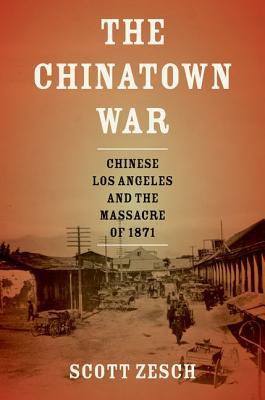
The Chinatown War is an outstanding examination of a little remembered event in Los Angeles history. One terrible night in 1871, racial tension boiled over in what was later labeled “the Chinese Massacre” and what the people of Los Angeles at the time called “Black Tuesday” or “the night of horrors”.
Scholars can’t even agree on how many people were murdered that night in October 1871. Scott Zesch, the author of The Chinatown War, believes it was around 18.
“Most Angelenos do not even know what happened that night, for the city’s fathers decided to put the incident behind them shortly after it occurred, and the victims were not people of consequence. They were ordinary immigrants whose American dream ended in a nightmare.” prologue
Public opinion was driven by resentment and distrust of Chinese immigrants. While often portrayed as a working class complaint over jobs, the hatred towards the Chinese was a thinly veiled racism against a people who were hated largely because their ways and culture were different.
“Contrary to popular belief, the earliest Chinese immigrants to America did not come to build the transcontinental railroad in the 1860s. Instead, it was the California Gold Rush of 1849 that brought the first large wave of Chinese to the West Coast.” pg 6
I learned so much from this book.
For example, Chinese immigrants in Los Angeles were often members of social groups called huiguan – commonly called “companies” in the newspapers of the time, although that translation is not exactly correct. Huiguan were social groups formed to help Chinese immigrants in their new lives in America. Members would sign up for the huiguan based on the location they immigrated from in China.
Also, though it is now one of the most populous cities in the U.S., in 1871 Los Angeles only had a population of around 6,000 people. Unfortunately, this massacre is one of the events that brought Los Angeles to the attention of the rest of the world.
“One of the city’s early historians, Charles Dwight Willard, characterized Los Angeles as ‘undoubtedly the toughest town of the entire nation’ during the 1850s and 1860s. He claimed that it had a larger percentage of miscreants than any other American city and, for its size, also had the highest number of fights, murders, and robberies.” pg 23
Policing this rough and tumble western town wasn’t easy. This was compounded by the fact that the police department was too small.
Los Angeles’s early police department was too small, and was staffed by men too inexperienced or indifferent to their responsibilities, to be very effective in keeping order.” pg 53
The riot itself is difficult to read about, even now that nearly 150 years have passed since that night. Innocent people were dragged from their homes, brutalized and murdered.
“One eyewitness reported that the ‘stark, staring corpses hung ghastly in the moonlight,’ while ‘others, mutilated, torn and crushed, lay in our streets.'” pg 150
Not all of the citizens of Los Angeles participated in the massacre. Some tried to shame the mob into stopping or hid the terrified Chinese in their own homes to protect them.
“Baldwin quickly realized that the crowd’s sentiment was very much against him. As he said later, ‘I might as well have spoken to a cyclone.'” pg 145
A man named William H. Gray concealed several people in his home. In the years following the massacre, he received anonymous gifts in thanks for his actions that night.
Zesch examines the whole incident from the beginning to the trials following and how it affected (or didn’t) Los Angeles afterwards. His research and scholarship really is astonishing. He gives context and history not only of the city but also of the Chinese immigrant community at that time.
Highly recommended for anyone who wants to learn about an event in Los Angeles history that should never be forgotten.
The Herbal Goddess Guide is a beautiful little reference book in which 12 different herbs are examined for physical, mental and spiritual healing purposes.
Amy Jirsa provides recipes, yoga poses, crafts and more to utilize the healing power of the plants in various ways.
This book may not be for everyone as it has a very new age feel. Jirsa discusses magical traditions, honoring a plant’s spirit and more.
However, if you’re into tapping your inner goddess, this may be the perfect book for you.
If you read it and you enjoy it, you may want to purchase The Herbal Goddess Guide for your personal collection because Jirsa suggests “getting to know” each plant for a month and there is a chapter devoted to each.
It could take you awhile to thoroughly digest the information in these pages. (And to try everything!)
My favorite chapter, probably because it is my favorite herb, is lavender. Did you know it is a member of the mint family?
While lavender is known for being relaxing, it can, in some cases, be stimulating, so be sure to check in with your mind, your mood, and your energy level after each recipe.” pg 131.
Some of the yoga poses Jirsa outlines are rather advanced, but she offers modifications for each. If your flexibility isn’t up to snuff, no worries.
Highly recommended for the open-minded reader and non-traditional healers.
For similar, new age/self help books I’ve reviewed, check out:
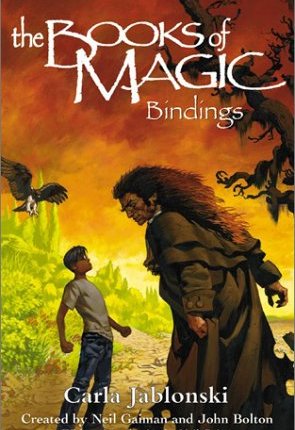
You don’t have to read the previous entry in the series about Timothy to understand this stand-alone story. Carla Jablonski does a good job recapping what has gone on before.
“Throughout all the journeys, it seemed like there were always people trying to kill him or take his magic.” pg 12
My beef with this book is, even though she uses Neil Gaiman’s characters, she doesn’t write with the magic of Gaiman.
The plot is incredibly straight-forward, the bad guys are sadly predictable and it just doesn’t sparkle.
Even Tamlin, the man who went to Faerie long ago and fell in love with its Queen, isn’t as complex as I wish he would be.
Tamlin knew that to the Fair Folk, as something was, it always would be. Nothing ever changed. The ability to see reality and to change was man’s magic. My magic, Tamlin thought.” pg 42
It’s not her fault. Jablonski has written a thoughtful young adult novel about reality not always being what it appears to be and explaining some of Tim’s origins.
She’s just not Neil Gaiman. There’s nothing wrong with that, but if you’re going to write someone’s characters, you need to embody who they are.
Now that he was in a real-life fairy tale, complete with its own monster, he realized how unlikely those stories really were.” pg 111
If you must give me a name, call me hobgoblin. Or better yet, I am a changeling- a word that describes within its own name what we are bound and intended to do. We kidnap a human child and replace him or her with one of our own.” pg 7, ebook.
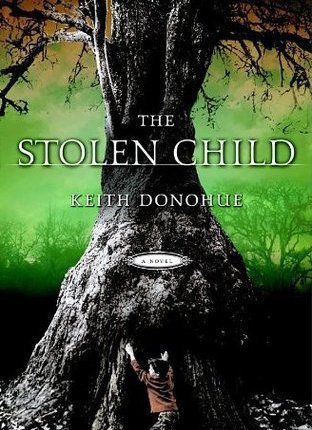
The Stolen Child is the story of a changeling and the boy whose place he took, Henry Day.
The chapters alternate between the real Henry Day and the false Henry Day. It is a captivating story about magic, family and belonging.
“This is my confession, too long delayed, which I have been afraid to make, and only now reveal because of the passing dangers to my own son. We change. I have changed.”
It also addresses the issues of the modern world and how technology and humanity has driven nature into corners.
The changelings are basically immortal children (but they can die through accidents) who live in the woods until their turn comes to rejoin the human world. Years before, they were all ripped from their families and made a part of the same group their replacement just deserted.
Their world is brutal, cold and always on the verge of collapse. One of their only rules is they don’t discuss a new changeling’s prior life during his new one.
The adjustment period from human to changeling is difficult enough without keeping the memories alive through the long years of their unchanging childhood.
But things aren’t much easier on the changelings who take the child’s place. If they are discovered, in the past, the changelings have been killed or their family members have gone mad from the strain.
They must carry a secret with them for the rest of their lives. It is as a lonely an existence as the changeling group separated from humanity in the forest.

























 The Help Desk Book Blog