All the Forgivenesses by Elizabeth Hardinger

All the Forgivenesses by Elizabeth Hardinger

From the front of the book: “As we know, forgiveness of oneself is the hardest of all the forgivenesses.” – Joan Baez

Bertie, the heroine of our tale, was the eldest girl born in a family of nine in rural Kentucky in the early 19th century. Because of her gender, her mother taught Bertie everything about keeping house and how to care for children, which Bertie ended up doing all the time to the detriment of everything else, including her education.

Photo by Lukas Kloeppel on Pexels.com

“We was living in the Appalachian hills in southeast Kentucky, but I didn’t know that then. It was just the place where we lived at. For all I knowed, it was the whole world.” pg 5

An early childhood tragedy cements in Bertie’s mind that she is unworthy of the trust and scant love her mother gives to her. She carries that burden in her subconscious mind throughout the tragedies that follow and it shapes everything in her life.

Elizabeth Hardinger has penned a beautiful historical fiction novel about family, secrets, struggles and the life-saving power of forgiveness, not just for yourself but for everyone around you. The characters in this book are complex and so flawed that sometimes I wanted to reach into the pages and hug them until they came to their senses.

That’s how you recognize an extraordinary author, they make you care.

“If you was a bawl-baby, you got shamed, you got teased, or people just ignored you like you’d embarrassed yourself, which I reckon bothered me the most of all. … So you learned to hide your feelings or wait till you was out behind the barn and nobody could hear you.” pg 8

Photo by Kristina Paukshtite on Pexels.com

The culture examined in All the Forgivenesses is rural, impoverished and male-dominated, mainly because of the time period. The reader is able to juxtapose Bertie’s tragic situation with her best friend Alta Bea, the daughter of a wealthy banker.

“For sure I hadn’t never met nobody like Alta Bea. I never knowed nobody that had that look in their eyes like she could see into you. It made a person tired and jangled, like somebody was shining an oil lamp in your eyes, but it also give you a feeling of glittering, fluttery things you couldn’t hardly not look at.” pg 52

The girls’ friendship is strained at times and built upon a foundation of mutual loneliness, though Bertie has little to no time in her day-to-day routine to just be a person. It’s fascinating to watch the two characters develop from children to adults and the character traits they drag along with them as well as the ones they leave behind.

The vernacular of All the Forgivenesses was distracting for a page or two, but it started to flow for me after that. I appreciated Hardinger’s skill in making Bertie’s rough-edges part of the story. She’s such a relatable character. You know she wants to live her own life, but with her family’s situation, she just can’t. And yet, for the most part, she loves them anyway.

“Read it, Bertie, you’ll like it,” she said. Hearing somebody use my name – and not to curse me out or ask me for something – I confess that made me glow a little bit.” pg 67

Photo by Andrea Piacquadio on Pexels.com

Highly recommended for readers who enjoy historical fiction or as a book club pick. My book club chose this and we had plenty to talk about – from gender roles to romance to families. Not everyone liked it as much as I did, but I absolutely loved the characters, Bertie being the top of my list.

And I do agree with the opening quotation of this book, “to forgive yourself can be the hardest of all the forgivenesses.” Funny that we, like Bertie, find it easier to extend that to others than to ourselves. I wonder what that ultimately says about us.

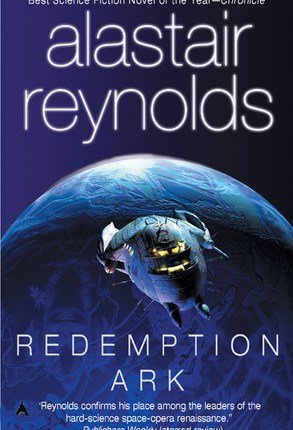
Redemption Ark (Revelation Space, #2) by Alastair Reynolds

Redemption Ark (Revelation Space, #2) by Alastair Reynolds

In Redemption Ark, we return to the universe of Revelation Space in the second book of Alastair Reynolds’ science fiction series. Some of the characters readers will recognize, others are new. As usual, we are treated to Reynolds’ prodigious talent when it comes to heaping helpings of the science part of science fiction.

Those are the best parts of this book: the futuristic space battles and the mysterious machinations of the Inhibitors, machines designed by an alien intelligence to wipe out civilizations that develop the technology to travel among the stars. For the reasoning behind this decision, you’ll have to read the book. 🙂

Photo by Pixabay on Pexels.com

They had never encountered another extant machine-using intelligence, nothing to measure themselves against. Until now. And what this machine-using intelligence did, so it seemed, was stalk, infiltrate and slaughter, and then invade skulls. pg 7

Humanity has divided itself into distinctive groups during its expansion into space, one of the most notable of these being the Conjoiners, a technologically advanced society that has linked its digital implants in a sort of hive mind. This link created a sort of “enlightenment” and connected the Conjoiners together in ways that aren’t quantifiable by those outside of the group.

“Down at the very deepest level Skade detected a few partitioned private memories that he did not think she could read. For a thrilling instant she was tempted to reach in an edit the man’s own blockades, screening one or two tiny cherished memories from their owner. Skade resisted; it was enough to know that she could.” pg 30

Photo by Suzy Hazelwood on Pexels.com

However, not everyone wants to allow the neural Conjoiner implants for fear of the loss of autonomy or privacy (see above) and embrace a more Luddite view of technology. This limited use of technology was pushed further by the appearance of a “melding plague,” an alien infestation that invades technology in an organic manner and consumes it, creating something else.

As you can tell from my rambling, Reynolds has created a universe populated with fascinating cultures, technologies and relationships. My main quibble with this book, as it was with his last, is his seeming inability to write about emotions. The extraordinary breakthrough of the Conjoiners was intimately connected to emotion and sharing it in a way that was impossible prior to the neural implants- an evolution of mankind. Reynolds puts all that depth into one or two lines of one paragraph of the book, which was fascinating to me, but also infuriating.

“Once you’ve touched someone else’s mind, walked through their dreams, seen the world through their eyes, felt the world through their skin… well… there never seemed to be any real need to go back to the old way.” pg 528

Photo by cottonbro on Pexels.com

He could have written a whole book about that one idea if he wanted to- I’d read it.

Another issue I had was the conclusion, which I won’t spoil for anyone here, but he writes it as almost an afterthought. For more than 500 pages, he built to this spectacular conclusion, which he then tossed away.

I was so mad.

On the other hand, he sets up the next book in the series beautifully, which must have pleased his publisher.

Highly recommended for science fiction readers. There are few who write the science better than Alastair Reynolds, but don’t expect too much in the way of emotional depth or exploration.

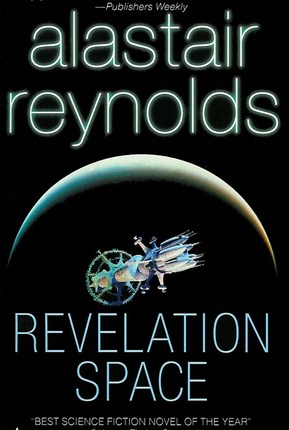
Revelation Space (Revelation Space, #1) by Alastair Reynolds

Revelation Space (Revelation Space, #1) by Alastair Reynolds

Through the interweaving stories of a scientist, soldier, and weapons expert, Alastair Reynolds explores classic science fiction themes in Revelation Space, a space opera and mystery.

“Despite being buried for nine hundred thousand years – at the very least – the chambers were almost intact, with the bones inside still assuming a rough anatomical relationship to one another. They were typical Amarantin skeletons.” pg 11, ebook

Photo by Pixabay on Pexels.com

Nearly a million years previous, an entire species called Amarantin disappeared in a mysterious celestial-based disaster called, by those who study the geological record, “The Event”. Dan Sylveste, a scientist with unique machines for eyes, is trying to unearth the truth of what happened to them.

Khouri, a former soldier turned assassin for a semi-secret agency, goes on a routine assignment, only to have the experience turn into something entirely unexpected.

“Assassins, it turned out, had to be among the sanest, most analytic people on the planet. They had to know exactly when a kill would be legal – and when it would cross the sometimes blurred line into murder and send a company’s stocks crashing into the Mulch.” pg 45, ebook

Photo by Ivan Siarbolin on Pexels.com

Meanwhile, on an enormous space ship capable of traveling across the universe at nearly the speed of light, Volyova has a serious problem. Her captain has a strange disease that is assimilating his ailing body into the ship itself and the man she hired to run the ship’s guns has gone insane. Could these two disasters be connected somehow?

“It was not something to which she was ever going to become totally accustomed, Volyova knew, but in recent weeks visiting the Captain had begun to take on definite tones of normality. As if visiting a cryogenically cooled corpse infected with a retarded but potentially all-consuming plague was merely one of life’s unpleasant but necessary elements…” pg 35, ebook

Throughout the story, Reynolds asks the reader to imagine a humanity that has split itself into factions. Some groups travel among the stars, assimilating rare machines into their bodies, losing touch with what it means to be human as they spend years in frozen animation while the rest of the universe ages as usual.

Other groups are just as isolated on far-flung planets and develop their own cultures, ways of government, and quickly-shifting alliances.

Photo by Felix Mittermeier on Pexels.com

Also, through the story of the extinct Amarantin, Reynolds examines what it would mean if humanity discovered aliens were real, but mysteriously absent from huge swathes of what is otherwise inhabitable space. Are we really as alone in the universe as we appear to be? And why is that so.

“Something had reached into his mind and spoken to him. But the message that was imparted to him was so brutally alien that Sylveste could not begin to put in human terms. He had stepped into Revelation Space.” pg 100, ebook

The broad themes of Revelation Space are fun questions to ponder, but Reynolds’ storytelling suffers in some of his more technical moments and during a truncated love story. A couple times during the beginning of the book, I had difficulty picturing scenes because I would get so bogged down in the details. But that became easier as the story progressed.

The love story though, was one of the worst I’ve read in science fiction literature. It made me feel like the woman was just a plot device for Reynolds to be able to explain some of the more complex plot twists. That’s fine if that’s what she was meant to be, but it was rather off-putting. I do enjoy a good love story and felt like, if you were going to make it so awkward, maybe it didn’t belong in there.

Photo by burak kostak on Pexels.com

Otherwise, I enjoyed this read and intend to start the next soon. Highly recommended for readers who enjoy science fiction and stories that make you want to go stand outside and stare at the stars for awhile.

Promethea, Vol. 2 by Alan Moore

Promethea, Vol. 2 by Alan Moore

Promethea, Volume 2 was an incredibly disappointing follow-up to a promising comic series.

The reader continues to follow the efforts of Sophie, a student who has learned to channel the spirit of a being of enlightenment named Promethea, while battling demons and other nebulous, bad guys.

Photo by Francesco Ungaro on Pexels.com

We have yet to learn more about the villains of the story, except in brief asides, or Sophie’s allies, some sort of technological heroes.

This entry is bogged down with a lengthy metaphysical poem about the progression of tarot cards and an unexpected tantric sex primer.

Photo by Alina Vilchenko on Pexels.com

My quibbles with the tarot card piece is it is far too simplistic but also too long. Each card can be interpreted a number of different ways, and not just applied to principles of civilization. It is also a metaphor for the soul’s journey, which Alan Moore touches on, but, I feel, never truly explains.

Also, by presenting the whole thing through rhyme, I couldn’t help but draw comparisons to Dr. Seuss. I get what Moore was going for, but it didn’t work for me.

Meanwhile, I couldn’t help but wonder if the lead character in this story was a guy if we would have been subjected to the tantric stuff at all.

Photo by Roy Reyna on Pexels.com

I believe the earthly can be spiritual and the spiritual can be earthly. I think “kundalini rising” is just the lightning flash of inspiration in reverse. But a male hero being pressured into trading his body for secret knowledge? I don’t see it happening.

I liked the first entry of Promethea. I thought it was ground-breaking in the way it depicted a strong female character on a spiritual journey.

This second book simply isn’t of the same quality. Perhaps the series will redeem itself in the next entry. One can only hope.

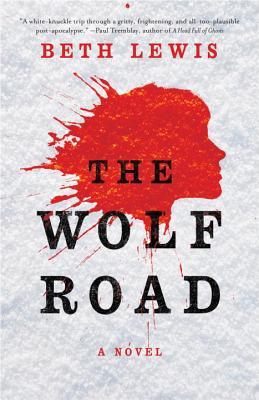
The Wolf Road by Beth Lewis

The Wolf Road by Beth Lewis

Elka grew up in a world where nuclear bombs fell from the sky and poisoned the earth, and the weather can turn deadly in a heartbeat. In this apocalyptic landscape, she found a home in the wilderness with a man she called, “Trapper,” and he was like a father to her. Turns out, there was a dark side to the person who fed and sheltered Elka. Now, Elka has to find her real parents who went north years before. And she has to hurry, because if Trapper finds her first, something terrible will happen.

“Trapper was my family even though I didn’t know a sure thing about him, but I figured quick I didn’t know much more ’bout my parents and they was kin. Trapper was the kind a’ family you choose for yourself, the kind that gets closer’n blood.” pg 21

Photo by Valiphotos on Pexels.com

The title of the book speaks to Elka’s disdain for taking the regular road through the wilderness — in her world, that’s where the predators find you. It’s also a metaphor for living the life you want to live, not the one that others expect for you.

“I don’t much like roads. Roads is some other man’s path that people follow no question. All my life I lived by rules of the forest and rules of myself. One a’ them rules is don’t go trusting another man’s path.” pg 85

Elka, instead, forges her own road through the trees and, as she goes, chooses a new family including a beautiful young woman with a background as mysterious as Elka’s own and a lone wolf who appears one day out of the blue. But she doesn’t trust her own choices because she made such a terrible one by relying on the monster she called Trapper.

Photo by Pixabay on Pexels.com

“He bolted up, stood tall and kinglike, towering above me. Felt like I’d lost a piece of me in that moment, like that wolf had stolen something and I had to stick with him always to make sure I’d get it back.” pg 73

Written in first-person narrative style, The Wolf Road is a dystopian coming-of-age story with some elements of horror and mystery. I found the opening to be a bit slow, but was swept up in the plot as the story progressed and Elka remembered certain details she had forgotten from her unique childhood.

Recommended for readers who like the thrills and chills of dystopian worlds.

Thanks for reading!

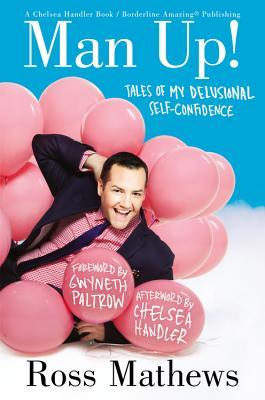
Man Up!: Tales of My Delusional Self-Confidence by Ross Mathews

Man Up!: Tales of My Delusional Self-Confidence by Ross Mathews

Ross Mathews is perhaps best known for how he got started in the entertainment business — as “Ross the Intern” on “The Tonight Show” with Jay Leno. If you’ve never seen any of his segments, I think you can catch some of them on YouTube. I think they’re worth a few minutes of your time as I found him funny.

This book is a little slice of Mathews’ personality. Nothing deep or earth-shattering, but bit after bit of light and amusing self deprecation.

Sometimes after reading a bunch of serious books, I need a bit of fluff. I’d venture to say that there are very few books as fluffy as this one. 🙂 It’s one silly thing after another and could be just what you need to make you smile.

Mathews skates across deeper issues a couple of times. For example, he mentions that he lost his father at a young age but he doesn’t go into depth about his feelings of loss. Instead, he talks about overdosing on THC while his father was dying in the hospital.

Photo by Pixabay on Pexels.com

Though there are no great introspective moments in Man Up!, it could be perfect for reading next to a pool, on a plane, or while you’re sitting in a doctor’s office.

Between the laughs, he does have a good message about self acceptance and living your dreams. It’s not a subtle delivery, but that’s not who Mathews is. And, I think he’s just fine with that.

If you enjoyed this book, you might want to try Sleepwalk With Me and Other Painfully True Stories or It’s All Relative: Two Families, Three Dogs, 34 Holidays, and 50 Boxes of Wine.

Thanks for reading!

The Speed Reading Book by Tony Buzan

The Speed Reading Book by Tony Buzan

I did not speed read Tony Buzan’s The Speed Reading Book because I found it to be rather a slog. There is useful information in here about the physical capabilities of your eyes and brain, methods for training your eyes how to move, the benefits of improving your vocabulary, how to recognize patterns in the way paragraphs are structured, and the basics of logic.

However, it’s interspersed with information that I felt was better presented in Use Your Head.

“Quite apart from important improvements in the technique of learning how to read fast which are set forth in this book, what I wish to emphasize in my system is that understanding and remembering factual material is not nearly as important as knowing how to relate new material to what you already know. This is the all-important ‘integrative factor’, or if you will, learning how to learn.” pgs 12-13

Photo by fotografierende on Pexels.com

He re-hashes the proper way to make a mind-map and the importance of previewing all reading material, even mystery novels, which I felt was silly. I can’t speak for the whole world, but I read mysteries to be entertained, not create a template into which I fit important details as I go along.

“The purpose of the preview is to develop a structure into which the mind can more easily fit the smaller details of that structure. … Previewing should be applied whatever kind of material you are going to read, which it be letters, reports, novels or articles.” pg 115

Though he did backpedal on his “preview everything” stance somewhat in a chapter about reading poetry: “When reading literature and poetry, bring to bear all your knowledge and judgment, and if you feel that it is the kind of writing you wish to treasure forever, forget about speed reading through it and reserve it for those occasions when time is not so pressing.” pgs 167-168

Thank you, I will.

Photo by Mark Cruzat on Pexels.com

Perhaps part of my problem with this book is that it revealed to me just how slowly I read and assimilate non-fiction, because Buzan offers the reader information about the absolute limitlessness of human capability.

“Theoretically, the human visual system can photograph an entire page of print in one-twentieth of a second, and thus a standard length book in between six and twenty-five seconds, and the entire Encyclopaedia Britannica in less than an hour. Advanced skinning and scanning skills take you on the first step of that incredible and inevitable journey.” pg 70

Let’s say I have much room for improvement.

The book also showed its age somewhat during a chapter on the importance of organizing how you take in information from newspapers: “Newspapers are so much a part of our everyday life that we seldom stop to think that they are a very recent development.” pg 148

But are they still? I’m not so sure.

Photo by Masha Raymers on Pexels.com

The book ends on a high note and, of course, I plan to continue practicing and improving my skills: “Your continuing success in all fields of speed reading depends on your personal decision to continue the course you have begun, and on the capacity of your brain to read, assimilate, comprehend, recall, communicate and create, abilities which we know approach the infinite. Your success is therefore guaranteed.” pg 177

But if you’re only going to read one book by Tony Buzan, I recommend Use Your Head.

The Art of Exceptional Living by Jim Rohn

The Art of Exceptional Living by Jim Rohn

Nearly every house valued over $200,000 has a library in it. Now why do you think that is?

Jim Rohn, motivational speaker and business genius, was a kinder, gentler Tony Robbins. Originally from Iowa, he uses common sense and a storytelling style in an effort to encourage listeners to improve their lives. This audiobook presentation is a mix of live presentations and studio-recorded bits. Personally, I think he was better in front of a live audience, but there was plenty to take away from in both sections.

Photo by Ihsan Aditya on Pexels.com

Here’s some of what he shares in this audiobook:

Read, learn, journal. Write down what works and what doesn’t. Write down your goals and then take a minute to look at the passing days, weeks and months and see what you’ve accomplished.

Eat healthy and take that walk around the block. If you don’t, you may seriously regret it, maybe not today or tomorrow but in the years to come, you’ll wish you took a minute to invest in yourself.

Work hard at your job and you’ll make a living. Work hard on yourself and you’ll make a fortune!

Photo by Taryn Elliott on Pexels.com

Rohn insists that anyone can be exceptional. He says success in business (and life) comes from small positive steps taken consistently over time. That type of approach really works for most any goal or dream you may have.

Read contracts all the way through, every time. It seems like a simple thing, but it can take you down some dark roads if you don’t read the fine print. He learned that the hard way.

Don’t stop reading and be a lifetime learner. Stay curious. Stay involved.

And take pictures. Part of your legacy to the next generation can be the pictures and documentation you’ve made of your life.

Photo by Kaique Rocha on Pexels.com

I can’t tell you how many times I’ve listened to this audiobook. It’s one of my go-to programs when life has me down. Jim Rohn believed you can accomplish anything that you set your mind to do. He makes listeners believe that too. Highly recommended for anyone who wants to learn “the art of exceptional living.”

Thanks for reading!

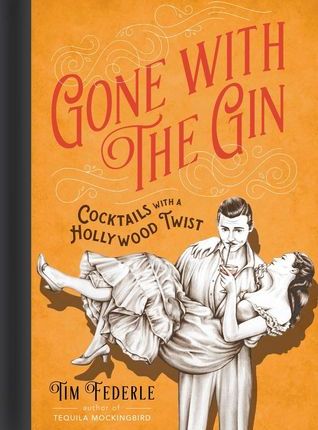
Gone with the Gin: Cocktails with a Hollywood Twist by Tim Federle

Gone with the Gin: Cocktails with a Hollywood Twist by Tim Federle

“Gone with the Gin” is an effervescent drink guide that pairs cleverly named potables with classic films. It’s a winner!

Last year (or was it the year before), I named Tequila Mockingbird: Cocktails with a Literary Twist, also by Tim Federle, as one of my favorite reads in my annual book review. It’s similar to Gone with the Gin, except that Tequila Mockingbird uses classic literary works instead of film.

Federle has a way with puns and summarizing complex plots in three sentences or less without devolving into the unbearably cheesy. My favorites from Gone with the Gininclude the “Ben-Hurricane” and “The Empire likes Jack”.

Photo by Anthony Shkraba on Pexels.com

And, like Tequila Mockingbird, I think I’m going to have to purchase a copy of this book to keep at the house. Like the majority of my reading material, I borrowed it from the library. But it’s going to be a sad day when I have to give it back…

Lest you think that Federle is a one-note author, please take a moment to consider another of his books: Life Is Like a Musical: How to Live, Love, and Lead Like a Star. It gives some hard-won lessons from Federle’s days dancing and singing his way across the stage. I enjoyed it too.

I think it’s fair to say that I highly recommend most anything Federle has written, so far. Keep ’em coming, Tim!

And thanks for reading!