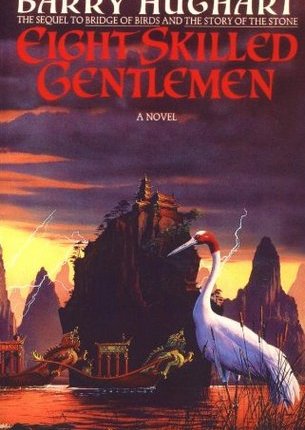
Eight Skilled Gentlemen (The Chronicles of Master Li and Number Ten Ox, #3) by Barry Hughart

Eight Skilled Gentlemen (The Chronicles of Master Li and Number Ten Ox, #3) by Barry Hughart

“My experience with the old man has taught me to keep my mouth shut when the wrinkles around his eyes squeeze up in tight concentric circles, so I waited until his mind relaxed along with the wrinkles, and then he shook himself and turned toward me.” “Ox, have you ever visited the Forbidden City?”

Photo by David Yu on Pexels.com

Eight Skilled Gentlemen is the final book of The Chronicles of Master Li and Number Ten Ox series. I feel it missed the mark somewhat.

Like the previous two books, it has some beautiful imagery and fantastical magic sequences based in an ancient fictional China of Barry Hughart, the author’s, own creation. As usual, I liked the interactions between our two heroes. I also liked riding along while Master Li and Ox attempt to solve the murder mystery.

“All we can do now is go down that list of involved mandarins and find the weak link. You may have you break a few of the bastard’s bones, my boy, but one way or another he’s going to enable us to toss the rest of them in jail,” the sage said grimly.”

Unlike the rest of the series, the overarching story for this entry felt scattered, so much so, that the ending felt almost tacked on. Which seems like a harsh criticism, except those final scenes were my favorite of the book.
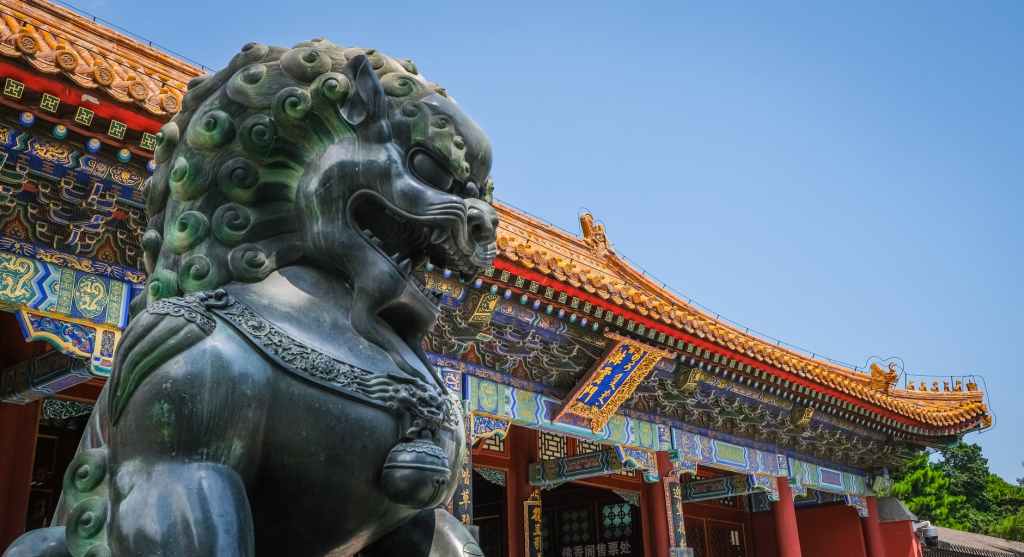
Photo by Magda Ehlers on Pexels.com

If only it had felt more connected to the rest of the tale…

Like some of the other readers of this series, I noticed some repetition in Hughart’s storytelling by the third book. Formulaic can still be brilliant, but I’m not certain this book reached that bar.

There was also Hughart’s unfortunate tendency to have his characters launch into song or prose within the story. This should have added to the immersive feeling of the reading experience, but I found myself skimming when I reached those sections. Again, it felt more repetitive this time around than magical.

Adding to my disappointment, Eight Skilled Gentlemen was clearly supposed to be part of a longer series. The final few lines of the book offer no satisfying conclusion for characters whom I have come to love during the 850 pages I spent with them.

The little bit I have researched about the author seems to indicate Hughart had a disagreement with his publisher and then tired of writing it. He passed away in August of last year.

It is incredibly sad because the books are so lovely and Hughart deserved the chance to finish them in a manner he saw fit. I think it’s a loss not just for the author’s family but for the entire fantasy-reading world.

Photo by Magda Ehlers on Pexels.com

In conclusion, if you haven’t read this series and like fantasy, you must give it a try. Just be aware it is a work of art with an abrupt end.

The Story of the Stone (The Chronicles of Master Li and Number Ten Ox, #2) by Barry Hughart

The Story of the Stone (The Chronicles of Master Li and Number Ten Ox, #2) by Barry Hughart

“Ox,” he said, “the writing of your memoirs is doing wonders for your calligraphy, but I must question the content. Why do you choose the rare cases in which matters run melodramatically amok?” I heroically refrained from saying, “They always do.”

The Story of Stone, Barry Hughart

Master Li and Number Ten Ox are at it again.

There’s an unexplained murder, puzzling fragment of a poorly-finished forgery, and nature herself is leaving clues behind with whole swathes of plants dying in a strange pattern.

Photo by carol wd on Pexels.com

“I wasn’t sure that any autopsy could be delightful, but I didn’t care. The old fire had returned to Master Li’s eyes, and I felt like a warhorse who was being called back into battle.”

In the course of solving the mystery, Li and Ox encounter ghosts, hidden torture chambers, and make a journey down to the depths of hell. It is one of the finest homages to Dante’s Inferno that I’ve ever had the pleasure to read.

“Ox, what do you smell in the air?” he asked. “Wet earth, pine needles, pork fat, donkey manure, and perfume from Mother Ho’s House of Joy,” I said. “Wrong. You smell destiny,” Master Li said happily.

And, as usual, readers get to enjoy the sometimes hilarious, and always entertaining, interplay between a brilliant scholar and his surprisingly strong sidekick.

Recommended for readers who enjoy a blend of fantasy, mystery and historical fiction.

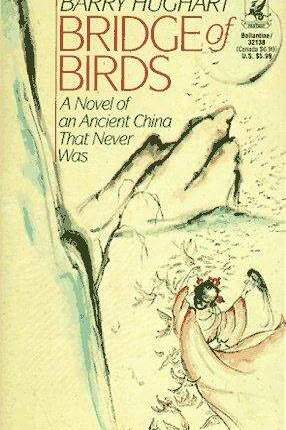
Bridge of Birds (The Chronicles of Master Li and Number Ten Ox, #1) by Barry Hughart

Bridge of Birds (The Chronicles of Master Li and Number Ten Ox, #1) by Barry Hughart

Bridge of Birds is a charming, award-winning fantasy novel that follows the investigative efforts of Master Li as he strives to safe the mysteriously stricken children from the village where Number Ten Ox lives.

“Jade plate, Six, Eight. Fire that burns hot, Night that is not. Fire that burns cold, First Silver, then gold.” pg 22, ebook

Photo by Somya Dinkar on Pexels.com

A beautiful blend of myth and fantasy, the reader is ferried from one exotic locale to the next at the side of the two heroes, one ancient and one young with surprising strength.

We navigate dangerous mazes to hidden treasure hoards, satisfy the grieving souls of haunted ghosts, and marvel at the lightning intellect of Master Li, the scholarly genius with “a slight flaw in his character”.

“My surname is Li and my personal name is Kao, and there is a slight flaw in my character,” he said matter-of-factly. “You got a problem?” pg 32, ebook

There is very little downtime in Bridge of Birds. And just when you think things couldn’t possibly get worse for Master Li and Number Ten Ox, somehow they do.

Despite its breakneck pacing, I found many beautiful moments to marvel over in this story. It is a fairy tale with both substance and heart. Easy to see why it received the 1985 World Fantasy Award for Best Novel and 1986 Mythopoeic Award for Best Fantasy.

Photo by eberhard grossgasteiger on Pexels.com

I think that’s even more impressive when you consider this was Barry Hughart’s debut novel.

“Reverend Sir, in your studies of myth and folklore, have you ever encountered a ghostly handmaiden who pleads that birds must fly?” pg 154, ebook

Highly recommended for readers who like fantasy and historical fiction novels with a dash of mystery and for their heroes to have slight flaws in their character – such a propensity to drink too much wine or the willingness to swindle others but for very good reasons.

The Lies of Locke Lamora (Gentleman Bastard, #1) by Scott Lynch

The Lies of Locke Lamora (Gentleman Bastard, #1) by Scott Lynch

In The Lies of Locke Lamora, readers are introduced to Locke, an orphan in a fantastical city with magical glass relics the size of entire city blocks. The glass is all that was left behind by the people who founded the city. Its inhabitants now do not understand how it was constructed, but that doesn’t keep them from utilizing the spires of magic glass or appreciating its otherworldly beauty.

Within this strange city that is similar to our world’s Venice, yet so different, Locke Lamora is taken in by various characters in the realm’s criminal underworld. The boy shows promise for a life of theft and confidence games… if he can reign in his propensity for accidentally getting people killed.

Photo by Pixabay on Pexels.com

“At the height of a long wet summer of the seventy-seventh year of Sendovani, the Thiefmaker of Camorr paid a sudden and unannounced visit to the Eyeless Priest at the Temple of Perelandro, desperately hoping to sell him the Lamora boy.”

There are layers to this tale. There’s intrigue and backstabbing among the criminal underworld or those who call themselves, “the right people”. There’s a gang of criminal masterminds, the Gentleman Bastards, who prey on the city’s upper class citizens, but who pass themselves off as simple sneak thieves to the rest of the gangs.

And while Locke’s gang, the Gentleman Bastards, are running one of the biggest cons of their life, the chapters of that storyline are interspersed with the personal histories of the gang’s members. Part of that history includes the Gentleman Bastards’ training as priests of the various orders in the city, of which there are many.

So, to recap: there’s complex religion, city hierarchy, criminal hierarchy, levels of con games, and then the real story begins when Locke’s plan, as usual, begins to go sideways.

“I ache in places I didn’t previously realize I owned,” said Locke, gingerly applying adhesive paste to his chin with his fingers. “But it can’t be helped.”

Photo by Francesco Ungaro on Pexels.com

I first read The Lies of Locke Lamora eight years ago in March 2012. I recently re-read it in May 2020. To my surprise, I enjoyed it somewhat less the second time around.

I still like the characters, the story and the setting, all of which were beautifully written. My complaint was the pacing. Just as the author gets rolling on the main story line, he draws us back into the past. I didn’t seem to mind it the first time I read the book, but I definitely noticed it in the second reading.

But don’t let a small thing like pacing dissuade you from reading The Lies of Locke Lamora. It is an awfully entertaining fantasy read. And if I remember correctly, the next two books in the series are fun as well.

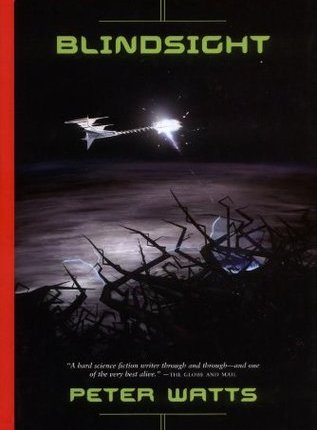
Blindsight (Firefall, #1) by Peter Watts

Blindsight (Firefall, #1) by Peter Watts

Blindsight is an incredibly imaginative science fiction novel that takes on the foibles of human consciousness and examines, in a serious way, what an alien-form of consciousness might look like.

Siri is a unique protagonist. Because of severe seizures when he was young, doctors performed dramatic brain surgery in order to save his life, essentially cutting his brain in half.

Photo by meo on Pexels.com

“The brain’s a very flexible piece of meat; it took some doing, but it adapted. I adapted.” pg 9, ebook.

This early surgery changed the way Siri’s brain worked and how it processed reality, making him the perfect translator for other humans whose brains and bodies have been so changed that baseline humans can no longer communicate with them.

And Siri’s special talents are desperately needed after aliens unleash surveillance technology in the atmosphere. Humanity called the strange lights in the sky, “fireflies.”

“How else would you explain 65,536 probes evenly dispersed along a lat-long grid that barely left any square meter of planetary surface unexposed? Obviously the Flies had taken our picture.” pg 24, ebook.

Photo by Felipe Helfstein on Pexels.com

Siri becomes part of an elite mission sent by Earth to discover where the “fireflies” originated from and who or what created them.

Blindsight isn’t a simple read. It proposes complex ideas that demand some attention to unravel and it makes the reader consider how real is her own perception of this thing we call “reality.”

It asks how technology may change not only how humankind takes in information, but how that information is interpreted and how that would separate people from each other. The characters Peter Watts has created for the alien-seeking mission are some of the most unique I’ve read because he takes those ideas to extreme conclusions.

“When the fate of the world hangs in the balance, you want to keep an eye on anyone whose career-defining moment involves consorting with the enemy.” pg 135, ebook.

But it feels very real. That is Watts’ strength – making the fantastical seem perfectly logical like vampires, real vampires.

Highly recommended for readers who enjoy “hard” science fiction.

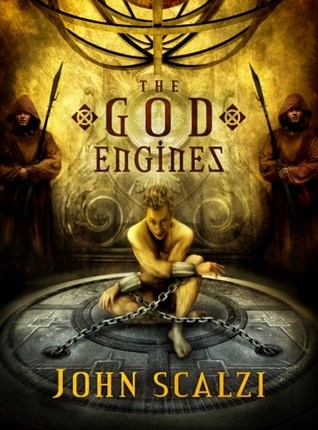
The God Engines by John Scalzi

The God Engines by John Scalzi

In the world of The God Engines, beings called gods power the ships that take humanity between the stars. How the world became this way is not for Captain Tephe to question, instead it is a matter of faith. As part of Tephe’s service and devotion to his own deity, he has to keep the being that powers his engine in check and subservient to his will.

That is not a simple task.

Photo by Pixabay on Pexels.com

“I do not know why this is. Why single made iron can kill a god. I know only that it can. I know the gods fear death more than do men. I can kill you with this, god.” pg 8, ebook

When Tephe is called to perform a secret mission of great importance for his deity, it throws his entire world view in jeopardy. He discovers his god, and all the others, may not be what they appeared to be.

“Words. They have power. To name a god is to give it power. To deny it such is to take it.” pg 16, ebook

I feel like this story was too short to fulfill its full potential. The general idea was very promising – what would a world where embodied gods were used as power sources look like? How would the society be structured? And how would a worshiper’s faith change or be challenged through day-to-day interactions with the gods?

Photo by Ben Yi on Pexels.com

The plot felt rushed as the characters raced from one place to another. I also wanted a bit more background about the universe of The God Engines, but the lack of it added somewhat to the mystery of the story.

“You are charged with silence,” proclaimed the third Bishop. “What is spoken to you here is not to be spoken again, on remit of your soul.” pg 31, ebook

I think the strength of this story is in how it addresses faith. Faith in the goodness of the unseen shapes lives and guides actions. It explains why some gods power ships and others rule empires. Because of faith, humanity has waged wars and conquered planets.

Perhaps someone should have made certain this faith wasn’t misplaced…

Recommended for readers who enjoy short science fiction novels with a liberal dash of horror.

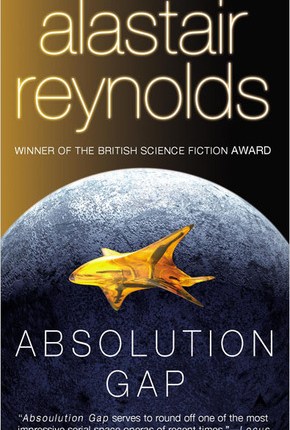
Absolution Gap (Revelation Space, #3) by Alastair Reynolds

Absolution Gap (Revelation Space, #3) by Alastair Reynolds

Alastair Reynolds ends his space opera trilogy with Absolution Gap. Many of the characters from the last book are desperately fighting the Inhibitors, but humankind seems to be losing the war. In a final hail Mary, the Conjoiners and a new member of their race seek a distant star system where a planet seems to disappear and the phenomena is worshiped by a group of fanatics led by a prophet with religious fervor literally in his bloodstream.

For a fraction of a second something inexplicable had occurred. A sensor anomaly. A simultaneous hiccup in every sensor that happened to be observing Haldora as the ship made its approach. A hiccup that made it appear as if the gas giant had simply vanished. Leaving, in its place, something equally inexplicable.” pg 54

Photo by Edvin Richardson on Pexels.com

Reynolds weaves two main story lines together to create an adequate, but perhaps not entirely satisfying, ending. The science in his books is impeccable. But, like in my previous reviews, I wanted a bit more from the characters.

“Are you all right, sir?” he had asked. Clavain had looked at him sharply. “I’m an old man,” he had replied. “You mustn’t expect the world of me.” pg 77

Readers have come to care about Clavain, Anoinette Bax, Scorpio, and the myriad others characters in this world. The endings given to them are, in my opinion, abrupt and almost given as an aside.

But some of Reynolds writing is simply beautiful and it makes up for a variety of quibbles I had with the story telling.

“It was quiet now, but coming nearer, and he knew that when it reached its awesome crescendo it would fill his soul with joy and terror. And though the bridge looked much the way it had before, he could see the beginnings of stained-glass glories in the black sky beyond it, squares and rectangles and lozenges of pastel light starting to shine through the darkness, like windows into something vaster and more glorious.” pg 100

Photo by Pixabay on Pexels.com

The broader themes are worth considering as well. What would happen to the human mind if the body becomes essentially immortal? Why does it seem like we’re so alone in the universe when there are so many inhabitable planets? What would advanced technological warfare look like? How would technology and its awesome capabilities change society, our modes of transport, and us?

“Brane theory suggested that the universe the senses spoke of was but one sliver of something vaster, one laminate layer in a stacked ply of adjacent realities. There was, Quaiche thought, something alluringly theological in that model, the idea of heavens above and hells below, with the mundane substrate of perceived reality squeezed between them. As above, so below.” pg 286

Photo by Miriam Espacio on Pexels.com

Recommended for science fiction readers who want to ponder those types of questions.

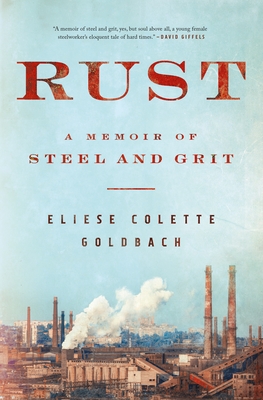
Rust: A Memoir of Steel and Grit by Eliese Colette Goldbach

Rust: A Memoir of Steel and Grit by Eliese Colette Goldbach

Eliese Goldbach pulls back the curtain to reveal the unseen struggles and contributions to society by steelworkers in Cleveland, Ohio, her hometown. Along the way, she delves into complex issues of mental health, politics, socioeconomic status, gender equality, and religion in her own life. It is, ultimately, a memoir about hope, but there was great suffering on Goldbach’s path to this realization.

When Goldbach was young, she viewed the stink of the steel mills as a type of pollution she needed to keep out of her body. But, when her plans to become a nun don’t materialize and she faces hurdles to completing the paperwork for her masters degree, Goldbach applies at the steel mill for the paycheck, accepting it as a step backwards in order to move forward into self sufficiency.

Photo by PhotoMIX Company on Pexels.com

“In a Rust Belt town, that flame isn’t just a harbinger of weird smells and pollution. It isn’t an anachronism, and it doesn’t prove a lack of innovation. … The flame is very much a part of our history and our identity. It’s a steady reminder that some things can stand the test of time, even in a world where nothing is built to last.”

A large part of Goldbach’s failure to thrive is caused by her mental health struggles. It affects her ability to hold down a full time job, maintain her relationships, and makes her dread the future. Yes, she might be doing well now, she tells herself, but in another couple of weeks that might not be true any longer.

“Doctors would tell me that mixed-state bipolar disorder is one of the most dangerous forms of the disease. Depression brings suicidal thoughts, and mania adds impulsivity. When people with mixed-state bipolar disorder have the will for death, they are more likely to have the energy to follow through.”

Photo by Artem on Pexels.com

Raised in a conservative and religious household, Goldbach is trained from an early age to see feminism as a dirty word. Through her own life experience, she discovers that some of her assumptions about feminism are untrue and begins to speak up for those who are unable or unwilling to speak for themselves.

“While there were other women who worked in the mill, we were definitely a minority. … There was a good deal of mansplaining, and there were offhanded comments that came straight out of the 1950s.”

Goldbach’s memoir shines in its examination and dissection of her personal beliefs and how those change through experience. It feeds into my own belief that only the person living a life has the true insight into its meaning and direction.

“I’m just disappointed in myself, I guess. I feel like I should have done more by now, and I’m worried that I’ll get stuck in the mill.”

Photo by Kateryna Babaieva on Pexels.com

Some readers may find Goldbach’s politics off-putting. But I think the difficult conversations she describes at the dinner table with her parents are going on at other dinner tables all across the country. An open dialogue and willingness to look at our differences can be painful, but that doesn’t mean we should never have those conversations.

Recommended for readers who enjoy memoirs and as a possible book club pick. Trigger warnings for mental health issues, especially those with bipolar disorder, and rape.

Thank you to NetGalley and the publisher for a free digital copy of this book. The brief quotations cited in this review may change or be omitted in the final print version.

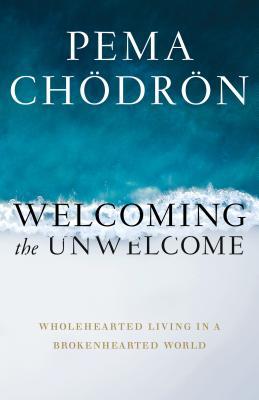
Welcoming the Unwelcome: Wholehearted Living in a Brokenhearted World by Pema Chödrön

Welcoming the Unwelcome: Wholehearted Living in a Brokenhearted World by Pema Chödrön

“We are at a time when old systems and ideas are being questioned and falling apart, and there is a great opportunity for something fresh to emerge. I have no idea what that will look like and no preconceptions about how things should turn out, but I do have a strong sense that the time we live in is a fertile ground for training in being open-minded and open-hearted.” pg 28

The incomparable Buddhist nun and teacher, Pema Chödrön, interprets the dharma and applies it in the various challenging circumstances of modern life. From polarization to living in the now, comfort zones and boredom, Chödrön challenges practitioners to question their deeply entrenched beliefs by applying new lenses of perception. Change within, she says, and you will see changes in the world.

Photo by icon0.com on Pexels.com

“Trungpa Rinpoche said that the way to arouse bodhichitta was to “begin with a broken heart.” Protecting ourselves from pain – our own and that of others – has never worked. Everybody wants to be free from their suffering, but the majority of us go about it in ways that only make things worse.” pg 4

Remembering this shared struggle to find relief from suffering is one of the many ways Chödrön breaks down the problematic mindset of us vs. them. She gives plenty of tips for remembering the sacred within oneself and everyone else. One of the simple ones that stuck with me was, when you see someone suffering, say to yourself, “just like me.”

Stuck in traffic but don’t want to be? Everyone around you is too. They’re just like you. Irritated by developments on the world stage? There are others who are just like you. Have a cold and just want to get some uninterrupted sleep? Think of the thousands out there who are just like you.

“… if we gradually increase our capacity to be present with our pain and the sufferings of the world, we will surprise ourselves with our growing sense of courage. In our practice of cultivating a broken heart, we can incrementally build the strength and skill to handle more and more.” pg 6

Photo by Pixabay on Pexels.com

What I like most about Chödrön’s books is that she isn’t afraid to talk about how she has stumbled with the various teachings in her own life. She takes a clear look at her foibles and, instead of hiding them where no one else can see them, she uses her failings to propel herself and others forward.

For example, Chödrön relates how, when she first became the director of an abbey in Nova Scotia, she thought the kitchen was a disaster. She put all of these rules in place to organize and clean the kitchen, yet it was never good enough. She confesses going down to the kitchen at night after everyone was asleep in order to organize the drawers without their knowledge. Yet even with all of those struggles, the kitchen remained as it was.

So, instead of fighting it further, she relaxed into the belief that the problem was not with the kitchen or anyone in it, but her own perception of the kitchen.

“I said to myself, “I don’t care if the whole place is a mess. I’m going to work on my propensity to label things in negative ways, such as ‘dirty’ and ‘disorganized.’ I’m going to pay more attention to how I project my own version of reality onto the world.” pg 74

Photo by Mike on Pexels.com

And this self examination altered her view of reality. “Instead of my whole being going into a knot of contraction, I felt relaxed and happy in there. It was a miracle.” pg 74

What sorts of things do you view as disorganized kitchens in your own life?

Highly recommended for readers interested in Buddhist teachings or improving the world around them by change from within.