WebMage (Webmage #1, Ravirn #1) by Kelly McCullough

WebMage (Webmage #1, Ravirn #1) by Kelly McCullough

“I’m a thoroughly modern sorcerer, a code-warrior, a programmer. I’m not a classical magician. I hate the old ways. They’re painful, inefficient, and hideously dangerous.” pg 81, ebook

Ravirn uses magic like programmers use code- it’s a unique magic system and author Kelly McCullough should be very proud for coming up with it. I loved that part of the story.

Photo by Markus Spiske on Pexels.com

The wizard’s minions act like computer programs and execute directives given to them. They’re curious creatures, full of attitude and spunk. The closest comparison that immediately pops into my mind is Harry Dresden’s skull- Bob.

But unlike Dresden, Ravirn’s magic is coded and can be bugged. So when one of the Fates comes to him with an idea of how to change reality through a particularly nasty computer program, his adventure truly begins.

“Life with you is always interesting. I don’t know what I’d do for entertainment without the chaos that follows in your wake.” pg 196, ebook

This story is action from the beginning. One event after another spins our hero in circles. I could have used a few breaks from the action myself, but readers who crave that sort of thing may really like this one.

I keep going back to the Dresden Files as a comparison for this story and I think it’s apt. We have a love interest, minions (as I mentioned), magic and a dry sense of humor that seeps out of the story. Recommended for fans of those books as well as general fantasy readers.

Thanks for reading!

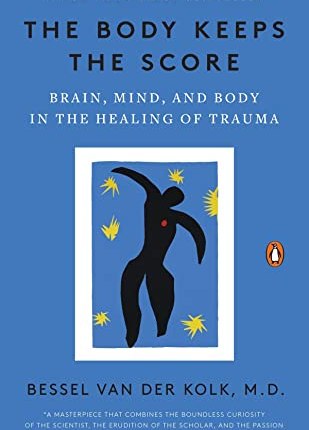
The Body Keeps the Score: Brain, Mind, and Body in the Healing of Trauma by Bessel van der Kolk

The Body Keeps the Score: Brain, Mind, and Body in the Healing of Trauma by Bessel van der Kolk

The Body Keeps the Score is a non-fiction book about how the body stores trauma and what you can do about it.

My most distressing take-away from this book was how common trauma is. Author Bessel van der Kolk discusses how people from all walks of life suffer from trauma.

Photo by Thiago Matos on Pexels.com

People suffering from these kinds of afflictions believe they’re the only ones. They try to numb the pain with drugs or alcohol and are easily triggered which brings back the pain of the traumatic events again and again.

This affects their lives, relationships and ability to trust others.

Kolk details how traumatic memories can be triggered by smells, touch and taste. He explains how powerful emotions remain behind, even after the logical mind has processed the event.

Photo by cottonbro on Pexels.com

He suggests you can’t think your way out of strong emotions.

What do we do about this?

Form a strong community around yourself with supportive relationships. Practice mindfulness and yoga- exercises that explore the mind and body connection.

Photo by Elina Fairytale on Pexels.com

Also, find a therapist who practices eye movement desensitization and reprocessing (EMDR). The author records amazing recoveries by sufferers who utilized this therapy.

Personally, I’ve practiced EMDR with a therapist and the results were astounding. I left the session feeling lighter than I have in years, having released trauma I didn’t realize I was carrying.

But, like others, I still struggle with powerful emotions stored in my body. It is a process, not a cure. And I’ve learned to take life one day at a time.

Highly recommended for readers looking for scientifically-proven ways to handle trauma.

Thanks for reading!

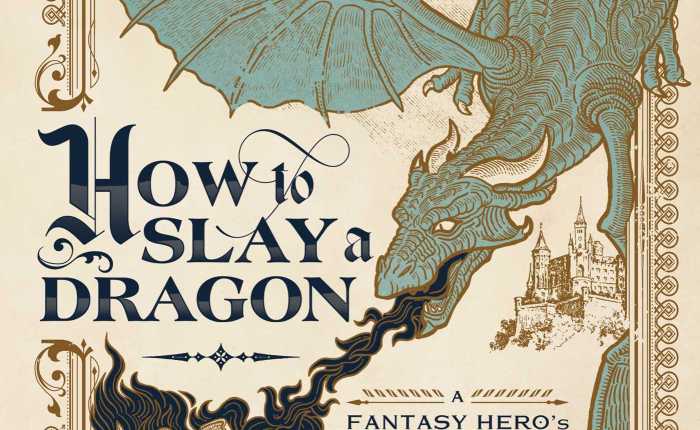
How to Slay a Dragon: A Fantasy Hero’s Guide to the Real Middle Ages by Cait Stevenson

How to Slay a Dragon: A Fantasy Hero’s Guide to the Real Middle Ages by Cait Stevenson

How to Slay a Dragon is a humorous look at medieval history with a running, stand up-esque commentary by a nameless narrator.

“…this is still a book to guide heroes who are setting off to slay a dragon, steal the throne, and defeat a few hordes of supernaturally evil creatures along the way.” pg xv, capitulum infodumpium. (Not real Latin, but amusing all the same.)

Photo by Tia Rawat on Pexels.com

Cait Stevenson divides the history into broad categories like: preparing for your quest, hazards along the way and winning the war. Then there are subcategories like: how to not marry the prince, how to win the bar fight, and how to outwit a genie.

My favorite was “How to Put Up with the Bard” because I tend to play that class of character in role-playing games. 🙂

“When William Porland recorded the names of fifty taverns in the fifteenth century, six of them were called the Swan. … There was no reason to distinguish an inn by a written-out name when literacy rates maxed out in the 30 to 40 percent range, which meant a 60 to 70 percent chance that the clientele couldn’t read… pg 27 How to Find the Inn

Photo by Pixabay on Pexels.com

Cait uses actual events and historical figures to make the past come alive. I found the whole book very entertaining and I learned so much- a hallmark of a successful history book.

She even includes fantastical beliefs and superstitions like: “The most important thing to know is that medieval dragons usually kill with venom, not fire. They breathe thick clouds of deadly smoke in all directions at once.” pg 93

In the modern era, I think we dismiss historical figures as unapproachably different from us because technology wasn’t as developed as it is now. This book makes readers realize that there is very little difference between a historical figure and a modern one. People are people- with their flaws and strengths.

Photo by Dariusz Staniszewski on Pexels.com

Now, they just happen to walk around with iPhones.

“Snowball fights in fifteenth-century Germany were apparently so common that priests classified them as a sin. Or perhaps the real problem was that priests were getting smacked in the face with snowballs.” pg 117

Highly recommended for readers who love history and humor in one convenient package. This book might fit the bill for reluctant readers as well.

Thanks for reading!

Or What You Will by Jo Walton

Or What You Will by Jo Walton

Or What You Will is a unique fantasy novel about a writer, one of her fictional characters, her real life, a final story she is writing, and her love affair with the city of Florence.

“I have been a character, and I have been a narrator, but now I don’t know what I am.” pg 8, ebook.

Photo by Tamara Velazquez on Pexels.com

Told from the point of view of a character inside another character’s mind and between flashbacks to real life and an on-going fictional story-within-the-story, Or What You Will sounds quite complex. But once I got into the flow of it, I enjoyed this quirky tale quite a lot.

“Readers remember you. So you’ll live on in the books. It’s the only form of immortality the real world has.” pg 53, ebook.

I loved learning about Sylvia (the fictional writer’s) life, loves, and writing process. Part of its charm is that this is a meta-filled book for readers who love the process of writing and the development of characters. It is also filled with surprising and entertaining tidbits of real history about Florence which appealed to the amateur historian in me.

Photo by Josh Hild on Pexels.com

There was plenty to enjoy in Or What You Will. My quibble with the book has to do with its ending.

After meticulously building an immersive world, or two, the author unceremoniously ends the story in a few paragraphs.

It was incredibly disappointing, especially when you consider the book is only 226 pages long (ebook). She had room to do more. In fact, I could have stayed in the world she created for twice as many pages.

That being said, the last few pages of the book made me cry. So, perhaps it was a satisfying ending in its way. I just wish it had been developed more fully.

Photo by Daria Shevtsova on Pexels.com

Other than the ending, this is a brilliant and totally unique story, unlike anything I’ve ever read. If you like Jo Walton’s other fantasies, you may want to give it a try.

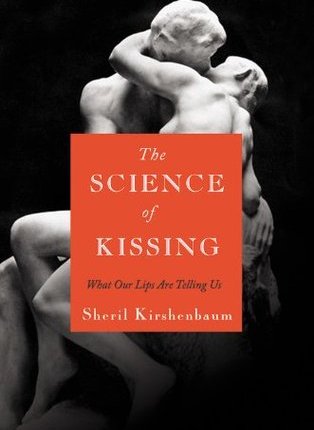
The Science of Kissing: What Our Lips Are Telling Us by Sheril Kirshenbaum

The Science of Kissing: What Our Lips Are Telling Us by Sheril Kirshenbaum

What do we know about the “science” of kissing? Researcher and author Sheril Kirshenbaum shows we know surprisingly little in The Science of Kissing.

“Kissing is a type of universal language, best interpreted by those involved in the exchange.” pg 209

Photo by Flora Westbrook on Pexels.com

To start, I didn’t know that humankind wasn’t the only species to demonstrate “kissing” behavior.

“Moose and ground squirrels brush noses. Manatees nibble at their partners. Moles rub snouts and turtles tap heads. Porcupines nuzzle noses – one of the few regions of their bodies that lack quills.” pg 29

Photo by Snapwire on Pexels.com

I also didn’t know, seems obvious in hindsight, that kissing wasn’t always a common behavior. It has spread throughout cultures and countries because of the way we’re interconnected with technology.

But that wasn’t always the case. Historians and anthropologists have recorded different attitudes towards kissing among various cultures for hundreds of years.

“… he noted that some Finnish tribes were not very interested in kissing, and observed that while the sexes would bathe together completely nude, a kiss on the lips was considered indecent.” pg 57

Kirshenbaum briefly covers a few different scientific studies into sexual behavior or kissing.

“In Alfred Kinsey’s 1948 report ‘Sexuality in the Human Male,’ for instance, kissing style was found to correlate with a person’s level of education. Seventy percent of well-educated men admitted to French kissing, while only 40 percent of those who dropped out of high school did.”

Photo by Pixabay on Pexels.com

However, I felt that the majority of this book was written anecdotally because there are so few rigorous studies that have been conducted. In fact, one of the chapters of this book consists of suggestions of studies that could be done with some of the information that Kirshenbaum compiled.

… only one in seven women answered that she would consider sex with someone she had not first kissed. Conversely, the majority of men reported that they would not be deterred.” pg 92

Despite what I perceived as a lack of hard science in here, I found the book amusing. Recommended for readers who are looking to be entertained, rather than enlightened, about kissing.

Before We Were Yours by Lisa Wingate

Before We Were Yours by Lisa Wingate

Before We Were Yours is a historical fiction based on the real and heart-breaking scandal of child kidnappings and paid adoptions from the Tennessee Children’s Home Society.

Children were treated like a type of rare commodity. Sadly, abuse and even death awaited some of the unfortunates who passed through the society. Some of the children taken in had families, but the society acted as if they did not.

Photo by Pixabay on Pexels.com

As a student of forgotten history, I didn’t want to believe that such things could have happened in the United States and, relatively, recently. But, it’s true.

“The Foss children and the Arcadia were formed from the dust of imagination and the muddy waters of the Mississippi River. Though Rill and her siblings exist only in these pages, their experiences mirror those reported by children who were taken from their families from the 1920s through 1950.” pg 295, ebook

Lisa Wingate tells the story in two different timelines – one in 1939 and the other in the modern day. The earlier story line is by far the most compelling.

Readers meet Rill Foss, one of five children belonging to an itinerant family who live on the Mississippi River in their house boat. Her story begins the night her mother, Queenie, is having trouble delivering a new baby.

When Rill’s father, Briny, takes Queenie to the local hospital for help, something terrible happens to the children they leave behind.

Photo by Maximilian Mu00fcnzl on Pexels.com

Meanwhile in the modern day, Avery Stafford has moved home to help her father, a senator, during his re-election campaign. There are also concerns about her father’s health as well as her upcoming nuptials to organize.

But then she stumbles upon an elderly woman who has a picture that closely resembles Avery’s own grandmother. Could there be a connection between the two?

“Grief and a change of location can often be more than the mind and body can handle.” pg 43, ebook

Of the two stories, the earlier one is far more interesting. Rill is such a strong and indefatigable heroine in her struggle to keep her siblings together. I was enthralled by each chapter narrating her life.

Photo by Kristina Paukshtite on Pexels.com

The Avery portion of the story, on the other hand, was just so predictable. If Before We Were Yours had just been the modern story, this book would hardly have earned a mention from me, let alone netting the Goodreads Choice Award for historical fiction from 2017.

“Life is not unlike cinema. Each scene has its own music, and the music is created for the scene, woven to it in ways we do not understand.” pg 278

Recommended for readers who enjoy historical fiction as well as book clubs.

In the future, I may pen a History Guy episode about the Tennessee Children’s Home Society. It seems to me that the fate of these poor children, now grown and many departed from this life, is history that deserves to be remembered.

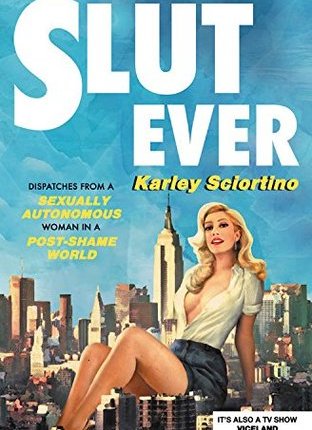
Slutever: Dispatches from a Sexually Autonomous Woman in a Post-Shame World by Karley Sciortino

Slutever: Dispatches from a Sexually Autonomous Woman in a Post-Shame World by Karley Sciortino

“Without question, if I weren’t a slutty as I am, my life thus far would have been far less interesting. … But my sluttiness has also been the cause of many existential bathroom-mirror moments.” pg 8, ebook

Photo by cottonbro on Pexels.com

Karley Sciortino, sex blogger and author, has led a self-described colorful life. It certainly comes through in this tell-all memoir.

Through her experiences, Sciortino has proudly embraced her sexuality and her place in society as a woman who knows what she wants in the bedroom, and takes it. This hasn’t been a simple path.

Part of her struggles are society’s views and programming about “slutty” women.

“It’s a no-brainer that we’re influenced by the people and stories that make up the culture around us. And it’s difficult to cite an example, either real or fictional, of a happy, healthy, promiscuous person – let alone a woman.” pg 8, ebook

The rest of her difficulties seem to stem from a lack of self knowledge or awareness. Sciortino isn’t afraid to tackle any and all issues head on in her own unique way.

“…my goal isn’t to be good or normal or accepted. My goal is to be free. (And maybe also to troll society a bit in the process, for good measure.)” pg 12, ebook

Photo by Nina Uhlu00edkovu00e1 on Pexels.com

It took me a couple chapters to get into this memoir. Sciortino’s writing style is frank to the point it sometimes feels abrasive, but it maintains an honest delivery throughout.

“My biggest revelation of the saga was that group sex is amazing for when you’re drunk, because you can just take a time-out whenever you’re bored or tired and someone else will literally take over for you. Genius.” pg 24, ebook

The early part of the book is fixated on sexual experiences and experimentation. As she delves deeper into her underlying motivations and psychology, Sciortino begins to get to the heart of matters. That’s when I felt this book became worth the read.

She had me asking myself some difficult questions: Why is sexuality such a complex issue? Why should people, in the privacy of their own homes and with proper consent, care what others think?

Photo by cottonbro on Pexels.com

Why are there different standards for men and women?

And why is sexuality, which can play such a large part of the happiness in our lives, so difficult to talk about? (For some, not Sciortino, obviously.)

Recommended for mature readers who don’t mind a nearly stream-of-consciousness style of writing as well as a thick skin to push through Sciortino’s delivery to get to the meaning behind the words – because there is meaning to be found.

Thanks for reading!

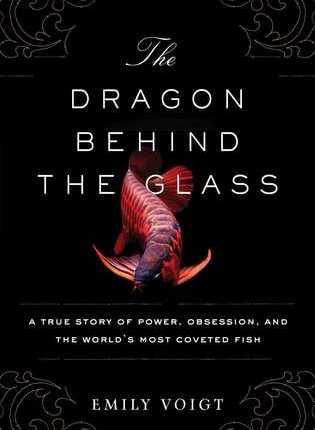
The Dragon Behind the Glass: A True Story of Power, Obsession, and the World’s Most Coveted Fish by Emily Voigt

The Dragon Behind the Glass: A True Story of Power, Obsession, and the World’s Most Coveted Fish by Emily Voigt

The Dragon Behind the Glass documents journalist Emily Voigt‘s descent down the rabbit hole of fish collecting, money, power, and scientific exploration in some of the most remote locations in the world.

“A pair of whiskers juts from its lower lip, and two gauzy pectoral fins extend from its sides, suggesting a dragon in flight. This resemblance has led to the belief that the fish brings prosperity and good fortune, acting as a protective talisman to ward off evil and harm.”

(Fish pictured below is not an arowana.)

Photo by Chevanon Photography on Pexels.com

Though it starts off with a major hook, Voigt takes the reader to a crime scene where a pet store owner appears to have been killed for his shelf of rare fish, the book begins to meander after that and never gets back to the compelling pace of the opening.

That is not to say there aren’t some fascinating history and fish-related trivia tidbits. In fact, the majority of the book consists of that.

“… the keeping of pets reflects our hunger for status symbols, for what the philosopher Jean-Paul Sartre called the ‘carnal, clinging, humble, organic, milky taste of the creature,’ which underlies all luxury goods. The modern pet shop first appeared in American cities in the 1890s; and with it began the mass importation of exotic animals from Asia and South America.” pg 21, ebook.

Photo by La Miko on Pexels.com

Voigt explores the history of aquariums, pet-crazes throughout history, and the ascendance of the arowana as the pet fish of choice in the East. Complicating matters, the arowana has become incredibly rare in the wild, partially due to its desirability among collectors, but also because of the destruction of its native habitat.

“The most highly coveted – or at least the traditional favorite – is the legendary Super Red, native to a single remote lake system in the heart of Borneo. … As late as 2008, researchers with Conservation International reported that rural Cambodians were still eating greens, even as wild populations plummeted due to over-harvesting for the aquarium trade.” pg 30, ebook

Like other rare and precious commodities, the interest and money surrounding the arowana has led to some shady dealings. I wasn’t too surprised by the alleged criminal activity Voigt describes among collectors. But I was flabbergasted by the fierce competition among some scientists in the rush to catalog and name the increasingly rare fish.

Perhaps that’s naive of me. Scholars jockey for prestige as much as anyone else. I suppose I’ve never stopped to think about it.

Photo by Andrea Piacquadio on Pexels.com

I was also surprised by how many species are out there that science has not studied yet.

“When I first set out to report on the Asian arowana, I figured I would start by finding the researcher studying the species in the wild- only to realize no such person exists. The popular illusion that modern science has the entire living world covered, that there is an expert analyzing every crevice, is far from true.” pg 205, ebook

Recommended for readers who are interested in a detailed study of fish, travel and history. It’s a slow-paced adventure, and not for everyone, but there are some treasures to be found if you stick with it.

Thanks for reading!

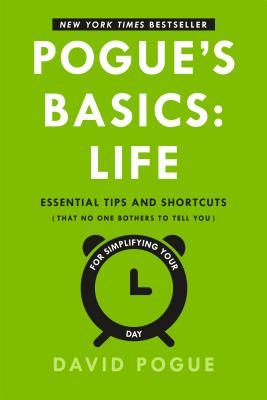
Pogue’s Basics: Life: Essential Tips and Shortcuts (That No One Bothers to Tell You) for Simplifying Your Day by David Pogue

Pogue’s Basics: Life: Essential Tips and Shortcuts (That No One Bothers to Tell You) for Simplifying Your Day by David Pogue

David Pogue and his team tested every suggestion in this book to verify that each works the way it is supposed to.

The result is a gem.

“… the morsels in this book describe features hidden right under our noses, features that lots of people don’t know about. As well as ‘Everyone’s been using it wrong’ insights. Plus tips that are clever, unexpected, and useful.” pgs 5-6

Photo by Kaboompics .com on Pexels.com

I knew some of the tips in these pages, but certainly not all of them.

When I’m done with this book, I’m going to gift it to my pre-teen, who thinks she knows everything but obviously doesn’t. I think she’ll find this incredibly handy in a few years.

A pot of water doesn’t boil over if you lay a wooden spoon across the top of the pot.” pg 81

Who knew? I didn’t. That’s one of the tips I’ve already used to make my life easier.

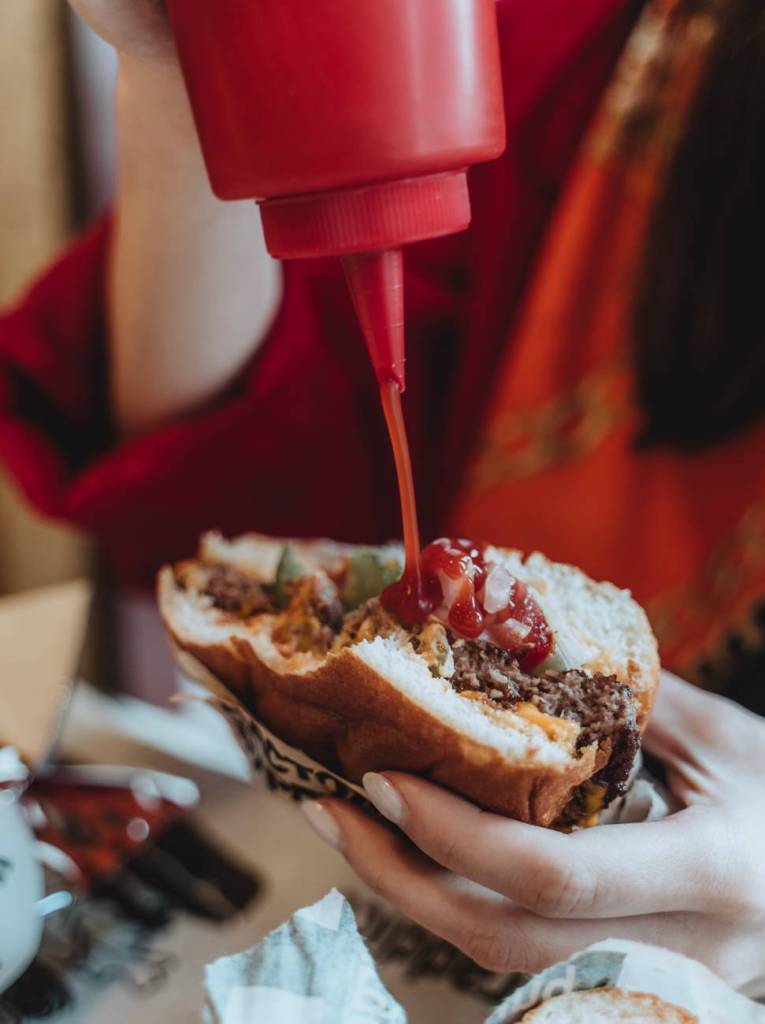
I’ve also utilized the tip for how to get ketchup out of the bottom of the bottle. And no, it’s not leaving it upside down and leaning against something for two hours though that does work. It is a much more immediate solution.

Photo by Vova Krasilnikov on Pexels.com

Some of the technology tips may be outdated, only because this book was printed in 2015. But I haven’t tested them all yet, so don’t hold me to it. It’s one small section in a stellar lineup of life “basics” that cover topics including the car, travel, food, clothes, your body, animals, house and home, and more.

Highly recommended for anybody who’s looking to make their lives a little bit simpler. Let’s be honest then, that’s everybody.

Thanks for reading!