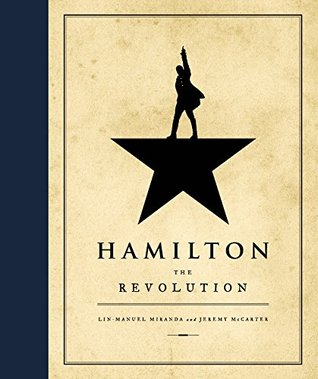
Hamilton: The Revolution by Lin-Manuel Miranda

Hamilton: The Revolution by Lin-Manuel Miranda

Hamilton: The Revolution is a musical that uses hip-hop to tell the story of Alexander Hamilton, one of the founders of the United States.  This book is not just the libretto, but also the story behind the musical.

Photo by Karolina Grabowska on Pexels.com

I have not heard this libretto performed, yet, so the part of Hamilton that stuck out the most for me was not the music (which might change after I hear it live) but the enormous amount of research that Miranda put into the creation of it.

I also enjoyed the copious details of his creative process. Every artist takes a different route to produce a masterpiece. Miranda credits the love for his wife as the foundation of this work, even calling Hamilton: The Revolution a “love letter” to her.

Love seems to be the driving force behind most creative endeavors, doesn’t it?

Photo by Nataliya Vaitkevich on Pexels.com

Back to the history behind Hamilton: I loved that Miranda included photographs of the actual documents and direct quotations from the figures of the period. This isn’t just a fun musical that uses hip hop to tell its story. This is history being retold in a way that appeals to modern sensibilities.

About Hamilton’s ambition that is highlighted in the song My Shot, Miranda says: “A character needs to want something pretty badly to sing about it for two and half hours… Alexander Hamilton lived hard, wrote fast, and hustled his a** off. “For to confess my weakness, Ned,” he wrote to a friend at age 14, “my Ambition is prevalent.” This man was born to perform an “I want” song. pg 21

I don’t know that I knew what the word ‘ambition’ meant at 14… a sign of things to come perhaps.

I loved all of the information about the set construction and having New York itself as the background: “The founders tended to be country boys. Washington, Jefferson, Adams, and many other key figures of the revolution hailed from, and frequently returned to, estates and farms out of town… It’s no wonder that John Adams, who despised Hamilton, also despised the town and its citizens: “They talk very loud, very fast, and all together,” he complained…” pg 38

Still rather true today, yes? I tease… 🙂

Photo by TheUknownPhotographer on Pexels.com

I didn’t know about Hamilton’s actual love poem to Eliza about which, Miranda says, “(she) wore it in a necklace for the rest of her life”:

“Before no mortal ever knew, A love like mine so tender, true, Completely wretched- you away, And but half blessed e’en while you stay. If present love (illegible) face, Deny you to my fond embrace, No joy unmixed my bosom warms, But when my angel’s in my arms.” pg 69

He wooed her with poetry- smart man.

I enjoyed the introduction to Angelica Schuyler, an incredibly bright woman in a time when she couldn’t really use that intellect in a constructive way.

In this passage, Miranda talks about how difficult her brilliant character is to portray and how hard her lines are to say: “Renee was the first one who came in and made us say, ‘Oh, she thinks exactly that fast,” he recalls. Her whirring brain made Angelica come alive in a new way… Renee acknowledges that she does indeed think pretty fast- “too fast to have good handwriting.”pg 79

That must be why I have bad handwriting too. 🙂

Photo by Daria Shevtsova on Pexels.com

I loved the empowering message of Hamilton: “There are plenty of debatable lessons to be drawn from Alexander Hamilton’s life, but that one is clear. The poor bastard orphan from the islands ought to have died a dozen times but somehow lived to help to found the nation…”There are strong minds in every walk of life that will rise superior to the disadvantages of situation and will command the tribute due to their merit,” Hamilton wrote in The Federalist No. 36. Look no further than his own life for proof of that statement.” pg 149

One of the rules of fostering creativity is to not be afraid to make mistakes. They were very brave in the development of Hamilton: “Lin, Tommy, and their collaborators shared an eagerness to try things- to try everything- to find what worked best. “New discoveries, new mistakes” was the daily goal that Tommy had announced for the company at their first rehearsal the previous November.” pg 206

The pages of this book are packed with the stories, anecdotes, and behind-the-scenes hijinks of the creators, actors/actresses, and historical figures behind Hamilton: The Revolution. Pick it up and treat yourself to the newest Broadway sensation- winner of the 2016 Pulitzer Prize for Drama. It’s amazing and well worth the time.

Thanks for reading!

Spark Joy: an illustrated master class on the art of organizing and tidying up by Marie Kondo

Spark Joy: an illustrated master class on the art of organizing and tidying up by Marie Kondo

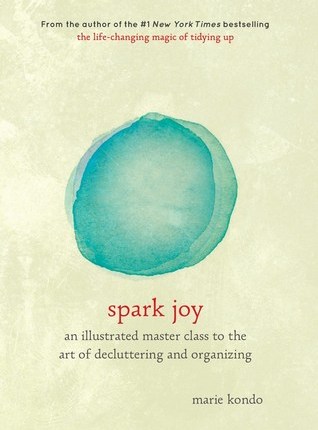
Spark Joy is author Marie Kondō’s follow up to her internationally best-selling title, The Life-Changing Magic of Tidying Up: The Japanese Art of Decluttering and Organizing.

Kondo’s not for everyone — some of her ideas are very different like treating your possessions as if they have spirits of their own and sorting items by smell — but I like her.

I think it’s because she is obviously very passionate about what she teaches. Her excitement seems to seek from the pages of her book.

This companion novel is an excellent book by itself, but, in my opinion, you won’t be able to fully appreciate it unless you’ve read Kondō’s first title. She doesn’t as completely explain her tidying methods in this book as she took the time to in the last. But there was still so much to enjoy here.

She encourages individuals to embrace what they love, even if society doesn’t love it too, like in this section called Save Your Cosplay for Indoors“…a surprisingly high percentage of my clients have costume-like clothes. To name just a few, I have encountered a Chinese dress, a maid’s outfit, and a belly-dancing costume. … If it brings you joy, but you can’t see yourself wearing it outside, there’s no reason you shouldn’t wear it inside.” pg 25-26

Kondo has a pretty philosophy of living: “I’m convinced that things that have been loved and cherished acquire elegance and character. When we surround ourselves only with things that spark joy and shower them with love, we can transform our home into a space filled with precious artifacts, our very own art museum.” pg 47

One of my favorite parts of both books is Kondo’s theory about socks. It makes me smile: “The socks you wear at home are particularly important because they are the contact point between you and your house, so choose ones that will make the time you spend there even more enjoyable. Balling your socks and stockings, or tying them into knots, is cruel. Please put an end to this practice today.” pg 98 🙂

As much as I enjoy Kondo’s quirkiness, I don’t embrace all of her theories.

For example, I’m still trying to talk myself out of the mountains of books that I have around the house. I have this dream that one day, I’ll have an enormous library with shelves so high that I’ll need a ladder with rollers to climb up and reach the books at the top.

Here’s what Kondo has to say about tidying up the books: “When you’re left with only those books that you love, you’ll discover that the quality of information you receive changes noticeably. The room you make by discarding books seems to create space for an equivalent volume of new information. You’ll soon see that the information you need comes just when you need it, and when it does, you’ll find that you respond to it immediately in a new pattern of behavior that wasn’t possible when you were hoarding books and neglecting the information they contained.”pg 126

Sigh.

Here’s a helpful tip for sorting piles of stuffed animals: “Energy resides in the eyes, which is why it’s best to cover them when discarding something. Once their eyes are hidden, stuffed toys and dolls look much more like objects, and that makes it far easier to part with them. The simplest solution is to place a cloth or piece of paper over their faces.” pg 164-165

Consider some of the most used items in your life for the royal treatment: “…my criterion for deciding which items require royal treatment… is this: the item’s proximity to your body. Items such as forks or undergarments, which come in direct contact with delicate parts of our bodies, should be treated as a rank above the rest whenever possible.” pg 183

Good to know.

And finally: “Tidying is a special event. If you give storage your best effort, experimenting with different ideas and enjoying the whole process, you’ll find that it goes very smoothly. Treat it like a game. Each idea you try will bring immediate results, and you can readjust anytime you like.” pg 206

If only I had that sort of passion for tidying…

Marie Kondo is inspiring but I don’t know if I will ever achieve the emotional highs that she seems to find from it. The best part of this book is: she makes me willing to try.

Other tidying (or anti-tidying) books I’ve reviewed can be read here:

Remodelista: The Organized Home by Julie Carlson

The Joy of Leaving Your Sh*t All Over the Place by Jennifer McCartney

Thanks for reading!

Tiger Lily by Jodi Lynn Anderson

Tiger Lily by Jodi Lynn Anderson

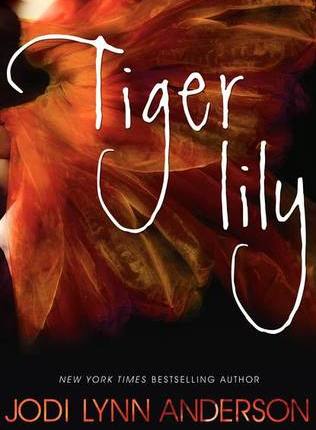
tigerlilyThis book is an absolutely magical re-telling of the story of Tiger Lily from Peter Pan. The narrator is the fairy, Tinker Bell.
I’ve always had a soft place in my heart for J. M.Barrie’s masterwork. Who among us hasn’t wanted to go to a place where you could remain young forever and never grow up?

Jodi Lynn Anderson writes that “never aging” magic of Neverland quite well: “Englanders had come to Neverland before. … The Englanders had the aging disease. As time went on they turned gray, and shrank, and, inexplicably, they died. It wasn’t that Neverlanders didn’t know anything about death, but not as a slow giving in, and certainly not an inevitability.” pg 13 (ebook)

Tiger Lily’s tribe may age, but how old they appear is contingent on something other than time. It’s curious and magical.

The lost boys come alive in this book with a wildness and unpredictability that I loved: “There was a joyfulness and- at the same time- a fragility about each of them. They were sloppy and uncared for and wildly alert and full of energy.” pg 61, ebook.

Despite their untamed natures, they are still children: “Straw beds had been separated haphazardly into different areas of the burrow, as if the boys hadn’t counted on wanting to live separately when they’d first built it, and only recently pushed themselves as far apart from each other as possible. Still, on one of the beds there was a worn home-sewn toy in the shape of a rabbit, and lying on a pillow, as if it had just been played with, a model of a ship.” pg 61, ebook.

Peter is the boy who has emotions but doesn’t understand them- perpetually young yet always on the verge of growing up.

He’s fiercely admired by his lost boys and, eventually, Tiger Lily: “Peter picked at his hangnail again. “Actually, I never get sad. It’s a waste of time, don’t you think?” Tiger Lily didn’t answer. She was impressed by the idea of deciding not to be sad. His words made him seem very strong. Impervious.” pg 67, ebook

Peter is still Peter in this tale. As far as girls go, he can be charming but also rude and aloof: “I think we could be good friends,” he said, falling into step with her. “It’s perfect because I wouldn’t fall in love with you, like I do with the mermaids. Girls always seem so exotic. But it would be okay with you, because you’re more like… you know. Not like a girl.” pg 77, ebook.

Tinker Bell was a sympathetic character in this book, rather than the spoiled, jealous creature that she is portrayed as in Peter Pan“A faerie heart is different from a human heart. Human hearts are elastic. They have room for all sorts of passions, and they can break and heal and love again and again. Faerie hearts are evolutionarily less sophisticated…. Our hearts are too small to love more than one person in a lifetime. … I tried to talk sense into my hard little heart. But it had landed on Peter, a creature two hundred times my size and barely aware of me, and there was no prying it loose.” pg 77-78, ebook.

Hook is extra creepy and villainous: “Neverland had called to him out of legends. A green place. A wild place. And most of all, a place where he’d never grow old. Most people in London hadn’t believed it existed, but some still insisted it did, and Hook had cast his lot with them. To get to the island, he’d begged, stolen, and eventually murdered.” pg 89-90, ebook.

And so is Mr. Smee. But, I’ll let Anderson tell you his story. She does a wonderful job of it.

The relationship between Tiger Lily, Peter, and Wendy makes a lot more sense in this story. It is less about any potential failings by the girls. The main source of conflict seems to be Peter’s emotional immaturity: “As you may have guessed already, Peter had a soul that was always telling itself lies. When he was frightened, his soul told itself, “I’m not frightened.” And when something mattered that he couldn’t control, Peter’s soul told itself, “It doesn’t matter.” pg 169, ebook.

The ending of this book was totally satisfying as well for all of the characters, even little Tinker Bell. I can’t say enough good things about it.

It’s easy to see why fairy tell retellings are so popular with books like Tiger Lily out there, waiting to be discovered.

Thanks for reading!

Rules for a Knight by Ethan Hawke

Rules for a Knight by Ethan Hawke

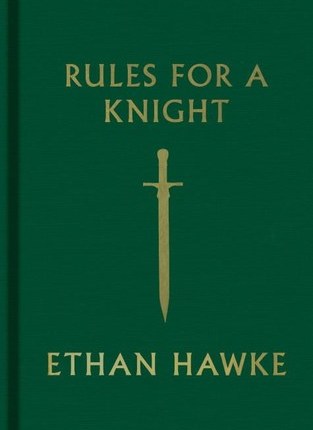
Rules for a Knight was very sweet. It is a fictional story about a knight who dedicates a journal to his children and, in it, uses stories to explain how he expects them to behave and grow after he is gone.

Photo by Pixabay on Pexels.com

Surprisingly, it is by Ethan Hawke, the actor!  I didn’t know that he could write… and, in this book, he shows that he really can.

I had been exposed to many of the parables presented in Rules for a Knight before through either Buddhist or Christian teachings, but they are repackaged quite well in this small, green tome.

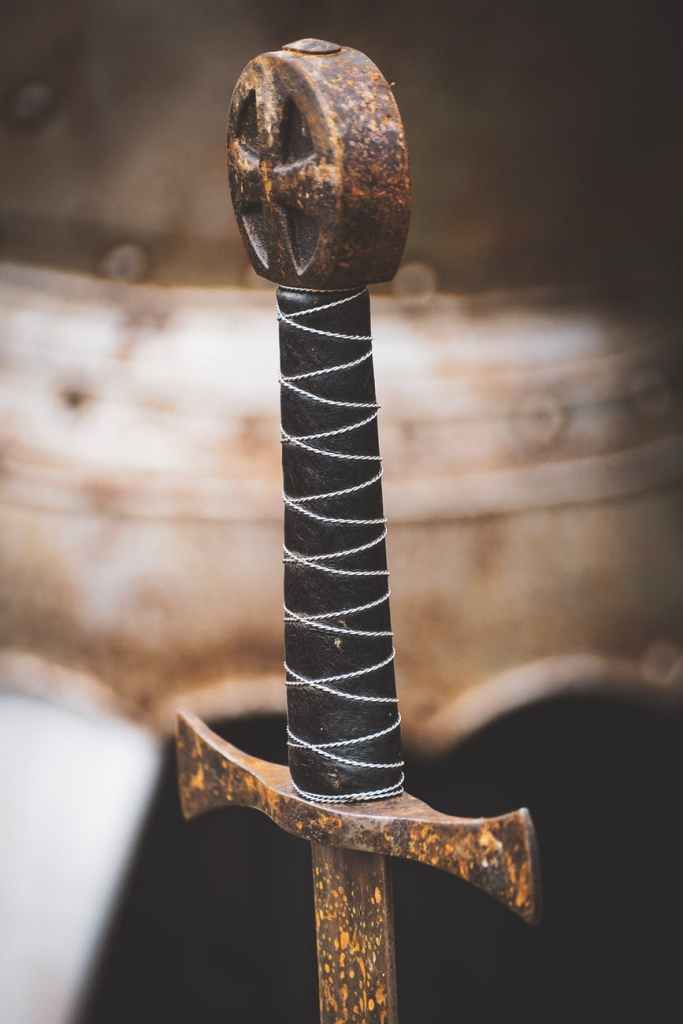
The book itself is a joy for readers who really appreciate books as an art form both in what it contains and also in its packaging.  Rules for a Knight is covered in soft green cloth with the title embossed in gold and a ribbon bookmark bound into the lining- almost as if the book itself is inviting the reader to take her time, stop reading, put in the bookmark, and ponder the wisdom that comes from its pages.

Photo by Thought Catalog on Pexels.com

This is a book to be savored and read slowly with hot tea or coffee, whichever you prefer. 🙂

I think that there will always be a place on my bookshelf for stories that teach about inner truths and the journey from apprenticeship to mastery. I also liked that the knight addressed himself to both his sons and his daughters. Probably not historically accurate, but I approve anyway.

Some of my favorite bits:
“…the first thing you must understand is that you need not have gone anywhere. You are always in the right place at exactly the right time and you always have been.” pg 11

“There are only two possible outcomes whenever you compare yourself to another, vanity or bitterness, and both are without value.” pg 39

“Pay attention: what you need to know is usually in front of you. There are no secrets, just things people choose not to notice.” pg 63

Photo by Susanne Jutzeler on Pexels.com

“Later he told me when he was younger he learned the secret to performing under pressure: don’t do it for yourself. Do it for someone else.” pg 67

If you enjoyed Rules for a Knight, you may want to read Zen Seeds: Reflections of a Female Priest by Shundo Aoyama or After the Ecstasy, the Laundry: How the Heart Grows Wise on the Spiritual Path by Jack Kornfield.

Thanks for reading!

Malice in Ovenland: Volume 1 by Micheline Hess

Malice in Ovenland: Volume 1 by Micheline Hess

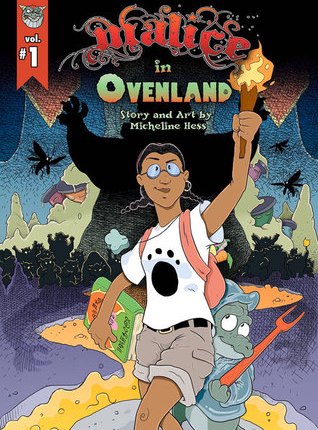
Malice in Ovenland by Micheline Hess is a graphic novel for children. Lily Brown’s mom tells her to clean the kitchen- and her adventure begins.

An excellent pick for reluctant readers, this story is a cute, gross, and, endearing romp through a fantastical world hidden behind an oven.

Lily’s heroic journey reminded me of the comic series, Princeless by Jeremy Whitley. In Princeless, the heroine tires of waiting for a prince to come save her, so, she sets about saving herself.

Lily is no wilting flower either, despite her name. 🙂

With art and a storyline appropriate for the pre-teen crowd and an empowered female protagonist, I could see this being a great addition to any juvenile’s graphic art collection.

What I enjoyed most about Malice in Ovenland were the homages to other great works of children’s literature.

The obvious one, of course, is to Alice in Wonderland but I also caught shades of the Lord of the Rings in the poem included at the end of Chapter 1.

The moment that Crumb comes to visit Lily in the dungeon reminded me of when Taran met Gurgi in the Black Cauldron.

The Queen’s advisor, named Crispodemus, reminded me of Nicodemus the rat from the classic children’s story, Mrs. Frisby and the Rats of NIMH by Robert O’Brien. (One of my all-time favorites, by the way)

And finally, The Royal Rangers reminded me of the Beagle Boys from Duck Tales– bumbling, minimally intelligent thugs, who would be harmless if they weren’t so determined to be bad.

Malice in Ovenland would be a great title for a reluctant reader or a reluctant eater. The story, in addition to the adventure, teaches kids to not be afraid to try new things- either food or life related.

It’s a message that can’t be repeated enough.

The humor is mainly gross-out or potty-related but, as a mother of a soon-to-be-10 year old, that’s exactly where her humor is at right now. It’s perfect for the audience that it is seeking.

Big thanks to NetGalley for providing me with a free digital edition of this title for review purposes and thanks for reading!

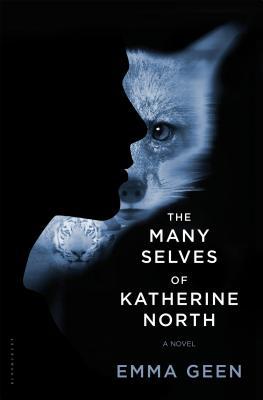
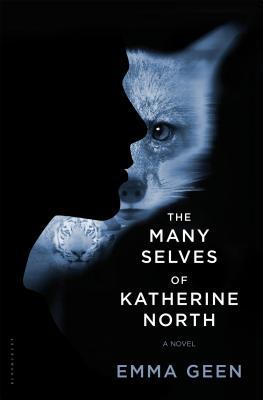
The Many Selves of Katherine North by Emma Geen

The Many Selves of Katherine North by Emma Geen

katherinenorthIn The Many Selves of Katherine North by Emma Geen, humanity has harnessed the power of consciousness and mechanized the ability to place that consciousness in different bodies at will.
Katherine is a teenager who works for a large research company. She’s the longest lasting “phenomenaut” (person who’s consciousness is put into the body of an animal) because she seems to be special.

The process of consciousness transfer seems to stop working when the brain ages and loses its plasticity. Despite her age, Katherine’s brain seems to be fine.

But then, one day, Katherine sees something strange when she’s out of her body… and perhaps she’s not as well as she imagined.

The Many Selves of Katherine North asks some pretty powerful questions like: What is consciousness? How does our physical body change how we perceive the world? What is reality?

I think that this story has the potential to open up a dialogue about these questions between readers who may not have considered them before. In that way, this is a very powerful book.

I did not like how the story flips back and forth between the present and the past. I think Geen was using the shifting timeline to build the mystery, but, because of the nature of Katherine’s many consciousness experiences, it made things rather confusing.

This is a complicated book. At times, maybe too complicated.

The richness and variety of Katherine’s experiences drives a wedge between her reality and the rest of humanity’s reality.

The reader really sees difference in this moment, when Katherine is preparing to go into work: “Later, I lie in bed quivering… because it’s only hours until I’m out of here. Here- not just a room but skin. How can other people call this their totality? There is so much more.” pg 19

Katherine captures the impossibility of explaining out-of-body experiences very succinctly here: “Because how do you cram the lived experience on to a page? The words available to me were never enough. Something would always slip the sentences. Human language developed around human bodies, it never quite fits other ways of being. pg 66

I loved all of the chapters when Katherine was in the body of an animal. In this one, she was a snake: “Old scents have imprinted upon the world like spoor into soft mud, the past blundering prey. I wonder if this is one reason many animals have a poor memory compared to humans. What’s the use in remembering when the world does it for you? pg 146 Fascinating.

Emma Geen included a disclaimer at the back of her book and it contained some of my favorite lines: “…what if there are other valid ways of knowing? What is the world is not one, but multitude, with as many ways of being as there are beings? What if literature were the opportunity to glimpse such refractions, thrown by the world as though from a diamond?” pgs 349-350 Loved that.

If you enjoyed The Many Selves of Katherine North, you may want to pick up The Night Circus by Erin Morgenstern or Mythago Wood by Robert Holdstock for more glimpses of worlds hidden within worlds.

Big thanks to Goodreads First Reads program, NetGalley, and Bloomsbury USA for providing me with an advance reading copy of this novel.

Thanks for reading!

Expecting Someone Taller by Tom Holt

Expecting Someone Taller by Tom Holt

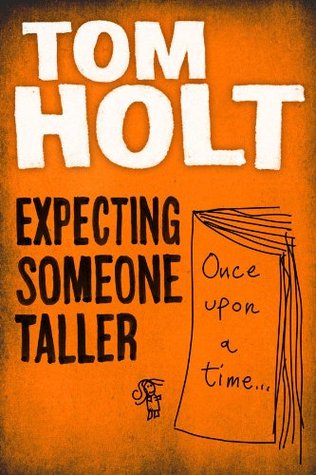
expecting someone tallerExpecting Someone Taller by Tom Holt is a humorous fantasy novel based off of the Ring Cycle of Norse mythology.  It’s older (published in 1990) but I like reading pulp fantasy fiction, no matter its age.
Full disclosure: I know The Lord of the Rings better than the Norse mythological stories it is based on. Holt provides a very short synopsis of the myths for folks like me and I was grateful for it. Otherwise, I would have not understood what on earth was going on.

Holt is an English fantasy-humorist and, like Pratchett’s many offerings, I enjoy his books but never have laugh out loud moments. I don’t know if the humor is lost-in-translation or what.

I expect that those who are more familiar with the Norse myths and who enjoy subtle humor might really love this rather silly tale of Malcolm and the ring.

There were some memorable lines: “Ingolf eased the plain gold ring off his finger and passed it to Malcolm, who accepted it rather as one might accept some delicacy made from the unspeakable parts of a rare amphibian at an embassy function.” pg 7 Nice.

“The next morning, Malcolm thought long and hard before waking up, for he had come to recognise over the past quarter of a century that rather less can go wrong if you are asleep.” pg 15 Absolutely true in my experience too.

Malcolm figuring out how the Tarnhelm (a hat that can change the wearer into anything) works: “Make me,” he said aloud, “as handsome as it is possible to be.”… He stood for awhile and stared… “We’ll call that one Richard” (he had always wanted to be called Richard). He resumed his own shape (which came as a bitter disappointment) then said “Richard,” firmly. At once, the Most Handsome Man reappeared in the mirror, which proved that the Tarnhelm had a memory, like a pocket calculator.” pg 20-21

The difference between smiles: “The girl looked at him and smiled. Malcolm had come to believe that he was fairly well equipped to deal with smiles, but this was a new sort; not a happy, optimistic smile but a sad, wistful smile. It didn’t say, “Wouldn’t it be nice if…” like the stock delivery of a Rhinemaiden, but, “It would have been nice if…” which is quite different.” pg 117

Why humans are the worst pick for ring bearing: “And so you give this irregularity in your minds a name of its own. You call it Love, which is meant to make everything all right. Rather than try to sort it out or find a vaccine, you go out of your way to glorify it. I mentioned your art and your poetry just now. What are your favourite themes? Love and War.”…”Now be fair,” he continued, “can you honestly say that a member of a species with this ancestral fallibility should be allowed to rule the universe?” pg 160 Fair question.

If you enjoyed Expecting Someone Taller, you may want to pick up The Good Fairies of New York by Martin Millar (a modern day fantasy with fairies) or Anansi Boys by Neal Gaiman (a fantasy about gods and their descendants).

Thanks for reading!

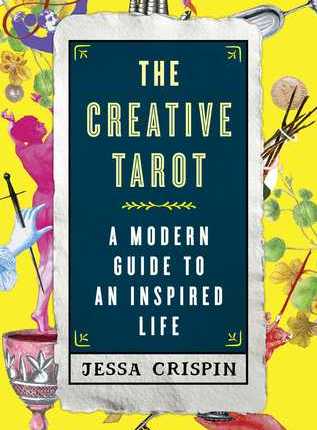
The Creative Tarot: A Modern Guide to an Inspired Life by Jessa Crispin

The Creative Tarot: A Modern Guide to an Inspired Life by Jessa Crispin

The Creative Tarot: A Modern Guide to an Inspired Life is an excellent tarot card reading manual for beginners to the more experienced card reader.

I loved that Crispin gives novel, art, and film suggestions for each card so that the reader can immerse herself in the “feel” or “mood” of them. That was a lovely touch and different from any other book on tarot cards that I’ve read.

Photo by Anna Tarazevich on Pexels.com

Mainly, the books that I’ve picked up have been about tarot card theory and how the cards tie in to the Tree of Life. It’s a complex system and can only be talked about in metaphors.

Imagine my relief to read a book about just the cards themselves and not an arcane “theory of everything.”

A.E. Waite was the co-creator of the Rider-Waite Tarot. He had some interesting thoughts about the tarot card reading qabalists, many of whom wrote books like the ones I’ve mentioned above.

A.E. Waite’s beliefs, which Crispin includes in the chapter entitled, A History of the Tarot, were: “Waite believed that the magical systems (tarot) of the Golden Dawn and other systems were not about imposing your will on a situation… or about telling the future… He believed they were for elevating the soul and for bringing what is unconscious conscious.” pg 7.

Photo by Jonathan Petersson on Pexels.com

I believe that too. But, if you can’t explain the system in a way that makes sense, then what’s the point of writing a beginner’s manual. There can be no “elevation of the soul” if the beginners can’t understand the first thing about reading tarot cards.

Thankfully, Crispin’s interpretations are simple and clear. This is a book that will see some use, not become another expensive paperweight.

I liked Crispin’s description of Temperance: “Temperance is an easily misunderstood card, as it has become associated mostly with abstention. Not drinking, not participating, denying yourself something. But that breaks away from the origins of the card, which traditionally portrays a hermaphrodite blending two cups of water- one hot and one cold- to create something in the middle between these two extremes.” pgs 76-77

Photo by Aleksandar Pasaric on Pexels.com

Temperance is about finding the middle way, not skirting along the edges from one extreme to another. Kind of ruins the idea of a “temperance movement,” doesn’t it.

I also liked this blurb about the Tower: “Remember that scene in Louisa May Alcott’s Little Women, where Amy throws Jo’s stories into the fire? That’s the feeling of the Tower: the realization that all is lost, and you will have to start over from the beginning.” pg 83

Yes, I’m a bookworm. Yes, Little Women is one of my favorite books. I think Crispin nailed the card’s description with that scene.

Photo by Pixabay on Pexels.com

I thought this description of The Moon was brilliant: “The Moon rules our dreams, and that’s a good way to think about this card. They don’t make sense on a logical level, but on a personal level, on an emotional level, they do. The location in a dream will shift without warning; dead people will walk beside the living; your mother will show up, say something nonsensical while wearing a jellyfish on her head, and then stab you in the heart. And you wake up and think, “Oh, of course, this is about that incident that happened when I was five.”

My dreams are just like that. In fact, I had that exact dream last night. 🙂

The tone in The Creative Tarot is very friendly and conversational, as if you asked your best friend to teach you a little bit about her favorite hobby- tarot cards. Highly recommended for artists, dreamers, and aspiring tarot card readers.

Its only weakness, in my opinion, is that I wanted more… more stories, more examples. I understand that we’re dealing with 50 plus cards and they can’t all receive extremely detailed treatment, otherwise we’d get the George R.R. Martin version of Tarot card books, but a girl can dream.

Jessa Crispin has modernized a system that seems to want to stay inaccessible to the beginner. I wish more of the books about the tarot were like this one.

Thanks for reading!

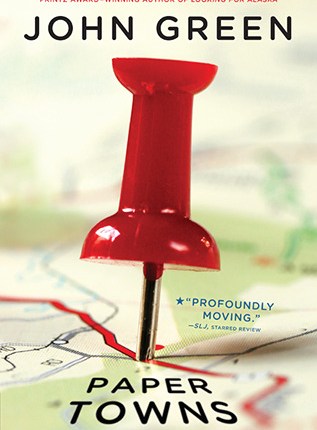
Paper Towns by John Green

Paper Towns by John Green

Warning: this is a book you either love or hate.  Consider yourself warned.

I fell more on the “hate” side of this equation but, surprisingly, enjoyed the film. This young adult, coming-of-age tale has elements of mystery to it.

Quentin has always loved Margo. One night, she wakes him up and they go on a wild tear about town, righting perceived wrongs and causing all sorts of hijinks.

Photo by David Besh on Pexels.com

The next day, Margo has disappeared. Their night out left all sorts of clues to where she went. Q decides to find her.

My negative reaction to Paper Towns surprised me because I loved John Green‘s The Fault in Our Stars so much.

Right off the bat, the reader is thrown into Margo and Quentin’s lives and we’re exposed to some of their worst traits rather than their best. Usually, people behave their best when you first get to know them and then, as they become comfortable with you, they let some of their more questionable sides out.

Photo by Alfonso Escalante on Pexels.com

The whole “rolling around the neighborhood at night and causing mayhem” takes place right at the start of Paper Towns. It isn’t fun because we don’t really know these characters yet.

It’s easier to forgive adolescent hijinks when you know and love the people who are doing them, but we’ve got almost zero time to form a connection before they’re breaking laws.

I think I would have given up on Paper Towns if I hadn’t watched John Green’s TedTalks video on the topic. If you haven’t seen it yet, here it is:https://youtu.be/NgDGlcxYrhQ

Quick summary of Green’s video: The basic idea behind a paper town (a made up town on a map) was copyright protection. The coolest part is that the mapmakers took something that wasn’t real and made it real because they presented it that way for so long.

I know that John Green can write amazing, sympathetic characters. He chose not to in this book and I’ve been rolling it around my brain, wondering why.

I think that Green wrote the characters in this story like a paper town.

At first, he presents the main characters as over-the-top clichés of what teenagers could be. The reader isn’t necessarily meant to bond with them at this point, they’re not real, they’re just “people on paper.”

Photo by Helena Lopes on Pexels.com

Then, through the second part of the book, let’s call it the “clue finding” part, Green slowly reveals more and more of the real parts of their characters just as Quentin finds more and more clues to where Margo has gone.

Through their hopes and dreams, relationships, daily struggles and hopes, they’re becoming more real.

Finally, in the last third of the book, as we join the characters on their mad rush to find Margo, they’ve become real. Real enough to have some close life-threatening moments on the road. Though they started out fake, Green built enough substance for the characters so that they have heft and dimension.

That’s my theory on why Green wrote such awful characters: he meant to. But, I still never liked any of them very much, even after they became “real.”

Photo by Buro Millennial on Pexels.com

I liked Green’s prologue: “The way I figure it, everyone gets a miracle. Like, I will probably never be struck by lightning, or win a Nobel Prize, or become the dictator of a small nation in the Pacific Islands, or contract terminal ear cancer, or spontaneously combust. … My miracle was this: out of all the houses in all the subdivisions in all of Florida, I ended up living next door to Margo Roth Spiegelman.” pg 15 ebook.

“Margo always loved mysteries. And in everything that came afterward, I could never stop thinking that maybe she loved mysteries so much that she became one.” pg 23 (ebook)

And that was the high point in this book for me. It was all downhill afterwards.

Here’s the passage that helped develop my theory about Green writing paper characters in Paper Towns: “… she looks like Margo Roth Spiegelman, this girl I have known since I was two- this girl who was an idea that I loved. And it is only now, when she closes her notebook and places it inside a backpack next to her and then stands up and walks toward us, that I realize that the idea is not only wrong but dangerous. What a treacherous thing it is to believe that a person is more than a person.” pg 406 (ebook)

Photo by Mihis Alex on Pexels.com

In conclusion, if you haven’t read any of John Green’s books, please don’t start with this one.

I highly recommend A Fault in Our Stars. It will break your heart. This one was not so good.

The film adaptation of Paper Towns was surprisingly ok. Borrow it from the library and let me know what you think.

I’m off to be more than a paper character in my own life- thanks for reading!