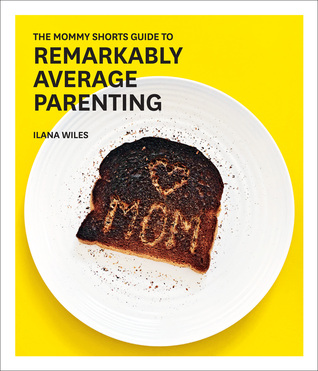
The Mommy Shorts Guide to Remarkably Average Parenting by Ilana Wiles

The Mommy Shorts Guide to Remarkably Average Parenting by Ilana Wiles
remarkably average

The Mommy Shorts Guide to Remarkably Average Parenting is one of the best books about parenthood I’ve ever read. It is an honesty, funny and poignant look at the un-glamorous side of parenting. I loved the pictures. I loved the stories. I wish that this book had been around when I had my baby. Between this read and How Not to Hate Your Husband After Kids, mothers-to-be have all their bases covered.

Ilana warns mothers about the perils of choosing rare names: “… if you want to name your child something odd, I support you. I like odd names. I think odd names make the world a more interesting place. But you should be prepared to hear some criticism when you are at your most vulnerable.” pg 19. I didn’t even pick something that weird for my child (Willow) but I still faced criticism. When I told my grandpa the name I picked for his first female great-grandkid, he told me that it was the stupidest thing he’d ever heard. And there I was, heavily pregnant. Yeah, I cried. Wish someone had warned me.

I empathized with the idea that parents have no clue what they’re doing and we’re all secretly terrified that we’re going to screw up our kids in some irreparable way. Over a decade later and I still feel that: “In hindsight, the newborn phase wouldn’t be that hard if new parents weren’t so worried about messing up in such a way that it would ruin their newborn’s life forever.” pg 33.

The page entitled, My two-year-old’s rules for eating a banana pg 76, had me in stitches. Kids are so weird about food. My daughter is currently on a mac-n-cheese, ramen and ice cream kick. This time last year, all she would eat was homemade pancakes and grilled cheese with the crusts cut off. I’m sure that in another year, we’ll be somewhere else. And it’s not just about the “what”, there’s also the “how.” If you cut the crusts off the grilled cheese, but then don’t cut it diagonally, then no dice. You may as well throw it out because my kid won’t eat it. It’s absurd, but true. Poor Ilana suffers through the same thing but with bananas.

Photo by Aleksandar Pasaric on Pexels.com

The other funniest mini-chapter is: “Totally Butchered Words: Even if you do stop cursing and shield your kids’ ears from swearwords outside the home, your kids will probably still end up saying a few unfortunate things anyway. This is because toddlers might be trying to say one thing, but then it comes out sounding like another word entirely.” pg 116. I can’t even quote what she prints on the next pages because it is too filthy but, in my opinion, it is absolutely hilarious.

Ilana’s parenting philosophy is fantastic: “It’s not a matter of high or low expectations- it’s a matter of no expectations. Discover who your kid is as you go. Your kids will not be who you expect, but the things that amaze us most in life are never the things we expect.” pg 215 Mine amazes me all the time.

Highly recommended to own or give as a gift, The Mommy Shorts Guide to Remarkably Average Parenting is a cut-above average.

Thanks for reading!

The Deepest Secret by Carla Buckley

The Deepest Secret by Carla Buckley

thedeepestsecretI enjoyed the conversation with my book club about The Deepest Secret more than I liked the book itself. Buckley has written a world in which everybody has secrets. Discovering what those secrets are is the point of this thriller about a cul-de-sac and its occupants.


Tyler, one of the main characters, has XP, a disease in which his skin can burn at the slightest exposure to UV rays. So, most of his portion of the story takes place at night, when he can safely go outside: “He goes over to the bridge and shines his flashlight down into the water. Minnows dart in every direction, shivery brown shapes. Rosemary had once told him that fish stayed awake all night, just like him. That had comforted him, knowing that someone else was awake besides him and the crickets.” pg 19 He sees all sorts of crazy stuff.

Tyler’s mom, Eve, has gone into mothering overdrive because of her son’s illness: “She misses the carefree person she used to be, that joyful girl. Being Tyler’s mother has turned her into someone who’s endlessly vigilant. She tortures herself with horrifying scenarios just so she can come up with a plan.” No fun.

Eve’s relationship with her husband is understandably screwed up because of the way she behaves about her son. He is generally absent and works in another city. Tyler has an older sister who doesn’t get the attention she needs because her bro is sick all the time.

And that’s just one family. Now add about a dozen other characters and you begin to get the feel of The Deepest Secret. I never had trouble keeping anyone straight, but there are a lot of characters.

The best part of the conversation with the book club centered around the idea of secrets and “normalcy.” One of our members said that if we could point to one person who was normal, then he could show us someone else who was not. The point being that “normal” doesn’t really exist. It’s just some sort of pie-in-the-sky ideal that we tell ourselves about each other.

The Deepest Secret had me questioning the unseen lives of those around me from others in my neighborhood to the people next door. It was an unnerving feeling but not necessarily unpleasant. Pick this one up if you want to shake your view of reality a bit. Or if you want to feel like someone is peeking through the windows of your home at all of your mundane moments. Because, it’s not like you have anything to hide… do you?

Thanks for reading!

The Alchemy of Freedom: The Philosophers’ Stone and the Secrets of Existence by A.H. Almaas

The Alchemy of Freedom: The Philosophers’ Stone and the Secrets of Existence by A.H. Almaas

I picked up The Alchemy of Freedom because I was looking for an accessible book about alchemy. Unfortunately, it wasn’t actually about alchemy nor was it accessible in my opinion.

Photo by Evgeny Tchebotarev on Pexels.com

But, everybody is ready at different times for different manners of spiritual teachings. Don’t let my incomprehension deter you if you find the description intriguing.

I’m neither a genius nor a guru, just someone who studies religions and spirituality in a comparative, curious, meandering way. This could be the book that opens a door for you.

It simply wasn’t that for me.

There are some gems hidden in these pages but I found it mainly to be a labyrinth of words. I’ve had a similar feeling when listening or reading the works of Eckhart Tolle.

I feel like what Almaas is saying is worthwhile, so I made my way through it. But I just didn’t get the majority of it. Puzzling my way through this book was like grasping a cloud.

Photo by Rok Romih on Pexels.com

I had finished this book last week in preparation for writing a review the day it came out, but when I sat down to write yesterday, the words wouldn’t come. Rarely does reading a book leave me speechless.

I’ll pull some highlights to give you a feel for it. Reminder: this was a digital advance reader’s copy so the final published version could be slightly different.

I was able to comprehend Almaas’ thoughts about our “true nature” and most of the passages I highlighted talk about it: “Whether we recognize it as presence or awareness or emptiness, true nature is crucial to the process of awakening, realization, enlightenment, and liberation. It is the source of all spiritual experiences, insights, and transformations.” loc 116-133.

The bits of alchemy that Almaas did discuss were illuminating: “When we are experiencing ourselves as true nature, we realize that a human being is really the alchemical laboratory. The human being, the human consciousness, the human mind, the human heart are the instruments through which the magician works.” loc 186.

Photo by Vinu00edcius Vieira ft on Pexels.com

Most books that discuss alchemy are symbols heaped upon symbols. Perhaps it’s just the nature of the topic, but it’s frustrating.

About the philosophers’ stone: “The alchemists spent millennia trying to find it. They considered it the final result of the magnum opus, the great work of spiritual and material transmutation. Some alchemists thought they could make it, others believed it had to be discovered. … I am not teaching anything about alchemy here; I am borrowing the idea because it fits with what I am trying to say about true nature. … We can only experience true nature in the manifold ways it presents itself, and yet it is always one thing.” loc 666

I felt like this next quotation encompassed my experience of this book: “Sometimes we can rapidly absorb a teaching, and other times we can’t get very far with it for a long time. But we don’t need to get into a mental struggle with the ideas and the notions. Although understanding is an important part of awakening, it need not happen immediately.” loc 922.

So, that’s a relief. Perhaps my awakening is still on its way. Until then, I’ll just chill where I am.

Photo by Jill Wellington on Pexels.com

Thank you to NetGalley and Shambhala Publications for a free advance reader’s copy of this book.

And thank you for reading!

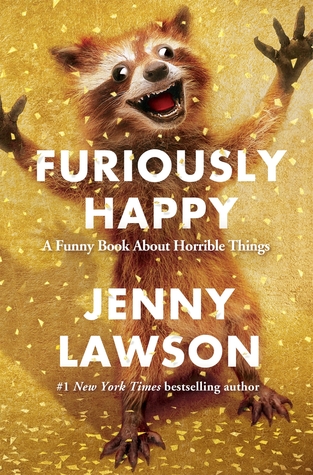
Furiously Happy: A Funny Book About Horrible Things by Jenny Lawson

Furiously Happy: A Funny Book About Horrible Things by Jenny Lawson
furiously happy

Jenny Lawson may not appeal to all readers, but I love her stuff. Her books are like open diaries and sometimes you just have to look away, but I always find myself looking back. I loved her first book and this one was even better.

In addition to being, in my opinion, uproariously funny, Jenny is a poster child for the millions who suffer silently from mental illness and the social stigma that goes along with that. She has more than embraced her condition, she’s transcended it into a weird alternate reality with grinning, taxidermied raccoons and brown (not white) Pegasuses with back herpes.

Though she obviously has her dark moments, Jenny’s world seems a lot more fun than the ordinary world. That in itself is miraculous when you consider the sheer amount of mental anguish that she’s lived through. I think Jenny gives people with debilitating mental illnesses hope- that they too can live a life filled with laughter, quirkiness and fun despite any obstacles.

It’s weird but my favorite part was the bit about Japanese toilets. I googled it and found out that Japanese toilets are a for-real “thing”- those buttons, squirting water and all. So, in addition to being entertaining and inspiring, this book could also be considered educational. 🙂

If you enjoyed Furiously Happy, you may want to try I’m Just a Person by Tig Notaro, Mother. Wife. Sister. Human. Warrior. Falcon. Yardstick. Turban. Cabbage. by Rob Delaney or Sleepwalk With Me and Other Painfully True Stories by Mike Birbiglia.

Thanks for reading!

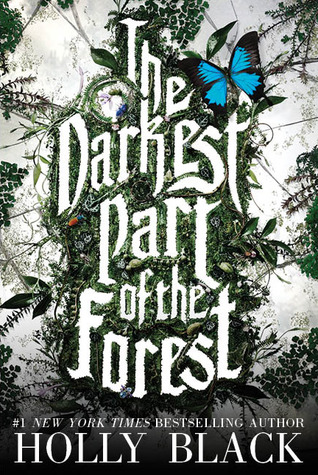
The Darkest Part of the Forest by Holly Black

The Darkest Part of the Forest by Holly Black

thedarkestpartThe Darkest Part of the Forest is a delightful fairy tale and coming-of-age story about a girl who wants to be a knight and a boy who wants to be loved.
The fairies in the woods around Fairfold are not the playful, glitter-winged sprites of popular culture. These are dark and frighting creatures who lure unsuspecting travelers into their caves and ponds to gnaw their flesh from their bones. They sneak into the homes of Fairfold and exchange their fairy children for the human ones. They will enchant and destroy on a whim.

But, Hazel and Ben aren’t afraid. Perhaps they should be.

I was charmed by this story. Holly Black has created a world that I want to step into despite its dangers. Highly recommended for young adults or the young at heart who are looking for a fantasy-filled escape from the real world.

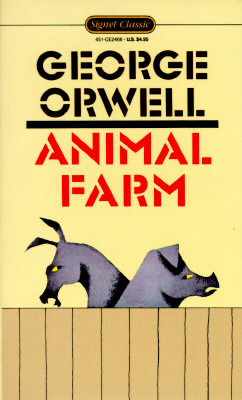
Animal Farm by George Orwell

Animal Farm by George Orwell

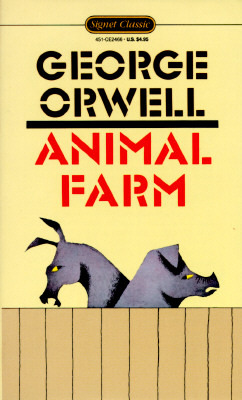
animalfarmContinuing my series on ‘books I should have read in school, but didn’t,’ I tackled Animal Farm, a short story that is not just a political metaphor, but also a fable about what can happen to even good-intentioned revolutionaries as, after a successful rebellion, they slide slowly but inexorably back towards everything that they fought against in the first place.
Here’s a simplified run-down of the plot: so, there’s a farm. The animals rise up against the farmer and take the place for themselves. They work hard, starve themselves even to succeed, and, despite all obstacles, keep moving forward. The pigs are the smartest, can read and set up the morality of the farm in the form of commandments which are written on the side of a barn in white paint.

Most of the animals can’t read, but they think they remember what the commandments say. Then, as the pigs become more like the humans they overthrew, they find that the commandments are changing to fit the behavior of the pigs. And finally, after much hardship, things come full circle and the pigs have set themselves up as the farmer used to be and everything starts over again.

This is from the preface by Russell Baker: “Orwell called the book “a fairy story.” Like Voltaire’s Candide, however, with which it bears comparison, it is too many other things to be so handily classified. It is also a political tract, a satire on human folly, a loud hee-haw at all who yearn for Utopia, an allegorical lesson, and a pretty good fable in the Aesop tradition.” introduction vi. Also, I would call it a warning. Think for yourselves or others will think for you. Educate yourselves or others will tell you what the words say and will re-write them to benefit themselves or their friends.

Please read everything you can get your hands on. Here’s what can happen if you don’t: None of the other animals on the farm could get further than the letter A. It was also found that the stupider animals, such as the sheep, hens, and ducks, were unable to learn the Seven Commandments by heart. After much thought Snowball declared that the Seven Commandments could in effect be reduced to a single maxim, namely: “Four legs good, two legs bad.” This, he said, contained the essential principle of Animalism.” pg 50.

How do traditions get started?: “Mr. Jones’s gun had been found lying in the mud, and it was known that there was a supply of cartridges in the farmhouse. It was decided to set the gun up at the foot of the flagstaff, like a piece of artillery, and to fire it twice a year- once on October the twelfth, the anniversary of the Battle of the Cowshed, and once on Midsummer Day, the anniversary of the Rebellion.” pg 60 The brilliance of this story is the way that Orwell takes completely human tendencies like remembrances, parades and political speeches and reveals them for the manipulating tools that they can potentially be in the hands of the selfishly motivated.

Or how about the archetype of the ‘reluctant’ leader? : “Comrades,” he said, “I trust that every animal here appreciates the sacrifice that Comrade Napolean has made in taking this extra labour upon himself. Do not imagine, comrades, that leadership is a pleasure! On the contrary, it is a deep and heavy responsibility.” pg 69. The superior housing, connections, salaries and kick-backs… leadership is indeed a heavy and nearly impossible to bear responsibility. It’s a wonder that anyone volunteers for it.

And finally, the poignancy in the memories of Clover, one of the longest lived animals on the farm: “If she herself had had any picture of the future, it had been of a society of animals set free from hunger and the whip, all equal, each working according to his capacity, the strong protecting the weak, as she had protected the lost brood of ducklings with her foreleg on the night of Major’s speech. Instead- she did not know why- they had come to a time when no one dared to speak his mind, when fierce, growling dogs roamed everywhere, and when you had to watch your comrades torn to pieces after confessing to shocking crimes.” pg 95 How did it all happen? Was it the grasping of the pigs? The helplessness of the illiterate but good-hearted animals? What was it? Fate?

The greatest lesson of Animal Farm is that I could imagine this tragedy happening in a town/state/country near me. Couldn’t you?

Thanks for reading.

Cress (The Lunar Chronicles #3) by Marissa Meyer

Cress (The Lunar Chronicles #3) by Marissa Meyer

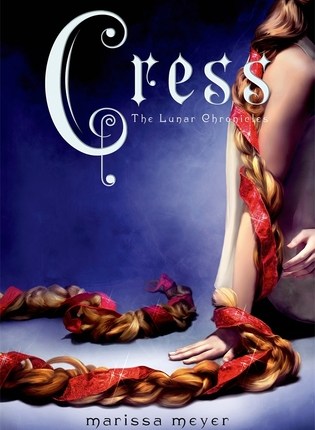
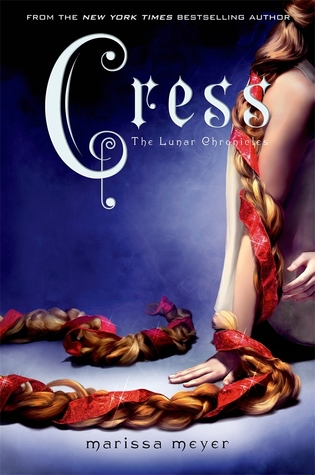
cressI’m pleased to report that this series continues to improve. Cress, the third entry in The Lunar Chronicles, introduces the reader (or audio book listener) to a girl named Crescent Moon.

Cress, for short, has long tangled hair like Rapunzel. The clever parallels to the classic fairy tale continue through the story and, of course, the characters from the first two books are woven throughout.

I find that I’m invested in Cinder’s story now whereas after the first book, I was lukewarm about the whole thing. And how about that Scarlet? I think her portion of this novel nearly gave me a heart attack.

No spoilers, but one of the most fascinating new characters in this entry comes from Luna. If you’ve read it, I’m sure you know who I’m talking about. Can this new person be as kind or genuine as he/she appears to be or is it all just another glamour? Here’s hoping.

Teen angst continues in this book but it is, thankfully, hidden behind intergalactic and earth-bound chase scenes and daring missions. Small gripe here, but did literally everyone in this book have to have a love interest?

And, in case anyone is wondering, I am still Team Iko. 🙂

Recommended for readers looking for slightly different fairy tales or who enjoy young adult fantasy. I can’t say that the first two entries lived up to the hype that I’d heard, but this one was approaching it.

Thanks for reading!

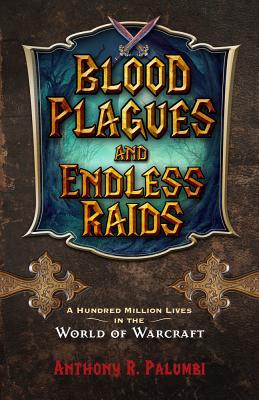
Blood Plagues and Endless Raids: A Hundred Million Lives in the World of Warcraft by Anthony R. Palumbi

Blood Plagues and Endless Raids: A Hundred Million Lives in the World of Warcraft by Anthony R. Palumbi
blood plagues

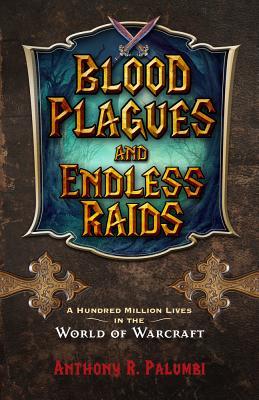
Anthony R. Palumbi’s memoir is about video games, relationships and play/life balance.

Blood Plagues and Endless Raids took a chapter for me to warm up to it. Palumbi begins his homage to World of Warcraft with an icky story about driving to meet his guild mates for the first time. But once I got past that part, I enjoyed this gaming memoir quite a lot.

I’ve mentioned in previous reviews that I am, or used to be, a very dedicated player of Everquest, both one and two. Though it never had the mammoth popularity of WoW, Everquest had quite a few things in common with the mega-hit including some game dynamics and gamer-speak. So, I found myself nodding along most of the time.

You don’t have to be a gamer to appreciate this memoir. Palumbi explains every slang term and technique that pops up. He also delves deeply into game morality, relationships in MMORPGs (massive multiplayer online role playing games), addictions, game burnout, the notable players and even how WoW entered popular culture. It is an informative and, for readers like me, a nostalgic treat.

Photo by Soumil Kumar on Pexels.com

Even though, in-game, Palumbi and I would have moved in entirely different circles. He’s a raider, you see. This means he’s into end-game content which in the old days took 40 or so players coordinating, in sometimes very complex ways, to master. I, on the other hand, prefer to wander around and see what there is to see. I like to fish and chat and have fun. Palumbi likes to PvP, strut his stuff in his rare gear and order the main tank around.

Beneath these differences though, there runs a love for gaming and the social-ness of it. He, and I, don’t have that anymore. People have moved on, had families and gone to different games. When I log onto EQ2, there’s not a single person on that I know anymore. It is very sad in some ways.

“Those who match up through games have come to know each other very well long before meeting in person. … WoW romance served, ironically, as a kind of return to romantic tradition, with separation or impossibility as a core component.” loc 467. Have I mentioned that I met my spouse in-game? Let me tell you the tale.

Photo by Luis Quintero on Pexels.com

So, I was wandering beneath the trees of Kelethin (a newbie zone for wood elves) and I was stuck in a perpetual corpse run loop. This was back when death had a cost- you’d die and lose every piece of equipment on your body unless you could go back to the scene and click your corpse. My friend had made me a nice leather piece of armor and I didn’t want to admit to him that I died and lost it, so I was looking for myself, literally. But, I was near Orc Hill and, well, I had died maybe half a dozen times looking for that tunic.

In the midst of this bloodbath, I get this ‘tell’ out of the blue (in WoW they’re called ‘whispers’) by this guy who goes “Hey, do you need some help?” And I experienced a moment of utter panic because I had always been told that people online were dangerous. But I threw caution, and my pride really, to the wind and said, “Yeah, I do.”

So these random guys helped me find most of my corpses and, as I logged on over the next couple of weeks, I met the rest of their friends. One of whom is the man I ended up marrying.

As many people as the games brought together, they also drove people apart. “Choosing a game over another person’s feelings felt strange enough on its own; to have one of my best real-life friends applauding this decision was disconcerting. At the same time, it was rewarding to hear that kind of praise from someone who’d always been so much better at games.” loc 661. I knew people who dropped out of college because of MMORPGs, lost their jobs or their relationships. Another sad reality, but true.

Palumbi also delves briefly into the gender divide on video games and how females are treated differently than their male counterparts. I honestly think that most people assumed I was a guy playing because it was more common. The last thing my future husband said before he flew out to meet me was “You are really a girl, right?” and I had to laugh. Because, REALLY, I am. So, I dealt with some harassment and discrimination because of my gender, but not a horrific amount. Sometimes it seems like I was in the lucky minority.

Highly recommended for current or former gamers or anyone who wants to understand a spouse who plays. Some further reading: You’re Never Weird on the Internet or Fantasy Freaks and Gaming Geeks: An Epic Quest for Reality Among Role Players, Online Gamers, and Other Dwellers of Imaginary Realms.

Thank you to NetGalley and Chicago Review Press for a free digital copy of this book. And thanks for reading!

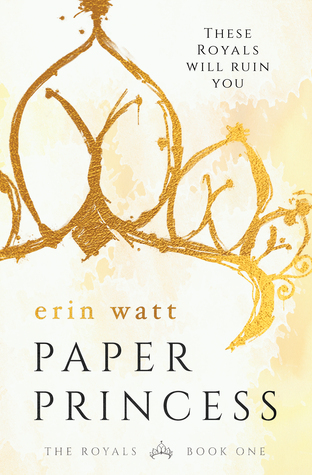
Paper Princess (The Royals, #1) by Erin Watt

Paper Princess (The Royals, #1)  by Erin Watt

paperprincessWow. And my library had this shelved with the young adult. I need to tell someone…

First of all, how scandalous. From graphic sex to underage drinking, fighting, stripping- this book is wild.

I know erotica is incredibly popular. I don’t judge what people read. Really. But this one was just so… I don’t even know how to describe it. I’ll just let some of the lines speak for themselves.

“This house is an illusion. It’s polished and pretty, but the dream Callum is trying to sell is as flimsy as paper. Nothing stays shiny forever in this world.” pg 32 Hence, the title of this book.

“You’re playing a dangerous game,” he rasps out. Don’t I know it. Still, I can’t let Reed see he’s gotten to me. I pull my hand away, folding the fingers into a fist. “I don’t know any other way to play it.” pg 92. Eye roll.

“My skill, if I have one, isn’t dancing. It’s my ability to believe that tomorrow can be a better day.” pg 171. Like a formerly stripper version of Scarlet from Gone with the Wind.

And finally: “When we get home, I run upstairs to add ‘the drive’ to my mental catalog of wonderful things that have happened in my life. I place it right after ‘blow job’.” pg 320 I have nothing to say.

But what could one possibly say after a literary gem like that.

No spoilers here, but who among us didn’t see the ending coming from a mile away? With all of that ‘calf touching’ by the pool, hungry eye foreshadowing and whatnot?

I am appalled that this has a YA sticker on it, more like rated X. I wonder how many 12 and 13 year olds picked this up thinking it was another The Selection.

Borrow from the library responsibly and thanks for reading!