Artemis: The Indomitable Spirit in Everywoman by Jean Shinoda Bolen

Artemis: The Indomitable Spirit in Everywoman by Jean Shinoda Bolen
artemis

In Artemis, Jean Bolen discusses the importance of archetypes and mythological stories. She asserts that we don’t just enjoy the stories for their entertainment value- we respond to the psychological truths contained between the lines.

I’ve always enjoyed academic discussions of mythological tales. I never really knew why though until I read this book.

The meanings of mythology are so layered that our conscious minds may not even know that our subconscious minds are latching onto the veiled truths. We love them without realizing their importance.

Artemis: The Indomitable Spirit in Everywoman contains an intricate dissection of the tale of Atalanta, a mortal whose life paralleled the goddess, Artemis, in many ways.

I think I had been exposed to this tale in a classical mythology course in college, but the complex Jungian psychology that goes along with it wasn’t explained to this extent. Bolen’s explanation of the myth is masterful.

One archetype in particular that I enjoyed learning about was Selene/Endymion. Sometimes, in the frantic growth to adulthood, one can feel alone in their struggles and inner landscape.

Photo by luizclas on Pexels.com

I’ve known so many girls (myself included) who were living that pattern but they didn’t even know it. Bolen’s explanation of the motivations and the potential growth that can accompany this life pattern was enlightening as well as encouraging.

Bolen ties humanity together through shared experiences and mythologies. She makes the reader feel that, no matter what they have gone through, they are not and have never been alone. It’s a very empowering message.

My minor in classics covered much that was discussed in this book but the feminist lens that was applied to the mythologies was very unique and different from what I have learned in the past.

Photo by Taryn Elliott on Pexels.com

In addition to the myths, Bolen includes contemporary fictional heroines as well as real life figures who embody the archetypes. I liked that she traveled beyond the boundary of the tales to apply the energies to real life.

Young women who aspire to embody the vision of Artemis in all of her variations in their own life will find many examples to emulate within these pages.

I enjoyed this quite a lot. I haven’t read Bolen’s Goddesses in Everywoman but this book makes me want to dive into it.

I’d recommend this book to anyone who’s interested in Jungian psychology, mythology or the elevation of the human spirit.

I received a free copy of this book through Goodreads First Reads. FTC guidelines: check!

Thanks for reading!

The Power of Personality: How Introverts and Extroverts Can Combine to Amazing Effect by Sylvia Loehken

The Power of Personality: How Introverts and Extroverts Can Combine to Amazing Effect by Sylvia Loehken
powerpersonality

The Power of Personality is more than just another book that picks apart the obvious differences between introverts, centroverts, and extroverts. It delves very deeply into the strengths and possible hurdles that each face in business, social situations, and with each other.

Loehken presents management techniques for the different personality types and how one might leverage innate characteristics for the most positive outcome possible in a variety of ways. I found the book to be very helpful in explaining my own reactions to most perceived conflicts.

I hope to utilize what I’ve learned in the future to harness my strengths while minimizing the others. Some of my more damaging introverted tendencies are that I’m conflict/contact adverse and easily overstimulated in every day life.

I thought when Loehken discusses how the different personality types view each other that her descriptions were spot on. I think I do tend to categorize most extroverts as loud, unthinking buffoons. My mistake.

I suppose that extroverts view me as “boring, lame duck, sensitive flower, unsociable, professional worrier, reader, timid”pg 51. I never considered why.

Photo by Armando Are on Pexels.com

Perhaps now with a more educated mindset, I can embrace personality differences and work more smoothly with extroverts. Rather than, in my previous experience, pushing them away so that I can have some peace and quiet.

The other portion of the book that I enjoyed is Chapter 8: Stressful Encounters: Status Games pg 161. It reminded me of a book on body language, I Can Read You Like a Book: How to Spot the Messages and Emotions People Are Really Sending with Their Body Language. But, instead of just focusing on body language, Loehken goes into all manner of status symbols, interactions, and conversational cues.

She dissects how, particularly introverts, do themselves a disservice in their professional and personal lives because of how they perceive and react to conflict. It blew my mind.

It may be because this is a European book (the price on the back is listed in pounds) but I have never read anything like this in an American business book. Loehken talks about the unwritten rules of polite society and how, in sometimes subconscious ways, we shape our relationships and our status to the people around us.

Photo by fauxels on Pexels.com

One of her tips for dominating or owning space that I’m going to integrate into my life (right now!) is to sit fully on an office chair instead of perching on the edge. “If you take the whole seating area of a chair, this has a higher status effect than someone who only takes up half the seat or sits on the edge.”pg 175. Lesson learned.

The weak part of this book was any of the bits that dealt with centrovists. Basically, Loehken kept saying (paraphrasing in my own words) ‘If you’re a centrovist, you enjoy the benefits from both types of personalities and will therefore be more successful in whatever it is that we’re talking about in this section.’

It got kind of annoying after awhile because Loehken tells us that everyone exists on a scale of personality (we’re rarely entirely one type or another from situation to situation) so the centrovist advice could have been most applicable for every reader. Unfortunately, it felt more like a ‘Captain Obvious’ moment every time it came up rather than a revelation.

If you enjoyed The Power of Personality, I’d suggest reading I Can Read You Like a Book: How to Spot the Messages and Emotions People Are Really Sending with Their Body Language. It deals with body language rather than the driving personality behind the body, but it is still illuminating. It helps readers monitor the involuntary signals that we send out in our day to day interactions, how to leverage your movements and to send the message that you want to send, rather than broadcasting your internal mindset unintentionally.

I received a free copy of this book through Goodreads First Reads. FTC guidelines: check! Thanks for reading!

Batman: The Killing Joke by Alan Moore

Batman: The Killing Joke by Alan Moore

I’ve decided to explore the world of superhero comics. First on my list, Batman: The Killing Joke by Alan Moore.

Photo by BROTE studio on Pexels.com

The story opens on a dark and stormy night. We’re heading into Arkham Asylum with Batman. After passing a few famous inmates, we’re outside inmate #0801, Name Unknown’s cell.

A shadowy figure is playing solitaire within the barred room. It’s The Joker.

By far, one of the creepiest villains of the Batman pantheon.

“So when you find yourself locked onto an unpleasant train of thought, heading for the places in your past where the screaming is unbearable, remember there’s always madness. Madness is the emergency exit…”

He is mad, yes, but brilliant in his insanity. And, in that, is he so different from the rest of the human race?

“Faced with the inescapable fact that human existence is mad, random and pointless, one in eight of them crack up and go stark slavering buggo! Who can blame them? In a world as psychotic as this… any other response would be crazy!”

Photo by adnorf on Pexels.com

Recommended for the more mature graphic novel readers because of some disturbing content and images, Batman: The Killing Joke is no joke and one heck of a ride.

Watchmen, also by Alan Moore, is one of my all time favorite graphic novels, so I was expecting to enjoy this one. If you haven’t had a chance to read it yet, it’s another must-read for the graphic novel fan.

Thanks for reading!

Hellhole by Gina Damico

Hellhole by Gina Damico
hellhole

Hellhole is a modern Faustian tale about Max Kilgore, his deathly ill mother and the devil.

Though written for a young adult audience, readers need to be aware that there are some bad words in the dialogue and innuendo in some situations. All kids are different, but I’d lean towards 15 and up forHellhole.

Our hero is just a regular guy: “Seventeen-year-old Max Kilgore suffered from the unfortunate curse of having a name that was far cooler than the person it was attached to.” pg 8, ebook.

Max attends high school, holds down a job and cares for his ailing mother in Eastville. “The town of Eastville was known for four things: its renowned hospital, its renowned high school football team, its renowned granite quarry, and its stupid, stupid name. No one could say with authority what Eastville was supposed to be east of…” pg 13, ebook.

One day, after a bad decision on Max’s part, Burgundy Cluttermuck (Burg) walks through his door. “The name is Burgundy Cluttermuck, devil-at-large. I do bachelorette parties and retirement galas, but no more children’s birthday.” He sucked in some air through his teeth. “Too much screaming.” pg 38.

How is Max going to get rid of him? And how long is this devil going to stick around? It’s dangerous to have a devil around the house: “He won’t go after you. He’ll go after the ones you love, and then you’ll have to live with the guilt. That’s your ‘punishment for dealing in devilry’…” pg 107, ebook.

Photo by PhotoMIX Company on Pexels.com

Recommended for young adults, 15 plus. If you enjoy this book, a similar read is The Gentleman by Forrest Leo.

Thanks for reading!

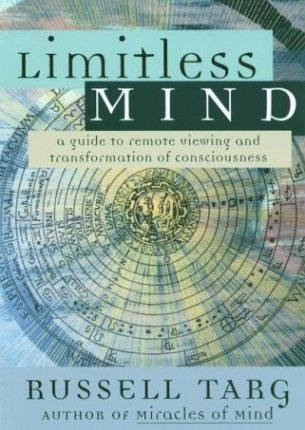
Limitless Mind: A Guide to Remote Viewing and Transformation of Consciousness by Russell Targ

Limitless Mind: A Guide to Remote Viewing and Transformation of Consciousness by Russell Targ
limitless mind

Russell Targ is one of the founding members of the Stanford Research Institute’s studies of psychic phenomena. He worked with Hal Puthoff and Ingo Swann to develop the remote viewing protocols for the CIA.

Remote viewing, though lambasted in popular culture in such films as “Men who Stare at Goats,” is an actual practice. It was utilized by United States and Russian militaries with some success or complete failure- depending on who you ask.

I thought that a handbook on remote viewing from this seminal scientist would delve more into the nitty-gritty of the practice. But, it doesn’t.

Targ does give a broad outline of what remote reviewing is. He also give examples of his research, but it wasn’t all that I had hoped it would be.

Limitless Mind is, however, packed with information about psychic studies from the late 1800’s until the current time. Targ discusses the studies from multiple countries covering such diverse topics as spoon bending, distance healing and psychic diagnosis.

If the reader is looking for remote viewing techniques only, I’d recommend Remote Viewing: The Complete User’s Manual for Coordinate Remote Viewing or The Seventh Sense: The Secrets of Remote Viewing as Told by a “Psychic Spy” for the U.S. Military.

Thanks for reading!

The Lumberjanes, Vols. 2, 3 & 4 by Noelle Stevenson

The Lumberjanes, Vols. 2, 3 & 4 by Noelle Stevenson

Welcome to a special triple review at The Help Desk! Today, we’re looking at The Lumberjanes– a delightful series of graphic novels that is appropriate for ages 10 and up.

The Lumberjanes are a type of girl scout, but so much cooler.

Their camp is surrounded by menacing forest from which comes an abundance of magical monsters. With their courage, smarts and friendships, the Lumberjanes overcome all obstacles.

It is similar, in theme, to Gravity Falls and may greatly appeal to reluctant readers.

lumberjanes2

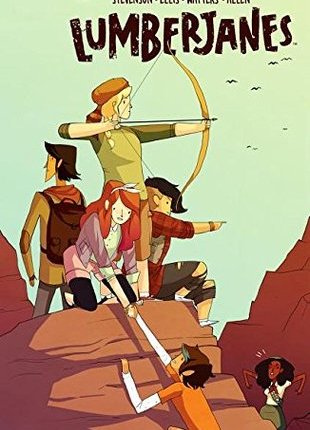
Lumberjanes, Vol. 2: Friendship to the Max

Is there anything a Lumberjane can’t do? I don’t think so.

From monsters to mysteries to zombified boy scouts, the Lumberjanessaga continues in this fun graphic novel.

Friendship to the max!

If only I could convince my reluctant reader to give it a try… I think she’d love it. Highly recommended for everyone.

lumberjanes3

Lumberjanes, Vol. 3: A Terrible Plan

This entry in the Lumberjanes series opens up with the classic setup of ghost stories being told around a campfire. The girls’ different personalities are highlighted in the stories they choose to tell.

Then, the camp has a free day where everyone can pick their own activity. Hijinks ensue.

Mal and Molly go on a picnic date in the woods and, in typical Lumberjane fashion, something totally unexpected happens.

“Molly, we are doomed. SO DOOMED. AN UNSCALABLE MOUNTAIN OF DOOMED.”

“Mal, come on. We’re gonna figure this out. It’s going to be fine…”

Are they doomed? Will April, Jo and Ripley be able to earn at least one badge before the day is up?

Read this book to find out!

Recommended for everyone.

lumberjanes4

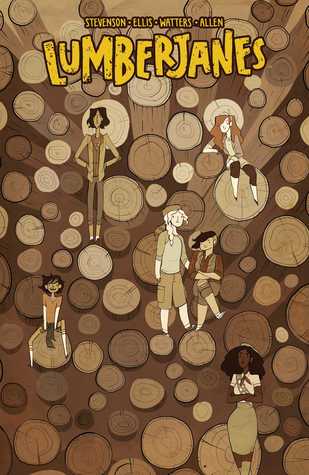
Lumberjanes, Vol. 4: Out of Time

Lumberjanes, Vol. 4 finally delivers a story line in which Jen gets a chance to shine. Yay, Jen!

We are also treated to a bit of background about Camp Lumberjane itself.

Also, the weather takes a turn as a winter blizzard appears out of nowhere… in the middle of summer.

Things are awfully weird around here. Good thing the Lumberjanes have each other.

Recommended for the adventurous reader and timid reader and everyone in-between.

Thanks for reading!

Brave New World by Aldous Huxley

Brave New World by Aldous Huxley
bravenewworld

Although not my favorite of the classic dystopians, Aldous Huxley’s Brave New World is certainly a ground-breaking work about societal control through genetic manipulation, subliminal conditioning and socially acceptable drug use.

You are not born into this world; you are decanted. The institution of the traditional family has fallen apart- is even considered obscene.

Children run about naked and wild, experimenting with sex from a shockingly young age. This is a world where everyone’s body belongs to everyone else. Promiscuity is encouraged as well as mass consumption and instant gratification.

Men and women take a drug called “soma” to mellow out any pesky emotions. It is also used in quasi-religious ceremonies and public gatherings to create a kind of ecstasy.

A strict caste system is in place from the moment a baby is decanted. Societal mores are whispered into children’s ears thousands of times per week while they sleep. So, when they grow up, they fit seamlessly into the role that the world has chosen for them from conception.

Not everyone is happy in this world. Can you imagine that? Perhaps they just need more soma…

Recommended for those who enjoy classic works that examine the way society’s systems constrain and suffocate those who, for whatever reason, don’t or can’t fit in.

Thanks for reading.

Time in a Bottle: Mastering the Experience of Life by Howard Falco

Time in a Bottle: Mastering the Experience of Life by Howard Falco
timeinabottle

Time in a Bottle is a self help book about changing your perceptions to improve your life. Though not a new message, some readers may find this book worth the time.

Howard Falco presents this knowledge with a spiritual slant. Readers who are turned off by that kind of thing may want to choose another book.

The main premise: “Our misunderstanding of time- how our thoughts relate to time, how time is actually created, and how time seems limited- is one of the biggest reasons we suffer and at times feel hopeless or powerless in our lives.” pg 1, introduction.

One of the ways to “master the experience of life” is to realize that you are infinite potential like the universe itself: “You are a part of infinity. To the degree that you feel that life is finite and limited, you will act out of this fear, and work to create an experience that is a result of this fear.” pg 33.

I agree that mindset is important to determining your life’s path. Love and fear seem to be the two driving forces of our world. Wonder why that is…

Photo by Nacho Juu00e1rez on Pexels.com

Falco also discusses giving up resistance to how life is: “It is critical that you know that the ending of your resistance toward any particular thing (sickness, layoffs, war, family, financial trouble, death, political chaos, natural disasters, etc.) is not in anyway condoning these terrible things or giving up on change. It is simply the full acknowledgment that for the moment this is what is happening.” pg 40

He talks about giving up regrets about the past that could potentially be holding you back: “This is not about accepting that something had to happen to you; it is about acknowledging that it did happen and standing in front of the universe saying, “I trust that there is perfection and a specific, divine purpose for my past and the exact way it unfolded. Because of this, I am realizing more of my unlimited potential for the future.”

So then, unburdened, you step into your future with faith.

Falco incorporates quotes from famous philosophers and scientists along with anecdotal stories to illustrate his points. As I said, no new wisdom here, but plenty of good reminders to trust, forgive and move forward to a life outside of time.

Thanks for reading!

Night by Elie Wiesel

Night by Elie Wiesel

Night is Elie Wiesel’s memoir about his experiences during the Holocaust. It is shocking and sad, but worth reading because of the power of Wiesel’s witnessing one of humanity’s darkest chapters and his confession on how it changed him.

Photo by Pixabay on Pexels.com

In the new introduction to the ebook version I read, Wiesel talked about the difficulty he had putting words to his experience. “Convinced that this period in history would be judged one day, I knew that I must bear witness. I also knew that, while I had many things to say, I did not have the words to say them.” pg. 7, introduction

The original version of Night was written in Yiddish. I wish I knew enough Yiddish to read it. There’s something powerful about reading books in their original form.

Wiesel closes his introduction with his reasons for writing this book:“For the survivor who chooses to testify, it is clear: his duty is to bear witness for the dead and for the living. … To forget would be not only dangerous but offensive; to forget the dead would be akin to killing them a second time.” pg 12, introduction.

Even though a member of his community warned Wiesel’s village about the horrors that awaited them, they didn’t believe him.

Photo by Engin Akyurt on Pexels.com

After they were placed in a ghetto, the Jewish population of Sighet thought that the worst was behind them. “Most people thought that we would remain in the ghetto until the end of the war, until the arrival of the Red Army. Afterward everything would be as before. The ghetto was ruled by neither German nor Jew; it was ruled by delusion.” pg 26, ebook.

If I had been in their place, I don’t think that I would have acted any differently. How could one possibly imagine the horrors that they were going to face?

Wiesel is starved, overworked and beaten in the concentration camps. He loses more than his family and faith: “One day when I was able to get up, I decided to look at myself in the mirror on the opposite wall. I had not seen myself since the ghetto. From the depths of the mirror, a corpse was contemplating me. The look in his eyes as he gazed at me has never left me.”pgs 110-111 ebook.

Another Holocaust survivor’s memoir that I highly recommend is Man’s Search for Meaning by Viktor Frankl. Never forget.

Thank you for reading.