The Kingdom of Little Wounds by Susann Cokal

The Kingdom of Little Wounds by Susann Cokal

The Kingdom of Little Wounds is about a seamstress, a nursemaid and a royal family haunted by illness. It is a, sometimes very, adult tale about secrets, sex and power.

Confession: I picked this one out at the library for the cover.

I saw it and thought, “This must be a young adult fantasy of some kind about a princess who works magic with needles.” Sometimes it’s nice to indulge in a pleasant escape from the world.

So, this book is nothing like that.

In the afterword, Susann Cokal describes her work as “a syphilitic fairy tale.” There’s nothing wrong with that. It just really wasn’t what I expected and wanted it to be.

This tale has rape and madness to it. There’s also some torture, severing of body parts and other pretty gross stuff that goes on.

It is definitely geared towards an adult audience. Librarians, please put it in the proper collection. It is not young adult.

The main characters, Ava and Midi, are likeable but powerless. “I truly would like to think I’m in the middle of a fairy tale, facing the period of hardship that precedes a triumph. But I am not a likely heroine.” pg 9, ebook.

The king, Christian, is ridiculous and controlled by his courtiers. “Have you found any… any culprits?” Sir Georg hesitates, and the favorites tense. Who will be blamed? A Lutheran? … Or perhaps some cousin with a tenuous but plausible claim to succession – someone who should be removed for the health of the court anyway?” pg 77, ebook. Notice how they are unconcerned with justice.

Alliances and power shift quickly in this story like the tide. The characters never know who they can trust. “We are all, of course, in service of the Crown and King. Who is known for being liberal with his gratitude, no matter what the rank of the creditor.” I recall something my mother used to say: Be wary of a promise without a clear price.” pg 131, ebook.
Photo by Mike on Pexels.com

Also, in the afterword, Cokal shared that a piece of this story, the appearance of a star, actually happened in Europe in the late 1500’s, early 1600’s. “The new star has put all of us off balance. We’ve always expected things to change down below, in the canals, the streets, and so on, but the heavens have been constant in our memory. This star shines even in the daylight, as if to drive away the sun. It is so bright that it seems heavier than the rest; we have the impression that if we were to stand on tiptoes, we might touch it.” pg 192, ebook.

Recommended for readers who aren’t bothered by dark themes and are in the mood for a “syphilitic fairy tale.”

Thanks for reading!

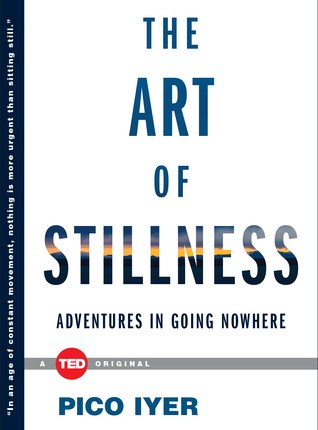
The Art of Stillness: Adventures in Going Nowhere by Pico Iyer

The Art of Stillness: Adventures in Going Nowhere by Pico Iyer
artofstillness.jpg

Pico Iyer approaches stillness from a Buddhist perspective in “The Art of Stillness.”

“And it’s only by going nowhere- by sitting still or letting my mind relax- that I find that the thoughts that come to me unbidden are far fresher and more imaginative than the ones I consciously seek out.” pg 62.

It’s not a world that most people are accustomed to experiencing, a space of being rather than an active doing. But, as Iyer so succinctly illustrates, it’s a realm that our fast-paced and technology addicted world desperately needs.

To venture into this emptiness is a restful and required experience for the health of the mind as much as inspired action is necessary for the experience of a fulfilling life.

I think that our culture has forgotten the power of stillness and the beauty of balancing our male and female energies. This book is an excellent reminder to appreciate both.

For those folks out there who haven’t heard Pico Iyer’s TED talk on this topic, I would recommend that you watch it first, then read this.

I read this and then I listened to the talk. Almost all 18 minutes of it were taken verbatim from The Art of Stillness. So, you’ll enjoy it more, I believe, if you do the opposite of what I did.

My big takeaway from this was the idea of air travel as “a retreat in the sky” pg 56. I dislike flying to the point where I tend to reach my destination exhausted and ready to return home the moment I land.

I think if I could successfully adopt the process that Iyer describes of treating the flight as a “meditative retreat” that I could change my experience of air travel from a nightmare into a restful pause.

There are many large ideas like that contained within this small book.

For the right person at the right time, The Art of Stillness could change her life. As Iyer says, The Art of Stillness doesn’t contain any “new” ideas but they are powerful and much needed ones.

Readers who are short on time, but big on stress may really love this book.

I received a free copy of this book through Goodreads First Reads. FTC guidelines: check!

Thanks for reading!

Born Round: The Secret History of a Full-time Eater by Frank Bruni

Born Round: The Secret History of a Full-time Eater by Frank Bruni
frankbruni

Born Round by Frank Bruni is satisfying memoir about a life-long struggle with food, a loving family and a journalist’s journey to find the beat he was born to eat… I mean, write.

I enjoyed all of Frank Bruni’s wandering memories. Like him, I grew up in a family where most of our gatherings center around food, eating, drinking and holidays. They still do.

Unlike Frank, I never tried “Mexican speed” or bulimia to try to manage my weight. Learning about some of the behaviors he used to maintain a weight he found acceptable was scary.

I can’t help but think that if we didn’t expect so much of each other, what a happier world this would be. Idolizing impossible body standards in the mass media does no one any favors.

When Frank goes on to become the food critic for the New York Times, I loved hearing about the subterfuges he used to hide his identity. I didn’t even know he was a food critic when I picked this book out of the digital audiobook pile.

Photo by Pixabay on Pexels.com

But, of course, that is what the boy, who loved to eat, became. Isn’t it funny how our life’s paths find us?

There are some extraordinarily vulnerable moments in Born Round. Frank is honest and doesn’t sugarcoat some of his tougher times, especially with his mother.

This memoir could potentially be a trigger for someone who suffers from an eating disorder, but, it is mainly a story about overcoming all that and adopting healthier behaviors.

Recommended for people who enjoy honest and open memoirs about families, food and how one man became the food critic he was literally born to be.

Thanks for reading!

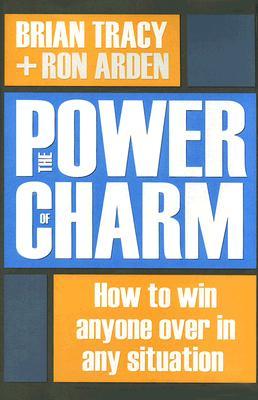
The Power of Charm: How to Win Anyone Over in Any Situation by Brian Tracy and Ron Arden

The Power of Charm: How to Win Anyone Over in Any Situation by Brian Tracy and Ron Arden

The Power of Charm is a book written for business professionals, who want to give themselves a bit of a leg up, by increasing their charm potential.

I found the book to be interesting, but it also flirts with the line between charming and manipulating. I suppose we could ask ourselves if, at the end of the day, there is any difference between the two.

Personally, I think there is.

Photo by Kat Smith on Pexels.com

In my mind, charm is unrehearsed, natural and springs from a genuine interest in others. Manipulation is ego-driven scheming. But, both can get you what you want.

I’m torn as to how this book actually fell on that scale. Some of the exercises feel like charm practices- others, like manipulation strategies.

Essentially, Brian Tracy and Ron Arden give listening and speaking tips to better understand whoever it is you’re interacting with. There’s nothing all that manipulative about polishing your communication skills.

On the other hand, in the chapter entitled: “Do Your Homework” in which the authors say, “Anytime you are getting together with someone, socially or professionally, whom you particularly want to impress, do your homework. Learn what you can about that person before you actually meet. It’s the best way to be charming and interesting to others.” pg 107. It didn’t sit so well with me.

Photo by Eduardo Dutra on Pexels.com

Here’s why- Tracy gives the following story as an example: “I learned of a successful business owner with a crack sales team who was discontented with the company he was representing. … In asking around, I discovered that he was heavily into numerology and made all his decisions based on the numbers of the birth dates of potential business partners… One of his first questions of me was my birthday. I was prepared. I told him that it was a certain day, month, and year that added up to a ‘lucky number’ for business relationships. … The preparation was the key.” pg 108.

That smacks to me of manipulation rather than charm. What do you think?

On the other hand, I seriously appreciated the tips on how to become a better conversationalist. I’ve got some work to do there.

Generally, I let my fast-talking husband take the lead in social conversations because he always has something to say. I see now how that may be a disservice to others who may want to get to know me better.

“The Secret of Charm: The deepest craving of human nature is the need to feel valued and valuable. The secret of charm is therefore simple: make others feel important.” pg 12.

It is as simple and powerful as that. I’d also recommend being kind. The world could use more charm and kindness.

Recommended for readers who understand the difference between charm and manipulation. I’m not sure that includes me, but I’ve already read it so… sorry.

And thanks for reading!

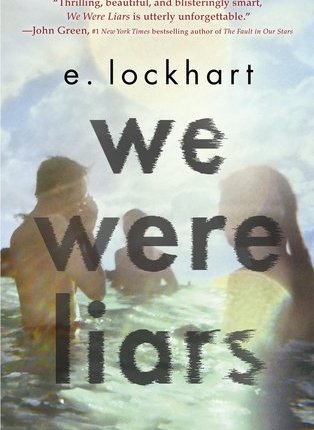
We Were Liars by E. Lockhart

We Were Liars by E. Lockhart

The Sinclair family is blonde, beautiful and wealthy. They gather together in the summer on a private island owned by the patriarch of the family.

Cadence Sinclair Eastman is ill. A terrible accident a few summers ago left her with debilitating migraines and a faulty memory.

Can she put together the pieces of what happened before she has to leave for the summer?

We were Liars is a fantastic coming-of-age book with an unreliable narrator, forbidden love and an excellent twist that I’ll bet you won’t see coming. (I know I didn’t.)

“We are Sinclairs. No one is needy. No one is wrong. We live, at least in the summertime, on a private island off the coast of Massachusetts. Perhaps that is all you need to know.” pg 26, ebook.

This is not a family who wears their hearts on their sleeve: “We believe in outdoor exercise. We believe that time heals. We believe, although we will not say so explicitly, in prescription drugs and the cocktail hour. We do not discuss our problems in restaurants. We do not believe in displays of distress. Our upper lips are stiff, and it is possible people are curious about us because we do not show them our hearts.” pg 55, ebook.

Photo by Matt Hardy on Pexels.com

Cadence, her cousins and Gat, the nephew of one of the boyfriends of a Sinclair daughter, call themselves, ‘The Liars’. Why they do so is one of the biggest mysteries in the story and I won’t ruin it for you.

I loved this book. I loved the tone, the mystery and the slow reveal.

I also loved how the reader gets to know Cadence so completely. This is not a story that leaves you wondering about character motivations.

Highly recommended for fans of young adult books, coming-of-age tales and stories with unreliable narrators. We were Liars may just be one of my favorite reads of 2017.

Thanks for reading!

The Spy by Paulo Coelho

The Spy by Paulo Coelho

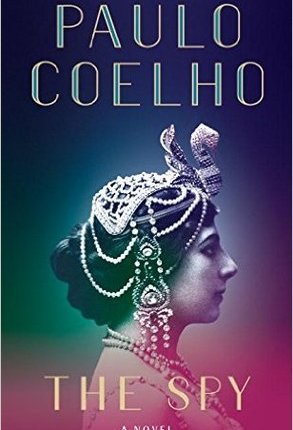
The Spy is the story of Mata Hari, told first in her voice and then from the point of view of one of her male admirers.

Paulo Coelho isn’t at his best in this novel.

Photo by Faisal Rahman on Pexels.com

He prefers and excels at metaphorical stories. For example, in this tale, Coelho has Mata Hari comparing herself to the nightingale that impaled itself on a thorn to grow a bright red rose for a young man in love.

I get what he was reaching for- but I think this tale would have been told better through details rather than metaphors.

Also, it’s so short. The audiobook was only a couple hours long.

It wasn’t nearly long enough to do Mata Hari’s life justice.

I first learned about the fascinating life of Mata Hari in Inspired!: True Stories Behind Famous Art, Literature, Music, and Film by Maria Bukhoninia. There were enough unbelievable things that happened in Mata Hari’s life to make a compelling historical fiction.

Photo by Pixabay on Pexels.com

Sadly, this didn’t quite fit the bill for me.

If you’re going to read a Coelho novel, may I recommend The Alchemist. (Which is also a novel people love or hate. I fell on the side of love.)

Thanks for reading!

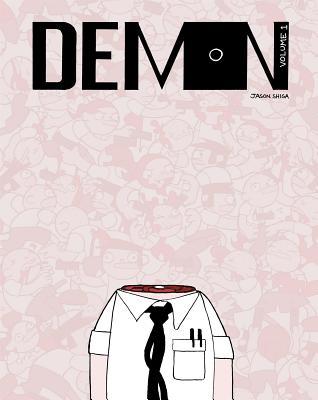
Demon, Volume 1 by Jason Shiga

Demon, Volume 1 by Jason Shiga

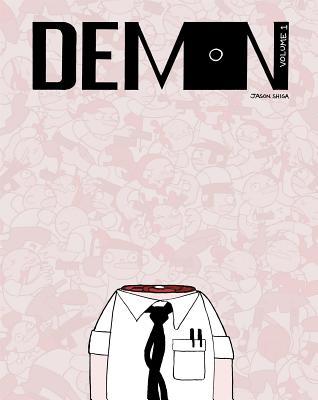
demonAn edgy, simply-drawn comic about a man who tries to commit suicide, but keeps waking up alive. There’s an unexpected twist and lots of blood.
In the author’s own words: “From the suicide depicted on the first page of the story to the climactic bloodbath three volumes later, Demon is my gleeful homage to the lurid and pulpy entertainment rags that make up the detritus of our childhoods.” From the foreword.

I see what he was trying to do. It just wasn’t for me.

For Jason Shiga, this was a very personal work: “Ultimately, Jimmy is me. When he leaps in front of a semi-trailer, it’s really me who secretly wants to do that. When he acts in a deliberately amoral and antisocial manner, that’s me, too.” From the foreword.

Shiga warns readers from the start that Demon is crass and graphically violent. And, it is.

Oh well. Next book!

Thanks for reading.

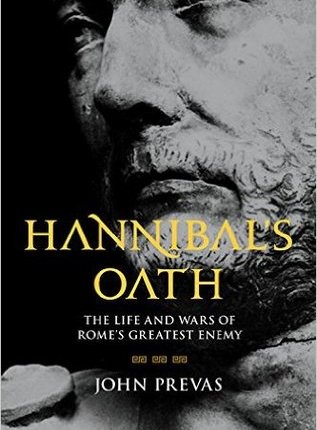
Hannibal’s Oath: The Life and Wars of Rome’s Greatest Enemy by John Prevas

Hannibal’s Oath: The Life and Wars of Rome’s Greatest Enemy by John Prevas

A fascinating and true study of Hannibal, one of ancient Rome’s greatest enemies, a brilliant general and, according to John Prevas, a “larger-than-life action hero from the past.”

Prevas did the translations from period and later documents, historical research and traveled to the places where Hannibal went, to create one of the most insightful, non-fiction examinations of Hannibal that I’ve ever read.

It all started with Hannibal’s father, Hamilcar. “Hamilcar was furious at what he saw as Roman bad faith, but powerless to intervene at the moment, he chose to bide his time and find another way to even the score.” loc 290, ebook.

Photo by Skitterphoto on Pexels.com

Spoiler alert (if you don’t know ancient history): Hamilcar had a bunch of kids and made them swear to destroy Rome. The boys, he groomed as warriors; the girls, he married off advantageously to help his sons.

“As the rituals neared completion, Hamilcar called for Hannibal, then only nine years of age, to join him at the altar. There, the young boy begged his father to take him to Spain, and Hamilcar consented on the condition that Hannibal pledge to the god he would always be an enemy to Rome and to anyone who stood with Rome.” loc 323, ebook. No pressure or anything.

The Barcas, Hamilcar’s family, create a foothold in Spain. It is from there, that Hannibal will eventually attack the Romans by, famously, crossing the Alps- with elephants in tow.

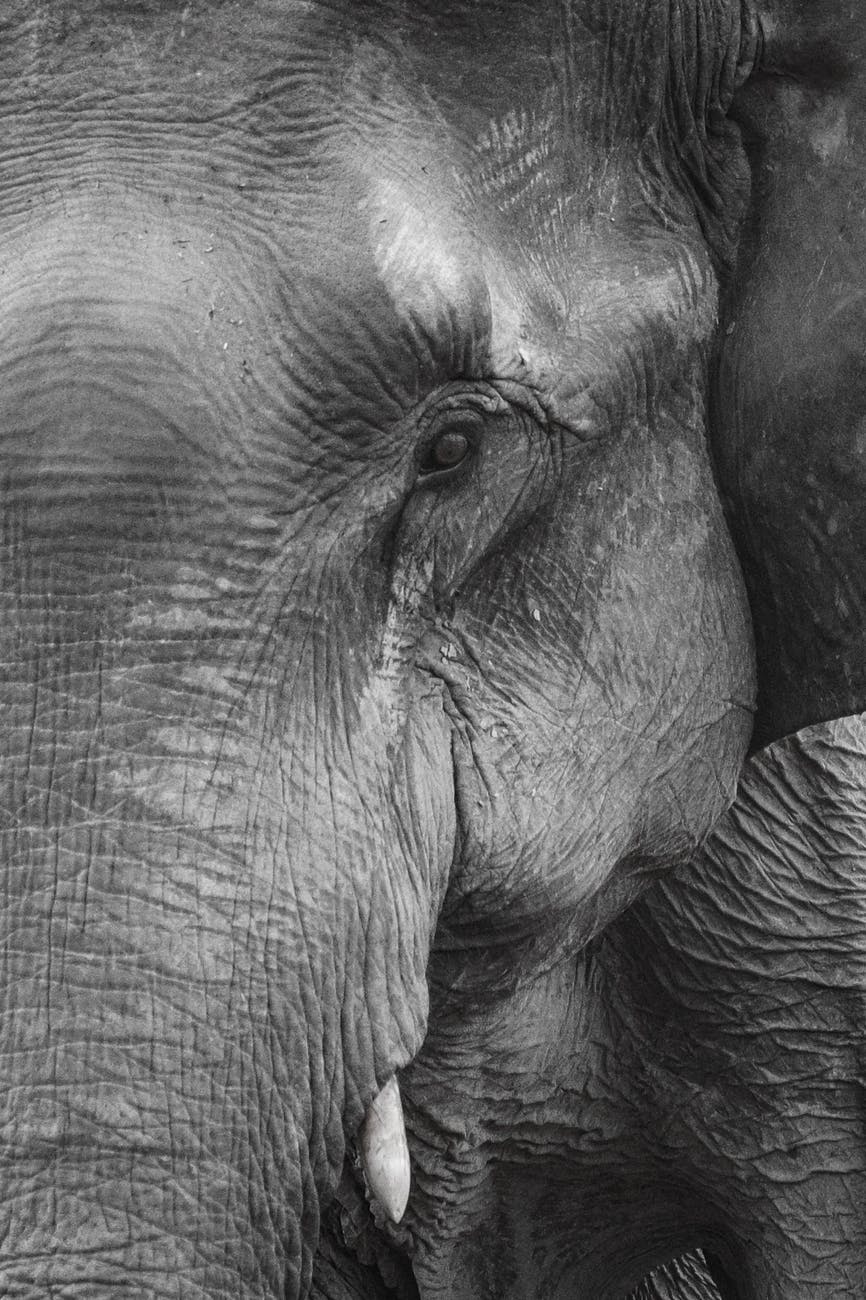
Anything to do with Hannibal’s elephants were my favorite parts of this book. “The elephants were often plied with wine before battle to stimulate their aggression, and while the wine might have done that to some degree, it also seems to have contributed to their tendency to panic and then rampage during the mayhem of the fighting.” loc 713, ebook.

Drunk, rampaging elephants! It doesn’t get much more dramatic than that.

Though written more like a textbook than a historical fiction (which is my favorite way to learn about history), I still learned a lot from Hannibal’s Oath and enjoyed it.

Recommended for classic majors, elephant lovers and fans of ancient history.

Photo by NADExRioTic on Pexels.com

Reminder: the short quotations I cited in this review may change in the final printed version. Thank you to NetGalley and Da Capo Press for a free advance reader’s copy of this book.

Thanks for reading!

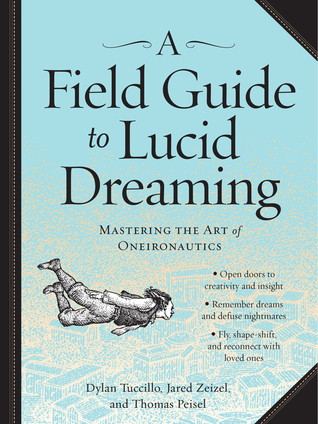
A Field Guide to Lucid Dreaming: Mastering the Art of Oneironautics by Dylan Tuccillo

A Field Guide to Lucid Dreaming: Mastering the Art of Oneironautics by Dylan Tuccillo
luciddreaming

An excellent guide to experiencing or deepening lucid dreams, A Field Guide to Lucid Dreaming is filled with tips, tricks and advice to explore your dream world.

My husband and daughter experience lucid dreams all the time and I don’t or, at least, haven’t yet. It’s embarrassing.

It’s as if they have access to worlds that I can only dream about, literally. I picked this book up because I wanted to develop this skill too.

So far, with the advice contained within this Field Guide, I’ve realized that I was dreaming once, became lucid and immediately woke up. But, that’s progress.

I’m encouraged actually. If I can go lucid once, I can do it again.

“Lucid dreaming is the ability to know you’re dreaming while you’re dreaming. A lucid dreamer is able to go to sleep at night and wake up within his or her dream. With this unique awareness, you can generally behave like someone who is awake, exercising the free will, imagination, and memory of waking life.” introduction. How fun would that be?

Ever wanted to fly? Face your nightmares? Talk to a deceased loved one? The authors of this book claim that it is all possible.

Photo by Ron Lach on Pexels.com

They addressed some of my problems directly: “Quite often, the amateur lucid dreamer’s early exploits in lucidity last only a few moments. If you’ve become lucid already but lost your awareness very quickly, don’t worry. This is common. In the next chapter we’ll look at ways in which you can stabilize the dream and stay lucid for long stretches of time.” pg 106.

Practice makes perfect, it seems.

The shamanistic beliefs about the dream world are intriguing:“…shamans of indigenous cultures understood that in order for something to be created in the physical world (such as that kitchen you’ve been meaning to remodel, or this book), it must first be constructed in the “imaginal realm.” In other words, lucid dreaming might be a tool in creating our physical reality.”pg 151.

Life is like a dream and we are the dreamers, whether asleep or awake:“This world can be a nightmare or a nice dream. It’s full of friends or enemies, success or failure, meaning or nihilism. We’re headed toward destruction or we’re headed toward rebirth. There are many viewpoints on Earth as there are people. And just like the dream, we shape our experience with our thoughts, emotions, and expectations. pg 246.

Recommended for anyone who, like me, wants to master lucid dreaming. I think that this book will help you find your way.

Sweet dreams 🙂

Thanks for reading!