Psychic Dreamwalking: Explorations at the Edge of Self by Michelle Belanger

Psychic Dreamwalking: Explorations at the Edge of Self by Michelle Belanger

Psychic Dreamwalking has some instruction on lucid dreaming, but it is interspersed with a lot of personal background information and some psychic vampire stuff. That didn’t bother me, even though it isn’t my particular realm of study. I’ve found that the mind is a very powerful tool for interpreting reality and people seem to believe all sorts of things that I find to not be compatible with my life experience. But, if that kind of thing annoys you, just stop reading Psychic Dreamwalking before Chapter 9 and you’ll avoid most of it.

I rather liked author Michelle Belanger’s opening dedication, “Prayer of the Dreaming”: “I commit myself to you, Lord Morpheus! Open wide the Gates of Dream. Grant me safe passage in your realm So I may return with tales to tell. -from the Introduction. She mentions that this prayer is based on The Dream King from Neil Gaiman’s Sandman series. I haven’t read that comic yet, but it has a great reputation. I’ll have to get to it sometime.

What is dreamwalking anyway?: “Dreamwalking is the art of sending forth a part of the self in order to make contact with others through the medium of dreams. Anyone can learn how to dreamwalk, and, as we explore the concept throughout this book, you will find that most people already do. … The lack of available information on dreamwalking exists in part because there is no consistent nomenclature for the technique. There are accounts of dreamwalking mixed in with experiments in astral projection, dream telepathy, and lucid dreaming, but they are rarely identified as such.” pg 1

It is so difficult in consciousness experimentation to come up with a vocabulary to discuss not only your experiences but to be able to communicate something very personal and individual with someone else who may have had completely different experiences and who are approaching the same topic from a different background. The name of the game in this book is “dreamwalking” which I find to be a rather poetic way to describe a universal phenomenon.

“But this the fundamental premise of dreamwalking: on some level, the dreamspace is real. It is not real in the sense that the physical world it (sic) real, but it is certainly as real as the astral planes described by writers like Madame Blavatsky and Dion Fortune. Like the astral planes, the dreamspace is a subjective reality. As much as it is a place we can go to, it is also a place that we shape with out (sic) hopes, desires, and fears.” pg 25

I think this is a part of the human experience that deserves a far broader investigation than experts and laypersons have given it so far. But there’s always time to get started! Who’s with me?

Belanger talks about Carl Jung a lot in this book. I wonder what he would think about dreamwalking…: “Jung’s concept of the collective unconscious, a layer of myth and symbol deep within each of our minds that connects all of us in mysterious ways, hearkens back to the ancient notions that the dreamspace is a realm unto itself, a hazy place of twilight where men can sometimes meet with gods.” pg 36

It reminds me a great deal of the Dreamtime of the First Nations of Australia. This is not a new concept but one which, as I said before, deserves more experimental research than it has yet received.

The main technique that Belanger uses to access this world within dreams is one that I am very familiar with, namely building a gate: “The Gates of Dream are an archetypal image that I return to again and again in this book. Archetypes and symbols have some objective reality within the realm of dreams, and the Gates of Dream represent the point of passage from your personal dreams to the wider territory of the dreamspace. You can harness this archetypal image in your dream haven, creating a crossing-over point that can later serve as a focus for when you seek to dreamwalk.” pg 51

If you’d like to learn about my experiences with walking through gates, I invite you to explore my blog: https://thelightcongress.com/

Belanger touches a bit on shamanic practices, but not in depth: The shamanic dreamtime, as a realm of myths and images that is peopled by animal totems and celestial teachers, can very easily be equated to Jung’s collective unconscious, the psychological repository of humanity’s collective myths, dreams, and symbols. Many of the totems and other mythic figures encountered in the shamanic realms are Jungian archetypes transported from their existence as simple concepts to vivid, potent entities. … There is a kind of travel that occurs in dreamwalking, but it is, at first, an inward journey. This inward journey, however, can lead the dreamwalker elsewhere. Traveling within can sometimes lead you out. pg 67

I’ve explored a few books about shamanism. You can read those reviews here:

In this passage, Belanger discusses the importance of lucid dreaming in various religious traditions: “From the monks of Buddhist Tibet to the 12th century Spanish Sufi Ibn El-Arabi, mystics the world over have proclaimed the benefits of lucid dreaming. For religious thinkers, lucid dreaming has long been seen as a way to illuminate both the nature of the Self and the nature of reality. Tibetan Buddhists were pursuing lucid dreams as early as the eighth century C.E. According to their philosophy, the mastery of lucid dreams was a necessary step in the pursuit of enlightenment. The ability to recognize the illusory nature of the dreamstate directly correlated to the ability to recognize the illusory nature of all things. pg 139 Fascinating in how the study of dreams can be applied to other areas of your life!

Belanger captured my feelings about psychic vampires very well in this passage: “Ultimately, you and you alone can judge the validity of your experiences. You should never surrender this right, but you should also not use it as an excuse to indulge in wish fulfillment. Make a thorough investigation of every experience and decide for yourself. pg 181. Cura te ipsum.

Though I feel that Psychic Dreamwalking contained a lot of superfluous information, there are some solid dreamwalking techniques in here. I think that the main hurdle to this practice is simply becoming lucid while dreaming in the first place. So, for now, I’ll stick with going into trance. But, for those who already have the ability to lucid dream, this may be something that you’ll want to investigate. Pick up Otherwhere by Kurt Leland for a first person account of dreamwalking or Multidimensional Man by Jurgen Ziewe.

Thanks for reading!

Archetypes on the Tree of Life: The Tarot as Pathwork by Madonna Compton

Archetypes on the Tree of Life: The Tarot as Pathwork by Madonna Compton

Archetypes on the Tree of Life is a dense spiritual text exploring the Tree of Life through the use of Tarot cards.

It’s kind of funny- I think my favorite part of this book wasn’t actually the book at all but instead the brief introduction which was written by Hans Nintzel. Nintzel was a student of the western mysteries who describes himself as “living down the street from Israel Regardie.” As I used the writings of Israel Regardie to do my own explorations into the Tree of Life, I found my mind blown right there. How cool would that have been, to have lived on the occult teacher’s own street? Too cool.

Here’s what Nintzel had to say that was so compelling:
As Qabalah evolved, it was discovered that, using this glyph or map called the Tree of Life, one could move around the geography of the consciousness, so to speak, contacting or balancing various personal energies by contemplating various aspects of the God energy using myths, legends, visions, and dreams, represented by the archetypes of the Tarot.”pg 4

I have yet to see a more concise description of what pathworking is than that. Now why Nintzel didn’t write his own book, I simply don’t know. Being the librarian that I am, I did a bit of digging into his background and it seems that he was a prolific lecturer and a translator of alchemical texts, but didn’t write his own. Disappointing. Here’s a link that I found of works that he helped to bring to the US which were listed in his obituary: https://www.alchemywebsite.com/rams.html

As for Compton’s 300 or so page contribution, I found myself to be disappointed. Archetypes on the Tree of Life is in the main, rather obscure Qabalistic/Kaballistic theory. It reads almost exactly like Regardie’s Garden of Pomegranates or Fortune’s The Mystical Qabalah. That’s not to say that it doesn’t have some gems of interest, but mostly it’s slow going and not as accessible as the publisher (Llewellyn) promised it to be in the page where it described the goals of its Spiritual Perspectives Series.

Compton’s most interesting point has nothing to do with traditional pathworking but is instead a hypothesis that she and her meditation partner have constructed about potential alternate paths across Daath. They’ve chosen a five pointed star to create the paths, but I would perhaps lean more towards a six pointed star, which still sort of works. The six pointed star is a combination of an upwards and downwards facing triangle, an ancient alchemical symbol for self actualization. Though, admittedly, the five pointed star has definite Tiphareth associations… and so the debate continues I suppose. 🙂 Anyway, if you’re interested in Compton’s theory, turn to page 304 to save yourself some time digging through the other stuff.

If you enjoyed this book, may I recommend reading either of the two books I mentioned earlier: The Garden of Pomegranates by Israel Regardie or The Mystical Qabalah by Dion Fortune. If you want more examples of modern pathworking, see my book: https://thelightcongress.com

Thanks for reading!

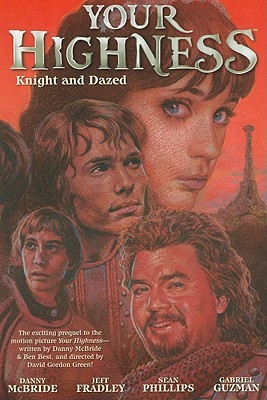
Your Highness by Sean Phillips

Your Highness by Sean Phillips

Your Highness, a two comic collection, is the prequel to a film called, you guessed it, “Your Highness”.

In these pages, Fabious, the elder prince, goes on a quest to slay a monster who was unleashed by an evil sorcerer. The younger brother, Thadeous, is sent by his father, the king, to secure a treaty with a nearby dwarven kingdom.

Both princes encounter adventures that they were not prepared for.

I wish, in preparation for reading this slim tome, that I had had the chance to rewatch the movie. But I didn’t. So, until then, I’ll just have to rely on my memory of the film from twelve plus years ago.

In the comic, as in the movie, both princes are caricatures of the angel/devil archetype of consciousness.

Fabious, the elder brother, stands in for our “angelic nature”. He is driven to bring justice and safety to those around him while carefully protecting his honor throughout the quest. The flipside to this personality is he suppresses his baser urges, leading to some amusing innuendo with his fellow knights.

(Sexual innuendo and clever word play isn’t something I necessarily find funny, but for those who do, Fabious provides this in spades.)

The other brother, Thadeous, represents humanity’s shadow mode of consciousness. He delights in excess whether that is food, marijuana, or sex. And though he is tasked by his father with as important a mission as his brother, readers know immediately that he will probably fail- not because he’s is incapable of doing what is required, but because he will most likely chose to indulge in his baser instincts to the detriment of his goal.

Overall, I liked the artwork in Your Highness. I thought the panels flowed nicely and the dialogue was well done too.

As for the story itself, I felt it was a tad predictable, but still enjoyable.

I wish, in the Thadeous storyline, the dwarves’ weed had had some magical properties that elevated it beyond bringing an excellent high. Maybe using it could cause one to see where minerals were hidden beneath the earth?

Anyway, recommended for fans of the movie and readers who enjoy fantasy comics in general.

The Bone Houses by Emily Lloyd-Jones

The Bone Houses by Emily Lloyd-Jones

“Death is not to be feared,” he said. “But nor can it be forsaken. One must be mindful.” pg 3, ebook

Ryn is a grave digger in a small village. The only trouble is the dead don’t always stay dead in her world.

Sometimes they wander out of the forest. When they reawaken, the dead are called “bone houses.”

Photo by F H on Pexels.com

The bone house did not speak. They never did. But still, Ryn felt obligated to say something. “Sorry about this,” said Ryn. And then she swung the axe at the dead woman’s knees. pg 14, ebook

In addition to her wandering dead problem, Ryn’s father went on a work outing and never returned. When a stranger comes to her village with a proposition to explore the lands around her home, Ryn decides to find him.

That is where the story really picks up.

Author Emily Lloyd-Jones explores Welsh myth and legend in this young adult fantasy. I enjoyed the story but the big twists were sign-posted so well that I guessed them before they occurred, something that I never manage to do.

This is probably because I’m not the intended audience for the story, but that’s fine. It is well-written other than that small quibble.

I liked the main character, Ryn, quite a lot. She’s strong, brave, and unafraid to venture into enchanted forests.

Reluctant readers might enjoy this book because the pace is quite fast. Recommended for readers who like young adult fantasy stories.

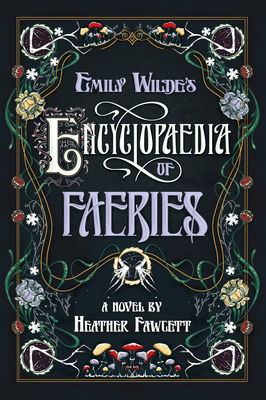
Emily Wilde’s Encyclopaedia of Faeries (Emily Wilde, #1) by Heather Fawcett

Emily Wilde’s Encyclopaedia of Faeries (Emily Wilde, #1) by Heather Fawcett

Emily Wilde’s Encyclopaedia of Faeries is a charming fantasy story about a fairy researcher and her efforts to study a group of fae in a country far from her own.

I loved everything about this story. The characters, the plot, the pacing- they were all excellent.

I particularly enjoyed the fairy lore that author Heather Fawcett created for the story. It felt true. If fairies actually existed, I think they would be something like how they are described in this tale.

Photo by Javon Swaby on Pexels.com

“I wish to accomplish two objectives- firstly, to identify the species of Folk that dwell here, and second, to describe their interactions with the mortal inhabitants.” pg 71, ebook

Not only was the main character wonderfully crafted, but the secondary characters were great too. Wendell, Emily’s co-researcher, is compelling and really adds to the story.

I won’t say much more about Wendell because discovering what is special about him is part of the charm of the book.

Highly recommended for fantasy readers.

Fairy Tale by Stephen King

Fairy Tale by Stephen King

“Here is something I learned in Empis: good people shine brighter in dark times.” pg 250

Charlie is a typical teen- plays sports and helps his father out around the house. But one day, after helping a neighbor after an accident, Charlie enters a world that is not our own. And discovers an adventure that he wasn’t looking for.

The incomparable Stephen King has written a mammoth fairy tale (600 pages in my digital version!). I thought it was too long.

Not that I mind long books. It sort of felt like King started the book thinking it was going to be about something different than it turned into.

The reason I feel that way is because the first quarter of the book takes so long to establish Charlie’s character and real world connections.

Photo by Alesia Kozik on Pexels.com

I wanted to just get on with it. Then, when we finally made it to Empis, events went too quickly!

King uses quite a lot of foreshadowing which was ok at first, but then it started to become too much. I realize he was trying to build tension- it was just over-used.

“Remember when I said at the outset that no one would believe my story?” pg 494, ebook

I enjoyed any part of the story that had Radar the dog in it. She was my favorite character. King really took his time developing her and her reactions to the world around her, which was fun.

King is at his best when he’s describing the eerie atmosphere of the other world and its unfortunate denizens. Like I said, those parts went too quickly.

Other than my small gripes, this was a well-written story and worthy of its Good Reads nomination. Readers who like Stephen King for his horror should read a different book. This is definitely more fantasy than horror.

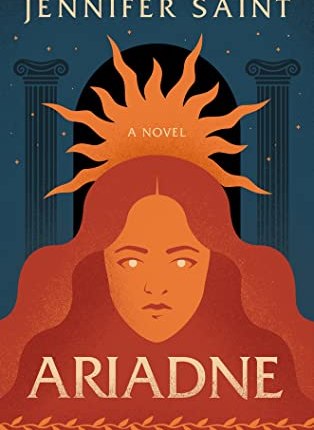
Ariadne by Jennifer Saint

Ariadne by Jennifer Saint

Jennifer Saint writes the mythological story of Ariadne from her and her sister Phaedra’s points-of-view.

“I took that story with me in the coming days and turned it over, like the stone in a ripe peach: the sudden, unexpected hard shock in the center of everything.” pg 14

Like CirceAriadne gives the female figures in the classic tale a voice, something they have never had in the original telling.

“The cold green of his eyes. Like the shock of the chill waters when the seafloor drops away unexpectedly beneath your feet and you realize that you have swum out far beyond your depth.” pg 34

For those not familiar with the myths, Ariadne was in charge of the Minotaur’s labyrinth on Crete. Theseus relied on her for help when he confronted the monster, who was also Ariadne’s half-brother.

Photo by Tiff Ng on Pexels.com

What happens next is the main part of this story. The labyrinth encounter is finished in the first 100 pages, which surprised me. I expected it to be longer.

Saint touches on the unfair nature of many of the classic myths towards women, which includes the story of Medusa and any number of Zeus’s mortal lovers. Zeus took lovers again and again, and his wife visited all sorts of nasty revenges upon them. But that didn’t stop Zeus’s prowling.

Ariadne is somewhat empowered in this story- she realizes the unfair treatment- but at the same time she isn’t able to do much to change her own fate, or the fate of her beloved sister Phaedra.

The gods and goddesses are bound by fate as well. This is most easily seen in some of the stories Dionysus tells about his time among mortals. I could see book clubs having a great time discussing the roles of fate and free will in this story.

I think Saint could have gone a little further in her interpretation of the myths, she stays pretty close to the original telling. It still makes for a beautiful story, but it could have been even better.

Recommended for readers interested in Greek and Roman mythology.

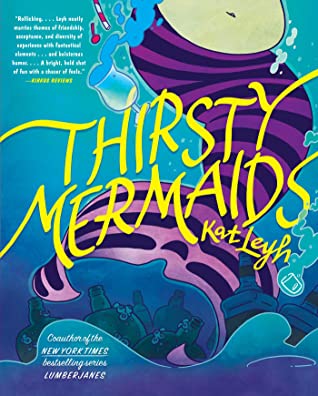
Thirsty Mermaids by Kat Leyh

Thirsty Mermaids by Kat Leyh

Three friends from the sea go on a magical adventure on the land- and can’t recall the magic to return to the sea.

Thirsty Mermaids is a fun tale for teens or the young at heart that explores the themes of friendship, self sufficiency and belonging.

At first, the merfolk and sea witch believe they don’t have any skills that could translate to jobs on land. But after exploring what they are already inclined to do, they find their way into situations that fit them quite well.

The sea witch’s task, to find a way to break the spell, is more difficult. She has to go on a soul-searching mission which, as we all know, is one of the hardest tasks of all.

The artwork of Thirsty Mermaids is quite similar to Lumberjanes, Vol. 1: Beware the Kitten Holy, another graphic novel which I love. The reason for this is because Kat Leyh is a co-author of Lumberjanes.

Both works share messages of acceptance and body positivity, the kind of messages which always deserve reminders.

I enjoyed this graphic novel very much. Highly recommended.

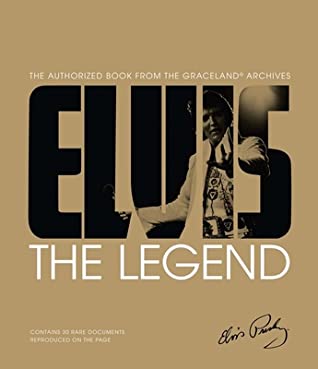
Elvis: The Legend: The Authorized Book from the Graceland® Archives by Gillian G. Gaar

Elvis: The Legend: The Authorized Book from the Graceland® Archives by Gillian G. Gaar

Elvis: The Legend shares facts and anecdotes about Elvis Presley’s life and career. Mixed in with the text, the book contains photos of Elvis and documents of interest like telegrams and receipts for his clothing.

The information is shared by topic rather than chronologically, which I found a little annoying, but I got over it.

“At the end of his set, Elvis had teasingly announced ‘Girls, I’ll see you all backstage,” then found himself being chased across the field by a pack of screaming teenage girls, who followed him into the locker room and tore off his jacket, shirt, and shoes.” pg 29

Readers will find nothing very controversial in this book- perhaps because it is the “authorized book from the Graceland archives”. I picked it up because I recently watched the Baz Luhrmann film about Elvis and I wanted to know if he had to enter military service because of a run-in with the police about his dancing, which the film implied.

That did not seem to be the case. But again, this book isn’t a true biography, so maybe I should look somewhere else.

A fact the film glossed over that this book shares is while Elvis was stationed in Germany, he met his eventual wife Priscilla Beaulieu when she was only 14 years old. They didn’t marry until she was a respectable 21, but I found that initial meeting surprising.

“Then, on September 24, 1959, Elvis met 14-year-old Priscilla Beaulieu, who had been brought to 14 Geothestrasse by a mutual friend.” pg 52

I suppose things were done differently back in the day.

Recommended for Elvis fans looking to know more about Presley. Those searching for a biography should look elsewhere.