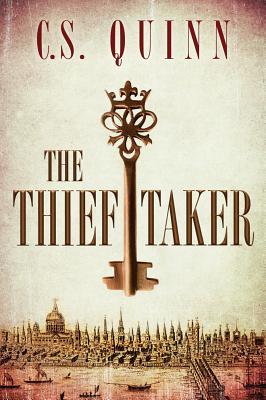
The Thief Taker (The Thief Taker #1) by C.S. Quinn

The Thief Taker (The Thief Taker #1) by C.S. Quinn

In the 1660s, thief takers solved the cases that were beneath the dignity of the typical London watchmen.

The poorer sort of people, who had experienced a crime or theft, would come to men like the title character in this story for justice. He would attempt to track down the perpetrator by finding the property that they took and fenced.
Photo by Wallace Chuck on Pexels.com

Usually, the thief taker could either get the property back for his client or turn the thief in to the higher authorities. But, the punishments back then were so barbaric- chopping off a hand, splitting noses- that the thief taker would usually just let the criminal go with a warning to not steal again or advise him to find a different clientele.

Charlie Tuesday is a thief taker in London. One day, a beautiful young woman comes to him for help in solving her sister’s murder. Normally, he doesn’t work on any cases larger than theft but the money that is offered is more than he can refuse.

From the strange mutilation of the body, he determines that there’s more to this crime than meets the eye. As the plague descends on London, he and Anna-Maria race to stop the murderer from striking again and, perhaps, even threatening the throne of England itself.

Photo by Yoss Cinematic on Pexels.com

The Thief Taker‘s scenery is lush. The customs, clothing, and food from 1665 are so different from what we have now. The reader is whisked away to a world that is the same in some ways (human behavior and emotions) and so different in other ways (social structures and occupations). I didn’t even know what a thief taker was until I read this book.

The story is an intricate mystery with the murders, possible witchcraft, and treason. I didn’t see the ending coming at all. It could be that I don’t read that many mysteries, but I thought that it was really well done.

Another fascinating piece to this story are the plague victims. The horrific conditions that the author describes, like bodies rotting in the streets and the Thames becoming clogged with corpses around London Bridge, actually took place.

Photo by Yoss Cinematic on Pexels.com

Because of these icky details, The Thief Taker occasionally veers towards the horror genre but never really crosses that line.

I kept picturing the rotting plague victims as zombies. In some ways, they’re similar. Contact with a plague victim could bring infection. Sometimes, the main character would come across a body that would appear dead, but wasn’t dead.

At one point in the story, a character describes the plague victims who are wandering the streets in search of mercy as the “walking dead.” It was very creepy.

Photo by Renato Danyi on Pexels.com

Also, the societal breakdown that accompanied the plague was so quick. Every moment the characters were in the London streets was filled with tension. The reader didn’t know if a plague victim was going to pop out of a quarantined house or if a thug was going to try to commit a robbery in a dark alley.

Readers who like the historical fiction of Philippa Gregory, Judith Merkle Riley, and Sarah Dunant may enjoy this.

I received a free copy of this book through Goodreads First Reads program.

Thanks for reading!

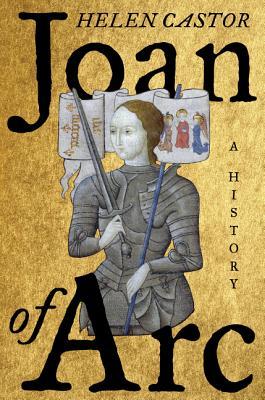
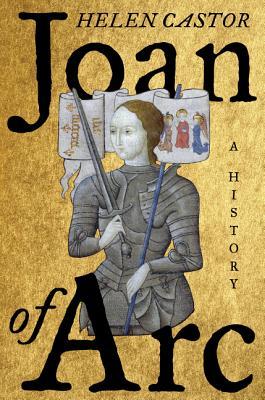
Joan of Arc: A History by Helen Castor

Joan of Arc: A History by Helen Castor
joanofarc

The review that I’m about to give Joan of Arc: A History has nothing to do with the historical accuracy of the book. On the contrary, I found this to be an extraordinarily well researched and cited biography.

Unfortunately, that mega-effort did not lend itself to a readable or enjoyable book.

The general idea behind Joan of Arc is sound. Helen Castor wanted to present Joan’s story in context with an extended history of France for years before and after her appearance on the world stage.

In that way, she thought that the legend of the woman could be separated away from the reality. The reader could appreciate the main players, the attitude towards spiritual visions, the belief of divine will in war and the monarchy, and capture the overall general flavor of the time period.

It was a good premise, but it just didn’t work. Maybe this was a doctoral thesis that Castor tweaked a bit and published? It reads like that.

Why is it that experts on topics are rarely able to translate that interest and depth of knowledge into stories that the general public would enjoy? I love medieval history, especially the backgrounds of the handful of female figures who made it into print during that period. This should have been right up my alley.

Photo by Pixabay on Pexels.com

Joan of Arc: A History read like a school textbook- the dull kind.

Actually, it reminded me of translating Livy’s History of Rome from Latin into English during college. It should have been fascinating stuff as he was writing about a particularly exciting period in Roman history when Hannibal was crossing the Alps to invade. But, sadly, Livy got caught up in listing endless details, particularly the size and shape of the elephants. Through description after description, the pace of Hannibal’s army slowed to a trickle and then it turned into a snooze-fest.

That also happened in this book.

If you enjoy scholarly research to the point that you just have to have it and nothing else will do, read this book. If you want history to come alive and punch you in the face, pick up something (anything really) by Margaret George or Bernard Cornwell.

I particularly liked The Memoirs of Cleopatra or The Autobiography of Henry VIII: With Notes by His Fool, Will Somers. George may not have the exacting research standards of this biography, but her historical fictions are informative in addition to a delight to read.

I received a free copy of this book through Goodreads First Reads. Thanks for reading!

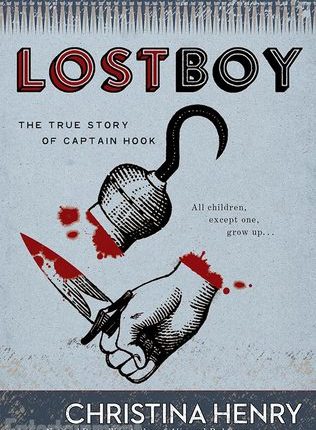
Lost Boy: The True Story of Captain Hook by Christina Henry

Lost Boy: The True Story of Captain Hook  by Christina Henry
lostboy

Christina Henry, author of the chilling Alice, which is a brilliant re-telling of Alice in Wonderland, has shifted focus to a new fairytale. In Lost Boy, readers get to experience the story of the boy-who-never-grew-up through the origin story of his arch-nemesis. And what a story it is.

“Peter will say I’m a villain, that I wronged him, that I never was his friend. But I told you already. Peter lies. This is what really happened.” loc 85, ebook. Goosebumps? Yeah.

Fans of the original tale will need to prepare themselves for having beloved characters shown in a new and sinister light. Think Longbourn, but worse, much worse. “I had been with Peter longer than I’d been in the Other Place, longer than I could count, anyway. The seasons did not pass here and the days had no meaning. I would be here forever. I would never grow up.” loc 146, ebook. The others in Peter’s group call the narrator, Jamie.

He is a fierce fighter- the best. And he protects the younger and weaker members of those lucky few that Peter brings back from the real world or in this tale, the Other Place. This protective instinct is sneered at by Peter who accuses Jamie of “babying” or “mothering” the boys. In truth, there is no worse insult in Peter’s arsenal. Grown ups either abuse you or take your stuff or both. They’re pirates.

“(Peter) had invited us there, had promised us we would be young and happy forever. So we were. Unless we got sick, or died, or were taken by the pirates.” loc 257, ebook. So, Neverland is not the paradise that it is portrayed as in the original tale. There are also monsters called Many-Eyed that eat the boys alive, if they catch them.

“Was this, I wondered, what it felt like to be a grown-up? Did you always feel the weight of things on you, your cares pressing you down like a burden you could never shake? No wonder Peter could fly. He had no worries to weight him to the earth.” loc 1971, ebook.

The stage is set. Love and hate intertwine with magic, blood and, of course, a little bit of fairy dust.

If you enjoyed this tale, you may also want to explore some other Peter Pan re-tellings like Tiger Lily by Jodi Lynn Anderson or All Darling Children by Katrina Monroe. The last, a horror-filled offering, may really appeal to those who want to delve more into the potential shadows of Neverland. There’s a price to pay for never growing up. In that tale, as in this, Peter pays it without a qualm.

Thank you to NetGalley and Berkley Publishing for a free advance reader’s copy of this book. Reminder: the short quotations I cited in this review may vary in the final published version.

Thanks for reading!

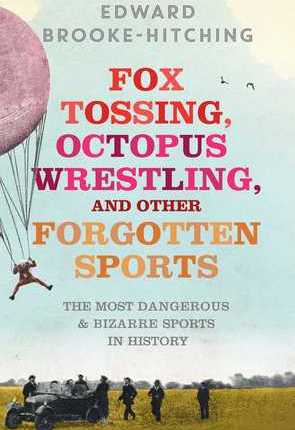
Fox Tossing, Octopus Wrestling and Other Forgotten Sports by Edward Brooke-Hitching

Fox Tossing, Octopus Wrestling and Other Forgotten Sports by Edward Brooke-Hitching

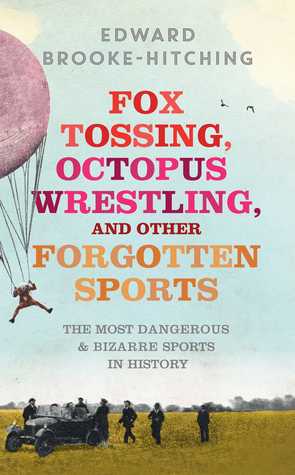
foxtossingThe moral of today’s story is that people used to do terrible things to animals in the name of “sport.” Interspersed with fascinating tidbits about dueling with rubber bullets and auto polo, Fox Tossing, Octopus Wrestling and Other Forgotten Sports documents the nauseating practices of bear, dog and monkey baiting and more- so much more.
It describes mass hunts conducted in arenas by royalty and nobles were hundreds, if not thousands, of animals were slaughtered as entertainment. From shooting arrows at roosters to breaking apart a barrel with a cat inside, I could not believe the brutality.

If you can make it through the animal abuse sports, and I confess that I skimmed most of those, what’s left is amazing. “… from learning about how our ancestors entertained themselves we gain a unique insight into broader contemporary attitudes towards morality, humor, and the trials of daily existence.” pg 3. “The reasons why these forgotten sports fell out of favor are, of course, many and varied, but broadly speaking can be divided into three categories: cruelty, danger, and ridiculousness.” pg 5.

Ah, balloon jumping. This is a sport where a dude would attach a huge balloon to himself and leap across the landscape like a superhero. Why did we quit balloon jumping? “He did nearly clear the electrified cables, but unfortunately his feet became entangled, and when he tried to extract himself by grabbing one of the wires he was blown to the ground in a hail of sparks, dying instantly. Alas, balloon jumpers never quite managed to refine the sport to a level of safety below “frequently lethal”…” pg 24.

Then there was dwile flonking: “In mid-1960’s Norfolk, it became a favorite activity of locals to gather in a large group, dance to an accordion, and hit each other in the face with beer-soaked rags.” pg 87. What fun.

I would say that the practice of “flyting” is alive and well in some online forums: “Flytings were extemporary swearing matches that placed a value on the imagination and verbal dexterity of the participants, who would exchange insults with impressive wordplay in a sense similar to modern rap battles, but with an intensity of vitriol and florid vocabulary that is hard to fully comprehend by modern standards.” pg 101. But not on Goodreads, where civil discourse rules the day. 🙂

Recommended for trivia hounds and those interested in obscure history, Fox Tossing is full of hilarious and heart-breaking facts about some of mankind’s forgotten pastimes. Those who are triggered by animal cruelty would be best served by picking a different book.

Thanks for reading!

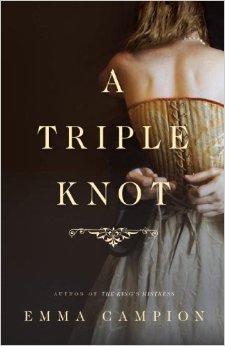
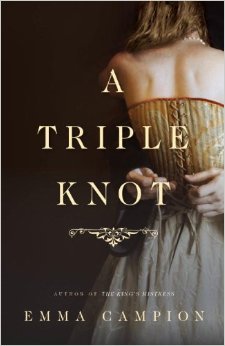
A Triple Knot by Emma Campion

A Triple Knot by Emma Campion
a triple knot

I love historical fiction about the English monarchy and court. This time period, the 1300’s, is one that I wasn’t very familiar with, which was fine with me. I’m always up for learning something new while being entertained. Warning: there are some spoilers ahead if you aren’t familiar with English history.

This story centers around Joan of Kent. Joan’s father was executed by her grandmother’s lover when she was very young. She also didn’t trust her own family to provide for her or believe that they had her best interests at heart. After reading about the actions of some of her clan, I can’t really blame her for that.

Joan seemed ridiculously naive when she married, clandestinely, at the age of twelve for love. Then, when her family insisted on a more advantageous match, she was heart broken.

I was surprised at first about her behavior and reaction but then I imagined that the lack of training, guidance or protection that she received during her childhood was probably the reason that she believed she could marry whomever she wished. Royalty didn’t enjoy the freedom of marrying for love. Poor Joan.

The historical figures described in this tale, such as Edward III and his son, The Black Prince, were larger than life with tempers to match. I loved the descriptions of the clothing, the feasts, the dancing, building maintenance and other minutiae of daily life.

I didn’t love other aspects of this story. I felt like this book was too long and the second half was incredibly rushed. I think the author should have created a trilogy.

She could have ended book one at the decision of the Pope about Joan’s marriage status. (I won’t ruin that one for you.) Then, a second book could have followed about the birth of her first four children and family life. A third book could have chronicled her next marriage and what followed.

In this book, five years passed in approximately a page and a half, sometimes less. There could have been so much more to the story and I would have loved to have read it.

Fans of Philippa Gregory’s brand of historical fiction will probably eat this up with a spoon. Prepare yourself for some rushed passages though.

I received a free copy of this book through Goodreads First Reads. Thanks for reading!

Feast of Sorrow: A Novel of Ancient Rome by Crystal King

Feast of Sorrow: A Novel of Ancient Rome  by Crystal King
feastofsorrow

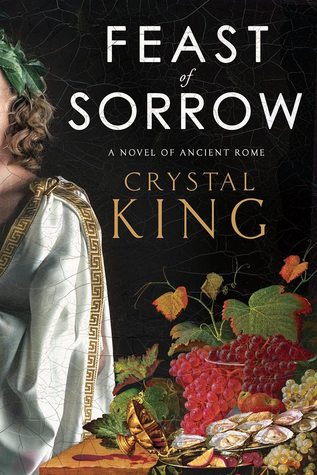
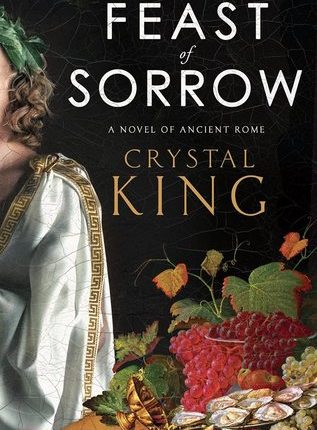
A Feast of Sorrow captures the beauty, opulence and madness of Rome during the reign of the Caesars. The story is told from the point of view of a slave in the household of Apicius. But, not just any slave. Thrasius is a cook, a coquus, the head of Apicius’ kitchen. He makes some of the finest delicacies known and invents new ones.

Apicius is wealthy beyond reason. He has the ability to purchase Thrasius the finest ingredients and the rarest spices. Apicius’ dream is to become Caesar’s gastronomic adviser. But that position isn’t acquired by wealth alone. Political currency and power is the only way forward.

And the stage is set. Feast of Sorrow has heroes, villains and, of course, food. What a strange and weird feast it is. Honeyed dormice, flamingo tongues, and more- only the best for Apicius and his clients.

Thrasius begins writing a book to preserve his master’s recipes for all time. “I added your trick about using eggs to help make cloudy wind clear, instructions on how to preserve oysters, and even Fannia’s recipe for how to make wormwood liquor. I thought about how many cooks don’t have the right information or knowledge.” loc 1592. Interestingly enough, after the tale, Crystal King talks about how Apicius’ recipes are some of the oldest surviving examples of ancient cuisine.

“Stuff the dormice with pork forcemeat and also with all the flesh from all the parts of the dormouse, pounded with pepper, pine nuts, silphium, and liquamen. Sew them up and arrange them on a tile and put them into the oven or cook them, stuffed, in a covered pot.” -On Cookery, Apicius. Loc 4466, ebook. Mmmmmm.

King fills these pages not just with food, but also, to modern eyes, the strange and sometimes cruel practices of the Roman people. Did you know that Roman diners used to wipe their hands clean in the hair of their slaves? Did you know that Romans had special priests who read the flight of birds to determine if an event was going to be successful or not? Did you know that patricians, the nobility of Rome, were judged not only for their appearance and natural abilities but also how well they could throw a dinner party?

I enjoyed this book not only for the way that King told the story of the nameless people who made Apicius’ name known for all time but also for the twists and turns it contains. Feast of Sorrow will shock you, entertain you and, maybe, make you want to try a dormouse.

Thank you to NetGalley and Touchstone Publishing for a free digital advance reader copy of this book. Note: the brief quotations that I pulled from my copy may change in the final published version. Thanks for reading!

Wolf Hall (Thomas Cromwell Trilogy #1) by Hilary Mantel

Wolf Hall (Thomas Cromwell Trilogy #1) by Hilary Mantel
wolfhall

Wolf Hall is a historical fiction reader’s feast. Henry the VIII’s story, though it has been told, is re-examined through the eyes of Thomas Cromwell, one of his counselors. Who knew that a professional paper-pusher and merchant could be so fascinating?

Cromwell’s history made it unlikely that he would ever climb to such heights among the powerful. Born the son of an alcoholic blacksmith, Cromwell’s cleverness is his only advantage.

Then, through a relative, Cromwell is taken into Cardinal Wolsey’s household. Wolsey recognizes the diamond in the rough and Cromwell becomes his right-hand man. It is a life-or-death dance that Cromwell and Wolsey play with King Henry, as the king demands a new wife. (the Cardinal speaks) “Tell me why you are scowling in that way.” (Cromwell) “The people up there say they are going to kill me.” “Really?” the cardinal says. He face says, I am astonished and disappointed. “And will they kill you? Or what do you think?” pg 31, ebook.

Meanwhile, those around the king never let Cromwell forget his humble beginnings for a moment. The duke of Norfolk scowls. He paces; he rattles a little; at last he bursts out, “Damn it all, Cromwell, why are you such a … person? It isn’t as if you could afford to be.” Thomas waits, smiling. He knows what the duke means. He is a person, he is a presence. He knows how to edge blackly into a room so that you don’t see him; but perhaps those days are over.” pg 154, ebook.

The fact that Cromwell survives Wolsey’s disgrace is a miracle. As he builds his connections and power, the reader can only gape in amazement. “Chapuys greet him without a smile. “Well, you have succeeded where the cardinal failed, Henry has what he wants at last. I say to my master, who is capable of looking at these things impartially, it is a pity from Henry’s point of view that he did not take up Cromwell years ago. His affairs would have gone on much better.” pg 415.

The BBC made a fantastic book-to-screen version of this story. Many of my favorite moments from the book were taken exactly from these pages. I highly recommend it too.

My only complaint about this novel is that the style is ambiguous. Instead of labeling who is speaking, Mantel often just says “he”.

The reader must stay on her toes to keep up with the machinations of the characters, because Mantel doesn’t bother to explain it or their reasoning. I expect, that in some ways, it is very much like how these historic figures lived their lives. Never quite knowing who to trust or how the wind was blowing.

Yes, now we know what happened, who went to the block and who didn’t, but this story nearly succeeds in making the reader forget the ending. Wolf Hall throws you right into confusion of Henry the VIII’s reign. And, it was a Wolf Hall indeed.

Thanks for reading!

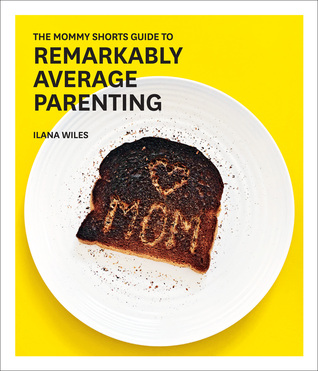
The Mommy Shorts Guide to Remarkably Average Parenting by Ilana Wiles

The Mommy Shorts Guide to Remarkably Average Parenting by Ilana Wiles
remarkably average

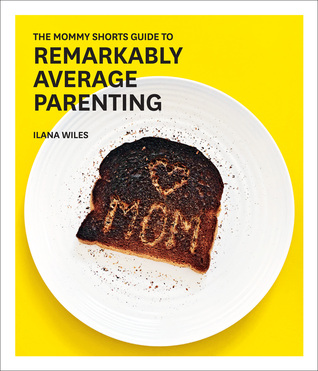
The Mommy Shorts Guide to Remarkably Average Parenting is one of the best books about parenthood I’ve ever read. It is an honesty, funny and poignant look at the un-glamorous side of parenting. I loved the pictures. I loved the stories. I wish that this book had been around when I had my baby. Between this read and How Not to Hate Your Husband After Kids, mothers-to-be have all their bases covered.

Ilana warns mothers about the perils of choosing rare names: “… if you want to name your child something odd, I support you. I like odd names. I think odd names make the world a more interesting place. But you should be prepared to hear some criticism when you are at your most vulnerable.” pg 19. I didn’t even pick something that weird for my child (Willow) but I still faced criticism. When I told my grandpa the name I picked for his first female great-grandkid, he told me that it was the stupidest thing he’d ever heard. And there I was, heavily pregnant. Yeah, I cried. Wish someone had warned me.

I empathized with the idea that parents have no clue what they’re doing and we’re all secretly terrified that we’re going to screw up our kids in some irreparable way. Over a decade later and I still feel that: “In hindsight, the newborn phase wouldn’t be that hard if new parents weren’t so worried about messing up in such a way that it would ruin their newborn’s life forever.” pg 33.

The page entitled, My two-year-old’s rules for eating a banana pg 76, had me in stitches. Kids are so weird about food. My daughter is currently on a mac-n-cheese, ramen and ice cream kick. This time last year, all she would eat was homemade pancakes and grilled cheese with the crusts cut off. I’m sure that in another year, we’ll be somewhere else. And it’s not just about the “what”, there’s also the “how.” If you cut the crusts off the grilled cheese, but then don’t cut it diagonally, then no dice. You may as well throw it out because my kid won’t eat it. It’s absurd, but true. Poor Ilana suffers through the same thing but with bananas.

Photo by Aleksandar Pasaric on Pexels.com

The other funniest mini-chapter is: “Totally Butchered Words: Even if you do stop cursing and shield your kids’ ears from swearwords outside the home, your kids will probably still end up saying a few unfortunate things anyway. This is because toddlers might be trying to say one thing, but then it comes out sounding like another word entirely.” pg 116. I can’t even quote what she prints on the next pages because it is too filthy but, in my opinion, it is absolutely hilarious.

Ilana’s parenting philosophy is fantastic: “It’s not a matter of high or low expectations- it’s a matter of no expectations. Discover who your kid is as you go. Your kids will not be who you expect, but the things that amaze us most in life are never the things we expect.” pg 215 Mine amazes me all the time.

Highly recommended to own or give as a gift, The Mommy Shorts Guide to Remarkably Average Parenting is a cut-above average.

Thanks for reading!

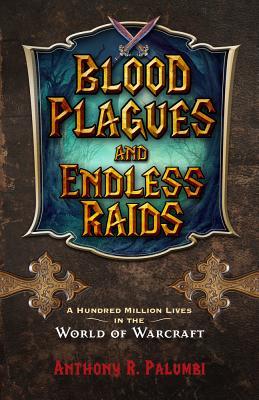
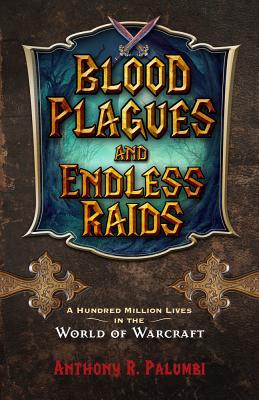
Blood Plagues and Endless Raids: A Hundred Million Lives in the World of Warcraft by Anthony R. Palumbi

Blood Plagues and Endless Raids: A Hundred Million Lives in the World of Warcraft by Anthony R. Palumbi
blood plagues

Anthony R. Palumbi’s memoir is about video games, relationships and play/life balance.

Blood Plagues and Endless Raids took a chapter for me to warm up to it. Palumbi begins his homage to World of Warcraft with an icky story about driving to meet his guild mates for the first time. But once I got past that part, I enjoyed this gaming memoir quite a lot.

I’ve mentioned in previous reviews that I am, or used to be, a very dedicated player of Everquest, both one and two. Though it never had the mammoth popularity of WoW, Everquest had quite a few things in common with the mega-hit including some game dynamics and gamer-speak. So, I found myself nodding along most of the time.

You don’t have to be a gamer to appreciate this memoir. Palumbi explains every slang term and technique that pops up. He also delves deeply into game morality, relationships in MMORPGs (massive multiplayer online role playing games), addictions, game burnout, the notable players and even how WoW entered popular culture. It is an informative and, for readers like me, a nostalgic treat.

Photo by Soumil Kumar on Pexels.com

Even though, in-game, Palumbi and I would have moved in entirely different circles. He’s a raider, you see. This means he’s into end-game content which in the old days took 40 or so players coordinating, in sometimes very complex ways, to master. I, on the other hand, prefer to wander around and see what there is to see. I like to fish and chat and have fun. Palumbi likes to PvP, strut his stuff in his rare gear and order the main tank around.

Beneath these differences though, there runs a love for gaming and the social-ness of it. He, and I, don’t have that anymore. People have moved on, had families and gone to different games. When I log onto EQ2, there’s not a single person on that I know anymore. It is very sad in some ways.

“Those who match up through games have come to know each other very well long before meeting in person. … WoW romance served, ironically, as a kind of return to romantic tradition, with separation or impossibility as a core component.” loc 467. Have I mentioned that I met my spouse in-game? Let me tell you the tale.

Photo by Luis Quintero on Pexels.com

So, I was wandering beneath the trees of Kelethin (a newbie zone for wood elves) and I was stuck in a perpetual corpse run loop. This was back when death had a cost- you’d die and lose every piece of equipment on your body unless you could go back to the scene and click your corpse. My friend had made me a nice leather piece of armor and I didn’t want to admit to him that I died and lost it, so I was looking for myself, literally. But, I was near Orc Hill and, well, I had died maybe half a dozen times looking for that tunic.

In the midst of this bloodbath, I get this ‘tell’ out of the blue (in WoW they’re called ‘whispers’) by this guy who goes “Hey, do you need some help?” And I experienced a moment of utter panic because I had always been told that people online were dangerous. But I threw caution, and my pride really, to the wind and said, “Yeah, I do.”

So these random guys helped me find most of my corpses and, as I logged on over the next couple of weeks, I met the rest of their friends. One of whom is the man I ended up marrying.

As many people as the games brought together, they also drove people apart. “Choosing a game over another person’s feelings felt strange enough on its own; to have one of my best real-life friends applauding this decision was disconcerting. At the same time, it was rewarding to hear that kind of praise from someone who’d always been so much better at games.” loc 661. I knew people who dropped out of college because of MMORPGs, lost their jobs or their relationships. Another sad reality, but true.

Palumbi also delves briefly into the gender divide on video games and how females are treated differently than their male counterparts. I honestly think that most people assumed I was a guy playing because it was more common. The last thing my future husband said before he flew out to meet me was “You are really a girl, right?” and I had to laugh. Because, REALLY, I am. So, I dealt with some harassment and discrimination because of my gender, but not a horrific amount. Sometimes it seems like I was in the lucky minority.

Highly recommended for current or former gamers or anyone who wants to understand a spouse who plays. Some further reading: You’re Never Weird on the Internet or Fantasy Freaks and Gaming Geeks: An Epic Quest for Reality Among Role Players, Online Gamers, and Other Dwellers of Imaginary Realms.

Thank you to NetGalley and Chicago Review Press for a free digital copy of this book. And thanks for reading!