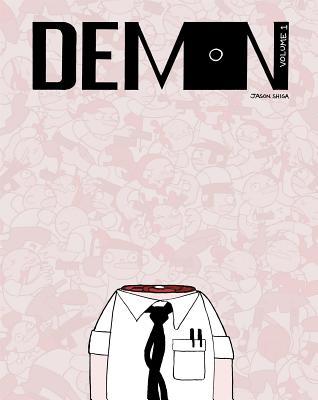
An edgy, simply-drawn comic about a man who tries to commit suicide, but keeps waking up alive. There’s an unexpected twist and lots of blood.
In the author’s own words: “From the suicide depicted on the first page of the story to the climactic bloodbath three volumes later, Demon is my gleeful homage to the lurid and pulpy entertainment rags that make up the detritus of our childhoods.” From the foreword.
I see what he was trying to do. It just wasn’t for me.
For Jason Shiga, this was a very personal work: “Ultimately, Jimmy is me. When he leaps in front of a semi-trailer, it’s really me who secretly wants to do that. When he acts in a deliberately amoral and antisocial manner, that’s me, too.” From the foreword.
Shiga warns readers from the start that Demon is crass and graphically violent. And, it is.
Secrets of Meditation is one of the clearest and beginner friendly meditation manuals that I’ve ever read.
Davidji breaks practices down not only into type and step-by-step instructions with examples, but also by lineage and development over time and place.
Davidji provides enough background on himself to establish his bona fides but not so much as to overpower the instruction with meaningless chatter about himself.
He intersperses the text with helpful advice, additional authors to explore, and a myriad of ways to connect with him online for some meditation freebies.
Though it’s clear that he’s immersed himself in Eastern culture and practices (having traveled extensively in the East and studied under various gurus), Davidji hasn’t adopted an insider’s way of talking about meditation.
Sometimes, and maybe this is just me, it feels like meditation instructors go so far out into the “oneness” that they never come back fully into the real world. That’s not Davidji at all. I loved this text mainly because of how he could keep one foot “over there” and the other firmly planted “back here”.
Admittedly, my daily meditation practice has lately fallen somewhat on my priority list. This book makes me want to head back to the mat.
And also, Seeking Heaven. Eben Alexander is a neurosurgeon who had a near death experience turned it into guided meditations. I think they’re easy enough for beginners to use.
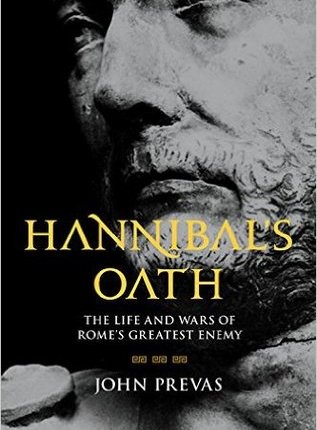
A fascinating and true study of Hannibal, one of ancient Rome’s greatest enemies, a brilliant general and, according to John Prevas, a “larger-than-life action hero from the past.”
Prevas did the translations from period and later documents, historical research and traveled to the places where Hannibal went, to create one of the most insightful, non-fiction examinations of Hannibal that I’ve ever read.
It all started with Hannibal’s father, Hamilcar. “Hamilcar was furious at what he saw as Roman bad faith, but powerless to intervene at the moment, he chose to bide his time and find another way to even the score.” loc 290, ebook.
Spoiler alert (if you don’t know ancient history): Hamilcar had a bunch of kids and made them swear to destroy Rome. The boys, he groomed as warriors; the girls, he married off advantageously to help his sons.
“As the rituals neared completion, Hamilcar called for Hannibal, then only nine years of age, to join him at the altar. There, the young boy begged his father to take him to Spain, and Hamilcar consented on the condition that Hannibal pledge to the god he would always be an enemy to Rome and to anyone who stood with Rome.” loc 323, ebook. No pressure or anything.
The Barcas, Hamilcar’s family, create a foothold in Spain. It is from there, that Hannibal will eventually attack the Romans by, famously, crossing the Alps- with elephants in tow.
Anything to do with Hannibal’s elephants were my favorite parts of this book. “The elephants were often plied with wine before battle to stimulate their aggression, and while the wine might have done that to some degree, it also seems to have contributed to their tendency to panic and then rampage during the mayhem of the fighting.” loc 713, ebook.
Drunk, rampaging elephants! It doesn’t get much more dramatic than that.
Though written more like a textbook than a historical fiction (which is my favorite way to learn about history), I still learned a lot from Hannibal’s Oath and enjoyed it.
Recommended for classic majors, elephant lovers and fans of ancient history.
Reminder: the short quotations I cited in this review may change in the final printed version. Thank you to NetGalley and Da Capo Press for a free advance reader’s copy of this book.
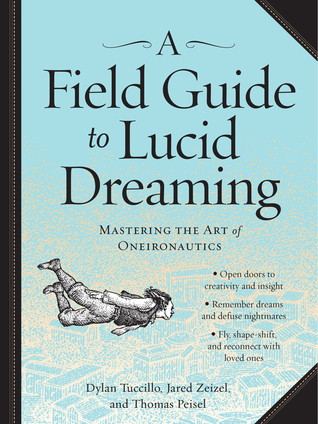
An excellent guide to experiencing or deepening lucid dreams, A Field Guide to Lucid Dreaming is filled with tips, tricks and advice to explore your dream world.
My husband and daughter experience lucid dreams all the time and I don’t or, at least, haven’t yet. It’s embarrassing.
It’s as if they have access to worlds that I can only dream about, literally. I picked this book up because I wanted to develop this skill too.
So far, with the advice contained within this Field Guide, I’ve realized that I was dreaming once, became lucid and immediately woke up. But, that’s progress.
I’m encouraged actually. If I can go lucid once, I can do it again.
“Lucid dreaming is the ability to know you’re dreaming while you’re dreaming. A lucid dreamer is able to go to sleep at night and wake up within his or her dream. With this unique awareness, you can generally behave like someone who is awake, exercising the free will, imagination, and memory of waking life.” introduction. How fun would that be?
Ever wanted to fly? Face your nightmares? Talk to a deceased loved one? The authors of this book claim that it is all possible.
They addressed some of my problems directly: “Quite often, the amateur lucid dreamer’s early exploits in lucidity last only a few moments. If you’ve become lucid already but lost your awareness very quickly, don’t worry. This is common. In the next chapter we’ll look at ways in which you can stabilize the dream and stay lucid for long stretches of time.” pg 106.
Practice makes perfect, it seems.
The shamanistic beliefs about the dream world are intriguing:“…shamans of indigenous cultures understood that in order for something to be created in the physical world (such as that kitchen you’ve been meaning to remodel, or this book), it must first be constructed in the “imaginal realm.” In other words, lucid dreaming might be a tool in creating our physical reality.”pg 151.
Life is like a dream and we are the dreamers, whether asleep or awake:“This world can be a nightmare or a nice dream. It’s full of friends or enemies, success or failure, meaning or nihilism. We’re headed toward destruction or we’re headed toward rebirth. There are many viewpoints on Earth as there are people. And just like the dream, we shape our experience with our thoughts, emotions, and expectations. pg 246.
Recommended for anyone who, like me, wants to master lucid dreaming. I think that this book will help you find your way.
**Warning: minor spoiler in the last paragraph of this review. Read with caution.**
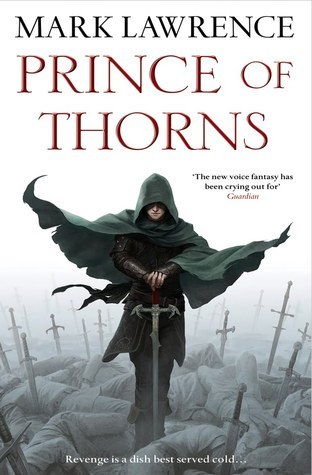
Prince of Thorns is about a boy who becomes a monster on his way to becoming a man. There’s some fantasy twists in it, but that’s the main story.
I wanted to love this book. But, sadly, the title character is simply unlikeable. And, the role of women in the book is either sex object or nothing.
“Two hundred dead farmers lying with their scythes and axes. You know, I warned them that we do this for a living. … I gave them that chance, I always do. But no. They wanted blood and slaughter. And they got it.” pg 1, ebook. That’s the very first page, folks.
And all of this cynicism and blood thirst is from a 14 year old. Sure…“There’ s a reason I’m going to win this war. Everyone alive has been fighting a battle that grew old before they were born. I cut my teeth on the wooden soldiers in my father’s war room. There’s a reason I’m going to win where they failed. It’s because I understand the game. pg 19, ebook.
Mark Lawrence tries to use a magical reason to explain this adult reasoning from a child, but it didn’t work for me.
“We wrap up our violent and mysterious world in a pretense of understanding. We paper over the voids in our comprehension with science or religion, and make believe that order has been imposed. And, for the most of it, the fiction works. We skim across surfaces, heedless of the depths below. … Until that moment when something from the cold unknown reaches up to take us.” pg 205, ebook.
If you want dark fantasy about a band of thieves, may I recommendThe Lies of Locke Lamora. If you’re looking for an epic fantasy about humankind being the pawns for something greater than ourselves, try Gardens of the Moon. As for Prince of Thorns, if you must read it, borrow it from the library. Because then, like me, you can give it back, only have lost the time it took to read it.
The story opens on a dark and stormy night. We’re heading into Arkham Asylum with Batman. After passing a few famous inmates, we’re outside inmate #0801, Name Unknown’s cell.
A shadowy figure is playing solitaire within the barred room. It’s The Joker.
By far, one of the creepiest villains of the Batman pantheon.
“So when you find yourself locked onto an unpleasant train of thought, heading for the places in your past where the screaming is unbearable, remember there’s always madness. Madness is the emergency exit…”
He is mad, yes, but brilliant in his insanity. And, in that, is he so different from the rest of the human race?
“Faced with the inescapable fact that human existence is mad, random and pointless, one in eight of them crack up and go stark slavering buggo! Who can blame them? In a world as psychotic as this… any other response would be crazy!”
Recommended for the more mature graphic novel readers because of some disturbing content and images, Batman: The Killing Joke is no joke and one heck of a ride.
Watchmen, also by Alan Moore, is one of my all time favorite graphic novels, so I was expecting to enjoy this one. If you haven’t had a chance to read it yet, it’s another must-read for the graphic novel fan.
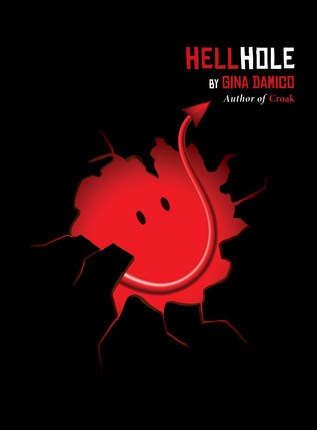
Hellhole is a modern Faustian tale about Max Kilgore, his deathly ill mother and the devil.
Though written for a young adult audience, readers need to be aware that there are some bad words in the dialogue and innuendo in some situations. All kids are different, but I’d lean towards 15 and up forHellhole.
Our hero is just a regular guy: “Seventeen-year-old Max Kilgore suffered from the unfortunate curse of having a name that was far cooler than the person it was attached to.” pg 8, ebook.
Max attends high school, holds down a job and cares for his ailing mother in Eastville. “The town of Eastville was known for four things: its renowned hospital, its renowned high school football team, its renowned granite quarry, and its stupid, stupid name. No one could say with authority what Eastville was supposed to be east of…” pg 13, ebook.
One day, after a bad decision on Max’s part, Burgundy Cluttermuck (Burg) walks through his door. “The name is Burgundy Cluttermuck, devil-at-large. I do bachelorette parties and retirement galas, but no more children’s birthday.” He sucked in some air through his teeth. “Too much screaming.” pg 38.
How is Max going to get rid of him? And how long is this devil going to stick around? It’s dangerous to have a devil around the house: “He won’t go after you. He’ll go after the ones you love, and then you’ll have to live with the guilt. That’s your ‘punishment for dealing in devilry’…” pg 107, ebook.
Even though Kate Atkinson took readers back into the beautiful world that she created for the Todd family, this story wasn’t nearly as enjoyable as Life After Life.
This time, the story focused on Teddy. It is told through the mixed up timeline that I’ve come to expect from Atkinson. We get to see Teddy’s relationships, family and inner thoughts.
It didn’t have the magic of Ursula’s story, in my opinion. In Life After Life, I was enthralled. For the majority of A God in Ruins, I was not.
I was surprised that I liked very few of the characters. Viola, in particular, was awful. I realize that that is partially the point, but still- it’s hard to appreciate the story when you don’t like most of the major characters.
The writing was still lovely, but I didn’t connect to this book the way that I did with the other one. I’m rather disappointed actually.
Dark Matter is a fantastic, sci-fi read about regret, love and quantum mechanics.
My book club picked this wild ride of a book and everybody took something different out of it.
We all enjoyed it, which is weird for us. Usually, we have opinions across the spectrum. This one, though, was universally loved. That’s saying something.
“In the shadow of this moment, my life is achingly beautiful. “I have an amazing family. A fulfilling job. We’re comfortable. Nobody’s sick.” pg 28. And then, something truly surprising happens. No spoilers!
I think that, as time passes, we grow comfortable in our lives, our marriages and relationships. Part of this book is about appreciating what you may take for granted. “He says, “It’s like we get so set in our ways, so entrenched in those grooves, we stop seeing our loved ones for who they are. But tonight, right now, I see you again, like the first time we met, when the sound of your voice and your smell was this new country.” pg 67.
The leader of my book club picked quotations that had to do about self-knowing and quantum mechanics. It was no surprise that mine were all about love. I’m one of the hopeless romantics of the group.
And one of the most open-minded: “We all live day to day completely oblivious to the fact that we’re a part of a much larger and stranger reality that we can possibly imagine.” pg 96. I truly believe that.
A local physics professor joined our circle and gave a short lecture on basic quantum mechanics and wave theory. But, you don’t have to be an expert on the subject to enjoy this story. It’s approachable science, like The Martian.
Recommended for book clubs, especially, but also anyone who wants an unbelievable story will probably love this too.
I heard that this is going to be made into a film- read the book anyway. It’s always better.
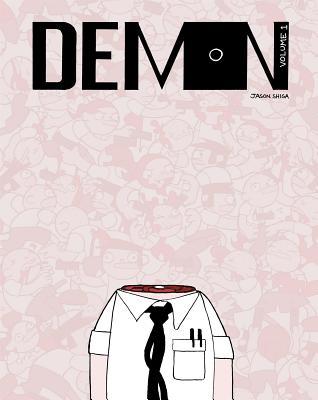 An edgy, simply-drawn comic about a man who tries to commit suicide, but keeps waking up alive. There’s an unexpected twist and lots of blood.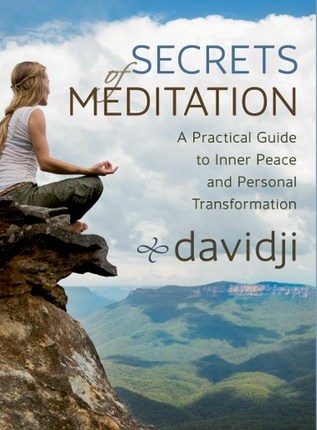




 **Warning: minor spoiler in the last paragraph of this review. Read with caution.**



 Even though Kate Atkinson took readers back into the beautiful world that she created for the Todd family, this story wasn’t nearly as enjoyable as
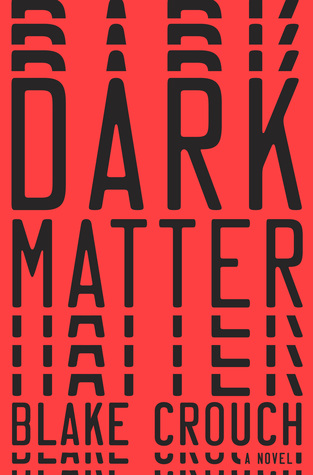 Dark Matter is a fantastic, sci-fi read about regret, love and quantum mechanics.
 The Help Desk Book Blog