Blood of Elves (The Witcher, #1) by Andrzej Sapkowski

Blood of Elves (The Witcher, #1) by Andrzej Sapkowski

In a fantasy realm where the races of humankind, elves, dwarves, and gnomes have ceased to co-exist peacefully, there lives a princess whose inner power, if left uncontrolled, could destroy the world. Geralt of Rivia, also known as the Witcher, and his friends, are tasked with not only protecting this girl but also instructing her so that her abilities don’t destroy her mind from the inside-out.

“Ciri had heard such reassurances in the past. … Now she believed it. Because it was Geralt of Rivia, the White Wolf, the Witcher, who said it. The man who was her destiny.” pg 11, ebook
Photo by Lukas Hartmann on Pexels.com

But there are forces in this world who are seeking Ciri for other reasons. She has the potential to be a force for the greater good or a weapon of chaos.

“Difficult times are approaching,” she said quietly. “Difficult and dangerous. A time of change is coming. It would be a shame to grow old with the uncomfortable conviction that one had done nothing to ensure that these changes are for the better.” pg 23, ebook

I picked up Blood of Elves because I recently watched most of the Netflix show based on the video games and also these books. I thought Blood of Elves was the first in the series, but apparently I missed a short story collection prior to this book.

That didn’t lessen my enjoyment of this tale, but I do enjoy having context. Andrzej Sapkowski does a good job of dropping bread crumbs about who Witchers are, who Ciri is, and the complex interactions of the different powers in the world, so newcomers to the book-version of the story, like me, can keep up and it doesn’t feel like an information dump.

“You are not learning in order to kill and be killed. You are not learning to kill out of fear and hatred, but in order to save lives. Your own and those of others.” pg 59, ebook
Photo by Engin Akyurt on Pexels.com

A small complaint though, and I had this same comment about the Netflix show, is that the storyline bounces around quite a lot. If you’re not paying attention, or reading carefully, you’re in danger of losing the thread because this isn’t a simple world nor is it populated by one dimensional characters.

Sapkowski shines in the dialogue between these characters, especially during the action sequences. It is easy to see why a video game was created using this material.

“Remember,” she repeated. “magic is Chaos, Art and Science. It is a curse, a blessing and progress. It all depends on who uses magic, how they use it, and to what purpose.” pg 147, ebook

Highly recommended for fans of the genre, the games or show. Blood of Elves delivers.

Thanks for reading!

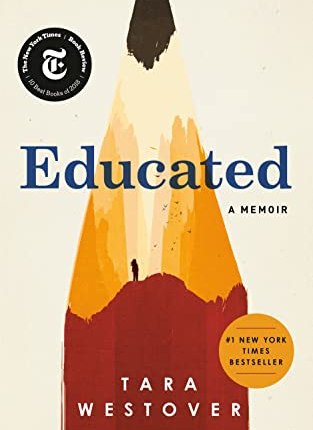
Educated by Tara Westover

Educated by Tara Westover

Educated is a gripping memoir by Tara Westover about her unconventional upbringing in remote Idaho, how she left that life, and discovered both physical and emotional freedom through a world class education.

“(My father) never told me what to do if I left the mountain, if I crossed oceans and continents and found myself in strange terrain, where I could no longer search the horizon… He never told me how I’d know when it was time to come home.”

Photo by Bri Schneiter on Pexels.com

This not a simplistic life story and Tara takes the time to look at what happened as truthfully and clearly as she can. This has led her to some difficult conclusions.

For example, Tara’s father embraced a survivalist lifestyle not only because of his religious convictions, but also because of a deep-seated paranoia. It wasn’t until Tara attended a college level psychology class that she realized her father’s particular way of thinking could be indicative of a mental disorder.

In addition to his erratic and paranoid behavior, the conservative nature of her father’s view on the roles for women has had a long-lasting impact on Tara. It led her to minimize physical abuse that took place in her childhood home as well as struggle to find her own place in the world. And, until a life-changing accident affects her father’s health permanently, Tara never saw her mother as an equal in her parents’ relationship, which, in turn, seriously affected how she viewed herself in relationship to the people around her.

Photo by Rachel Claire on Pexels.com

All of the various events and family members Tara describes have far reaching consequences for her eventual life away from her family’s mountain home. Her journey from the past to the future was extraordinary and makes for a great read.

I had heard a lot of bookish chatter about Educated over the last two years and was skeptical about how good it might actually be. Those fears were ill founded- I thoroughly enjoyed this memoir, reading it in only a handful of days. I highly recommend it.

There are some trigger warnings for readers who have struggled with mental disorders or been victims of physical abuse. This book also contains some slightly graphic descriptions of life threatening injuries.

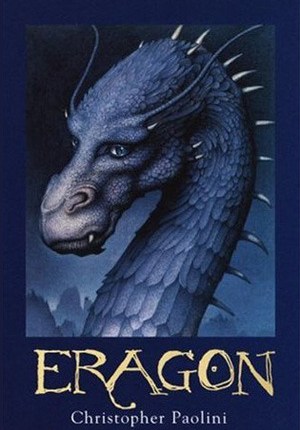
Eragon by Christopher Paolini

Eragon by Christopher Paolini

Eragon follows the exploits of a boy, a dragon, and their fight against an evil king, and his henchmen, who would plunge the world into darkness.

Prophecies of revenge, spoken in a wretched language only he knew, rolled from his tongue. He clenched his thin hands and glared at the sky. The cold stars stared back, unwinking, otherworldly watchers.” pg 14, ebook

Photo by carol wd on Pexels.com

Though it is written for children, Eragon is a charming tale that I thoroughly enjoyed as an adult reader. The pace was snappy, the characters were written quite well, and the story itself was a fun, adventure and fantasy.

“Eragon found the stone both beautiful and frightening. Where did it come from? Does it have a purpose? Then a more disturbing thought came to him: Was it sent here by accident, or am I meant to have it?” pg 16, ebook

Photo by Dids on Pexels.com

I did a little research about the author, Christopher Paolini, and was surprised to discover that this was one of the first books he published and he was in his teens when he wrote it. How impressive is that?

“Dragons will constantly amaze you. Thing… happen around them, mysterious things that are impossible anywhere else.”

There were a couple things I didn’t enjoy about Eragon, but they didn’t ruin my appreciation for the overall story. For example, I wanted Saphira the dragon to have a different personality. She has some character traits that I felt were incongruous with how an immensely powerful, magical being would act.

Photo by Andre Moura on Pexels.com

When I think carefully about it, what a silly quibble to have with a story based in fantasy. But readers will have their preferences, and I like to picture dragons as either wise and benevolent, Buddha-like beings or demonic treasure hoarders along the lines of Smaug.

Paolini’s version of them is different from both of these extremes. He makes dragons fallible, like humans. Which, at the end of the day, makes this a better story for children. A lesson like, even the most powerful among us can make mistakes or experience unpleasant emotions like jealousy, is a good lesson to learn.

“These books are my friends, my companions. They make me laugh and cry and find meaning in life.” pg 153, ebook

Photo by Pixabay on Pexels.com

Highly recommended for young adult fantasy readers or the young-at-heart.

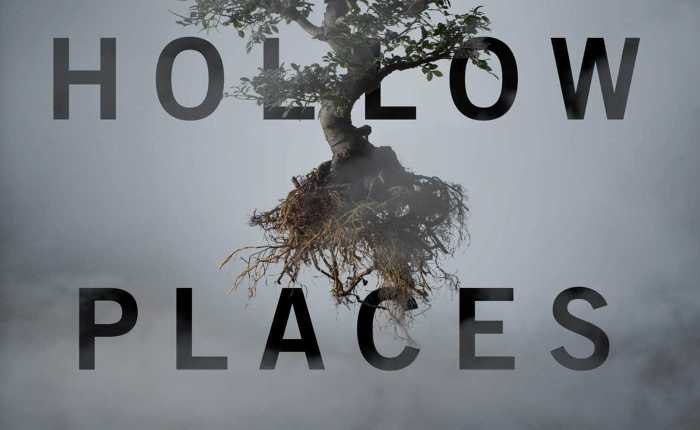
The Hollow Places by T. Kingfisher

The Hollow Places by T. Kingfisher

Kara is going through a hard time and is grateful for a chance to help out at her Uncle Earl’s museum. She has always loved it there.

“Nobody ever believes me when I tell them my uncle Earl owns a museum. They start to come around when I explain that it’s a little tiny museum in a storefront in Hog Chapel, North Carolina, although there’s so much stuff jumbled together that it looks bigger than it is.”

Photo by Tobias Bju00f8rkli on Pexels.com

But when Kara and Simon, the barista next door, attempt to repair a hole in the wall of the museum, they discover a hallway that shouldn’t be there.

“Frankly, I wasn’t even sure what you were supposed to do when you had an impossible hallway in the walls. Did you call the police to report that the laws of time and space were getting broken?”

What lies beyond the hallway? Kara and Simon are going to find out, and their lives are never going to be the same.

Photo by Elina Krima on Pexels.com

First, I am not a big fan of the horror genre. But, The Hollow Places, is horror done the way I like it best.

There’s an unknown world with as-yet unknown dangers. The story is one of exploration and carefully-crafted reveals so you feel as if you’re on an adventure.

The characters are fantastic. Kara and Simon are people I would walk down a mysterious and magical hallway with, no question.

The author slowly builds the tension of the story so, for the most part, the main emotion the reader feels is a growing sense of dread. It’s an emotion a reader with an anxiety disorder (like me) is familiar with and there’s something very satisfying about having that feeling validated and then resolved.

I believe life rarely gives the same kind of closure.

Photo by Elina Krima on Pexels.com

The voice of the main character, Kara, is down-to-earth and, occasionally, quite funny. I liked how the author gave her all sorts of relatable, every-day type problems and then, once the story started rolling, she re-evaluated the importance of issues that would have caused her major headaches prior to her life-changing experience.

I could see myself doing the same sort of thing if I was in her shoes.

The Hollow Places contains some nightmare-inducing moments but nothing I considered gratuitously violent. There’s some mild sexual references in the banter between the two main characters. This book might work for older teens who are looking for a spooky October read.

Highly recommended for readers of horror or who like their fantasies to have some thrills and chills.

Thank you to NetGalley and the publisher for a free digital copy of this book.

The Loop by Jeremy Robert Johnson

The Loop by Jeremy Robert Johnson

“It was so surprisingly calm that it took a few minutes before anyone in the room even noticed the way that Chris Carmichael was twitching at his desk.”

Photo by Pixabay on Pexels.com

The first hint that something has gone wrong in Lucy Henderson’s town is a horrific event in her high school classroom. The violent-nature of the event triggers trauma from Lucy’s past, an emotional wound that goes so deeply into her psyche that she hasn’t begun to process it- let alone the damage it has left behind.

It doesn’t help that Lucy feels like an outcast and an outsider in her small hometown. Part of this is baggage from Lucy’s past, but the majority of it is the racism and tribalism she faces from the small-minded young adults in the community. They won’t let her forget she looks different from them and torment her with their racial hatred on a near-daily basis.

The only semblance of friendship in her life is with a young man who goes by the name of “Bucket,” for reasons that are explained in the story. (No spoilers.)

Photo by Anna Shvets on Pexels.com

When all hell breaks loose in town, Lucy and Bucket only have each other and a few acquaintances to help in a race to save their families. The nightmare that they had been living solely in their minds becomes all too real.

“What the hell is going on in this town? Sometimes it feels like things are f*cked up in every direction, you know?”

The character and world-building of The Loop is well done in that I connected deeply with Lucy and Bucket before the story took off.

My lack of enjoyment of the book stems from the graphic nature of the violence against people and animals, both physical and mental. There are also brief instances of sexual abuse between underage teens as well as the discussions of porn with descriptions vague enough that young adults reading this book will immediately turn to Google to answer any questions they may have. There is bullying, unaddressed by the adults in the young peoples’ lives, as well as the trauma Lucy suffered at the hands of a system that should have protected her.

Photo by cottonbro on Pexels.com

Which brings me to another discussion point, this is not a book for young adults. If it was television, it would carry a mature rating. The horror genre has a huge following and graphic violence is definitely a part of that. That being said, it is strange to me how cavalierly some treat depictions of absolutely horrific things.

I feel like society has become desensitized to violence in the media we mindlessly consume. Descriptions of fingers popping through eyeballs and knives cutting through flesh is delivered as a matter-of-course, part of what makes the story so scary.

I picked this title out of the myriad being published in the next months because it was compared to Stranger Things, a horror show, true, but one that leans on the psychological and paranormal scares far more than the physically violent ones. I watched that show with my young daughter. I would not let her read this book, at least until she’s 18.

I say that as a former librarian but also a mother.

All that being said, there are beautiful lines in the book that perfectly capture the agony of mental pain.

For example: “She imagined herself tilting her head back and opening her mouth to scream again, only this time her mouth kept opening and her jaw detached like a snake’s and she kept splitting until she was cleaved in two and all that came out of her was white flame.”

Photo by Matej on Pexels.com

But I didn’t feel that the beauty of those fleeting moments made the time I spent reading the title worth it.

Recommended only for adult horror readers who can handle the triggers of violence and everything else described above.

Thank you to NetGalley and the publisher for a free digital advance readers copy of this book. The brief quotations I cited may be changed or omitted in the final, printed version.

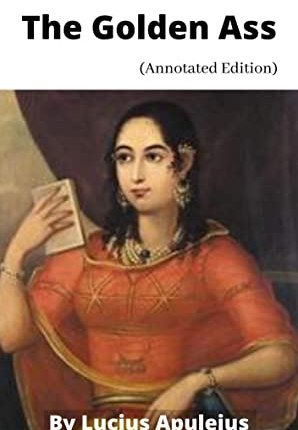
The Golden Ass by Apuleius

The Golden Ass by Apuleius

Lucian longs to experience real magic. When he discovers it, an unfortunate misstep turns him into the title character. In the shape of an ass, Lucian suffers through a series of misadventures.

Photo by Nilina on Pexels.com

I wonder when Apuleius was writing The Golden Ass, if he ever imagined this particular novel would be the only one written in Latin to have made it through his time to ours in its entirety.

Perhaps that’s an unfair question, because how could a writer imagine something like that?

But if he could have somehow foreseen it, I think that he would have written something different than this rambling, depressing, occasionally obscene adventure. Or maybe not. Maybe it summoned up his society nicely.

Photo by Mike Andrei on Pexels.com

Hypothetical ramblings aside, it didn’t make for an enjoyable reading experience.

A very large consideration for readers of The Golden Ass is the quality of the translation and how that may affect your enjoyment of the book. A friend and I read this book in tandem and this particular problem became clear quite quickly.

My edition, borrowed from the library, is a reprint of a translation by William Adlington in “Oxenford, September 1566,” and comes complete with the spelling and idiosyncrasies of his era.

“You perhappes (sic) that are of an obstinate minde (sic) and grosse (sic) eares (sic), mocke (sic) and contemme (sic) those things which are reported for truth, know you not that it is accounted untrue by the depraved opinion of men, which either is rarely seene (sic), seldome (sic) heard, or passeth the capacitie (sic) of mans reason, which if it be more narrowly scanned, you shall not onely (sic) finde (sic) it evident and plaine (sic), but also very easy to be brought to passe.” pgs 14-15, ebook

Photo by Andrea Piacquadio on Pexels.com

I found many passages “passeth the capacitie of” my reason because the nearly five hundred years between Adlington’s translation and this made so much of it nearly unintelligible.

My friend read a modern translation by Penguin Publishing and reported a more positive reading experience. If given a choice between the two, please do pick the more modern version.

“Verily shee (sic) is a Magitian (sic), which hath power to rule the heavens, to bringe (sic) downe (sic) the sky, to beare (sic) up the earth, to turne (sic) the waters into hills and the hills into running waters, to lift up the terrestrial spirits into the aire (sic), and to pull the gods out of the heavens, to extinguish the planets, and to lighten the deepe (sic) darknesse (sic) of hell.” pg 19, ebook

Translation problems aside, I found the bulk of the story to be repetitive and, on the main, depressing. Things get worse and worse for our hero.

Photo by Emmylou on Pexels.com

Yes, there is some measure of relief when we reach the end of our story and explore the mysteries of a cult whose rituals have been forgotten to history. But between the beatings and, as I mentioned, various obscene interludes, the end couldn’t come fast enough. Poor Lucian, “poore” William Adlington, and poor me!

The version I read of The Golden Ass, I recommend only for English majors, classicists or religious scholars. The appeal for modern readers just isn’t there.

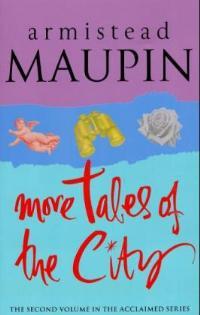
More Tales of the City (Tales of the City, #2) by Armistead Maupin

More Tales of the City (Tales of the City, #2) by Armistead Maupin

“For all her trials, she loved it here in San Francisco, and she loved her makeshift family at Mrs. Madrigal’s comfy old apartment house on Barbary Lane.” pg 11, ebook

All of the characters whom readers loved from the first book (Tales of the City) are back and mixing things up in San Francisco. This soap opera-ish fictional series remains as fast-paced in its second installation as it was from the start.

Photo by Aleksey Kuprikov on Pexels.com

Mary Ann is still working for Halcyon Communications, which is under new leadership, and has to face a new set of challenges. That’s not even mentioning the dark memories she’s trying to forget about a certain former boyfriend, or two.

Michael Tolliver, called Mouse by his friends, is still on the look out for love after a disastrous semi-relationship in the last book.

Mona Ramsey, the free spirit, is about to uncover another major secret about her past. She can add it all of the other ones she’s picked up…

“And she was- she believed- the only one who knew Mrs. Madrigal’s secret. That knowledge, moreover, formed a mystical bond between the two women, an unspoken sisterhood that fed Mona’s soul on the bleakest of days.” pg 18

Photo by Daria Shevtsova on Pexels.com

There’s a pregnancy, romantic cruise, conspiracy, secret club and more in this installment. A must-read for any fan of the series.

“I want it too badly, Mary Ann. Any idiot can see that. When you want it too badly, no one wants you. No one is attracted to that… desperation.” pg 129

One criticism I had for this book, the same I had for the last one, is in the highly unlikely coincidences contained in many of the plot twists. It seems to me that in a city the size of San Francisco, the dozen or so main characters would be more likely to run into other people than each other.

Photo by Daria Shevtsova on Pexels.com

But, like most works of fiction, I suppose it’s fine to suspend your disbelief on some points.

As for the rest of the book, I would describe it as compulsively readable. It’s almost like book candy, you can’t stop at just reading one. I certainly couldn’t.

Photo by Ylanite Koppens on Pexels.com

And, with that, it’s on to the next one…

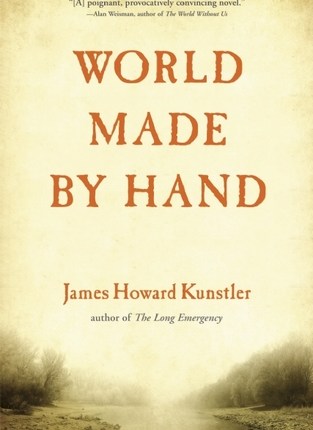
World Made by Hand by James Howard Kunstler

World Made by Hand by James Howard Kunstler

“It was chilling to reflect on how well the world used to work and how much we’d lost.” pg 12, ebook.

Photo by Davide Locatelli on Pexels.com

In World Made by Hand, civilization has fallen to pieces. There is no consistent electricity. The town of Union Grove has running water, but only because of a water system that relied more on elevation than anything else.

Worse, the justice system has fallen apart. There is little to no medical care facilities or supplies available. Television stations have ceased to broadcast. The radio sometimes broadcasts religious programming in the moments the electricity flickers on and then off.

“It’s not all bad now,” I said. “We’ve lost our world.” “Only the part that the machines lived in.” Jane Ann patted my thigh, but said no more and got up to leave.” pg 25, ebook

Photo by Pixabay on Pexels.com

A slow-paced dystopian novel that savors the end of life as we know it might not have been the best book for me to read right now. In the midst of a global pandemic and unfounded fears that life may never go back to the way it was, this wasn’t as much an escape as an additional cork-popper to my ever-present anxiety.

The characters lack depth, but I found myself caring for them because they seemed so real.

They want food, shelter and safety for their loved ones, even though all of those things have become difficult to find.

“By the time he passed away, it was obvious there would be no return to ‘normality.’ The economy wouldn’t be coming back. Globalism was over. The politicians and generals were failing to pull together at the center.” pg 29, ebook.

There are very few moments of action in here. I can see the slow pace being frustrating to some readers.

“The afternoon weather resolved into an uncomfortable drizzle, driven by hot winds out of the south. I had an old ripstop nylon poncho from my collegiate camping days, but it had lost its waterproofing.” pg 126, ebook

Photo by Sam Willis on Pexels.com

But, to play the devil’s advocate, perhaps that would be the way the world would actually end. To quote T.S. Eliot: “Not with a bang, but with a whimper.”

Recommended for readers who enjoy dystopians like Station Eleven and who are brave enough to read this kind of thing with the current state of things.

Before We Were Yours by Lisa Wingate

Before We Were Yours by Lisa Wingate

Before We Were Yours is a historical fiction based on the real and heart-breaking scandal of child kidnappings and paid adoptions from the Tennessee Children’s Home Society.

Children were treated like a type of rare commodity. Sadly, abuse and even death awaited some of the unfortunates who passed through the society. Some of the children taken in had families, but the society acted as if they did not.

Photo by Pixabay on Pexels.com

As a student of forgotten history, I didn’t want to believe that such things could have happened in the United States and, relatively, recently. But, it’s true.

“The Foss children and the Arcadia were formed from the dust of imagination and the muddy waters of the Mississippi River. Though Rill and her siblings exist only in these pages, their experiences mirror those reported by children who were taken from their families from the 1920s through 1950.” pg 295, ebook

Lisa Wingate tells the story in two different timelines – one in 1939 and the other in the modern day. The earlier story line is by far the most compelling.

Readers meet Rill Foss, one of five children belonging to an itinerant family who live on the Mississippi River in their house boat. Her story begins the night her mother, Queenie, is having trouble delivering a new baby.

When Rill’s father, Briny, takes Queenie to the local hospital for help, something terrible happens to the children they leave behind.

Photo by Maximilian Mu00fcnzl on Pexels.com

Meanwhile in the modern day, Avery Stafford has moved home to help her father, a senator, during his re-election campaign. There are also concerns about her father’s health as well as her upcoming nuptials to organize.

But then she stumbles upon an elderly woman who has a picture that closely resembles Avery’s own grandmother. Could there be a connection between the two?

“Grief and a change of location can often be more than the mind and body can handle.” pg 43, ebook

Of the two stories, the earlier one is far more interesting. Rill is such a strong and indefatigable heroine in her struggle to keep her siblings together. I was enthralled by each chapter narrating her life.

Photo by Kristina Paukshtite on Pexels.com

The Avery portion of the story, on the other hand, was just so predictable. If Before We Were Yours had just been the modern story, this book would hardly have earned a mention from me, let alone netting the Goodreads Choice Award for historical fiction from 2017.

“Life is not unlike cinema. Each scene has its own music, and the music is created for the scene, woven to it in ways we do not understand.” pg 278

Recommended for readers who enjoy historical fiction as well as book clubs.

In the future, I may pen a History Guy episode about the Tennessee Children’s Home Society. It seems to me that the fate of these poor children, now grown and many departed from this life, is history that deserves to be remembered.