Rules for a Knight by Ethan Hawke

Rules for a Knight by Ethan Hawke

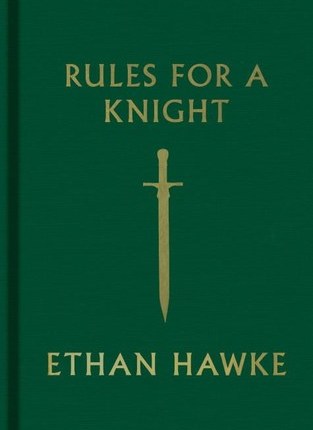
Rules for a Knight was very sweet. It is a fictional story about a knight who dedicates a journal to his children and, in it, uses stories to explain how he expects them to behave and grow after he is gone.
Photo by Pixabay on Pexels.com

Surprisingly, it is by Ethan Hawke, the actor!  I didn’t know that he could write… and, in this book, he shows that he really can.

I had been exposed to many of the parables presented in Rules for a Knight before through either Buddhist or Christian teachings, but they are repackaged quite well in this small, green tome.

The book itself is a joy for readers who really appreciate books as an art form both in what it contains and also in its packaging.  Rules for a Knight is covered in soft green cloth with the title embossed in gold and a ribbon bookmark bound into the lining- almost as if the book itself is inviting the reader to take her time, stop reading, put in the bookmark, and ponder the wisdom that comes from its pages.
Photo by Thought Catalog on Pexels.com

This is a book to be savored and read slowly with hot tea or coffee, whichever you prefer. 🙂

I think that there will always be a place on my bookshelf for stories that teach about inner truths and the journey from apprenticeship to mastery. I also liked that the knight addressed himself to both his sons and his daughters. Probably not historically accurate, but I approve anyway.

Some of my favorite bits:
“…the first thing you must understand is that you need not have gone anywhere. You are always in the right place at exactly the right time and you always have been.” pg 11

“There are only two possible outcomes whenever you compare yourself to another, vanity or bitterness, and both are without value.” pg 39

“Pay attention: what you need to know is usually in front of you. There are no secrets, just things people choose not to notice.” pg 63
Photo by Susanne Jutzeler on Pexels.com

“Later he told me when he was younger he learned the secret to performing under pressure: don’t do it for yourself. Do it for someone else.” pg 67

If you enjoyed Rules for a Knight, you may want to read Zen Seeds: Reflections of a Female Priest by Shundo Aoyama or After the Ecstasy, the Laundry: How the Heart Grows Wise on the Spiritual Path by Jack Kornfield.

Thanks for reading!

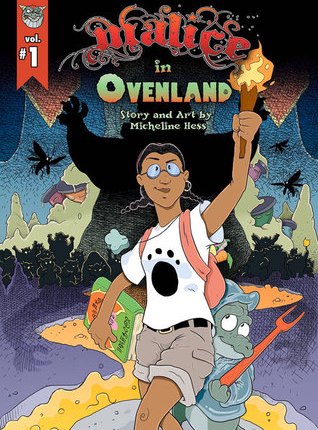
Malice in Ovenland: Volume 1 by Micheline Hess

Malice in Ovenland: Volume 1 by Micheline Hess

Malice in Ovenland by Micheline Hess is a graphic novel for children. Lily Brown’s mom tells her to clean the kitchen- and her adventure begins.

An excellent pick for reluctant readers, this story is a cute, gross, and, endearing romp through a fantastical world hidden behind an oven.

Lily’s heroic journey reminded me of the comic series, Princeless by Jeremy Whitley. In Princeless, the heroine tires of waiting for a prince to come save her, so, she sets about saving herself.

Lily is no wilting flower either, despite her name. 🙂

With art and a storyline appropriate for the pre-teen crowd and an empowered female protagonist, I could see this being a great addition to any juvenile’s graphic art collection.

What I enjoyed most about Malice in Ovenland were the homages to other great works of children’s literature.

The obvious one, of course, is to Alice in Wonderland but I also caught shades of the Lord of the Rings in the poem included at the end of Chapter 1.

The moment that Crumb comes to visit Lily in the dungeon reminded me of when Taran met Gurgi in the Black Cauldron.

The Queen’s advisor, named Crispodemus, reminded me of Nicodemus the rat from the classic children’s story, Mrs. Frisby and the Rats of NIMH by Robert O’Brien. (One of my all-time favorites, by the way)

And finally, The Royal Rangers reminded me of the Beagle Boys from Duck Tales– bumbling, minimally intelligent thugs, who would be harmless if they weren’t so determined to be bad.

Malice in Ovenland would be a great title for a reluctant reader or a reluctant eater. The story, in addition to the adventure, teaches kids to not be afraid to try new things- either food or life related.

It’s a message that can’t be repeated enough.

The humor is mainly gross-out or potty-related but, as a mother of a soon-to-be-10 year old, that’s exactly where her humor is at right now. It’s perfect for the audience that it is seeking.

Big thanks to NetGalley for providing me with a free digital edition of this title for review purposes and thanks for reading!

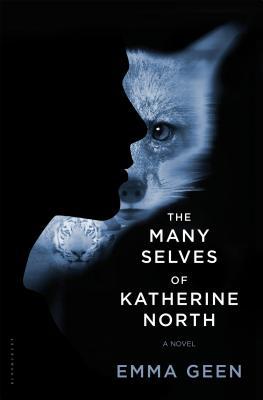
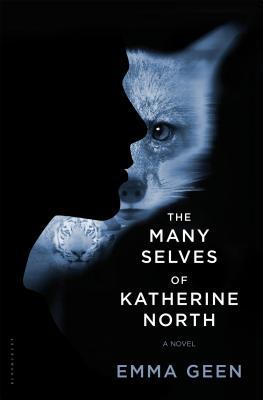
The Many Selves of Katherine North by Emma Geen

The Many Selves of Katherine North by Emma Geen

katherinenorthIn The Many Selves of Katherine North by Emma Geen, humanity has harnessed the power of consciousness and mechanized the ability to place that consciousness in different bodies at will.
Katherine is a teenager who works for a large research company. She’s the longest lasting “phenomenaut” (person who’s consciousness is put into the body of an animal) because she seems to be special.

The process of consciousness transfer seems to stop working when the brain ages and loses its plasticity. Despite her age, Katherine’s brain seems to be fine.

But then, one day, Katherine sees something strange when she’s out of her body… and perhaps she’s not as well as she imagined.

The Many Selves of Katherine North asks some pretty powerful questions like: What is consciousness? How does our physical body change how we perceive the world? What is reality?

I think that this story has the potential to open up a dialogue about these questions between readers who may not have considered them before. In that way, this is a very powerful book.

I did not like how the story flips back and forth between the present and the past. I think Geen was using the shifting timeline to build the mystery, but, because of the nature of Katherine’s many consciousness experiences, it made things rather confusing.

This is a complicated book. At times, maybe too complicated.

The richness and variety of Katherine’s experiences drives a wedge between her reality and the rest of humanity’s reality.

The reader really sees difference in this moment, when Katherine is preparing to go into work: “Later, I lie in bed quivering… because it’s only hours until I’m out of here. Here- not just a room but skin. How can other people call this their totality? There is so much more.” pg 19

Katherine captures the impossibility of explaining out-of-body experiences very succinctly here: “Because how do you cram the lived experience on to a page? The words available to me were never enough. Something would always slip the sentences. Human language developed around human bodies, it never quite fits other ways of being. pg 66

I loved all of the chapters when Katherine was in the body of an animal. In this one, she was a snake: “Old scents have imprinted upon the world like spoor into soft mud, the past blundering prey. I wonder if this is one reason many animals have a poor memory compared to humans. What’s the use in remembering when the world does it for you? pg 146 Fascinating.

Emma Geen included a disclaimer at the back of her book and it contained some of my favorite lines: “…what if there are other valid ways of knowing? What is the world is not one, but multitude, with as many ways of being as there are beings? What if literature were the opportunity to glimpse such refractions, thrown by the world as though from a diamond?” pgs 349-350 Loved that.

If you enjoyed The Many Selves of Katherine North, you may want to pick up The Night Circus by Erin Morgenstern or Mythago Wood by Robert Holdstock for more glimpses of worlds hidden within worlds.

Big thanks to Goodreads First Reads program, NetGalley, and Bloomsbury USA for providing me with an advance reading copy of this novel.

Thanks for reading!

Expecting Someone Taller by Tom Holt

Expecting Someone Taller by Tom Holt

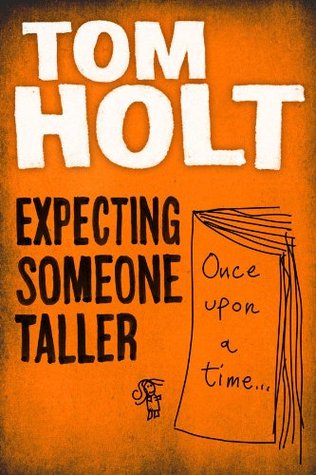
expecting someone tallerExpecting Someone Taller by Tom Holt is a humorous fantasy novel based off of the Ring Cycle of Norse mythology.  It’s older (published in 1990) but I like reading pulp fantasy fiction, no matter its age.
Full disclosure: I know The Lord of the Rings better than the Norse mythological stories it is based on. Holt provides a very short synopsis of the myths for folks like me and I was grateful for it. Otherwise, I would have not understood what on earth was going on.

Holt is an English fantasy-humorist and, like Pratchett’s many offerings, I enjoy his books but never have laugh out loud moments. I don’t know if the humor is lost-in-translation or what.

I expect that those who are more familiar with the Norse myths and who enjoy subtle humor might really love this rather silly tale of Malcolm and the ring.

There were some memorable lines: “Ingolf eased the plain gold ring off his finger and passed it to Malcolm, who accepted it rather as one might accept some delicacy made from the unspeakable parts of a rare amphibian at an embassy function.” pg 7 Nice.

“The next morning, Malcolm thought long and hard before waking up, for he had come to recognise over the past quarter of a century that rather less can go wrong if you are asleep.” pg 15 Absolutely true in my experience too.

Malcolm figuring out how the Tarnhelm (a hat that can change the wearer into anything) works: “Make me,” he said aloud, “as handsome as it is possible to be.”… He stood for awhile and stared… “We’ll call that one Richard” (he had always wanted to be called Richard). He resumed his own shape (which came as a bitter disappointment) then said “Richard,” firmly. At once, the Most Handsome Man reappeared in the mirror, which proved that the Tarnhelm had a memory, like a pocket calculator.” pg 20-21

The difference between smiles: “The girl looked at him and smiled. Malcolm had come to believe that he was fairly well equipped to deal with smiles, but this was a new sort; not a happy, optimistic smile but a sad, wistful smile. It didn’t say, “Wouldn’t it be nice if…” like the stock delivery of a Rhinemaiden, but, “It would have been nice if…” which is quite different.” pg 117

Why humans are the worst pick for ring bearing: “And so you give this irregularity in your minds a name of its own. You call it Love, which is meant to make everything all right. Rather than try to sort it out or find a vaccine, you go out of your way to glorify it. I mentioned your art and your poetry just now. What are your favourite themes? Love and War.”…”Now be fair,” he continued, “can you honestly say that a member of a species with this ancestral fallibility should be allowed to rule the universe?” pg 160 Fair question.

If you enjoyed Expecting Someone Taller, you may want to pick up The Good Fairies of New York by Martin Millar (a modern day fantasy with fairies) or Anansi Boys by Neal Gaiman (a fantasy about gods and their descendants).

Thanks for reading!

Paper Towns by John Green

Paper Towns by John Green

Warning: this is a book you either love or hate.  Consider yourself warned.

I fell more on the “hate” side of this equation but, surprisingly, enjoyed the film. This young adult, coming-of-age tale has elements of mystery to it.

Quentin has always loved Margo. One night, she wakes him up and they go on a wild tear about town, righting perceived wrongs and causing all sorts of hijinks.

Photo by David Besh on Pexels.com

The next day, Margo has disappeared. Their night out left all sorts of clues to where she went. Q decides to find her.

My negative reaction to Paper Towns surprised me because I loved John Green‘s The Fault in Our Stars so much.

Right off the bat, the reader is thrown into Margo and Quentin’s lives and we’re exposed to some of their worst traits rather than their best. Usually, people behave their best when you first get to know them and then, as they become comfortable with you, they let some of their more questionable sides out.

Photo by Alfonso Escalante on Pexels.com

The whole “rolling around the neighborhood at night and causing mayhem” takes place right at the start of Paper Towns. It isn’t fun because we don’t really know these characters yet.

It’s easier to forgive adolescent hijinks when you know and love the people who are doing them, but we’ve got almost zero time to form a connection before they’re breaking laws.

I think I would have given up on Paper Towns if I hadn’t watched John Green’s TedTalks video on the topic. If you haven’t seen it yet, here it is:https://youtu.be/NgDGlcxYrhQ

Quick summary of Green’s video: The basic idea behind a paper town (a made up town on a map) was copyright protection. The coolest part is that the mapmakers took something that wasn’t real and made it real because they presented it that way for so long.

I know that John Green can write amazing, sympathetic characters. He chose not to in this book and I’ve been rolling it around my brain, wondering why.

I think that Green wrote the characters in this story like a paper town.

At first, he presents the main characters as over-the-top clichés of what teenagers could be. The reader isn’t necessarily meant to bond with them at this point, they’re not real, they’re just “people on paper.”

Photo by Helena Lopes on Pexels.com

Then, through the second part of the book, let’s call it the “clue finding” part, Green slowly reveals more and more of the real parts of their characters just as Quentin finds more and more clues to where Margo has gone.

Through their hopes and dreams, relationships, daily struggles and hopes, they’re becoming more real.

Finally, in the last third of the book, as we join the characters on their mad rush to find Margo, they’ve become real. Real enough to have some close life-threatening moments on the road. Though they started out fake, Green built enough substance for the characters so that they have heft and dimension.

That’s my theory on why Green wrote such awful characters: he meant to. But, I still never liked any of them very much, even after they became “real.”

Photo by Buro Millennial on Pexels.com

I liked Green’s prologue: “The way I figure it, everyone gets a miracle. Like, I will probably never be struck by lightning, or win a Nobel Prize, or become the dictator of a small nation in the Pacific Islands, or contract terminal ear cancer, or spontaneously combust. … My miracle was this: out of all the houses in all the subdivisions in all of Florida, I ended up living next door to Margo Roth Spiegelman.” pg 15 ebook.

“Margo always loved mysteries. And in everything that came afterward, I could never stop thinking that maybe she loved mysteries so much that she became one.” pg 23 (ebook)

And that was the high point in this book for me. It was all downhill afterwards.

Here’s the passage that helped develop my theory about Green writing paper characters in Paper Towns: “… she looks like Margo Roth Spiegelman, this girl I have known since I was two- this girl who was an idea that I loved. And it is only now, when she closes her notebook and places it inside a backpack next to her and then stands up and walks toward us, that I realize that the idea is not only wrong but dangerous. What a treacherous thing it is to believe that a person is more than a person.” pg 406 (ebook)

Photo by Mihis Alex on Pexels.com

In conclusion, if you haven’t read any of John Green’s books, please don’t start with this one.

I highly recommend A Fault in Our Stars. It will break your heart. This one was not so good.

The film adaptation of Paper Towns was surprisingly ok. Borrow it from the library and let me know what you think.

I’m off to be more than a paper character in my own life- thanks for reading!

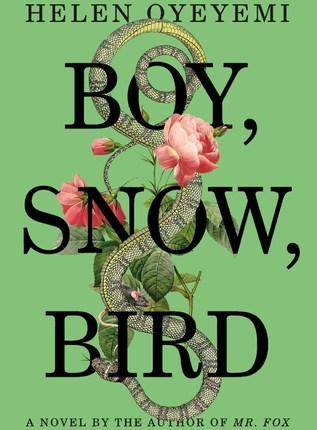
Boy, Snow, Bird by Helen Oyeyemi

Boy, Snow, Bird by Helen Oyeyemi

Boy, Snow, Bird is beautiful, haunting, modern and loose re-telling of the fairy tale of Snow White. The ending made me so mad that I almost chucked the e-reader across the room.

The story is about Boy Novak moving to a new place and starting her life over again. She meets a man named Arturo who has a beautiful daughter named Snow.

Photo by Pixabay on Pexels.com

Their relationship changes when she gives birth to a child named Bird. The interactions between Boy, Snow and Bird are what to watch for in this well-described tale.

I loved the characters and the huge twists in this book so much. I was reminded of the major twist in The Life of Pi. Oyeyemi was able to flip the narrative over and make it something else by unveiling a rather large surprise towards the end.

Still though, that ending. I can’t make up my mind whether it was awesome or infuriating.

Photo by cottonbro on Pexels.com

At any rate, this is a book that captured my attention and held it mercilessly until it was done.

Oyeyemi can write.

Check out this passage: “The town should really have been called Flax Hills, since it was huddled up between two of them, but maybe that was the locals’ way of instructing one of the hills to scram. The hills are ringed round with old, dark, thick-trunked trees. They’re so tall you feel a false stillness standing under them; when you look all the way up, you see the wind crashing through the topmost branches, but you hear all the commotion only distantly, if at all…” pg 26.

Photo by Eva Elijas on Pexels.com

Much of this story deals with gender politics and the balance of power between the sexes. Oyeyemi drives right to the heart of the issue with her descriptions.

“I watched wealthy men and their wives and dates dancing and playing cards and making deals: I will admire you exactly as much, no more or less, as you admire me. I will love you in the strictest moderation. Some couples seemed pleased with their negotiations and others were in despair.” pg 31

I loved Oyeyemi’s descriptive writing. She makes you feel what the characters are feeling and it’s beautiful.

For example, here’s the beginning of a love story in three lines: “Because he says he can’t stand you and you act like you can’t stand him, and whenever a man and woman behave like that toward each other, it usually means something’s going on. There’s a precious metal kind of gleam about you, and the man’s a jeweler, you know. So look out.” pg 33

Photo by Andrew Neel on Pexels.com

I really liked Oyeyemi’s character development. She writes flawed characters that readers can see themselves in. It makes for an engaging and emotional read.

In this passage, she takes a stab at describing the small things that we look for in each other: “…he knew how to lean in and light a girl’s cigarette with a look and a smile that had me stubbing my cigarette out whenever his attention was elsewhere, just so he’d light up another one for me. It could have been the way he guarded the flame with his palm, the unexpected care with which he carried it up toward your lips; who knows what makes a man’s gesture attractive?” pg 56-57

Finally, I enjoyed Oyeyemi’s interpretation of the magic that exists in every day life. Because I believe it is there, if we only knew how to look for it.

“…a whole lot of technically impossible things are always trying to happen to us, appear to us, talk to us, show us pictures, or just say hi, and you can’t pay attention to all of it, so I just pick the nearest technically impossible thing and I let it happen. Let me know how it goes if you try it.” pg 177

I’m off to try the “nearest technically impossible thing.” Thanks for reading!

Welcome to The Help Desk! Book reviews and musings on life by Heidi Wiechert.

Welcome to The Help Desk! Book reviews and musings on life by Heidi Wiechert.

Hello world!  My name is Heidi and I’m a public librarian.  I work at a desk with a huge help sign over it.  Hence, the name of this blog.

I’m going to record my book reviews here.  I may also write some job related posts too, but nothing too serious or scholarly.

I love to read fiction, non-fiction, fantasy, memoirs, historical fiction, business books, and metaphysical or New Age books.  Frankly, if it’s been written, I’d probably read it and, most likely, love it.

I utilize Goodreads and, if you’re on there too, I’d love to connect.  See you there: https://www.goodreads.com/HeidiWiechert

Thanks for reading!