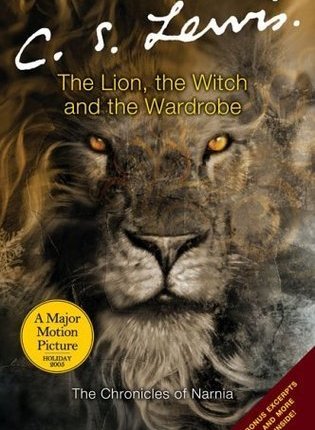
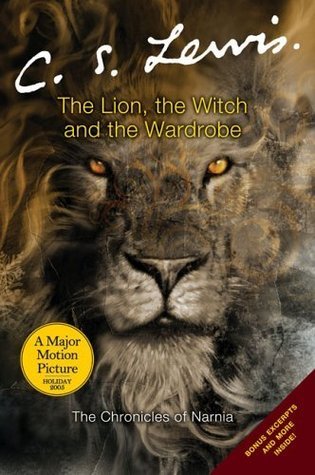
The Lion, the Witch, and the Wardrobe (Chronicles of Narnia, #1) by C.S. Lewis

The Lion, the Witch, and the Wardrobe (Chronicles of Narnia, #1) by C.S. Lewis
lionwitch

This is the story of four siblings who stumble through a wardrobe into a different world. They discover magic, monsters and their destiny.

One Christmas, when I was 11 or 12, my mother gave me The Chronicles of Narnia. It ignited a lifelong love of fantasy fiction and reading.

“Peter! Susan! It’s all true. Edmund has seen it too. There is country you can get to through the wardrobe. Edmund and I both got in. We met one another in there, in the wood.” pg 40.

I get the criticisms of this series- that it is heavy handed with its symbolism.

But, when I read it as a child, all of that slipped right over my head. All I knew, was that this was an adventure and I loved it.

The White Witch is one of the best villains in children’s literature: “As for you,” said the Witch, giving Edmund a stunning blow on the face as she re-mounted the sledge, “let that teach you to ask favour for spies and traitors. Drive on!” And Edmund for the first time in this story felt sorry for someone besides himself.” pg 113.

She opposes Aslan, a great golden lion and the ruler of Narnia, who hasn’t been seen for an age: “And now,” said Aslan presently, “to business. I feel I m going to roar. You had better put your fingers in your ears.” And they did. And Aslan stood up and when he opened his mouth to roar his face became so terrible that they did not dare to look at it.” pg 161.

The film did a solid job capturing the magic of this story, but nothing compares to the book.

“Once a King in Narnia, always a King in Narnia.” pg 186.

In fact, just writing up this review makes me want to read them all again.

I’ll see you on the other side of the wardrobe…

Thanks for reading!

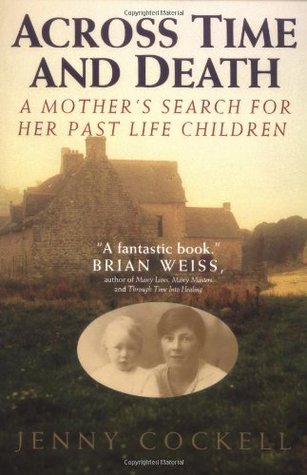
Across Time And Death: A Mother’s Search For Her Past Life Children by Jenny Cockell

Across Time And Death: A Mother’s Search For Her Past Life Children by Jenny Cockell
acrosstime

Jenny Cockell retained memories of a former life. In these memories, she died young and left children behind. Across Time and Death documents her acceptance of the memories and her search to find her previous family.

In childhood, my dreams were swamped by memories of Mary’s death. … All this, however, seemed inconsequential beside my fear for the children I was leaving behind.” pg 1.

In the religion of my childhood, reincarnation was neither taught nor accepted. But, as I’ve read different books, I’ve come to believe that it’s true.

I was so curious about it, in fact, that I participated in a past-life regression therapy session. The recording of it is mildly interesting, but mainly traumatic. I saw abuse, a lifetime of servitude and then a death that was penniless and alone in the dark.

The therapist can be heard on the recording, murmuring niceties about being “safe and secure.” There was a lot of, “let it go into the light” and “breathe in and out, slowly.”

Still, I walked out of that session and haven’t gone to another one since. I most likely never will.

If we do indeed live again and again, perhaps there’s a reason that we retain no memory of it. That’s my two cents. Back to Across Time and Death.

Photo by Pixabay on Pexels.com

As a child, Jenny understood her past life memories more clearly than when she was an adult. “I had no cause to doubt that these memories were real. I assumed that memories of this kind were normal, and I expected everyone else to have them too.”pg 12.

Culture has such power to shape our worldview. Isn’t it true that part of the process for choosing the next Dalai Lama is that the candidate has to recognize the previous Lama’s belongings?

Jenny’s experience with regression through hypnosis seemed to echo mine. “Hypnosis is a strange experience even without the element of regression. All sorts of memories which have been hidden deep within the subconscious and cannot ordinarily be reached can be brought to the surface. This is double edged – both a wonderful and a disturbing experience at the same time.” pg 34. Yes.

When Jenny is finally able to overcome all of her doubts and fears, she then has to consider what the, now grown, children are going to think of her. “I needed to ask for help because I was beginning to panic. I wondered if I had any right to disturb Mary’s children or, conversely, if I had the right to keep my story from them.” pg 107. Which is a legitimate concern.

I’d recommend this book for people who are on the fence or just curious about reincarnation. If your mind is completely made up one way or another, I don’t know that Jenny’s testimony will mean as much to you.

Thanks for reading!

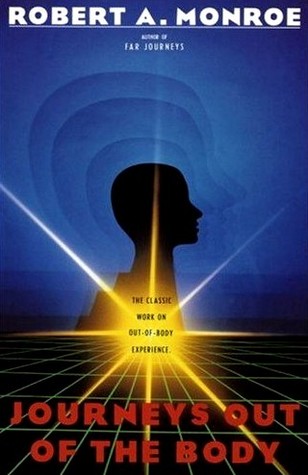
Journeys Out of the Body: The Classic Work on Out-of-Body Experience by Robert A. Monroe

Journeys Out of the Body: The Classic Work on Out-of-Body Experience by Robert A. Monroe
journeys out of the body

A ground breaking work into the mystery that is the out-of-body experience by a leading researcher in the field.

Ultimately, Journeys Out of the Body left me with more questions than answers, but, for the most part, I enjoyed the ride.

Charles Tart’s introduction is excellent: “… OOBE’s are a universal human experience, not in the sense that they happen to large numbers of people, but in that they have happened all through recorded history, and there are marked similarities in the experience among people who are otherwise extremely different in terms of cultural background. One can find reports of OOBEs by housewives in Kansas which closely resemble accounts of OOBEs from ancient Egyptian or oriental sources.” pg 8.

That statement reminded me of the near death experiences described in Wisdom of Near-Death Experiences: How Understanding NDEs Can Help Us Live More Fully by Penny Sartori. OOBEs like NDEs are a human experience rather than a cultural one.

Munroe points out a curious habit of society that I’ve noticed:“Many (in spiritual and occult circles) have deep professional jealousy for each other, and often are inclined to be suspicious of techniques and theories propounded outside their particular activity. They may even subtly deride or look with tolerant, superior amusement at results unrelated to their specialty. pg 37.

Why can’t we all just get along? I bet we’d learn more that way.

Photo by Min An on Pexels.com

Munroe’s thoughts on the “natural” home for what he calls the “second body”, astral body, or body of light: “The Second Body is basically not of this physical world. To apply it to visits to George’s house or other physical destinations is like asking a diver to swim down to the ocean bed without scuba gear or pressure suit. He can do it, but not for long, and not too many times.” pg 75-76.

That was why Munroe believes that out of body experiences are so hard to substantiate. When explorers are looking for evidence from the physical world, it isn’t the natural place for that consciousness to be.

Munroe talks about going to an alternate dimension in his explorations. He quotes a college professor about the possibility of this: “Dr. Leon M. Lederman, professor of physics at Columbia University, has stated: “Basic physics is completely consistent with the cosmological conception of a literal antiworld of stars and planets composed of atoms of antimatter, which is to say negative nuclei surrounded by positive electrons. We can now entertain the intriguing idea that these antiworlds are populated by antipeople, who antiscientists are perhaps even now excited by the discovery of matter.” pg 100

I think that would make a great science fiction novel. Has anybody written anything like that?

Photo by Yan Krukov on Pexels.com

I had imagined that learning about out of body experiences would be empowering and uplifting but parts of Munroe’s account didn’t really leave me feeling that way.

Take this journal entry in which he describes aliens and the loss of his belief system: “Then they seemed to soar up into the sky, while I called after them, pleading… By this time, it was getting light, and I sat down and cried, great deep sobs as I have never cried before, because then I knew without any qualification or future hope of change that the God of my childhood, of the churches, of religion throughout the world was not as we worshiped him to be- that for the rest of my life, I would “suffer” the loss of this illusion. Are we, then, just leftover laboratory animals? Or perhaps the experiment is still “in process.” pg 262.

Very, very bleak and, it just didn’t feel right to me. However, Munroe believes this is true and I felt very sad for him.

If you are interested in more information about OBEs, you may want to read Soul Traveler: A Guide to Out-of-Body Experiences and the Wonders Beyond by Albert Taylor or Multidimensional Man by Jurgen Ziewe.

If you want more one-on-one experiences with aliens, try The Key: A True Encounter by Whitley Shrieber.

Thanks for reading!

Wisdom of Near-Death Experiences: How Understanding NDEs Can Help Us Live More Fully by Penny Sartori

Wisdom of Near-Death Experiences: How Understanding NDEs Can Help Us Live More Fully by Penny Sartori
wisdomofneardeath

An extraordinary book by Penny Sartori who was a nurse, now doctor, and worked for years in the NHS.

She realized that with end life issues, there are many categories of experiences that are not discussed in medical educations but that happen often enough to be tacitly understood by practicing medical staff. Dr. Sartori compiled this book with the aim of helping other medical professionals understand near-death experiences and their potential effects on recovering patients.

Refreshingly, Dr. Sartori writes simply enough for a lay-person (like me) to completely understand the text and I found first-hand account after account fascinating, uplifting, and educational.

I’ve read about many near-death experiences and I’ve always gotten the feeling that there was something more there. As if, in reading the account, I was viewing a light behind a veil. Dr. Sartori calls this, “Ineffability.” “Ineffability: When people try to make sense of the (near-death) experience or try to verbalize it they find that words fail them. They have experienced something with which they have nothing to compare, and to try to find words to describe it is impossible.” pg 9

It’s nice to be able to put a word to that feeling.

At the end of the chapter about international near-death experiences, she has this to say: “It is evident that NDEs are worldwide phenomena and it has therefore been suggested that they are merely the effects of a dying brain. However, some cultures report components that are not present in other cultures, which would rule out materialist explanations. As some components are interpreted according to culture then it is reasonable to construe that the components may be interpreted symbolically through each individual’s cultural filter. This could suggest an underlying collective consciousness, as discussed by Carl Jung.” pg 83.

Photo by Timo A. on Pexels.com

Most of the books I’ve read on this topic have had little to say about the commonality of NDEs among the world’s population. This is a good introduction to it.

About the power of love: “Hospice and palliative-care consultant Dr. John Lerma has reported that 70 to 80 percent of his patients waited for loved ones to leave the room before dying. He also remarked that he had witnessed patients who had been certified dead return to life as the pain of their loved ones had pulled them back from a place of peace and love.” pg 103 Mind blown.

Love literally brought people back from the dead.

About the science of spirituality and how that relates to religious texts: “Texts such as the Books of the Dead have many similarities to NDEs. For many thousands of years these have been reduced to myths but now they appear to be ‘maps of the inner territories of the psyche encountered in profound non-ordinary states of consciousness’. Maybe this is what is needed to reintegrate our spiritual roots with our huge advances in technology.“pg 191 I think that this may be true too.

And finally: “One thing I’ve come to realize over the past few years is that heaven is not a location – it is a state of mind and is within us all. We just have to go within and find it.” pg 191 Absolutely, Dr. Sartori.

If you enjoyed The Wisdom of Near-Death Experiences, I would suggest reading, The Map of Heaven by Eben Alexander. You may also enjoy Journey of Souls: Case Studies of Life Between Lives by Michael Newton- a hypnotherapist explores between life/past life consciousness with his patients to heal current issues.

Also, if you want to explore the idea that heaven is inside of us, you may want to check out What if This is Heaven by Anita Moorjani.

Thanks for reading!

The Thief Taker (The Thief Taker #1) by C.S. Quinn

The Thief Taker (The Thief Taker #1) by C.S. Quinn

In the 1660s, thief takers solved the cases that were beneath the dignity of the typical London watchmen.

The poorer sort of people, who had experienced a crime or theft, would come to men like the title character in this story for justice. He would attempt to track down the perpetrator by finding the property that they took and fenced.

Photo by Wallace Chuck on Pexels.com

Usually, the thief taker could either get the property back for his client or turn the thief in to the higher authorities. But, the punishments back then were so barbaric- chopping off a hand, splitting noses- that the thief taker would usually just let the criminal go with a warning to not steal again or advise him to find a different clientele.

Charlie Tuesday is a thief taker in London. One day, a beautiful young woman comes to him for help in solving her sister’s murder. Normally, he doesn’t work on any cases larger than theft but the money that is offered is more than he can refuse.

From the strange mutilation of the body, he determines that there’s more to this crime than meets the eye. As the plague descends on London, he and Anna-Maria race to stop the murderer from striking again and, perhaps, even threatening the throne of England itself.

Photo by Yoss Cinematic on Pexels.com

The Thief Taker‘s scenery is lush. The customs, clothing, and food from 1665 are so different from what we have now. The reader is whisked away to a world that is the same in some ways (human behavior and emotions) and so different in other ways (social structures and occupations). I didn’t even know what a thief taker was until I read this book.

The story is an intricate mystery with the murders, possible witchcraft, and treason. I didn’t see the ending coming at all. It could be that I don’t read that many mysteries, but I thought that it was really well done.

Another fascinating piece to this story are the plague victims. The horrific conditions that the author describes, like bodies rotting in the streets and the Thames becoming clogged with corpses around London Bridge, actually took place.

Photo by Yoss Cinematic on Pexels.com

Because of these icky details, The Thief Taker occasionally veers towards the horror genre but never really crosses that line.

I kept picturing the rotting plague victims as zombies. In some ways, they’re similar. Contact with a plague victim could bring infection. Sometimes, the main character would come across a body that would appear dead, but wasn’t dead.

At one point in the story, a character describes the plague victims who are wandering the streets in search of mercy as the “walking dead.” It was very creepy.

Photo by Renato Danyi on Pexels.com

Also, the societal breakdown that accompanied the plague was so quick. Every moment the characters were in the London streets was filled with tension. The reader didn’t know if a plague victim was going to pop out of a quarantined house or if a thug was going to try to commit a robbery in a dark alley.

Readers who like the historical fiction of Philippa Gregory, Judith Merkle Riley, and Sarah Dunant may enjoy this.

I received a free copy of this book through Goodreads First Reads program.

Thanks for reading!

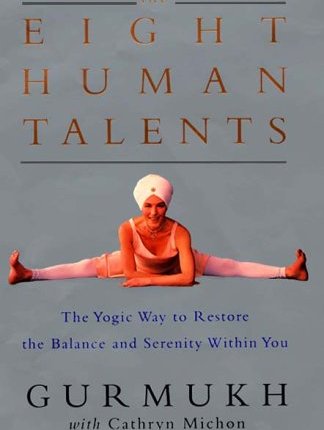
The Eight Human Talents: The Yogic Way to Restore the Balance and Serenity Within You by Gurmukh Kaur Khalsa

The Eight Human Talents: The Yogic Way to Restore the Balance and Serenity Within You by Gurmukh Kaur Khalsa

The Eight Human Talents is part-story and part-instruction manual for the practice of Kundalini yoga. I’ve only ever practiced hatha yoga and this is very different from what I’ve learned. I’ve tried a couple poses and this is definitely going to take some practice.

Photo by Elly Fairytale on Pexels.com

If I learned anything from this book, it is to breathe deeply. One of Gurmukh’s main points is that by connecting with the breath, we reconnect with ourselves.

Also, don’t be afraid to try, even if you fail. “If we can make one step towards happiness, towards healing, towards change, miracles begin to happen. The Kundalini Yoga and Meditation in this book are a way of making those small steps towards happiness. If you will try even one thing from this book-one breathing exercise, one stretch, one meditation- know that somewhere I am cheering right out loud for you, because I know that making that first step is the hardest thing to do…” introduction, xxii.

Some of Gurmukh’s stories were saccharine sweet, but I enjoyed most of them. “We are powerless over every other person on the planet, and we only have power over our own lives. No matter how problematic the people in your life are, you are always the solution.” pg 125.

I’ll have to get back to you on if these exercises deliver on the myriad of promises that Gurmukh makes. So far, I’ve discovered that my lower back needs to be strengthened and I should work on my neck flexibility.

Photo by Chermiti Mohamed on Pexels.com

She ties all of her suggested poses to different chakras and energies found within the body. If that concept is too far out for you, you may be better served with a different introduction to Kundalini yoga.

Recommended for beginners to moderately experienced practitioners.

Thanks for reading!

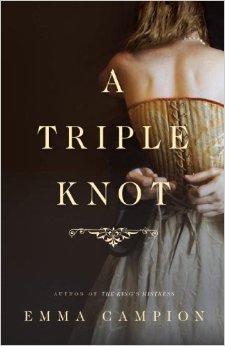
A Triple Knot by Emma Campion

A Triple Knot by Emma Campion
a triple knot

I love historical fiction about the English monarchy and court. This time period, the 1300’s, is one that I wasn’t very familiar with, which was fine with me. I’m always up for learning something new while being entertained. Warning: there are some spoilers ahead if you aren’t familiar with English history.

This story centers around Joan of Kent. Joan’s father was executed by her grandmother’s lover when she was very young. She also didn’t trust her own family to provide for her or believe that they had her best interests at heart. After reading about the actions of some of her clan, I can’t really blame her for that.

Joan seemed ridiculously naive when she married, clandestinely, at the age of twelve for love. Then, when her family insisted on a more advantageous match, she was heart broken.

I was surprised at first about her behavior and reaction but then I imagined that the lack of training, guidance or protection that she received during her childhood was probably the reason that she believed she could marry whomever she wished. Royalty didn’t enjoy the freedom of marrying for love. Poor Joan.

The historical figures described in this tale, such as Edward III and his son, The Black Prince, were larger than life with tempers to match. I loved the descriptions of the clothing, the feasts, the dancing, building maintenance and other minutiae of daily life.

I didn’t love other aspects of this story. I felt like this book was too long and the second half was incredibly rushed. I think the author should have created a trilogy.

She could have ended book one at the decision of the Pope about Joan’s marriage status. (I won’t ruin that one for you.) Then, a second book could have followed about the birth of her first four children and family life. A third book could have chronicled her next marriage and what followed.

In this book, five years passed in approximately a page and a half, sometimes less. There could have been so much more to the story and I would have loved to have read it.

Fans of Philippa Gregory’s brand of historical fiction will probably eat this up with a spoon. Prepare yourself for some rushed passages though.

I received a free copy of this book through Goodreads First Reads. Thanks for reading!

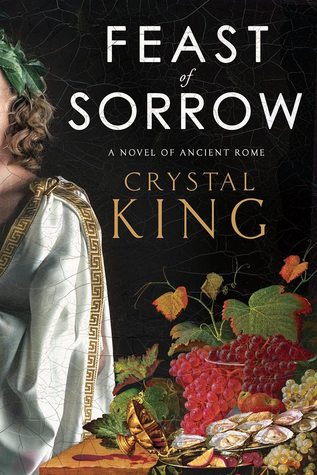
Feast of Sorrow: A Novel of Ancient Rome by Crystal King

Feast of Sorrow: A Novel of Ancient Rome  by Crystal King
feastofsorrow

A Feast of Sorrow captures the beauty, opulence and madness of Rome during the reign of the Caesars. The story is told from the point of view of a slave in the household of Apicius. But, not just any slave. Thrasius is a cook, a coquus, the head of Apicius’ kitchen. He makes some of the finest delicacies known and invents new ones.

Apicius is wealthy beyond reason. He has the ability to purchase Thrasius the finest ingredients and the rarest spices. Apicius’ dream is to become Caesar’s gastronomic adviser. But that position isn’t acquired by wealth alone. Political currency and power is the only way forward.

And the stage is set. Feast of Sorrow has heroes, villains and, of course, food. What a strange and weird feast it is. Honeyed dormice, flamingo tongues, and more- only the best for Apicius and his clients.

Thrasius begins writing a book to preserve his master’s recipes for all time. “I added your trick about using eggs to help make cloudy wind clear, instructions on how to preserve oysters, and even Fannia’s recipe for how to make wormwood liquor. I thought about how many cooks don’t have the right information or knowledge.” loc 1592. Interestingly enough, after the tale, Crystal King talks about how Apicius’ recipes are some of the oldest surviving examples of ancient cuisine.

“Stuff the dormice with pork forcemeat and also with all the flesh from all the parts of the dormouse, pounded with pepper, pine nuts, silphium, and liquamen. Sew them up and arrange them on a tile and put them into the oven or cook them, stuffed, in a covered pot.” -On Cookery, Apicius. Loc 4466, ebook. Mmmmmm.

King fills these pages not just with food, but also, to modern eyes, the strange and sometimes cruel practices of the Roman people. Did you know that Roman diners used to wipe their hands clean in the hair of their slaves? Did you know that Romans had special priests who read the flight of birds to determine if an event was going to be successful or not? Did you know that patricians, the nobility of Rome, were judged not only for their appearance and natural abilities but also how well they could throw a dinner party?

I enjoyed this book not only for the way that King told the story of the nameless people who made Apicius’ name known for all time but also for the twists and turns it contains. Feast of Sorrow will shock you, entertain you and, maybe, make you want to try a dormouse.

Thank you to NetGalley and Touchstone Publishing for a free digital advance reader copy of this book. Note: the brief quotations that I pulled from my copy may change in the final published version. Thanks for reading!

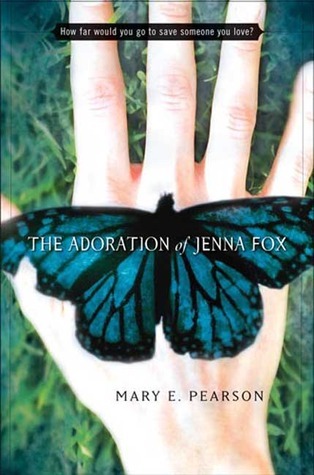
The Adoration of Jenna Fox (Jenna Fox Chronicles, #1) by Mary E. Pearson

The Adoration of Jenna Fox (Jenna Fox Chronicles, #1)  by Mary E. Pearson
jennafox

Warning: minor spoilers ahead if you are not familiar with the topic of this book.

The Adoration of Jenna Fox fits nicely into a science fiction/medical category that includes films like Gattaca or books like Starters. As medicine advances, ethical questions begin to develop about treatment, life and death and humanity needs to answer them. But, one thing that remains the same throughout all of these technical changes, is the power of the love that parents have for their child.

Even now, people sign do not resuscitate orders so that medicine won’t keep them in a vegetative state for indeterminate periods of time. The occurrence of near-death experiences has exploded since CPR and other life-saving techniques have developed.

Imagine sometime in the near future, when bio-implants can be used to stop or even reverse internal damage. What if we figure out how to turn the aging gene off? How then will we handle death with dignity? Or will we even be able to accept death at all?

I listened to an interview with the author in which she said that she wrote this book because her own teenager was diagnosed with cancer. She went through the terror and did whatever was necessary to save her child. Along the way, she ran into parents whose children were terminally ill but had no viable treatment options. Pearson realized how lucky she and her daughter were and it sparked her imagination.

It’s a worthy a question: how far would you go to save someone you love? I recommend this book to anyone who wants to consider the possible answer.

Thanks for reading!