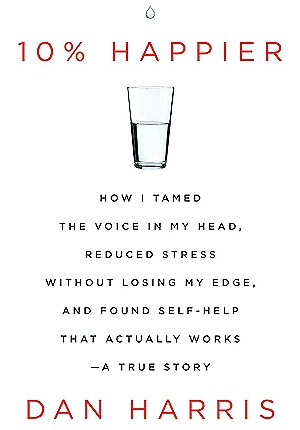
10% Happier: How I Tamed the Voice in My Head, Reduced Stress Without Losing My Edge, and Found Self-Help That Actually Works by Dan Harris

10% Happier: How I Tamed the Voice in My Head, Reduced Stress Without Losing My Edge, and Found Self-Help That Actually Works  by Dan Harris
10 happier

Dan Harris had problems, like all of us, but unlike all of us, he was beginning to experience some of the messier symptoms of his dysfunctional inner world in front of millions of people.

He sought help and jumped into the meditation world with both feet. I think its why most people find their way into spiritual practices- something isn’t working quite right in their life and they need to change from the inside out. So, they look for a process of inner change and run smack into meditation.

However, Dan isn’t drinking the kool-aid of the new age movement. He questions every practice for its practical benefits and searches for scientific experimentation to back up those benefits.

In essence, he brings the investigative skills that he applies to his job as a news anchor to the practice of meditation and it’s a delight to read.

I loved this. Dan had the same initial reaction to Eckhart Tolle and Deepak Chopra that I did. One of them seems too mellow to be real and the other seems to market himself too well to be that spiritual.

Over time, I’ve come to love both of those authors/gurus for their wisdom, but they are both just out of this world. Harris isn’t afraid to point that out.

In conclusion, I’d recommend 10% Happier to anyone who wants to become 10% happier- isn’t that all of us?

Also, anyone who has read Eckhart Tolle or Deepak Chopra may also enjoy this, if only for the surprisingly accurate descriptions of their foibles. Anyone who wants to try meditation but feels like they don’t have time, couldn’t do it if they tried, or doesn’t know where to start may find some inspiration from this book.

And, finally, anyone who is fed up with the hippie-dippie-trippie feeling that most spiritual memoirs give them, will find a kindred soul in Dan Harris.

Thanks for reading!

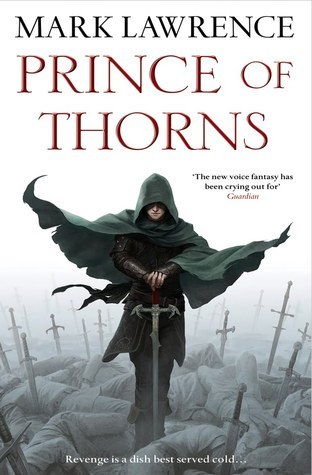
Prince of Thorns (The Broken Empire #1) by Mark Lawrence

Prince of Thorns (The Broken Empire #1) by Mark Lawrence

princeofthorns**Warning: minor spoiler in the last paragraph of this review. Read with caution.**
Prince of Thorns is about a boy who becomes a monster on his way to becoming a man. There’s some fantasy twists in it, but that’s the main story.

I wanted to love this book. But, sadly, the title character is simply unlikeable. And, the role of women in the book is either sex object or nothing.

“Two hundred dead farmers lying with their scythes and axes. You know, I warned them that we do this for a living. … I gave them that chance, I always do. But no. They wanted blood and slaughter. And they got it.” pg 1, ebook. That’s the very first page, folks.

And all of this cynicism and blood thirst is from a 14 year old. Sure…“There’ s a reason I’m going to win this war. Everyone alive has been fighting a battle that grew old before they were born. I cut my teeth on the wooden soldiers in my father’s war room. There’s a reason I’m going to win where they failed. It’s because I understand the game. pg 19, ebook.

Mark Lawrence tries to use a magical reason to explain this adult reasoning from a child, but it didn’t work for me.

“We wrap up our violent and mysterious world in a pretense of understanding. We paper over the voids in our comprehension with science or religion, and make believe that order has been imposed. And, for the most of it, the fiction works. We skim across surfaces, heedless of the depths below. … Until that moment when something from the cold unknown reaches up to take us.” pg 205, ebook.

If you want dark fantasy about a band of thieves, may I recommendThe Lies of Locke Lamora. If you’re looking for an epic fantasy about humankind being the pawns for something greater than ourselves, try Gardens of the Moon.  As for Prince of Thorns, if you must read it, borrow it from the library. Because then, like me, you can give it back, only have lost the time it took to read it.

Thanks for reading!

Batman: The Killing Joke by Alan Moore

Batman: The Killing Joke by Alan Moore

I’ve decided to explore the world of superhero comics. First on my list, Batman: The Killing Joke by Alan Moore.

Photo by BROTE studio on Pexels.com

The story opens on a dark and stormy night. We’re heading into Arkham Asylum with Batman. After passing a few famous inmates, we’re outside inmate #0801, Name Unknown’s cell.

A shadowy figure is playing solitaire within the barred room. It’s The Joker.

By far, one of the creepiest villains of the Batman pantheon.

“So when you find yourself locked onto an unpleasant train of thought, heading for the places in your past where the screaming is unbearable, remember there’s always madness. Madness is the emergency exit…”

He is mad, yes, but brilliant in his insanity. And, in that, is he so different from the rest of the human race?

“Faced with the inescapable fact that human existence is mad, random and pointless, one in eight of them crack up and go stark slavering buggo! Who can blame them? In a world as psychotic as this… any other response would be crazy!”

Photo by adnorf on Pexels.com

Recommended for the more mature graphic novel readers because of some disturbing content and images, Batman: The Killing Joke is no joke and one heck of a ride.

Watchmen, also by Alan Moore, is one of my all time favorite graphic novels, so I was expecting to enjoy this one. If you haven’t had a chance to read it yet, it’s another must-read for the graphic novel fan.

Thanks for reading!

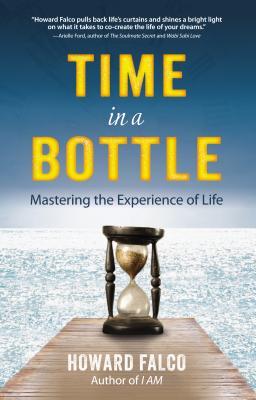
Time in a Bottle: Mastering the Experience of Life by Howard Falco

Time in a Bottle: Mastering the Experience of Life by Howard Falco
timeinabottle

Time in a Bottle is a self help book about changing your perceptions to improve your life. Though not a new message, some readers may find this book worth the time.

Howard Falco presents this knowledge with a spiritual slant. Readers who are turned off by that kind of thing may want to choose another book.

The main premise: “Our misunderstanding of time- how our thoughts relate to time, how time is actually created, and how time seems limited- is one of the biggest reasons we suffer and at times feel hopeless or powerless in our lives.” pg 1, introduction.

One of the ways to “master the experience of life” is to realize that you are infinite potential like the universe itself: “You are a part of infinity. To the degree that you feel that life is finite and limited, you will act out of this fear, and work to create an experience that is a result of this fear.” pg 33.

I agree that mindset is important to determining your life’s path. Love and fear seem to be the two driving forces of our world. Wonder why that is…

Photo by Nacho Juu00e1rez on Pexels.com

Falco also discusses giving up resistance to how life is: “It is critical that you know that the ending of your resistance toward any particular thing (sickness, layoffs, war, family, financial trouble, death, political chaos, natural disasters, etc.) is not in anyway condoning these terrible things or giving up on change. It is simply the full acknowledgment that for the moment this is what is happening.” pg 40

He talks about giving up regrets about the past that could potentially be holding you back: “This is not about accepting that something had to happen to you; it is about acknowledging that it did happen and standing in front of the universe saying, “I trust that there is perfection and a specific, divine purpose for my past and the exact way it unfolded. Because of this, I am realizing more of my unlimited potential for the future.”

So then, unburdened, you step into your future with faith.

Falco incorporates quotes from famous philosophers and scientists along with anecdotal stories to illustrate his points. As I said, no new wisdom here, but plenty of good reminders to trust, forgive and move forward to a life outside of time.

Thanks for reading!

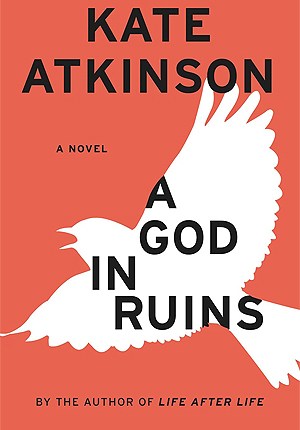
A God in Ruins (Todd #2) by Kate Atkinson

A God in Ruins (Todd #2) by Kate Atkinson

godinruinsEven though Kate Atkinson took readers back into the beautiful world that she created for the Todd family, this story wasn’t nearly as enjoyable as Life After Life.
This time, the story focused on Teddy. It is told through the mixed up timeline that I’ve come to expect from Atkinson. We get to see Teddy’s relationships, family and inner thoughts.

It didn’t have the magic of Ursula’s story, in my opinion. In Life After Life, I was enthralled. For the majority of A God in Ruins, I was not.

I was surprised that I liked very few of the characters. Viola, in particular, was awful. I realize that that is partially the point, but still- it’s hard to appreciate the story when you don’t like most of the major characters.

The writing was still lovely, but I didn’t connect to this book the way that I did with the other one. I’m rather disappointed actually.

Thanks for reading.

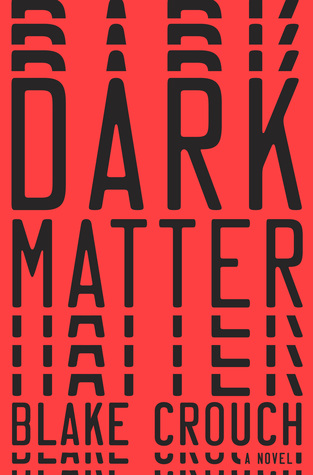
Dark Matter by Blake Crouch

Dark Matter by Blake Crouch

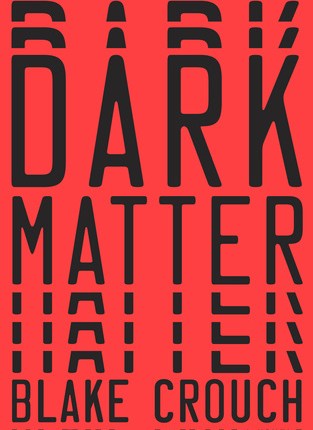
darkmatterDark Matter is a fantastic, sci-fi read about regret, love and quantum mechanics.

My book club picked this wild ride of a book and everybody took something different out of it.

We all enjoyed it, which is weird for us. Usually, we have opinions across the spectrum. This one, though, was universally loved. That’s saying something.

“In the shadow of this moment, my life is achingly beautiful. “I have an amazing family. A fulfilling job. We’re comfortable. Nobody’s sick.” pg 28. And then, something truly surprising happens. No spoilers!

I think that, as time passes, we grow comfortable in our lives, our marriages and relationships. Part of this book is about appreciating what you may take for granted. “He says, “It’s like we get so set in our ways, so entrenched in those grooves, we stop seeing our loved ones for who they are. But tonight, right now, I see you again, like the first time we met, when the sound of your voice and your smell was this new country.” pg 67.

The leader of my book club picked quotations that had to do about self-knowing and quantum mechanics. It was no surprise that mine were all about love. I’m one of the hopeless romantics of the group.

And one of the most open-minded: “We all live day to day completely oblivious to the fact that we’re a part of a much larger and stranger reality that we can possibly imagine.” pg 96. I truly believe that.

A local physics professor joined our circle and gave a short lecture on basic quantum mechanics and wave theory. But, you don’t have to be an expert on the subject to enjoy this story. It’s approachable science, like The Martian.

Recommended for book clubs, especially, but also anyone who wants an unbelievable story will probably love this too.

I heard that this is going to be made into a film- read the book anyway. It’s always better.

Thanks for reading!

The Annotated Sandman, Vol. 1 by Neil Gaiman

The Annotated Sandman, Vol. 1  by Neil Gaiman

sandmanIn Sandman, a powerful group of mortals is trying to trap Death itself. Instead, they catch another important figure, the Lord of Dream. This volume details the Lord of Dream’s struggle to reassert his power after being locked away for so many years.
He’s lost his symbols of authority, which are literally pieces of his power. So, he needs to get those back.

Also, the denizens of the realm of Dream have gone off the rails since their lord has been missing. Some of these are nightmare creatures- fatal to humankind. This isn’t going to be simple.

Sandman, Vol. 1 was very dark. Neil Gaiman is known for his dark fantasy, but there are usually moments of light. In Neverwhere or The Ocean at the End of the Lane, there is darkness, but nothing like this.

Within these pages, there’s serial killers, child abusers, psychotic mental ward escapees, kidnapping rapists- one after another in a seemingly endless parade. It’s a lot to take.

I found I wasn’t a fan of the Lord of Dream himself. His immortal nature has made him unable to understand emotions or even desire to. I suspect that subsequent volumes deal with this exact issue. But, he’s rather unlikeable in Vol. 1.

I really disliked the way he treated women- in multiple relationships. The worst being Nada. Again, I’m guessing that this is a story of redemption. But in that one moment, no spoilers but readers know what I’m talking about… his behavior was unforgivable.

Honestly, I liked Watchmen more. So far. The characters in that tale weren’t necessarily likeable either. I suppose we’ll have to see how the story develops in the next volume.

Recommended for graphic novel readers who like their stories gothic, mythical and with a sprawling storyline.

Thanks for reading!

The Mapmaker’s Daughter by Katherine Nouri Hughes

The Mapmaker’s Daughter by Katherine Nouri Hughes
mapmaker's daughter

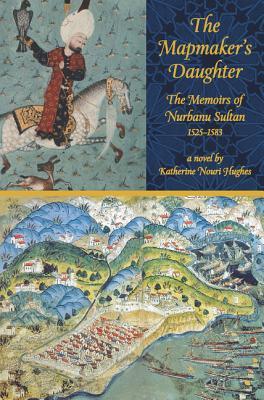
A fascinating peek into the 16th century world of the Ottoman Empire. The story is told through the memories of a woman who is dying and recalling the circumstances that brought her to where she is now. Her extraordinary life included being kidnapped by pirates, educated with a prince and joining the royal family of Suleiman “the Magnificent.”

All of this as a female in the 1500s! Katherine Nouri Hughes, the author, admits that there are so few records of her life that Cecilia Baffo Veniero, called Nurbanu, was a blank slate.

But, Nurbanu actually existed. Hughes gives her a life of mystery, dizzying highs, lows, and riches beyond imagining. I loved it.

And, I learned so much from this story. Admittedly, my historical fiction preferences seem to run towards the Roman Empire or Tudor England. Perhaps it was time I branched out.

For example, did you know that there was a law for when the heir to the Sultan took the throne, that all of his brothers were killed? This was to protect the dynasty from civil war. “And to whomsoever of my sons the Sultanate shall pass, it is fitting that for the order of the world he shall kill his brothers. That law has held us together; secured our Empire; made us who we are…” loc 127, ebook.

Beyond the obvious reasons, this was particularly awful because the Sultan tended to have scores of kids. There were the usual threats of illness and the plague to consider.

Suleiman himself was a legend in his own time. “A man like no other. His titles alone told the story. … Sultan of the Two Continents, Servitor of the Two Sanctuaries, Warden of the Horizons. Suleiman the Magnificent- man and legend combined. … Imperial, mirthless, deadly pale.” loc 463, ebook.

He ruled an empire and his children. According to Hughes, he was heavily influenced by his favorite wife, Hurrem, who is a colorful character in this story.

Nurbanu is fortunate because, when she is captured, she was already well-educated. “I’d been assigned to the Head Scribe herself without question because I was educated. That was what Barbarossa had said at the presentation. ‘She can read.'” loc 482. That saves her from more gruesome fates within the harem.

But it doesn’t make her life easy. After all, she’s still a slave in the palace of Suleiman.

“I know how awful the end of fantasy is- for it steals into parts of the heart and mind where nothing should be able to go. It is driven by the heat of what we long for, and it melts all that is in its path until it comes out into the open and is exposed for what it is: something that was never true.” locs 3250-3268.

Recommended for readers who like historical fiction with a large cast of character, an exotic locale and a heroine with a quick mind.

Thank you to NetGalley and Open Road Integrated Media for a free advance reader copy of this book. Reminder- the short quotations that I used in this review may differ in the final printed version.

Thanks for reading!

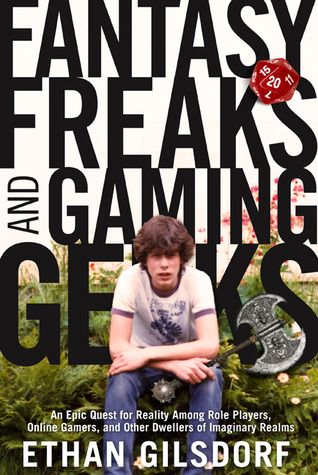
Fantasy Freaks and Gaming Geeks: An Epic Quest for Reality Among Role Players, Online Gamers, and Other Dwellers of Imaginary Realms by Ethan Gilsdorf

Fantasy Freaks and Gaming Geeks: An Epic Quest for Reality Among Role Players, Online Gamers, and Other Dwellers of Imaginary Realms  by Ethan Gilsdorf
fantasyfreaks

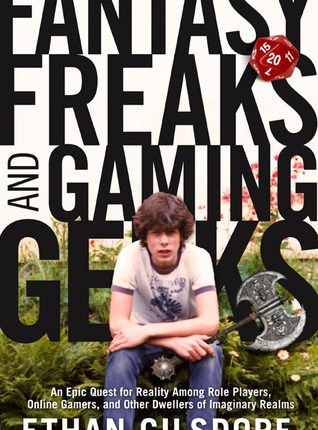
Ethan Gilsdorf carried angst about his gaming habits for various reasons for years. This book could have been a healing for him, but he doesn’t seem to take that leap.

It made me sad. Yes, perhaps the start of his DnD experience coincided with his mother’s illness, but I think that was not the only reason why he entered the world of fantasy.

Some people are born wanting to see worlds beyond this one. Why that is, I don’t know. I just know that it is so. Ethan suggests, in Fantasy Freaks and Gaming Geeks, that it takes trauma to send a person in that direction, I disagree. I think some of us were born that way. 🙂

The content of the book is excellent. He travels from the UK to New Zealand and everywhere inbetween to find people who are engaging in LARPS, SCA, Tolkien, gamer conventions, Worlds of Warcraft, EverQuest, and more.

I loved his interviews with the man/woman on the street. He’d ask why they were doing whatever it was they were doing and they’d answer with conviction. There’s something very satisfying in reading personal statements by passionate people.

The enthusiasm nearly drips from the pages. I loved that.

I was hoping that Ethan would learn from all of these people who absolutely loved what they were doing with no regrets. But, he seemed to go to his default mode of judging and self-pity rather than expansion.

Ethan made some steps towards self realization at the end of the book, but I wish he had gone further.

If you enjoy this book or topic, may I suggest Of Dice and Men: The Story of Dungeons & Dragons and the People Who Play It. It’s a non-fiction read about Dungeons and Dragons. It lacks the comprehensive nature of Fantasy Freaks and Gaming Geeks, but David Ewalt carries none of the emotional baggage of Ethan Gilsdorf so it feels more light-hearted.

Thanks for reading!