The Kingdom of Little Wounds by Susann Cokal

The Kingdom of Little Wounds by Susann Cokal

The Kingdom of Little Wounds is about a seamstress, a nursemaid and a royal family haunted by illness. It is a, sometimes very, adult tale about secrets, sex and power.

Confession: I picked this one out at the library for the cover.

I saw it and thought, “This must be a young adult fantasy of some kind about a princess who works magic with needles.” Sometimes it’s nice to indulge in a pleasant escape from the world.

So, this book is nothing like that.

In the afterword, Susann Cokal describes her work as “a syphilitic fairy tale.” There’s nothing wrong with that. It just really wasn’t what I expected and wanted it to be.

This tale has rape and madness to it. There’s also some torture, severing of body parts and other pretty gross stuff that goes on.

It is definitely geared towards an adult audience. Librarians, please put it in the proper collection. It is not young adult.

The main characters, Ava and Midi, are likeable but powerless. “I truly would like to think I’m in the middle of a fairy tale, facing the period of hardship that precedes a triumph. But I am not a likely heroine.” pg 9, ebook.

The king, Christian, is ridiculous and controlled by his courtiers. “Have you found any… any culprits?” Sir Georg hesitates, and the favorites tense. Who will be blamed? A Lutheran? … Or perhaps some cousin with a tenuous but plausible claim to succession – someone who should be removed for the health of the court anyway?” pg 77, ebook. Notice how they are unconcerned with justice.

Alliances and power shift quickly in this story like the tide. The characters never know who they can trust. “We are all, of course, in service of the Crown and King. Who is known for being liberal with his gratitude, no matter what the rank of the creditor.” I recall something my mother used to say: Be wary of a promise without a clear price.” pg 131, ebook.
Photo by Mike on Pexels.com

Also, in the afterword, Cokal shared that a piece of this story, the appearance of a star, actually happened in Europe in the late 1500’s, early 1600’s. “The new star has put all of us off balance. We’ve always expected things to change down below, in the canals, the streets, and so on, but the heavens have been constant in our memory. This star shines even in the daylight, as if to drive away the sun. It is so bright that it seems heavier than the rest; we have the impression that if we were to stand on tiptoes, we might touch it.” pg 192, ebook.

Recommended for readers who aren’t bothered by dark themes and are in the mood for a “syphilitic fairy tale.”

Thanks for reading!

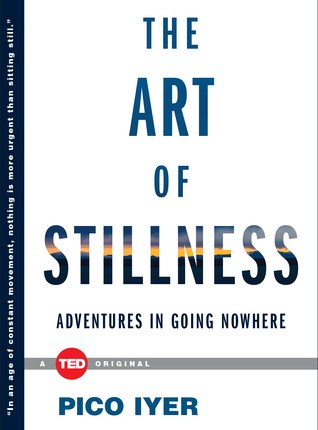
The Art of Stillness: Adventures in Going Nowhere by Pico Iyer

The Art of Stillness: Adventures in Going Nowhere by Pico Iyer
artofstillness.jpg

Pico Iyer approaches stillness from a Buddhist perspective in “The Art of Stillness.”

“And it’s only by going nowhere- by sitting still or letting my mind relax- that I find that the thoughts that come to me unbidden are far fresher and more imaginative than the ones I consciously seek out.” pg 62.

It’s not a world that most people are accustomed to experiencing, a space of being rather than an active doing. But, as Iyer so succinctly illustrates, it’s a realm that our fast-paced and technology addicted world desperately needs.

To venture into this emptiness is a restful and required experience for the health of the mind as much as inspired action is necessary for the experience of a fulfilling life.

I think that our culture has forgotten the power of stillness and the beauty of balancing our male and female energies. This book is an excellent reminder to appreciate both.

For those folks out there who haven’t heard Pico Iyer’s TED talk on this topic, I would recommend that you watch it first, then read this.

I read this and then I listened to the talk. Almost all 18 minutes of it were taken verbatim from The Art of Stillness. So, you’ll enjoy it more, I believe, if you do the opposite of what I did.

My big takeaway from this was the idea of air travel as “a retreat in the sky” pg 56. I dislike flying to the point where I tend to reach my destination exhausted and ready to return home the moment I land.

I think if I could successfully adopt the process that Iyer describes of treating the flight as a “meditative retreat” that I could change my experience of air travel from a nightmare into a restful pause.

There are many large ideas like that contained within this small book.

For the right person at the right time, The Art of Stillness could change her life. As Iyer says, The Art of Stillness doesn’t contain any “new” ideas but they are powerful and much needed ones.

Readers who are short on time, but big on stress may really love this book.

I received a free copy of this book through Goodreads First Reads. FTC guidelines: check!

Thanks for reading!

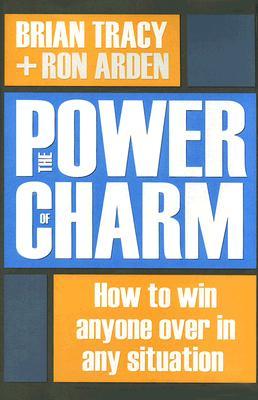
The Power of Charm: How to Win Anyone Over in Any Situation by Brian Tracy and Ron Arden

The Power of Charm: How to Win Anyone Over in Any Situation by Brian Tracy and Ron Arden

The Power of Charm is a book written for business professionals, who want to give themselves a bit of a leg up, by increasing their charm potential.

I found the book to be interesting, but it also flirts with the line between charming and manipulating. I suppose we could ask ourselves if, at the end of the day, there is any difference between the two.

Personally, I think there is.

Photo by Kat Smith on Pexels.com

In my mind, charm is unrehearsed, natural and springs from a genuine interest in others. Manipulation is ego-driven scheming. But, both can get you what you want.

I’m torn as to how this book actually fell on that scale. Some of the exercises feel like charm practices- others, like manipulation strategies.

Essentially, Brian Tracy and Ron Arden give listening and speaking tips to better understand whoever it is you’re interacting with. There’s nothing all that manipulative about polishing your communication skills.

On the other hand, in the chapter entitled: “Do Your Homework” in which the authors say, “Anytime you are getting together with someone, socially or professionally, whom you particularly want to impress, do your homework. Learn what you can about that person before you actually meet. It’s the best way to be charming and interesting to others.” pg 107. It didn’t sit so well with me.

Photo by Eduardo Dutra on Pexels.com

Here’s why- Tracy gives the following story as an example: “I learned of a successful business owner with a crack sales team who was discontented with the company he was representing. … In asking around, I discovered that he was heavily into numerology and made all his decisions based on the numbers of the birth dates of potential business partners… One of his first questions of me was my birthday. I was prepared. I told him that it was a certain day, month, and year that added up to a ‘lucky number’ for business relationships. … The preparation was the key.” pg 108.

That smacks to me of manipulation rather than charm. What do you think?

On the other hand, I seriously appreciated the tips on how to become a better conversationalist. I’ve got some work to do there.

Generally, I let my fast-talking husband take the lead in social conversations because he always has something to say. I see now how that may be a disservice to others who may want to get to know me better.

“The Secret of Charm: The deepest craving of human nature is the need to feel valued and valuable. The secret of charm is therefore simple: make others feel important.” pg 12.

It is as simple and powerful as that. I’d also recommend being kind. The world could use more charm and kindness.

Recommended for readers who understand the difference between charm and manipulation. I’m not sure that includes me, but I’ve already read it so… sorry.

And thanks for reading!

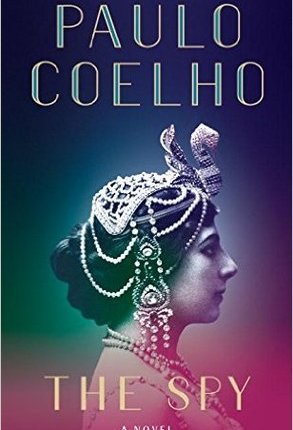
The Spy by Paulo Coelho

The Spy by Paulo Coelho

The Spy is the story of Mata Hari, told first in her voice and then from the point of view of one of her male admirers.

Paulo Coelho isn’t at his best in this novel.

Photo by Faisal Rahman on Pexels.com

He prefers and excels at metaphorical stories. For example, in this tale, Coelho has Mata Hari comparing herself to the nightingale that impaled itself on a thorn to grow a bright red rose for a young man in love.

I get what he was reaching for- but I think this tale would have been told better through details rather than metaphors.

Also, it’s so short. The audiobook was only a couple hours long.

It wasn’t nearly long enough to do Mata Hari’s life justice.

I first learned about the fascinating life of Mata Hari in Inspired!: True Stories Behind Famous Art, Literature, Music, and Film by Maria Bukhoninia. There were enough unbelievable things that happened in Mata Hari’s life to make a compelling historical fiction.

Photo by Pixabay on Pexels.com

Sadly, this didn’t quite fit the bill for me.

If you’re going to read a Coelho novel, may I recommend The Alchemist. (Which is also a novel people love or hate. I fell on the side of love.)

Thanks for reading!

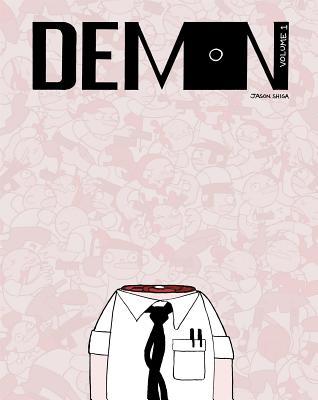
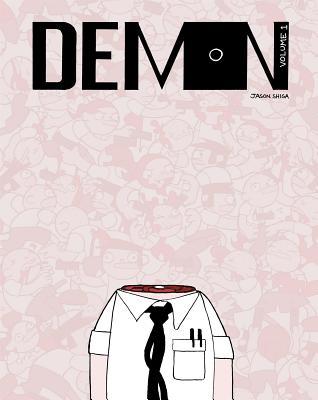
Demon, Volume 1 by Jason Shiga

Demon, Volume 1 by Jason Shiga

demonAn edgy, simply-drawn comic about a man who tries to commit suicide, but keeps waking up alive. There’s an unexpected twist and lots of blood.

In the author’s own words: “From the suicide depicted on the first page of the story to the climactic bloodbath three volumes later, Demon is my gleeful homage to the lurid and pulpy entertainment rags that make up the detritus of our childhoods.” From the foreword.

I see what he was trying to do. It just wasn’t for me.

For Jason Shiga, this was a very personal work: “Ultimately, Jimmy is me. When he leaps in front of a semi-trailer, it’s really me who secretly wants to do that. When he acts in a deliberately amoral and antisocial manner, that’s me, too.” From the foreword.

Shiga warns readers from the start that Demon is crass and graphically violent. And, it is.

Oh well. Next book!

Thanks for reading.

Secrets of Meditation: A Practical Guide to Inner Peace and Personal Transformation by Davidji

Secrets of Meditation: A Practical Guide to Inner Peace and Personal Transformation by Davidji

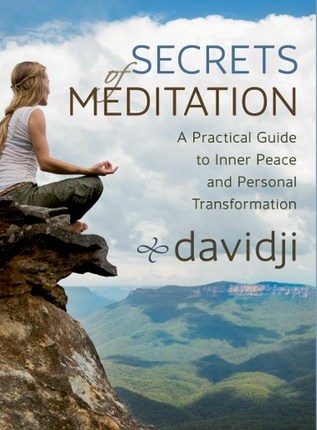
Secrets of Meditation is one of the clearest and beginner friendly meditation manuals that I’ve ever read.

Davidji breaks practices down not only into type and step-by-step instructions with examples, but also by lineage and development over time and place.

Davidji provides enough background on himself to establish his bona fides but not so much as to overpower the instruction with meaningless chatter about himself.

Photo by Spencer Selover on Pexels.com

He intersperses the text with helpful advice, additional authors to explore, and a myriad of ways to connect with him online for some meditation freebies.

Though it’s clear that he’s immersed himself in Eastern culture and practices (having traveled extensively in the East and studied under various gurus), Davidji hasn’t adopted an insider’s way of talking about meditation.

Sometimes, and maybe this is just me, it feels like meditation instructors go so far out into the “oneness” that they never come back fully into the real world. That’s not Davidji at all. I loved this text mainly because of how he could keep one foot “over there” and the other firmly planted “back here”.

Admittedly, my daily meditation practice has lately fallen somewhat on my priority list. This book makes me want to head back to the mat.

If you enjoyed Secrets of Meditation, you may want to read 10% Happier: How I Tamed the Voice in My Head, Reduced Stress Without Losing My Edge, and Found Self-Help That Actually Works which is not so much meditation instruction as a memoir from someone beginning meditation. I recommend it a lot because Dan Harris seemed so relatable to me.

And also, Seeking Heaven. Eben Alexander is a neurosurgeon who had a near death experience turned it into guided meditations. I think they’re easy enough for beginners to use.

Thanks for reading!

A Field Guide to Lucid Dreaming: Mastering the Art of Oneironautics by Dylan Tuccillo

A Field Guide to Lucid Dreaming: Mastering the Art of Oneironautics by Dylan Tuccillo
luciddreaming

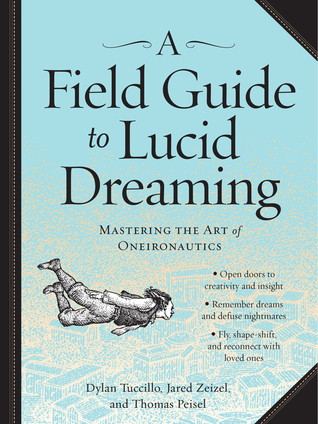
An excellent guide to experiencing or deepening lucid dreams, A Field Guide to Lucid Dreaming is filled with tips, tricks and advice to explore your dream world.

My husband and daughter experience lucid dreams all the time and I don’t or, at least, haven’t yet. It’s embarrassing.

It’s as if they have access to worlds that I can only dream about, literally. I picked this book up because I wanted to develop this skill too.

So far, with the advice contained within this Field Guide, I’ve realized that I was dreaming once, became lucid and immediately woke up. But, that’s progress.

I’m encouraged actually. If I can go lucid once, I can do it again.

“Lucid dreaming is the ability to know you’re dreaming while you’re dreaming. A lucid dreamer is able to go to sleep at night and wake up within his or her dream. With this unique awareness, you can generally behave like someone who is awake, exercising the free will, imagination, and memory of waking life.” introduction. How fun would that be?

Ever wanted to fly? Face your nightmares? Talk to a deceased loved one? The authors of this book claim that it is all possible.

Photo by Ron Lach on Pexels.com

They addressed some of my problems directly: “Quite often, the amateur lucid dreamer’s early exploits in lucidity last only a few moments. If you’ve become lucid already but lost your awareness very quickly, don’t worry. This is common. In the next chapter we’ll look at ways in which you can stabilize the dream and stay lucid for long stretches of time.” pg 106.

Practice makes perfect, it seems.

The shamanistic beliefs about the dream world are intriguing:“…shamans of indigenous cultures understood that in order for something to be created in the physical world (such as that kitchen you’ve been meaning to remodel, or this book), it must first be constructed in the “imaginal realm.” In other words, lucid dreaming might be a tool in creating our physical reality.”pg 151.

Life is like a dream and we are the dreamers, whether asleep or awake:“This world can be a nightmare or a nice dream. It’s full of friends or enemies, success or failure, meaning or nihilism. We’re headed toward destruction or we’re headed toward rebirth. There are many viewpoints on Earth as there are people. And just like the dream, we shape our experience with our thoughts, emotions, and expectations. pg 246.

Recommended for anyone who, like me, wants to master lucid dreaming. I think that this book will help you find your way.

Sweet dreams 🙂

Thanks for reading!

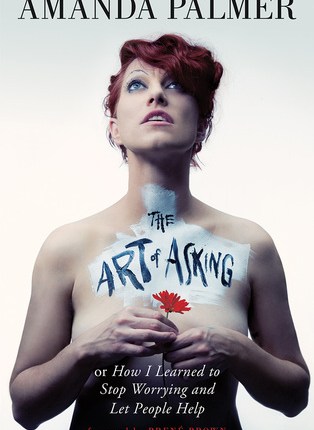
The Art of Asking; or, How I Learned to Stop Worrying and Let People Help by Amanda Palmer

The Art of Asking; or, How I Learned to Stop Worrying and Let People Help by Amanda Palmer

Amanda Palmer is an extremely talented artist who has done it all- from performing in a punk rock band to posing as a statue on the streets.

I can see why readers are passionate about this book and the author. She just didn’t strike a spark for me.

Photo by Jeffrey Czum on Pexels.com

Memoirs can drag on and become self-indulgent and ridiculous. I feel like that was a problem with The Art of Asking.

The tipping point for me was when she formed The Dresden Dolls with her friend and said (I’m quoting from memory here since I was listening to the audiobook): “I finally had the strongly emoting band I’d always dreamed of” or something like that.

I realized, I was strongly emoting on this book, but not in a good way.

I understand her internal struggles in forming a relationship with Neil Gaiman must have been difficult for her, but her “should I date him, he’s older and richer and more famous than me” just came off as silly and very first-world problems.

I get that she loves her fans, her art, her lifestyle- but it just come together to make a read that I enjoyed.

My apologies to her fans. If it helps, my favorite parts of the audiobook were the songs she put between some of the tracks. Those were actually pretty awesome.

Photo by Inga Seliverstova on Pexels.com

And the over-arching theme of The Art of Asking was good too.

Society isn’t comfortable with asking. We don’t know how to do it, don’t feel comfortable with it and it prevents people from making the art that they were born to make.

You can get that part of this book by watching Palmer’s TED talk. Maybe you should do that instead of reading this.

Here ’tis: 

https://www.ted.com/talks/amanda_palmer_the_art_of_asking

Thanks for reading.

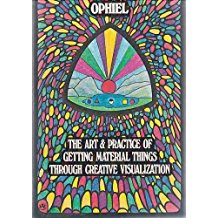
Art and Practice of Getting Material Things Through Creative Visualization by Ophiel

Art and Practice of Getting Material Things Through Creative Visualization by Ophiel

Originally published in 1967, the Art and Practice of Getting Material Things Through Creative Visualization arrived nearly three decades before The Secret.

With more of an occult than a New Age twist, the one-name author, Ophiel, talks readers through what is essentially the Law of Attraction, but he never calls it that.

Photo by Egor Kamelev on Pexels.com

Ophiel tends to write portions of the book that he thinks are most important in all caps. LIKE THIS. It can be annoying.

Another interesting quirk, Ophiel talks about him/herself in the third person, at all times.

In this passage, he’s talking about why he wrote this book, and you get to see the author’s style in action: “Ophiel’s defect consists of not being about to accept self-styled prophets’ sayings, and teachings, without raising the following awkward question- and making the following embarrassing test. The question is IS WHAT THEY SAY TRUE? and the test is DOES WHAT THEY SAY WORK, AND PRODUCE RESULTS? And if what they SAY DOES NOT WORK THEN IT IS NOT TRUE, and into the garbage can with it!!” pg iii

Ophiel claims that creative visualization techniques don’t always work for a variety of reasons. He gives the reader exercises and suggestions for improving their results.

“In Creative Visualization work all the planes involved in our cosmic existence are used, the Etheric, the Lower Astral, The Higher Astral, the Mental Plane, and the Causal Plane, AND ALL THESE PLANES HAVE DEFINITE RULES AND LAWS FROM WHICH THEY WILL NOT DEVIATE ONE IOTA.” pg 5.

Again, with the capitalization.

Photo by stein egil liland on Pexels.com

He also has interesting ideas about reasons why beginners fail out of the gate.

He cites something called “the sphere of availability”: “The new student then proceeds to visualize for LARGE THINGS. BIG THINGS. VALUABLE THINGS. Things that are far beyond his ability- not to visualize-imagine-desire, BUT FAR BEYOND HIS PRESENT ABILITY TO DEMONSTRATE-VISUALIZE.” pg 31.

Ophiel uses different words, but essentially he says, start small, celebrate the small victories and increase your “sphere of availability” in that manner. He also gives practices to improve your visualization skills.

Honestly, if asked to recommend a teacher for creative visualization, I’d say skip Ophiel and read Abraham Hicks. They’re a lot more fun.

Thanks for reading!