Otherwhere: A Field Guide to Nonphysical Reality for the Out-Of-Body Traveler by Kurt Leland

Otherwhere: A Field Guide to Nonphysical Reality for the Out-Of-Body Traveler by Kurt Leland

Kurt Leland’s Otherwhere is the first out-of-body memoir/guide (that I’ve read, so far) that discusses the importance of the individual’s consciousness in how the inner worlds are perceived.

It’s not a new idea, being repackaged and sold throughout time, lately in the New Age/New Thought movement, that one’s beliefs shape one’s reality. But, as Kurt Leland points out in other dimensions where thoughts literally are that reality, this individual viewpoint takes creation to a whole different level.

He suggests that what Robert Munroe, Jurgen Ziewe, and so many other consciousness explorers experience when they are in their various out-of-body states is archetypical energy, though he doesn’t use that terminology. Leland calls the perception of this energy: one’s own personal translation tables.

Rather than taking the figures that one encounters at face value or judging them based on ingrained religious beliefs, Leland encourages the Otherwhere visitors to examine what the figure does. It’s very similar to what dream interpreters teach about how to understand your dreams.

Like me, Leland believes that anyone can have out-of-body experiences. He has this to say about why more people don’t: “It’s my firm belief that what prevents people from having out-of-body experiences and exploring nonphysical reality on their own is fear of the unknown. In my experience, the best way to overcome fear of the unknown is to familiarize oneself with the personal accounts of people who have overcome that fear themselves. I believe that personal accounts of out-of-body experiences are far superior to how-to manuals in stimulating people to venture into the unknown.” Preface, xii

He goes on to say: “In my opinion, our fear of the unknown is really just anxiety about becoming unlovable as a result of having had unfamiliar experiences and being changed by them. If we attempt to explore nonphysical reality and succeed, we’re afraid that we’ll be rejected, disbelieved, or thought to be crazy.” pg 27. Time to get over that. Don’t you think? 🙂

Lelend uses lucid dreaming as his method of exploring other worlds (Otherwhere). I’ve explored a few books about lucid dreaming one of which you can read here. If you are interested in my explorations into nonphysical reality, you can read those here.

I found this episode of a woman that he encountered there to be very illuminating. In this passage, he is talking to his Otherwhere instructors about her: (the Instructor saying) “As you can see, my colleague and I intended every image in the dream to contribute in some way to the lesson we wanted you to learn.” (Leland asks) “What about the woman reading the book?” “As you recall, she was facing the door into Otherwhere. There are many people in the world who have an interest in exploring psychic phenomena. They love to read about other people’s adventures in altered states of consciousness. But if a door that would allow them to undertake such explorations on their own were to open, they would make up excuses not to go through. The most common one is that they don’t have time.” pg 99

Let’s not be that woman.

The importance of physical life- in this excerpt, Leland is listening to an instructor in Otherwhere: “While it’s true that I no longer feel regret about anything I’ve experienced during previous lifetimes on Earth, I wouldn’t say that I’m grateful to be among the dead. That would imply that life over here, in Otherwhere, has a greater value than life on Earth. From our perspective, that isn’t true. There are things that can be learned only here and not there. But there are also things that can be learned only on Earth. Learning is all that matters, and no lesson is more or less valuable than any other. pg 152

Keep on learning, check.

In this passage, Leland examines the availability of teachings on other dimensions: “There are many maps of nonphysical reality… scattered throughout the history of your art and literature. These can provide useful translation tables for orientation within nonphysical reality. Why should every individual who explores nonphysical reality start from scratch?” pg 158

Why indeed… with the modern age and the easy availability of formerly difficult-to-discover information through the internet and public libraries, one can stand on the shoulders of giants to begin your own personal studies.

Everyone is an artist: “Every human being is immensely creative. But unless that creativity is channeled into some art or craft, it will be used instead to generate illusion. It could be said, therefore, that every human being is an artist, at least in potential. Developing this creativity is an essential part of every person’s life purpose, even if it isn’t the main focus of one’s career.” pg 238.

I believe that too. I’ve read a bunch of books about creativity, one of which you can explore here.

“How you choose to represent to yourself the ways of gaining access to any zone of Otherwhere is up to you. The validity of such images lies in their usefulness, not in some kind of absolute truth. The only important thing is that you give yourself some way of identifying the zone into which you’ve traveled, so that you can return on future occasions. Whether this manner of identification is the name of a subway line or station, or the number on a gate in an alley, is your choice. The identifying function of such names or numbers is all that matters.” pg 262

Or, like in my own personal explorations, tarot cards.

Leland finishes his account with a modern version of Dante’s Paradiso in which, he traveled to Otherwhere and discovered different areas within that place where the dead came to terms with the life they had just completed. Absolutely fascinating stuff.

Then he talks about ways to remove your consciousness from the ordinary to experience what he and others (and me!) have experienced- whether that be through meditation, lucid dreaming, shamanic drumming, etc, and, the librarian in me loved this part, gives book lists for learning each type of technique. He saves consciousness explorers a lot of time, which is a kind thing to do.

I highly recommend Otherwhere for folks beginning their consciousness exploration or the experienced traveler. It is a how-to guide, a journal, and an encouraging, exploratory ramble through Otherwhere, a place where anyone can go, if they only set their mind and heart on doing so.

Thanks for reading!

The Goddess and the Shaman: The Art & Science of Magical Healing by J.A. Kent
The Goddess and the Shaman: The Art & Science of Magical Healing by J.A. Kent

“I discovered the presence of a mystical and magical tradition that was largely concealed within our culture that had its roots in ancient pre-Christian Paganism, alchemy, Hermetic philosophy, the holy Qabalah, and elements of Greek, Egyptian, and Gnostic mysticism. It is generally referred to as the Western magical tradition. I tend to see it as the lost shaman tradition of the West.” -From the Preface

J.A. Kent, PhD, examines various occult and healing practices from a variety of traditions by interviewing practitioners as well as providing case studies of her own patients in order to present, what I can only call, her doctoral thesis of her personal magical paradigm. Her paradigm is the title of her book, The Goddess and the Shaman.

“There are strong social and medical pressures in Western-style thinking that regard those who have psychic experiences to be either fraudulent or psychotic.” pg 16

Let me briefly explain this paradigm, though I highly recommend reading the book to get it in Kent’s own words.

“The Goddess” is another name for what Kent calls the “Elphame,” essentially the other non-physical worlds that exist either alongside or on top of (depending upon who you speak to) our normal every day world. “The shaman” are the lightworkers and healers who explore these realms for various reasons including healing others of sicknesses both of the body and spirit.

I think it took a great deal of bravery to write a book like this, especially with the prevailing worldviews at work today. Well done, J.A. Kent!

The world is an enchanted, mysterious, and magical place that will reveal its many secret powers and energies to those who have the persistence and determination to unlock them.” pg 64

The trouble with spiritual healing or any type of work in the Elphame, Goddess, or whatever you want to call it, is that the practitioner exits the consensual reality of the every day world and enters non-consensual reality- the abode of the dreamers, lovers, poets, musicians, mad, etc. I have come to believe that the Western world, Western medicine especially, is not kind to those who venture outside the bounds of the normal.

Kent discusses this in depth in multiple places of this book. Suffers who could find no mundane explanation for their troubles turn to her in order to find some relief. And, encouragingly, many found healing.

“Ultimately they rejected the reductionist psychiatric explanation and embarked on their own magical journey of healing.” pg 159

Recommended for therapists and spiritual healers who are looking for more ideas about how to assist those who come to them seeking help. I enjoyed this book very much.

Thanks for reading!

I’ll Have What She’s Having by Chelsea Handler

I’ll Have What She’s Having by Chelsea Handler

In I’ll Have What She’s Having, Chelsea Handler shares amusing (often hilarious) stories and anecdotes about her family, relationships, pets and other memories from her life. The focus of the essays is all about uplifting and encouraging others through sharing the gifts and love that Chelsea has experienced throughout her life.

“This woman I’ll become, she will never be silent.” pg 4

Through the use of meditation, exercise, professional therapy, and various psychedelics, Ms. Handler has reached a relatively stable and positive stage of her life. As someone who has enjoyed her books and stand-up comedy for years, it is such a pleasure to read that she is both happy and thriving.

“None of the things other people have called me has ever really mattered. What other people say about you only matters if you believe what they are saying is true.” pg 18

She not only stands up for herself in these pages- defending her choices and lifestyle from both naysayers and judgey people of all types, but she also stands up for others. Ms. Handler has a talent for seeing how someone else is hurting and bringing them the comfort that they need most at that time.

It is a rare gift.

“Sitting around and thinking of all the people who don’t love you or don’t want to hang out with you diminishes your own light. … There are many moments in life when your own light is all you need.” pg 104

As someone who is childless by choice, Ms. Handler does not use this as an excuse to be standoffish when the young people in her life need assistance. In this book, she discusses at length how she is a matriarch/patriarch to both her family and her friends’ children. She sets an example for how to be and interact in the world- as a strong woman and parental figure.

I believe it is this type of behavior that builds strong communities, which uplifts everyone. Well done, Chelsea!

Highly recommended for readers who enjoy Ms. Handler’s comedy but also anyone who is looking for a pick-me-up in book form. I took great courage from I’ll Have What She’s Having and I hope others do too.

Thanks for reading!

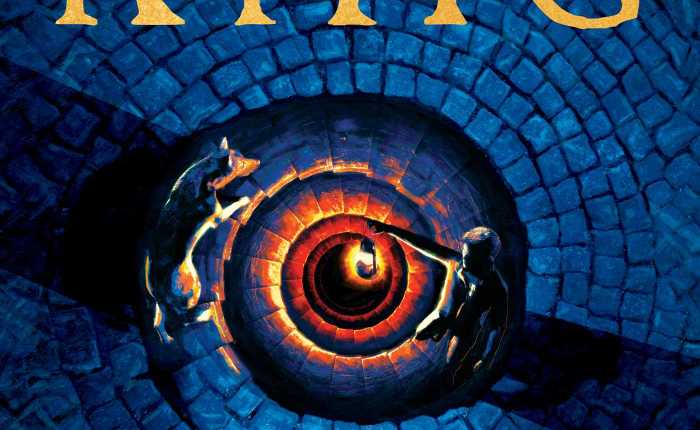
Fairy Tale by Stephen King

Fairy Tale by Stephen King

“Here is something I learned in Empis: good people shine brighter in dark times.” pg 250

Charlie is a typical teen- plays sports and helps his father out around the house. But one day, after helping a neighbor after an accident, Charlie enters a world that is not our own. And discovers an adventure that he wasn’t looking for.

The incomparable Stephen King has written a mammoth fairy tale (600 pages in my digital version!). I thought it was too long.

Not that I mind long books. It sort of felt like King started the book thinking it was going to be about something different than it turned into.

The reason I feel that way is because the first quarter of the book takes so long to establish Charlie’s character and real world connections.

Photo by Alesia Kozik on Pexels.com

I wanted to just get on with it. Then, when we finally made it to Empis, events went too quickly!

King uses quite a lot of foreshadowing which was ok at first, but then it started to become too much. I realize he was trying to build tension- it was just over-used.

“Remember when I said at the outset that no one would believe my story?” pg 494, ebook

I enjoyed any part of the story that had Radar the dog in it. She was my favorite character. King really took his time developing her and her reactions to the world around her, which was fun.

King is at his best when he’s describing the eerie atmosphere of the other world and its unfortunate denizens. Like I said, those parts went too quickly.

Other than my small gripes, this was a well-written story and worthy of its Good Reads nomination. Readers who like Stephen King for his horror should read a different book. This is definitely more fantasy than horror.

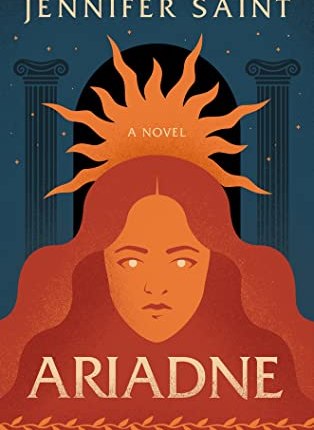
Ariadne by Jennifer Saint

Ariadne by Jennifer Saint

Jennifer Saint writes the mythological story of Ariadne from her and her sister Phaedra’s points-of-view.

“I took that story with me in the coming days and turned it over, like the stone in a ripe peach: the sudden, unexpected hard shock in the center of everything.” pg 14

Like CirceAriadne gives the female figures in the classic tale a voice, something they have never had in the original telling.

“The cold green of his eyes. Like the shock of the chill waters when the seafloor drops away unexpectedly beneath your feet and you realize that you have swum out far beyond your depth.” pg 34

For those not familiar with the myths, Ariadne was in charge of the Minotaur’s labyrinth on Crete. Theseus relied on her for help when he confronted the monster, who was also Ariadne’s half-brother.

Photo by Tiff Ng on Pexels.com

What happens next is the main part of this story. The labyrinth encounter is finished in the first 100 pages, which surprised me. I expected it to be longer.

Saint touches on the unfair nature of many of the classic myths towards women, which includes the story of Medusa and any number of Zeus’s mortal lovers. Zeus took lovers again and again, and his wife visited all sorts of nasty revenges upon them. But that didn’t stop Zeus’s prowling.

Ariadne is somewhat empowered in this story- she realizes the unfair treatment- but at the same time she isn’t able to do much to change her own fate, or the fate of her beloved sister Phaedra.

The gods and goddesses are bound by fate as well. This is most easily seen in some of the stories Dionysus tells about his time among mortals. I could see book clubs having a great time discussing the roles of fate and free will in this story.

I think Saint could have gone a little further in her interpretation of the myths, she stays pretty close to the original telling. It still makes for a beautiful story, but it could have been even better.

Recommended for readers interested in Greek and Roman mythology.

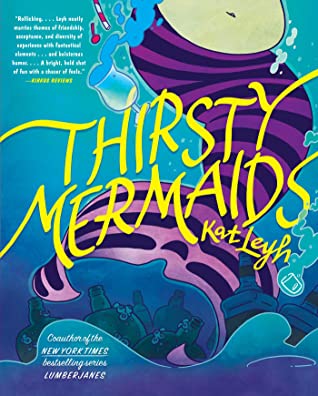
Thirsty Mermaids by Kat Leyh

Thirsty Mermaids by Kat Leyh

Three friends from the sea go on a magical adventure on the land- and can’t recall the magic to return to the sea.

Thirsty Mermaids is a fun tale for teens or the young at heart that explores the themes of friendship, self sufficiency and belonging.

At first, the merfolk and sea witch believe they don’t have any skills that could translate to jobs on land. But after exploring what they are already inclined to do, they find their way into situations that fit them quite well.

The sea witch’s task, to find a way to break the spell, is more difficult. She has to go on a soul-searching mission which, as we all know, is one of the hardest tasks of all.

The artwork of Thirsty Mermaids is quite similar to Lumberjanes, Vol. 1: Beware the Kitten Holy, another graphic novel which I love. The reason for this is because Kat Leyh is a co-author of Lumberjanes.

Both works share messages of acceptance and body positivity, the kind of messages which always deserve reminders.

I enjoyed this graphic novel very much. Highly recommended.

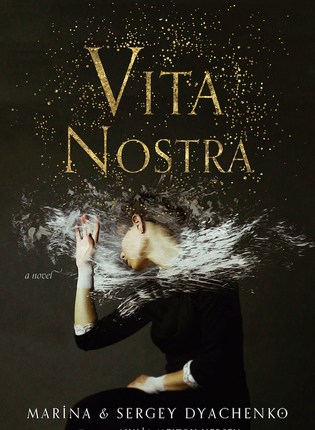
Vita Nostra (Vita Nostra, Book One) by Marina Dyachenko, Sergey Dyachenko

Vita Nostra (Vita Nostra, Book One) by Marina Dyachenko, Sergey Dyachenko

The reader joins Sasha Samokhina as she begins her magical training at a school where no one tells her what they are teaching.

Later that evening she was supposed to attend prep courses at the university. Sasha did not go. She lay on her bed, textbooks thrown aside, and thought, What’s the point? Because clearly the world did not work the way she imagined before.” pg 29, ebook

Through pain and suffering, Sasha slowly finds her way in this new world. If she fails, real world consequences follow, so she doesn’t dare to fail.

But what is it, exactly, that she’s learning? Discovering that is one of the joys of this book.

“Attention, students,” continued Portnov just as softly. “You are at the beginning of a journey, during which all of your strength will be required. Physical and mental. What we will be studying is not for everyone.” pg 70, ebook

Photo by Kei Scampa on Pexels.com

A friend pointed out to me that this book has quite an eastern European feel to it. I knew as I was reading it that the tone was dark, but as soon as he said that I had to agree.

This is not your typical magic school. It isn’t kind, gentle, or forgiving.

“What will happen if we don’t learn it?” Sasha asked. All three girls fell silent. The question that had tortured them all day was now out in the open.” pg 76, ebook

That being said, the magic system itself is one of the most unique I have ever read. The reveal is very slow, but I thought it was definitely worth the wait.

Recommended for older teens or adults because of some disturbing content.

Jade City (The Green Bone Saga, #1) by Fonda Lee

Jade City (The Green Bone Saga, #1) by Fonda Lee

Two crime syndicates war over control of a city using a special type of jade that gives magical powers to some, and brings addiction and death to others.

In other reviews, this book has drawn comparisons to The Godfather and I can see the similarities. Both works deal with families and hierarchies within a criminal world. However, the fantasy element makes the story feel entirely new.

And it is well written. The pacing and characters are well done. I just didn’t connect with the characters and I felt like I should have.

This disconnect led me to not enjoying this book as much as others, which is a shame. Perhaps if I had felt more invested, I would have looked forward to the twisting and turning plot. As it was, I wasn’t interested.

That being said, this story may appeal to fantasy readers who enjoy a criminal element in their reads. Let me know what you think about it.

Greenmantle by Charles de Lint

Greenmantle by Charles de Lint

In Greenmantle, author Charles de Lint mixes fantasy and the mob and creates something new.

Invisible in the shadows of the side of his house, a small figure stirred. A smile touched her fox-thin features.” pg 67

Photo by Alex Andrews on Pexels.com

Ali and her mother, Frankie, recently won the lottery and used the money to move to a house out in the country. Their neighbor, Tony, has a checkered past and has moved out to the country for reasons of his own.

Together, they’ll explore a mysterious force in the woods that is connected to haunting music as well as face threats from a far more earthly menace.

I enjoyed Greenmantle quite a lot.

“Where it passed sleepers, dreams were suddenly filled with resonances never sensed before, while those who were awake, paused in their conversations for that one moment it took for the stag to go by, resuming them again then, knowing they weren’t quite the same, but not knowing why.” pg 100

Photo by Vincent M.A. Janssen on Pexels.com

The fantasy portions of the story were my favorite. Lint writes them well- making the fantastical seem as if it is actually possible.

Easy to see why he was one of the first writers of the modern urban fantasy genre.

Highly recommended for fantasy readers. Thanks for reading!