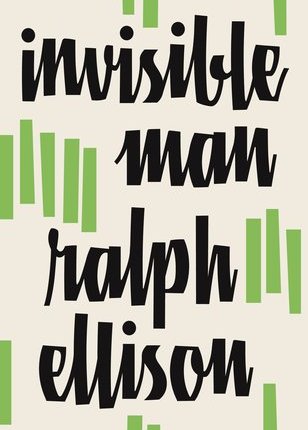
In Invisible Man, an unnamed narrator moves through a series of events that highlight racism and inequality both in the society and in the people within the system.
This is a book that is difficult to describe and may need to be experienced.

The writing is powerful and builds like a punch in sections. I listened to the audiobook while on a walk through the woods so maybe that’s why I was so sensitive to the rhythms.
I’m not a black man and I’ve never walked a mile in his shoes, but this book gives a short sojourn into another person’s life.
The material is sobering and shocking, at times, lyrical and beautiful in others. Rather like life.

At the end of the book, I found myself hopeful for the narrator. Hopeful that he would move forward from all of the challenges that he faced into a new dawn of understanding and racial equality.
I’m always hopeful for improvement. Always.
I think society sometimes uses aspects of our lives (like gender, race, social status, level of education, sexual orientation) to place people into tidy boxes or make them invisible like the narrator in Ellison’s novel.
One way to combat this evil is to know that we’re not alone as we travel through life. We’re all in this together. We see each other and acknowledge each other’s strengths and weaknesses.

We are seen and appreciated for our uniqueness by the communities we create. It’s a big responsibility.
I read this classic because it is painted on the staircase of the library where I work. I’m trying to read all of the classics recorded there in an effort to become “classically” well-read.
What do I mean by classics? The most-tagged classics on Goodreads.com include such notable books as “1984” by George Orwell, “The Catcher in the Rye” by J.D. Salinger, and “Of Mice and Men” by John Steinbeck.
Of those three, dear readers, I’ve only read one.

So, the next problem with this aspiration of mine is — Where do I start? Who is the definitive voice when it comes to choosing classics?
Who better than a library, I thought, literally.
I had the privilege of working at O’Fallon Public Library during the Great Renovation of 2015 to 2016. One of my favorite pieces of improved library space (other than the bubble wall!) are the book spines that were painted on our stairs.
I’d like to invite everyone to read along with me as I “climb the stairs” by reading the classics listed there. The goal is to share the books our community deemed important enough to preserve in our library space for all time.
The next title on the steps is Watership Down, another classic that I have not had the pleasure of reading. (Portions of this review first appeared on the O’Fallon Public Library’s blog.)
Thanks for reading!
- The Ballad of a Small Player: a Metaphysical Movie Review
- Otherwhere: A Field Guide to Nonphysical Reality for the Out-Of-Body Traveler by Kurt Leland
- Psychic Dreamwalking: Explorations at the Edge of Self by Michelle Belanger
- Archetypes on the Tree of Life: The Tarot as Pathwork by Madonna Compton
- The Goddess and the Shaman: The Art & Science of Magical Healing by J.A. Kent




 The Help Desk Book Blog