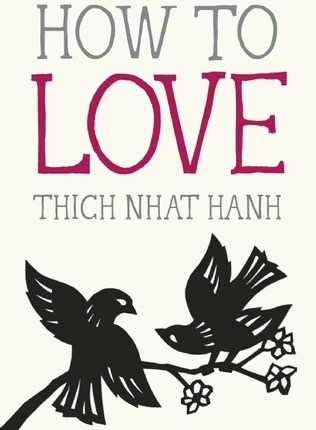
How to Love (Mindfulness Essentials, #3) by Thich Nhat Hanh

How to Love (Mindfulness Essentials, #3) by Thich Nhat Hanh

Thich Nhat Hanh, monk and spiritual leader, has written a short series of books he calls “Mindfulness Essentials.” This entry is all about love. You might ask yourself, what could a monk possibly know about love? Turns out, plenty.

Hanh applies the mindfulness techniques he’s learned over his lifetime of spiritual practice to the potentially thorny pathways of love, and the result is a gem of a read.

Photo by Asad Photo Maldives on Pexels.com

He counsels lovers to bring happiness to each other through being present in the moment and sharing your appreciation with each other. For example, if someone is distracted or worried, Hanh says you should draw their attention to the physical beauty of the world around them. In this way, you anchor the other in the present moment and ease the suffering of their busy mind.

This type of presence is a gift that you can give to anyone at anytime. And it doesn’t cost anything.

Hahn describes four defining traits of love as loving-kindness, joy, compassion, and equanimity. Then he examines these traits in detail so readers can ponder the mystery of love and see where, potentially, we may be falling short of these ideals.

Photo by Jasmine Carter on Pexels.com

He teaches all love begins with self love and walks hand-in-hand with spiritual practice. Through deep listening and the establishment of intimacy, Hahn believes love heals through empathy and “karuna,” a term that describes suffering with another and then doing what you can to end that suffering.

In addition, don’t take the other person for granted or make assumptions about what they may need. It is only through open communication that, Hahn believes, love lives.

He makes it sound so easy. I wish it was.

Photo by Pixabay on Pexels.com

Recommended for readers looking to learn about the spiritual side of love in a quick and easy read. Hanh doesn’t waste words and I am always in awe of what teachings he has to impart.

Thanks for reading!

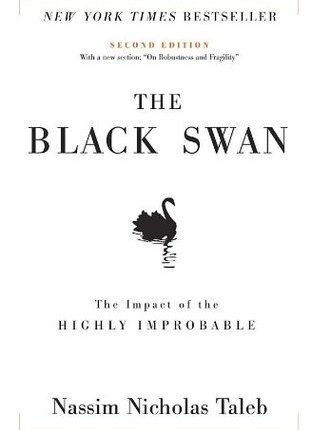
The Black Swan: The Impact of the Highly Improbable by Nassim Nicholas Taleb

The Black Swan: The Impact of the Highly Improbable by Nassim Nicholas Taleb

Nassim Nicholas Taleb discusses “black swans”, unexpected and life-changing events, and how life is far more uncertain than most believe it to be. He also examines, in-depth, how we fool ourselves into believing reality is otherwise by various means like confirmation bias (we look for evidence to support our existing beliefs) and narrative fallacies (the tendency to describe existence using linear stories when reality is far more complicated).

Mix in a heaping dose of storytelling and autobiographical information and you get The Black Swan.

Photo by Takeshi Arai on Pexels.com

“This combination of low predictability and large impact makes the Black Swan a great puzzle; but that is not yet the core concern of this book. Add to this phenomenon the fact that we tend to act as if it does not exist!” Prologue xxii

This is a dense read, full of philosophical references and terminology. Basically, beyond black swans having a larger impact on reality than we realize they do, this book can be simplified way down to “beware of because” and “know what you don’t know”.

“Beware of because” because (tee-hee) reality is far more random than most believe it to be. And we suck at predicting the future, for a variety of reasons, but partially because it is impossible to project future events from historical ones.

“Note here that I am not saying causes do not exist; do not use this argument to avoid trying to learn from history. All I am saying is that is it not so simple; be suspicious of the “because” and handle it with care — particularly in situations where you suspect silent evidence.” pgs 120-121

Photo by Karolina Grabowska on Pexels.com

“Silent evidence” is the information not readily apparent for whatever reason. Taleb gives an illustrative example of silent evidence from ancient history of a philosopher being presented an argument that a group of sailors survived a shipwreck because they prayed. The philosopher wonders how many of the sailors who drowned were also praying. The drowned sailors, you see, are the silent evidence.

Biologically, Taleb says, human beings are not set up to be deep thinkers and are fooled by a variety of logical fallacies. This is only a problem because, as time goes on, humanity has less running away to do from things trying to eat us and more dealing with the complexities of modern existence.

But by remembering “to know what we don’t know” and understanding some of the limitations built into our brains by memory and logical fallacies, we can be prepared to make better decisions than before. Or, at least, we’ll have a better grasp on how risky and unknown life is.

Photo by Marlene Leppu00e4nen on Pexels.com

Anyway, this book certainly gave me a lot to think about. The part that struck me the most is when Taleb applies his black swan idea to careers and how this uncertainty applies particularly to authors and artists. For every J.K. Rowling, there will be thousands of writers who never make that break through. I started wondering how many extraordinary books I will never get to read because of this phenomena.

The author’s tone throughout the book, slightly irreverent, didn’t annoy me as much as it seems to have bothered other readers. I enjoyed learning a new way to look at reality, but, as I mentioned before, this is a dense read and I wouldn’t consider it “fun” reading either.

It may appeal most to philosophers and anyone who wants to consider new ways to view reality.

Thanks for reading!

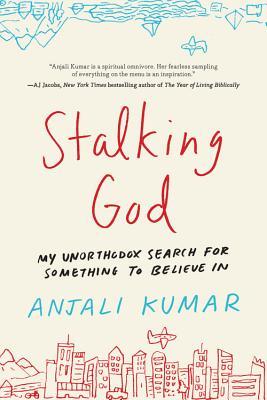
Stalking God: My Unorthodox Search for Something to Believe In by Anjali Kumar

Stalking God: My Unorthodox Search for Something to Believe In by Anjali Kumar

Anjali Kumar is a lawyer who is used to having all the answers. After she had a daughter, Anjali realized she knew very little about the big questions: why are we here? What is it all about? Is there a God?

“In 2010, when my daughter Zia was born, I decided that I needed to find God.” loc 24, ebook.

Anjali went on a quest to find out the answers, not only for the sake of her daughter, but also herself. She touches all the bases – from meditation to faith healing to Burning Man to yoni worship – Anjali leaves no stone unturned in her search to find what is real.

Photo by Artem Beliaikin on Pexels.com

“Along the way, I learned to chant, to meditate, and to marvel. I wrestled with my own identity, from my ethnic and cultural roots in India, to my femininity, to my role as a woman, daughter, mother, and wife. … I fancied myself an explorer, no different really than Magellan or Columbus. I was looking for a new world.” locs 148-163.

It’s a fascinating memoir.

Before each experience, Anjali puts in her research in an effort to find the science behind the beliefs. It’s not always as concrete as she would like it to be, but Anjali tries to engage her brain and her heart in her quest.

This is before she goes to her first “para-tan sounding”: “According to string theory, the entire universe is basically humming – all of it and all of us. Add that to the fact that the chanting of mantras has a long, compelling spiritual history, that cancer researchers are using sound- high-intensity focused ultrasound- to successfully destroy prostate cancer cells … and this whole Paramji thing starts to look like it might be grounded in a bit of hard science…” loc 500

Photo by Nataliya Vaitkevich on Pexels.com

Anjali tries to keep an open mind, even when things sound very strange: “One thing I had to be cognizant of… was how difficult it is as an outsider to come to terms with what are easy to perceive as the odd behaviors and strange beliefs of ‘other people.’ … as outsiders we have no idea what those behaviors and traditions stand for or mean.” loc 904.

She finds layers of meaning, even when particular experiences weren’t all that she hoped they would be. Anjali also experiences a few surprises along the way.

“I was looking for a theory of everything spiritual for Anjali and Zia. And yet, so far, just like those physicists had failed to find a theory of everything in the entire universe, I had failed to find a theory of everything for my own spirituality.” loc 1343.

Photo by Pixabay on Pexels.com

And she never gives up because: “A spiritual home is something that we all have to find for ourselves.” loc 2853.

Recommended for seekers everywhere. Anjali’s discoveries may not be earth-shattering, but they’re real and worth the read.

Thank you to NetGalley and Seal Press for a free advance reader copy of this book. Reminder: the short quotations in this review may change or be omitted in the final printed version.

Thanks for reading!

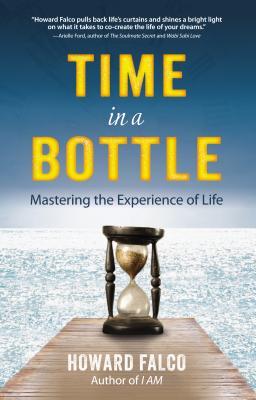
Time in a Bottle: Mastering the Experience of Life by Howard Falco

Time in a Bottle: Mastering the Experience of Life by Howard Falco
timeinabottle

Time in a Bottle is a self help book about changing your perceptions to improve your life. Though not a new message, some readers may find this book worth the time.

Howard Falco presents this knowledge with a spiritual slant. Readers who are turned off by that kind of thing may want to choose another book.

The main premise: “Our misunderstanding of time- how our thoughts relate to time, how time is actually created, and how time seems limited- is one of the biggest reasons we suffer and at times feel hopeless or powerless in our lives.” pg 1, introduction.

One of the ways to “master the experience of life” is to realize that you are infinite potential like the universe itself: “You are a part of infinity. To the degree that you feel that life is finite and limited, you will act out of this fear, and work to create an experience that is a result of this fear.” pg 33.

I agree that mindset is important to determining your life’s path. Love and fear seem to be the two driving forces of our world. Wonder why that is…

Photo by Nacho Juu00e1rez on Pexels.com

Falco also discusses giving up resistance to how life is: “It is critical that you know that the ending of your resistance toward any particular thing (sickness, layoffs, war, family, financial trouble, death, political chaos, natural disasters, etc.) is not in anyway condoning these terrible things or giving up on change. It is simply the full acknowledgment that for the moment this is what is happening.” pg 40

He talks about giving up regrets about the past that could potentially be holding you back: “This is not about accepting that something had to happen to you; it is about acknowledging that it did happen and standing in front of the universe saying, “I trust that there is perfection and a specific, divine purpose for my past and the exact way it unfolded. Because of this, I am realizing more of my unlimited potential for the future.”

So then, unburdened, you step into your future with faith.

Falco incorporates quotes from famous philosophers and scientists along with anecdotal stories to illustrate his points. As I said, no new wisdom here, but plenty of good reminders to trust, forgive and move forward to a life outside of time.

Thanks for reading!

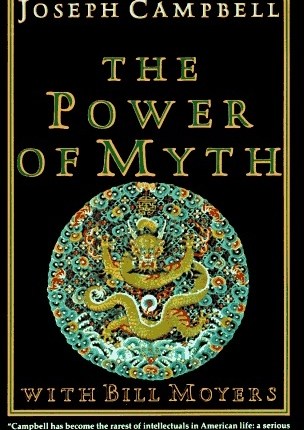
The Power of Myth by Joseph Campbell

The Power of Myth by Joseph Campbell

Though a bit rambling at times, The Power of Myth is a great introductory text on archetypes found within all world mythologies from almost every time period.

Photo by Plato Terentev on Pexels.com

In it, Joseph Campbell explains why the underlying stories are the same from all over the world and what they mean in both cultural, personal, and world contexts.

He breaks down some of the major archetypes like the sacrificed god and resurrection, virgin births, goddesses, trees, snakes, and more. As someone who has studied tarot and The Tree of Life extensively, I found it to be an illumination.

Photo by Alex Conchillos on Pexels.com

I particularly liked learning about the mythology of Star Wars. With the release of the new film, that particular series is back in the top of the pop culture charts. I think that The Power of Myth explains why it has such enduring appeal.

If you liked The Power of Myth, you may want to try Hero with a Thousand Faces or Pathways to Bliss: Mythology and Personal Transformation, both of which are also by Joseph Campbell.

Or pick up any of the many books about mythology from any country you’d like. If you immerse yourself in enough of the stories, you will pick up on the reoccurring patterns yourself.

I believe that one of the many purposes of mythology, beyond its entertainment value, is to teach us about what we have in common with each other, and also, the hidden dimensions of ourselves.

As the doorway to the Delphic Oracle said, “Know Thyself.” And, really, that is the greatest power there is. Mythology helps you do that.

Thanks for reading!

The Alchemy of Freedom: The Philosophers’ Stone and the Secrets of Existence by A.H. Almaas

The Alchemy of Freedom: The Philosophers’ Stone and the Secrets of Existence by A.H. Almaas

I picked up The Alchemy of Freedom because I was looking for an accessible book about alchemy. Unfortunately, it wasn’t actually about alchemy nor was it accessible in my opinion.

Photo by Evgeny Tchebotarev on Pexels.com

But, everybody is ready at different times for different manners of spiritual teachings. Don’t let my incomprehension deter you if you find the description intriguing.

I’m neither a genius nor a guru, just someone who studies religions and spirituality in a comparative, curious, meandering way. This could be the book that opens a door for you.

It simply wasn’t that for me.

There are some gems hidden in these pages but I found it mainly to be a labyrinth of words. I’ve had a similar feeling when listening or reading the works of Eckhart Tolle.

I feel like what Almaas is saying is worthwhile, so I made my way through it. But I just didn’t get the majority of it. Puzzling my way through this book was like grasping a cloud.

Photo by Rok Romih on Pexels.com

I had finished this book last week in preparation for writing a review the day it came out, but when I sat down to write yesterday, the words wouldn’t come. Rarely does reading a book leave me speechless.

I’ll pull some highlights to give you a feel for it. Reminder: this was a digital advance reader’s copy so the final published version could be slightly different.

I was able to comprehend Almaas’ thoughts about our “true nature” and most of the passages I highlighted talk about it: “Whether we recognize it as presence or awareness or emptiness, true nature is crucial to the process of awakening, realization, enlightenment, and liberation. It is the source of all spiritual experiences, insights, and transformations.” loc 116-133.

The bits of alchemy that Almaas did discuss were illuminating: “When we are experiencing ourselves as true nature, we realize that a human being is really the alchemical laboratory. The human being, the human consciousness, the human mind, the human heart are the instruments through which the magician works.” loc 186.

Photo by Vinu00edcius Vieira ft on Pexels.com

Most books that discuss alchemy are symbols heaped upon symbols. Perhaps it’s just the nature of the topic, but it’s frustrating.

About the philosophers’ stone: “The alchemists spent millennia trying to find it. They considered it the final result of the magnum opus, the great work of spiritual and material transmutation. Some alchemists thought they could make it, others believed it had to be discovered. … I am not teaching anything about alchemy here; I am borrowing the idea because it fits with what I am trying to say about true nature. … We can only experience true nature in the manifold ways it presents itself, and yet it is always one thing.” loc 666

I felt like this next quotation encompassed my experience of this book: “Sometimes we can rapidly absorb a teaching, and other times we can’t get very far with it for a long time. But we don’t need to get into a mental struggle with the ideas and the notions. Although understanding is an important part of awakening, it need not happen immediately.” loc 922.

So, that’s a relief. Perhaps my awakening is still on its way. Until then, I’ll just chill where I am.

Photo by Jill Wellington on Pexels.com

Thank you to NetGalley and Shambhala Publications for a free advance reader’s copy of this book.

And thank you for reading!

The Zen of You and Me: A Guide to Getting Along with Just about Anyone by Diane Musho Hamilton

The Zen of You and Me: A Guide to Getting Along with Just about Anyone by Diane Musho Hamilton
zen of you and me

The Zen of You and Me takes on conflict mediation through zen philosophy. I learned a lot about managing conflict but more about myself and why, perhaps, I tend to avoid it. Hamilton is never preachy, but gently guides the reader through the dark woods of differences into the clear fields of appreciation and inclusion.

“It is a very freeing experience to suddenly realize that a difference between us is not only OK- it is stimulating and worthwhile. This realization heights our confidence to bring them out directly and openly.” loc 180.

Hamilton talks about leading classes through difficult discussions about race and privilege. The group only manages to make their way through it when one of the members expresses his desire to be heard and the others in the group allow themselves to listen.

But it isn’t easy to listen. You might be angry or otherwise triggered by what you’re listening to. Hamilton addresses that: “Threat provokes such intense sensations in our body and mind that sitting still seems wildly counter intuitive and impossible. But the first step is to learn to sit still and simply pay attention.” loc 310. Mindfulness provides the way out.

Photo by Elina Fairytale on Pexels.com

I also learned that I’m not as good a listener as I could potentially be. Hamilton provides some excellent advice for improving your skills: “Listening has a lot in common with meditation. Both involve a clear intention of bringing attention to this moment, receiving input, and letting go of the preoccupations of the self. … My first impulse was to tell her it was OK; everything would be all right. Then it occurred to me that she didn’t want to hear that. … I distinctly remember the warm sensation of letting go move through me.” loc 377.

I’ve started practicing not listening to answer but listening to listen. I surprised myself with how often my mind was racing away somewhere else as soon as another person opened her mouth. But, now that I know I do that, I can focus on changing that behavior. Thanks Diane Musho Hamilton!

I expect that now I’ll experience my loved ones in wholly new ways. “Anytime we express our real thoughts and feelings, it creates more truth and reveals a bigger perspective. And anytime someone else shares their truth with us, we should be grateful that we are given the opportunity to see and feel more than we did before. It is a privilege to feel.” loc 511. It is a privilege, isn’t it.

Hamilton talks about one of her students who set an intention to not lose her temper but was then hijacked by her emotions: “Her conditioned patterns are her suffering, like mine are mine, and yours are yours. I invited her to include them, to love them, because this practice is love.” loc 1331. So, it’s not about banging yourself into shape or forcing yourself to become something you’re not. It is more like becoming who you naturally are- which is freedom, joy, love and boundlessness.

Recommended for those who struggle with conflict within themselves or between themselves and others. The Zen of You and Me is helpful, succinct, beautiful and very zen.

Thank you to NetGalley and Shambhala Publishing for a free digital copy of this book. And thank you for reading!

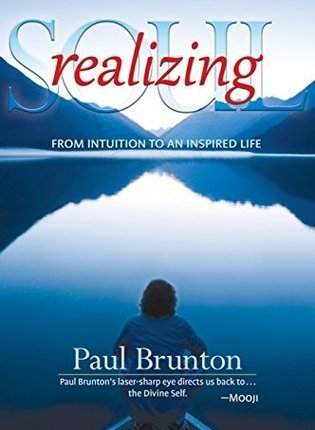
Realizing Soul — From Intuition to an Inspired Life by Paul Brunton

Realizing Soul — From Intuition to an Inspired Life by Paul Brunton

Paul Brunton was an English philosopher who dedicated his life to the spiritual journey.

Photo by Jonas Ferlin on Pexels.com

I had never read the teachings of Brunton before Realizing Soul and I found him to be very similar to Eckhart Tolle or, interestingly enough, Abraham Hicks.

He was like Eckhart Tolle in that he stressed the importance of the Now moment.

Brunton was like Abraham Hicks in that his description of the “Oversoul” could walk hand in hand with Hick’s “Vortex of Creation”. In fact, in my mind when I was reading this, I just substituted Oversoul for Vortex because I was more familiar with Hick’s thoughts on the matter than Brunton’s.

There is quite a lot of information in Realizing Soul, though it isn’t very long. In fact, I wish that some of the passages had been longer. This book was mainly a compilation of ideas from many of Brunton’s different writings.

I suppose that it gives the reader a great overview of the various works but I felt that it lacked some depth because of the shortened sections which were each generally only a couple of sentences long.

Photo by ArtHouse Studio on Pexels.com

Some parts I want to remember:
“…That which he has been seeking so ardently has been within himself all the time. For there at the core of his being, hidden away underneath all the weakness, passion, pettiness, fear, and ignorance, dwells light, love, peace, and truth. The windows of his heart open on eternity, only he has kept them closed! He is as near the sacred spirit of God as he ever shall be, but he must open his eyes to see it. Man’s divine estate is there deep within himself. But he must claim it.”pg 18

“The personal ego of man forms itself out of the impersonal life of the universe like a wave forming itself out of the ocean. It constricts, confines, restricts, and limits that infinite life to a small finite area. The wave does just the same to the water of the ocean. The ego shuts out so much of the power and intelligence contained in the universal being that it seems to belong to an entirely different and utterly inferior order of existence. The wave, too, since it forms itself only on the surface of the water gives no indication in its tiny stature of the tremendous depth and breadth and volume of water beneath it…” pg 27

“What can I do to break this barren, monotonous, dreary, and sterile spiritual desert of my existence? The answer is if you cannot meditate successfully go to nature, where she is quiet or beautiful; go to art where it is majestic, exalting; go to hear some great soul speak, whether in private talk or public address; go to literature, find a great inspired book written by someone who has had the glimpses (of the divine within life).” pg 78

Photo by Dina Nasyrova on Pexels.com

“Man as scientist has put under observation countless objects on earth, in sea and sky. He has thoroughly examined them. But man as man has put himself under a shallower observation. He has limited his scrutiny first to the body, second to what thinking can find. Yet a deeper level exists, where a deeper hidden self can be found.” pg 96

For the most part, I found Realizing Soul to be very beautiful and rich in meaning. There were some bits on karma and ego illusion that didn’t really resonate with me, but that doesn’t mean that it won’t speak to others.  If you want more of Brunton’s writings, they can be found online for free at this website: http://www.paulbruntondailynote.se/

If you enjoyed this book, you may want to listen to some of Eckhart Tolle’s lectures like Even the Sun will Die, Gateways to Now, or pick up the book, Stillness Speaks. Readers may also enjoy The Art of Living and Dying: Celebrating Life and Celebrating Death by Osho.

Thanks to the Goodreads First Reads program for a free copy of this book.  And, thank you for reading!