Otherwhere: A Field Guide to Nonphysical Reality for the Out-Of-Body Traveler by Kurt Leland

Otherwhere: A Field Guide to Nonphysical Reality for the Out-Of-Body Traveler by Kurt Leland

Kurt Leland’s Otherwhere is the first out-of-body memoir/guide (that I’ve read, so far) that discusses the importance of the individual’s consciousness in how the inner worlds are perceived.

It’s not a new idea, being repackaged and sold throughout time, lately in the New Age/New Thought movement, that one’s beliefs shape one’s reality. But, as Kurt Leland points out in other dimensions where thoughts literally are that reality, this individual viewpoint takes creation to a whole different level.

He suggests that what Robert Munroe, Jurgen Ziewe, and so many other consciousness explorers experience when they are in their various out-of-body states is archetypical energy, though he doesn’t use that terminology. Leland calls the perception of this energy: one’s own personal translation tables.

Rather than taking the figures that one encounters at face value or judging them based on ingrained religious beliefs, Leland encourages the Otherwhere visitors to examine what the figure does. It’s very similar to what dream interpreters teach about how to understand your dreams.

Like me, Leland believes that anyone can have out-of-body experiences. He has this to say about why more people don’t: “It’s my firm belief that what prevents people from having out-of-body experiences and exploring nonphysical reality on their own is fear of the unknown. In my experience, the best way to overcome fear of the unknown is to familiarize oneself with the personal accounts of people who have overcome that fear themselves. I believe that personal accounts of out-of-body experiences are far superior to how-to manuals in stimulating people to venture into the unknown.” Preface, xii

He goes on to say: “In my opinion, our fear of the unknown is really just anxiety about becoming unlovable as a result of having had unfamiliar experiences and being changed by them. If we attempt to explore nonphysical reality and succeed, we’re afraid that we’ll be rejected, disbelieved, or thought to be crazy.” pg 27. Time to get over that. Don’t you think? 🙂

Lelend uses lucid dreaming as his method of exploring other worlds (Otherwhere). I’ve explored a few books about lucid dreaming one of which you can read here. If you are interested in my explorations into nonphysical reality, you can read those here.

I found this episode of a woman that he encountered there to be very illuminating. In this passage, he is talking to his Otherwhere instructors about her: (the Instructor saying) “As you can see, my colleague and I intended every image in the dream to contribute in some way to the lesson we wanted you to learn.” (Leland asks) “What about the woman reading the book?” “As you recall, she was facing the door into Otherwhere. There are many people in the world who have an interest in exploring psychic phenomena. They love to read about other people’s adventures in altered states of consciousness. But if a door that would allow them to undertake such explorations on their own were to open, they would make up excuses not to go through. The most common one is that they don’t have time.” pg 99

Let’s not be that woman.

The importance of physical life- in this excerpt, Leland is listening to an instructor in Otherwhere: “While it’s true that I no longer feel regret about anything I’ve experienced during previous lifetimes on Earth, I wouldn’t say that I’m grateful to be among the dead. That would imply that life over here, in Otherwhere, has a greater value than life on Earth. From our perspective, that isn’t true. There are things that can be learned only here and not there. But there are also things that can be learned only on Earth. Learning is all that matters, and no lesson is more or less valuable than any other. pg 152

Keep on learning, check.

In this passage, Leland examines the availability of teachings on other dimensions: “There are many maps of nonphysical reality… scattered throughout the history of your art and literature. These can provide useful translation tables for orientation within nonphysical reality. Why should every individual who explores nonphysical reality start from scratch?” pg 158

Why indeed… with the modern age and the easy availability of formerly difficult-to-discover information through the internet and public libraries, one can stand on the shoulders of giants to begin your own personal studies.

Everyone is an artist: “Every human being is immensely creative. But unless that creativity is channeled into some art or craft, it will be used instead to generate illusion. It could be said, therefore, that every human being is an artist, at least in potential. Developing this creativity is an essential part of every person’s life purpose, even if it isn’t the main focus of one’s career.” pg 238.

I believe that too. I’ve read a bunch of books about creativity, one of which you can explore here.

“How you choose to represent to yourself the ways of gaining access to any zone of Otherwhere is up to you. The validity of such images lies in their usefulness, not in some kind of absolute truth. The only important thing is that you give yourself some way of identifying the zone into which you’ve traveled, so that you can return on future occasions. Whether this manner of identification is the name of a subway line or station, or the number on a gate in an alley, is your choice. The identifying function of such names or numbers is all that matters.” pg 262

Or, like in my own personal explorations, tarot cards.

Leland finishes his account with a modern version of Dante’s Paradiso in which, he traveled to Otherwhere and discovered different areas within that place where the dead came to terms with the life they had just completed. Absolutely fascinating stuff.

Then he talks about ways to remove your consciousness from the ordinary to experience what he and others (and me!) have experienced- whether that be through meditation, lucid dreaming, shamanic drumming, etc, and, the librarian in me loved this part, gives book lists for learning each type of technique. He saves consciousness explorers a lot of time, which is a kind thing to do.

I highly recommend Otherwhere for folks beginning their consciousness exploration or the experienced traveler. It is a how-to guide, a journal, and an encouraging, exploratory ramble through Otherwhere, a place where anyone can go, if they only set their mind and heart on doing so.

Thanks for reading!

How Not to Be a Hot Mess: A Survival Guide for Modern Life by Craig Hase, Devon Hase

How Not to Be a Hot Mess: A Survival Guide for Modern Life by Craig Hase, Devon Hase

“(This book) draws on Buddhist advice because, believe it or not, Buddhism has been through it all before. It’s seen wars, plagues, oppression, and ten thousand terrible haircuts – and it has, along the way, developed dependable ways to stay steady in the roller coaster of family feuds, romantic vacillations, uncertain futures, and all the rest.” pg 9, ebook

How Not to be a Hot Mess was a timely read for me, though there was little in here that was “new”. Instead, it offers gentle reminders to meditate, tell the truth, be generous and take care of yourself – all things that help mitigate hot messiness in the day-to-day.

Photo by Marta Wave on Pexels.com

“So there are approximately one bajillion reasons why you should meditate. The top three reasons as I’ve just mentioned, are that you’ll be less stressed, more focused, and you might even stumble your way into slightly better humanhood.” pg 23, ebook

I used to meditate every day. But then, for whatever reason, I fell out of the habit. I’m going to be doing my best to bring it back because I think I was a calmer person and less reactive to things.

This book also reminded me about skillful speech.

“There are people out there- and I’ve met a lot of them now- who follow these guidelines of True, Kind, Timely, Helpful beautifully. And they all have some things in common: they have good friends, stable community connections, a sort of quiet confidence, and they kind of glow.” pg 53, ebook

I don’t tend to say a lot but I try to make what I say fit within those guidelines. This book reminded me of how important this can be. It’s like modern life makes me forget sometimes, in the mad crush and noise, what’s really important.

“You, too, can do this. It’s not just for fancy historical figures or people who write books and give TED talks and share wisdom from the mountaintops. You really can stay clear, say what’s true, give a little, make sex good, meditate occasionally, and be less of a jerk and more of a stable loving presence in your world. Right in the middle of everything.” pgs 84-85, ebook

Yes, I can do this. And so can you. Happy reading, friends.

Love People, Use Things: Because the Opposite Never Works by Joshua Fields Millburn

Love People, Use Things: Because the Opposite Never Works by Joshua Fields Millburn

‘The Minimalists,’ Joshua Fields Millburn and Ryan Nicodemus, share their life journeys towards intentional living using seven different areas of focus: stuff, truth, self, values, money, creativity and people. Readers are invited to use the lessons they have learned to enact positive change in their own lives.

I, like many, had preconceived notions about what minimalism is. I thought it was about creating a living space that has like one chair, one table, and a cup with a single sharpened pencil in it. You can see the room, can’t you. In my mind, that was minimalism- bare to the point of ridiculousness.

Photo by Waldemar Nowak on Pexels.com

Millburn addresses this misconception early on in the book.

“Minimalists don’t focus on having less, less, less; they focus on making room for more: more time, more passion, more creativity, more experiences, more contribution, more contentment, more freedom.” pgs 35-36

Sounds pretty good to me, Josh. So how do we get there?

“Minimalism is a practice of intentional living. While it starts with the stuff, it’s ultimately a stewardship program for one’s life.” pg 124-125

I’ve recently experienced some major changes in my life, which include relocating to a new home and moving almost a decade’s worth of stuff. During the process, I took the time to try on every piece of clothing in my wardrobe and, to my not-unexpected dismay, about three-quarters of the clothing no longer fit.

Photo by Tembela Bohle on Pexels.com

It was simply a matter of donating the old clothes then. But I found myself hesitating to do so. I’ve lived a lot of life in those clothes and just holding them brought back so many memories.

I realize the memories aren’t in the items, they’re in me. Millburn points out that it’s easy to make that mistake.

“While it’s true that our memories are not in our things, it is also true that sometimes our things can trigger memories inside us.” pg 20

He recommends taking pictures of these treasured items so you can continue to access the memories at will while still making room for growth.

Because that’s what all of this minimalism stuff is geared towards: Living an intentional life so you can grow with the values that you’ve chosen for yourself. What you’re aiming for is growing like a cultivated flower about to bloom rather than a tumor that spills out uncontrolled in all directions.

Photo by Jess Bailey Designs on Pexels.com

“Growth is a critical component of a meaningful life- as long as it’s responsible growth- because continual improvement makes us feel alive and brings purpose to our actions.” pg 170

To do so, we must first confront the reasons why we’re holding on to all these items in the first place.

Fear is a common theme with people who are starting to confront their stuff. We’re afraid to pull back the curtain because we’re afraid not of the stuff itself, but of the work that must be done to live a more rewarding life after getting rid of it.” pg 102

And for me that’s the crux of the issue- fear. What am I afraid of? I’m afraid of living a life that doesn’t match up with my values. I fear change, not because it might be negative but because it pulls me out of my little routines into a place of uncomfortable uncertainty.

Your fears are probably quite different from mine, but the point is that you have them. Do you know what yours are?

Highly recommended for readers interested in self improvement, self help or the minimalist movement. Thank you to the publisher for a free advance reader’s copy of this book.

And thanks for reading!

Ways of Heaven: An Introduction to Chinese Thought by Roel Sterckx

Ways of Heaven: An Introduction to Chinese Thought by Roel Sterckx

“China, so far, tends to creep into our narrative only from the time it appears on the imperial horizons of the West, or when it enters the international politics of the twentieth century, or when its economy seems unresistingly relevant (or threatening) to us.” Preface, x

Ways of Heaven, by professor Roel Sterckx from the University of Cambridge, seeks to build a bridge for the western mind to a thorough understanding of Chinese thought through its philosophy, history, historical figures, rituals, food and more.

The result is a delightful window into a different world, complete with context and signposts to guide your way.

Photo by zhang kaiyv on Pexels.com

I was looking for a book with a general overview of Chinese philosophy and this one definitely fits the bill.

Duke Ling of Wei asked Confucius about military formation. Confucius replied: ‘I have, indeed, heard something about the use of sacrificial vessels, but I have never studied military matters.’ The following day, he left the state. (An. 15.1) pg 221

Sterckx explains how Chinese history changed with each dynasty as well as the interpretations of key philosophical texts. Each succeeding ruling figure had to prove that their rule was legitimate and connected to all of the ones that went before it. Also, if Confucius’s teachings didn’t fit with how the current emperor wanted to rule, all that had to be done was to craft a different interpretation for the new ruler.

Photo by Te Ta on Pexels.com

In that way, Chinese history and philosophy are both living systems, shaped by those who came before us and also, perhaps, changed in ways we will never know. It is fascinating to consider.

(And also ripe fodder for any authors who are looking for material to create historical fiction or alternative universes.)

I appreciated how Sterckx teases out the importance of symbols and materials that permeate Chinese culture. Lately, I’ve been on a Chinese and Korean television binge through Netflix and I could tell I was missing all sorts of meanings because I didn’t grasp the cultural cues.

Ways of Heaven helps with that too.

“In the Olympics of Chinese metaphor, champions are those who float along the river of life with ease, accompanied by a teacher or loved one and with the looks of a dragon and a character like jade.” pg 367

Photo by Harrison Candlin on Pexels.com

My favorite part of the book is when Sterckx talks about the use of music in Chinese ritual. How many times in films and television have you seen an ancient sage playing a flute while seated serenely on the side of a mountain? I can think of dozens of examples of just that. Now I know why:

“Music creates an unspoken bond that no other medium can achieve. … It is ritual lived through sound: ‘Music is what sages delight in, and it can be used to make the hearts of the people good. Its effect on people is deep; it can change habits and alter customs.'” pg 241

Highly recommended for readers who are interested in Chinese history or philosophy.

Thanks for reading!

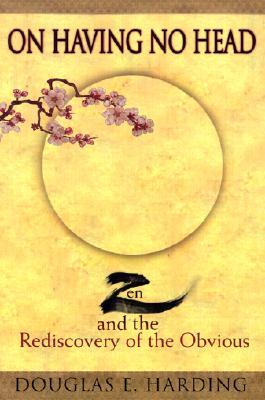
On Having No Head: Zen and the Rediscovery of the Obvious by Douglas E. Harding

On Having No Head: Zen and the Rediscovery of the Obvious by Douglas E. Harding

Douglas Harding had a strange experience when he was a young man. As he was hiking in the Himalayas, Harding had a moment he would later describe as of “no thought”, and where he perceived his body as having no head. In addition, he had a vision of his body as a house with a single window, but inside the house, there was nothing looking out at the world.

That nothingness is where Harding envisioned his consciousness resides.

Trippy, I thought. If that had happened to me, I might have been pretty freaked out.

Photo by Asep Syaeful Bahri on Pexels.com

Not necessarily so for Harding, who described the experience as incredibly peaceful and enlightening. When he came back from this experience, he applied his insight to various Eastern schools of philosophy, notably Zen.

The result is this book- a discussion of not only what happened to him, but an examination of consciousness itself. Where does consciousness reside? Where is the ‘me’ of our constant thoughts and emotions?

It’s somewhat of a winding path to get there, but Harding eventually points to the idea that consciousness is space in which reality is perceived.

When I first hopped into this book, I thought, how ridiculous. We all have heads attached to our necks. We can see them and feel them. Not only that, we can see and feel the heads of other people if we really wanted to.

Photo by Gabby K on Pexels.com

Harding takes this idea of ‘seeing’ and ‘touch,’ and questions what it is that people actually perceive. Yes, he says, you can see your head in a mirror. But that is a reflection of your head and not the head itself.

Everybody says these constructs are the thing itself. However, as Harding points out, they’re not really, are they? If you look down your own face, you can usually ‘see’ your nose as a series of splotches and shapes. Is that your nose though, or just splotches?

And he goes on from there.

By the end of the book, I was nodding my head a little and felt like I could understand something of what he was saying. But now that I’m trying to write a portion of it down, it just sounds like nonsense.

Photo by Olya Kobruseva on Pexels.com

Perhaps this is a book to be experienced rather than described. Rather, I might humbly suggest, like consciousness itself?

Recommended for spiritual seekers or anybody who enjoys pondering koans.

Thanks for reading!

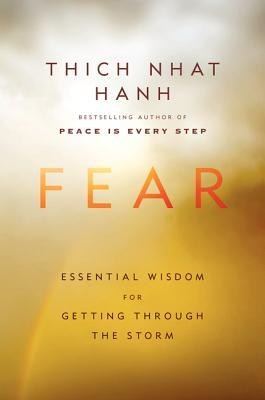
Fear: Essential Wisdom for Getting Through the Storm by Thich Nhat Hanh

Fear: Essential Wisdom for Getting Through the Storm by Thich Nhat Hanh

In Fear: Essential Wisdom for Getting Through the Storm, Thich Nhat Hanh simply and succinctly illuminates the Buddhist path beyond fear into an existence of freedom and joy.

“Nobody can give you fearlessness. Even if the Buddha were sitting right here next to you, he couldn’t give it to you. You have to practice and realize it yourself.” pg 6

Photo by Aleksandar Pasaric on Pexels.com

This book is more than theory, parables and anecdotal stories. Hanh also includes various meditations to assist in the effort.

“When the Buddha was very old, just before he died, he said, ‘My dear friends, my dear disciples, don’t take refuge in anything outside of you. In every one of us there is a very safe island we can go to. … That is a place where you can take refuge whenever you feel fearful, uncertain or confused.'” pg 71

He dissects the various forms fear can take in our lives- from fear of death, grief, anxiety about the future to reconciling with painful emotions from the past.

Photo by David Bartus on Pexels.com

My main takeaway from the book was, to deal with any kind of fear, we need only to approach it with mindfulness and compassion for ourselves and the suffering of others.

“We don’t try to grab on to the pleasant sensation, and we don’t try to push it away. We just acknowledge its existence. When a painful feeling comes, we do the same thing. … A feeling is just a feeling. And you are much more than that feeling.” pg 135

Hanh reminds readers that we are more than the temporary thoughts and feelings that cause so much havoc on their way through our minds and hearts. Our true nature is something else.

My favorite metaphor that Hanh employs to remind readers of this true nature is his comparison of a life to a wave.

“The wave is always water; it doesn’t ‘come from’ water, and it doesn’t go anywhere. It is always water; coming and going are just mental constructions. … Birth and death, coming and going, are just concepts. When we are in touch with our no-birth, no-death nature, we have no fear.” pg 50

Photo by Emiliano Arano on Pexels.com

I appreciated the reminders and found a lot of comfort in these pages. I hope other readers find the same.

Recommended for readers who are interested in learning and utilizing Buddhist philosophy and techniques to overcome any fear or other unpleasant emotion that may be in their lives.

Embrace Your Weird: Face Your Fears and Unleash Creativity by Felicia Day

Embrace Your Weird: Face Your Fears and Unleash Creativity by Felicia Day

Embrace Your Weird is a non-fiction and self help manifesto encouraging creativity and told in Felicia Day’s unmistakably humorous way.

I say “unmistakable” for any of her myriad fans who have watched her ground-breaking web series, “The Guild,” or read another of her books like You’re Never Weird on the Internet. Her tone and sense of humor remains the same.

Photo by Prateek Katyal on Pexels.com

And if you haven’t had the chance to enjoy any of Day’s other creations, I encourage you to give them a try. They’re light-hearted and fun.

“Aside from (over)sharing a lot of my opinions, I have filled this book with exercises designed to uncover the joy of creativity. To help people beat back the fear that keeps them from trying new things.” pg xi

On almost every other page, Day encourages readers to stop a moment and draw a picture, fill out a list, or write empowering messages over and over so that they’ll sink in. The act of reading this book is nearly a creative act in and of itself. (Sadly, I couldn’t do this because I was reading a library book. Suggestion for future readers: buy yourself a copy.)

“No, I don’t think creativity is a cure-all. But I do believe it could be a cure-most.” pg 29

Photo by Pixabay on Pexels.com

Besides reminding readers that we have unique voices and viewpoints that the world needs to hear, Day loosely structures the rest of the book off of life viewed as a game. She asks us to remember our “hero-self,” identify “enemies” and “allies” of our creativity, and to view the steps we take towards creation as “quests.”

Day also shares moments in her life when she’s completed or failed attempting various pieces of this philosophy in her own life.

“I constantly hand my heart over to strangers to batter however they wish, and I wonder why I’m constantly wounded all the time, and this makes me reluctant to create. Good way to operate? NOT REALLY!” pg 143

As I said, the whole book has a definite Felicia Day vibe. And it’s fun!

“Playfulness is the root of all creation. All invention. All discovery. There is no reason NOT to feel joyous when we make things.” pg 206

Photo by Sharon McCutcheon on Pexels.com

She wasn’t afraid to tackle all sorts of hang-ups people might have in their creative process. Day nailed my biggest issue: finishing projects once they’re started.

“But we will never get anywhere if we don’t focus on one thing at a time. And then see that thing through before moving on!” pg 239

Message received. Now to put it into action…

Recommended for anyone looking to start or jump start their creativity. This book is an excellent place to begin. Thanks for reading!

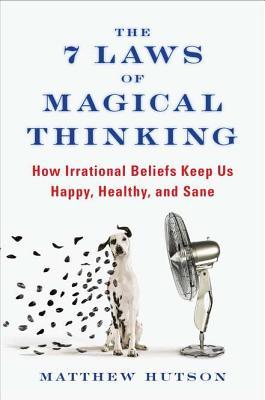
The 7 Laws of Magical Thinking: How Irrational Beliefs Keep Us Happy, Healthy, and Sane by Matthew Hutson

The 7 Laws of Magical Thinking: How Irrational Beliefs Keep Us Happy, Healthy, and Sane by Matthew Hutson

Matthew Hutson examines some of humankind’s irrational beliefs and shows, through stories and examples, how the beliefs are types of coping mechanisms and can be consciously utilized for a better life.

“These habits of the mind guide us through the world every day. In very basic ways they provide a sense of control, of purpose, of connection, and of meaning, and without them we couldn’t function.” pg 9

Photo by Pixabay on Pexels.com

The beliefs Hutson discusses are “objects carry essences”, “symbols have power”, “actions have distant consequences”, “the mind knows no bounds”, “the soul lives on”, “the world is alive” and “everything happens for a reason”.

I couldn’t possibly touch on every idea that engaged me in this book, but I do want to mention my favorite chapter. I was particularly drawn to “the mind knows no bounds”.

“If anything is magic, consciousness is.” pg 108

Everything Hutson discusses in this book originates in the mind: how we perceive events, people, death, the whole enchilada. I think it is in the interpretation of life and the meanings we assign to things that seem to be the key to magical thinking.

“Believing that our thoughts have the power to drive our own behavior as well as the behavior of the outside world – that they’re not just feeble shadows cast against the inside of our heads – provides a sense of agency and makes us go out there and become active participants in life.” pg 123

Photo by Roy Reyna on Pexels.com

That’s the sort of magical thinking I support – the interconnecting, empowering and mystical kind, that inserts meaning into the most trivial moments and illuminates your life, revealing a pattern of something greater. Then, spring boarding that knowledge into action, having another realization, and so on.

“While mystical states may not unite you with a universal intelligence, they can still tap you into your own potential for transformation. Which makes them mind-expanding after all.” pg 123

Though his writing can become dense at times, Hutson lightens things up with stories from his own life or his research. It feels like a non-fiction psychology book with a heaping dose of philosophy, religion, and memoir.

Photo by Renato Danyi on Pexels.com

“The idea is to face morality as frankly as you can without freaking out. To accept a manageable share of anxiety and to channel it toward building a heaven here on Earth.” pg 162

Here’s author Matthew Hutson dancing with fire!

Good luck with that, fellow readers. I’ll be cheering for you, which, if you read this book and understand the power of magical thinking, may have more impact than you ever imagined.

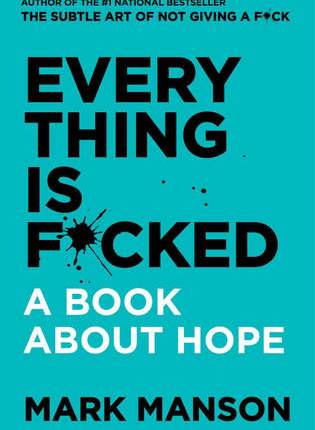
Everything is F*cked: A Book About Hope by Mark Manson

Everything is F*cked: A Book About Hope by Mark Manson

This creatively titled self-help book, Everything is F*cked, presents psychology, philosophy and the author’s view of reality.

In a series of essays, Mark Manson discusses a variety of topics including the differences between the “thinking brain” and “feeling brain.” He uses Isaac Newton’s laws to create a parallel universe’s version of emotional laws and completes a fairly scathing dissection of religion.

Throughout the various topics, he circles back to the idea of hope and how it can potentially create more problems than it solves.

Photo by meo on Pexels.com

Why did Manson write a book about hope?

“This book is my little source of hope. It gives me purpose; it gives me meaning. And the narrative that I’ve constructed around hope is that I believe this book might help some people, that it might make both my life and the world a little bit better.” pg 15

I did not read Manson’s other incredibly popular title, The Subtle Art of Not Giving a F*ck: A Counterintuitive Approach to Living a Good Life, so I went into this one not knowing what to expect. I found Manson to be particularly adept at breaking down complex topics into simple, easy-to-understand analogies.

For example, here’s his take on the psychological cause of a underlying feeling of unworthiness: “This feeling of unworthiness is usually the result of some bad sh*t happening to us at some point. We suffer through some terrible stuff, and our Feeling Brain decides that we deserved those bad experiences. Therefore, it sets out, despite the Thinking Brain’s better knowledge, to repeat and re-experience that suffering.” pg 46

Photo by Pixabay on Pexels.com

And here’s the analogy he crafts around his explanation of unworthiness: “Put another way, the problem isn’t that we don’t know how not to get punched in the face. The problem is that, at some point, likely a long time ago, we got punched in the face, and instead of punching back, we decided we deserved it.” pg 46

His writing is simple and succinct, which could be incredibly useful for readers who are looking for more information about the self help topics presented. I didn’t particularly care for Manson’s overall style, but that’s a personal preference rather than a commentary on the value of what he’s discussing.

“The stories of our future define our hopes. And our ability to step into those narratives and live them, to make them reality, is what gives our lives meaning.” pg 70

Photo by Engin Akyurt on Pexels.com

I think this author may be similar to Sarah Knight and her series of self help books about The Life-Changing Magic of Not Giving a F**k. Readers either love or hate those, I fell somewhere in between.

My favorite part of this was when Manson dived into some Buddhist philosophy in the chapter, “Pain is the Universal Constant.” He discusses the teaching of suffering being similar to a person struck by arrows. The first arrow brings physical pain and the second brings the emotional pain, which can be far worse and last longer than the physical pain because of the narratives we weave around it.

Through meditation, the second arrow, emotional pain, can be diminished or perhaps eliminated.

“That while pain is inevitable, suffering is always a choice. That there is always a separation between what we experience and how we interpret that experience. That there’s always a gap between what our Feeling Brain feels and what our Thinking Brain thinks. And in that gap, you can find the power to bear anything.” pg 186

Photo by Aleksandar Pasaric on Pexels.com

Recommended for readers who aren’t offended by strong language and have the ability to hold the book they’re reading in that gap in their minds — between the thoughts and the emotions, in the space of pure being.

I’ll meet you there. 🙂