Trance-Portation Learning to Navigate the Inner World by Diana L. Paxson

Trance-Portation Learning to Navigate the Inner World by Diana L. Paxson

“The goal of this book is to teach skills that underlie the spiritual practices of a variety of traditions, from the ceremonial to the shamanic. But acquiring the ‘gifts of the spirit’ cannot be an end in itself. They have to be used.” pgs xv-xvi

Author Diana Paxson pulls from a variety of spiritual traditions in an effort to teach readers the basics of going into trance.

The first few chapters are about how to prepare yourself, set up cues for trance work, and to do the exercises “safely” which include setting up wards and how to come back out of trance.
Photo by Plato Terentev on Pexels.com

“All of the senses can provide cues for psychic or magical work. By repetition, we condition ourselves to move into a particular state when we experience a specific stimulus.” pg 64

The next chapters delve into what practitioners may find once they’re in trance and how to navigate this other state of consciousness. This includes how one might find guides, how to behave, and how to deal with the various entities that may be encountered.

The final parts of the book tackle the difficult topic of spiritual emergencies and give some suggestions for group trance work.

Photo by Polina Tankilevitch on Pexels.com

Overall, this book covers a wide variety of topics that spiritual practitioners may need when they begin the practice of going into trance. In that way, it could be an invaluable addition to your library.

On the other hand, I didn’t agree with all of the advice given. It didn’t make sense with my experience of the trance work I’ve completed and I think it might scare beginners away.

The particular advice that I’m referring to is the idea that if you come out of trance too fast that you might leave parts of your soul behind, which you will then need to retrieve before you are able to feel like yourself again.

I understand, from the book, that soul retrieval is a common enough shamanic practice. Still, I feel like we are doing beginners a disservice to plant in their minds the idea that this is something that could happen.

Why not instead say it is best to come out of trance slowly and leave it at that? Anyone who falls asleep knows that it is more pleasant to wake up slowly than to be shaken to consciousness. Do we leave portions of ourselves behind when we’re jolted awake by an alarm clock? I say no.

Photo by Aphiwat chuangchoem on Pexels.com

In addition, when Paxson talks about the kinds of entities one may encounter in trance, including animal guides or even gods, she gives them all of the foibles that go along with being a part of the human race. In the section about developing a relationship with a god or goddess, she talks about how practitioners may have to deal with divine jealousy.

I think it might be better to say, you bring your entire self with you when you go into trance. Your strengths and failings are on full display in your interactions with what or who you find there. Again, this avoids planting any negative expectations for practitioners while still providing ample warning.

Recommended with reservations for spiritual seekers who are looking to add trance work to their repertoire.

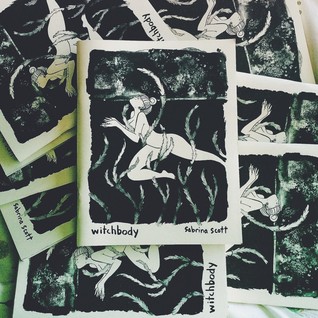
witchbody by Sabrina Scott

witchbody by Sabrina Scott

What is a “witchbody”?

Sabrina Scott defines this nebulous concept in graphic novel format.

Basically, to have a witchbody, the spiritual practitioner uses his or her senses and whole body to connect with everything in the world around her- be that a polluted parking lot or a clear mountain lake.

Scott touches on this idea that sometimes in our spiritual practices we only consider “pure” and “unpolluted” things as holy. They put forward the theory that, if we continue down this path, there may be nothing left to connect with as everything in existence mixes and mingles with everything else.

The spiritual is in the here and now, in the interaction of all things. I heartily agreed.

They wander through philosophy and other theories in the delivery of this message, which some readers may enjoy. I found myself wishing the text had a little more organization to it.

The art in this black and white graphic novel is beautiful. There is some non-graphic nudity- for librarians looking to categorize this book, I’d suggest in the adult graphic novel section.

As lovely as the art is, the lettering is close together and difficult to read in places. I think the author was going for the obviously hand drawn look, but I think they went one step too far. Otherwise, this book was enjoyable.

Highly recommended for spiritual seekers.

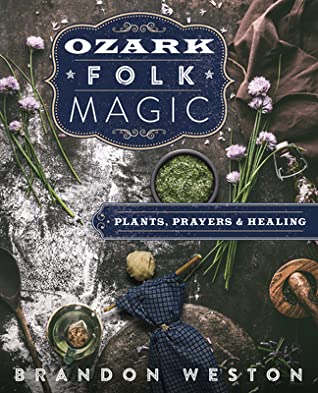
Ozark Folk Magic: Plants, Prayers & Healing by Brandon Weston

Ozark Folk Magic: Plants, Prayers & Healing by Brandon Weston

“There are many more folk beliefs unique to the Ozarks, some of which will be discussed in this work, but we also have to remember that much of what makes up this tradition can be traced to influencing factors from outside the region.” pg 16

Author and healer Brandon Weston takes readers through the varying histories and roles of Ozark folk magic. He discusses the different kinds of historical practices as well as following the evolution of Ozark traditions in the modern day.

Photo by Gaspar Zaldo on Pexels.com

“What worked was saved, treasured, and passed down through the generations. This process continues even today, and as a practitioner in the modern world, I’m constantly making these changes not only within my own work, but also for the culture as a whole.” pg 33

It is an illuminating look into a culture that remains fairly closed and secretive even today.

Brandon discusses the historical reasons for this secret keeping and doesn’t dismiss the darker portions of Ozark history such as racial tensions.

Also, he makes sure to talk about the dangers of overdosing on certain herbs or not seeking the help of western medicine when it is warranted. This book is fully of cautionary tales as well as educational ones.

Photo by lilartsy on Pexels.com

“There are many rituals that might be very interesting to look at but that aren’t worth using in a modern setting. Take, for instance, those rituals that involve the harming or killing of an animal, like the infamous black cat rite. I can’t stress enough that many traditions of the past need to be left in the past.” pg 247

My favorite part of this book was the chapter dealing with how different practitioners have reported receiving “the gift”. There were so many different ways and methods! It was fascinating to read Brandon’s take on all of it.

“Another unique road to power often found in the modern Ozarks comes in the form of receiving the gift through communion with nature. It might seem overly simplistic, but one of the beautiful aspects of Ozark healing is its simplicity.” pg 92

Highly recommended for anyone interested in the history and practices of Ozark folk magic.

Thanks for reading!

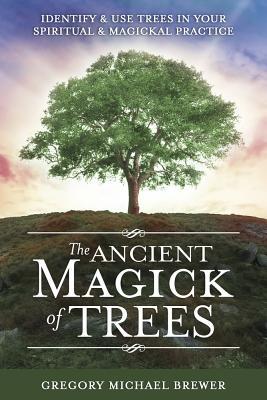
The Ancient Magick of Trees: Identify & Use Trees in Your Spiritual & Magickal Practice by Gregory Brewer

The Ancient Magick of Trees: Identify & Use Trees in Your Spiritual & Magickal Practice by Gregory Brewer

“Since the dawn of humanity, in all cultures and religions across the globe, trees have been revered not only as a life-sustaining source of food and medicine but also as a place where spirits dwelt, awaiting to reveal great mysteries to those who sought their wisdom, knowledge, and magick.” pg 2

Author Gregory Brewer examines the wonder and mystery that are trees from the pagan perspective in this book which is part informational, tree-related ritual/meditation suggestions, and reference.

Photo by Pixabay on Pexels.com

Understanding the symbolism of trees throughout countless cultures of human history is an enlightening study, but equally important is learning to form a personal connection with them in order to better comprehend the interaction of how the divine reveals itself to us through nature.” pg 243

The majority of the book is dedicated to descriptions and occult associations for different types of trees.

I read The Ancient Magick of Trees in order to learn more ways to invite nature into my life. The book has that but I found Forest Bathing: How Trees Can Help You Find Health and Happiness to be more immediately practical. I also connected more with the information in the forest bathing book.

Thanks for reading!

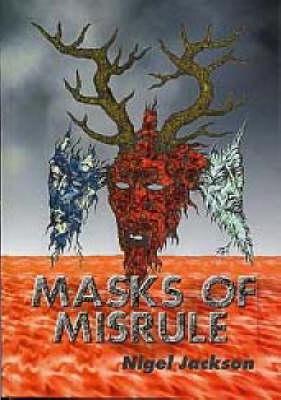
Masks of Misrule: The Horned God and His Cult in Europe by Nigel Jackson

Masks of Misrule: The Horned God and His Cult in Europe by Nigel Jackson

My mind has been going in circles as I’ve pondered, for days, how to review this book. It is a poorly organized and bewildering publication that could be tremendously important for pagans or religious scholars who are looking for information about The Horned God.

“The Knell of Inbetweenness hath been struck,
The Bell of MISRULE soundeth;
Reverberating the Thirteen Angles,
Echoing through the Nine Spheres”

Photo by Luca Paul on Pexels.com

It begins with a foreword by Michael Howard speaking of the scarcity of information about a male god within the existing neo-pagan revival movement. Then, the author, Nigel Jackson, goes into what could almost be called a tirade against established religions and the current neo-pagan movement in a chapter entitled, “In the Sign of the Horns.”

“The old time is passed away and the ‘age between the ages’ is begun: the Aionic Twilight falleth over the world and the day of the cross and the mitre is wholly done with.” pg 11

Honestly, that type of tribalism and fear-mongering is a poor look for any type of spiritual movement. Why immediately alienate readers from other spiritual paths who are coming to your materials with an open mind and a willingness to learn?

Photo by Vladyslav Dushenkovskyi on Pexels.com

Despite his initial hostility, Nigel Jackson quickly turns his attention to what he believes are different aspects of a male pagan god, throughout history, and includes various rituals to invoke this ancient being.

As I mentioned earlier, it is a bewildering hodge-podge of material with only the thinnest of connecting threads between. Newcomers to occult matters or pagan practices may lose their way within the quickly shifting time periods, places, names and associated mythologies.

However, I found information in “Chapter Three: Cycles of the Midnight Hunt” and “Chapter Seven: Wudewasa, the Knowledge of the Green Man” that was completely new to me and interesting.

“It was held that when nocturnal thunder broke over the wildwood and the forked lightning-flash clove the darkness and the night-tempest roared and tossed the boughs, that the wild host of Woodwoses came forth in primal panoply, raging through the hoary oaks and pines, their eldritch voices mingling with the storm’s tumult.” pg 107

Photo by Pixabay on Pexels.com

The printing of Masks of Misrule is a travesty for any lover of books. The font is irregular and fades, seemingly at random, within the text. The cover is ridiculous and does nothing to convey the seriousness with which the author treats his subject.

But if you set all of these concerns aside, some of the mythology contained within this book is entirely original, at least to me, and could be incredibly useful for seekers who are looking for a new movement within paganism that celebrates the male side of nature.

Thanks for reading!

Drawing Down the Moon: Witches, Druids, Goddess-Worshippers, and Other Pagans in America by Margot Adler

Drawing Down the Moon: Witches, Druids, Goddess-Worshippers, and Other Pagans in America by Margot Adler

Margot Adler talks to adherents in different traditions all across the United States, and a few in Europe, in order to banish some of the mystery and misconceptions surrounding neo-pagan groups.

“Since Pagans are a very diverse group, it is wrong to say all Pagans believe this or that, but here are some beliefs that many people in this book share: The world is holy. Nature is holy. The body is holy. Sexuality is holy. The imagination is holy. Divinity is immanent in nature; it is within you as well as without. Most spiritual paths ultimately lead people to the understanding of their own connection to the divine.” pg 11, ebook.

Photo by Gianluca Grisenti on Pexels.com

I didn’t know much of anything about pagan religions before I read this book, mainly because I am from a particularly conservative part of the country and there are very few groups of this type around. It’s hard to get to know people if there aren’t any to talk to.

In some circles, just the word “pagan” inspires fear because it’s not clear what this means or people might be threatened by how someone’s beliefs might be different from their own.

“Neo-Pagans look at religion differently; they often point out that the root of the word means “to relink” and “to connect,” and therefore refers to any philosophy that makes deep connections between human beings and the universe.” pg 24

Adler examines an extraordinary number of pagan groups, an almost bewildering amount. I liked that this book introduced me to so many different paths and ideologies, but at the same time, it began to get somewhat repetitive as she broke down all of the different groups.

Photo by Gheorghita Claudiu on Pexels.com

But as the friend who had recommended this book reminded me, Drawing Down the Moon was created in the years before the existence of the internet. It was intended not just to explain what these groups were, but also operated as a catalog of sorts, for readers who were looking for the right path for themselves.

Recommended for spiritual seekers who are looking for a tradition that fits or for anyone who is curious about the stunning variety of spiritual beliefs there are out there. I learned so much.

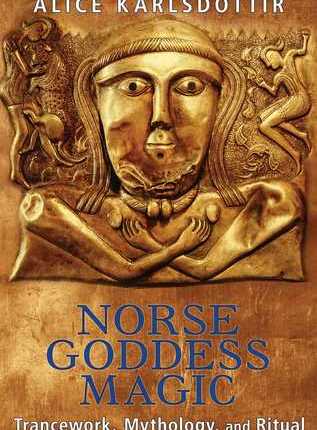
Norse Goddess Magic: Trancework, Mythology, and Ritual by Alice Karlsdóttir

Norse Goddess Magic: Trancework, Mythology, and Ritual by Alice Karlsdóttir

This is a new age, non-fiction book about trance work, which can loosely be described as deep meditation. I practice a type of meditation called “pathwalking” which is basically just another word for the same kind of practice. This book is about someone who focuses on the Norse religion exclusively.

I read Norse Goddess Magic not for the details about the Norse pantheon (which admittedly I know very little about, so it was very interesting and educational) but mainly for the author’s experience in trance work. To my disappointment, she spends pages and pages explaining what going into trance is, how she does it, and then only a few paragraphs in each chapter detailing an actual trance.

Photo by Lucian Potlog on Pexels.com

I wanted the book to be mainly trance work. That is what made it unique and original- her personal sojourns into “another world” and what she brought back. The rehashing of all of the old mythologies were, as I said, interesting, but if I wanted to read them, I could have picked up any book about Norse mythology.

I also felt like Alice spent a lot of time explaining why trance work is a valid method of information gathering and defending her opinion on why she believes that. I agreed with her completely so I just read through the pages thinking- preaching to choir, get to the trances! So, that was a frustration.

A part of the book that I disagreed with was Alice’s assertion that it is “difficult” to go into trance. In my experience, if you believe something is difficult to do be that hypnosis, meditation, whatever- you’re putting stumbling blocks on your path that don’t need to be there. Going into trance is as simple as watching your breath flow in and out. If you breathe, you can go into trance. I felt like she did a disservice to beginners with that particular teaching.

Photo by Daisa TJ on Pexels.com

I felt like Alice’s trances were so closely focused on one goddess or aspect of the goddess, that she didn’t really get all that she could out of her trance work or interactions in the other worlds. She read all of this information to prime her subconscious mind and then… it felt like not much happened.

To be fair, she did see the person she was looking for, describe their physical characteristics, express the emotion that they evoked in her, and then, maybe, have a brief interlude with them. In my personal trance work, there’s more interaction in the world itself but that could be the difference of our focus.

Alice said from the start that she wanted to know more about these different goddesses and form a working relationship with them whereas I’m just curious to see what’s out there. I’ve run into Roman gods and goddesses, Native American figures, Tibetian locations, some Egyptian and Hindu gods… but again, I’m not focused on one or another of the world religions. With an open mind, it’s incredible the types of things that you see.

Photo by carol wd on Pexels.com

So, I don’t believe in priming your mind with symbols before you do your work. Pick where you’re going or who you want to see, and just go. Personally, I use the symbols on the Tree of Life or tarot cards. Believe that you can do it. Figure out what works for you. And do it.

Then write it down so that I can read it. 🙂 Because I will.

Thanks for reading!

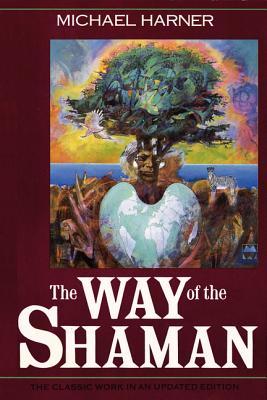
The Way of the Shaman by Michael Harner

The Way of the Shaman by Michael Harner

The Way of the Shaman says the practice of shamanism isn’t a cultural thing- it’s a “human” thing.

Michael Harner gives a brief biography of his own beginner experiences, then a very short history of shamanism, what it is, and how the experiences during the shamanic vision walks compare to ordinary reality.

He goes on to give a few practices for beginners to experience those states of consciousness for themselves as well as methods for contacting your “power animal” and some basic healing techniques.

I valued this book most for its discussions of shamanistic consciousness rather than the practices, but I could see both being of value for the proper audience.

Photo by Abet Llacer on Pexels.com

On shamanism across cultural boundaries: Shamanism represents the most widespread and ancient methodological system of mind-body healing known to humanity. Archaeological and ethnological evidence suggests that shamanic methods are at least twenty or thirty thousand years old… One of the remarkable things about shamanic assumptions and methods is that they are very similar in widely separated and remote parts of the planet, including such regions as aboriginal Australia, native North and South American, Siberia and central Asia, eastern and northernmost Europe, and southern Africa.”pg 40-41

One of Harner’s reasons for writing this book is to encourage everyone to deeper self knowledge: “…truly significant shamanic knowledge is experienced, and cannot be obtained from me or any other shaman. Shamanism is, after all, basically a strategy for personal learning and acting on that learning.” pg xxiv of introduction.

The world could use more self knowledge.

Photo by Mikhail Nilov on Pexels.com

How Harner has experienced the ineffable nature of shamanic consciousness: “His experiences are like dreams, but waking ones that feel real and in which he can control his actions and direct his adventures. While in the shaman state of consciousness, he is often amazed by the reality of that which is presented.” pgs 21-22

I find it interesting how various religious practices and occult teachings mix, blend, and borrow from each other. Or perhaps, at their base, they’re all just the same thing- various ways of experiencing the non-ordinary consciousness from which all humanity springs.

I read a book by practicing shaman, James Endredy, called The Flying Witches of Veracruz back in December of 2014 and it seemed to be a total pipe dream. It was filled with amazing creatures and impossible actions, like flying, shape shifting, and jumping higher than humanly possible.

Photo by Rakicevic Nenad on Pexels.com

James talked about the magical in the same breath that he talked about what he ate for breakfast.

Harner explains in this book why it reads like that: “The emphasis I make here on drawing a distinction between the experiences one has in (ordinary consciousness) and the (shaman consciousness)…is not a distinction that is usually noted in the conversations of shamans among themselves or even with Westerners. Thus, if you were to listen to a Jivaro shaman talk, you might hear in his everyday conversation accounts of experiences and deeds which could seem to you, as a Westerner, to be patently absurd or impossible…” pg 47-48.

That whole book makes so much more sense to me now.

In the afterword, Harner closes with thoughts about why shamanism works: “Albert Schweitzer reportedly once observed, “The witch doctor succeeds for the same reason all of the rest of us (doctors) succeed. Each patient carries his own doctor inside him. They come to us not knowing this truth. We are at our best when we give the doctor who resides within each patient a chance to go to work.”

Be a healer by reminding people that they have the power to heal themselves.

If you’re looking for more books like The Way of the Shaman, try The Flying Witches of Veracruz: A Shaman’s True Story of Indigenous Witchcraft, Devil’s Weed, and Trance Healing in Aztec Brujeria by James Endredy or Active Dreaming: Journeying Beyond Self-Limitation to a Life of Wild Freedom by Robert Moss.

Thanks for reading!