Trance-Portation Learning to Navigate the Inner World by Diana L. Paxson

Trance-Portation Learning to Navigate the Inner World by Diana L. Paxson

“The goal of this book is to teach skills that underlie the spiritual practices of a variety of traditions, from the ceremonial to the shamanic. But acquiring the ‘gifts of the spirit’ cannot be an end in itself. They have to be used.” pgs xv-xvi

Author Diana Paxson pulls from a variety of spiritual traditions in an effort to teach readers the basics of going into trance.

The first few chapters are about how to prepare yourself, set up cues for trance work, and to do the exercises “safely” which include setting up wards and how to come back out of trance.
Photo by Plato Terentev on Pexels.com

“All of the senses can provide cues for psychic or magical work. By repetition, we condition ourselves to move into a particular state when we experience a specific stimulus.” pg 64

The next chapters delve into what practitioners may find once they’re in trance and how to navigate this other state of consciousness. This includes how one might find guides, how to behave, and how to deal with the various entities that may be encountered.

The final parts of the book tackle the difficult topic of spiritual emergencies and give some suggestions for group trance work.

Photo by Polina Tankilevitch on Pexels.com

Overall, this book covers a wide variety of topics that spiritual practitioners may need when they begin the practice of going into trance. In that way, it could be an invaluable addition to your library.

On the other hand, I didn’t agree with all of the advice given. It didn’t make sense with my experience of the trance work I’ve completed and I think it might scare beginners away.

The particular advice that I’m referring to is the idea that if you come out of trance too fast that you might leave parts of your soul behind, which you will then need to retrieve before you are able to feel like yourself again.

I understand, from the book, that soul retrieval is a common enough shamanic practice. Still, I feel like we are doing beginners a disservice to plant in their minds the idea that this is something that could happen.

Why not instead say it is best to come out of trance slowly and leave it at that? Anyone who falls asleep knows that it is more pleasant to wake up slowly than to be shaken to consciousness. Do we leave portions of ourselves behind when we’re jolted awake by an alarm clock? I say no.

Photo by Aphiwat chuangchoem on Pexels.com

In addition, when Paxson talks about the kinds of entities one may encounter in trance, including animal guides or even gods, she gives them all of the foibles that go along with being a part of the human race. In the section about developing a relationship with a god or goddess, she talks about how practitioners may have to deal with divine jealousy.

I think it might be better to say, you bring your entire self with you when you go into trance. Your strengths and failings are on full display in your interactions with what or who you find there. Again, this avoids planting any negative expectations for practitioners while still providing ample warning.

Recommended with reservations for spiritual seekers who are looking to add trance work to their repertoire.

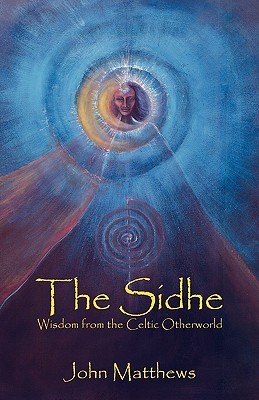
The Sidhe: Wisdom from the Celtic Otherworldby John Matthews

The Sidhe: Wisdom from the Celtic Otherworldby John Matthews

“I knew then that something was going to happen in Ireland. I had no idea then just what an enormous and irrevocable change it was going to make to my life.” pg 5, ebook

John Matthews received a call from a friend whose occupation is archaeology. The friend showed John into a barrow where he first saw the glyph that is on the cover of this book.

John claims that through meditation upon the glyph, he communicated with other beings whom he believes are ‘the Sidhe.’

“To truly know a thing is to become one with it. Just as to become one with it is to truly know it.” pg 27, ebook

Photo by cottonbro on Pexels.com

He shares the communications that he had through the glyph throughout the text. At the end, he includes six exercises that the beings gave him and encourages readers to try the practices for themselves.

Readers could potentially experience the connection John felt.

“Drawn by this feeling, I lay down beneath the branches of the old oak, and, as I had done countless times before, stared up through the branches at the patches of blue sky that showed through. As I did so a sense of stillness and peace descended upon me.” pg 36, ebook

Photo by Magda Ehlers on Pexels.com

The Sidhe: Wisdom from the Celtic Otherworld reminded me of the multiple works of Abraham Hicks or Seth Speaks: The Eternal Validity of the Soul. There’s probably a reason for that.

It could be that the channelers are tapping into a similar place. In this book, John calls it the “great net” of creation. I’ve heard it called, “Indra’s net,” among other names in other sources.

Whatever it may be, I find it interesting that the communications received are similar enough to draw comparisons.

“Among the greatest gifts we have observed in your race is the desire to know and to explore. This hunger has propelled you far along the path of the day and the path of the night. Hence, your journey is indeed one of exploration, not only in time and space, but in the dimensions of Spirit.”

Photo by Stefan Stefancik on Pexels.com

Of course, I had to try John’s method for myself. I’m always so curious about these kind of things.

Unfortunately, I fell asleep rather than having a memorable experience. I expect the fault was on my side, but perhaps I experienced something in my sleep- I just failed to remember it.

I do plan to give the meditation a try again in the future, when I’m not so sleepy.

I was fascinated with the way the glyph looks like a treble clef with multiple circles. When John began to describe the Sidhe’s connection to music, I felt that comparison made sense.

“Much of our time is spent in the making of music- though for us it is more serious than a pleasant pastime, since it is part of our creative process in more than an abstract fashion.” pg 69

Playing music is one of the few activities that put me into a flow state. Perhaps I should try meditating that way.

Anyway, I recommend this book for the curious or spiritual seekers. If you try the exercises within, please do share your results. Maybe some day, the world will have more answers than questions about these ineffable things.

Or, maybe, we’ll open yet another door for endless discoveries. Either way, I’ll be interested to see what comes next.

Thanks for reading!

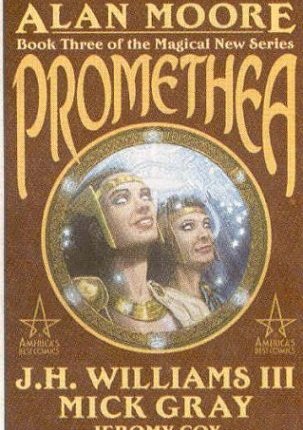
Promethea, Vol. 3 by Alan Moore

Promethea, Vol. 3 by Alan Moore

The saga of Promethea continues in Volume Three of the five book series.

Promethea, the version embodied by Sophie Bangs, has embarked on an adventure through the myriad worlds of the Tree of Life. She seeks another of the avatars of Promethea who recently died. Together, they hope to find the deceased woman’s husband and learn about the occult on the way.

Photo by Stacey Gabrielle Koenitz Rozells on Pexels.com

Meanwhile, back in the real world, Sophie has left someone unexpected in charge of keeping the baddies at bay while she’s away. Is Stace up to the task?

The artwork of the series continues to impress with its beauty and ingenuity. I especially enjoyed the mobius strip path of the world of Hod.

Alan Moore’s writing is at its best when he’s waxing on about the complexity of the universe and delivering punchy one-liners ending those conversations.

Photo by Pixabay on Pexels.com

However, he takes the characters through so many different places so quickly that the adventures themselves end up feeling rather stilted. I think I may have enjoyed this entry more if he had spent a little more time exploring the worlds rather than simply explaining them.

I get that Promethea has places to be. But she could have savored the journey along the way.

Recommended for graphic novel readers who enjoy a mix of fantasy and occult in their stories. Thanks for reading!

Here are links to the other two reviews I’ve written for this series:

Book One

Book Two

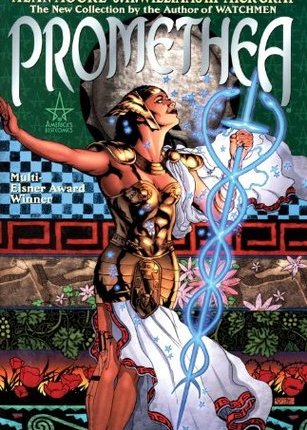
Promethea, Vol. 1 by Alan Moore

Promethea, Vol. 1 by Alan Moore

Promethea is a brilliant fantasy graphic novel by the legendary Alan Moore. It follows a woman who is researching a story for her thesis, only to discover that the story actually lives in the imagination and can explode into the real world in surprising and mystical ways.

“Tell me, child, what is your name?” “Promethea.”

Photo by Hert Niks on Pexels.com

It is a clever, gender-bent retelling of Prometheus. But, it presents the exploration and knowledge of the mystical worlds of the qabalah as Prometheus’ gift to the world, instead of the usual literal interpretation of the gift of fire to light the night.

It seems to be Promethea’s destiny to bring fire and knowledge back to the imagination of humanity in order to change the world forever for the better.

“I am Promethea, the rumored one, the mythic bough that reason strains to bend. I am that voice left, once the book is done… I am the dream that waking does not end.”

Photo by Suvan Chowdhury on Pexels.com

To free her conditioned mind from the limitations of this reality, the woman, now bearing the incarnation of Promethea, needs to learn from her previous incarnations. If she doesn’t quickly grasp the secrets of the four sacred weapons, the cup, sword, pentacle and wand, Promethea’s ancient enemies will rip her to pieces.

“Humans are amphibious, Sophie. That means they live in two worlds at once: matter and mind. Yet many people only notice the solid world they have been conditioned to think of as more real while all about them diamond glaciers creak and star-volcanoes thunder.”

This graphic novel is pretty far out there. I really liked the mythic and occult themes, and strong female characters.

Photo by Erik Mclean on Pexels.com

There’s some near nudity, but nothing too ridiculous. One of the incarnations of Promethea was brought into being by an author who used words and his imagination to shape his mistress into something more. Because of this sexual-themed awakening, she only wears a sheet, but it covers all the wobbly bits. Barely.

Highly recommended for adult readers who like fantasy graphic novels. There are few authors who write such themes better than Alan Moore.

Thanks for reading!

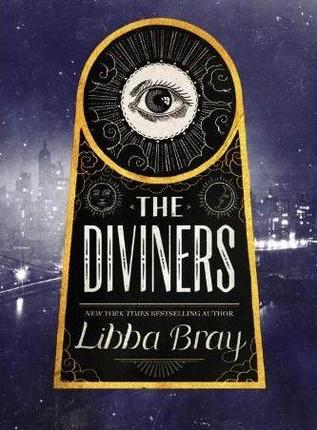
The Diviners (The Diviners, #1) by Libba Bray

The Diviners (The Diviners, #1) by Libba Bray

The Diviners is a surprisingly complex young adult novel about a returned evil, supernatural powers, secrets and mystery. It is set during the Prohibition Era in New York.

“A faint glow emanates from that dark, foul-smelling earthen tomb. Yes, something moves again in the shadows. A harbinger of much greater evil to come.” pg 10, ebook.

Photo by cottonbro on Pexels.com

Evie, the heroine of our tale, has the ability to read people, emotions and past events from objects. She is a diviner, a snappy dresser and one of the most delightful characters I’ve read about this year. And how!

After an unfortunate reading of an object from one of the most powerful families in her hometown, Evie is sent to be with her uncle Will in New York. He runs a museum of the occult and supernatural. Jericho, his ward, lives in the museum with Evie’s uncle. Jericho has a, you guessed it, secret past.

“Last but not least, here is the place where we spend most of our time: the library.” Jericho opened a set of mahogany pocket doors, and Evie let out a whistle. She’d never seen such a room. It was as if it had been transported here from some spooky fairy-tale castle.” pg 34, ebook.

Photo by Suzy Hazelwood on Pexels.com

Evie’s best friend, Mabel, has a major crush on Jericho. Evie attempts to play matchmaker, help her uncle’s museum succeed and help solve the occult-related murders that are occurring all over New York City.

Meanwhile, Memphis is a numbers runner for the top man in Harlem. He has a secret past as well and a nightmare that haunts him each night.

Theta, a showgirl for the Ziegfeld follies, is running away from her dark past and towards the bright lights of New York. Her roommate has, gasp, secrets too.

Photo by Bob Ward on Pexels.com

As the characters’ lives begin to intertwine, they race to stop a killer and, potentially, the end of the world.

Highly recommended for fans of young adult fantasy. The Diviners is a magical trip through the past and a world where ghosts and supernatural powers are real.

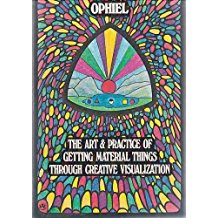
Art and Practice of Getting Material Things Through Creative Visualization by Ophiel

Art and Practice of Getting Material Things Through Creative Visualization by Ophiel

Originally published in 1967, the Art and Practice of Getting Material Things Through Creative Visualization arrived nearly three decades before The Secret.

With more of an occult than a New Age twist, the one-name author, Ophiel, talks readers through what is essentially the Law of Attraction, but he never calls it that.

Photo by Egor Kamelev on Pexels.com

Ophiel tends to write portions of the book that he thinks are most important in all caps. LIKE THIS. It can be annoying.

Another interesting quirk, Ophiel talks about him/herself in the third person, at all times.

In this passage, he’s talking about why he wrote this book, and you get to see the author’s style in action: “Ophiel’s defect consists of not being about to accept self-styled prophets’ sayings, and teachings, without raising the following awkward question- and making the following embarrassing test. The question is IS WHAT THEY SAY TRUE? and the test is DOES WHAT THEY SAY WORK, AND PRODUCE RESULTS? And if what they SAY DOES NOT WORK THEN IT IS NOT TRUE, and into the garbage can with it!!” pg iii

Ophiel claims that creative visualization techniques don’t always work for a variety of reasons. He gives the reader exercises and suggestions for improving their results.

“In Creative Visualization work all the planes involved in our cosmic existence are used, the Etheric, the Lower Astral, The Higher Astral, the Mental Plane, and the Causal Plane, AND ALL THESE PLANES HAVE DEFINITE RULES AND LAWS FROM WHICH THEY WILL NOT DEVIATE ONE IOTA.” pg 5.

Again, with the capitalization.

Photo by stein egil liland on Pexels.com

He also has interesting ideas about reasons why beginners fail out of the gate.

He cites something called “the sphere of availability”: “The new student then proceeds to visualize for LARGE THINGS. BIG THINGS. VALUABLE THINGS. Things that are far beyond his ability- not to visualize-imagine-desire, BUT FAR BEYOND HIS PRESENT ABILITY TO DEMONSTRATE-VISUALIZE.” pg 31.

Ophiel uses different words, but essentially he says, start small, celebrate the small victories and increase your “sphere of availability” in that manner. He also gives practices to improve your visualization skills.

Honestly, if asked to recommend a teacher for creative visualization, I’d say skip Ophiel and read Abraham Hicks. They’re a lot more fun.

Thanks for reading!

Video guest post: The Beast of Gévaudan by The History Guy

Here’s another entry in the collaboration between the Help Desk and, my friend, The History Guy.

He has a degree in history. He likes history. And if you like history too, this is the video for you!

It killed over 100 people. What was it? Enjoy the curious history of The Beast of Gévaudan.

As always, thanks for reading.