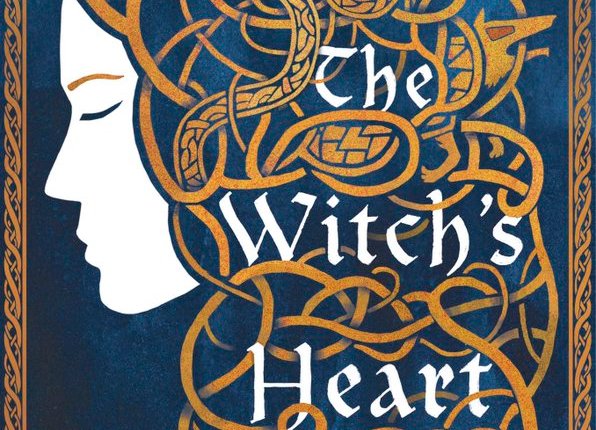
The Witch’s Heart by Genevieve Gornichec

The Witch’s Heart by Genevieve Gornichec

“The third time she was reborn, Gullveig fled, though she left something behind: her speared heart, still smoking on the pyre.” pg 4

Angrboda, the Norse witch formerly known as ‘Gullveig’, is hiding from the Aesir when the trickster god Loki finds her. And changes her life (or in her case: lives) forever.

“Although her memories as Gullveig were vague enough, she recalled feeling like she didn’t belong – and the moment they’d turned on her, burned her, she’d felt a lot of things. But the emotion she could recall most distinctly was not fear or anger, but the feeling of being used.” pg 43

Photo by Jeremy Bishop on Pexels.com

The gods kill Angrboda because of her refusal to share the secret of her scrying power, called ‘seid’. She will not look into the future and give Odin the mysteries that reside at the end of all things.

Odin does not take no for an answer.

Genevieve Gornichec reimagines the shadowy character of Angrboda in this Norse myth-filled retelling. Maybe it’s because I’m a classics major and gravitate towards mythology, but it seems to me that it has become somewhat popular to do so – think The Song of Achilles or Circe.
Photo by Bakr Magrabi on Pexels.com

In this case, I feel like Gornichec didn’t go far enough in her imagining. She gave Angrboda a voice, a rare talent, and a fierce love for her children, but, beyond that, the witch remains a fairly passive character.

Part of this could be due to the fact that the Aesir are such powerhouses in the old myths. They hog the spotlight and the action. But still, I believe there’s enough room around the stories to give a figure whose mythology has been largely forgotten a new legacy.

I think the biggest missed opportunity for this is in Angrboda’s relationship with Loki.

“She would do anything for him, she realized then… And for some reason, this scared her, as if the thought itself were a promise she knew that she couldn’t hope to keep.” pg 74

Photo by Liza Summer on Pexels.com

Like the other major players in the mythology, readers will be familiar with many of Loki’s hijinks. He is constantly in action, tricking people or becoming the victim of his own cleverness. What readers have never really gotten to see is his interior world. What is he thinking when he pulls his legendary stunts? What are his secret motivations?

One would think this is something he might share with a lover. But the storytelling never quite got there and I found The Witch’s Heart to be rather a disappointment in that way.

That being said, if you’re a reader who enjoys mythological retellings, there is still much to enjoy in this story. It is well-written if fairly limited in scope.

Thanks for reading!

The Testament of Loki (Loki, #2) by Joanne M. Harris

The Testament of Loki (Loki, #2) by Joanne M. Harris

“Once more the Wolf at Hel’s gate greets Asgard’s heroes, one by one. Battle rages, Worlds collide. Stars fall. Once more, Death has won.” pg 5

Ragnarok has come and gone. It didn’t end well for any of the gods, goddesses or, everyone’s favorite Chaos demon, Loki. He begins this story in the same place we left him in the last one — a dungeon in the world of Chaos, wishing and dreaming for light.

Photo by Athena on Pexels.com

What happens next is surprising and told in only the way that Joanne Harris can do it.

“Stories can do so many things. Build empires, topple kings. They can even raise the dead. I should know; they raised me.” pg 10

This wholly unique tale is more along the lines of what I had expected from The Gospel of Loki, but didn’t get. In the previous book, Harris rewrites Norse mythology in much the same way as it has always been told. I get it, she was giving us context. But, it wasn’t very much fun to read… just rehashing old stories.

In this entry, we see Loki in a whole new light with modern characters and his typical problems. It makes for a more cohesive and, in my opinion, entertaining story.

“You know, ‘crazy’ is such a negative word. I prefer ‘disordered.’ Order’s so dull. Chaos is where the party is.” pg 25

Photo by Anni Roenkae on Pexels.com

What has an immortal trickster god learned over his long lifetime? In The Gospel of Loki, he learned the only person he could trust in the world is himself. He learned what it was to be hated for what you were, rather than any actions that one may take. (Though, perhaps, he didn’t always behave in a way to endear himself to others. Not that Loki would ever admit that, of course.)

He learned that prophecies are tricky things and can be bent to be of use to those who deliver them.

“The Prophecy promised us new runes, new gods, a new beginning. And I mean to find those new runes with whatever resources this World can provide.” pg 68

Is it too late for Loki to learn new tricks?

It’s been awhile since I read Harris’ other fantasy series Runemarks, but from what little I can remember of it, I think this book leads perfectly into that one. Which is a curious thing, because Runemarks was published years before this.

Oh, that Joanne Harris. She’s so sneaky. I wonder if she planned that or was embracing a bit of chaos in her writing career. If there’s anything I’ve learned from this book and the last one, it’s that a little chaos can be a good thing.

Thanks for reading!

The Gospel of Loki (Loki #1) by Joanne M. Harris

The Gospel of Loki (Loki #1) by Joanne M. Harris

Joanne M. Harris treats readers to episodes from Norse mythology from Loki’s point of view.

“No doubt about it, I told myself. These bastards really don’t like me.” pg 27

Born from literal Chaos and tricked into joining Odin’s forces of Order, Loki is perpetually a child of both worlds. From his first moments out of the world of Chaos, Loki is disliked by the other gods. That leads to some initial unpleasantness and he vows, no matter how long it takes, to get his revenge.

Photo by Gioele Fazzeri on Pexels.com

“Till then, I bided my time, and smiled as sweetly as my scarred lips would allow, until the day I would take my revenge and bring the gods down, one by one.” pg 67

And it is a long game. Through schemes, tricks and straight up cons, Loki weaves disorder throughout the worlds.

There’s the memorable time he convinces Thor to dress up as a bride in order to sneak into the home of their enemies: “I’ll be your handmaid, Thor,” I said. “Don’t worry, I won’t steal your thunder. You’ll make a gorgeous bride.” Thor growled. pg 118

As he becomes famous for his trickery, it becomes more difficult for Loki to pull off his tricks. He’s pushed into marriage by Odin, but it doesn’t fit who he is. It isn’t in his nature to settle.

“I began to see that celebrity wasn’t all hot girls and free beer. It’s also the curse of expectation — and the bitterness of falling short.”pg 141

Photo by Little Visuals on Pexels.com

We all know where the story is headed, but it’s a train wreck you can’t quite look away from.

My quibbles with this book included a disjointed feel to the overall story. Loki and company run from one disaster to the next. I realize that the source material is probably the reason for this, but it just doesn’t coalesce into something more than its parts.

Odin’s gods, the gods of Order, come off as rather one note. It’s interesting how Odin was able to see potential in Loki, enough so that he calls him from Chaos to begin with, but the other immortals share none of his vision.

Other than a few notable exceptions, they never extend an olive branch or give Loki the smallest chance to prove himself. In my mind, it’s easy to see why he wants them to fall. Who wouldn’t wish that on the people who are mistreating you?

Photo by Nick Bondarev on Pexels.com

I’ve read a few of Joanne Harris’ other books, and I remember they contained delightful twists in them, so that the plot wasn’t so straight forward. She’s somehow stuck in telling conventional mythology in this book.

If only she could have used this book to tell aspects of the story we haven’t heard before, or even imagined, using the voice of one of the most interesting of the gods to do so. That would have been something I may have enjoyed even more.

Recommended for readers who adore Loki. There’s plenty of him in here, and that’s it.

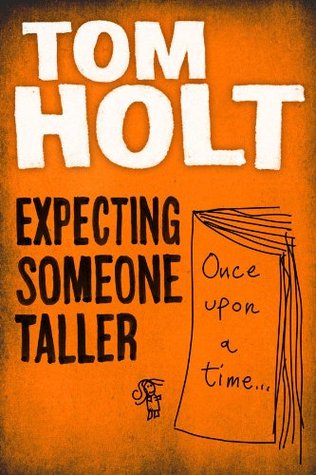
Expecting Someone Taller by Tom Holt

Expecting Someone Taller by Tom Holt

expecting someone tallerExpecting Someone Taller by Tom Holt is a humorous fantasy novel based off of the Ring Cycle of Norse mythology.  It’s older (published in 1990) but I like reading pulp fantasy fiction, no matter its age.

Full disclosure: I know The Lord of the Rings better than the Norse mythological stories it is based on. Holt provides a very short synopsis of the myths for folks like me and I was grateful for it. Otherwise, I would have not understood what on earth was going on.

Holt is an English fantasy-humorist and, like Pratchett’s many offerings, I enjoy his books but never have laugh out loud moments. I don’t know if the humor is lost-in-translation or what.

I expect that those who are more familiar with the Norse myths and who enjoy subtle humor might really love this rather silly tale of Malcolm and the ring.

There were some memorable lines: “Ingolf eased the plain gold ring off his finger and passed it to Malcolm, who accepted it rather as one might accept some delicacy made from the unspeakable parts of a rare amphibian at an embassy function.” pg 7 Nice.

“The next morning, Malcolm thought long and hard before waking up, for he had come to recognise over the past quarter of a century that rather less can go wrong if you are asleep.” pg 15 Absolutely true in my experience too.

Malcolm figuring out how the Tarnhelm (a hat that can change the wearer into anything) works: “Make me,” he said aloud, “as handsome as it is possible to be.”… He stood for awhile and stared… “We’ll call that one Richard” (he had always wanted to be called Richard). He resumed his own shape (which came as a bitter disappointment) then said “Richard,” firmly. At once, the Most Handsome Man reappeared in the mirror, which proved that the Tarnhelm had a memory, like a pocket calculator.” pg 20-21

The difference between smiles: “The girl looked at him and smiled. Malcolm had come to believe that he was fairly well equipped to deal with smiles, but this was a new sort; not a happy, optimistic smile but a sad, wistful smile. It didn’t say, “Wouldn’t it be nice if…” like the stock delivery of a Rhinemaiden, but, “It would have been nice if…” which is quite different.” pg 117

Why humans are the worst pick for ring bearing: “And so you give this irregularity in your minds a name of its own. You call it Love, which is meant to make everything all right. Rather than try to sort it out or find a vaccine, you go out of your way to glorify it. I mentioned your art and your poetry just now. What are your favourite themes? Love and War.”…”Now be fair,” he continued, “can you honestly say that a member of a species with this ancestral fallibility should be allowed to rule the universe?” pg 160 Fair question.

If you enjoyed Expecting Someone Taller, you may want to pick up The Good Fairies of New York by Martin Millar (a modern day fantasy with fairies) or Anansi Boys by Neal Gaiman (a fantasy about gods and their descendants).

Thanks for reading!