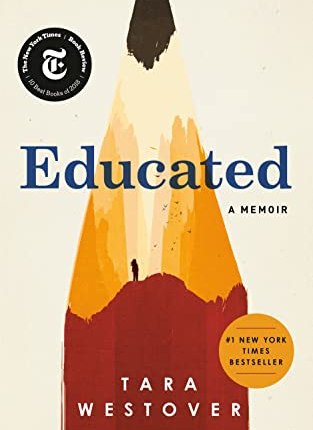
Educated by Tara Westover

Educated by Tara Westover

Educated is a gripping memoir by Tara Westover about her unconventional upbringing in remote Idaho, how she left that life, and discovered both physical and emotional freedom through a world class education.

“(My father) never told me what to do if I left the mountain, if I crossed oceans and continents and found myself in strange terrain, where I could no longer search the horizon… He never told me how I’d know when it was time to come home.”

Photo by Bri Schneiter on Pexels.com

This not a simplistic life story and Tara takes the time to look at what happened as truthfully and clearly as she can. This has led her to some difficult conclusions.

For example, Tara’s father embraced a survivalist lifestyle not only because of his religious convictions, but also because of a deep-seated paranoia. It wasn’t until Tara attended a college level psychology class that she realized her father’s particular way of thinking could be indicative of a mental disorder.

In addition to his erratic and paranoid behavior, the conservative nature of her father’s view on the roles for women has had a long-lasting impact on Tara. It led her to minimize physical abuse that took place in her childhood home as well as struggle to find her own place in the world. And, until a life-changing accident affects her father’s health permanently, Tara never saw her mother as an equal in her parents’ relationship, which, in turn, seriously affected how she viewed herself in relationship to the people around her.

Photo by Rachel Claire on Pexels.com

All of the various events and family members Tara describes have far reaching consequences for her eventual life away from her family’s mountain home. Her journey from the past to the future was extraordinary and makes for a great read.

I had heard a lot of bookish chatter about Educated over the last two years and was skeptical about how good it might actually be. Those fears were ill founded- I thoroughly enjoyed this memoir, reading it in only a handful of days. I highly recommend it.

There are some trigger warnings for readers who have struggled with mental disorders or been victims of physical abuse. This book also contains some slightly graphic descriptions of life threatening injuries.

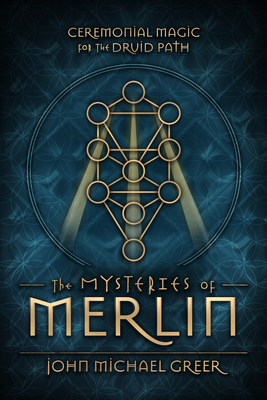
The Mysteries of Merlin: Ceremonial Magic for the Druid Path by John Michael Greer

The Mysteries of Merlin: Ceremonial Magic for the Druid Path by John Michael Greer

John Michael Greer, one of the most influential authors on Druidism in the modern age, takes a crack at reviving ancient traditions through ceremonies involving the mysterious figure of Merlin. As for his success at this integration, I think that’s up to individual readers to decide for themselves.

Photo by Carol Lemos on Pexels.com

I didn’t connect with the rituals myself, but the first part of this book which details the author’s research into mystery cults and mythology in general, was fascinating to me.

“… myths are things that never happened but always are. They express spiritual truths too profound to be communicated in any more direct way.” pg 12

Though this topic has been covered by a variety of different authors, perhaps most notably Joseph Campbell, Greer’s take on the subject is welcome and refreshing. His focus in this book is piecing together what the Pagan Celtic religion of Britain may have looked like through the fragmentary records and mythology that remain behind.

“Was Merlin, then, purely a god, and his appearances as a Dark Age prophet and wizard only garbled mythology? That is a surprisingly difficult question to answer.” pg 27

Photo by cottonbro on Pexels.com

Greer’s writing is accessible even for those who may not have a background of western occultism or paganism to draw upon. But, this book might be most useful for those who feel drawn to those spiritual paths because, as I mentioned before, the majority of this book is dedicated to detailing rituals that Greer has created for those traditions.

Seekers interested in the forgotten history of paganism in Europe, as I am, might be better served with another book. If I find one, I’ll let you know.

“Vortigern ordered the workmen to dig into the hill and they found the lake; once the water was drained away, the rocks appeared, and the dragons leapt out of them and began to fight each other. As they struggled, Vortigern asked Merlin what the combat meant, and the boy burst into tears and began to prophesy.” pg 22

Photo by Dimitry Anikin on Pexels.com

As for the actual historical personage of ‘Merlin,’ I think Greer’s interpretation of the sparse evidence is as good as any I’ve read which, admittedly, isn’t very much because there’s not much to go on.

And as for the retrieval of ancient traditions and mystery cults, perhaps new mythologies, like this book, need to be written. The old lineages may simply be lost forever.

Here’s my contribution to the mysteries of Merlin which I recovered through my explorations into the Qabalistic Tree of Life. It is from a series of pathworkings I recorded called “The Light Congress”:

In Chapter 13, Merlin is the wizard in the wood who called himself ‘Nobody’:

In Chapter 21, Merlin reveals his true identity as he works to discover a source of what he calls ‘progenitor thoughts’:

Though he appears again further on in the book, these two initial encounters were quite revealing. I hope you find some meaning in the symbolism and message therein.

Through The Light Congress, I hope to discover a new path, one of endless spiritual mythologies and stories for the modern age. It remains to be seen how successful the attempt will be.

Small disclaimer, Mr. Greer and my’s only association is through the reading of his books (which are quite worthwhile for spiritual seekers and I highly recommend them). I wish him well in his exploration of the worlds of spirit and the mysteries they contain. Any missteps I make in my personal journey are my own fault and may be laid entirely at my doorstep.

Thank you for reading!

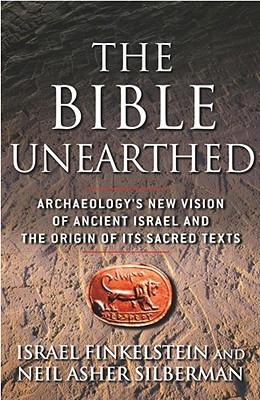
The Bible Unearthed: Archaeology’s New Vision of Ancient Israel and the Origin of Its Sacred Texts by Israel Finkelstein, Neil Asher Silberman

The Bible Unearthed: Archaeology’s New Vision of Ancient Israel and the Origin of Its Sacred Texts by Israel Finkelstein, Neil Asher Silberman

Authors Israel Finkelstein and Neil Asher Silberman examine archaeological evidence in an effort to shine further light on the writing and creation of the first five books of the old testament of the Bible or the Pentateuch.

Photo by Luis Quintero on Pexels.com

From a historical perspective, this book was fascinating to me.

“Recent developments in archaeology have finally allowed us to bridge the gap between the study of biblical texts and the archaeological finds. We can now see that the Bible is – along with distinctive pottery forms, architectural styles, and Hebrew inscriptions – a characteristic artifact that tells a great deal about the society in which it was produced. pg 22, ebook

This was the first time I had read a non-fiction book about the actual history of events and leaders from the Bible rather than a theological interpretation. This may have been one of the reasons why I enjoyed it so much, but, despite my inexperience with books on such topics, I still believe it is very well done.

Photo by Suliman Sallehi on Pexels.com

The Bible Unearthed could be a challenging read for some. For example, it doesn’t hesitate to look at potential political reasons for why the Bible was written and constructed in the manner that it was.

The authors also don’t shy away from discussing when there is a lack of historical evidence for long-held assumptions or ideas.

“As far as we can see on the basis of the archaeological surveys, Judah remained relatively empty of permanent population, quite isolated, and very marginal right up to and past the presumed time of David and Solomon, with no major urban centers and with no pronounced hierarchy of hamlets, villages, and towns.” pg 132

Photo by Mike on Pexels.com

Religion doesn’t seem to be a topic that invites inspection or examination. This book does, in my opinion, a brilliant job of looking at only the evidence.

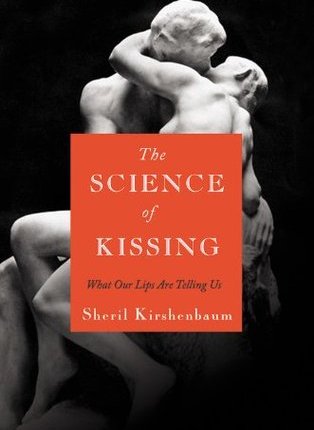
The Science of Kissing: What Our Lips Are Telling Us by Sheril Kirshenbaum

The Science of Kissing: What Our Lips Are Telling Us by Sheril Kirshenbaum

What do we know about the “science” of kissing? Researcher and author Sheril Kirshenbaum shows we know surprisingly little in The Science of Kissing.

“Kissing is a type of universal language, best interpreted by those involved in the exchange.” pg 209

Photo by Flora Westbrook on Pexels.com

To start, I didn’t know that humankind wasn’t the only species to demonstrate “kissing” behavior.

“Moose and ground squirrels brush noses. Manatees nibble at their partners. Moles rub snouts and turtles tap heads. Porcupines nuzzle noses – one of the few regions of their bodies that lack quills.” pg 29

Photo by Snapwire on Pexels.com

I also didn’t know, seems obvious in hindsight, that kissing wasn’t always a common behavior. It has spread throughout cultures and countries because of the way we’re interconnected with technology.

But that wasn’t always the case. Historians and anthropologists have recorded different attitudes towards kissing among various cultures for hundreds of years.

“… he noted that some Finnish tribes were not very interested in kissing, and observed that while the sexes would bathe together completely nude, a kiss on the lips was considered indecent.” pg 57

Kirshenbaum briefly covers a few different scientific studies into sexual behavior or kissing.

“In Alfred Kinsey’s 1948 report ‘Sexuality in the Human Male,’ for instance, kissing style was found to correlate with a person’s level of education. Seventy percent of well-educated men admitted to French kissing, while only 40 percent of those who dropped out of high school did.”

Photo by Pixabay on Pexels.com

However, I felt that the majority of this book was written anecdotally because there are so few rigorous studies that have been conducted. In fact, one of the chapters of this book consists of suggestions of studies that could be done with some of the information that Kirshenbaum compiled.

… only one in seven women answered that she would consider sex with someone she had not first kissed. Conversely, the majority of men reported that they would not be deterred.” pg 92

Despite what I perceived as a lack of hard science in here, I found the book amusing. Recommended for readers who are looking to be entertained, rather than enlightened, about kissing.

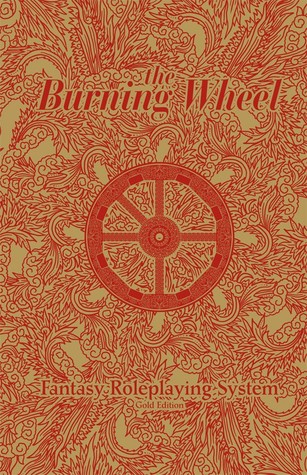
The Burning Wheel by Luke Crane

The Burning Wheel by Luke Crane

I’ve been reading the rule books of different roleplaying games this year like Nobilis and now The Burning Wheel in order to alleviate boredom and socialize with friends while playing the various games online. While doing so, I have come to appreciate the artistry and finesse that goes into creating the games.

This effort is most easily seen in the rulebooks.

The Burning Wheel rulebook is gorgeous. The artwork and binding are lovely. This is a book that feels like it belongs in your hands when you open it.

I realize that the world is moving more digital all the time, books included, and that makes sense. It saves resources, space, and what could be more convenient than having your entire library with you when you travel?

But I think I would miss the experience of holding a physical book and the sensations that go along with that. I watched a YouTube video review of this game that suggested part of the familiarity of the feel of this book might be related to the fact that it was created in the shape and size of a family Bible.

Whatever the draw is, if you’re going to play this game, I highly recommend buying a physical copy of the book.

That being said, the game itself is incredibly complex. No matter what you want to do in Burning Wheel, it requires some sort of roll. The most annoying aspect of this complexity is in the “resource” portion of the game. I failed a roll a few weeks ago and now my financially-challenged elf bard has to find a job.

Photo by fotografierende on Pexels.com

Do I really want to play a game to roleplay something like that? I could just live life as it is right now to worry about resources.

The organization of the rulebook also leaves something to be desired. For example, bard songs and their details are located in a couple different places.

So, say you’re playing along, then you want to know what sort of dice you have to roll to sing a song to the trees. In order to find that information, you’ve got to look all over the place. It doesn’t work well at all.

Photo by Pixabay on Pexels.com

Even the character creation is an unwieldy process. It took two very experienced gamers and I, who admittedly has less experience but plenty of enthusiasm, nearly four hours to put together two characters. Four hours!

Despite its complex and difficult nature, I think experienced gamers who are willing to greatly simplify the rules might still enjoy playing this game. Newbies to RPGs may want to try something else.

The Complete Idiot’s Guide to T’ai Chi & QiGong by Bill Douglas

The Complete Idiot’s Guide to T’ai Chi & QiGong by Bill Douglas

The Complete Idiot’s Guide to T’ai Chi & QiGong is a useful reference guide that I’ve been using in conjunction with online courses to dip my toes into the practice of both.

The first part of the book is the history of the martial and meditative arts as well as best practices. The second part is the movements.

Photo by Pixabay on Pexels.com

I liked that links to demonstrative videos are sprinkled throughout the text, somewhere over a hundred of them! It really helped the materials to come alive for me.

The way the author writes might be a little far out for readers who are looking for more scientific approaches to the practices. He touches on scientific studies that demonstrate health benefits, but doesn’t go too deeply into the science behind them. Readers who are looking for something like that may want to find a different book.

Photo by Craig Adderley on Pexels.com

I’ve begun to incorporate both t’ai chi and qigong into my daily routine. It is a nice, restive break from the stressful day-to-day grind. As I move my body through the practices, my mind follows.

It is difficult to describe, but easy to experience if you attempt some of the movements yourself.

One of the most helpful online resources I discovered for qigong is “Qi Gong for Better Health and Wellness” by Lee Holden on Wondrium.

Highly recommended for readers at all levels of fitness. Namaste!

The Buddhist on Death Row by David Sheff

The Buddhist on Death Row by David Sheff

David Sheff examines the life and spiritual transformation of Jarvis Jay Masters, a man who has spent years on death row and in solitary confinement for a crime he says he didn’t commit.

“Even if Masters was innocent, I didn’t know what to think about the claims that he was, as his supporters described him, an enlightened Buddhist practitioner who had changed and saved lives.”

Photo by Donald Tong on Pexels.com

It is a powerful non-fiction account not only because Masters is honest and open about how he came to be where he is today, but because the spiritual lessons he has discovered throughout his experience are applicable for all of us. You don’t have to be sitting in a literal prison to feel like you’re locked in a cell and can’t get out.

The mind and heart can create suffering wherever in the world you are.

“Set in a place of unremitting violence, insanity, confusion, and rage, Masters’s story traverses the haunted caverns and tributaries of loneliness, despair, trauma, and other suffering- terrain we all know too well- and arrives at healing, meaning, and wisdom.”

Photo by Caroline Martins on Pexels.com

I don’t think you need to be a practitioner of Buddhism to appreciate the wisdom in this book. Spiritual lessons like the knowledge that can be found in self awareness and how to obtain freedom from suffering can be helpful for all of us.

I enjoyed the book so much that I read it in only a few sittings.

The lama wrote that all people have been sentenced to death- in that way, Jarvis wasn’t unique. … “We all live in a prison, and we all hold the key,” Chagdud Tulku wrote.

Photo by Pixabay on Pexels.com

Highly recommended for spiritual seekers of all types.

Thank you to NetGalley and the publisher for a free digital copy of this book.

Nobody Wants to Read Your Sh*t: Why That Is And What You Can Do About It by Steven Pressfield

Nobody Wants to Read Your Sh*t: Why That Is And What You Can Do About It by Steven Pressfield

Steven Pressfield shares the applicable lessons he’s learned from a lifetime of different writing jobs. The most important one is the title of this non-fiction, self help book.

Photo by Suzy Hazelwood on Pexels.com

“Sometimes young writers acquire the idea from their years in school that the world is waiting to read what they’ve written. They get this idea because their teachers had to read their essays or term papers or dissertations. In the real world, no one is waiting to read what you’ve written. pg 16, ebook

Along the way, Pressfield discovered the importance of writing for yourself rather than as a ghost writer, the necessity of structuring each piece whether it is a screen play or a novel, the enduring popularity of the hero’s journey and more.

Photo by Kun Fotografi on Pexels.com

He also addresses the inner demons that may prevent fledging writers from finishing what they begin, a topic that Pressfield also discusses at length in his other book, The War of Art: Break Through the Blocks & Win Your Inner Creative Battles

“I did not know that there existed inside my head an invisible, insidious, intractable, indefatigable force whose sole object was to keep me from doing my work, i.e., finishing the book I had been trying to write for seven years- and ultimately to destroy me, physically, psychologically, and spiritually. All I knew was that I couldn’t finish anything.” pg 49

Photo by bongkarn thanyakij on Pexels.com

I found all of his advice helpful, and the manner in which Pressfield delivers it as both approachable and entertaining.

“The writer must know what genre he is working in and the conventions of that genre, just as the bridge builder must understand the science of foundational integrity and the means of mitigating stress on strung steel.” pg 66, ebook

He closes the book with a humorous anecdote about writing for a pornographic film. Even in that tale, Pressfield managed to teach me something about story construction and storytelling. I only mention it in case any potential reader finds such things offensive. Here’s your warning.

Highly recommended for writers at any level. Pressfield knows his stuff.

Mystical Places by Sarah Baxter, Amy Grimes

Mystical Places by Sarah Baxter, Amy Grimes

Throughout history, humankind has told each other stories. Sometimes these stories center on places that become sacred through their association to the legends that are told.

Sarah Baxter highlights 25 such locations from all over the world. Each brief chapter includes a short description of the site and the stories associated with it.

Photo by diana plotkin on Pexels.com

“In these pages we meet mythical kings, sacred summits, and enchanted architecture, plus a cast of elves, giants, ghosts, golems and sea creatures without which our planet might be a more logical and well-reasoned place but also less colourful and compelling.” pg 6, ebook.

I thoroughly enjoyed armchair traveling from Africa to Canada, China to Portugal, and more. This book gave me so many ideas for places I want to see when I feel comfortable boarding a plane again.

And, in the meantime, there’s always the possibility of travel-filled day dreams.

In the chapter about Cadair Idris in Wales, Baxter writes: “It’s said that on the very crown of the peak there is a long, wide platform of stone slabs that is the Bed of Idris and that whoever sleeps on that bed will suffer one of two fates: they will wake up either as the most profound poet or completely mad.” pg 18, ebook.

Photo by Adrian Dorobantu on Pexels.com

Worth the risk, right?

I was also taken with the descriptions of the Stone Circles of Senegambia, thousands of ancient stone monuments found in Senegal and The Gambia.

“Stories passed down the generations claim that the stones were put in place by the gods at the very dawn of time. Other legends suggest they are the gravestones of an ancient race of giants or chiefs and that a curse will fall on anyone who dares disturb them…” pg 76, ebook.

I had never heard anything about these circles, despite taking a class in ritual and religion in prehistory from Oxford. I am also fairly well-read in world mythologies yet there were surprises on almost every page.

Photo by Oleg Magni on Pexels.com

Highly recommended for travelers, armchair or otherwise, who are seeking destinations of mystical significance or anyone who wants to learn about legends from around the world. The only trouble that may be encountered for the mystical tourist is the remoteness of some of the locations.

Thank you to NetGalley and the publisher for a free advance reader copy of this book. The brief quotations I cited may change or be omitted entirely from the final version, which I believe is slated to be published tomorrow.