Why Good People Do Bad Things: Understanding Our Darker Selves by James Hollis

Why Good People Do Bad Things: Understanding Our Darker Selves by James Hollis

“Expressed in its most functional way, the Shadow is composed of all those aspects of ourselves that have a tendency to make us uncomfortable with ourselves.” pg 9

Jungian analyst James Hollis examines “shadow work” from the perspective of an individual to couples then communities and all the way up to the collective unconscious.

He’s at his best when he’s illuminating how the Shadow works at an individual level. When he goes beyond that into couples or groups, I thought he began to generalize to the point where the book was no longer helpful on a practical level and moved more into the realm of philosophy.

Photo by Sunsetoned on Pexels.com

Hollis brought the book back into the self help genre by providing a final chapter full of questions for “reflection” by the reader. The purpose of this inner gazing is not just self knowledge, says Hollis, but also wholeness at a soul level.

“This book operates from a central thesis that is relatively unknown to the general public but is a truism for depth psychology, namely, that the human psyche is not a single, unitary, or unified thing, as the ego wants to believe. It is diverse, multiplicitous, and divided… always divided.” pg xi, preface.

I read Why Good People Do Bad Things in conjunction with a philosophy class off of The Great Courses Plus (Wondrium) called “Understanding the Dark Side of Human Nature” by Daniel Breyer. The two complemented each other quite well.

“Can the reader imagine that something inside you wishes to ‘talk’ to us? As a result of this conversation, consciousness is strengthened, new energies are available, and each person lives a richer life, one that is more authentically one’s own.” pg 192

Photo by Bianca Salgado on Pexels.com

This isn’t what I would call a ‘fun’ read. In fact, I had to take Why Good People Do Bad Things in sections, put it down for awhile, and come back to it, again and again.

I don’t mind self knowledge. I’ve done dozens of meditations where I look at aspects of myself and come back with a different understanding of who I am than before I started.

The difficulty is looking into the bits that I don’t want to see. Like I said, I can manage it in small doses. It isn’t somewhere I’d want to live.

It is understandable why so few attempt Shadow work. It is much easier to scapegoat others, blame, and feel superior to them.” pg 203

Photo by Umberto Shaw on Pexels.com

Recommended for any seekers who are looking for a psychologist’s take on Shadow work. This book might be the push that you need to brave that darkness. But beware, there’s someone in there who may have been waiting to talk to you for a long time and you might not like what they have to say.

Thanks for reading!

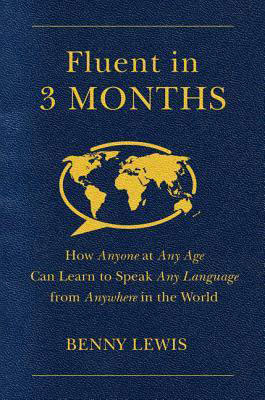
Fluent in 3 Months: How Anyone at Any Age Can Learn to Speak Any Language from Anywhere in the World by Benny Lewis

Fluent in 3 Months: How Anyone at Any Age Can Learn to Speak Any Language from Anywhere in the World by Benny Lewis

Fluent in 3 Months is a self help guide for anyone who aspires to speak more than one language.

Though it’s mainly filled with common sense ideas, I liked how the author, Benny Lewis, put it all together.

Lewis begins by sharing his own life experience with readers- that he felt he failed in his early attempts to learn another language through the traditional method of high school class. He also details how he spent six months in Spain with the idea that he’d absorb language like a sponge but then didn’t learn any Spanish.

Photo by RODNAE Productions on Pexels.com

The reasons why he feels like he was unsuccessful, because he was lacking the passion to learn and also didn’t speak the language to native speakers, are his main suggestions for language learning in this book.

“When it comes to language learning, there is no room for doubt: you decide your own success.” pg 24

Beyond those two main tips, Lewis shares shortcuts for learning tons of vocabulary quickly (visualization methods) and practicing immersion without going to the actual country. The latter, as he points out, has been made much easier since technology has brought distant countries into the comfort of your own home.

Through Skype calls or internet programs or even Netflix, language learners can interact with and immerse themselves in their target language.

Photo by Anna Nekrashevich on Pexels.com

“You must speak the language with other human beings.” pg 87

The task facing language learners has now become putting in the work to do so rather than traveling the distance for the opportunity.

I think Lewis is on to something with his insistence on speaking your target language from the start.

“As a result of speaking the language right away, students start to acquire the language rather than learn it as they would other academic subjects.” pg 6

I have a friend who’s niece majored in Spanish. But when they visited Spain together, she lacked the confidence to speak it when ordering dinner.

Photo by Adrianna Calvo on Pexels.com

If, from the first stages, learners were able to clear that initial hurdle, day-to-day use, and the successive ones of perfectionism or uncertainty, I agree that the whole language learning process would flow more easily.

Because, as Lewis points out, language is meant for communication with others. We’re rather missing the point if we acquire skills on paper that can’t be put to real life use.

Highly recommended for language learners of any age.

And thanks for reading!

The Art of Comforting: What to Say and Do for People in Distress by Val Walker

The Art of Comforting: What to Say and Do for People in Distress by Val Walker

“Qualities like gentleness, patience, warmth, and empathy can be so undervalued in this day and age that when we need to sit down with someone devastated by a loss or turbulent change in their lives, we often feel unsure about what to say or do.” pg 7, ebook.

Author Val Walker discovered first-hand that there is a lack of knowledge about offering comfort in the modern age. She was going through a divorce and relocation, and had no one to confide in. She said her friends and family members were either too busy to give her some of their time or they gave her a type of attention she didn’t desire- like mouthing platitudes or giving unwelcome advice.

Photo by Nikita Khandelwal on Pexels.com

Walker realized that society has lost its ability to do something as simple as listen and be present. She wrote this book to help others offer this gift to those around them.

“Presence. Unshakable, steady, tender, and empathic presence. Soft strength. That was comfort.” pg 10, ebook

She dispels many myths about what comforting may look like, including my concern that I never know what to say when someone shares their inner turmoil with me.

“Myth: Comforters always know what to say. We don’t have to know the right thing to say. Sometimes there is really nothing that can be said.” pg 21, ebook

Photo by cottonbro on Pexels.com

After that, Walker interviews mental health professionals from many different modalities, offering different ways that these comforters approach and soothe those around them. From creating art to writing to simply watching television together, there are so many opportunities to spend time and connect with someone in need.

“The language of comforting is a language like any other- it can be learned but, once mastered, can become as effortless as breathing. And if our words and gestures are warm, empathic, and respectful, they will help to create a safe space for the comforter and the one being comforted to inhabit.” pg 81

Photo by Jonathan Borba on Pexels.com

The past year has been devastating for so many. I picked up this book because I never know what to say when someone comes to me with pain or disappointment or heartbreak.

Walker has reassured me that sometimes the best help anyone can give another is to say nothing at all but to offer the gift of your presence and attention. Because at the end of the day, another word for ‘comfort’ is ‘love’. And we all know how to do that already, right?

Thanks for reading!

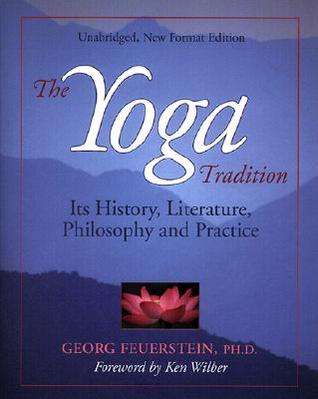
The Yoga Tradition: Its History, Literature, Philosophy and Practice by Georg Feuerstein

The Yoga Tradition: Its History, Literature, Philosophy and Practice by Georg Feuerstein

The Yoga Tradition is a reference book for the history and practical methods of yoga in its myriad forms throughout time and different religious traditions.

“In its oldest known form, Yoga appears to have been the practice of disciplined introspection, or meditative focusing, in conjunction with sacrificial rituals.” pg 27

Photo by Lucas Pezeta on Pexels.com

From these ancient beginnings, author Georg Feuerstein takes readers on a fantastical and spiritual journey through the various branches of yoga including Raja, Hatha, Bhakti, Jnana and more. He’s printed original texts, along with analysis of them, throughout the book to provide context and origin materials for each tradition.

What emerges in The Yoga Tradition is stunning in its complexity as well as sheer variety of methods, beliefs and practices.

“Long before the word yoga acquired its customary meaning of ‘spirituality’ or ‘spiritual discipline,’ the sages of India had developed a body of knowledge and techniques that aimed at the transformation and transcendence of ordinary consciousness. This stock of ideas and practices formed the matrix out of which grew the complex historical phenomenon that later came to be called Yoga.” pg 65

Photo by Karolina Grabowska on Pexels.com

Beyond sharing the history, philosophy, and practice of yoga, Feuerstein encourages modern scientists to look closely at the traditions in these pages to see what benefits could be gained from the ancient knowledge.

“Gradually, modern medicine and psychology, aided by advanced scientific concepts, methods, and instrumentation, are rediscovering some of the amazing facts that yogins have talked about and demonstrated for centuries.” pg 400

In my mind, that is one of the most exciting aspects of this book- what humanity could possibly learn about the enduring mystery of consciousness itself through the application of modern methods of study to ancient techniques.

Highly recommended for anyone interested in yoga and looking for a scholar’s thorough dissection of its history and forms. Your search can begin and end with this title.

Thanks for reading!

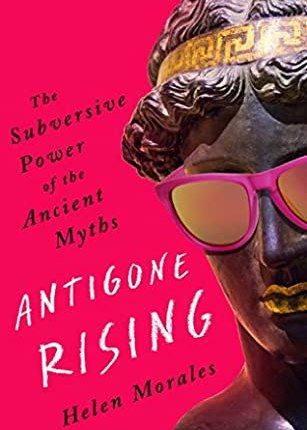
Antigone Rising: The Subversive Power of the Ancient Myths by Helen Morales

Antigone Rising: The Subversive Power of the Ancient Myths by Helen Morales

Helen Morales highlights troubling aspects of Greek and Roman mythology in a call-to-action to analyze and reimagine those myths for modern times.

As a classicist, I was familiar with most of the myths Morales examined. However, I was unaware of some of the toxic sub-context contained within them.

“My hope is that by tracing patterns and connections between ancient and modern beliefs and practices it will become easier to understand how misogyny operates and the ways in which classical antiquity plays a role (although it is not the only player and this is not its only role) in legitimating how misogyny operates today.” pg 14

Photo by Miggy Rivera on Pexels.com

The stories we tell ourselves are powerful. It shapes our expectations for our communities and the roles we occupy within them. Joseph Campbell pointed this out for the last generation. Perhaps Helen Morales will be the one to point it out for this one.

“The problem is that misogynist myths are more strongly culturally entrenched in our societies than myths that subvert them.” pg 148

But all hope is not lost. Creators from books to film to music videos are taking these myths and making them their own. With time, new interpretations will take hold.

Antigone is rising. Antigones (and Ismenes and Haemons) are rising.” pg 150

Photo by cottonbro on Pexels.com

Lest we forget, Morales reminds readers that ancient myths have been the inspiration for, among other things, “the Declaration of Independence and the US Constitution, trades union movements, Marxism, and the gay rights movement.”

It is all about how we interpret and tell the myths with each passing generation. Let’s choose carefully.

Thanks for reading!

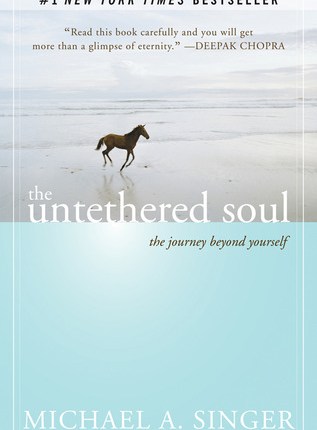
The Untethered Soul: The Journey Beyond Yourself by Michael A. Singer

The Untethered Soul: The Journey Beyond Yourself by Michael A. Singer

Michael Singer reminds readers that we are not the thoughts that we habitually think or the bodies that we walk around in. He gives multiple tips on how to access the spiritual strength inside ourselves and how to view life through the wide lens of this non-attached perspective.

Singer writes that it is through this new way of looking at life that one can find enlightenment.

Photo by Supriyo Ghoshal on Pexels.com

The ideas that are shared in Untethered Soul can be found in countless other books on spiritual studies. This isn’t new information. But, I think, there is always room on my bookshelf for a book that reminds me of spiritual truths.

It is all too easy to get caught up in the day-to-day trivialities of life with its stresses and constant demands on our attention. If you take a breath and a step back, it’s surprising what you can see.

Photo by Engin Akyurt on Pexels.com

Perhaps the mammoth success of The Untethered Soul over other books in its genre is the exposure it received on The Oprah Winfrey show. Whatever the case, it is quite accessible to readers who haven’t considered these concepts before.

Recommended for spiritual seekers both seasoned and not.

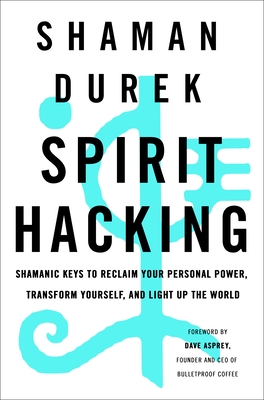
Spirit Hacking: Shamanic Keys to Reclaim Your Personal Power, Transform Yourself, and Light Up the World by Shaman Durek

Spirit Hacking: Shamanic Keys to Reclaim Your Personal Power, Transform Yourself, and Light Up the World by Shaman Durek

Shaman Durek offers practices to spiritual seekers who are looking for ways to improve their lives through the use of shamanistic techniques. Like most new age or spiritual books, not everything in here resonated with me. But I will take a few key concepts and jettison the rest.

Photo by Abet Llacer on Pexels.com

For starters, I took issue with the title of this book, “Spirit Hacking”. It implies that there are some sort of tested and proven short cuts to bringing spiritual dimensions into one’s life. I think most readers are wise enough to know that such a thing doesn’t exist. To put that sort of label on a work is false advertising to delusional, depending, I suppose, on how much one believes one’s own hype.

On the other hand, if “Spirit Hacking” was simply an effort to connect with readers who sincerely want to believe in such spiritual short cuts then this book will probably fill some sort of gap in his or her journey to a desired “goal”.

Personally, I took the title as a type of warning flag before I read it. Tread softly here, Heidi, I said to myself. And question everything.

Photo by Darius Krause on Pexels.com

Shamanism, like other semi-organized movements, varies greatly depending upon who is imparting the wisdom and from what tradition. Shaman Durek touches upon topics I’ve studied from other sources such as there are different types of spirits, various rituals or practices to interact with these spirits and time isn’t as fixed as some imagine it may be. But he puts his own unique spin on the information.

I like the empowering side to shamanism. If you have lingering physical or emotional pain, these practices suggest that you can do something about it, today if you’d like. If you’d like to change the world, go within and change yourself, then the rest will follow.

I also like the idea that everything on the planet from plants to animals to places has a guiding spirit or intelligence. If only one knew the way to interact with these intelligences, life itself could become a guide into the mysteries of the spirit. That part of shamanism is pretty cool.

Photo by Aleksandar Pasaric on Pexels.com

On the other hand, I don’t like how some shamanistic movements act like established religions, insisting that their ways or traditions are the only way to go. In addition to the snobbery, I take issue with the manner in which some shaman teach their methods. They fail to distinguish between the real world and visionary space, leading adherents to confuse one with the other or worse, not draw any dividing lines at all.

Shaman Durek’s tone can be somewhat abrasive, but if readers are looking for basic shamanistic ideas, they can be found here. Recommended with reservations for new age spiritual seekers.

Other titles about shamanism that you may want to explore if you’ve read this: This Trip Will Change Your Life: A Shaman’s Story of Spirit EvolutionThe Way of the ShamanActive Dreaming: Journeying Beyond Self-Limitation to a Life of Wild Freedom or The Flying Witches of Veracruz: A Shaman’s True Story of Indigenous Witchcraft, Devil’s Weed, and Trance Healing in Aztec Brujeria.

The Wild Woman’s Way: Unlock Your Full Potential for Pleasure, Power, and Fulfillment by Michaela Boehm

The Wild Woman’s Way: Unlock Your Full Potential for Pleasure, Power, and Fulfillment by Michaela Boehm

“This book is a call to come back to our wild, undomesticated ‘original nature,’ which, combined with an untamed heart, knows what is true for each of us. It is a call to return to the inborn genius that guides our passion, whispers in our ear with longing, and reveals itself abundantly when we allow our bodies to show us the way.” pg 8, ebook

Michaela Boehm utilizes her years of therapeutic practice and tantric training in this self help book designed for the modern woman.

Photo by Gabriela Cheloni on Pexels.com

There are so many choices and life paths from high-powered careers to motherhood, that many women try to do it all.

“The good news: amidst such a multitude of options we are free to choose what resonates with us. The bad news: it’s confusing, overwhelming, time-consuming, fraught with many pitfalls, and requires constant discernment.” pg 9, ebook

It’s not possible to do and have it all, Boehm writes, and while they attempt it, women cut themselves off from their sensual natures. She has written this book to give women practices and rituals to bring them back from this disconnection into the power and knowledge of their bodies.

Photo by Maria Orlova on Pexels.com

“Relaxing the body; engaging with life, beauty, and nature; and gentle, nonlinear movement and dance are some of those physical practices we’ll be engaging in throughout this book.” pg 34, ebook

I didn’t connect with all of Boehm’s writing, but I have begun to practice a version of her “formless dancing” every day. The practice itself is simple. Turn on music with no words and a beat, and move your body however it feels like moving. It’s designed to release tension and unconscious clenching that happens when one becomes disconnected from their physical form.

“Once you understand your own reasons for any numbness, tension, and strain that you may carry in your body, you can easily undo the related habitual body patterns and restore yourself to a state of pleasurable aliveness and sensual well-being.” pg 50

Photo by Engin Akyurt on Pexels.com

I find it extremely relaxing. I probably look mad, shimmying and bouncing and swaying around, but it feels really good so who cares. 🙂

Highly recommended for readers looking to reconnect with their body’s innate intelligence or who are interested in different spiritual practices.

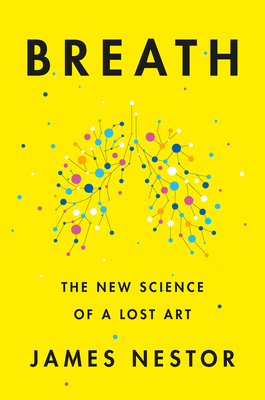
Breath: The New Science of a Lost Art by James Nestor

Breath: The New Science of a Lost Art by James Nestor

James Nestor takes a deep dive into the fascinating and surprisingly mysterious world of breathing. “How mysterious could it be, Heidi?” I hear you ask. It’s something everyone does without thinking literally a few times every minute every day of their lives.

Photo by Daisa TJ on Pexels.com

Well, there’s a lot of mysteriousness, as Nestor discovered through his journey from terrible breathing to consciousness-shifting, bone-building, better breathing.

“I do as instructed, and listen as the rushing wind that was pouring through my lungs suddenly stops and is replaced by pure silence, the kind of jarring quietude a skydiver feels the moment a parachute opens. But this stillness is coming from inside.” pg 143, ebook

He talks to researchers and mystics from around the globe to access both cutting edge research as well as ancient teachings from such exalted texts as The Upanishads.

What he’s discussing here isn’t new, but it feels new, perhaps because of the chronic disconnect between the mind and body that seems to haunt modern humanity.

Photo by Craig Adderley on Pexels.com

From breathing slower to exhaling more, the dangerous of mouth breathing and the astonishing connection carbon dioxide inhalation has to panic attacks, there’s a lot to explore.

And, despite all of the observed benefits and ten years of extensive research, Nestor doesn’t forget to mention that breathing isn’t a panacea. I appreciated that part as well.

“… what I’d like to make clear now, is that breathing, like any therapy or medication, can’t do everything. Breathing fast, slow, or not at all can’t make an embolism go away. … No breathing can heal stage IV cancer. These severe problems require urgent medical attention.” pg 184-185, ebook

Photo by Daria Shevtsova on Pexels.com

I bookmarked all of the exercises Nestor gathers together from the text and lists at the end of the book. Each has similar yet slightly different affects according to practitioners of the methods. I may have to try every one to see for myself.

Highly recommended.