This unique book is a series of pictures of dogs in a ‘zen’ state. Even though I’m more of a cat than a dog person (gasp, I know!), I found it completely charming.
As I enjoyed the pictures, I found myself becoming more relaxed. Cearns reminds us in the introduction: “Like the dogs in these photos and the canine companion on your couch, we all need to stop, take a break, relax, and unwind- to breathe it all in and be fully present in each and every experience.” Preach.
The best part of the collection is comparing the ‘zen’ photos to the regular photos of each pooch. I couldn’t believe the difference that eyes opened vs eyes closed made. Check this book out and see for yourself! Recommended for everyone with two legs or four.
Extraordinary and true story about how Gil and Eleanor Kraus saved fifty Jewish children from the Nazi Holocaust.
I watched the HBO documentary after I read this and, though similar and emotionally powerful, I enjoyed the book more because it provides a detailed history for each child (that Pressman was able to locate).
My only complaint about the book is that, though the story is gripping, it moves very slowly. My book club had a fascinating and educational discussion about 50 Children and, all said, I am very glad that it was the final club pick of 2016.
Did you know about this episode from US history?: “The fifty boys and girls whose lives were saved by Gil and Eleanor Kraus comprised the largest single known group of children, traveling without their parents, who were legally admitted into the United States during the Holocaust.” pg 9, ebook.
I didn’t realize that in the late 1930’s, that Jewish people were allowed, and even violently encouraged, to leave the Third Reich. The trouble was that, like other large displaced populations more recently, no country on earth was prepared to let that many people in or provide the social services required.
Fortunately, Gil Kraus was a well-connected lawyer who was willing and able to work within existing immigration and labor laws to find a way to bring the children into the US.
I knew that the situation was awful for Jewish people in Europe before and during World War II, but, until I read this book, I didn’t realize the complete hopelessness that was experienced even before concentration camps became the ‘final solution’: “Within the first ten days of the Anschluss, the Viennese police reported nearly one hundred suicides throughout the city, virtually all of them Jews. By the end of April, the number of suicides had jumped to at least two thousand. Among the victims was Henny Wenkart’s pediatrician, who took his life by jumping out a window.” pg 42, ebook.
The American diplomats in Austria and Berlin had a front row seat to the horrors that the Jewish population were experiencing, but their hands were tied by national policy and immigration caps.
George Messersmith and Raymond Geist helped the Krauses as much as they could, within the law: “The Jews in Germany are being condemned to death. Their sentence will be slowly carried out, but probably too fast for the world to save them,” Geist (US foreign service officer in the Third Reich) wrote in a private letter to Messersmith (State Department secretary, stationed in Washington D.C.) in December 1938, less than a month after Kristallnacht.” pg 61, ebook.
Why was the American publication so anti-immigration?: “The United States still bore the scars of the Great Depression, and restricting immigration was seen as a way to protect jobs for Americans, who for years had been plagued with staggering unemployment rates. But challenging economic considerations were not the only factors at play in the immigration debate. The American public simply was not moved by the dire situation in Europe.” pg 68, ebook.
And, antisemitism was far more prevalent than it is today. All of these things made it difficult if not impossible for the Jewish people who were trying to escape the Nazis.
Even after the Krauses were able to get the children to the United States, they faced harsh criticism from other Jewish charity groups for their actions. I was absolutely blown away by that.
You’d think that people would have banded together and said, “Look what’s possible!”, but instead, they fractured and accused the Krauses of breaking immigration laws. “Was it envy that prompted others to criticize what had clearly been a stunningly unique and successful rescue? Whatever their motivation, some of these same people now wondered if they might simply duplicate Gil’s strategy. pg 201, ebook.
But, since this was the largest group to get out, clearly the others didn’t succeed.
At book club, we talked about how the 1939 situation is similar to what the world is facing today with the Syrian refugee crisis and, though we all thought that immigration policy needs to be re-examined, that the real tragedy is that the world still hasn’t found a way to respond to the wars and conflicts that cause such displacement in the first place.
Is humanity ever going to figure out a way to either co-exist peacefully or provide sanctuary for those displaced by the fighting? I don’t know, but it’s a question that we should think about.
Recommended for anyone interested in the Holocaust, immigration, or testimonies from World War II- as uplifting as it is unsettling, 50 Childrenis a timeless lesson for everyone about the evils that happen when those able to help choose not to or look away.
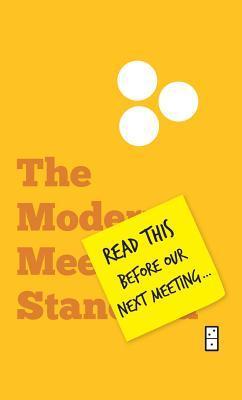
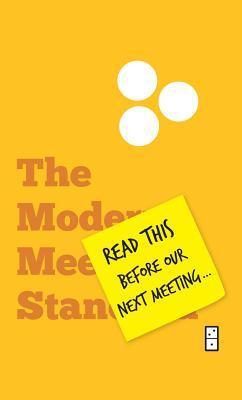
Endless meetings have you down? Pittampalli has a solution to your woes. He claims that modern meetings should only be held to solve specific problems and the only people who should be required to attend are those who could take direct action to solve that problem.
I think that the idea is a solid one.
It does take some internal mindset changes by the folks who call meetings. The first step, like with any problem, is to admit that you even have a problem.
“Over time, we’ve become nonchalant about bad meetings. If an operating room were as sloppily run as our meetings, patients would die.” pg 7.
Overly dramatic, perhaps, but true. And also keep in mind: “Change is never met with open arms. Great decisions involve risk and risk scares people; it’s natural for great ideas to get attacked or, worse, ignored. I can think of no single great innovation that has ever happened without the presence of opposition.” pg 15
So, there may be an uphill battle over this, but, Pattampalli thinks, it is worth it.
The end goal: “Meetings need to be less like the endless commercial breaks during a football game and more like pit stops in the Daytona 500.” pg 20.
So, they’re necessary, but they should run quickly because: “Meetings are too expensive and disruptive to justify using them for the most common types of communication, such as making announcements, clarifying issues, or even gathering intelligence. Like war, meetings are a last resort.” pg 23
This strict definition of a meeting means that there is going to be some major preparatory work since communication isn’t going to be a part of the show. The person calling the meeting has to distribute information about the issue so that those who are attending can contribute.
“Every meeting should require pre-meeting work. Any information for getting attendees up to speed should be given out beforehand. If the attendee doesn’t have time to read and prepare, she doesn’t have time to attend.” pg 37.
But, this preparation pays off when, after the meeting, the business should have created a concrete ‘action plan’ that includes: “What actions are we committing to? Who is responsible for each action? When will those actions be completed?” pg 39. Thus addressing the problem that the meeting was called to solve and serving its function.
Most of the meetings that I’ve attended in my life have been rambling, unfocused affairs that were called to fill the monthly meeting quota that was arbitrarily chosen by management- a touch-base, if you will.
Pittampalli is adamant that this is a waste of time. I never really saw it that way because I didn’t have any expectations that meetings were supposed to accomplish anything at all. We’d meet, then get on about our business. This book has shown me that I should expect more.
Recommended for anybody who wants to learn more about the benefits of “modern meetings”. This short book has everything that you need to start changing the world, one meeting at a time.
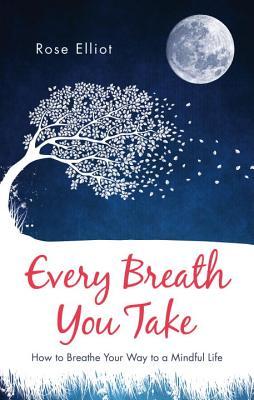
Every Breath You Take is one of the finest mindfulness manuals that I’ve ever had the pleasure to pick up.
Practice by practice, Elliot takes the reader from the simple and concrete observation of the breath to the complex and abstract juggling of mind stuff. Along the way, she provides stories and anecdotes of those who have walked these paths before us and shows that, no matter where you are in your life, you can become more aware and grounded in the present moment and how beneficial that can be for you.
She began her journey like most of us- convinced that mindfulness was too difficult: “I struggled with the practice. I found it dreary, dull and boring- all that ‘notice-what-you’re-doing-while-you-clean-your-teeth’- I just couldn’t get to grips with it at all. … when I was on the point of giving up altogether, I met a monk… and he quietly suggested that it is helpful to link mindfulness practice to breathing. This really helped.” loc 16.
Elliot is so relatable that she made me feel like, if she could do this, I could do it too.
A reminder that mindfulness isn’t just a ‘Buddhist’ thing: “…it is to the Buddha that we owe mindfulness, but that does not mean you have to ‘be a Buddhist’ (whatever that may mean), or indeed of any religion at all to practise it. The breath is universal, as is spirit, so we can all benefit.” loc 46. If we can breathe, we can watch the breath. We just need to remember to do it.
I loved Elliot’s gentle humor which was evident throughout: “You can use the irritations of daily life as reminders to take a mindfulness breath- and this way you’ll certainly get plenty of practice! For instance, such reminders might be: Being held up in traffic or a red light when you are driving. Waiting for the kettle to boil or for a bus or a train that’s late- waiting for almost anything. Lining up at the bank or at the grocery store checkout, or anywhere, for that matter. When someone is being really irritating, how great to know you have your own inner source of peace so they can’t bother you.” loc 237.
It is as if life is chock full of opportunities to take mindful breaths 🙂
My favorite part of the book was the many teachings about attachment. “When we can accept things as they are now, but recognize that they will change, and accept that too, we will know peace.” loc 793. I feel more peaceful already!
The Epilogue where Elliot talks about grieving for her husband and using these breathing exercises to make it through is especially touching. This is not just someone who talks the talk- she’s out there walking the walk. Highly recommended for anybody at any level of ability who wants to learn more about mindfulness.
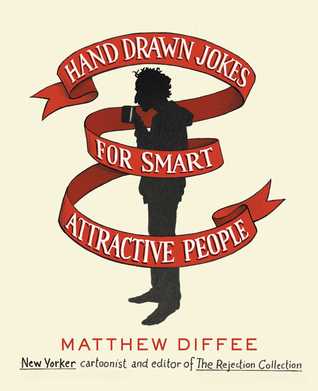
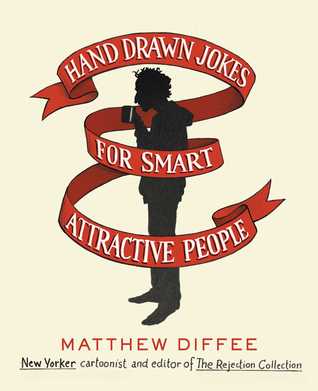
Sadly, the best part of this book is its inspired title: Hand Drawn Jokes for Smart Attractive People.
The rest is either clever, but not funny, or offensive depending on the page.
It’s a shame really- the artwork itself is great and it’s clear that Diffee is a talented cartoonist. I just didn’t connect with much of the work.
Out of all of it, my favorite cartoon was on page 188- Moses: The Teen Years where a young adult version of Moses is depicted staring into a mirror, carefully parting his long hair with a comb. The worst was the entirety of Chapter Eight: For Smart Attractive Indians and Eskimos and really soured this whole book for me.
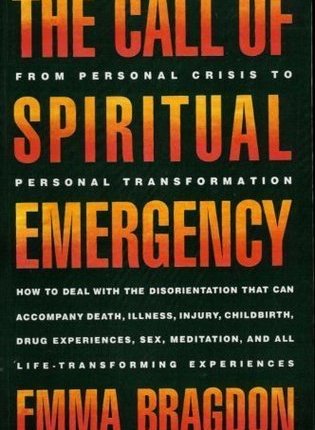
Though a bit dated (written in 1990), Emma Bragdon presents information about “spiritual emergencies,” what they are and how to help your loved ones or yourself through it.
To begin, what is a “spiritual emergency”? : “Spiritual emergence is a natural process of human development in which an individual goes beyond normal personal feelings and desires-ego- into the transpersonal, increasing relatedness to Higher Power, or God. … When spiritual emergence is punctuated by profound emotions, visions, psychosomatic illness, and compelling desires to behave in unusual ways, including suicidal thoughts, the spiritual emergence becomes a crisis, a spiritual emergency.” pg 1.
This process can be absolutely terrifying if the person has no idea what is going on and is surrounded by professionals who are also clueless.
I think that the main problem with integrating such experiences is that modern society neither supports or recognizes them as valid: “People in our culture are afraid of speaking openly about spiritual experiences, because psychic phenomena… have been considered symptomatic of psychosis. Most psychiatrists, psychologists, and even clergy have believed that most spiritual experiences are indicative of either retarded development or emotional disease.” pg 12.
The clergy part of that passage is particularly interesting to me. These are the so-called experts on the spiritual realm, yet, when something breaks through into reality, they’ve got nothing.
Bragdon then relates numerous instances of men and women from all over the world who have gone through this process and reminds us: “In all the major religions of the world can be found examples of people … who have been through intense and sometimes physically and emotionally debilitating periods of spiritual experiences and ultimately attained transpersonal levels of consciousness.” pgs 81.
It makes one wonder, if Jesus, Mohammed, Moses, or pick-your-prophet had been born in the modern era, would his/her vision just been medicated into oblivion?
Bragdon points out that the problem is in the attitudes of the religious and medical establishments- the places that should be the most educated and accepting of these sorts of troubles: “The administrators of (religious) institutions are inconsistent in their view of spiritual experience as part of spiritual growth. The conventional religious establishment is similar to the conventional medical establishment, which is so ambivalent about the reality of spiritual experiences that it doubts their validity altogether.” pg 101.
When did we completely separate the health of the body from that of the soul? After all, one won’t work without the other.
Then, she goes on to talk about all of the different ways that these sorts of experiences emerge from drug use, sex, stress, and just life.
It is so pervasive that it seems that it must be a part of the human experience, but it is hard to study and come to grips with in scientific terms because the phenomena can’t be forced or replicated.
Despite these difficulties to categorize and treat it, Bragdon suggests that being present for the person going through it is enough: “What these people do want is acknowledgement, recognition that they aren’t crazy, and the companionship of others who know what they have experienced is real.” pg 113
So, even though this book was written 26 years ago, I don’t think that we’ve really made that much progress in that time- at least not in the arena of holistic medicine or transpersonal psychology.
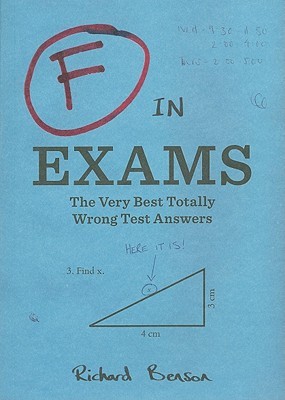
Necessity is the mother of invention. When these students didn’t know the answers, they pulled out all the stops to come up with something- sometimes with hilarious results.
At other times though, I despaired for the future…
I think that F in Exams would be enjoyed the most by current or former educators.
I read some of these aloud to my husband who used to be a college professor and he laughed so hard that he had tears in his eyes. Then, it led to a conversation about not knowing the answers on tests and making stuff up to fill in the blanks.
He admitted that he had done so once in a marketing class and the prof had given him points for his creativity.
Honestly, I don’t think I’ve ever attempted joking my way into a better grade. This book makes me wish that I had, just once.
His favorite: Question: “What was Sir Francis Drake known for? Answer: Sir Francis Drake circumsized the world with a 100 foot clipper.”
My favorite: Question: “Clair was well prepared for her interview. Explain how Claire may have prepared herself for the interview. Answer: Had a bath and put on her lucky pants.” There’s a lot to be said for a pair of lucky pants.
F in Exams would make excellent reading material for a doctor’s office or any other place where you need to spend a few moments relaxing (ahem, powder room?), in which case, you should buy your own copy. Otherwise, I’d recommend borrowing this short little book from your local library as I’m sure that I’m not going to feel the need to pick it up again.
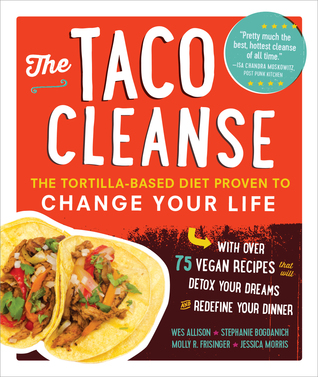
Deciding what to eat for dinner was becoming a drag, but luckily for me, the library has an enormous foodie section. I dug through the cookbook collection and discovered this gem- The Taco Cleanse.
Part satire, part traditional recipes, The Taco Cleanse makes you laugh while you prepare delicious, vegan eats.
From the copyright page: “This book contains the opinions and ideas of its authors, plus large quantities of total BS. Although the recipes are intended to be accurate and tasty, all other content is solely intended to be hilarious.” And it is.
This book isn’t just about the food: “Now, we want to be clear that supplementing- that is, drinking beverages that traditionally accompany tacos- is acceptable as long as you are getting all of your tacos in. Margaritas should be added on an as-needed basis for the top levels of the cleanse, but at Fuego (the highest cleanse level) you should be adding them at least a couple of times a week, working up to every day.” pg 4.
To your health. 🙂
My favorite part was the author’s insistence on Taco Journaling: “One of the most powerful things you can do in your taco journey is taco journaling. Writing down your thoughts during your Taco Cleanse now will be like having a time machine for your future. Future You can go back and see how you’ve changed over time, where you had taco successes and taco failures. … Every time you open your journal, you will feel peace in your heart.” pg 26.
They really nailed the self help tone that is prevalent in most “dietary” cookbooks. It is really very clever and worth the read, even if you’re not planning on trying the recipes.
Speaking of which, I personally plan on trying Minimalist Nacho Cheese pg 128, Infinite Fish Tacos pg 145, Smoked Brisket and Jalapeno Mac and Cheese Tacos pg 149, and the Frito Pie Tacos pg 152. Decadent.
Recommended for people who are experiencing a dinner idea slump or anybody looking for an excuse to drink a margarita (or two).
I read The Golem and the Jinni a few months ago and realized that I knew next to nothing about the mythology of the Jinn. Not that I’m an expert on golems either, but I had at least been exposed to the idea.
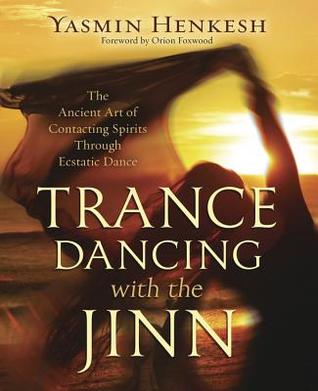
Trance Dancing with the Jinn is a book about kinetic meditation (trance dancing) but it also documents the history of the Jinn as written in the Quran and other sources as well as the biological and historical reasons that humans go into trance.
In addition to the mythology and biology, I learned about how trance dancing at meetings called “zars” is an outlet for women who have very little control over any other aspect their lives in Northern Africa.
The author is clearly a believer in the existence of “the Invisibles” but, if you don’t share the same beliefs, this book still has plenty of fascinating information for those interested in cultural, religious, or feminist studies and ritual dance.
The author asks the reader to have an open mind: “Do you believe in Invisibles or do you consider them an outdated tradition from an ignorant past? What if you had a safe, drug-free way to see for yourself? Would you be curious enough to try it- even though the method takes practice and you probably won’t succeed on your first attempt?” loc 200.
Yeah, I’m down for that.
I don’t think it is that difficult to entertain the idea that there may be intelligences that exist that can’t be perceived in normal states of consciousness.
As Henkesh reminds us: “According to NASA’s website, “Everything on Earth, everything ever observed by all our instruments, all normal matter- adds up to less than 5% of the Universe… The rest is a complete mystery, but an important one. Roughly 68% of the Universe is dark energy, while dark matter makes up about 27%.” This energy and matter are called “dark” because they do not reflect light… or interact with electromagnetic forces. We only know they are there by their effects on gravity…” loc 233, ebook.
Only 5% has been observed- that leaves a whole lot that we haven’t even looked at yet.
Western researchers are still discovering how and why trance works, but they at least acknowledge that it exists: “Neurologist Oliver Sacks once wrote, “Normal waking consciousness, rational consciousness as we call it, is but one special type of consciousness, whilst all about it, parted from it by the flimsiest of screens, live entirely different potential forms of consciousness.” loc 267.
The most fascinating part of this book was the emotional outlet that trance dancing has allowed women for hundreds of years: “… thousands of women in Egypt still turn to the zar when modern medicine fails them. If doctors cannot find the cause of their physical or mental ailments, they assume supernatural forces are involved. … Diagnostic zars can last anywhere from a day in Egypt to a week in Sudan and Ethiopia.” loc 2530-2548
I had never heard of this and looked up some examples of zar/trance dancing on YouTube. Go ahead, take a look:
I can see how such flowing, uninhibited movements would feel therapeutic now, so I can’t imagine the relief I’d feel if I was not allowed to have a job or leave the house without a male by my side. I’d probably be trance dancing non-stop.

















 The Help Desk Book Blog