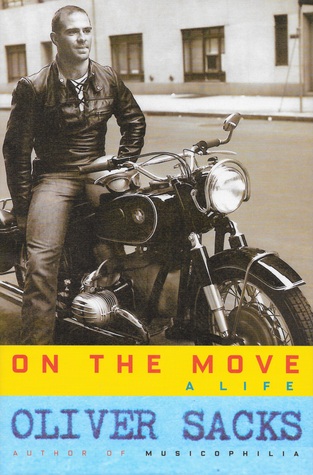
On the Move: A Life (Oliver Sacks’ memoirs #2) by Oliver Sacks

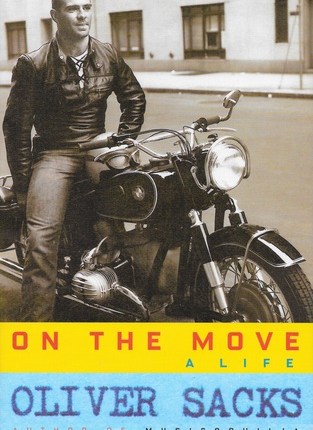
On the Move: A Life (Oliver Sacks’ memoirs #2) by Oliver Sacks
on-the-move

I knew nothing about Dr. Oliver Sacks before I read this book other than the fact that he was a prolific writer. Now I know much, much more.

I loved that Dr. Sacks didn’t hesitate to jump into the nitty gritty details of his life. One line that really stuck out to me: “It was just as well that I had no foreknowledge of the future for after that sweet birthday fling I was to have no sex for the next thirty-five years.” pg 203 Boom. It’s the last line of a chapter section, he neither explains it nor dwells on it. How extraordinary.

I also liked reading about the dramatic parts of his life like his early drug addiction, love of motorcycling, wild nights at the Y, and stint with the American truckers. I found myself dragging through his reminiscing about research or intellectual friends. I think the problem is that I don’t find the inner workings of the mind nearly as fascinating as he did.

Dr. Sacks lists his research pursuits in page after page of case studies, reading, and memories and it wasn’t very fun to slog through. I would probably enjoy the books that he wrote during these times more than this one that was about the writing of them. Another problem, sometimes during the narration, he moves backwards and forwards in time without noting that he is doing so other than writing the date. That was frustrating for me.

Despite some slow portions, Dr. Sacks does have some very beautiful writing in On the Move. Take this passage, where he’s thinking about why he lived so many years of his life on the East coast of the US when he really loved the West coast: “I suspect my nostalgia may be not only for the place itself but for youth, and a very different time, and being in love, and being able to say, “The future is before me.” pg 131

He also struck a chord with me in this line where he’s talking about his love of journaling: “My journals are not written for others, nor do I usually look at them myself, but they are a special, indispensable form of talking to myself.” pg 383 I feel that way too. I pour myself out on written pages in ways that I feel unable to do in the rest of my life through conversations or whatever else.

Dr. Sacks was extraordinarily bright, interested in life and all of its internal mechanisms. At least, after reading this memoir, one can say that he lived fully and well.

I received a free copy of this book through the Goodreads First Reads program. Thanks for reading!

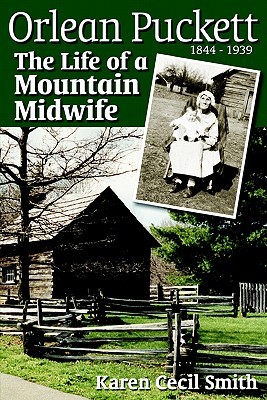
Orlean Puckett: The Life of a Mountain Midwife by Karen Cecil Smith

Orlean Puckett: The Life of a Mountain Midwife by Karen Cecil Smith
orlean-puckett

The Life of a Mountain Midwife is an interesting, but sometimes meandering, biography about a midwife named Orlean Puckett who lived and worked in rural Appalachia.

This reminded me of Laura Ingalls Wilder’s Little House on the Prairie books in that Karen Cecil Smith takes great care to detail the day-to-day chores, food, clothing, and lives of the people of Appalachian Mountains in the 1800’s to 1900’s. I loved those intimate details, many of which are completely gone from the modern lifestyle like chopping wood, lighting the stove, and cleaning laundry by hand.

Also, I am a big fan of BBC television show, Call the Midwives so the chapter detailing Puckett’s extraordinary midwifery skills was fascinating to me. Take this gem: “Aunt Orlean continued to ask, ‘Don’t you think it’s about time to feather her?’ Dr. Cundiff finally said, ‘Okay,’ at which point Aunt Orlean produced from her bag a goose feather. She stuck it into the fire and then placed the smoking feather beneath the mother’s nose. The mother started coughing and sneezing and the baby was born immediately.” pg 101 Can you believe that!

Astoundingly, Orlean Puckett delivered over 1000 babies with almost zero training and never lost a mother or child.

Photo by Pixabay on Pexels.com

Karen Cecil Smith utilizes actual interview tidbits from many of the people who knew Orlean Puckett for this book and that was also enjoyable. She maintained their improper grammar and local accent which lent real flavor to the narrative. For example, many of the children that Orlean helped deliver said that she “borned” them. Here’s a memory from a relative: “Now I was gonna stay up there one night with Granny (Orlean) and she was gonna learn me how to bake wheat bread the next mornin’ and Uncle Stewart he had to go to work and they waked me up and wanted to know if I wanted to put on bread.” pg 57

My only complaint about this book is that it wanders in places and the reader is led into extended stories about ancillary people to Orlean’s life when, this reader at least, just wanted to know more about the Orlean herself.

Photo by Lum3n on Pexels.com

If you are mainly interested in local history, this book is like a casual conversation with an elderly friend. I’d even go so far as to compare it to an unedited Story Corp interview. It can be charming but also frustrating when the story goes on and on but doesn’t seem to go anywhere.

If you enjoyed this book, I’d suggest any of the Laura Ingalls Wilder series. They have the same sort of detail oriented focus but with more of a story line.

I received a free copy of this book through Goodreads First Reads program. Thank you for reading!

Boy Meets Depression: Or Life Sucks and Then You Live by Kevin Breel

Boy Meets Depression: Or Life Sucks and Then You Live by Kevin Breel
boymeetsdepression

Boy Meets Depression is a raw memoir written by someone who lived through the depths of mental illness but, fortunately for the world, lived to tell about it.

Between relating events from his past, the author pokes around in the dark corners of his mind and it can be difficult to read because of his brutal self consciousness. Kevin Breel’s flowing, almost stream of consciousness, writing style probably isn’t for everyone, but I generally liked it because it allowed me to literally step inside his brain while I was reading his book.

Having dealt with a bout of crippling depression when I was at the age Breel describes here, I empathized deeply but also was forced to look through the mirror of my own recollections at moments that I perhaps didn’t want to remember.

But, that was ok. Breel’s point is that these life stories and experiences do not define us, it’s what we do with our lives that does.

A few highlights for me:

“You make a better life through example, not opinion. You can’t just think things. You gotta live them out.” pg 167 He found a counselor he liked and this was in one of their conversations.

“The thing about trying to figure out who you are is that it’s big waste of time. You never end up finding yourself, only being a part of the journey which is creating you.” pg 172 A conversation with his mother in which he realizes that he can go to therapy until he croaks but that the point of life is to live it.

“I’m not much a fan of stars, but I am a fan of the idea that sometimes life has to go pitch black before you can really appreciate the light.” pg 174  In this passage, Kevin was talking about the extreme darkness in the Yukon and how it allows people to see stars in the sky that they would not normally be able to see. What a beautiful metaphor for depression and life.

“I used to think that focusing on the here and now was just a cute way of ignoring life. Now I see it’s the opposite: the here and now is life. Everything else is just self-talk.” pg 188  How extraordinary that Breel has been able to come to this conclusion so early in his life. I think that generally it takes folks longer to come to the realization that the world in your mind isn’t real, just a story.

Photo by cottonbro on Pexels.com

I wish that our society could come up with better ways to address and treat mental illness than what we have figured out so far, but with books like Boy Meets Depression and Furiously Happy by Jenny Lawson I think that we have at least found a place to start the conversation.

Personal accounts of the darkness that dwells in our minds and the slow climb back into the light of wellness serve a purpose beyond a cathartic release for the author. It lets any of the book’s readers, who may be suffering with the same issues, realize that they’re not alone and that there are ways out. These books are like flashing exit signs to people who may be lost in a frighteningly dark place and I only hope that they find their way at the right time into the hands of the ones who need them most.

I received a free advance reading copy of this book through GoodReads First Reads program. Thanks for reading.

In the Skin of a Jihadist: Inside Islamic State’s Recruitment Networks by Anna Erelle

In the Skin of a Jihadist: Inside Islamic State’s Recruitment Networks by Anna Erelle
jihadist

This book was scary.

First of all, I had no idea how widespread the problem of young men and women leaving their home country to wage jihad had become. Anna Erelle was almost effortlessly sucked in to a horrific situation that has actually happened to hundreds of young people from Europe.

She demonstrates how easily a young woman, who may be lonely, marginalized, or searching for meaning, could be swept away by a religious fanatic so that she could never return home.

Once these young people hit the Syrian border, their passports are taken so that, even if they changed their minds, they couldn’t go back. And, the worst part is that it happened so quickly. The events of In the Skin of a Jihadist occur over the course of one month.

Reading this as a parent, this book was a nightmare. One minute, your child is home with you- the next they’re on a one-way flight to Turkey and they’re never coming back.

As compelling as the story was, it suffered from some small translation problems. (It was originally written in French.)

Why, for example, did Anna get into that fight at the photojournalist party? I know that she was under pressure and had had too much to drink, but, if it had been me, I wouldn’t have punched a bouncer because I was upset about how my story was going. When everything soured, I would have packed my bags and taken the first flight home.

That probably only shows how she’s a more serious journalist than I am, but still. I felt as if I was missing some details about why she was behaving how she was and how the French police used her contacts and information to prosecute terrorists.

Overall though, it was a harrowing read. I learned more about Sharia law than I had known before I read this book and also about why people would chose that type of lifestyle- it was all profoundly disturbing.

Read In the Skin of a Jihadist if you want to know more about this issue but prepare yourself for some eye-opening revelations.

If you want to learn more about this topic, I’d recommend reading The Terrorist’s Son: A Story of Choice by Zak Ebrahim or I Am Nujood, Age 10 and Divorced by Nujood Ali.

I received a free copy of this book through GoodReads First Reads program. Thanks for reading!

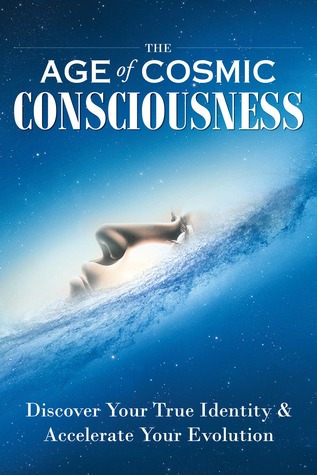
The Age of Cosmic Consciousness: Discover Your True Identity & Accelerate Your Evolution by Transform Publishing

The Age of Cosmic Consciousness: Discover Your True Identity & Accelerate Your Evolution by Transform Publishing
ageofcosmic

Time for the hippie librarian to get a little New Age-y!

The Age of Cosmic Consciousness is a bunch of different metaphysical concepts strung together sort of like Ram Dass’ Be Here Now but written on regular paper instead of- I don’t know what that stuff is- let’s say brown paper bags.

The first thing to know about this book is that it is written in a flow of consciousness style. I found it very difficult to get into, but then hypnotic once I got reading, and thus it became difficult to put dow

. I found it similar to Kelly Howell’s Secret of the Universal Mind Meditation in that one idea leads to the next idea in a very natural and linear fashion.

A lot of the concepts in here have been covered by The Secret and various other authors. There’s a good bit about the Law of Attraction, but there’s so much more than that.

What I loved about this book can be summed up in this quote: “Do not overly focus on the inaccessible gurus and unapproachable enlightened people. Recognize and accept that a higher consciousness can be attained by anyone who proactively pursues its realization.” pg 136 I truly believe that enlightenment is for everyone and possible for everyone. This book really puts that idea forward.

That being said, I don’t know that I was prepared for the “other beings of light consciousness” mentioned in this book or the section that purports to have information directly from them but not “channeled”. Or the other section about aliens tampering with human DNA in the dawn of time. My inner self doesn’t necessarily “resonate” with those ideas yet, but some readers out there may feel it and understand it.

Photo by Julia Volk on Pexels.com

In conclusion, The Age of Cosmic Consciousness is worth the read for anyone interested in improving themselves and the world through inner transformation. Remember to keep an open heart and mind because some of the ideas presented are fairly “evolved”. Some similar books are: Be Here Now and Gateway to the Heavens: How Simple Shapes Mould Reality and the Fabric of Your Being.

I received a free copy of this book through the Goodreads First Reads program. Thanks for reading!

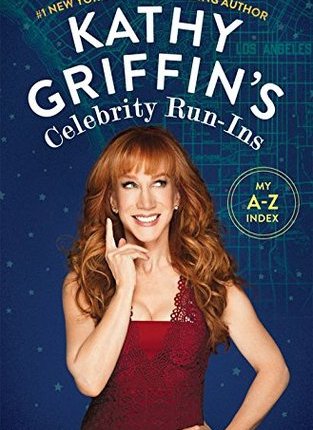
Kathy Griffin’s Celebrity Run-Ins: My A-Z Index by Kathy Griffin

Kathy Griffin’s Celebrity Run-Ins: My A-Z Index by Kathy Griffin

Here’s The Help Desk’s first ever video review!

I hope you enjoy it and here are the links to the books I mentioned at the end of the video.

The Andy Cohen Diaries

Tip It

Thanks for reading.

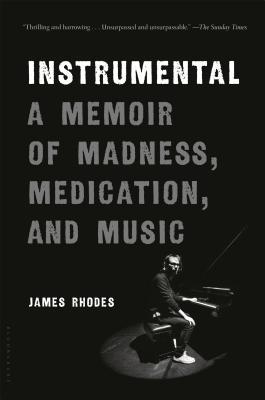
Instrumental: A Memoir of Madness, Medication, and Music by James Rhodes

Instrumental: A Memoir of Madness, Medication, and Music by James Rhodes
instrumental

This is a shocking memoir about the horrific sexual abuse that James suffered as a child and how music saved him. It is raw, ragged and real.

The author is frank about describing what happened, how his life fell apart, and how he was able to finally begin putting it back together.

Not a book for the faint of heart, Instrumental makes the reader wonder why we’re all here and what might the purpose of suffering serve in the grand scheme of things. I don’t pretend to know the answers to these questions, but James has given us a powerhouse of a book and a place to start.

I am also a classically trained pianist but you don’t have to be one to appreciate Instrumental: “… the unassailable fact is that music has, quite literally, saved my life and, I believe, the lives of countless others. It provides company when there is none, understanding where there is confusion, comfort where there is distress, and sheer, unpolluted energy where there is a hollow shell of brokenness and fatigue.” loc 51, ebook.

James gives a poignant warning to readers: “…this book is likely to trigger you hugely if you’ve experienced sexual abuse, self-harm, psychiatric institutionalisation, getting high or suicidal ideation.” loc 112. So, friends, be aware before you pick this one up.

James has a child with his first wife and he adores the boy, only asking him to do what makes him happy.

Though James thinks he’s a poor father, he’s offering the child more than some people are able to manage, even coming from a stable and emotionally healthy place: “I want him to know the secret of happiness. It is so simple that it seems to have eluded many people. The trick is to do whatever you want to do that makes you happy, as long as you’re not hurting those around you. Not to do what you think you should be doing. Nor what you think other people believe you should be doing. But simply to act in a way that brings you immense joy.” loc 986.

Photo by uncoveredlens on Pexels.com

How wise is that.

James introduces each chapter with a suggested classical music track to listen to as you read as well as some juicy tidbits about the musicians who wrote the pieces: “Beethoven… was clumsy, badly coordinated, couldn’t dance, cut himself while shaving. … Schubert, nicknamed ‘Little Mushroom’ on account of his being 5 foot nothing and violently ugly, was spectacularly unsuccessful with girls and, on one of the very rare occasions he did manage to score, he caught syphilis. … From Schumann (who died alone and miserable in a mental asylum) to Ravel (whose experiences driving trucks and ambulances in the First World War changed him forever), the great composers were basket-case geniuses…” locs 2040-2058, ebook.

He reminds us that these men we’ve set on a pedestal because of the art they produced were nothing but human with all of the failings that people have today. James makes classical music and musicians interesting to the average person. It’s a gift and one that the genre really needed to bring a new generation into the fold. This book really made me wish that I could see James Rhodes in concert. I think I would love it.

Recommended for the music enthusiast and survivors of childhood abuse, anxiety, addictions, and cutting. Some similar reads: I’m Just a Person, My Booky Wook, or Kasher in the Rye: The True Tale of a White Boy from Oakland Who Became a Drug Addict, Criminal, Mental Patient, and Then Turned 16.

Thank you to NetGalley and Bloomsbury USA for a free digital copy of this book. Thank you for reading.

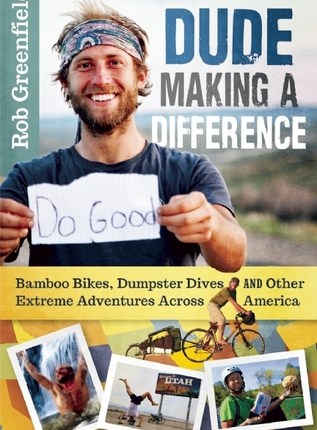
Dude Making a Difference: Bamboo Bikes, Dumpster Dives and Other Extreme Adventures Across America by Rob Greenfield

Dude Making a Difference: Bamboo Bikes, Dumpster Dives and Other Extreme Adventures Across America by Rob Greenfield

In Dude Making a Difference, Rob Greenfield has some interesting ideas about how to conserve resources, promote sustainability, and how to educate others on natural resources, transportation, personal hygiene, and more.

I don’t think that many of the methods that Rob uses will work for everyone, but they seem to make him feel better about his lifestyle.

In his quest to save the planet, Rob fights with the photographer who comes along on the 4,000+ mile bike ride (though he omits the details of these misunderstandings). I found that small detail to be ironic. It seems as if Rob cares more about the planet than he does about getting along with the people on it.

Photo by Leandro Boogalu on Pexels.com

I think that if he embraced working within the system rather than getting under other folk’s skin and bucking the system, then he might make more headway with convincing others to his point of view.

As it is, Rob runs afoul of multiple municipalities on his trip because of his dumpster diving and naked hi-jinks. I’m not saying that the system is perfect or that one shouldn’t question authority if you believe that the status quo is bogus — what I am saying is that I feel as if Rob pushes the issue just to see what he can get away with and to tell the story afterwards.

I learned quite a lot about small changes that I can make to my current lifestyle to save resources like changing out my faucets or utilizing a PowerPot (that particular product seemed exceptionally cool). But, the majority of this book felt repetitive and somewhat preachy.

Photo by Elina Fairytale on Pexels.com

Rob gets up from wherever he crashed for the night (rarely from a real bed, of course), he either feels energized or not, he scavenges for food from local dumpsters, gets yelled at for that or not, gets on the road where he either feels energized or not, promotes his sustainability initiative for the day- be that biking barefooted, or going without the seat on his bike, or using only leaky faucets to get drinking water- then he rides for awhile, finds somewhere to sleep, pops on social media while either plugging his computer into the grid or not- but justifying it either way- and then goes to sleep either energized by his day or not.

Repeat, repeat, repeat. For 104 days.

It’s interesting how Rob relies on waste to get by for much of the time because, if he succeeds in his quest to lower waste, he wouldn’t be able to live the lifestyle that he’s promoting anymore.

The cognitive dissonance in such a position would drive me bonkers, but Rob seems ok with it. I admire what he’s doing, but I just don’t believe in his methods.

If you enjoyed Dude Making a Different, you may want to read Outsmart Waste: The Modern Idea of Garbage and How to Think Our Way Out of It by Tom Szaky or The Art of Non-Conformity: Set Your Own Rules, Live the Life You Want, and Change the World by Chris Guillebeau.

I received a free copy of this book from the GoodReads First Reads Giveaway program. Thanks for reading!

The Office Sutras: Exercises for Your Soul at Work by Marcia Menter

The Office Sutras: Exercises for Your Soul at Work by Marcia Menter
officesutras

The Office Sutras sums itself up in the first couple of pages: “The basic premise of this book is that we’re on a spiritual journey every second of our lives, not just during those times we set aside to contemplate the cosmos. The job you have right now, no matter how frustrating, no matter how screamingly imperfect, is part of your spiritual path.”pg 3

Every page there after pretty much repeats the same theme.

This book just wasn’t for me. Every chapter presents a common problem that one can encounter at work and then gives exercises that you can use to come to an understanding about it.

I realized that I was never going to do any of the exercises and I didn’t regret that in any way. Big fail.

If you’re going to read a self help book that deals with work and has a Buddhist vibe, I’d suggest Peace Is Every Breath: A Practice for Our Busy Lives.

Thich Nhat Hanh is brilliant and I find his writing to be more appealing than this offering. Thanks for reading!