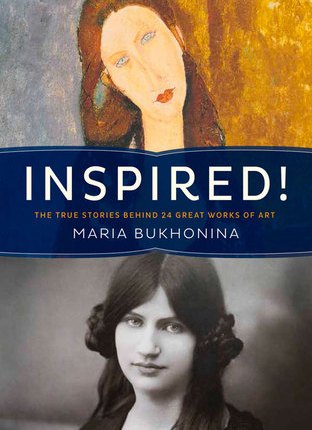
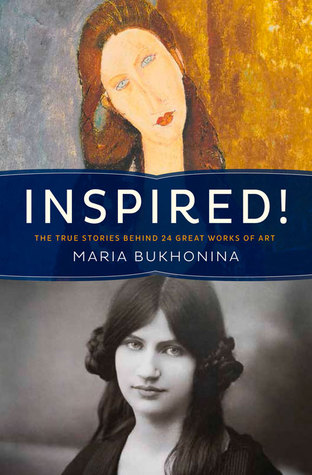
Inspired!: True Stories Behind Famous Art, Literature, Music, and Film by Maria Bukhonina

Inspired!: True Stories Behind Famous Art, Literature, Music, and Film by Maria Bukhonina
inspired

Artists are so interesting. Inspired! is a compilation of anecdotes about famous artists, writers, singers, actors, and a few of their muses. From scandals to ménage à trois, drug addictions, and kangaroo consumption (really!), this book has so many interesting little tidbits covering a variety of topics. I may be biased in that I love reading books that teach trivia, but seriously, this was excellent.

For example, did you know that the artist Suzanne Valadon was ground-breaking in the scandalous content of her paintings? She also fell passionately in love with a guy who was twenty years younger than her: “The relationship inspired Valadon to create Adam and Eve (1909), one of her best-known works. The painting was the first publicly exhibited depiction of a nude man and woman together by a female artist. The concept was daring- Adam and Eve unabashedly nude and running toward the viewer. The figure of Eve was a self-portrait, with Utter (her young lover) as Adam.” loc 317, ebook. Yay, Valadon!

Or did you know that Mata Hari was eventually executed as a traitor? I didn’t! “She refused to make her last confession to a priest, saying that the only thing she ever did was love men. “Harlot, yes, but traitor, never!” she said.” loc 458, ebook. Hard core.

How about the fact that Arthur Conan Doyle made even his mom mad when he killed off Sherlock Holmes? It didn’t sit well with the public. Doyle’s mother was furious with him. An avalanche of hate letters came in the mail. Rabid fans hounded Doyle on the streets of London, and an angry woman attacked him with an umbrella in broad daylight.” loc 507.

Reminds me of what happened to George Lucas when he messed with the sequences in Episodes IV, V, and VI. People get mad when you do things to beloved characters of the page and screen. Still true.

Photo by Tima Miroshnichenko on Pexels.com

The chapters are short so Bukhonina doesn’t get bogged down in the details of each story. I suppose a criticism of this book could be that she covers so many different artists, but I love short and sweet.

I highly recommend this one for trivia hounds and non-fiction devotees. Inspired! is a treat.

Thank you to NetGalley and Museyon Publishing for a free digital copy of this book. And thank you for reading!

The Paranormal Caught on Film: Amazing Photographs of Ghosts, Poltergeists and Other Strange Phenomena (Caught on Film) by Melvyn Willin

The Paranormal Caught on Film: Amazing Photographs of Ghosts, Poltergeists and Other Strange Phenomena (Caught on Film) by Melvyn Willin
paranormal-caught

The Paranormal Caught on Film is descriptive of what this book is — a collection of photos claiming to show the paranormal.

The short blurbs accompanying the photos were intriguing, but for the most part the photos themselves appeared to be either fancy light reflections or film corruptions. I was disappointed.

Page 91 of The Paranormal Caught on Film captured my feelings about the book as a whole: “I am always one to advocate keeping an open mind, but on the other hand we should be careful not to remain so open-minded that our brains fall out!”

If forced to pick favorite photos, I’d go with ‘Yogic Flying’ on page 101, which, after some investigating into the phenomena, doesn’t seem much like flying to me- more like enthusiastic rocking, which the picture doesn’t show.

I’d also go with ‘The Grey Lady’ on pg 133 which is allegedly a ghost caught on film in the Reading Room of the Willard Library in Indiana. Again, the lady looks more like a light reflection, but since it took place in a library, it made my list.

I can’t really recommend this one other than to say: borrow it from your local library.

Thanks for reading!

How to Be Ultra Spiritual: 13 1/2 Steps to Spiritual Superiority by Jp Sears

How to Be Ultra Spiritual: 13 1/2 Steps to Spiritual Superiority by Jp Sears

Anything can be a competition- even spirituality. JP Sears in How to Be Ultra Spiritual tackles everything from meditation to existing in the “soon” in a tongue-in-cheek effort to educate the reader on all spiritual matters.

Not for thin-skinned readers, this book uses humor to examine just how ridiculous the whole spiritual thing can be when taken to extremes. Though JP never breaks character, it is clear from the sheer amount of New Age material covered in these pages that if he hasn’t been on the retreats, met the gurus, done the shamanistic plant-fueled trips, then he’s talked to someone who has.

I found the whole thing incredibly funny, but it may not appeal to all seekers.

Photo by Eternal Happiness on Pexels.com

From the introduction: “… if there’s one thing for certain about consciousness, it’s that more is always better. There’s a lot more consciousness in the new level of consciousness that we’re now conscious of, but you’re unconscious to all of this if you’re still wasting your life in the old consciousness that is only spirituality.” loc 17, ebook. And so, the only choice we’re left with, is to become “ultra” spiritual.

What does this mean? “It’s not about being better than other people. It’s about being more spiritual than other people, which is exactly what makes you better than other people.” loc 72. Haha, JP, do go on.

When practicing veganism, he offers a few tips: “Thou shalt not acknowledge the illusionary nature of death in the presence of a thou who casts his stone at animal skulls.” loc 1079. The only vegans I’ve ever met are so not like that- and that’s what makes it so funny.

Photo by Polina Tankilevitch on Pexels.com

I’ve thought about taking a guru when I read a couple of Ram Dass’ books: “In the best circumstances your guru should be dead. … Aside from your guru always being with you like a caring stalker, the other advantage of assigning guru status to someone who’s dead is that it’s much easier for you to idealize his idealized self when he’s not alive. The tragedy of a guru still being alive is that they have their faults too.” loc 1250-1260 ebook.

It may be that I’ve never met my guru or it may be that everyone is meant to find their own way- it seems to me that we’re all just people doing the best we can. Not to pass judgement on anyone who has a guru or wants to find a guru, I’m certainly not a guru.

My favorite part of this book is when JP takes on Eckhart Tolle’s The Power of Now: A Guide to Spiritual Enlightenment with his ultra spiritual “power of soon”: “Conscious people never have hopes and dreams that are based on exactly what’s happening in this present moment of now in their life. Why? Because now isn’t a place- it’s an illusion of time that doesn’t exist. … The enlightened ones know that the only place where their hopes and dreams can live is in the present moment of their future.” loc 1578, ebook. Brilliant.

Recommended for folks who have followed a bunch of different spiritual trends and are ready for a hearty laugh about it all. Some further reading: Be Here Now, Awakening to Zero Point: The Collective Initiation, and Psychosomatic Wellness: Guided Meditations, Affirmations & Music to Heal Your Bodymind.

Thank you to NetGalley and Sounds True Publishing for a free digital copy of this book. And thanks for reading!

Stand Firm: Resisting the Self-Improvement Craze by Svend Brinkmann

standfirm

This was not the book for me at all, but it was excellently written. Basically, Stand Firm is an application of Stoic philosophy to the modern era.

It is serious anti-self help as opposed to the joke-y anti-self help of Sara Knight like Get Your Sh*t Together: How to Stop Worrying About What You Should Do So You Can Finish What You Need to Do and Start Doing What You Want to Do.

Brinkmann provides seven steps that outline his plan to apply Stoicism to your life and free yourself from the (as he sees it) needless, endless introspection and self improvement that plagues modern society. “In spheres like diet, health and exercise, a veritable religion has emerged that constantly churns out new edicts to follow and regimes to live by. … It seems that we- and I’m not afraid to count myself among the collective ‘we’- lack purpose and direction, and run around looking for the latest recipe for happiness, progress and success. From a psychological perspective, this resemble a collective state of dependency.” loc 118, ebook.

I disagree. I think that the myriad of different approaches are only of benefit to society. No one solution is going to fit everyone. The variety appeals to the varying needs.

Brinkmann also talks about using ‘negative visualization’ to build a sense of appreciation and gratitude: “Think about losing something (or someone) you care for and note how this enhances the pleasure you derive from it/them. Psychologists speak of the concept of ‘hedonic adaptation,’ i.e. that we very quickly get used to the good life. Negative visualization can counteract hedonic adaptation and make you more grateful.” loc 497, ebook.

Just playing the devil’s advocate here, but you can also build appreciation through positive visualization. See Thank & Grow Rich: A 30-Day Experiment in Shameless Gratitude and Unabashed Joy for more about that.

He explains why suppressing emotion is a good thing and should be practiced: “… the worship of authenticity in the pursuit of true feelings infantilises us. … As an adult, you should admire those who are capable of controlling- even suppressing- negative emotions. You should also be careful not to casually hurl around positive emotions. When repeated too many times, ‘Wow, that’s megafantastic!’ quickly loses its meaning.” loc 759, ebook. Again, I just can’t agree. It doesn’t feel right to me. That’s kind of the point of this book, that I shouldn’t trust those quickly passing ‘feelings’, but I do.

“Self-help literature is part of the problem, and should be ignored. However, since reading is generally a good thing, I recommend you throw yourself into a different type of literature instead- namely novels.” loc 983.

Eh, read whatever you want, whenever you want, as much as you want- that’s my recommendation.

I guess I figured out that I’m not a Stoic. Not a huge surprise there, but if you think that you may be or you’re just generally interested in Stoic philosophy- you should read this book. As for me, I’m going to go back to my navel-gazing, infantilising feeling releasing, self help inspired life. Stand Squishy, that’s me.

Thank you to NetGalley and Polity Publishing for a free digital copy of this book. And, thank you for reading!

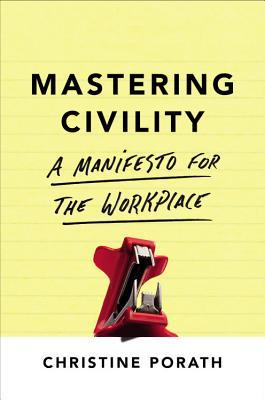
Mastering Civility: A Manifesto for the Workplace by Christine Porath

Mastering Civility: A Manifesto for the Workplace  by Christine Porath

I think we’ve all, at one time or another, worked with one of “those” people- the ones who are rude, who take all the credit, who won’t look up from their phones during meetings, send an email when they should call, or make you do work that they find boring or unimportant.

Before I read Mastering Civility, I assumed that this was behavior I had to endure until the perpetrator got another job or experienced a spontaneous personality overhaul.

Author Christine Porath asserts that tolerating incivility in the workplace is a bad idea because it spreads like a virus. Once rudeness or intolerance enters the scene, it effects everyone it touches and can sink the ship causing everything from profit loss to poor job performance.

Photo by Fox on Pexels.com

Throughout the book, Porath teaches the reader how to recognize incivility in oneself, how to assist coworkers in reforming poor behavior, and how to end working relationships with employees who either can’t or won’t toe the line. Sounding a clarion call for employers and employees alike, Porath rallies readers everywhere to join her in making the workplace civil again.

“Incivility usually arises not from malice but from ignorance. I started my research thinking that jerks out there were intentionally ruining workplaces; I now see that most bad behavior reflects a lack of self-awareness. We don’t want to hurt others, but we do.” pg 12. Until I read this book, I thought that too.

“…incivility has a way of pulling people off track and preventing them from doing their best. I’ve found this to be true in every study I’ve conducted. Even witnesses working around incivility take a hit.” pg 24.

I thought that was especially chilling because Porath ran a bunch of studies. “Many people think of rudeness as a self-contained experience, limited to one person or interaction. In truth, incivility is a virus that spreads, making the lives of everyone exposed to it more difficult. … Left unchecked, incivility can drag down an entire organization, making everyone less kind, less patient, less energetic, less fun- simply less.” pg 39.

Photo by Kate Trifo on Pexels.com

Ewww, you got your incivility all over my desk.

Those are the don’ts. Here are a few do’s: “If you want to connect with your employee or team, lead with warmth. Most of us are in a hurry to prove our competence, but warmth contributes significantly more to other’s evaluations. .. It facilitates trust, information, and idea sharing.” pg 71

“… the single biggest complaint I hear from employees about their bosses is that they fail to tune in. Do yourself and others a favor: When you speak or meet with someone, put away your smartphone. Make others the priority.” pg 114. Amen.

I laughed when Porath suggested eating well, exercising, and getting enough sleep to help foster a civil atmosphere in the workplace. Common sense stuff, yes, but how many of us have lashed out because we’re “hangry”? Change starts with you so: eat breakfast, people.

Recommended for people experiencing or who have experienced incivility in the workplace. Porath gives you some concrete methods to turn it all around. Some further business related reading that I’ve enjoyed: Do the Work, The Happiness Advantage: The Seven Principles of Positive Psychology That Fuel Success and Performance at Work and The Art of Exceptional Living.

Thanks for reading!

The Optimistic Workplace: Creating an Environment That Energizes Everyone by Shawn Murphy

The Optimistic Workplace: Creating an Environment That Energizes Everyone by Shawn Murphy

The Optimistic Workplace is a complex but useful manual on how to shift the environment at work. Shawn Murphy talks about all aspects of business from the individual to management to all the levels in-between. There weren’t many surprises in these pages, but the advice was solid.

I knew that leadership was important to the overall vibe in the work space and Murphy does say that it’s important: “…your leadership style impacts climate by up to 70 percent. Think about that 70 percent. It’s mostly how you show up and interact with others that shapes the climate that influences your team’s performance.” pg 9 But, it isn’t the only thing that matters.

Photo by Yan Krukov on Pexels.com

There are also ways in which the individual can change the work space. It all starts with greater self knowledge: “Workplace optimism thrives when people understand why they show up to work. Not only is the purpose and meaning of work important, but so, too, are the personal implications. … Personal expression through work is a major contributor to your employees’ well-being. Doing work that matters facilitates the expression of one’s talents.” pg 19 Makes sense. Know thyself does seem to be the foundation of most major life-changing movements.

“..the benefit to positively shaping the climate for your team is getting to know yourself better and discovering how to fulfill your own potential. You position yourself to love your work. In doing so, you set the tone and lead the way to help your employees realize their own potential and find greater meaning in their work and life.” pg 48 Sort of a trickle-down effect of optimistic workplace awesomeness.

Photo by Mikhail Nilov on Pexels.com

Of all of the myriad of studies included in this book, my favorite was the study of “ikigai” : “Your health is linked to a sense of purpose in life, or, as the Japanese all it, ikigai. … A 2008 study in Japan by Toshimasa Sone and his colleagues sought to understand how, if at all, ikigai contributed to longevity in life. … Mortality risks were higher in those who did not have a sense of being and of joy. Those lacking clarity in intentional living had a higher incidence of cardiovascular disease and other life-threatening illnesses.” pg 89 Purpose or death.

The only critical thing I have to say about The Optimistic Workplace is that it’s so broad. Towards the end, I despaired of ever having the time to implement all of the changes suggested, even though they seem like good ones. My boss suggested that I take my favorites and start there. I think I will.

Recommended for those who have plenty of time for reflection and transformative meetings- I think that this book has huge potential. I just wonder how many businesses would be able to take the time and actually work their way through it. Some further reading: Mastering Civility: A Manifesto for the Workplace, The Happiness Advantage: The Seven Principles of Positive Psychology That Fuel Success and Performance at Work, and Work Rules!: Insights from Inside Google That Will Transform How You Live and Lead.

Thanks for reading!

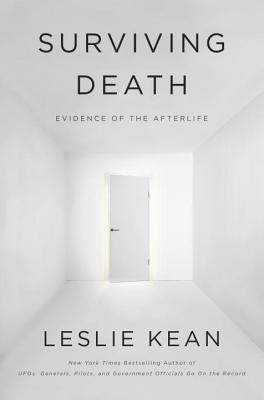
Surviving Death: Evidence of the Afterlife by Leslie Kean

Surviving Death: Evidence of the Afterlife  by Leslie Kean
surviving-death

Investigative journalist Leslie Kean takes a close look at a wide variety of unexplained phenomena in order to answer the age old question — does human consciousness survive death intact with the memories, personality, and uniqueness that was exhibited in life?

I found her evidence astonishing.

Much of her research into near-death experiences (NDEs), I had been exposed to in other books. But, the chapters about children remembering past lives, psychic mediums and physical mediums was entirely new to me.

As I read, I kept getting goose bumps up and down my arms. The stories are that powerful.

(Reminder, the following quotes were taken from an advance reader’s copy and may change or be edited in the final printed version.)

Why did Kean write this book? “My intention is to present some of the most interesting evidence from diverse sources and show how it interconnects, making it accessible for the intelligent and curious reader encountering the material for the first time. Strict journalistic protocols can be applied to any topic for which there is data, no matter how unusual or even indeterminate.” loc 51, ebook.

I think she succeeded admirably. Most of Surviving Death is easy to understand, no matter how far-out the material may be.

I’ll admit to losing interest in the passages where she tries to distinguish between intelligence coming from the living human psyche or dead ones, the psi theory vs the survival theory. But, since that was the point of the book, that may be some people’s favorite part so don’t let me put you off.

Photo by Daniel Torobekov on Pexels.com

Take these death bed descriptions of the other side by those about to leave this world: “The great inventor Edison, just hours before his death, emerged from a coma, opened his eyes, looked up, and said: “It’s very beautiful over there.” And more recently, the sister of Steve Jobs reported that just before he died, Jobs looked over the shoulders of his family members, right past them, and said, “Oh wow. Oh Wow. OH WOW!!” loc 2176, ebook.

I was not present when my grandpa passed, but Grandma told me later that at the moment he took his last breath, that a light came into his eyes and his face became so completely peaceful that he looked thirty years younger. I can’t say that I know for sure what waits for us beyond this life, but I can say that I’m not afraid. If you happen to have any fears in that regard, Surviving Death could be of great help to you.

Kean doesn’t answer the question she poses definitively because, of course, she hasn’t died and come back to tell us about it, but the stories and evidence that she presents is compelling. Throughout the chapters, Kean writes about personal, first-hand experiences that she has had. I believe that they are genuine. The hardcore skeptics may disagree.

The most extraordinary part of this book were the physical manifestations that Kean observed in the medium seances. Apparently, these seances have been going on for hundreds of years in certain areas of the world.

Did you know that in the 1920s in Warsaw, Poland, bowls of wax were placed in the seance chapter and apparitions were able to make molds of their hands? “In the Warsaw experiments, gloves were produced with interlocking fingers, with two hands clasping one another, and with the five fingers spread wide apart. Needless to say, the removal of a human hand from such formations would be impossible. Dematerialization was the only method that would leave the molds intact.” loc 4504, ebook. How had I never heard of this!

Recommended for readers who are prepared to have their minds blown. Surviving Death is incredible and almost indescribable. If you are interested in such studies, it is an absolute must-read. You may also want to look into Wisdom of Near Death Experiences: How Understanding NDEs Can Help Us Live More Fully and The Map of Heaven: How Science, Religion, and Ordinary People Are Proving the Afterlife.

Thank you to NetGalley and Crown Publishing for a free digital copy of this book. And, thank you for reading!

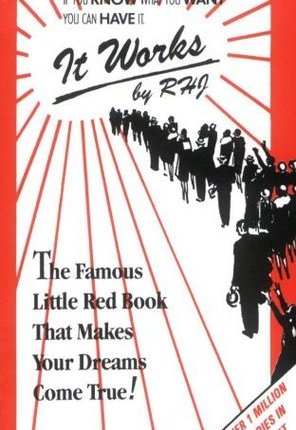
It Works: The Famous Little Red Book That Makes Your Dreams Come True! by RHJ

It Works: The Famous Little Red Book That Makes Your Dreams Come True! by RHJ

It Works by RHJ is a short book, pamphlet really, on the Law of Attraction. I was fortunate enough to pick up the deluxe version that not only had the text of the original work, but also a PDF of the way it appeared in its first printing.

A short chapter was also included that discussed the nearly-anonymous author.

Photo by Nilina on Pexels.com

I’ve read a lot of New Age/New Thought material, but I focused on this one because a certain loved one of mine is struggling. I won’t mention him by name because he says that I talk about him too much in my reviews, but suffice to say, I see him every day. Over a year and a half ago, he was laid off from a job that he enjoyed, had worked at for more than a decade, and he hasn’t found anything else yet to occupy his time. Part of the trouble, I think, is that he doesn’t know what he wants in a new occupation. It Works addresses that directly.

The mechanics of it are simple. Make a list of what you want, think about it every day, don’t tell anybody that you’re doing it. The assumption is that there is a force beyond our comprehension that responds to our thoughts and directs our lives based on what we choose to turn our thoughts towards.

Photo by Suzy Hazelwood on Pexels.com

The Abraham Hicks materials cover this in depth, but It Works was published in 1926, long before Abraham and The Secret burst into popular consciousness. This was, in fact, one of the first published books of its kind and even influenced the writings of that titan of new age thought, Napolean Hill.

To get what you want is no more mysterious or uncertain than the radio waves all around you. Tune in correctly and you get a perfect result…” pg 14.

“(Write down exactly what you want and the date you want it.) This may seem very foolish at first, but you can never realize your desires if you do not know positively and in detail what you want and when you want it. If you cannot decide this, you are not in earnest. You must be definite, and when you are, results will be surprising and almost unbelievable.” pg 20.

Photo by Kaboompics .com on Pexels.com

So, let’s cut to the chase. Does it really work?

The jury is still out. I made my list. 🙂 I guess we’ll see.

Recommended for fans of Abraham Hicks, Napoleon Hill and Pam Grout.

Thanks for reading!

Don’t Let Anything Dull Your Sparkle: How to Break Free of Negativity and Drama by Doreen Virtue

Don’t Let Anything Dull Your Sparkle: How to Break Free of Negativity and Drama by Doreen Virtue

This book wasn’t for me.

Don’t get me wrong, I love sparkling.

Photo by Hope Aye on Pexels.com

But, what dulls my sparkle is considering all of the ways in which the world raises my histamine levels, which seems to be Doreen Virtue’s thesis for this book: “…the next day as I was walking along Post Street in Union Square, I heard the inner message that is the basis of this book. … “The reason why you and so many people are experiencing life drama is because you’re addicted to histamine.” loc 81, ebook.

She goes on to list various ways that one may lower this including: major dietary changes, laundry detergent, cleaning supplies, certain types of exercise, therapy, dry cleaning chemicals, what types of plastic bottles to drink from, what types of television programs to expose yourself to, what types of make up to wear and much, much more.

I hope that the readers who are looking for this type of information find Don’t Let Anything Dull Your Sparkle because it is one of the most complete types of books of this kind that I’ve ever read.

Photo by Matheus Bertelli on Pexels.com

The thing is, I could make myself crazy if I tried to control all of that stuff.

I’ve discovered, through my own life, that if I do the inner work of feeling better then external circumstances sort of fall into place on their own without me dancing around trying to make it so.

Don’t get me wrong- I am all for self care. Regular massages, aromatherapy, professional therapy, organic foods, support groups, whatever you need to make yourself feel better, do it.

I just don’t need to adjust those things to sparkle. I feel innately sparkly. I am a veritable disco ball of sparkles.

Photo by NEOSiAM 2020 on Pexels.com

Beyond the histamine issue, it is clear that Dr. Doreen Virtue had another career in psychotherapy. If you’ve experienced drama of any kind, trouble finding that special someone or encountered difficult personalities, she will help you get past that in this book.

There again, my significant other and friends are all quite normal and low drama- sparkling, if you will.

But, if you’ve had relationship troubles, this could be the book that you’re looking for. So, seriously, don’t let me deter you if you feel you need to read it.

“Remember, it’s not about how many friends you have; it’s the quality of the friendships that matter. Even one good friendship, built upon mutual respect and other healthy qualities, will help you sparkle throughout the day.” loc 2034, ebook.

Photo by fauxels on Pexels.com

Meditation and yoga, two of my favorite things, are highlighted in this book as ways to improve your life. I couldn’t agree more!

In this passage, Doreen is talking about dealing with potential drama in your family or with in-laws: “…any way you slice it, the situation will bring up stress hormones in your brain and body, and part of being responsible is taking care of yourself. So, go do yoga as soon as you can. Play gentle music, meditate, eat a low-histamine diet, and avoid chemicals.” loc 1961, ebook.

The trouble is: brownies are not low-histamine. That’s a deal breaker for me.

Photo by Jhon Marquez on Pexels.com

I recommend this book if you’re sick and fed up with the way life is going and you want to try something drastic to turn it all around. Otherwise, I’d have to suggest borrowing this one from the library.

I’ve heard that high library usage lowers histamine levels and makes you sparkle too. Kidding.

Thank you to NetGalley and Hay House publishing for a free digital copy of this book. And, thank you for reading!