The Zen of You and Me: A Guide to Getting Along with Just about Anyone by Diane Musho Hamilton

The Zen of You and Me: A Guide to Getting Along with Just about Anyone by Diane Musho Hamilton
zen of you and me

The Zen of You and Me takes on conflict mediation through zen philosophy. I learned a lot about managing conflict but more about myself and why, perhaps, I tend to avoid it. Hamilton is never preachy, but gently guides the reader through the dark woods of differences into the clear fields of appreciation and inclusion.

“It is a very freeing experience to suddenly realize that a difference between us is not only OK- it is stimulating and worthwhile. This realization heights our confidence to bring them out directly and openly.” loc 180.

Hamilton talks about leading classes through difficult discussions about race and privilege. The group only manages to make their way through it when one of the members expresses his desire to be heard and the others in the group allow themselves to listen.

But it isn’t easy to listen. You might be angry or otherwise triggered by what you’re listening to. Hamilton addresses that: “Threat provokes such intense sensations in our body and mind that sitting still seems wildly counter intuitive and impossible. But the first step is to learn to sit still and simply pay attention.” loc 310. Mindfulness provides the way out.

Photo by Elina Fairytale on Pexels.com

I also learned that I’m not as good a listener as I could potentially be. Hamilton provides some excellent advice for improving your skills: “Listening has a lot in common with meditation. Both involve a clear intention of bringing attention to this moment, receiving input, and letting go of the preoccupations of the self. … My first impulse was to tell her it was OK; everything would be all right. Then it occurred to me that she didn’t want to hear that. … I distinctly remember the warm sensation of letting go move through me.” loc 377.

I’ve started practicing not listening to answer but listening to listen. I surprised myself with how often my mind was racing away somewhere else as soon as another person opened her mouth. But, now that I know I do that, I can focus on changing that behavior. Thanks Diane Musho Hamilton!

I expect that now I’ll experience my loved ones in wholly new ways. “Anytime we express our real thoughts and feelings, it creates more truth and reveals a bigger perspective. And anytime someone else shares their truth with us, we should be grateful that we are given the opportunity to see and feel more than we did before. It is a privilege to feel.” loc 511. It is a privilege, isn’t it.

Hamilton talks about one of her students who set an intention to not lose her temper but was then hijacked by her emotions: “Her conditioned patterns are her suffering, like mine are mine, and yours are yours. I invited her to include them, to love them, because this practice is love.” loc 1331. So, it’s not about banging yourself into shape or forcing yourself to become something you’re not. It is more like becoming who you naturally are- which is freedom, joy, love and boundlessness.

Recommended for those who struggle with conflict within themselves or between themselves and others. The Zen of You and Me is helpful, succinct, beautiful and very zen.

Thank you to NetGalley and Shambhala Publishing for a free digital copy of this book. And thank you for reading!

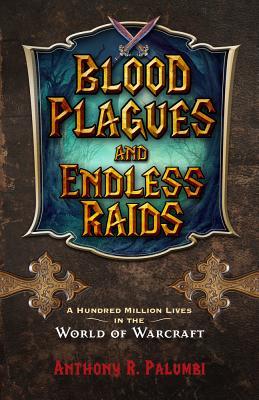
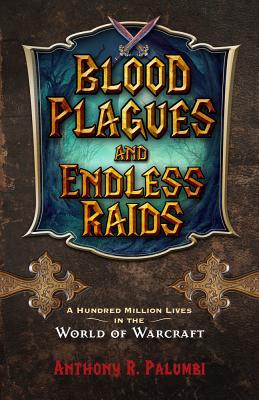
Blood Plagues and Endless Raids: A Hundred Million Lives in the World of Warcraft by Anthony R. Palumbi

Blood Plagues and Endless Raids: A Hundred Million Lives in the World of Warcraft by Anthony R. Palumbi
blood plagues

Anthony R. Palumbi’s memoir is about video games, relationships and play/life balance.

Blood Plagues and Endless Raids took a chapter for me to warm up to it. Palumbi begins his homage to World of Warcraft with an icky story about driving to meet his guild mates for the first time. But once I got past that part, I enjoyed this gaming memoir quite a lot.

I’ve mentioned in previous reviews that I am, or used to be, a very dedicated player of Everquest, both one and two. Though it never had the mammoth popularity of WoW, Everquest had quite a few things in common with the mega-hit including some game dynamics and gamer-speak. So, I found myself nodding along most of the time.

You don’t have to be a gamer to appreciate this memoir. Palumbi explains every slang term and technique that pops up. He also delves deeply into game morality, relationships in MMORPGs (massive multiplayer online role playing games), addictions, game burnout, the notable players and even how WoW entered popular culture. It is an informative and, for readers like me, a nostalgic treat.

Photo by Soumil Kumar on Pexels.com

Even though, in-game, Palumbi and I would have moved in entirely different circles. He’s a raider, you see. This means he’s into end-game content which in the old days took 40 or so players coordinating, in sometimes very complex ways, to master. I, on the other hand, prefer to wander around and see what there is to see. I like to fish and chat and have fun. Palumbi likes to PvP, strut his stuff in his rare gear and order the main tank around.

Beneath these differences though, there runs a love for gaming and the social-ness of it. He, and I, don’t have that anymore. People have moved on, had families and gone to different games. When I log onto EQ2, there’s not a single person on that I know anymore. It is very sad in some ways.

“Those who match up through games have come to know each other very well long before meeting in person. … WoW romance served, ironically, as a kind of return to romantic tradition, with separation or impossibility as a core component.” loc 467. Have I mentioned that I met my spouse in-game? Let me tell you the tale.

Photo by Luis Quintero on Pexels.com

So, I was wandering beneath the trees of Kelethin (a newbie zone for wood elves) and I was stuck in a perpetual corpse run loop. This was back when death had a cost- you’d die and lose every piece of equipment on your body unless you could go back to the scene and click your corpse. My friend had made me a nice leather piece of armor and I didn’t want to admit to him that I died and lost it, so I was looking for myself, literally. But, I was near Orc Hill and, well, I had died maybe half a dozen times looking for that tunic.

In the midst of this bloodbath, I get this ‘tell’ out of the blue (in WoW they’re called ‘whispers’) by this guy who goes “Hey, do you need some help?” And I experienced a moment of utter panic because I had always been told that people online were dangerous. But I threw caution, and my pride really, to the wind and said, “Yeah, I do.”

So these random guys helped me find most of my corpses and, as I logged on over the next couple of weeks, I met the rest of their friends. One of whom is the man I ended up marrying.

As many people as the games brought together, they also drove people apart. “Choosing a game over another person’s feelings felt strange enough on its own; to have one of my best real-life friends applauding this decision was disconcerting. At the same time, it was rewarding to hear that kind of praise from someone who’d always been so much better at games.” loc 661. I knew people who dropped out of college because of MMORPGs, lost their jobs or their relationships. Another sad reality, but true.

Palumbi also delves briefly into the gender divide on video games and how females are treated differently than their male counterparts. I honestly think that most people assumed I was a guy playing because it was more common. The last thing my future husband said before he flew out to meet me was “You are really a girl, right?” and I had to laugh. Because, REALLY, I am. So, I dealt with some harassment and discrimination because of my gender, but not a horrific amount. Sometimes it seems like I was in the lucky minority.

Highly recommended for current or former gamers or anyone who wants to understand a spouse who plays. Some further reading: You’re Never Weird on the Internet or Fantasy Freaks and Gaming Geeks: An Epic Quest for Reality Among Role Players, Online Gamers, and Other Dwellers of Imaginary Realms.

Thank you to NetGalley and Chicago Review Press for a free digital copy of this book. And thanks for reading!

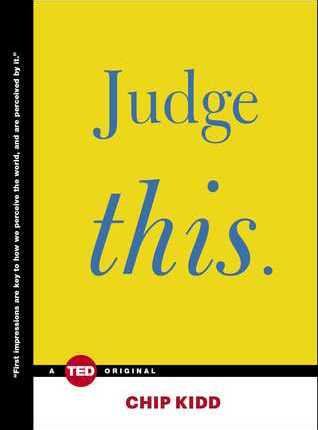
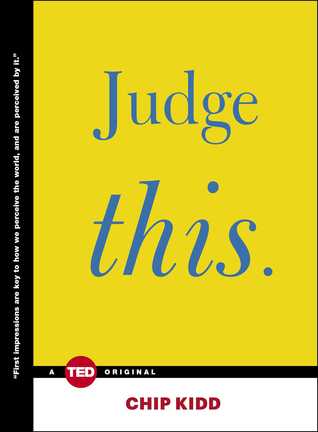
Judge This by Chip Kidd

Judge This by Chip Kidd
judgethis

The beauty of TED talks books are that they’re done by experts in whatever field is being discussed. You, the reader, can trust that they know their stuff- I find it comforting. The books, based on the 18 minute presentations, are not so long so that you feel overwhelmed or bored. I find myself branching out and exploring topics that I wouldn’t normally be interested in because of their brevity. I’d never put too much thought into product design or labeling and Chip Kidd was just the guy to introduce it to me.

Take the billing on movie posters for example. I never knew that, by union contract, the names had to a certain size on the poster. Or, that there’s a clearer font that could be used for improving the clarity of the names so that they can be read from further away, but it’s never used. Who knew!

His dissection of the Diet Coke can and ad campaign was another of my favorite moments. Kidd comes off as funny as well as highly knowledgeable- one of the best combinations in my opinion.

The last, but not least, of my favorite moments was when we got to hear Kidd’s thoughts behind why and how he designed the covers for some really impressive titles like Fraud: Essays, Gulp: Adventures on the Alimentary Canal, or The End of Overeating: Taking Control of the Insatiable American Appetite. Out of those three, Gulp drew my eye the most. When it first came into the library, I remember re-shelving it a couple of times, looking at its cover, and thinking “Wow, this is really different.” And not different in a bad way. It was different in a way that made me want to pick it up and add it to my mammoth to-read pile. And, apparently, that was exactly what Kidd was going for.

If you enjoy Judge This, I’d recommend Work Rules!: Insights from Inside Google That Will Transform How You Live and Lead (Google reveals its elegant methods of internal organization) and The Art of Stillness: Adventures in Going Nowhere (another TED talks book but about meditation instead of art design).

I received a free copy of this book through Goodreads First Reads. Thanks for reading!

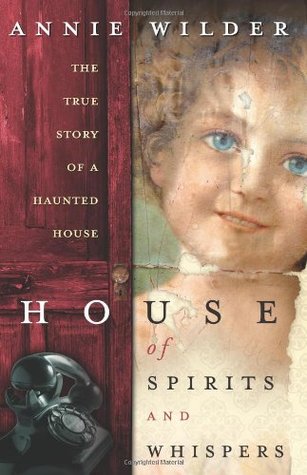
House of Spirits and Whispers: The True Story of a Haunted House by Annie Wilder

House of Spirits and Whispers: The True Story of a Haunted House  by Annie Wilder
houseofspirits

Annie Wilder is a very sensitive person. Almost from the moment she moves into her house, strange things start to happen. More than just creaking doors, Annie experiences full blown apparitions, strange noises in her furnace pipes, and has out-of-body encounters with turn of the century woman in period clothing.

Far from being freaked out by it all, though she is at times, Annie learns how to live with the spirits and takes pride in her haunted house.

From a young age, Annie accepted her other worldly perceptions saying: “.. a strong intuitive ability runs in my family. My mom can see and hear spirits, and both her mother and mother’s mother, who were Irish, was psychic, too.” pg 3.

It seems to me that if you grow up with these sorts of things happening around you, it isn’t too hard to carry them on into your adult life.

Not that things go entirely smoothly. When Annie realizes that something completely out of the ordinary is going on in her new digs, she freaks out a little bit.: “I needed to regain some sense of perspective and power. A weird dichotomy was developing in my relationship with my house. I loved my house in the daytime but felt terrified and powerless in it at night.” pg 27

Ghosts are a large part of her experience, but not the whole enchilada. “The house seemed super conducive to astral activity; besides seeing and hearing spirits, I started seeing lights.” pg 53. Lest you think that Annie is having a break with reality, some of her relatives stay in the house and see the same thing when she’s not even there. I wonder if she’s ever considered running a bed and breakfast.

She also has a scientifically-minded boyfriend who has strange things happen to him too: “It also meant a lot to me that Rex, with his objective, left-brain way of perceiving the world, was seeing and hearing some of the same extraordinary things that I was, and couldn’t explain them with regular science. He brought up the bumblebee as an example of something that defies the known laws of physics. Because of the size and mass of their bodies compared to the size of their wings, bumblebees should not be able to fly. But they do.” pgs 99-100. I didn’t know that.

Recommended for people who are interested in paranormal experiences, ghosts, and other unexplained phenomena, Annie Wilder introduces you to her house of spirits and whispers and it never gets too out of hand or scary. Some further recommended reading: True Tales of Ghostly Encounters or Hunt for the Skinwalker: Science Confronts the Unexplained at a Remote Ranch in Utah.

Thanks for reading!

The Real-Life MBA: Your No-BS Guide to Winning the Game, Building a Team, and Growing Your Career by Jack Welch, Suzy Welch

The Real-Life MBA: Your No-BS Guide to Winning the Game, Building a Team, and Growing Your Career by Jack Welch, Suzy Welch
the real life mba

Jack & Suzy Welch have years of corporate experience under their belts. The Real-Life MBA is filled with some of their best practices culled from this background. Some of it I found helpful, other suggestions I didn’t enjoy as much, but I think that this may be because I’m coming from a non-profit career track rather than a cut-throat, competitive one.

Let’s get the negative out of the way first. Mr. Welch is well known for his practice of sorting his employees into tiered groups- the top 20%, the middle 70%, and the bottom 10%. If you are in the bottom 10% and you don’t improve within a certain amount of time, he promptly and tactfully assists you in finding new employment.

Now, I understand that there needs to be a balance when applying the carrot and the stick in business relationships. But, their approach just seems harsh. Welch insists that this system is more fair to the employer and employee- if you’re a bad fit, you’re not doing anyone any favors by sticking around.

Photo by fauxels on Pexels.com

On the other hand, your business will always have a bottom %10 so there will always be the shadow of that looming ax. I suppose that this could lend itself to an environment of continual growth, but I feel like it would be more motivated by fear than love. And, really, who wants that.

I liked the vision of organizational structure that was presented in Yes, And: How Improvisation Reverses “No, But” Thinking and Improves Creativity and Collaboration by Leonard Kelly. I think that creativity, trust, safe environments for occasional failures and career success go hand-in-hand. By encouraging an “ensemble” effort rather than a “team” mindset and fostering collaboration rather than a score board, I suspect that one would see just as excellent receipts with less turnover and a closer team bond.

Photo by Andrew Neel on Pexels.com

I haven’t tested this theory though and Mr. Welch does have forty or fifty more years business experience than me, so take it with a grain of salt. But, that’s my two cents.

I liked the section on career development: It’s About You, starting on page 177. Most of it is just common sense advice, but it’s solid. Do what you love to do and don’t waste your time in a career you hate.

We spend most of our time at work so we may as well be happy when we’re there- it’s the fuel of success, etc. No big surprises, but sometimes the most useful and applicable advice isn’t surprising.

If you enjoyed The Real-Life MBA, I’d recommend Yes, And: How Improvisation Reverses “No, But” Thinking and Improves Creativity and Collaboration by Leonard Kelly to give you a slightly different viewpoint on teamwork.  Also, Work Rules!: Insights from Inside Google That Will Transform How You Live and Lead by Laszlo Bock so that you can read about HR practices inside one of the most successful and employee friendly companies on the planet.

I received a free copy of this book through the Goodreads First Reads program. Thanks for reading!

The Book of Tapping: Emotional Acupressure with EFT by Sophie Merle

The Book of Tapping: Emotional Acupressure with EFT by Sophie Merle
bookoftapping

Ok, friends, prepare yourself to go on a journey with your favorite hippie librarian into the world of EFT- emotional freedom technique.

I didn’t know what to expect from The Book of Tapping being unfamiliar with this entire method. What I found fascinated me.

What is EFT? :“The central tenet of its theory is that any discontent or disorder in our lives is the result of an imbalance in the energy that flows through our physical bodies. Its main concern is the restoration of harmony using the meridian points of Chinese acupuncture, for which EFT is an emotion-based variation.” loc 18, ebook.

“It is commonly believed in the Western World that matter and energy are entirely separate things. However, to understand how EFT works, it is important to recognize that we live in a world comprised of a single energy.” loc 81, ebook. I’m game to try anything once.

I’ve read other new age teachers, Abraham Hicks comes to mind, who teach that everything is vibration. So, to bring about great change, one need only take on a different vibration. I figured that EFT was a “tapping” version of that philosophy.

There are some huge claims made early in this book: “Some of the common problems EFT can eliminate are: Phobias. … Tragic memories. … Irresistible urges. … Difficult emotions. … Restrictive beliefs. … Illness and physical suffering.” loc 65, ebook. “Really?” I thought as I read those pages. “I’ve got to learn how to do this, like yesterday.”

Photo by Riccardo on Pexels.com

So, utilizing the lessons in The Book of Tapping, yours truly practiced her first rounds of EFT. I wasn’t expecting much, if anything to happen, but the results were surprising. First of all, I noticed a lightness around my head and face. It’s hard to describe, but it was as if a real weight or wet towel dropped off of the top of my head. I was very impressed and kept at it. In successive practices, I didn’t experience that enormous lightness of the first go-round, but it still felt like an improvement over where I had been.

“Once EFT has become a habit, you can also perform tapping rounds in your imagination. All it takes is to close your eyes, concentrate on your problem, and mentally perform the sequences.” loc 564. I memorized the method and use it now at work, in the car, when my co-workers are frustrated, an angry person calls on the phone, or if I have a panicky moment. It could be that it is an excellent in-the-moment distraction from what’s going on or maybe I’m actually changing my vibration. Frankly, I don’t care why it works, I’m just telling you- it works.

Keep an open mind, readers. Saying that, I have to admit, I wouldn’t necessarily have believed it if I hadn’t experienced it first-hand. This EFT thing is for real. Sometimes, I stumble upon books that change my world-view and this is one of those books. The Book of Tapping just might be one for you too.

Thank you to NetGalley and Inner Traditions for a free digital copy of this book.

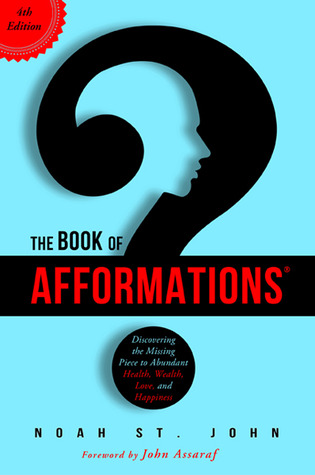
The Book of Afformations: Discovering the Missing Piece to Abundant Health, Wealth, Love, and Happiness by Noah St. John

The Book of Afformations: Discovering the Missing Piece to Abundant Health, Wealth, Love, and Happiness by Noah St. John
afformations

The Book of Afformations isn’t just another self help book putting forth the same old ideas of positive thinking, visualizations, and affirmations. Noah St. John has created a four part system to literally change the way you think, then act, and as a result, your life.

Step One: Ask yourself what you want, in all areas of your life. (A part of this stage is writing down all of the negative questions that you ask yourself like “Why am I never enough?”. That section was difficult to get through but eye opening.)

Step Two: Form empowering questions to help you achieve the priorities that you wrote down in Step One.

Step Three: Accept. Accept these new ways of looking at your life situation. Repeat the afformations. Create new beliefs and internal dialogue. Repetition is key here.

Step Four: Act. Here is where St. John steps away from other New Age authors that I’ve read. He suggests writing down three actions to take for each Afformation that you want to incorporate into your life. Do one a day. Keep going.

It seems really simple and the author peppers the text with success stories of people who have created amazing change in their life with this system. Another part of his book is a short biographical section about the author, how he came up with the system, and the extraordinary changes that he has made in his own life using it. The last couple pages are ads selling St. John’s other books, success workshops, online audio programs, and applications. They all seem to be quite popular, so it seems that at least some folks are having success with this.

I enjoyed the read and the author gave me some really interesting new techniques to try in my own life. I’d suggest this book to anyone who has tried affirmations and failed or is just looking to try something new for their negative thought patterns.

I received a free copy of this book through the Goodreads First Reads program. Thanks for reading!

Get Me Skinny by Tony Arreola

Get Me Skinny by Tony Arreola

Why is Getting Skinny So Hard?

Or so, Aubrey thought. Healthy hopes habitually crumbled into misery. Empty promise after empty promise, the fitness industry routinely burned her. Destined for another failed attempt, a disillusioned Aubrey hears of the talented Mr. Skinny. He holds the secret to her success. He’s smart, fit, charming and…too busy for her. She needs to get in shape, she needs to find a man, and she needs to make this year, her year.

-Goodreads

I liked the way that this book was written. It seemed overly simplistic at first, but I think that’s just because I’ve conditioned myself to think that eating healthy and becoming/remaining fit is a difficult thing to do. Tony Arreola breaks it down and drums it into your head that taking care of yourself is something that everyone can do and you can start, RIGHT NOW.

Photo by ROMAN ODINTSOV on Pexels.com

He clearly outlines the path to success with a narrative involving a girl named Aubrey who meets Tony and says “Get me skinny!”. She learns the proper way to eat, move, and retrain her inner voice for success- not just today but for the rest of her life.

If the reader didn’t pick it up through the story, Tony conveniently outlines all of the important points of his plan, coping mechanisms, exercise ideas, water/food intake information at the back of his book. That way, you don’t have to reread everything if you forget a point or two.

I wish that Tony had included more about his own personal background story and his motivation for getting into fitness. I feel that would be extra motivational for folks reading his book. A brief summary of it is included in “About the Author” in the back of the book and there is a short interlude in the story where Mr. Skinny talks about what drove him to a lifetime of health and fitness. More of that would be great. He has a lot of heart and the experiences that made him into what he is are really interesting.

Overall, this is an excellent resource for someone looking to make a major change in their life. I would recommend it for anyone who has tried and failed at diets, exercise programs, or just wants the motivation to do better. Tony/Mr. Skinny will take you to your goals and beyond.

Also recommended: This is Why You’re Sick and Tired by Jackie Warner or Making the Cut by Jillian Michaels.

I won a free copy of this book through the Goodreads First Reads program. Thanks for reading!

The End of Self-Help: Discovering Peace and Happiness Right at the Heart of Your Messy, Scary, Brilliant Life by Gail Brenner

The End of Self-Help: Discovering Peace and Happiness Right at the Heart of Your Messy, Scary, Brilliant Life by Gail Brenner

Dr. Gail Brenner, from a completely Western point of view, presents a method of self realization that feels quite Eastern in its premise. To escape from troubling thoughts or life situations, go within and stay in awareness of your own consciousness.

From this new way of existence, external problems will either change or cease to exist in your new perspective of non-being. In fact, this book read a lot like Eckhart Tolle but was, I felt, a lot more understandable with some easy exercises thrown in.

Photo by Brett Jordan on Pexels.com

I think sometimes it helps to read the same type of material from different people because maybe something that they say will finally penetrate the fog in your mind. It can be a frustrating slog through buzz words and generalities. Or, perhaps, this author’s life experience is closer to yours and you are more able to figure out what the heck they’re saying- the finger pointing at the moon and all that.

I try to have an open and empathetic mind when I read self-help because you run into a lot of authors who want you to jump through the exact same hoops that they did even though your life experiences or difficulties aren’t the same. Yes, you may find some techniques that work for you but it’s never quite the extraordinary break through that they’re claiming.

Photo by Karolina Grabowska on Pexels.com

I run into the same messages again and again in self-help, but, I’m always thinking, maybe THIS time it’ll stick and I won’t have to try, yet another, author. Dr. Brenner has written a message that resonated with me even though it wasn’t the first time I’d run into it and it’s almost universally applicable in its technique.

She wrote this book so that, theoretically, the reader would never have to delve into self help again out of feelings of lack, loneliness, fear, etc. I’m certain that I will go there again, the self help shelf, out of a sense of curiosity which Dr. Brenner doesn’t discourage. She doesn’t ask readers to check out of their lives, but she wants to make sure that you’re going into self help for the right reasons.

This is a great read. If you like Eckhart Tolle, but he feels too far or you don’t dig his teachings about the “pain body”, The End of Self-Help might be just what you’re looking for. If you’re looking for more of this type of teaching, listen to the audio lecture, In the Presence of a Great Mystery by Eckhart Tolle or Resist Nothing: Guided Meditations to Heal the Pain-Body by Kim Eng.

I received a free copy of this book through Goodreads First Reads program. Thanks for reading!