The Love Poems of Rumi by Jalaluddin Rumi, Edited by Deepak Chopra

The Love Poems of Rumi by Jalaluddin Rumi, Edited by Deepak Chopra

I think Rumi’s poetry is unsurpassed in its mysticism and beauty.

“In your light I learn how to love.
In your beauty, how to make poems.”

“You dance inside my chest,
where no one sees you,”

“but sometimes I do, and that
sight becomes this art.”
pg 62

Photo by Rahul on Pexels.com

When my husband and I were first dating, we lived in different parts of the country. This was one of the books he sent when he found out that I loved poetry. He bought himself a copy too and we read it together- separately. Then we talked about it on the phone later. This was in the days before Skype or Facetime. It seems so quaint now.

“I desire you
more than food
or drink”

“My body
my senses
my mind
hunger for your taste”

“I can sense your presence
in my heart
although you belong
to all the world”

“I wait
with silent passion
for one gesture
one glance
from you”
pg 34

Photo by Wendy van Zyl on Pexels.com

I’ll be married for 11 years this May.

If you ever meet someone romantically interesting who tells you they like poetry, buy them a book of Rumi. You won’t regret it- at least, my husband says he doesn’t. 🙂

Thanks for reading!

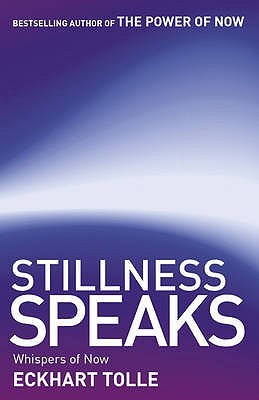
Stillness Speaks by Eckhart Tolle

Stillness Speaks by Eckhart Tolle
stillness speaks

Shorter and simpler than his other books, Stillness Speaks is the essence of Eckhart Tolle. If you’re interested in his teaching, but don’t feel up to some of his more far-out ideas, this would be a good place to start.

Waking up to who you really are: “When you recognize that there is a voice in your head that pretends to be you and never stops speaking, you are awakening out of your unconscious identification with the stream of thinking. When you notice that voice, you realize that who you are is not the voice- the thinker- but the one who is aware of it. Knowing yourself as the awareness behind the voice is freedom.” pg 29.

If you feel like things are out of your control, Eckhart Tolle hands the reins of power back to you: “Your thoughts make you unhappy. Your interpretations, the stories you tell yourself make you unhappy. “The thoughts I am thinking right now are making me unhappy.” This realization breaks your unconscious identification with those thoughts.” pg 120.

This book is filled with mind-blowing moments. Take this one (I underlined it in my copy): “Death is not the opposite of life. Life has no opposite. The opposite of death is birth. Life is eternal.” pg 103. Eckhart Tolle mic drop.

I’ve always loved his thoughts about the relationship between nature and man: “Nature can bring you to stillness. That is its gift to you. When you perceive and join with nature in the field of stillness, that field becomes permeated with your awareness. That is your gift to nature. Through you nature becomes aware of itself. Nature has been waiting for you, as it were, for millions of years.” pgs 85-86. So, go hug a tree today. 🙂

This book is an experience which is hard to describe. Read it and let me know what you think.

If you enjoy Stillness Speaks, you may want to give The Power of Now: A Guide to Spiritual Enlightenment or A New Earth: Awakening to Your Life’s Purpose a go. They are more difficult to get through than this offering, but I found them to be worth it.

Thanks for reading!

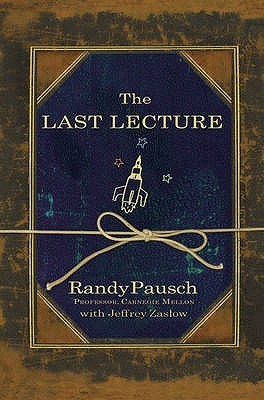
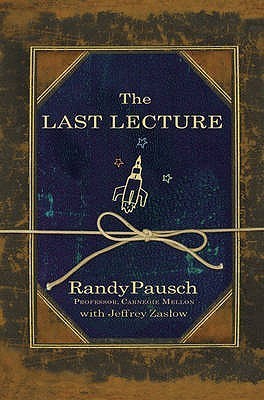
The Last Lecture by Randy Pausch

The Last Lecture by Randy Pausch
thelastlecture

The Last Lecture is Randy Pausch’s last hurrah- a final note to the world and his family about how to live, love and let go. It is beautiful.

I think that we’re all here for a reason and have stories to tell. How fortunate for us all that Randy had the time and ability to tell his particular story.

I recommend this book for fans of memoirs, computer engineering and heart-felt narratives. I listened to the audiobook and it was excellent.

Then, once I finished the book, I looked up Randy’s actual last lecture on YouTube. Bring your kleenexes, friends.

See it yourself: 

Thanks for reading!

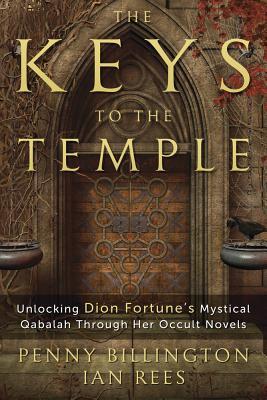
The Keys to the Temple: Unlocking Dion Fortune’s Mystical Qabalah Through Her Occult Novels by Penny Billington, Ian Rees

The Keys to the Temple: Unlocking Dion Fortune’s Mystical Qabalah Through Her Occult Novels by Penny Billington, Ian Rees
keystothetemple

I’d recommend The Keys to the Temple for mid-level to advanced students of the Qabalah. As simple as the authors have made it, they still assume that you know the worlds, paths and general theory. If you haven’t studied The Mystical Qabalah, this won’t make any sense at all.

If you have the background and the interest, The Keys to the Temple may be of great interest to you. This book contains one of the clearest explanations of the path of the spiritual journey that I have ever read.

Let’s start from the top. What is the Qabalah? “The Qabalah is a spiritual system that has been practiced secretly in Europe since at least the 12th century though it draws on deep roots within Judeo Christian tradition. loc 3117.

The Mystical Qabalah and Israel Regardie’s classic A Garden of Pomegranates: Skrying on the Tree of Life were my stepping stones into another way of viewing reality.

I have read criticisms of the books, that they’re too cerebral or dry theory. “However when most people encounter the book they are confronted by a dense-seeming text with long lists of apparently unrelated facts: the idea that this is linked with the vivid imagery and dynamism of the novels can be difficult to understand.” loc 172. I agree that it is “dense” but since it was my introduction to the stuff, I didn’t know any better.

Photo by Matheus Bertelli on Pexels.com

Dion Fortune went a step further and wrote fictional novels to put Qabalistic theory into the real world. The Keys to the Temple takes these books apart by plot, character, theory and then gives practical exercises for personal meditation on the works.

That last part, the practical exercises, is the most important in my mind. It’s like learning to ride a bike. You can read books about it and watch other people riding bikes or talk about riding bikes. But, it’s not until you ride yourself that you get the experience and thrill of it.

With this book, the authors have handed you a bike and shown you the door of the garage. It’s just up to you to ride out there. “Anyone can read this book, but only those who do the work will gain anything from it. The secret of magic is that it is experiential.” loc 2374.

Photo by Pixabay on Pexels.com

Fortune was also deep into Jungian psychology. “She came to significant conclusions when contrasting psychological and magical approaches in prompting change. Fortune was a forward thinker, and the first to acknowledge that ideas and theories could develop for the better. Her stories seem almost to anticipate the direction psychology would travel, into area that might now be described as spiritual psychology.” loc 3117. And this was in the early part of the 19th century. She truly was a woman ahead of her time.

I’m excited about this book and its potential. The Western Mystery tradition never gets its own shelf in the book stores. The new textbooks, what few there are, are mixed in with the New Age/New Thought works. But, that’s not quite right. It’s truly a category all of its own.

I think the time has come for these practices to be re-introduced to the world. The Keys to the Temple is a step in the right direction.

Thank you to NetGalley and Llewellyn Publications for a free digital copy of this book.

Thanks for reading!

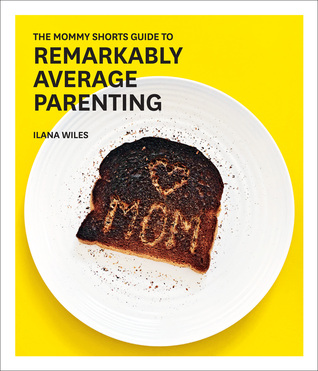
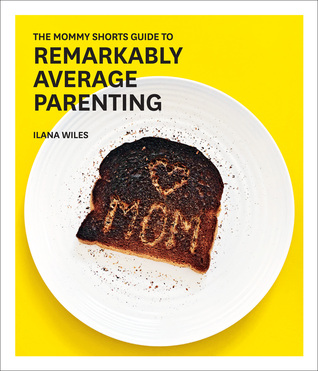
The Mommy Shorts Guide to Remarkably Average Parenting by Ilana Wiles

The Mommy Shorts Guide to Remarkably Average Parenting by Ilana Wiles
remarkably average

The Mommy Shorts Guide to Remarkably Average Parenting is one of the best books about parenthood I’ve ever read. It is an honesty, funny and poignant look at the un-glamorous side of parenting. I loved the pictures. I loved the stories. I wish that this book had been around when I had my baby. Between this read and How Not to Hate Your Husband After Kids, mothers-to-be have all their bases covered.

Ilana warns mothers about the perils of choosing rare names: “… if you want to name your child something odd, I support you. I like odd names. I think odd names make the world a more interesting place. But you should be prepared to hear some criticism when you are at your most vulnerable.” pg 19. I didn’t even pick something that weird for my child (Willow) but I still faced criticism. When I told my grandpa the name I picked for his first female great-grandkid, he told me that it was the stupidest thing he’d ever heard. And there I was, heavily pregnant. Yeah, I cried. Wish someone had warned me.

I empathized with the idea that parents have no clue what they’re doing and we’re all secretly terrified that we’re going to screw up our kids in some irreparable way. Over a decade later and I still feel that: “In hindsight, the newborn phase wouldn’t be that hard if new parents weren’t so worried about messing up in such a way that it would ruin their newborn’s life forever.” pg 33.

The page entitled, My two-year-old’s rules for eating a banana pg 76, had me in stitches. Kids are so weird about food. My daughter is currently on a mac-n-cheese, ramen and ice cream kick. This time last year, all she would eat was homemade pancakes and grilled cheese with the crusts cut off. I’m sure that in another year, we’ll be somewhere else. And it’s not just about the “what”, there’s also the “how.” If you cut the crusts off the grilled cheese, but then don’t cut it diagonally, then no dice. You may as well throw it out because my kid won’t eat it. It’s absurd, but true. Poor Ilana suffers through the same thing but with bananas.

Photo by Aleksandar Pasaric on Pexels.com

The other funniest mini-chapter is: “Totally Butchered Words: Even if you do stop cursing and shield your kids’ ears from swearwords outside the home, your kids will probably still end up saying a few unfortunate things anyway. This is because toddlers might be trying to say one thing, but then it comes out sounding like another word entirely.” pg 116. I can’t even quote what she prints on the next pages because it is too filthy but, in my opinion, it is absolutely hilarious.

Ilana’s parenting philosophy is fantastic: “It’s not a matter of high or low expectations- it’s a matter of no expectations. Discover who your kid is as you go. Your kids will not be who you expect, but the things that amaze us most in life are never the things we expect.” pg 215 Mine amazes me all the time.

Highly recommended to own or give as a gift, The Mommy Shorts Guide to Remarkably Average Parenting is a cut-above average.

Thanks for reading!

The Alchemy of Freedom: The Philosophers’ Stone and the Secrets of Existence by A.H. Almaas

The Alchemy of Freedom: The Philosophers’ Stone and the Secrets of Existence by A.H. Almaas

I picked up The Alchemy of Freedom because I was looking for an accessible book about alchemy. Unfortunately, it wasn’t actually about alchemy nor was it accessible in my opinion.

Photo by Evgeny Tchebotarev on Pexels.com

But, everybody is ready at different times for different manners of spiritual teachings. Don’t let my incomprehension deter you if you find the description intriguing.

I’m neither a genius nor a guru, just someone who studies religions and spirituality in a comparative, curious, meandering way. This could be the book that opens a door for you.

It simply wasn’t that for me.

There are some gems hidden in these pages but I found it mainly to be a labyrinth of words. I’ve had a similar feeling when listening or reading the works of Eckhart Tolle.

I feel like what Almaas is saying is worthwhile, so I made my way through it. But I just didn’t get the majority of it. Puzzling my way through this book was like grasping a cloud.

Photo by Rok Romih on Pexels.com

I had finished this book last week in preparation for writing a review the day it came out, but when I sat down to write yesterday, the words wouldn’t come. Rarely does reading a book leave me speechless.

I’ll pull some highlights to give you a feel for it. Reminder: this was a digital advance reader’s copy so the final published version could be slightly different.

I was able to comprehend Almaas’ thoughts about our “true nature” and most of the passages I highlighted talk about it: “Whether we recognize it as presence or awareness or emptiness, true nature is crucial to the process of awakening, realization, enlightenment, and liberation. It is the source of all spiritual experiences, insights, and transformations.” loc 116-133.

The bits of alchemy that Almaas did discuss were illuminating: “When we are experiencing ourselves as true nature, we realize that a human being is really the alchemical laboratory. The human being, the human consciousness, the human mind, the human heart are the instruments through which the magician works.” loc 186.

Photo by Vinu00edcius Vieira ft on Pexels.com

Most books that discuss alchemy are symbols heaped upon symbols. Perhaps it’s just the nature of the topic, but it’s frustrating.

About the philosophers’ stone: “The alchemists spent millennia trying to find it. They considered it the final result of the magnum opus, the great work of spiritual and material transmutation. Some alchemists thought they could make it, others believed it had to be discovered. … I am not teaching anything about alchemy here; I am borrowing the idea because it fits with what I am trying to say about true nature. … We can only experience true nature in the manifold ways it presents itself, and yet it is always one thing.” loc 666

I felt like this next quotation encompassed my experience of this book: “Sometimes we can rapidly absorb a teaching, and other times we can’t get very far with it for a long time. But we don’t need to get into a mental struggle with the ideas and the notions. Although understanding is an important part of awakening, it need not happen immediately.” loc 922.

So, that’s a relief. Perhaps my awakening is still on its way. Until then, I’ll just chill where I am.

Photo by Jill Wellington on Pexels.com

Thank you to NetGalley and Shambhala Publications for a free advance reader’s copy of this book.

And thank you for reading!

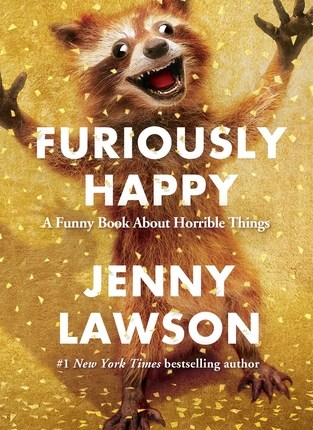
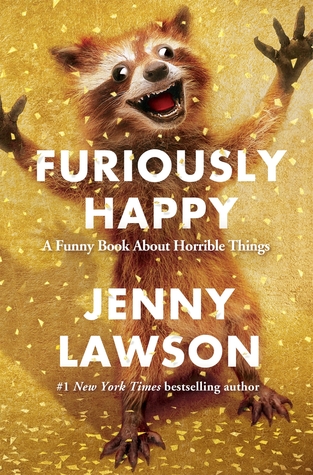
Furiously Happy: A Funny Book About Horrible Things by Jenny Lawson

Furiously Happy: A Funny Book About Horrible Things by Jenny Lawson
furiously happy

Jenny Lawson may not appeal to all readers, but I love her stuff. Her books are like open diaries and sometimes you just have to look away, but I always find myself looking back. I loved her first book and this one was even better.

In addition to being, in my opinion, uproariously funny, Jenny is a poster child for the millions who suffer silently from mental illness and the social stigma that goes along with that. She has more than embraced her condition, she’s transcended it into a weird alternate reality with grinning, taxidermied raccoons and brown (not white) Pegasuses with back herpes.

Though she obviously has her dark moments, Jenny’s world seems a lot more fun than the ordinary world. That in itself is miraculous when you consider the sheer amount of mental anguish that she’s lived through. I think Jenny gives people with debilitating mental illnesses hope- that they too can live a life filled with laughter, quirkiness and fun despite any obstacles.

It’s weird but my favorite part was the bit about Japanese toilets. I googled it and found out that Japanese toilets are a for-real “thing”- those buttons, squirting water and all. So, in addition to being entertaining and inspiring, this book could also be considered educational. 🙂

If you enjoyed Furiously Happy, you may want to try I’m Just a Person by Tig Notaro, Mother. Wife. Sister. Human. Warrior. Falcon. Yardstick. Turban. Cabbage. by Rob Delaney or Sleepwalk With Me and Other Painfully True Stories by Mike Birbiglia.

Thanks for reading!

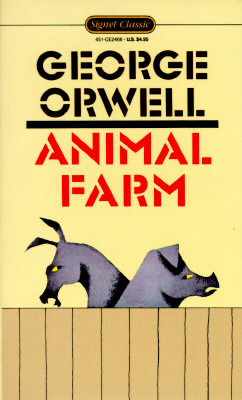
Animal Farm by George Orwell

Animal Farm by George Orwell

animalfarmContinuing my series on ‘books I should have read in school, but didn’t,’ I tackled Animal Farm, a short story that is not just a political metaphor, but also a fable about what can happen to even good-intentioned revolutionaries as, after a successful rebellion, they slide slowly but inexorably back towards everything that they fought against in the first place.

Here’s a simplified run-down of the plot: so, there’s a farm. The animals rise up against the farmer and take the place for themselves. They work hard, starve themselves even to succeed, and, despite all obstacles, keep moving forward. The pigs are the smartest, can read and set up the morality of the farm in the form of commandments which are written on the side of a barn in white paint.

Most of the animals can’t read, but they think they remember what the commandments say. Then, as the pigs become more like the humans they overthrew, they find that the commandments are changing to fit the behavior of the pigs. And finally, after much hardship, things come full circle and the pigs have set themselves up as the farmer used to be and everything starts over again.

This is from the preface by Russell Baker: “Orwell called the book “a fairy story.” Like Voltaire’s Candide, however, with which it bears comparison, it is too many other things to be so handily classified. It is also a political tract, a satire on human folly, a loud hee-haw at all who yearn for Utopia, an allegorical lesson, and a pretty good fable in the Aesop tradition.” introduction vi. Also, I would call it a warning. Think for yourselves or others will think for you. Educate yourselves or others will tell you what the words say and will re-write them to benefit themselves or their friends.

Please read everything you can get your hands on. Here’s what can happen if you don’t: None of the other animals on the farm could get further than the letter A. It was also found that the stupider animals, such as the sheep, hens, and ducks, were unable to learn the Seven Commandments by heart. After much thought Snowball declared that the Seven Commandments could in effect be reduced to a single maxim, namely: “Four legs good, two legs bad.” This, he said, contained the essential principle of Animalism.” pg 50.

How do traditions get started?: “Mr. Jones’s gun had been found lying in the mud, and it was known that there was a supply of cartridges in the farmhouse. It was decided to set the gun up at the foot of the flagstaff, like a piece of artillery, and to fire it twice a year- once on October the twelfth, the anniversary of the Battle of the Cowshed, and once on Midsummer Day, the anniversary of the Rebellion.” pg 60 The brilliance of this story is the way that Orwell takes completely human tendencies like remembrances, parades and political speeches and reveals them for the manipulating tools that they can potentially be in the hands of the selfishly motivated.

Or how about the archetype of the ‘reluctant’ leader? : “Comrades,” he said, “I trust that every animal here appreciates the sacrifice that Comrade Napolean has made in taking this extra labour upon himself. Do not imagine, comrades, that leadership is a pleasure! On the contrary, it is a deep and heavy responsibility.” pg 69. The superior housing, connections, salaries and kick-backs… leadership is indeed a heavy and nearly impossible to bear responsibility. It’s a wonder that anyone volunteers for it.

And finally, the poignancy in the memories of Clover, one of the longest lived animals on the farm: “If she herself had had any picture of the future, it had been of a society of animals set free from hunger and the whip, all equal, each working according to his capacity, the strong protecting the weak, as she had protected the lost brood of ducklings with her foreleg on the night of Major’s speech. Instead- she did not know why- they had come to a time when no one dared to speak his mind, when fierce, growling dogs roamed everywhere, and when you had to watch your comrades torn to pieces after confessing to shocking crimes.” pg 95 How did it all happen? Was it the grasping of the pigs? The helplessness of the illiterate but good-hearted animals? What was it? Fate?

The greatest lesson of Animal Farm is that I could imagine this tragedy happening in a town/state/country near me. Couldn’t you?

Thanks for reading.

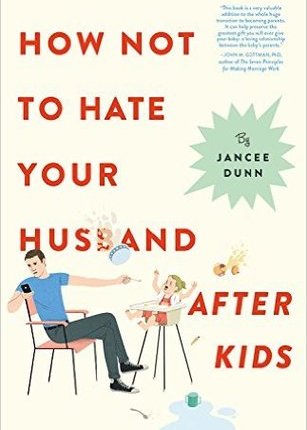
How Not to Hate Your Husband After Kids by Jancee Dunn

How Not to Hate Your Husband After Kids  by Jancee Dunn

This book gave me so many “ah-ha” moments that after a hundred pages I started to feel like an idiot. Why did I assume that so many of these little “life after baby” marital frustrations had only ever happened to me?

How Not to Hate Your Husband After Kids made me feel like I was part of a larger group called ‘mothers who try to do it all and feel secretly guilty that they can’t and wonder how everybody else does it.’ What a relief to know it wasn’t just me.

Photo by Andreas Wohlfahrt on Pexels.com

Dunn weaves her personal stories in with interviews from experts in fields as diverse as couples’ counseling to organizational gurus on a quest to save her sanity and her marriage from the hole that it had fallen into post-baby.

She is largely successful and gives plenty of tips that readers can incorporate immediately into their lives.

But, I was bothered by the, what I interpreted as, straight-up manipulation of her husband. Yes, Dunn is simply following expert advice, but reading about her self-satisfied crowing as she changes some of his more irritating behaviors felt disrespectful.

I mean, husband Tom is going to read this book.

I would feel devastated if my spouse wrote those sorts of things about me for millions of people to read and dissect. Granted, he was clued in that things were being recorded in a tell-all book, but still.

Photo by Public Domain Pictures on Pexels.com

“When I was six months pregnant with my daughter, I had lunch with a group of friends, all of whom were eager to pass along their hard-won scraps of parental wisdom. … ” … get ready to hate your husband,” said my friend Lauren. … Wrong, I told her calmly… But my friend Lauren was right.” locs 115-140 ebook.

We joke about how babies change lives but it’s not really funny, is it. It is a legit problem that marital happiness decreases because of less sleep, less money, less time, less sex… no need to go on.

Dunn begins her efforts to change her situation when she realizes that she’s reached a breaking point.

“Our daughter is now six, and Tom and I still have endless, draining fights. Why do I have the world’s tiniest fuse when it comes to the division of childcare and household labor? I am baffled that things have turned out this way.” loc 158.

In cringe-inducing honesty, Dunn admits to being verbally abusive to her spouse. My stomach actually churned when I read the sorts of things that she’d call him during fights.

Photo by cottonbro on Pexels.com

That part of the memoir made me very glad that she decided she didn’t want to live like that because I know that I wouldn’t have wanted that either.

I learned a lot about “maternal gatekeeping,” a pernicious practice where a mother discourages fathers from interacting with their children because of an internal belief that she knows better how to do EVERYTHING. And also, I learned about the importance of blocking time on weekends for personal rejuvenation and rest.

“And must we be compulsively busy every second of the day, briskly doing something “useful”? Nonstop activity can be addictive, but it’s a mistake, warns the University of Houston’s Brene Brown, a mom of two.” loc 1697.

Word. Everybody needs to chill out, calm down and unwind.

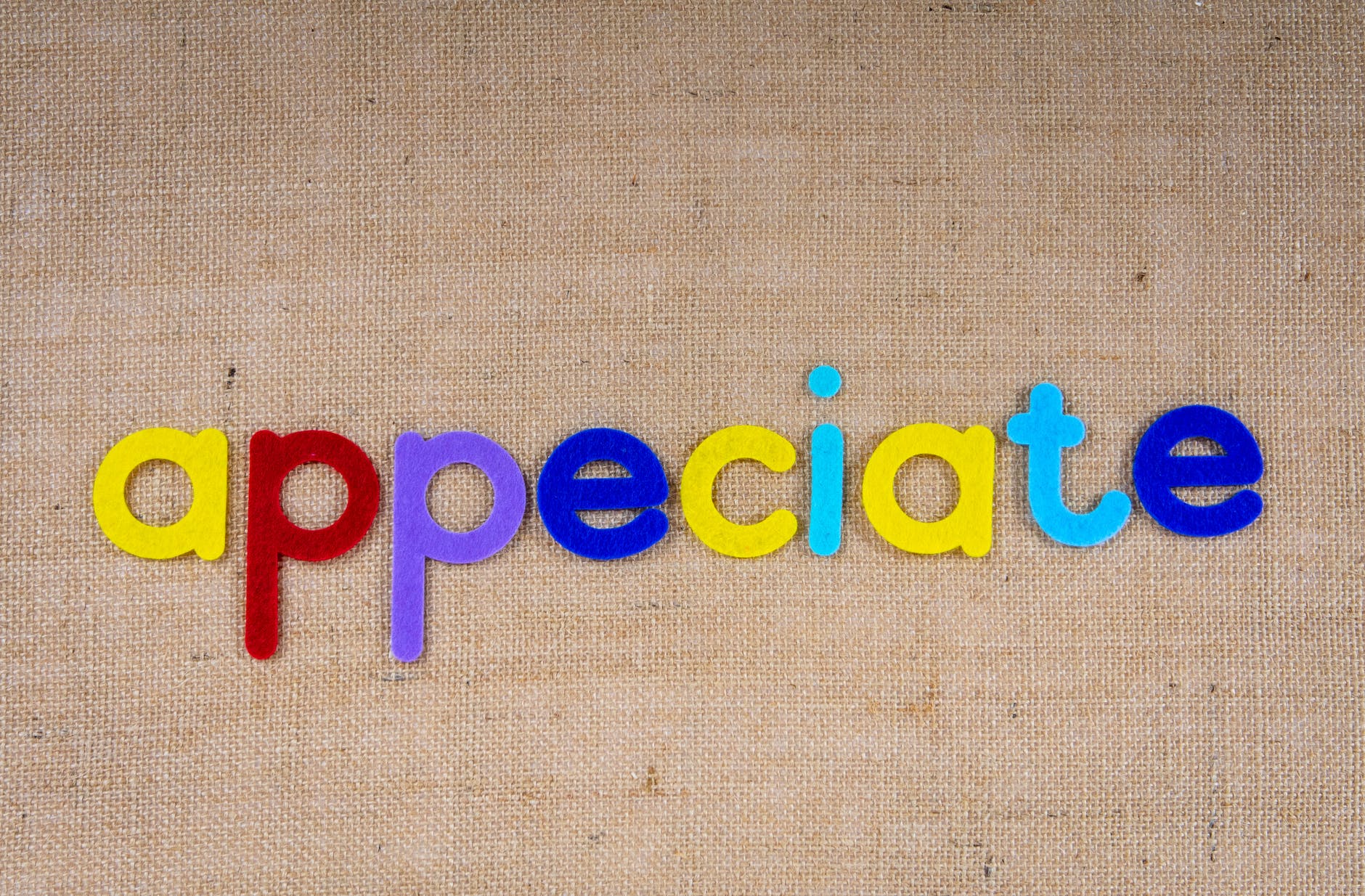
We also need to appreciate each other more.

At the end of the day and on the other side of all of the experts, Dunn comes to a dozen important realizations. One of which, appreciation, seems to be the magic bullet for most of her formerly-insurmountable marriage woes. It isn’t a new message but it is one that is worth repeating.

Photo by Magda Ehlers on Pexels.com

Recommended for parents of all ages, How Not to Hate Your Husband After Kids contains wisdom for just about every troublesome situation that one may find themselves in after children. Let’s hope the book can live up to its title.

Thank you to NetGalley and Little, Brown and Company for a free digital copy of this book. And thank you for reading!